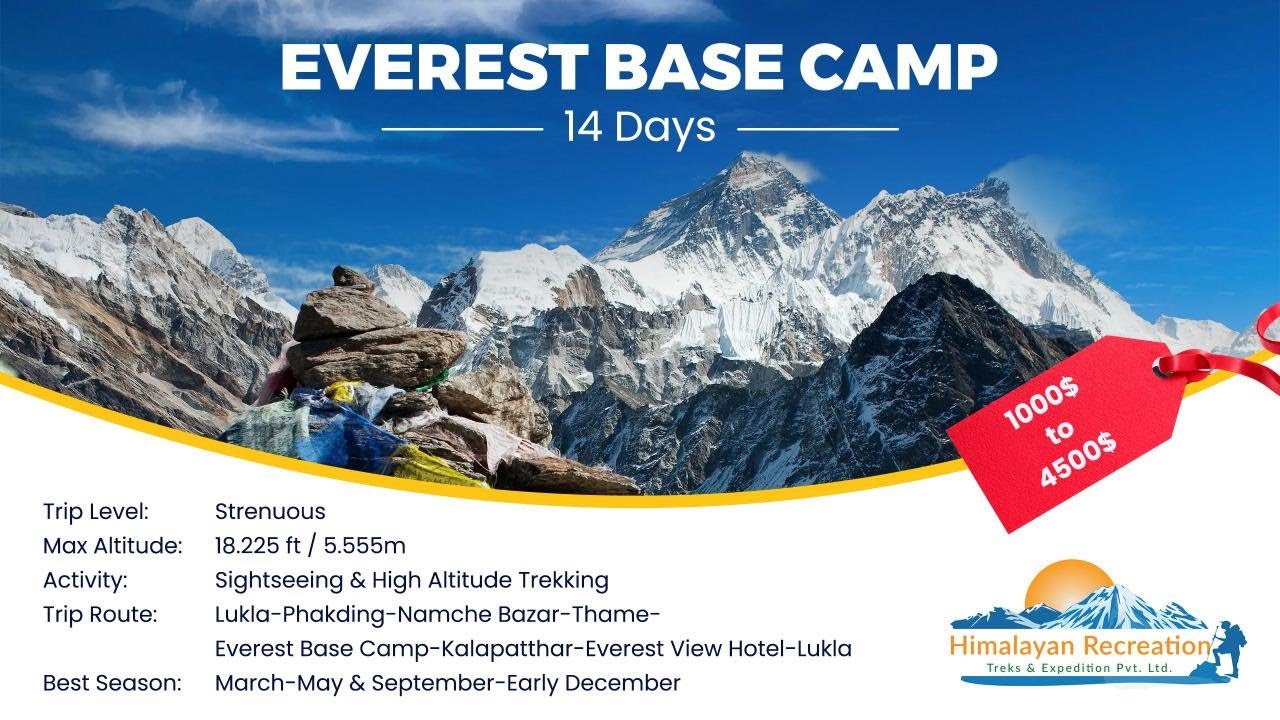
Best Season to Embark on the 10-Day Everest Base Camp Short Trek
The 10-Day Everest Trek can be trekked throughout the year with proper preparations. However, each season has its own pros and cons for trekking.
Spring is considered one of the best seasons for the Everest Base Camp Short Trek. The weather is mild, with moderate temperatures and clear skies during this time of the year.
The trail can be seen decorated with blooming rhododendron flowers, adding vibrant colors to the entire landscape. The views of the mountains are apparent and majestic in spring, offering you the 360-degree sight of various different peaks.
Spring is also one of the most popular trekking seasons, so be ready to come across a large number of trekkers along the trail.
- Summer/Monsoon (June to August)
The summer months are also monsoon season in the Everest region. Trekking during this time of the year can be challenging due to various factors, such as frequent rainfall and cloudy weather.
The trails can be muddy and slippery, and there is a higher chance of landslides in some areas, adding more risk to the journey. However, the region becomes lush and green, and the valleys are adorned with wildflowers.
Furthermore, the trails are less crowded during the monsoon season, and you may be able to enjoy a quieter environment.
- Autumn (September to November)
Autumn is another popular and ideal season for the Everest Base Camp Short Trek. The weather is usually stable and dry, offering clear skies and excellent visibility during the autumn.
The temperatures are moderate, making it ideal for trekking, and the trails are in their best condition, with the colorful autumn foliage adding breathtaking beauty to the surroundings.
Similar to spring, autumn also attracts a large number of trekkers, so you can expect more crowds along the trail.
- Winter (December to February)
Winter is not an ideal time to trek in the high altitudes. As it brings colder temperatures and snowfall to the Everest region, trekking during this season can involve certain challenges and risks.
The trail can sometimes be blocked because of the heavy snowfall, and the temperatures can be very harsh, especially at higher altitudes. However, the snow adds a unique charm to the landscape, and there are fewer crowds on the trail, providing you with a more tranquil experience.
A Typical Day on the Everest Base Camp Short Trekking
A normal day on the Everest Base Camp Short Trekking begins with waking up to the fresh mountain air in one of the teahouses. You will start your trip after having your breakfast in a scenic environment.
The walk takes you through diverse terrain, villages, lush green forests, and suspension bridges. After walking for several hours through beautiful landscapes and ascending gradually, you will have a short lunch break at one of the villages along the route. There, you can enjoy meals and take a rest.
The walk continues after having a meal and will take you through a charming Sherpa village amidst stunning mountain vistas. After walking for around 5 to 7 hours, you will arrive at the designated teahouse or lodge for the day, where you'll have time to relax.
Typically, trekkers spend their evenings communicating with fellow hikers, enjoying delicious dinners, and taking in the stunning views of the mountains.
The difficulty level of the Everest Base Camp Short Trek
The Everest Base Camp Short Trek is a moderately challenging trek that requires a good level of fitness and endurance. The trek involves walking for several hours each day on varied terrain, including uphill and downhill and some steep ascents and descents.
Furthermore, the walk includes high altitude, which poses a challenge. Thus, you must be fit physically with the ability to walk for around 5 to 7 hours each day.
It is highly recommended that you get engaged in physical exercise or activities such as cycling, hiking, and walking to increase your stamina level.
With proper preparation and a positive mindset, the Short Everest Base Camp Trek can be a very rewarding adventure.
Acclimatization and safety precautions during the 10-day Everest Base Camp Trek
Acclimatization and safety precautions during the 10-day Everest Base Camp Trek are crucial for a safe and enjoyable journey. Given the altitude and challenging landscape, it's essential to prioritize acclimatization.
Keeping all the safety factors in consideration, our itinerary includes an acclimatization day at certain points along the route to allow your body to adjust to the high altitude.
You should walk at your own pace and not rush to acclimatize well. It's important to follow your guide's instructions and drink plenty of water to stay hydrated. Furthermore, you should be aware of the symptoms of altitude sickness, such as headaches, dizziness, nausea, and shortness of breath.
If you experience any symptoms, it's important to express them to your guide and take the necessary precautions immediately.
How do I prepare for the short trek to Everest Base Camp?
To prepare for the short trek to Everest Base Camp, it's first important to focus on building your overall fitness and endurance. You can get ready for the trip by engaging yourself in regular exercises such as hiking, running, or cycling to improve your stamina.
We highly recommend you try short hikes and treks at a higher altitude to get used to the diverse terrain and increasing altitude. Mental preparation is also important, as the 10-day trek can be physically demanding. You should prepare yourself mentally for any risks and challenges you may face on the trail during the trek.
Another thing to do is familiarize yourself with the gear and equipment required and pack all the essential items for the journey.
Accommodation facilities on the Short Everest Base Camp Trekking
During the Short Everest Base Camp trekking, there are various accommodation options available along the trail. The accommodation ranges from basic facilities at the teahouses or lodges to luxury services at the luxury hotels along the route.
Generally, this package includes teahouses and lodges, which are the primary forms of accommodation that provide basic yet comfortable rooms with twin beds or dormitory-style accommodations. You can expect a bed with a mattress, a blanket, and a pillow.
The teahouses also have communal dining areas where you can enjoy meals and socialize with other trekkers. Keep in mind that the accommodation facilities may vary in terms of comfort and amenities. As you ascend to higher elevations, the facilities can be limited.
Food and drinking water during the Short Everest Base Camp Trek
You will be provided with food during the Short Everest Base Camp Trek by the teahouses and lodges along the trail. The teahouses offer a variety of meals, including traditional Nepali dishes like Dal Bhat (rice, lentil soup, and curry) and international cuisines such as pasta, rice, soups, and bread.
For breakfast, you can have bread or traditional bread with honey, vegetable curry, eggs, etc. It's important to note that as you ascend higher, the food choices may become more limited, and prices can increase due to the difficulty of transportation.
You can also carry your snacks to enjoy during the walk, such as chips, energy bars, and chocolates.
As for drinking water, you can easily have tap water throughout the trail, which is not always healthy and easy to drink. Thus, you can go for other options, like using water purification tablets or filters to treat water from taps or streams.
It's recommended to bring a reusable water bottle or purification tablets to minimize plastic waste and stay hydrated throughout the trek.
Permits required for Short Everest Base Camp Trek
There are two different permits needed for the Short Everest Base Camp Trek, which are explained below:
- Sagarmatha National Park Entry Permit: This is the permit required to enter the Sagarmatha National Park, as the trek lies inside the national park, where the Everest region is located. The cost for foreign nationals is NPR 3,000 (approximately USD 27).
- TIMS Card (Trekkers' Information Management System): The TIMS card is a trekking permit that you need to have to trek to any part of Nepal, which helps manage trekkers' information and ensures their safety. For the Everest region, the cost of the TIMS card for foreign trekkers is approximately USD 20.
Travel insurance for the Everest Short Trek
One of the most important considerations when starting any trip in the Himalayas is travel insurance. Travel insurance is crucial and required for the trek due to the difficulty of the Everest Short Trek and the risks of high altitude, potential altitude sickness, and other unforeseen situations.
All trekkers are required to submit a copy of their certificate of comprehensive travel insurance, which should include coverage for all medical expenses and emergency repatriation, during the booking process. The policy should also include coverage for high-altitude helicopter rescue and evacuation costs.
Your travel companion for the Short trek to Everest Base Camp
You will be guided by our professional guide and porter for the short trek to Everest Base Camp. Leading you throughout the trail, our guides and teams will be there to make sure that you have a safe and fun journey.
All of our guides are professionally trained and have years of experience guiding in the Everest region. With comprehensive knowledge of the trail, culture, community, and traditions of the region, you can expect to have a very fun and delightful trip.
Apart from having a safe travel experience, you can gain knowledge about the culture, people, and different facts of the Everest region during the trek, as our guides have deep insight into everything.
For Porter, it is up to you if you want to hire one or not. We advise our clients to have a porter, as it makes the journey more accessible and more convenient.
Tips on the Everest Short Trek
Tipping during treks in Nepal is a normal way of displaying appreciation to guides, porters, and other service providers. Trekkers usually tip the guides and other people who offer them services and facilities if they are satisfied.
The amount of the tip depends on you according to the level of facilities and service you receive.
Packing and Essentials for the Everest Base Camp Short Trek
We have prepared a list of all the necessary trekking gear and equipment for the 10-day trek to Everest Base Camp. You can either buy or rent the equipment and gear for the trek if you do not have it.
- Clothing: -Baselayer -Insulation layer -Third layer
- General Trekking gear -Trekking trousers and Shirts; -Trekking Shorts; -Waterproof shell jacket and Trousers; Underwear
- Headwear: -Hat -Beanie -Neck gaiter
- Handwear and Footwear: -Inner Gloves -Outer insulated Gloves; -Hiking Boots; -Trekking Shoes and Sandals; Hiking Socks; Warm Thermal Socks; Gaiters
- Bag and backpackers: -Duffel bag -Backpack -Day back -Raincover -Drybag
- Sleeping gear: sleeping bag -Liner -Earplugs
- Poles and Headgear: -Trekking poles -Sunglasses -Headlight
- Important accessories: water bottle/Hydration bladder -Towel -Pee funnel -Lock -Waterproof bag
- Extra accessories: camera, portable charger, books, cards, passport, money
- Medications and Toiletries: Water Purification Tablet, Isotonic Powder, Diamox, Common Medications, First Aid Kit, Sunscreen, Baby Wipes, Toiletries, Plasters, Oximeter, Hand Sanitizer
Lukla's flight delay and cancellation during the Short Everest Trek
Flight delays and cancellations during the Short Everest Trek are common events. The trek begins with a flight from Kathmandu to the Tenzing-Hillary Airport in Lukla, which is a small single-landing strip airport surrounded by the high Himalayas. There are high chances of flight delays and cancellations during your travels to Lukla.
Because of the location and elevation, weather conditions and visibility are hard to forecast and can change quickly. Consequently, flight schedules to Lukla can be affected. When the weather conditions aren't good and there is the risk of a dangerous landing, the airline doesn't take any risk and returns the flight immediately to Kathmandu. Such flight delays are likely to happen at any time of the year, especially during the monsoon season (late May to early September).
In case of a flight delay, you will have to wait until the flight gets rescheduled. In case of a flight cancellation, you can either wait a few days to take the next scheduled flight or take a helicopter flight on the same day.
Useful information and tips for the Everest Short Trekking
- Ensure you are physically fit and healthy to complete the journey comfortably.
- Pack essential trekking gear, including sturdy hiking boots, comfortable clothing in layers, a warm sleeping bag, a backpack, and trekking poles.
- Stay hydrated by drinking plenty of water throughout the trek. Carry water purification tablets or a water filter to treat water from local sources.
- Take regular breaks and walk at your own pace.
- Listen to your guide's instructions regarding safety precautions, rest days, and acclimatization hikes.
- Pack lightweight snacks and energy bars to keep you fueled during the trek.
- Choose the right time and season for the trek to avoid any risks and uncertainties.
- Practice responsible trekking by disposing of waste properly and respecting the environment.
- Remember to carry enough cash for the entire trip, as the trail does not have any ATMs.
Last-minute Trek booking with Himalayan Recreation
If you're looking for a last-minute booking for the Everest Short Trek, Himalayan Recreation is here for you. Although it is best to book trips to the Himalayas in advance for convenient travel, if you are not able to do so by any chance, we offer last-minute bookings.
In the case of a last-minute booking, you must provide us with the 100% trip payment 24 hours before the trek departs. Also, keep in mind that for last-minute bookings, there might be certain circumstances out of our control.
Practice eco-friendly travel with Himalayan Recreation
Himalayan Recreation puts a strong focus on sustainable travel practices. We are committed to minimizing our environmental impact and promoting responsible tourism during our treks.
We believe in leaving no trace principles and also make our trekkers aware of responsible trekking practices. You can take part in sustainable travel by getting engaged with locals to buy souvenirs, leaving no trace on the trails, and being aware of your impact on the community.
By choosing Himalayan Recreation for your Everest Base Camp 10 days trek, you can be sure that your journey is contributing to sustainable tourism and preservation efforts in the Himalayas.