Manaslu Tsum Valley Trek - 18 Days

360+ Reviews in TripAdvisor36+ Reviews in Google
Manaslu circuit Tsum Valley Trek

Our Manaslu and Tsum Valley Trek is one of the best-kept secrets you could explore in Nepal.

Combining the secluded Manaslu Circuit route with the cultural richness of Tsum Valley, this 18-day itinerary by Himalayan Recreation leads you to one of the toughest passes in Nepal, the Larkya La Pass (5,160 m).

Book your Manaslu Tsum Valley Trek today and discover Nepal's hidden Himalayan gem in 2026/2027, designed to offer real adventure and cultural immersion at the best possible cost.

At a Glance
  • Duration18 Days
  • Difficulty Level Moderate
  • Max Altitude Larkya La Pass (5160 M)
  • Group Size Up to 10 Hikers
  • Starts Kathmandu
  • Ends Kathmandu
  • Meals Full Board Meals on trek
  • Accommodation Tea house and 3 Star Hotel
  • Best Season Autumn & Spring
Highlights
  • Visit Rachen Gompa and Mu Gompa, breathe in the history and story, and let yourself feel the spirituality the moment you step into them.
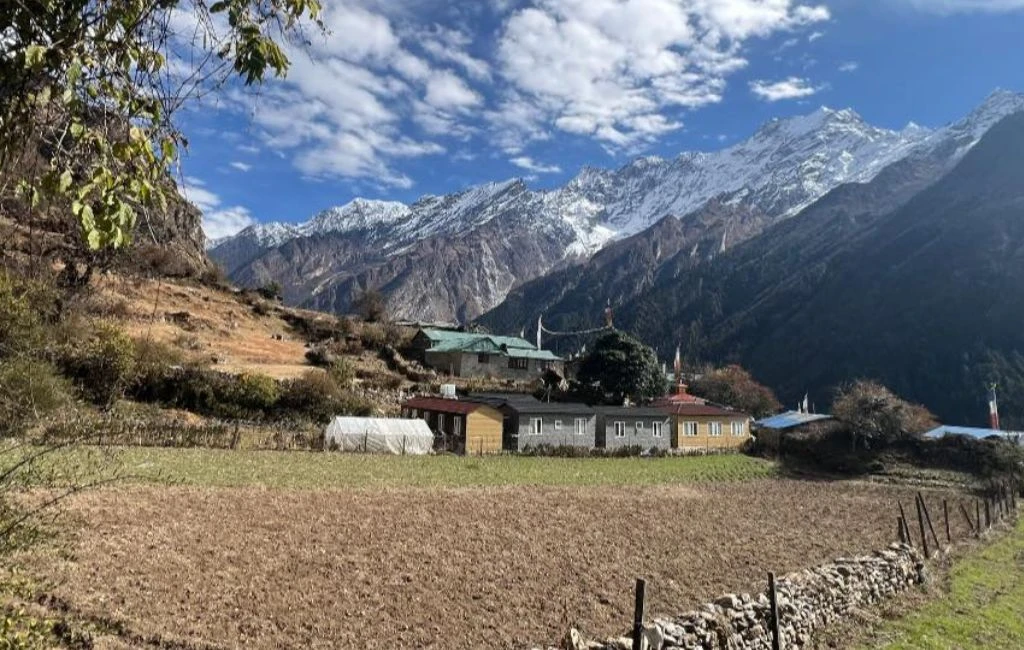
  • Walk on the trail of lush green forests and terraced fields that look like stairways to the heavens while being surrounded by snow-capped peaks like Ganesh Himal and Manaslu.
  • Reach the Larkya La Pass at 5,160 meters, which is not only a physical challenge but a mental one as well, and get rewarded with panoramic views of Manaslu, Himalchuli, and several others.
  • Explore the transition and culture of the Tsumba and Nubri, who are some of the warmest, most welcoming folks you’ll ever meet.
  • Explore the secluded and wild region with nothing but pure, unspoiled beauty in the lap of the mountains.
  • Witness the magical Birendra Lake surrounded by mesmerizing mountains all around.

Overview of the Manaslu and Tsum Valley Trek

We have brought you your dream trip to the Himalayas, combining two of the hidden gems of Nepal, the Manaslu and Tsum Valley Trek. If you have been searching for the ultimate adventure detouring from the commercialized trails, this 18 days trek combines two incredible trips in one trek.

The Tsum Valley is a hidden treasure of the Himalayas, a place where time feels like it’s standing still. This sacred valley is steeped in Buddhist culture, with ancient monasteries like Rachen Gompa and Mu Gompa that have been standing for centuries.

Another highlight of the Manaslu Tsum Valley trek is its local people, known as the Tsumba, who are some of the warmest and most welcoming folks you’ll ever meet, with their unique traditions, festivals, and way of life.

But the adventure doesn’t stop there. After exploring the Tsum Valley, you’ll continue on the Manaslu Circuit, one of Nepal’s most iconic trekking routes. The highlight of this part of the trek is crossing the Larkya La Pass (5,160 m), which is Nepal's most thrilling high-altitude pass.

The pass is tough, but when you stand on the top with the views of Manaslu, Himalchuli, and other Himalayan giants on the horizon, all that walking will be worth it. After the tough hike, the 18 days trek to Manaslu with Tsum Valley continues down to the other side of the valley, passing through picturesque villages, lovely forests, and grain fields.

Our Manaslu and Tsum Valley trek package features off-the-beaten-path deep valleys, cultures, lakes, and mountain passes all in one trek, making this the best choice for all the adventure cravers.

At Himalayan Recreation, we value your safety above everything else, and thus, we have acclimatization days included in the itinerary to ensure that you get plenty of rest along the way.

While the journey is already full of culture, biodiversity, and adventure, you can further make it challenging by adding the Annapurna Circuit trek into the itinerary. It all comes down to the kind of trek you are looking for, and we are here to make all your wishes come true.

So hurry up and book your trekking to Manaslu Tsum Valley with Himalayan Recreation and embark on this lifetime adventure.

Why choose the Manaslu Circuit & Tsum Valley trekking?

If you’ve been scrolling through endless trekking options and wondering what truly stands out, the Manaslu Circuit with Tsum Valley Trek 18 Days might just be the adventure you’ve been looking for.

This isn’t your average trek; it is the journey into raw beauty, hidden valleys, and authentic Himalayan culture that few have experienced. It is designed for trekkers who crave something beyond the usual routes, offering a chance to explore paths less traveled.

Crossing the mighty Larkya La Pass will test your limits, but the unbeatable rush of pride and joy when you stand at the top, surrounded by snow-capped giants, is unbeatable.

Why Choose Us for the 18 Days Manaslu & Tsum Valley Trek?

Himalayan Recreation is your best choice for the Manaslu Tsum Valley Trekking, assuring you a safe trekking experience in Nepal's most unspoiled region.

Our professionally trained guides have crossed the remote trails of the Manaslu and Tsum Valley Trek many times, providing in-depth cultural and natural guidance throughout the 18 days trek. Your safety is our top priority right from the moment you book your trek to the last day.

Our 18 days trek to Manaslu circuit with Tsum Valley package is transparent, comprehensive, and free of hidden charges. With Himalayan Recreation, your experience is not just a trek but a rich experience of nature, culture, and adventure with comfort and safety.

How much is the Manaslu Tsum Valley Trek Cost for 2026 and 2027?

The cost of the 18 Days Manaslu Tsum Valley Trek largely depends on the group size, the type of trip you choose (group or private), and the customization you make.

The cost starts at $1499 per individual for a group trek and increases as the number of trekkers decreases in a group. Private treks are a bit more expensive in terms of cost but offer extra flexibility.

No of people

Cost per person

1

USD 1999

2-4

USD 1699

5-7

USD 1599

7+

USD 1499

Our Manaslu and Tsum Valley trek package is all-inclusive, ensuring you have a hassle-free and relaxed trek. We've got you covered from start to finish, including all the required permits, accommodation, three meals a day, guide, and porter service. Just pack your bags and get ready to experience the adventure of a lifetime.

Do You Want a Group or a Private Trek?

At Himalayan Recreation, we offer both group and private trip options for the Manaslu Tsum Valley trek, along with the option of customization.

Group treks are great for meeting other travelers and sharing your entire experience. Whereas private treks provide more flexibility and one-on-one attention. Either way, you are guaranteed to have the best time of your life.

You also have the option to play around with the itinerary, making the trek fully yours. If the trip feels too long for you, then you can choose to trek either the Tsum Valley or Manaslu circuit separately, or if you wish to take this adventure even further, you can add the Annapurna circuit to the itinerary

Outline Itinerary

  • Day 01: Arrival at Kathmandu (1,400m) – Transfer to Hotel and Trek Briefing
  • Day 02: Drive from Kathmandu (1,400m) to Machha Khola (890m) – 8 to 9 hours
  • Day 03: Hike from Machha Khola (890m) to Jagat (1,340m) – 6 to 7 hours
  • Day 04: Trek from Jagat (1,340m) to Lokpa (2,240m) – 6 to 7 hours
  • Day 05: Trek from Lokpa (2,240m) to Chumling (2,386m) – 5 to 6 hours
  • Day 06: Trek from Chumling (2,386m) to Chhokangparo (3,031m) – 5 to 6 hours
  • Day 07: Trek from Chhokangparo (3,031m) to Nile (3,361m) – 5 to 6 hours
  • Day 08: Trek from Nile (3,361m) to Mu Gompa (3,700m) – Visit Monastery – Return to Chhokangparo
  • Day 09: Trek from Chhokangparo (3,031m) to Lokpa (2,240m) – 6 to 7 hours
  • Day 10: Trek from Lokpa (2,240m) to Deng (1,804m) – 6 to 7 hours
  • Day 11: Trek from Deng (1,804m) to Namrung (2,630m) – 6 to 7 hours
  • Day 12: Trek from Namrung (2,630m) to Lho (3,180m) – 4 to 5 hours
  • Day 13: Trek from Lho (3,180m) to Samagaon (3,530m) – 5 to 6 hours
  • Day 14: Acclimatization Day at Samagaon – Hike to Manaslu Base Camp or Pungyen Gompa
  • Day 15: Trek from Samagaon (3,530m) to Samdo (3,860m) – 4 to 5 hours
  • Day 16: Trek from Samdo (3,860m) to Dharamsala / Larkya Phedi (4,470m) – 4 to 5 hours
  • Day 17: Cross Larkya La Pass (5,160m), trek to Bimthang (3,720m) – 8 to 9 hours
  • Day 18: Trek from Bimthang (3,720m) to Tilije (2,300m) – 5 to 6 hours, Drive to Besisahar (760m) and then back to Kathmandu

Cost Details

Cost Includes
  • Airport Transfers: Pickup from Tribhuvan International Airport on your arrival day and drop-off on your final departure, as per your flight schedule.
  • 2 nights' stay in a 3-star hotel in Kathmandu on a bed & breakfast basis before starting the trek.
  • Experienced Trek Leader: One licensed, English-speaking trekking guide provided by Himalayan Recreation, including salary, meals, accommodation, insurance, transport, and all required trekking equipment.
  • All ground transfers from your hotel to the Kathmandu bus station
  • Public bus ticket from Kathmandu to Machha Khola
  • 16 nights in local teahouses during the trek (twin-sharing basis)
  • Meals During Trek: Three freshly prepared meals per day (breakfast, lunch, and dinner) during the trek, including one cup of tea or coffee with each meal.
  • Sleeping bag suitable for cold conditions (rated up to –20°C)
  • Duffle bag (provided if porter service is added)
  • Pocket map of the Manaslu & Tsum Valley region
  • Purified drinking water tablets (Ef-Chlor) for safe hydration
  • Permits & Documentation: All required trekking permits for the Manaslu and Tsum Valley restricted areas, including conservation and special permits.
  • Shared jeep transfer from Tilche to Besisahar
  • Public bus from Besisahar to Kathmandu or Pokhara (Day 18)
  • Storage Facility: Free storage of extra luggage at Himalayan Recreation’s office during the trek.
  • Government Taxes: All applicable government taxes, VAT, and service charges included.
Cost Excludes
  • Airfare, Nepal visa fees, and personal travel insurance.
  • Kathmandu Expenses: Extra hotel nights and meals in Kathmandu not mentioned in the itinerary.
  • Porter cost: USD 340 per porter for the entire trek. One porter can carry 20–24 kg, recommended for two trekkers
  • Private jeep from Kathmandu to Machha Khola: USD 200 per jeep
  • Private jeep from Tilche to Kathmandu or Pokhara: USD 300 per jeep
  • Hot showers, Wi-Fi, charging electronic devices
  • Bottled or alcoholic drinks, snacks, desserts, and extra meals
  • Tips: Tips for guide and porter (customary and appreciated, but not mandatory).

Dates & Prices

Select a departure month
Starts:Sunday Feb 01, 2026
Ends:Wednesday Feb 18, 2026
Price US$1699
Status Guaranteed
Starts:Sunday Feb 08, 2026
Ends:Wednesday Feb 25, 2026
Price US$1699
Status Guaranteed
Starts:Sunday Feb 15, 2026
Ends:Wednesday Mar 04, 2026
Price US$1699
Status Guaranteed
Starts:Sunday Feb 22, 2026
Ends:Wednesday Mar 11, 2026
Price US$1699
Status Guaranteed

Itinerary

Day 01:Arrival at Kathmandu (1,400m) – Transfer to Hotel and Trek Briefing

Your adventure begins the moment you step off the plane at Tribhuvan International Airport (TIA) in Kathmandu. You will be welcomed by a staff member of Himalayan Recreation with a warm smile who will escort you to the hotel. After settling down, you will meet your trekking guide for a short orientation. Here, you get to have an overview of the trek, permit details, and most importantly, guidelines for trekking in sensitive zones such as Manaslu and Tsum Valley.

The rest of the day is at leisure to rest or walk around the bustling streets of Thamel, lined with colorful restaurants, shops, and trekking shops.

    Day 02:Drive from Kathmandu (1,400m) to Machha Khola (890m) – 8 to 9 hours

    We leave early this morning for a long but scenic journey from Kathmandu to Machha Khola, which is some 160 km northwest. The drive along small towns like Dhading and Arughat takes us along the Budhi Gandaki River to deep valleys. The road is a highway for the first half, but the second half is bumpy, an adventure in itself.

    Along the way, we have an opportunity to see rolling hills, terrace fields, and in the distance, mountains. We pass through villages where the villagers are in the fields, and we have our first taste of rural Nepal life. After driving for approximately 8–9 hours, we arrive at Machha Khola, a riverside town. Overnight stay in a local guesthouse.

      Day 03:Hike from Machha Khola (890m) to Jagat (1,340m) – 6 to 7 hours

      Day one of our trek begins with a relaxed stroll along the Budhi Gandaki River. The route winds up and down through villages and farms before leading us to Tatopani, natural hot springs, where trekkers can stop and soak their feet if time allows. From here, the route climbs gradually, crossing suspension bridges and through dense forest

      We pass through the village of Khorlabesi, an agricultural town, and climb higher on stone steps before reaching Jagat. This picturesque village is constructed from stone houses and small tea stalls and has a distinct Tibetan influence. Jagat also marks the formal entry to the Manaslu Conservation Area, where permits are checked before entering further into the restricted area.

        Day 04:Trek from Jagat (1,340m) to Lokpa (2,240m) – 6 to 7 hours

        Today's trek is diverse as we trek along the Budhi Gandaki River upstream, passing through villages, fields, and forests. We take a gradual climb to Philim, a scenic Gurung village known for its rice terraces and vibrant culture. From there, the trail forks, with one path leading to the Manaslu Circuit and another to Tsum Valley.

        We continue the path into the region of the Tsum Valley, eventually reaching Lokpa. This small village is the first habitat of the Tsumba people, whose existence has a strong relationship with Tibetan Buddhism. At Lokpa, we have excellent views of Ganesh Himal and Shingri Himal, a foretaste of what awaits us visually.

          Day 05:Trek from Lokpa (2,240m) to Chumling (2,386m) – 5 to 6 hours

          After breakfast, we set out on a shorter but worthwhile trek to Chumling, one of the oldest villages deep inside Tsum Valley. The trail goes down to the Lungwa River and moves steadily upward through forests of pine and rhododendron. We trek along deep gorges and see cascading waterfalls on the way that add to the natural splendor of this remote valley.

          Chumling is a traditional village with stone buildings, ancient Buddhist monasteries, and breathtaking views of the surrounding hills. The village itself is calm, religious, and provides an interesting insight into the traditional lifestyle of the Tsumba people.

            Day 06:Trek from Chumling (2,386m) to Chhokangparo (3,031m) – 5 to 6 hours

            We turn our back on Chumling and proceed deeper into the sacred Tsum Valley today. Walking on the route passing mani walls, prayer wheels, and flying prayer flags, the path works its way slowly up through rice terraces and pine forests before swinging over suspension bridges above roaring rivers. The further we ascend, the more we are exposed to dramatic vistas of Ganesh Himal.

            By afternoon, we reach Chhokangparo, the biggest village in Tsum Valley, on a flat plain with stunning Himalayan scenery. On a clear day from here, we can see the majestic Himalayan summits of Himal Chuli (7,893m) and Shingri Himal. The altitude is starting to get to us now, so we hike slowly to acclimatize.

              Day 07:Trek from Chhokangparo (3,031m) to Nile (3,361m) – 5 to 6 hours

              The route today takes us further into the upper part of the valley, along villages rich in Tibetan Buddhist culture. We pass through Lamagaon, which is notable for the mythical Milarepa Cave, a meditation spot reported to be the spot at which Tibetan saint Milarepa meditated. The path then winds on through gorgeous meadows and mani walls with fleeting glimpses of Ganesh Himal.

              We then reach Nile, a village that is just a stone's throw from the Tibetan border. There is a greater sense of isolation and spirituality here, with monasteries and chortens dotting the village.

                Day 08:Trek from Nile (3,361m) to Mu Gompa (3,700m) – Visit Monastery – Return to Chhokangparo

                One of the highlights of the Tsum Valley trek is this. We hike up the valley to Mu Gompa, the largest monastery in the region, for breakfast. The climb is gradual but not strenuous, and the view of the valley and snow-capped peaks is nothing short of spectacular. We can go to the monastery at Mu Gompa, learn about the lifestyle of the monks who live in such remote conditions, and immerse ourselves in the peaceful spiritual atmosphere.

                After staying in Mu Gompa for a while, we retrace the route back down the valley, passing through Nile and small hamlets until we arrive at Chhokangparo again for the night. This acclimatizes us gradually while rediscovering the vibrant village life again.

                  Day 09:Trek from Chhokangparo (3,031m) to Lokpa (2,240m) – 6 to 7 hours

                  This is the 9th day of our itinerary, and today we set out on our return journey from Tsum Valley. The trail descends steadily, through the same villages and forest we ascended, but the view is fresh from this direction. We walk by mani walls, prayer flags, and waterfalls, and make our way eventually back towards Lokpa.

                  This decline gives us time to enjoy the unique culture of the Tsumba residents and the religious atmosphere of the valley. At Lokpa, the intersection village along the Manaslu Circuit and Tsum Valley, we come to the main Manaslu route to continue deeper into the Manaslu region.

                    Day 10:Trek from Lokpa (2,240m) to Deng (1,804m) – 6 to 7 hours

                    We now follow the Budhi Gandaki River upstream again, in smaller gorges and suspension bridges, numerous times. The track then goes through bamboo, pine forest, small villages, and cultivated fields. The spectacular scenes of cliffs and waterfalls are still awe-inspiring as we ascend towards the upper Himalayan region.

                    Late in the afternoon, we are in Deng, which is a tiny Tibetan village with stone-built houses and some lodges. Deng marks the beginning of an increasingly Tibetan-influenced culture as we head northwards to the highlands of Manaslu.

                      Day 11:Trek from Deng (1,804m) to Namrung (2,630m) – 6 to 7 hours

                      From Deng, we go on a trek over suspension bridges and through thick rhododendron and pine forests, following an upstream direction along the Budhi Gandaki. The trail slowly goes higher, and we find ourselves in a more alpine and Tibetan in character landscape. We trek past mani walls and villages like Ghap, where the practice of Tibetan Buddhism is more visible.

                      As we ascend, the landscape becomes more spectacular, with snow-white mountains gradually unveiling themselves. When we reach Namrung, a larger village with teahouses and beautiful stone structures, we are rewarded with breathtaking views of Himal Chuli, Manaslu, and Ganesh Himal.

                        Day 12:Trek from Namrung (2,630m) to Lho (3,180m) – 4 to 5 hours

                        Today's walk is shorter but extremely scenic. We climb gradually from Namrung up through woods and rice-terraces, up through villages covered with prayer flags and traditional Tibetan houses. The air is crisp, and the mountains feel closer with every step.

                        By noon, we arrive at Lho, a stunning village overshadowed by Ribung Monastery. The panorama of Manaslu (8,163m) from this point is stunning, most notably at sunset when the golden sunlight hits the summit. Lho is also one of the trek's culturally rich villages and provides us with ample opportunity to soak up the surroundings, visit the monastery, and engage with villagers.

                          Day 13:Trek from Lho (3,180m) to Samagaon (3,530m) – 5 to 6 hours

                          The trek today is on a gentle trail, further into the Manaslu massif as we head to Samagaun, the largest settlement of the region. As we begin the trek today, we pass through Shyala village, with grass fields and stone houses, with stunning views of Himal Chuli, Ngadi Chuli, and Manaslu towering above us.

                          We reach Samagaon in the afternoon, situated at the foot of Manaslu. This Tibetan-style village offers spectacular views of the surrounding peaks. It is also an excellent place where one can see the local culture and acclimatize to higher altitudes.

                            Day 14:Acclimatization Day at Samagaon – Hike to Manaslu Base Camp or Pungyen Gompa

                            This is our first acclimatization in the itinerary, which is much needed before we head to a higher altitude. Acclimatization day in Samagaon is for more exploration, as we have the option to hike to Manaslu Base Camp (4,800 m), a challenging but worthwhile side trip with up-close views of Manaslu's gigantic face. Alternatively, we can also visit Pungyen Gompa, a secluded monastery surrounded by stunning mountain vistas.

                            The day acclimatizes us gradually to the height as we take in the spectacular views along the way to Samagaon. Returning to the village by afternoon, we rest, enjoy the warm hospitality of the locals, and prepare for the next phase of our trek.

                              Day 15:Trek from Samagaon (3,530m) to Samdo (3,860m) – 4 to 5 hours

                              We depart Samagaon and continue uphill in open grassland, juniper forest, and yak-grazing terrain. The trail offers broad views of the surrounding peaks and glints of shadow down along the Budhi Gandaki as it grows narrower. The Tibetan border is near now, only a few kilometers away, and the landscape takes on a wild, desolate atmosphere.

                              By early afternoon, we arrive at Samdo, a village where people of Tibetan origin have maintained their centuries-old lifestyle. The village is small but rich in culture, providing some insight into old trade routes and mountain culture.

                                Day 16:Trek from Samdo (3,860m) to Dharamsala / Larkya Phedi (4,470m) – 4 to 5 hours

                                This is a gentler but serious day in preparation for crossing the high pass. From Samdo, we climb gradually past grazing yaks and serene trails following the river to the high-altitude foot of Larkya La Pass. The air is thinner, and the landscape is more barren with snow-capped ridges all around.

                                We reach Dharamsala (also referred to as Larkya Phedi) in the early afternoon. It is a basic overnight camp used by trekkers before the pass. We rest, rehydrate, and prepare for the challenging but rewarding crossing of tomorrow.

                                  Day 17:Cross Larkya La Pass (5,160m), trek to Bimthang (3,720m) – 8 to 9 hours

                                  This is the most challenging and successful day of the trek. Early before sunrise, we ascend gradually to the Larkya La Pass (5,160m), the highest point of the journey. The trail is rugged and tough, but every step offers stunning views of Manaslu, Himlung Himal, Cheo Himal, and Annapurna II. After a tough walk of around 4-5 hours, we reach the top of the pass, where prayer flags mark the achievement of having reached this stunning high point.

                                  From this point, we go on a long descent through steep landscape until we reach Bimthang, which is a stunning valley surrounded by glaciers and mountains. With the previous day being long and exhausting, we take it easy and celebrate our triumph.

                                    Day 18:Trek from Bimthang (3,720m) to Tilije (2,300m) – 5 to 6 hours, Drive to Besisahar (760m) and then back to Kathmandu

                                    This is the final day of trekking, as we head toward Tilije from Bhimthang, we cross alpine meadows and thick forests of rhododendron and oak. The scenery softens as we descend, with warm sun and fresher landscapes welcoming us once more. We pass through picturesque villages and reach Tilije, the trek's end section.

                                    We then have a jeep drive from Tilije to Besisahar, the gateway to the Annapurna region, and back to Kathmandu by road. Once we arrive in Kathmandu, you will be escorted to the hotel, where you can indulge in the comfort and rest.

                                      Not the right fit? Customize this itinerary or services to match your needs and budget—just contact us!

                                      Manaslu Tsum Valley Trek - 18 Days FAQs

                                      • The Manaslu Tsum Valley Trek is a scenic trekking route located in the Manaslu region, combining two of the best destinations, Larkya La Pass and Tsum Valley. It offers an off-the-beaten-path adventure, taking you through stunning scenery, traditional Tibetan villages, and rich Buddhist heritage.

                                      • The best time for the Manaslu and Tsum Valley Trekking is spring (March to May) and autumn (September to November). The weather is then at its best with clear skies, pleasant temperatures, and great scenery.

                                      • The 18 days trek to Manaslu with Tsum Valley is a moderate to demanding trek. It includes long walking days, great altitude gain, and steep inclines at times.

                                      • The trek generally starts at the town of Machha Khola, which can be reached by a 7 to 9-hour drive from Kathmandu.

                                      • The highest point of the trek is Larkya La Pass at 5,160 meters (16,929 feet). The pass is typically reached on the final days of the trek, with stunning views of the surrounding mountain ranges.

                                      • While the trek is challenging, you don't need to be an Olympic athlete. However, you will require a good level of cardiovascular fitness as the trek involves lengthy days of walking on varied terrain.

                                      • The trek is safe, but it's remote, so make sure you have travel insurance for trekking at high altitudes. Drink lots of water, rest when needed, and follow the acclimatization process to reduce risks like altitude sickness.

                                      • Yes, you need to hire a guide for the Manaslu and Tsum Valley trek. The area is a restricted zone, and you must trek with a certified guide and porter. Trekking with a guide also ensures your safety, accurate route guidance, and a richer cultural experience.

                                      • Electricity is available in most villages along the Manaslu Tsum Valley Trekking, but it may be restricted to more remote places. Wi-Fi may be offered at certain teahouses for a small charge, but the connectivity is slow or not stable. It is best to bring a power bank to charge devices.

                                      • The Manaslu Tsum Valley Trek is not ideal for young kids or the elderly unless they are in peak physical condition. The high altitude and extensive walking days can be hard. However, if with children or the elderly, one has to consider the pace and general fitness level.

                                      • If you are sick or injured, it is best to descend to a lower altitude, since altitude sickness worsens at higher altitudes. Take a first aid kit with you, and ensure you have adequate travel insurance that includes medical evacuation in case of an emergency.

                                      Know Before You Go

                                      When Is the Best Time to Do the Manaslu Circuit & Tsum Valley Trek?

                                      The best seasons for the Manaslu Circuit and Tsum Valley Trek are spring (March to May) and autumn (September to November).

                                      Spring offers moderate temperatures, rhododendron flowers, and clear skies, while autumn is marked by crisp weather, fresh landscapes after the monsoon, and the best mountain views. Both seasons are great for trekking with suitable weather conditions.

                                      Winter (Dec to Feb) is not out of the question for adventurous trekkers who prefer isolation and snow-covered paths, but the cold can be harsh, and some teahouses are closed in peak winter.

                                      Monsoon (June to Aug) is the worst time, as it brings heavy rain, muddy trails, clouded views, and landslides. For a perfect experience, we always recommend spring or autumn for the Manaslu Trek with Tsum Valley.

                                      What type of accommodation can be found on the Manaslu Tsum Valley Trek?

                                      Accommodation on the 18 Days Manaslu Tsum Valley Trek is in local family-run teahouses and lodges. The rooms are simple but comfortable, with two single beds, a mattress, a blanket, and a pillow usually provided.

                                      Toilets are shared, and some places have hot showers for a small extra fee. The rooms are basic but clean and offer the comfort needed after a day of trekking.

                                      The heart of every teahouse is the dining room, where trekkers gather around a warm stove, eat meals, share tales, and become acquainted with other travelers. While there is no luxury to be found here, the simplicity of the teahouses is all part of the charm of trekking through remote Himalayan villages.

                                      What Kind of Food Is Provided on the Tsum Valley with Manaslu Circuit Trek?

                                      You will have food on the Tsum Valley with Manaslu Circuit Trek at teahouses en route, and three freshly prepared meals a day, breakfast, lunch, and dinner, are included in our package. The food is simple but nutritious, designed to keep you going through the long walking days at high altitude.

                                      Breakfast generally begins with a serving of hot tea or coffee, accompanied by porridge, Tibetan bread, chapati, or pancakes. Eggs (boiled, scrambled, or fried) with toast are also widely available. Muesli with milk or cornflakes is also available in some teahouses for a change.

                                      The default choice for lunch is dal bhat (rice, lentil soup, vegetable curry, and pickle), which is filling. Fried noodles, fried rice, thukpa (Tibetan noodle soup), or momos (dumplings) are also available depending on the location.

                                      Dinner is a repeat of lunch, but somehow more comforting after a long day. Most trekkers go for dal bhat again, as it has unlimited refills and full of nutrition.

                                      Is safe drinking water available during the Manaslu and Tsum Valley trek?

                                      Yes, safe drinking water is available throughout the trail. For water to drink, there is boiled water in almost all teahouses at an extra charge.

                                      As an added precaution and also to be environmentally friendly, we recommend that you bring water purification tablets or a filter bottle so that you can fill up from local water sources instead of buying bottled water. That way, you will stay hydrated at all times and also help reduce the trash on the trails.

                                      How Difficult Is the Manaslu Tsum Valley Trek, and How Do You Prepare?

                                      The Manaslu Tsum Valley Trek is classified as a difficult journey. The highest altitude is at Larkya La Pass (5,160m), where altitude sickness can be an issue.

                                      Most of the trekking days consist of 5–7 hours of walking, with some longer days of 8–9 hours, over steep, rocky, and sometimes snowy trails. This can be hard, especially for first-time trekkers.

                                      To prepare yourself, you should have good physical fitness, stamina, and past trekking or hiking experience. Cardio exercises, strength training, and longer treks before the trek will be helpful. With a positive attitude, steady pace, and professional guidance, it is a successful and rewarding journey to the Manaslu and Tsum Valley Trek.

                                      Altitude sickness and prevention Guide on Tsum Valley with Manaslu Trek

                                      Altitude sickness is the biggest concern of the Manaslu Tsum Valley trek, as the trek takes you up to over 5000 m. Altitude sickness occurs when your body is not able to adjust to the increasing altitude, and the most important thing to do to avoid altitude sickness is to rest.

                                      The good news is that our itinerary includes enough acclimatization days to let your body adapt gradually. Our professional guides are trained to recognize symptoms early and know exactly how to respond.

                                      To avoid altitude sickness, the key is simple: walk at your own pace, stay hydrated, and rest whenever your body needs it. Avoid alcohol, listen to your guide’s advice, and don’t ignore even the mildest symptoms.

                                      How to prepare for the Trek to Tsum Valley & Manaslu?

                                      As the 18 days Manaslu and Tsum Valley trek is a challenging journey, which requires both physical and mental preparation, we suggest you start training beforehand to make sure you are able to enjoy the trip with ease.

                                      Get in some advanced practice of cardio and strength training, especially for your legs and core. You can also go on a short hike or trek with a backpack to simulate the trek. While on trek, make sure to walk at your own pace, pack layers and good gear, and don't forget the necessities.

                                      At the end of the day, the Manaslu Tsum Valley Trek is as much a mental challenge as it is a physical one. But the effort will all be worth it when you’re standing at the top of the Larkya La Pass, looking out at the Himalayas.

                                      What do you need to pack for the Manaslu Tsum Valley Trek?

                                      Packing smart is crucial for the trek to Manaslu with Tsum Valley, as you’ll be walking through remote villages and high passes. A sturdy pair of trekking boots, layered clothing, and a good down jacket are absolute musts.

                                      Do not forget essentials like trekking poles, gloves, sunglasses, headlamps, and a four-season sleeping bag to help keep you warm at the higher elevations. Small luxuries like energy bars, wet wipes, and lip balm also make a big difference.

                                      Since this is a wilderness trek, there are not many shops along the way. Carrying the right equipment with you ensures comfort and safety and allows you to enjoy to the maximum the beauty of the Manaslu and Tsum Valley region.

                                      We provide you with a sleeping bag, trekking poles, and a duffel bag before the trek if you do not already have them, and you can further buy or rent the equipment in Kathmandu.

                                      What are the Manaslu Tsum Valley Trek permits?

                                      Three permits are required for the Manaslu Tsum Valley trekking itinerary:

                                      The Restricted Area Permits are required because Manaslu and Tsum Valley are restricted regions. All of these are included in your Manaslu Tsum Valley trek package cost, and you don't need to go through the paperwork.

                                      What are the transport facilities of the Manaslu Tsum Valley Trek?

                                      Your Manaslu Tsum Valley trekking journey begins with a scenic drive from Kathmandu to Machha Khola, the gateway to the trek. The trip usually takes 7–8 hours, driving along winding mountain roads and riverside landscapes. Our itinerary includes a bus ride to Macha Khola from Kathmandu.

                                      On the way back, the trek ends near Tilije, from where a private jeep brings you back to Besisahar, and then another bus ride brings you to Kathmandu. In this way, you have a comfortable journey throughout the trek.

                                      All the land transports are included in your Manaslu and Tsum Valley trek package, and you do not have to worry about reserving buses or jeeps yourself. We manage the bookings so you can focus entirely on the trek.

                                      How to book a Manaslu Tsum Valley Trek with Himalayan Recreation?

                                      It is simple and problem-free to book your 18 days trek to Manaslu with Tsum Valley with Himalayan Recreation Treks. You can book the trip via our website, where you can choose the date and types of trek you want. Once you fill in the online form and pay a 20% deposit, we will arrange everything.

                                      We provide you with a detailed itinerary, logistics list, and pre-trip guidance so that you will feel prepared before your departure. Once booked, our team stays in constant communication with you until the trek begins.

                                      What is the cancellation policy?

                                      We know that sometimes plans alter, and hence our cancellation policy for the Manaslu Tsum Valley trekking package is kept flexible. You can cancel weeks before departure and get a reasonable refund.

                                      In case of emergencies close to the trekking date, we allow rescheduling of the trip for the same season or even next year without losing your deposit. This way, your effort and money won't go to waste.

                                      Similar TripsYou may also like

                                      Book NowPrice fromUS$1699
                                      Planning a Trip?

                                      Speak to a specialist to start planning tailor-made holiday.