Planning to trek Annapurna Base camp and wondering about the best time to go? The month you choose shapes everything: mountain views, ABC trek weather, trail conditions, and crowds. This guide walks you through the Annapurna trekking season month by month, so you can pick the right window. Smart Himalayan trek timing turns a hard climb into a trip you remember for the right reasons.
When Is the Best Time for Annapurna Base Camp Trek?
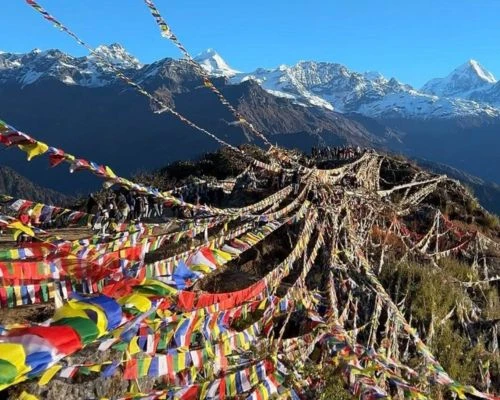
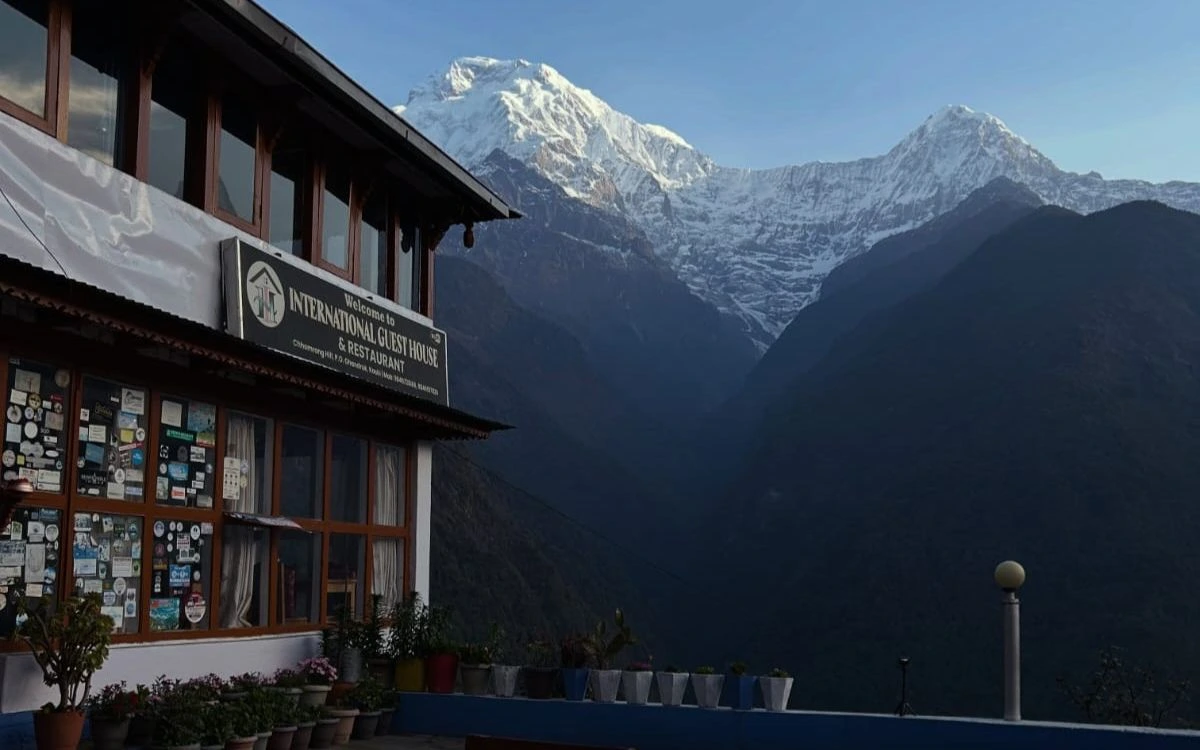
Chhomrong guesthouse with Annapurna South at sunrise on the ABC Trek
Spring (March to May) and autumn (late September to November) are the best seasons for the ABC trek. April and October stand out: skies stay clear, trails stay dry, and teahouses stay open all the way up.
Still, the best month depends on what you want. Rhododendron blooms, quiet trails, snowy peaks and lower costs each point to a different month.
Annapurna Base Campsits at 4,130 m, inside a natural amphitheatre of giants like Annapurna I, Annapurna South and Machhapuchhre. The route climbs from warm subtropical valleys to icy moraine, so weather changes fast. Pick the right month, and you walk dry trails under bright peaks. Pick the wrong one, and you may spend days in clouds and mud.
This guide covers all 12 months, so you can plan with confidence whether you are new to trekking in Nepal or adding another Himalayan trail to your list.
Annapurna Base Camp Trek Seasons at a Glance
Season
Months
What to expect
Crowds
Verdict
Spring
March–May
Warm days, blooming rhododendrons, some afternoon haze
High
Excellent
Monsoon
June–September
Heavy rain, leeches, cloudy views, landslides
Very low
Not advised
Autumn
September–November
Clear skies, stable weather, crisp air
Very high
Best overall
Winter
December–February
Cold, dry, snow at altitude, quiet trails
Low
For the experienced
Spring (March–May)
Spring is the Annapurna Base Camp trekking season for flower lovers. Rhododendron forests bloom from mid-March through April, turning the lower trail red, pink, and white. Many trekkers pair that display with the Ghorepani Poon Hill Trek, which crosses the same forests and adds a famous sunrise viewpoint.
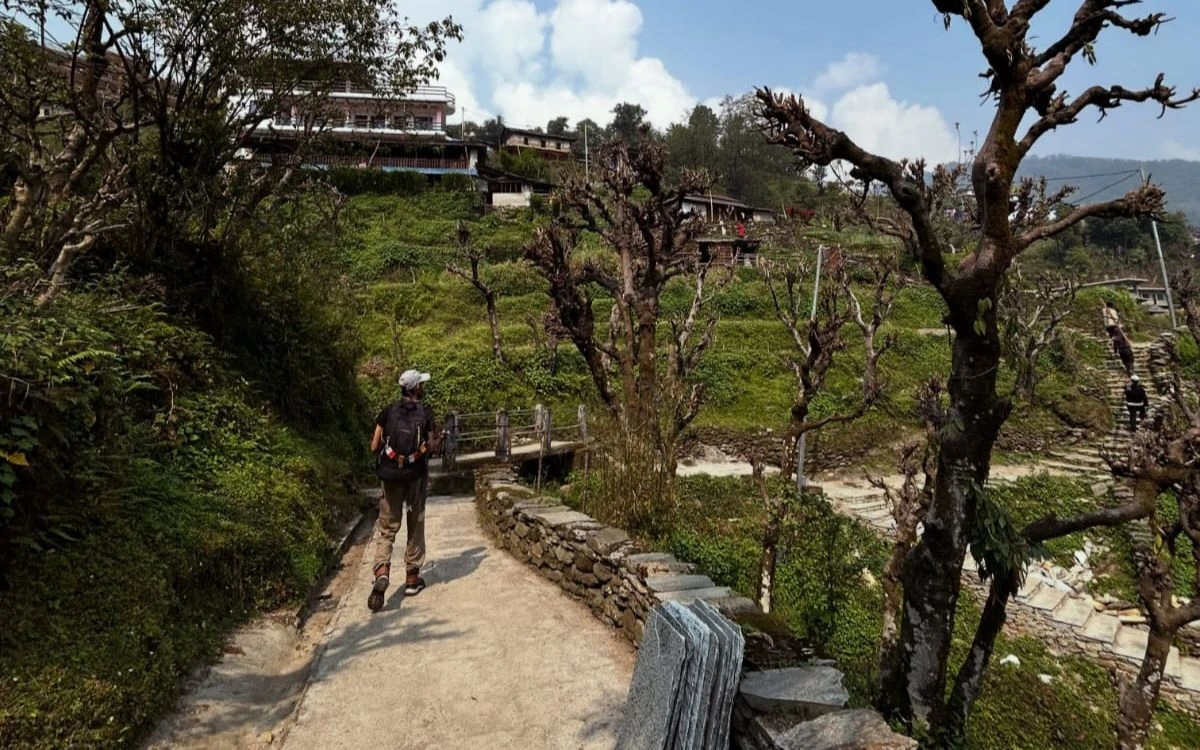
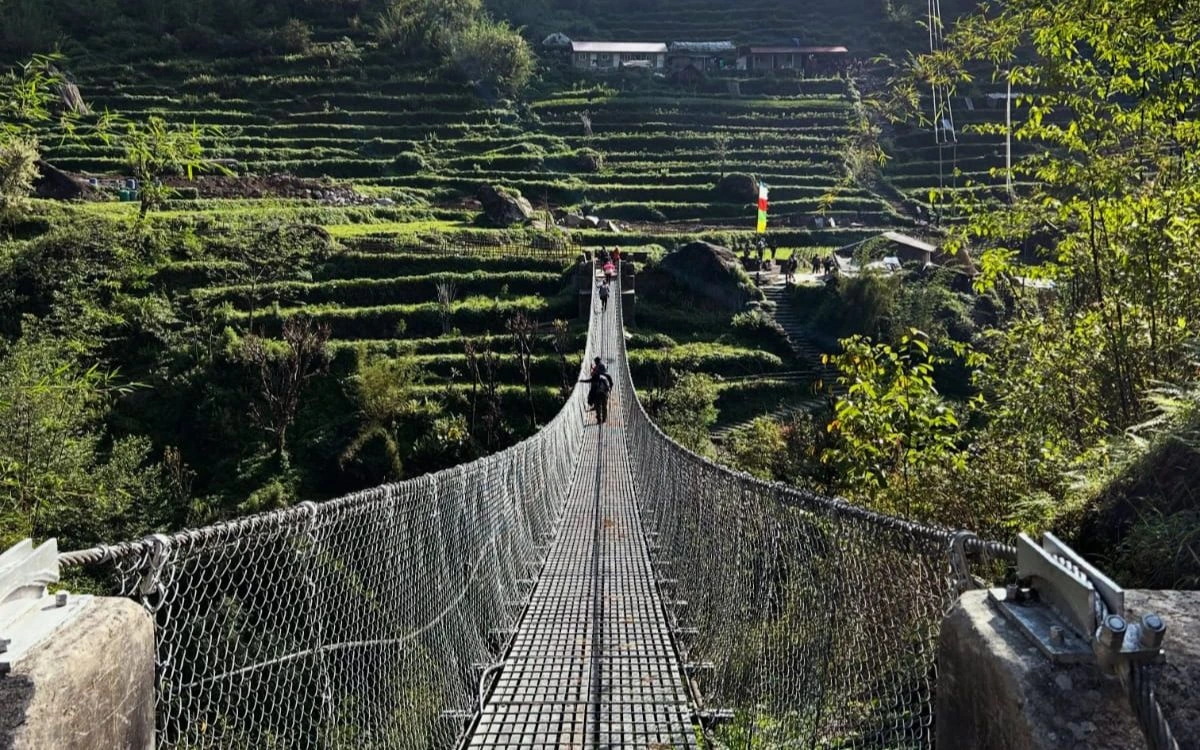
Suspension bridge over terraced fields on the Annapurna Base Camp Trek
Daytime temperatures reach 15–25°C in the valleys and 5–10°C near base camp. Nights at 4,130 m drop to about -5 to -10°C in April. Haze and afternoon cloud build as May approaches, so start walking early each day. Nepali New Year (mid-April) and Buddha Jayanti (May) add local colour along the way.
Monsoon (June–September)
Monsoon brings daily rain to the southern slopes. The Annapurna region ranks among the wettest parts of Nepal, and Pokhara alone receives over 3,000 mm of rain a year, most of it in these months. Leeches infest the lower forests, landslides block trails, and clouds hide the peaks. In return, you get green hillsides, full waterfalls, and almost no other trekkers.
The North Annapurna Base Camp Trek starts from the Manang side, north of the main range. It receives far less rain than the southern ABC route. Heavy rain can still wash out the roads to its trailhead, so check conditions before you commit.
Autumn (September–November)
Autumn delivers the clearest air and the most stable weather of the year. The monsoon washes the dust from the sky, and mountain views sharpen from late September onward. October is the peak month, and November follows with colder, quieter days.
Two big festivals shape autumn travel. Dashain (late September or October) and Tihar (October or November) send Nepali families on holiday, so buses and teahouses fill quickly. Book early.
Winter (December–February)
Winter brings sharp, clear mornings and nearly empty trails. It also brings serious cold. Nights at base camp fall to -15°C or lower, snow covers the trail above Chhomrong, and avalanche risk rises on the slopes between Deurali and Machhapuchhre Base Camp. Some higher teahouses also close or cut services. Winter works for fit, well-equipped trekkers with a flexible schedule and a guide who tracks daily conditions.
January is the coldest month. Skies stay mostly clear, but base camp nights drop to -15°C or lower, and fresh snow can slow your climb. Expect almost no crowds and a few closed teahouses.
Best for: experienced winter trekkers who want solitude.
February
February stays cold, but the days grow longer, and snowfall eases late in the month. Views remain crisp, and trails stay quiet. Maha Shivaratri falls in February or March, and you may see pilgrims heading to temples in the lower valleys.
Best for: quiet trails with sharp mountain views.
March
March marks the start of spring. Rhododendrons begin to bloom in the lower forests, and daytime temperatures climb. Snow still lingers above Himalaya village (2,900 m), and nights at base camp stay near -10°C. Holi, the festival of colours, adds a splash of fun in Pokhara.
Best for: early flowers with fewer crowds than April.
April
April is one of the two best months for the ABC trek. Rhododendrons peak, days are warm, and mornings are clear. The trail gets busy, so reserve teahouses ahead, especially around mid-April for Nepali New Year.
Best for: flowers, warm weather,r and stable conditions.
May
May is warmer and quieter than April. Haze builds by midday, and pre-monsoon showers arrive late in the month. Start early to catch clear views before the clouds roll in. Buddha Jayanti often falls in May.
Best for: warm nights and lighter crowds.
June
The monsoon usually reaches the Annapurna region in early to mid-June. Rain falls most afternoons, leeches appear below 2,500 m, and trails turn muddy. Views of the peaks become rare.
Best for: flexible, experienced trekkers only.
July
July is the wettest month. Heavy rain triggers landslides, and thick cloud hides the summits for days. If you still want to trek in July, consider the rain-shadow side of the Annapurna Circuit Trek, where rainfall is far lighter.
Best for: travellers who can switch routes. Skip the ABC trek this month.
August
August stays wet and cloudy. Waterfalls run at full force and the hills glow green, but slippery stone steps and swollen streams make progress slow and risky. Few teahouses see guests.
Best for: no one. Avoid it for ABC.
September
September marks the monsoon's retreat. Early in the month, rain and mud still dominate. By the last week, skies clear and the trail starts to dry. If you travel in September, aim for the final ten days.
Best for: budget travellers who accept some rain risk.
October
Trekker walking a village trail on the Annapurna Base Camp Trek
October is the best month for Annapurna Base Camp. Skies are clear, trails are dry, and the weather is the most reliable of the year. Nights at base camp fall to -5 to -10°C. Crowds peak too, and autumn also fills the Everest Base Camp Trek, so book flights, jeeps,s and teahouses early.
Best for: first-timers who want the safest weather window.
November
November stays dry and clear, and crowds thin out as the month goes on. Days are shorter and nights colder, often -10 to -15°C at base camp. Tihar, the festival of lights, usually lights up villages in early November.
Best for: stable weather with fewer people on the trail.
December
December brings dry, cold, and peaceful trekking. Snow often covers the upper trail, and daylight is short. If you want a lower winter option, compare it with the Langtang Valley Trek, which ends at Kyanjin Gompa (about 3,870 m).
Best for: quiet trails and winter scenery.
Which Month Is Best for Annapurna Base Camp Trek?
October wins for reliability. April wins for flowers and warmth. Choose by your priority:
Clearest mountain views: October and November.
Rhododendron blooms: late March to April.
Fewest crowds with decent weather: November or May.
Warmest nights: April and May.
Lowest prices: winter and late September. Accept more weather risk in return.
Annapurna Base Camp for Beginners
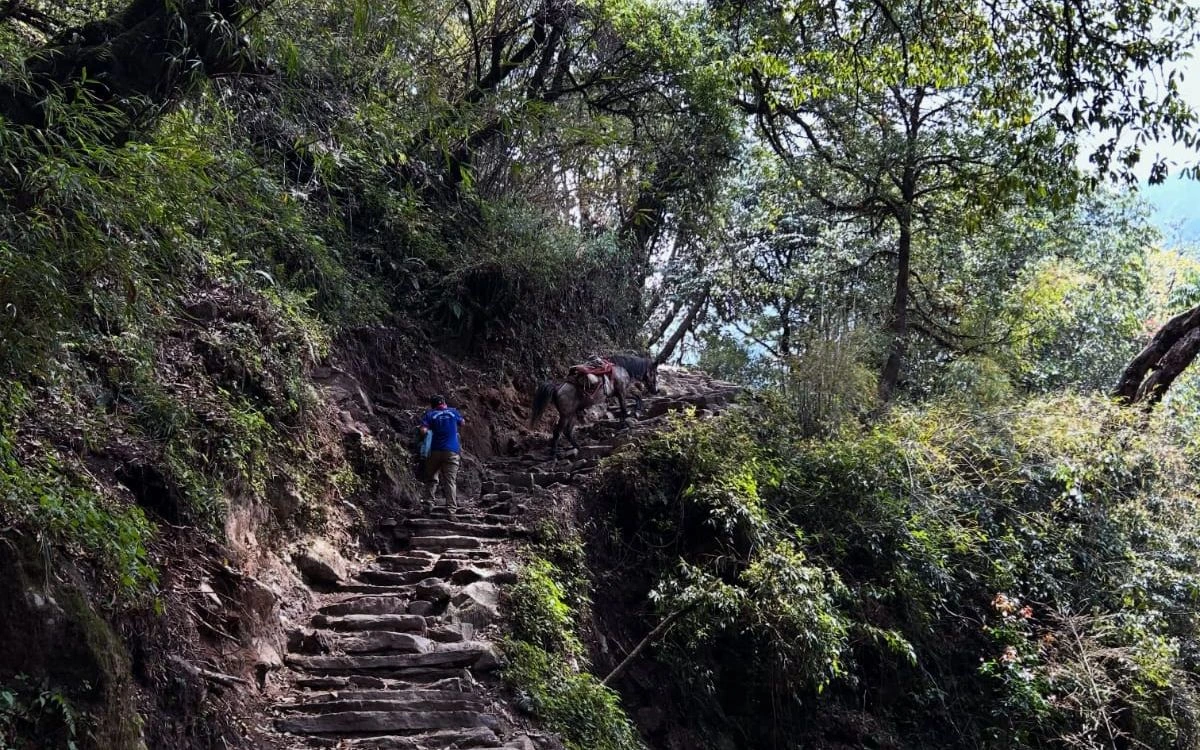
Stone staircase trail with a mule on the best time for Annapurna Base Camp Trek route
If you are a first-time trekker, choose April, October or early November. Weather is stable, teahouses stay open, and rescue support is easier to reach. The route is moderate, but base camp sits at 4,130 m, so altitude sickness is a real risk. Give yourself at least seven days and climb slowly.
Want a warm-up first? The Mardi Himal Trek offers a shorter teahouse route with similar mountain views, and it builds confidence before you tackle a longer trail.
Annapurna Base Camp Trek Weather and Temperature by Month
The Annapurna Base Camp Trek starts near 1,000 m and climbs to 4,130 m. Temperatures fall roughly 6°C for every 1,000 m you gain, so the valley and the summit feel like two different countries. The table below shows typical ranges. Conditions vary by year, so treat the numbers as a guide.
Month
Lower trail, daytime
Base camp, night
Rain/snow
Crowds
January
8–16°C
-15°C or lower
Dry, snow possible
Very low
February
10–18°C
-12 to -18°C
Light snow
Low
March
12–20°C
-8 to -12°C
Occasional snow
Moderate
April
15–25°C
-5 to -10°C
Occasional showers
High
May
18–28°C
-2 to -5°C
Afternoon cloud, showers
Moderate
June
20–30°C
0 to -3°C
Heavy rain
Very low
July
20–30°C
0 to 3°C
Very heavy rain
Very low
August
20–30°C
0 to 3°C
Very heavy rain
Very low
September
18–28°C
0 to -3°C
Rain easing
Low to moderate
October
15–25°C
-5 to -10°C
Dry
Very high
November
10–20°C
-10 to -15°C
Dry
Moderate
December
8–16°C
-12 to -18°C
Dry, snow possible
Low
What to Pack for Annapurna Base Camp in Different Seasons
Layers matter more than any single item. Pack these year-round:
Broken-in trekking boots and warm socks
Moisture-wicking base layers, a fleece and a down jacket
Waterproof jacket and trousers
Sun hat, sunglasses and SPF 50 sunscreen
Headlamp, water bottles and purification tablets
Trekking poles for the long stone staircases
Then add by season:
Spring and autumn: warm hat, gloves and a sleeping bag rated to -10°C.
Winter: a -15°C sleeping bag, insulated boots, thermal layers and traction spikes.
Monsoon: a pack cover, quick-dry clothing and leech socks.
Permits, Trail Conditions and Trekking Logistics
Entering the Annapurna Conservation Area: Permits and Rules
You need two documents to trek here: an Annapurna Conservation Area Permit (ACAP) and a TIMS card. ACAP costs NPR 3,000 for most foreign trekkers, and TIMS costs about US$20 when you arrange it through an agency. Fees can change, so confirm them before you travel.
Nepal also requires foreign trekkers to hire a licensed guide in national parks and conservation areas, a rule in force since April 2023. Book through a registered agency. It handles permits, checkpoints, and safety support, which keeps your trip legal and smooth.
Trail Conditions and Logistics
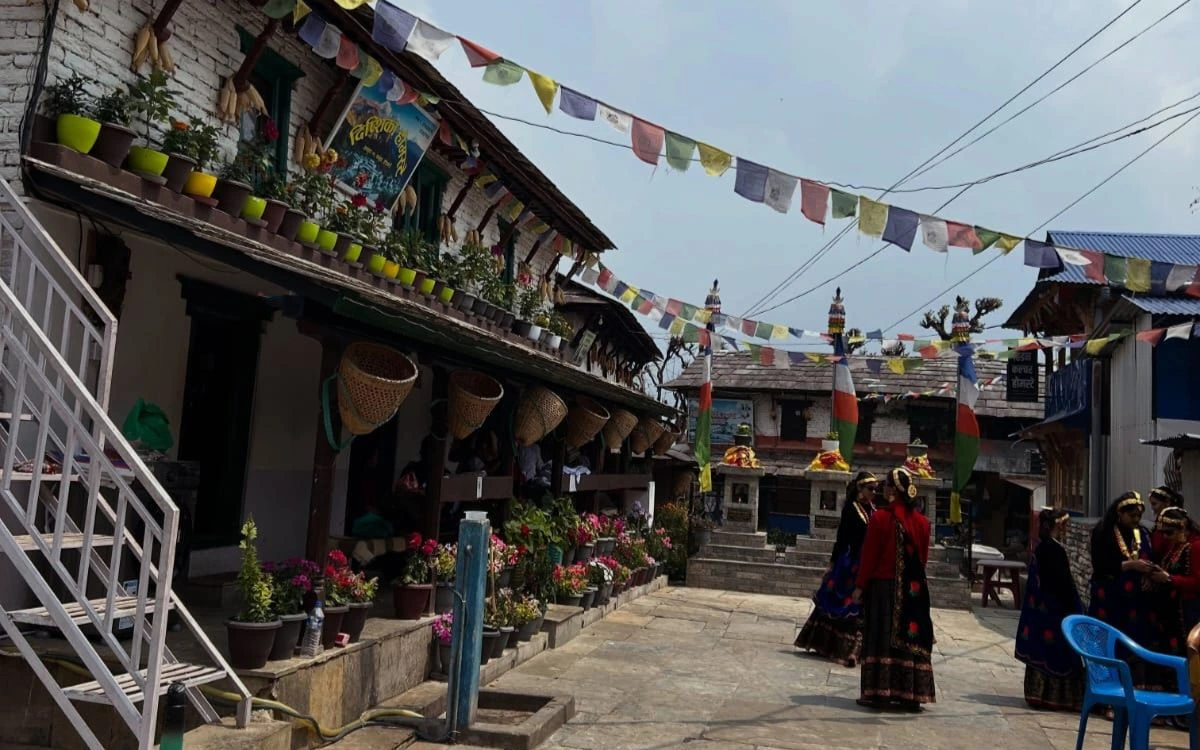
Prayer flags and women in traditional dress in a village on the ABC Trek
Most trekkers start from Pokhara and drive to Nayapul or a nearby trailhead. The trail follows steep stone steps, suspension bridges, and forested ridges. Climb no more than about 500 m of sleeping altitude per day above 3,000 m, and add a rest day if you feel unwell. Carry cash, since ATMs end early on the route, and expect slow internet in higher villages.
What is the best month for Annapurna Base Camp Trek?
October is the best month. Skies are clear, trails are dry, and weather stays stable. April is a close second, especially if you want to see rhododendrons in bloom.
Is Annapurna Base Camp Trek possible in winter?
Yes, but only with proper preparation. Nights fall to -15°C or lower, snow covers the upper trail, and avalanche risk rises. Go with a licensed guide and allow extra days for weather delays.
Can you trek to Annapurna Base Camp during monsoon?
You can, but most guides advise against it. Heavy rain, leeches,s and landslides make the trail slow and risky, and clouds hide the mountains. Choose spring or autumn instead.
Is April or October better for the trek?
October is slightly more reliable, with clearer skies and drier trails. April offers warmer weather and blooming rhododendrons. Both months are busy, so book early.
Does it snow at Annapurna Base Camp?
Yes. Heavy snow falls mainly from December to March, and light snow can arrive in any season at high altitude. Fresh snow around base camp is normal, even in April or November.
How cold is Annapurna Base Camp at night?
In spring and autumn, nights usually fall to -5 to -10°C. In winter, er they drop to -15°C or lower. During the monsoon, temperatures hover near freezing.
Which permits are required for the Annapurna Base Camp Trek?
You need an ACAP permit and a TIMS card. You also need a licensed guide hired through a registered agency, which the agency can arrange along with your permits.
Conclusion: Choose the Right Time for Your ABC Trek
Choose October for the clearest views and the steadiest weather. Choose April for flowers and warmth. Pick November, May, or winter if you want fewer people and accept some trade-offs. Skip June to August unless you love rain and can adapt your route.
Whatever month you pick, pack in layers, climb slowly,y and trek with a licensed guide.




 based on 7 reviews