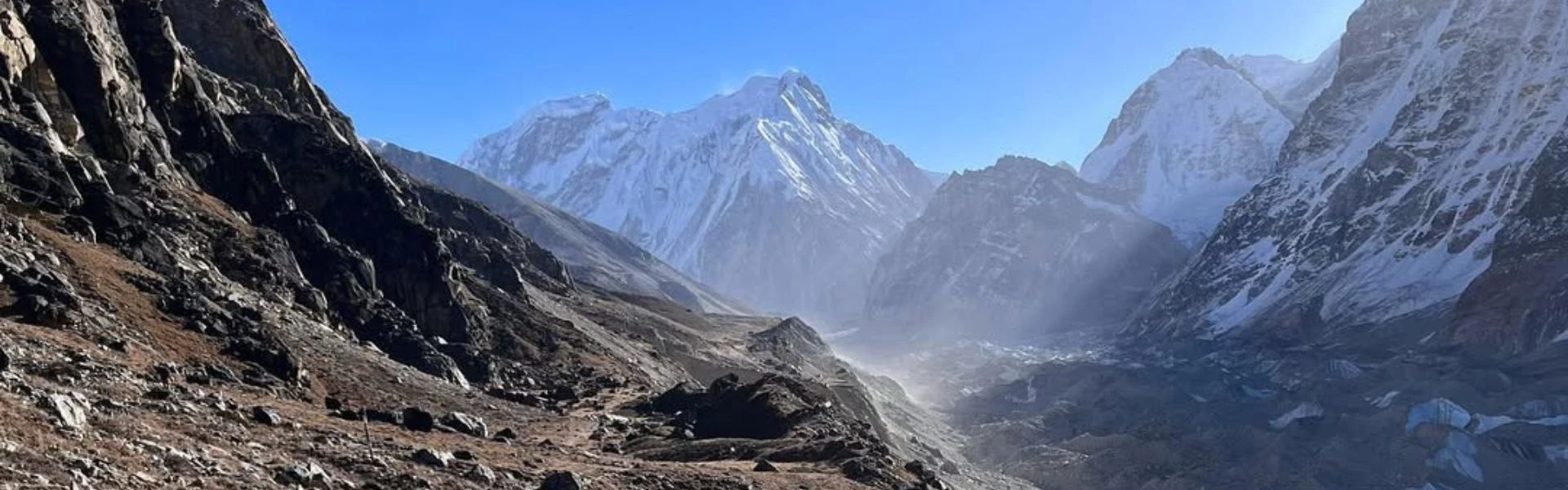
Located in the far-eastern Himalayas, the Kanchenjunga Conservation Area in Nepal is one of Nepal's most remote, pristine, and ecologically rich conservation areas. Protected since 1997, the Kanchenjunga Conservation Area covers 2,035 sq. km and is home to diverse ecosystems, the world's third highest peak, Mt. Kanchenjunga (8,586 m), a buffer zone (486 sq. km), and local communities that live in harmony with nature. The Kanchenjunga Conservation Area consists of various landscapes, including lush subtropical forests and high-altitude glaciers.
The area is known for its endangered and rare species. The wildlife of Kanchenjunga includes snow leopards, red pandas, Himalayan black bears, blue sheep, and more than 250 birds. Due to the region's rich biodiversity and unique culture, it is recognized as one of the most important ecological regions in Nepal.
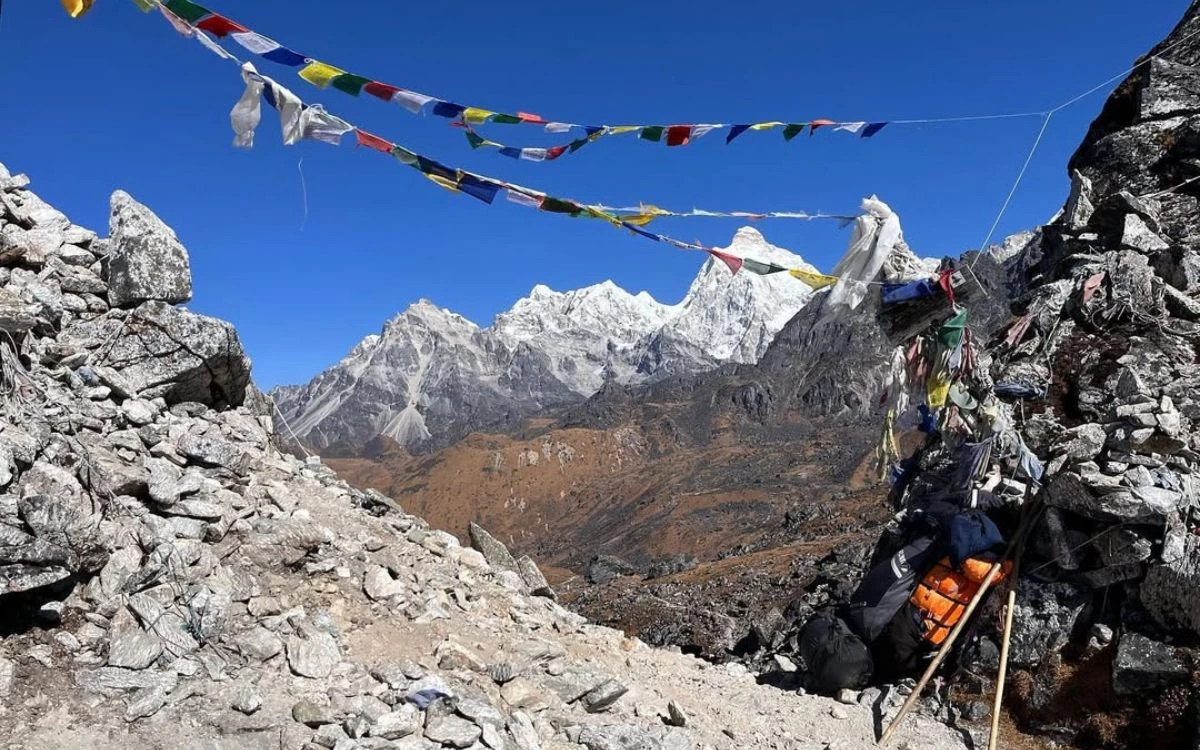
Colorful Buddhist prayer flags with snow-capped Himalayan peaks in Kanchenjunga Conservation Area Nepal
For those searching for an adventure, trekking in the Kanchenjunga Conservation Area offers some of the most wild and challenging trails in the Himalayas. Trekking through traditional Limbu, Rai, and Sherpa villages; deep forests, alpine meadows; and the base camps of Mt. Kanchenjunga, the Kanchenjunga region of Nepal is perfect for explorers looking for pure nature and cultural experiences.
In this blog, we will share with you all the history, biodiversity, trekking routes, permits, culture, weather, and everything you need to know about the Kanchenjunga Conservation Area.
Highlights of Kanchenjunga Conservation Area
Home to Mt. Kanchenjunga (8,586 m), the third-highest mountain in the world.
One of Nepal's least-traveled and least-explored Himalayan areas for true wilderness.
An abundance of wildlife and rare and endangered species like snow leopards, red pandas, musk deer, and Himalayan black bears.
Over 250 species of birds and is perfect for birdwatching.
Perfect scenery, including glaciers, deep river valleys, thick forests, and alpine meadows.
Culturally rich communities, including Sherpa, Limbu, Rai, and Tibetan communities.
More peaceful daily walking on the trekking trails compared to other trekking aspects.
A section of the Sacred Himalayan Landscape, which has a natural and cultural value.
Includes a buffer zone that works for community-based conservation sustainability.
Very challenging but extremely rewarding trekking itinerary to North and South Kanchenjunga Base Camps.
Distinct alpine plant diversity with more than 2,500 species of plants from subtropical to alpine regions.
A successful community-managed proven model for conservation in Nepal.
Beautiful high passes, waterfalls, monasteries, and traditional Himalayan life.
History of Kanchenjunga Conservation Area
The Kanchenjunga Conservation Area (KCA) in Nepal was officially established in 1997 for the purpose of conserving the valued biodiversity, landscapes, and cultural heritage of the far-eastern Himalayas. It encompasses 2,035 square kilometers and is one of the largest and most remote protected areas in all of Nepal. Conservation efforts within the area are managed by the National Trust for Nature Conservation (NTNC) to help ensure appropriate balance between conserving the environment while sustaining livelihoods for local communities.
In 2002, a buffer zone of 486 square kilometers was designated around the core conservation area. This buffer zone was created to provide support and involvement for local communities in conservation programs, to conduct sustainable resource use, support community-based tourism, and to conserve the natural ecosystems while protecting the local communities. The buffer zone designation was an important move towards human development while providing a partnership with wildlife and forest conservation.
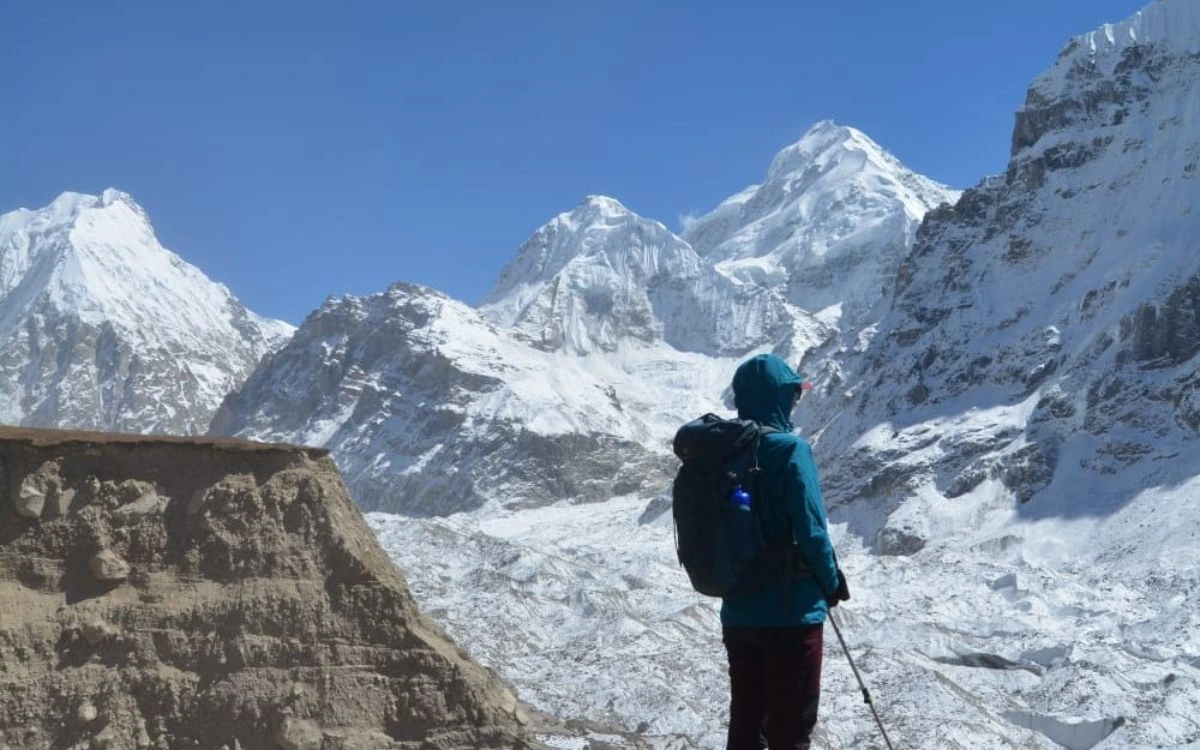
Trekker with backpack viewing snow-capped Kanchenjunga peaks and glacier in Nepal Himalayas
The Kanchenjunga region of Nepal has a long history of human settlement, as ethnic groups like the Sherpa, Limbu, Rai, and Tibetan-descended communities have called this place home for centuries. These communities feel a strong spiritual & cultural bond with the mountains, rivers, habits, and forests that occupy this region, which contributed to decisions to protect this landscape.
KCA is also part of the larger Sacred Himalayan Landscape, which connects Nepal, India, and Bhutan, and is focused on preserving ecological corridors, endangering species, and sacred sites. In this way, the Kanchenjunga Conservation Area has evolved into one of the archetypes of community-managed conservation, engaging in trekking, eco-tourism, and biodiversity protection but also protecting the heritage and natural beauty of this remote region of the Himalayas.
Where is the Kanchenjunga Conservation Area Located?
The Kanchenjunga Conservation Area is situated in the Taplejung District of the far eastern territory of Nepal bordering Sikkim, India to the east and Tibet, China to the north. As such, it covers the high Himalaya region, including the foothills and valleys surrounding Mt Kanchenjunga (8,586 m) and parts of Kambachen, Ghunsa, and Yamphudin.
Biodiversity of Kanchenjunga Conservation Area
Flora
The vegetation of the Kanchenjunga region in Nepal varies considerably with elevation. On the lower slopes, the vegetation consists of dense broadleaf forests and is characterized by oak, chestnut, and magnolia trees. In the mid-elevations, the vegetation consists of conifers including fir, spruce, hemlock, and rhododendron. Above the 4,000-meter elevation mark, the vegetation consists of alpine meadows with medicinal herbs, shrubs, and various unique wildflowers. The overall record for plants consists of over 2,500 species, a number of which are rare or endemic to the region and one of the most botanically diverse regions in Nepal. These forests also play an important role in soil erosion prevention and sustenance of water for local communities.
Fauna
The Kanchenjunga Conservation Area boasts a wide variety of wildlife. Mammals include snow leopards, red pandas, Himalayan black bears, musk deer, Himalayan tahr, serow, and blue sheep. The area contains over 250 species of birds, which include Himalayan monal, blood pheasant, snowcock, and bearded vulture, making it a great place for birdwatching. There are also small mammals, reptiles, and amphibians, and the forests provide essential migratory and endangered pathways.
Endangered Species in Kanchenjunga
A number of species in the Kanchenjunga Conservation Area Nepal are classified as vulnerable or endangered. Some of the most significant species include the snow leopard, red panda, Himalayan black bear, musk deer, and the Himalayan tahr. Conservation initiatives are aimed at habitat protection, reducing human-wildlife conflicts, and enhancing sustainable management through local community engagement. The Kanchenjunga Conservation Area buffer zone supports eco-tourism, wildlife monitoring, and public education and awareness activities that contribute to the long-term conservation of these iconic species of the Himalayas.
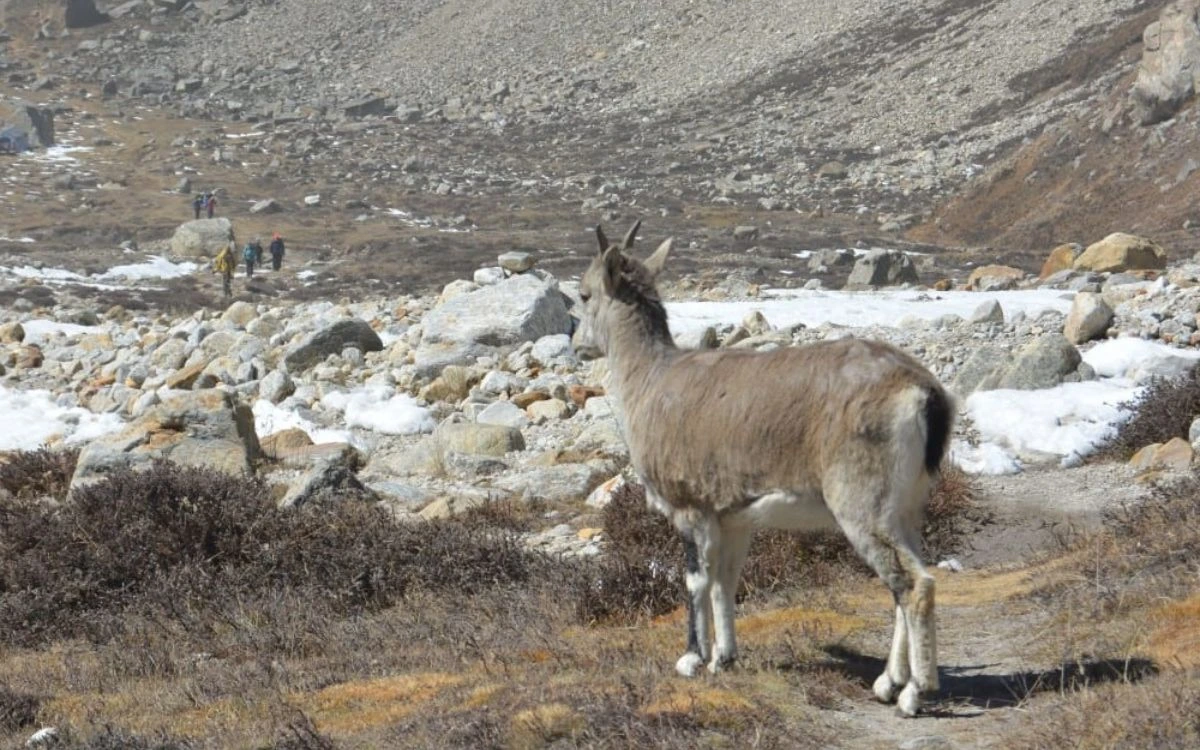
Wild Himalayan thar standing on rocky terrain with trekkers in background at Kanchenjunga Conservation Area
How to Reach Kanchenjunga Conservation Area?
By Flight
The easiest way to get to the Kanchenjunga Conservation Area is to take a domestic flight from Kathmandu to Suketar Airport in Taplejung. Once at Suketar, travelers can hire local jeeps or start trekking into the core areas such as Ghunsa, Yamphudin and Kambachen.
By Bus
For those wishing to travel by road, buses run from Kathmandu or Biratnagar to Taplejung, a long journey of about 24-30 hours of travel to enjoy the beautiful eastern Himalayan landscape. Once in Taplejung, you start trekking to the base camps and villages of Kanchenjunga.
By Private Vehicle
You can also hire a private jeep or car from Kathmandu, Biratnagar or Birtamod. The advantage of this is you can stop along the way for meals or rest if you'd like to, and the vehicle can drop you off directly in Taplejung or at a nearby trailhead to the Kanchenjunga Conservation Area.
Local Communities and Culture in Kanchenjunga Region
The Kanchenjunga region of Nepal is home to varied ethnic groups, including the Sherpa, Limbu, Rai, and Tibetan-origin groups, who have coexisted with nature for centuries and are fundamentally important to the Kanchenjunga Conservation Area. Their culture is intertwined with the mountains, rivers, and forests, and their spiritual customs are observed in relation to these natural environments.
The Kanchenjunga protected area is abundant with festivals and cultural events, such as Chhewar, Losar, and Dumje. Major celebrations of these festivals include masked dances, prayers, and local feasting, offering visitors a rich and full experience of local culture. Traditional food choices, such as Thukpa, Gundruk, and momo, reflect the Himalayan lifestyles. Visiting these communities provides both cultural insight into their lifestyles and support for sustainable tourism and community-based conservation initiatives in the Kanchenjunga region.
Climate & Weather in Kanchenjunga Conservation Area
Since the Kanchenjunga Conservation Area is situated at a high variability of altitude, it has a variety of climatic conditions. The lower elevations can be classified as subtropical and temperate with warm summers and mild winters, whereas the higher elevations are alpine and cold and embrace snow at these elevations from 5,000m up to most of the year. The higher elevations could see temperatures reach below -10 °C during the winters while temperatures at lower elevations have average readings between 15 °C and 25 °C during the day. The monsoon season is during the months of June through August, and this area can experience substantial rain that make trekking conditions challenging, such as slippery trails and possibility for landslides.
Best Time to Visit Kanchenjunga Conservation Area
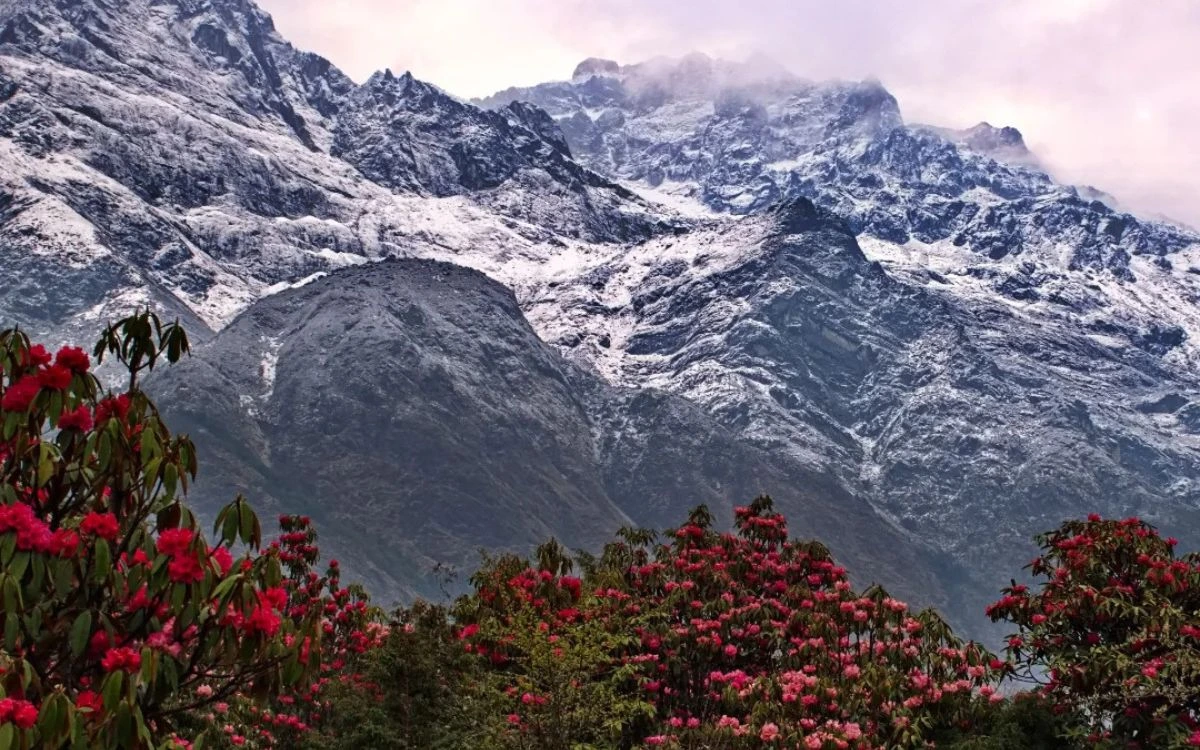
The best seasons to visit the Kanchenjunga Conservation area are during spring (March to May) and autumn (September to November). The weather is pleasant, the visibility of the Kanchenjunga mountain is great while skies are clear and bright. In spring, you could expect blooming rhododendrons and green lush areas while in autumn there are crisp conditions for trekking with stable weather. Spring and autumn seasons are the best time to trek in the Kanchenjunga Conservation Area, view wildlife, and visit villages without the complications of heavy rain or extreme cold temperatures.
Blooming red rhododendron flowers with snow-covered mountain backdrop in Kanchenjunga region
Kanchenjunga Trek Options (North, South & Circuit Routes)
North Route: The North route is meant for trekkers wanting high-altitude trails that are challenging, and to get up-close views of mountain peaks including Kanchenjunga. This route passes through traditional Limbu and Rai villages, alpine forests, and tranquil meadows. Pre-arranged itineraries on the North Route will typically include stops in the village of Ghunsa, the village of Yalung, and the village of Kambachen. Visiting villages provides trekkers the opportunity to mix with the local community and experience authentic traditions of the Himalayan culture.
South Route: The South route offers a little less steep trekking with a stunning view of the glacier, river valley, and dense forests. Those on the South Route will have a chance to visit areas such as Tapethok, Mamangkhe, and Lhonak, along with chances to see animals such as red pandas or snow leopards. This route is also home to beautiful rhododendron and bamboo forests.
Kanchenjunga Circuit: The full Kanchenjunga Circuit trek is a long, adventurous trek involving both North and South routes. The overall trek is approximately 220-235 km and usually takes 20-25 days, depending on acclimatization stops and environmental conditions. The circuit route involves experiencing the biodiversity of landscapes, villages, and cultural considerations of the entire Kanchenjunga Conservation Area while trekking some of the least crowded and most pristine trekking trails in Nepal.
Popular Attractions and Landmarks in Kanchenjunga
Pangpema
Pangpema is one of the most famous viewpoints in eastern Nepal. Situated at an altitude of approximately 5,143 meters, this viewpoint allows trekkers to have a stunning close up view of the towering north face of Mt. Kanchenjunga (8,586 m), the world's third highest mountain. The trek to Pangpema takes trekkers through alpine meadows, glacial valleys, and traditional Sherpa villages.
South Base Camp
The south base camp is located close to the powerful Yalung Glacier, a spectacular ice field that flows underneath the southern slopes of Kanchenjunga. Looking at an elevation of approximately 4,500 meters high, the camp is famed for its panoramic views of the Yalung Face as well as other Himalayan giants nearby, Perfectly visible from the camp at this location are Talung and Kabru. As one of the main highlights on the Kanchenjunga South trek, it has terrific views, high altitude trails that are quieter than other trekking regions, and magical scenery.
Yalung Glacier
The Yalung Glacier is one of the largest and most impressive glaciers in Nepal. Trekkers have access to the impressive vistas of the Yalung Glacier by trekking through high alpine terrain blanketed in ice, moraine, and jagged cliffs. The imposing mountain walls, deep crevasses, and glacially blue formations of the glacier provide stunning photo opportunities and a true sense of wilderness in the Himalayas.
Ghunsa Village
Ghunsa is the cultural and trekking center of the Kanchenjunga region. This traditional Sherpa village has unique wooden houses and prayer flags in abundance. Ghunsa is home to warm and friendly Sherpa communities living a Tibetan Buddhist traditional lifestyle and provides better facilities than many other high-altitude settlements, including some tea houses for meals and beds.
Khambachen
Khambachen is one of the gorgeous mountain villages along the trek, situated at 4,050 meters. It is surrounded by rugged cliffs and mountain peaks including Mount Jannu (Kumbhakarna), and it is one of the most beautiful places on the Kanchenjunga trek. Trekkers are able to enjoy views of dramatic waterfalls, glacially induced rivers, and stunning surroundings. It is also a perfect acclimatization stop which allows trekkers to explore nearby views in preparation for further trekking.
Permits Required for Trekking in Kanchenjunga Conservation Area
Restricted Area Permit (RAP)
Required to enter restricted zones of Kanchenjunga region.
Cost: USD 20 per person per week for the first 4 weeks; USD 25 a week thereafter.
Must be obtained through a registered trekking agency in Nepal.
Kanchenjunga Conservation Area Project (KCAP) Permit
Required to enter Kanchenjunga Conservation Area.
Cost: NPR 100 for Nepalese; NPR 500 for SAARC nationals; NPR 2000 (approximately USD 20) for all other nations.
This permit is a one-time entry permit to the trek.
TIMS Card
A TIMS card is not required for trekking in Kanchenjunga if you have the RAP.
These permits are also used for Kanchenjunga Conservation trekking and must be obtained prior to the trek and we can help you arrange these permits for you if you are planning to trek in the Kanchenjunga region.
Accommodation and Facilities in Kanchenjunga Region
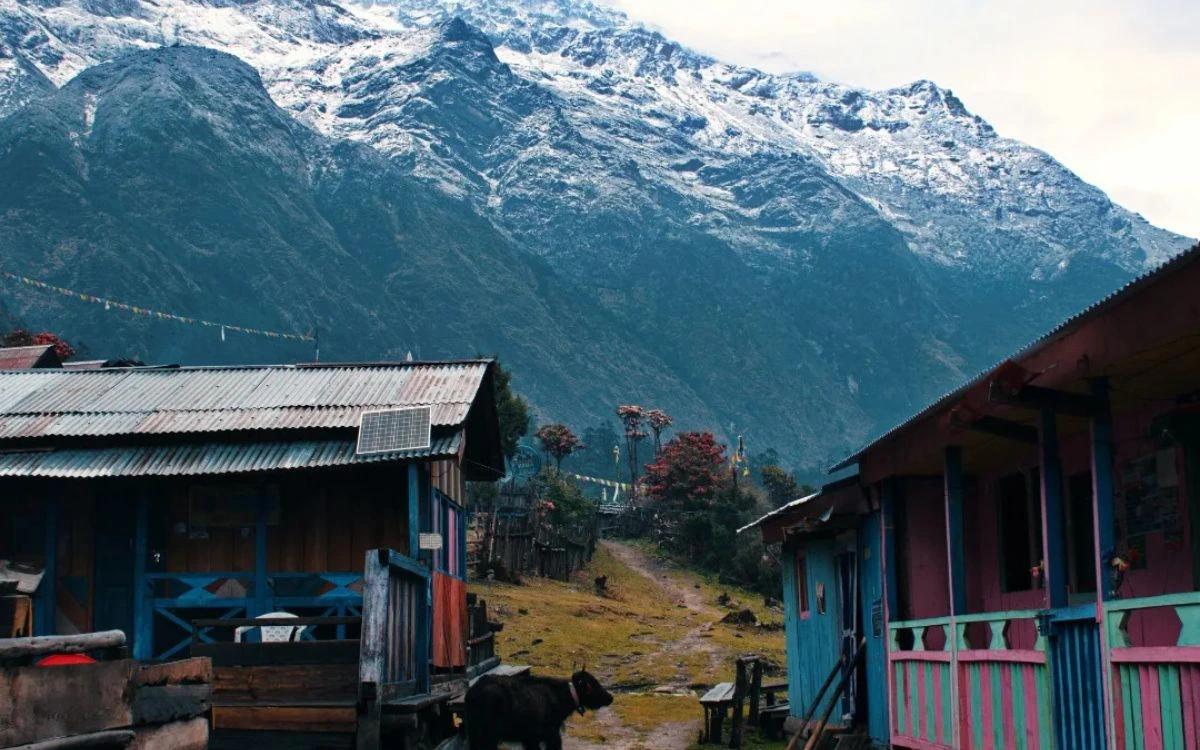
In the Kanchenjunga Conservation Area, the accommodations most often take the form of basic teahouses run by local families. These lodges are very simple, but they are safe and provide the very essential amenities necessary when trekking long distances. Most teahouses have two or three beds with a mattress, pillow, and blanket. Since this area is remote and with frigid temperatures, it is wise for trekkers to always bring a warm sleeping bag for added comfort.
The teahouses in lower sections of the trek route such as Taplejung, Mitlung, Chiruwa, and Yamphudin, are often a little bit nicer. In these lower-residence villages, trekkers can find double rooms, triple rooms, and sometimes, dormitory-style rooms. On average, a room is found at the price of around NPR 500 - 800 per night. In these lower villages, hot showers, charging for mobile phones, and limited WiFi may be found, although the service is never guaranteed.
Colorful teahouse lodges in mountain village with Himalayan peaks at Kanchenjunga Conservation Area
As trekkers move up in altitude further into the mountains, the villages are smaller. For instance, Ghunsa is one of the major stops along the way from South Base Camp, which has around eight to ten teahouses. Most teahouses offer a warm, dining hall where trekkers can eat and relax, charging phones, and drinking water that can be purchased or boiled upon request.
In the more remote and colder regions such as Khambachen and Lhonak, the facilities become very basic. Khambachen has a few small teahouses operated by local families. Lhonak has one unadorned guesthouse with a few rooms with a few blankets and almost no heating. There is no Wi-Fi, and electricity is very limited, so trekkers often carried their own power banks. Hot water was usually delivered in a bucket for an additional fee.
The food served throughout the region is simple, yet filling. Most teahouses serve dal bhat, noodles, soups, fried rice, potatoes, and Tibetan-style bread. Even though the Kanchenjunga region is remote and facilities may be limited, the locals' friendly hospitality is wonderful and makes the experience comfortable and memorable.
Tips for Visiting Kanchenjunga Conservation Area
Bring a warm sleeping bag, as teahouses higher up do not provide many blankets.
Always carry a licensed guide, as the Kanchenjunga region is remote, and often confusing.
Bring extra power banks because electricity is limited in the upper villages of Lhonak and Khambachen.
Trek slowly to avoid altitude sickness, and take acclimatization days seriously.
Carry purification tablets or a filter for water because safe drinking water is not always available.
Bring enough cash because there are no ATM services after Taplejung.
Be prepared for weather changes and pack layers, gloves, and waterproof clothing accordingly.
Be respectful of local culture and customs, as well as monasteries while in the communities.
Stock up on snacks, and other supplies while in Taplejung because the further up you go, food options become limited.
FAQs
How difficult is the Kanchenjunga trek for beginners?
The trek is tough because of distance, altitude and remoteness. Beginners should have trekking experience or train beforehand. A guide is recommended.
Is the Kanchenjunga trek safe for solo trekkers?
Trekking solo is possible, but wouldn't be our first choice. Remote areas with few facilities and changing weather conditions make having a guide safer.
How many hours do trekkers walk per day?
Trekkers will typically walk anywhere from 5-7 hours a day. Some longer or steep days may take up to 8-9 hours in the mountains and acclimatization days are typically shorter.
Can I charge my electronics?
In higher altitude villages, charging is limited. Lower villages such as Taplejung and Ghunsa may have electricity for a small fee, but charging is limited at higher-altitude villages. A solar charger or battery backup may be the best option.
Is mobile network or internet available?
You are likely to have coverage in Taplejung and a few lower villages, but not much in higher villages. Areas with little to no signal or internet include Lhonak or Khambachen.
What type of food is available?
Teahouses serve Nepali and Tibetan foods, such as dal bhat, noodles, soups, momos, potatoes, etc. Snacks for long stretches are a good idea.
Are ATMs available on the trail?
ATMs are only in Taplejung or nearby towns. Trekkers should carry enough cash for the entire trek.
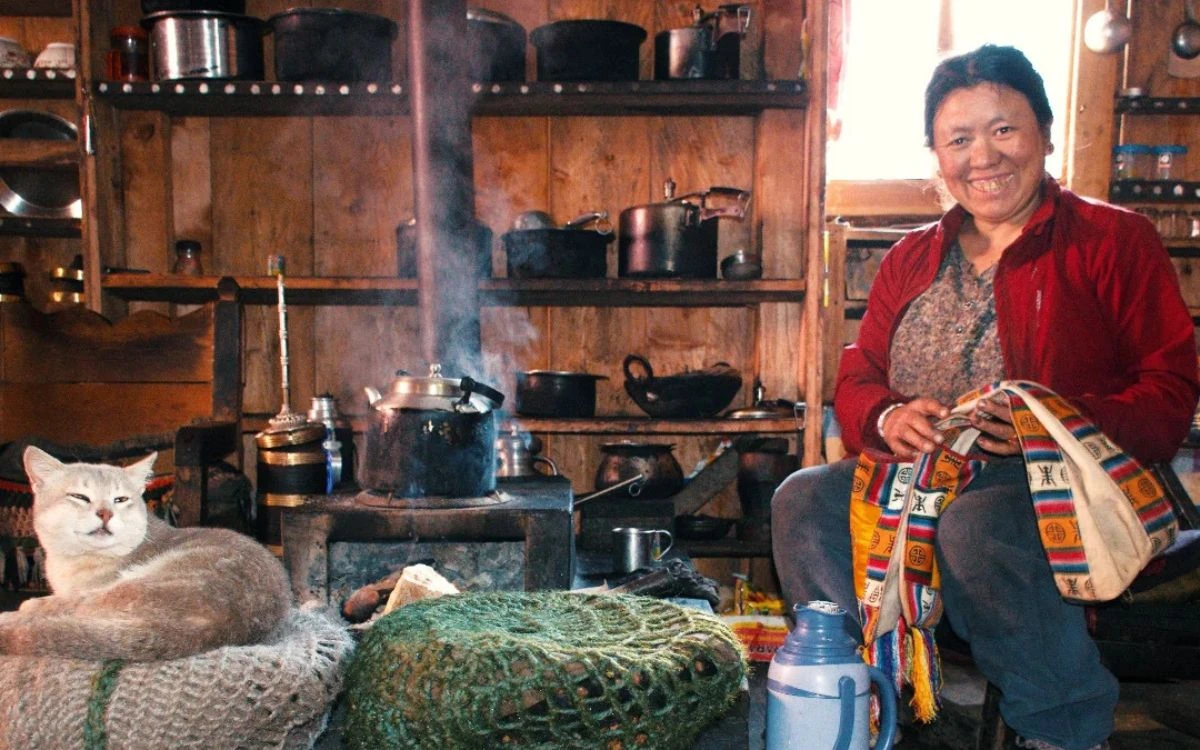
Local woman in traditional teahouse with cat in Kanchenjunga Conservation Area trekking route
Conclusion
The Kanchenjunga Conservation Area is a significant ecological and cultural area in Nepal known for its mountainous high Himalaya scenery, wildlife diversity, and cultural groups including Limbu, Rai, Sherpa, and Tibetan communities. There are several trail-side locations trekkers can visit including North and South Base Camps, Yalung Glacier, Ghunsa, Khambachen, and Lhonak, which represent greatly the natural and cultural characteristics of the area.
The area protects a large variety of plant species and endangered species, including snow leopards, red pandas, Himalayan black bears, etc. Although there are long trails, routes with modern pampering are limited after a time, but the value of the trek experience is matched only by its ability to give explorers another option to go to a quiet, uncluttered area.
If you would like assistance to plan your permits or routes, or wish to join a guided trek, feel free to reach out to us at Himalayan Recreation.





-6.webp)
-6.webp)