If you've ever wanted to be right there next to some of the highest peaks on earth, enjoy the crisp, clear air of the mountains, or hike on the same paths that the Sherpas have used for centuries through Nepal? Then autumn is the time for you to go! From September through November, the Nepal trekking experience in autumn is beyond your wildest dreams. Imagine having crystal clear skies with an unobstructed view of Mount Everest, moderate daytime temperatures that allow you to trek for hours without getting tired, and all of the exciting cultural activities that go along with being in the mountains during that time of year. During Autumn, the Himalayas offer some of their most beautiful views.
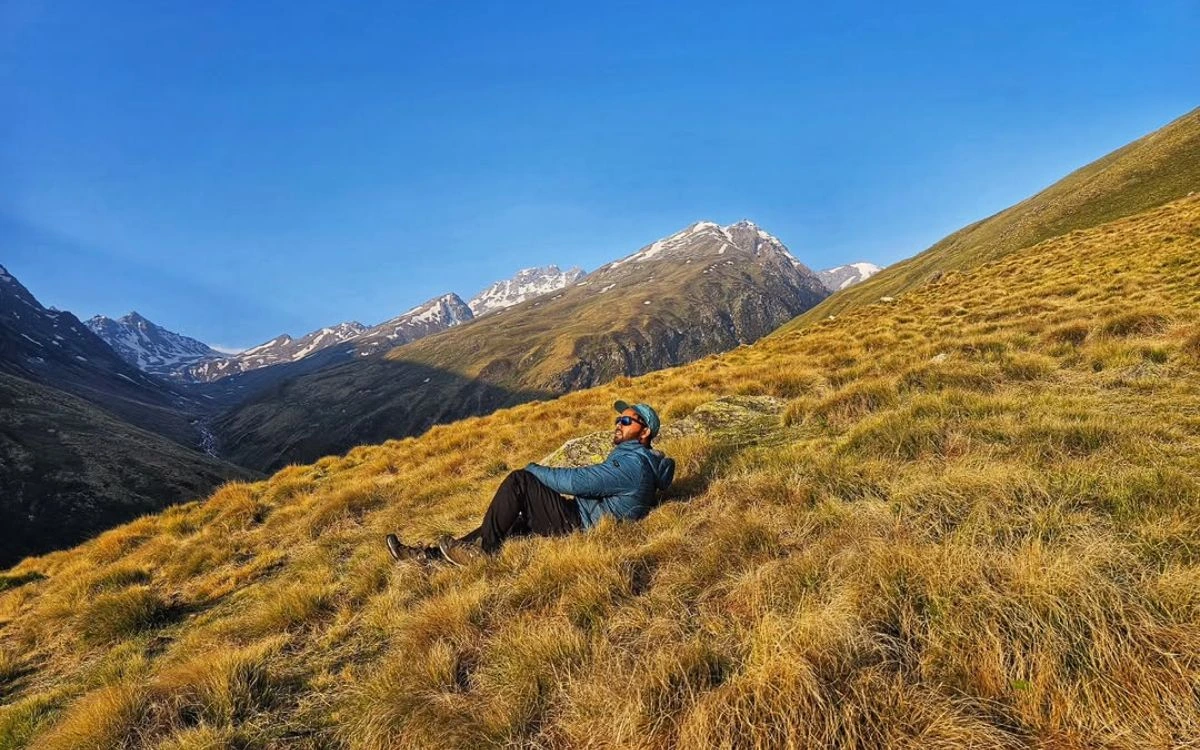
Hiker resting on golden autumn hillside with Himalayan mountains in background
Nepal welcomes all types of explorers during its autumn season, regardless of whether this will be their first experience trekking at altitude or if this will be their next extreme adventure. With the post-monsoon season allowing for clear skies, visitors are presented with spectacular panoramic views of the Himalayas, along with vistas offering stunning views of golden-hued rhododendron forests lining the trails at all times, as well as the opportunity to enjoy a cup of tea with friendly people living in mountain communities during sunrise (when the peaks of the Himalayas take on shades of pink and gold). Are you excited about what autumn in Nepal can offer you as a trekker? Let us examine all of the information regarding trekking in Nepal during this time of year.
Nepal Trekking in Autumn: An Overview
The autumn trekking season is the prime time to explore the many trekking regions of Nepal! After months of monsoon rain, adventurers in Nepal can expect cooler temperatures, a dry, washed-clean landscape, and unobstructed views of snowcapped mountains. The mountains, including Everest, Annapurna and Manaslu, will be visible at their most magnificent against brilliant blue skies. Another plus of the autumn trekking season is the number of other trekkers you will meet along the way, as well as the friendly hospitality offered to trekkers by the many local tea houses. The balance between accessing trails and undertaking exciting adventures makes autumn trekking in Nepal the best time, with possibilities ranging from moderate-level valley walking to tough high-altitude treks.
Why Autumn Is the Best Season for Trekking in Nepal
Autumn provides trekkers in Nepal with some of the best opportunities available. The clear skies due to the end of the monsoon season allow for great visibility. As well, the stable weather patterns provide trekkers with fewer unpredictable storms and consistent weather patterns to prepare for and adjust to during trekking. Additionally, the temperature in autumn at lower elevations is very comfortable, while high-altitude areas are still manageable with sufficient preparation. Along with being the time of year when Nepal has its largest number of festivals, trekkers can take part in an authentic cultural festival in the mountain communities. The combination of favourable weather, cultural richness and beautiful mountain views enables trekkers to have the best trekking experience possible.
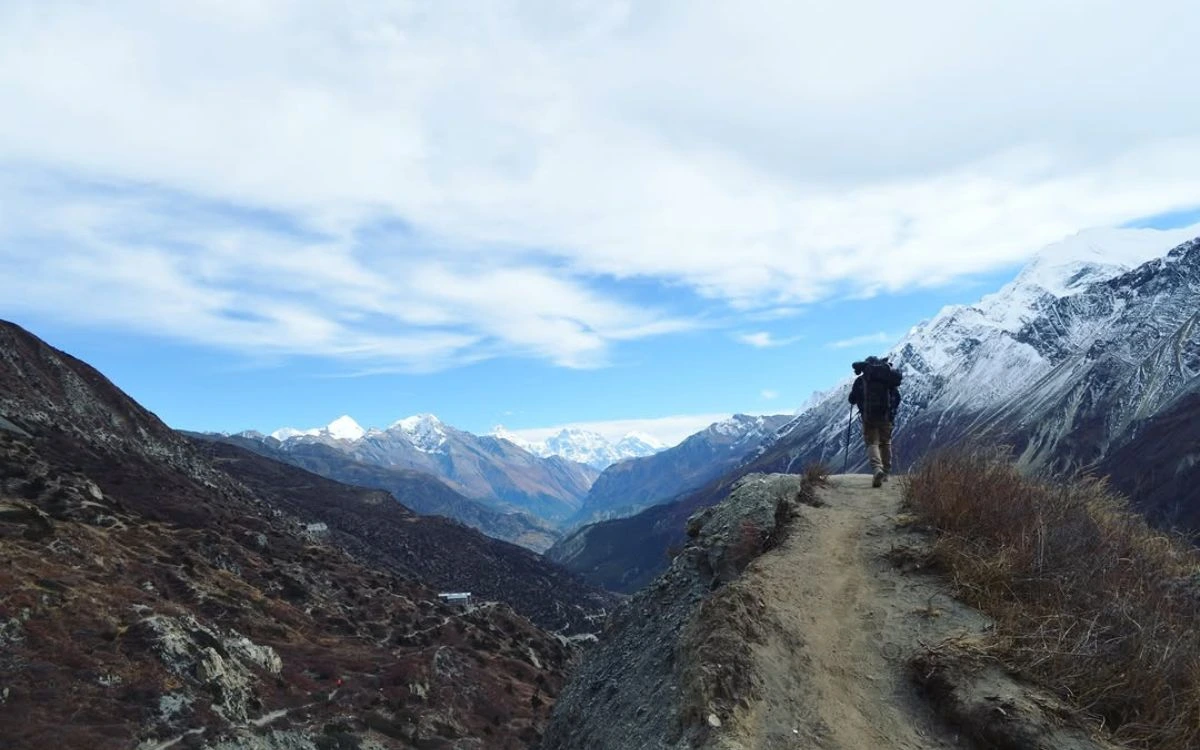
Trekker on mountain trail with snow-capped Himalayan peaks under clear blue sky
Autumn Weather in Nepal (September-November)
Understanding the weather patterns helps you prepare effectively for your autumn trek in Nepal.
Autumn Temperature in the Mountains
September represents the change from the Wet Season to Dry Season, where Daytime temperatures range from 15° to 20° in the daytime (Mid Elevation). October provides more stable weather with daytime temperatures at popular trekking zones averaging between 12° and 18°. November brings Cooler Air to many areas and cooler temperatures, especially in the higher elevations, as Average daytime temperatures reach between 5° and 10° each day. During this time of year, overnight temperatures decline considerably and approach Freezing (0°) at elevations of 4,000 meters. At lower elevations and in the valleys, the temperatures remain Comfortable for this time of year.
Rainfall & Visibility in Autumn
Although monsoon tail-end showers can appear sporadically throughout early September, they soon taper off. In mid-September, rain generally becomes infrequent, and October generally sees the least amount of precipitation, making it typically the driest month. The dry trend remains through November as well,l with no precipitation and clear and stable weather conditions in the mornings, photo-worthy mountain vistas abound, while afternoons may see light build-up of clouds that dissipate overnight. Trekking in Autumn allows for great visibility while taking stunning photos of the Himalayas in Nepal.
Best Trekking Routes in Nepal During Autumn
The season opens up incredible opportunities across Nepal's diverse mountain regions.
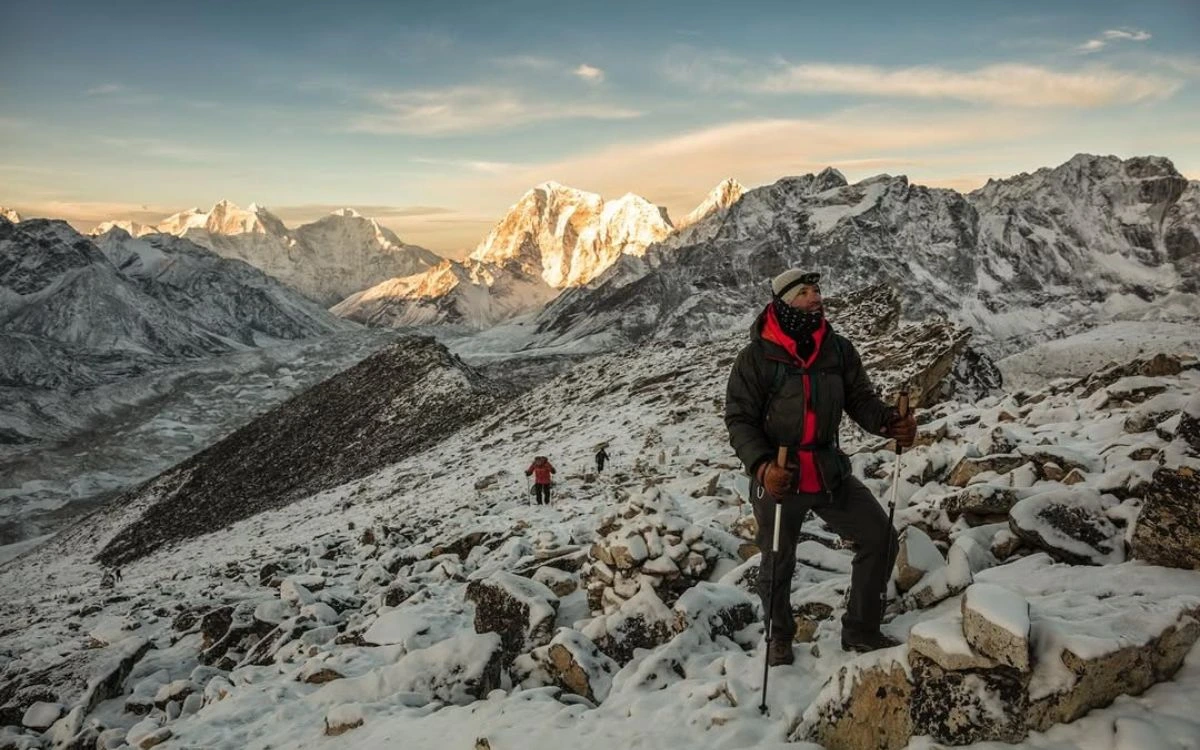
Mountaineers ascending snowy high-altitude pass at sunrise in the Himalayas
Everest Base Camp Trek in Autumn
Nepal's most popular trek is the Everest Base Camp trek, which occurs in the fall, providing excellent views of some of the highest mountains in the world, including Everest, Lhotse and AmaDablam, as you travel through Sherpa village,; across many suspension bridges, around centuries old monasteries; all the way to Mount Everest, the highest mountain in the world. The trek begins at Lukla, then travels through NamcheBazar, Tengboche and finally arrives at the Everest Base Camp (5,364 meters). After arriving at base camp, returning to Lukla includes an additional side trip to KalaPatthar to view the sunrise over Mount Everest. The duration of this trek generally lasts 12-14 days and has gradients suitable for moderate-level trekkers with good physical conditioning.
Annapurna Region Treks in Autumn
The Annapurna region has a variety of routes for trekking in the fall. The Annapurna Base Camp Trek traverses terraced hillsides, traditional Gurung villages, and lush rhododendron forests. At its end, this trek leads trekkers to an incredible amphitheatre surrounded by towering peaks. Illustrious views of Annapurna I, Machhapuchhre (Fishtail), and Hiunchuli are very close and intimate. The Annapurna Circuit is another well-loved route around the entire Annapurna massif. This trek entails crossing the dramatic Thorong La Pass (5,416m). Both hikes offer spectacular panoramas of Nepal's incredible biodiversity and cultural diversity, as well as remarkable photographic possibilities.
Langtang Valley Trek in Autumn
The Langtang Valley trek is located in the Langtang Valley, which is closer to Kathmandu and is shorter than other trekking areas; however, it is also a very rewarding experience. This route lies within the Langtang National Park, which contains the Red Panda (Ailurus fulgens) as well as the Himalayan Black Bear (Ursus thibetanus) and many types of trees and plants. The Langtang Valley has stunning views of the peaks of Langtang Lirung, as well as other mountains nearby. Along the way, you will also pass through many Tamang villages, giving you the chance to experience traditional mountain life. During autumn, the forests in the Langtang Valley turn golden, giving the area a magical feeling. The trek will normally take 7 to 10 days, so this trek is a perfect option for those who do not have a lot of time but still wish to have a true Himalayan experience.
Manaslu Circuit Trek in Autumn
The Manaslu Circuit trek is a unique and unspoiled walking route that borders the eighth-tallest mountain in the entire world. It is an area that requires special permits to visit, but offers those who make the trek an experience of following trails that have not been changed or altered and the chance to visit remote and scenic areas. The Larka La Pass sits at 5160m in elevation and poses many dangers due to how high it is. The weather in the fall is typically very stable and provides much more favourable and safe conditions for crossing the high pass. The route combines the culture of Tibetan Buddhism with stunning views of the mountains and provides trekkers with an opportunity to experience the wilderness far away from the crowded and commercialised trails that are found in many other popular trekking destinations.
Autumn Festivals You'll Experience While Trekking in Nepal
Trekking in Nepal during autumn means encountering vibrant cultural celebrations that add depth to your mountain adventure.
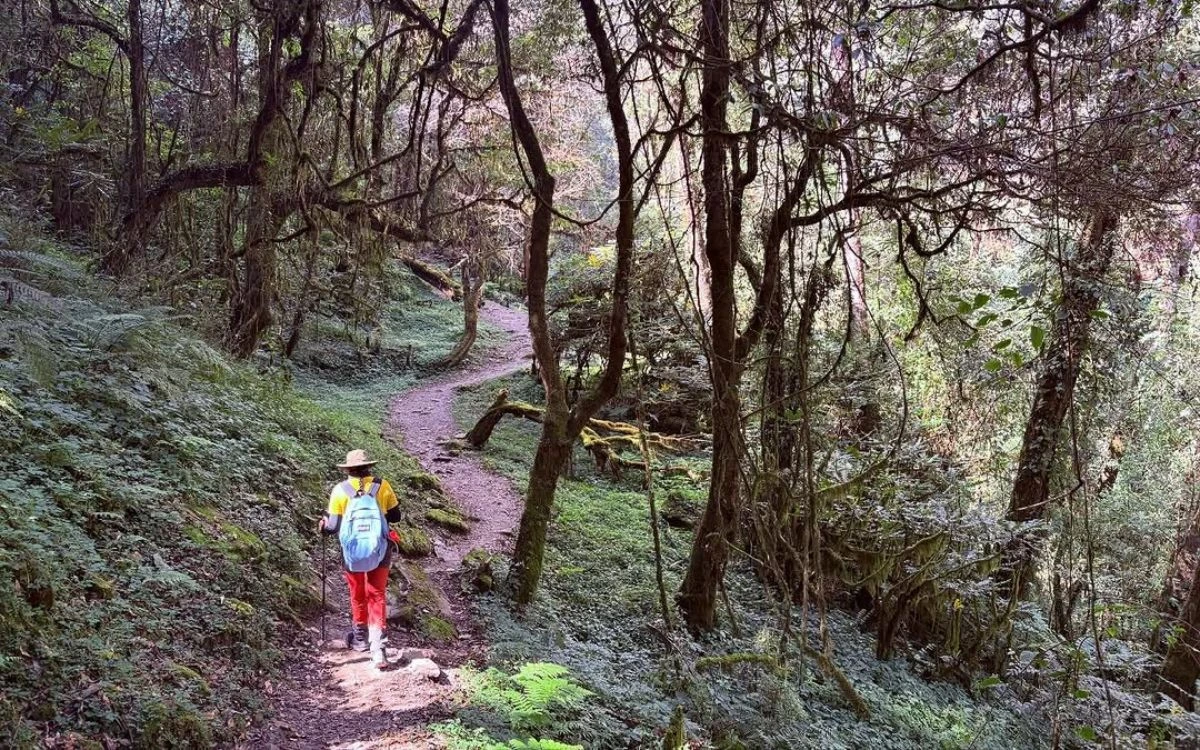
Trekker on forest path through rhododendron woods in Nepal
Dashain Festival
The biggest and longest festival in Nepal is its greatest festival Dashain. It generally happens during September/October, around a full moon,n for 15 days. The festival symbolizes victory of Goddess Durga over evil forces. Throughout the 15 days, you will see colourful kites flying, blessings being passed, and shared meals; this will be evident in your travels as well. Most teahouses are decorated and offer traditional food, so you can see some of Nepal’s rich culture!
Tihar Festival
In mid to late October and early November, Cock-A-Doodle-Doo, Festival of Lights in Nepal, follows Dashain with up to five days of events commemorating many different creatures and their relationships. Oil lamps and marigold garlands adorn the homes and trailways of both trekkers and local villagers. It creates a magical feel throughout the mountain villages as they twinkle against the darkened Himalayan mountains. Local people also perform their traditional dances and songs, inviting trekkers to join in on the fun.
Crowds & Accommodation During Autumn Trekking Season
In Nepal’s mountains, autumn attracts the largest number of trekkers throughout Nepal. The well-known routes for trekking, Everest Base Camp and Annapurna Circuit, are very busy at this time of year, but primarily in October. Fortunately, they by and large have well-defined trekking infrastructure, so the teahouses and lodges offer adequate accommodation and shelter. However, booking accommodation in advance is always recommended for those who will be trekking during peak weeks, particularly in the popular villages such as Namche Bazaar, Manang, and Ghorepani. A longer but quieter trek, like that of the Manaslu Circuit,t still offers excellent facilities; however, it can take up to three times longer. All of this combined creates an enjoyable environment where travellers meet, share stories and form friendships.
Cost of Trekking in Nepal in Autumn
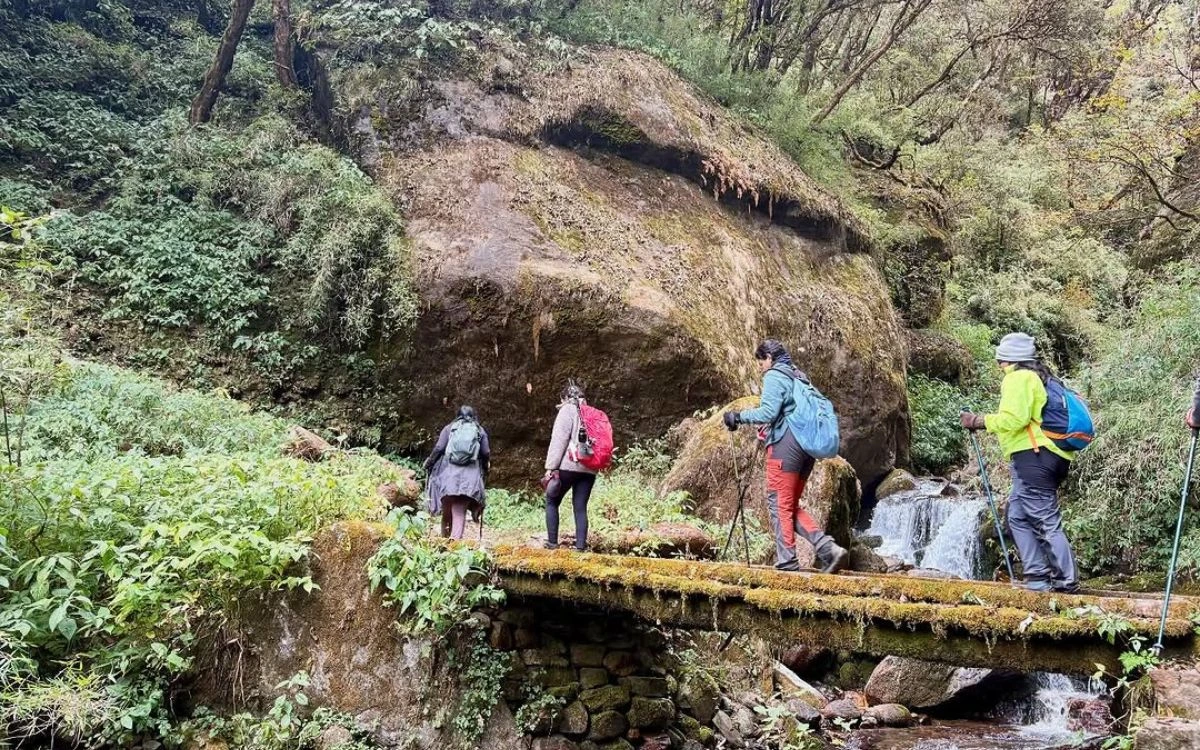
Group of trekkers crossing moss-covered stone bridge in lush mountain forest
The cost of trekking in Nepal is affected by the specific route taken, as well as the length of the trek and the level of service provided. For those trekking independently, the average daily expenses will be approximately $25-$40 per day, including accommodation, food and permits. Daily teahouse rate increases at higher elevations due to increased transportation costs. The price of a trek through an organised company with a guide and porter ranges from $800-$2000 depending on the specific route and group size. Other major expenses would be flights to mountain airstrips (particularly for Everest), the necessary permits, required insurance and the cost of equipment. Autumn is not a costly time for trekking; however, it is popular due to the great trekking conditions.
Packing List for Nepal Trekking in Autumn
When you go trekking on your trip to Nepal during September, October and November, you will want all the necessary and comfortable gear available. Key equipment includes:
Clothes: a base layer of moisture-wicking fabric, an insulated mid-layer, a waterproof jacket and trousers, both a warm fleece or down jacket, a pair of trekking trousers, thermal underwear which is suitableforo wear in higher altitude locationtoto keep warm, a sun hat, a warm beanie/hair band, gloves, etc.
Footwear: some comfortable pairs of waterproof trekking boots that have already been broken in for a good fit, comfortable camp shoes, wool or synthetic trekking socks to keep your feet dry and warm.
Equipment: a high-quality sleeping bag rated at –10°C; trekking poles to provide balance and help with hiking uphill and downhill; a headlamp (or flashlight) with spare batteries; a pair of sunglasses with UV protection; water purification tablets (or filter); and reusable containers/bottles for carrying water.
Documents: a valid passport; your trekking permits; your travel insurance documentation; your emergency contact details.
It is essential to layer as temperatures can change significantly between the daytime and nighttime and can vary dramatically (much more so than at lower altitudes) at higher altitudes.
Autumn Trekking Tips for Nepal
To get the most out of your trekking experience during autumn, here are some tips:
Acclimatisation: Allow yourself adequate time to adjust to higher elevations. Adhere to the "climb high, sleep low" concept for acclimatisation, and plan rest days when reaching high altitude locations to reduce chances of contracting altitude sickness.
Early Start: Trekking early will provide you with the best opportunity to get the best views in the morning and reach your destination before noon, when most clouds are likely to settle into the mountains.
Stay Hydrated: Due to the dry atmosphere of autumn, you are at a higher risk of being dehydrated. You should be drinking 3-4 litres of water each day, particularly when trekking at high altitudes.
Planning for Bookings: The majority of the more popular trekking villages will be very crowded during the peak weeks in October. It would be advisable to book your accommodation ahead of time when possible.
Respect for the Local Culture: Dress modestly, always request permission before taking pictures of your fellow trekkers, and know basic Nepali greetings so that you can have more meaningful interactions with the locals.
Packing for the Trek: Bring only the bare essentials to the trek. If you'd prefer to travel lighter, you will have the option of using Porter Services.
Monitoring Weather Patterns: Even though autumn provides for more stable weather, weather in the mountains can change very quickly. Therefore, monitor weather conditions and adjust your itinerary accordingly.
Autumn vs Spring Trekking in Nepal
The months of Autumn (March through May) generally provide good trekking conditions, but with different attributes. The months of Autumn tend to have clearer skies, thus providing better views, while the months of Spring have blooming Rhododendrons (a type of wild flower) and warmer temperatures.
Autumn trekking in the Himalayas also tends to be drier with less chance of unstable weather than that of Spring trekking in the Himalayas, which tends to have a greater chance of afternoon clouds forming. Because additional cultural festivities happen during the Autumn months, it is also a different experience than that of the Spring months. Temperature-wise, Autumn starts warm in September, gets cooler through November, and then gets warmer again through the Spring months.
Both Autumn and Spring months have high numbers of trekkers, although the Autumn months are somewhat more popular than the Spring months. Your choice of trekking will depend upon the type of weather/environment you prefer, the types of flora you will see, and what temperature ranges you feel comfortable in.
Is Autumn Trekking in Nepal Suitable for Beginners?
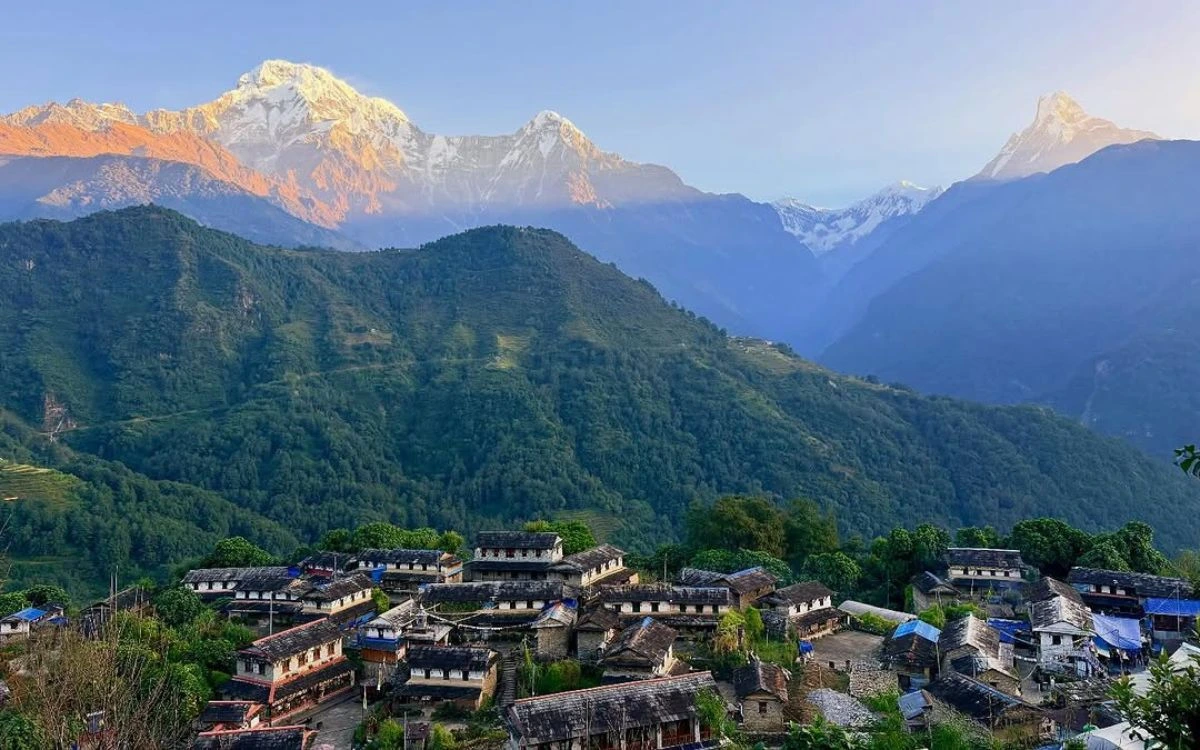
Traditional Nepali village with stone houses beneath Annapurna mountain range at dawn
New to trekking? Autumn is the best season for you! There's stable weather, clear trails, and a teahouse infrastructure in place to make your first Himalayan adventure as successful as possible. The Annapurna Base Camp, Poon Hill, and Langtang Valley treks offer moderate difficulty levels to match your own level of fitness and ability. You won't need any technical climbing skills for these treks, only endurance and determination. You'll be safe on these treks because of the many trekkers and experienced guides who will accompany you. As you prepare to embark on your first Himalayan trekking adventure, be sure to prepare physically (through cardiovascular training), understand the signs and symptoms of altitude sickness, choose a route or trek that corresponds to your level of fitness and experience, and start with shorter treks before attempting longer treks with greater elevation gain.
FAQs About Nepal Trekking in Autumn
What makes autumn the best time for trekking in Nepal?
With its clear skies, stable weather, mild temperatures, excellent visibility, and a host of cultural festivals, autumn offers an ideal trekking experience throughout Nepal’s mountainous regions.
Will I need to obtain a particular type of permit before trekking in the autumn?
Yes, you will need a permit to trek in most of the areas of Nepal. In addition, most of the popular trekking regions require a TIMS card and a permit for the conservation areas, while the restricted areas, such as Manaslu, require additional permits.
Are the trekking trails crowded during the autumn?
In terms of crowds, October is the busiest month, especially on the more popular trekking routes. Yet the infrastructure of the trails is further developed to accommodate the volume of visitors, so those seeking solitude may find less crowded options.
Can I trek alone during the autumn months?
Yes, you can trek independently along some of the popular routes, such as Everest Base Camp and Annapurna, because of the extensive teahouse network available along these routes. However, you remain free to hire the services of a guide and or porters if you wish to do so for the advantage and the added safety they provide.
What is the greatest challenge of trekking during the autumn?
Altitude sickness is the major challenge, regardless of the season. You will need to take extra precautions while you acclimatise to the higher-altitude areas and recognise the symptoms of altitude sickness to ensure that you can enjoy your trek and do it safely.
Is it necessary for me to purchase travel insurance for my trek(s) in Nepal?
Definitely. You must buy comprehensive insurance that covers high-altitude trekking (up to 6,000 meters) and emergency helicopter evacuation for every single trek you take in Nepal.
Conclusion
Nepal Trekking in Autumn offers an amazing mountain adventure with ideal weather, breathtaking views, culturally rich and times of celebration via unique festivals. Embark on a journey through the majestic range of the Nepalese Himalaya while discovering your own adventure on each day, from the most prestigious place on Earth, Everest Base Camp, to the more peaceful and remote area of Langtang Valley.
With Autumn’s clear blue skies, you can now see the full beauty of all the Nepalese mountains. Moreover, Autumn's ideal temperature and stable weather provide a safe and enjoyable environment for your trek. So, if you're thinking about trekking in Nepal for the first time or if you’ve already climbed many peaks, Autumn in Nepal will provide you with an amazing experience like no other. Well, what are you waiting for? Get in touch with Himalayan Recreation Treks & Expedition today and start creating lasting memories during your Autumn Trek in Nepal.


-2.webp)



-1.webp)
-1.webp)
-1.webp)