The 2014 Everest avalanche is regarded as one of the saddest events in the history of Himalayan climbing. On April 18, 2014, a large piece of ice broke off from the shoulder of Everest and swept across the Khumbu Icefall, and 16 mountain workers lost their lives. This was the most lethal incident on this mountain thus far. And this disaster put an end to an entire climbing season. For individuals who take an interest in Nepalese mountaineering either for the sake of information or for planning a journey to this location, it is vital to know and understand this disaster because it brought about numerous changes in relation to the issue of mountain climbing.
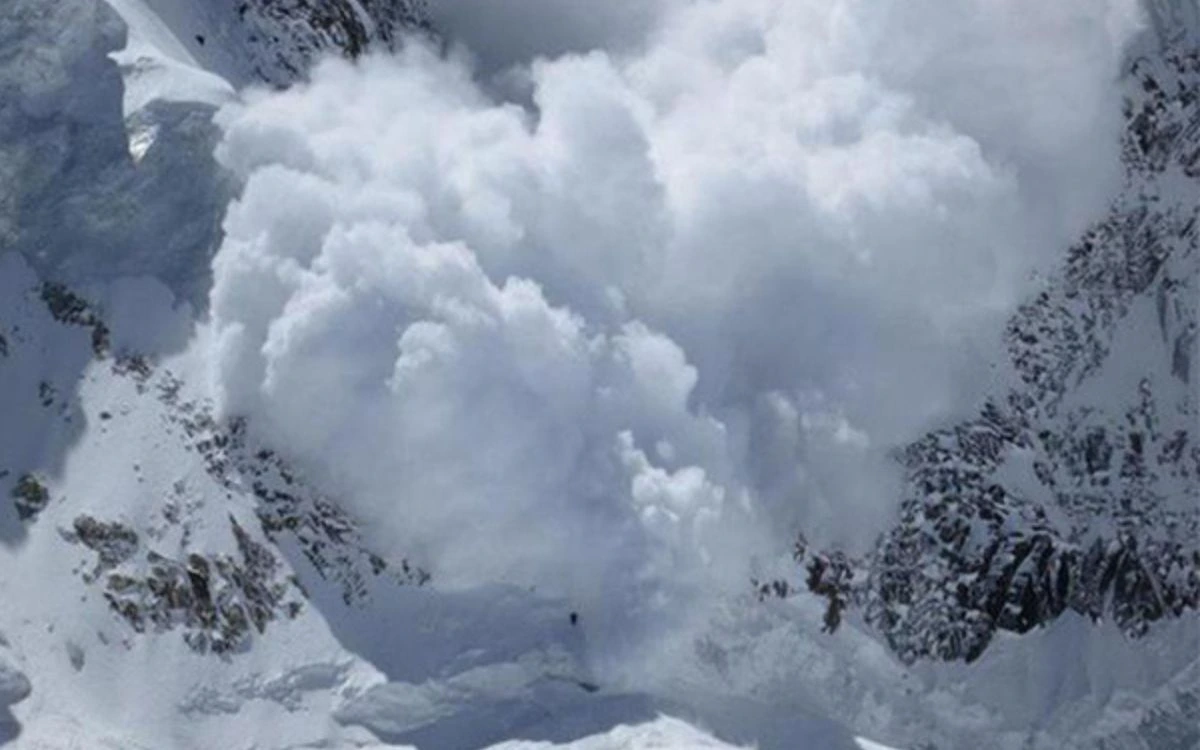
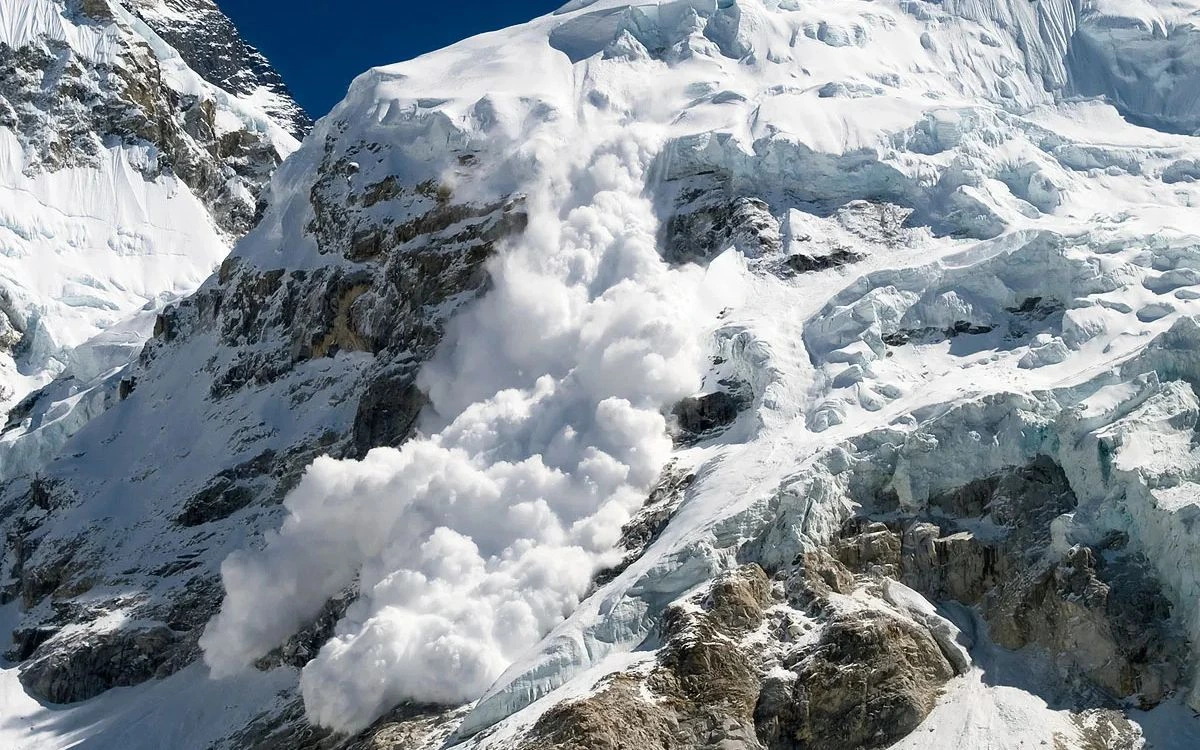
Avalanche cloud billowing down a snow-covered Everest slope
The article will provide readers with necessary details about the disaster. The article will describe all the steps that were taken from the moment when the serac fell off till rescue operations that were carried out on behalf of the Khumbu Icefall team. Additionally, it will dwell on the reasons leading to the disaster, how many people were lost, rescuers’ efforts, changes in relation to the way Sherpas work today, and other changes that took place owing to the tragedy.
2014 Everest Avalanche: What Happened?
On the side of Everest in Nepal, the way to the peak starts with the Khumbu Icefall, which is one of the deadliest patches of ice in the world. During every climbing season, Nepali laborers navigate through the changing glacier ice, transporting supplies that include food, tents, ropes, and oxygen to campers so climbers can reach Everest's summit. Although the work is tedious, it carries a great deal of risk.
Around 6:30 am Nepal time on April 18, 2014, the deadliest risk came into play when a piece of glacier ice broke off from Everest's west side and crushed a group of workers already walking on the glacier. The event became one of the scariest events in the history of climbing Everest and taught future travelers about the dangers of getting to base camp.
When Did the 2014 Everest Avalanche Happen?
Disasters usually happen suddenly, and in the case of the avalanches in the Khumbu Icefall area, the disaster happened earlier in the morning on April 18, 2014, when the ice in the Icefall is believed to be most steady, and that is why the Sherpa teams try to pass the Icefall before dawn. When the avalanche happened, dozens of workers were in the area trying to make their way through.
Map of the 2014 Khumbu Icefall avalanche path and recovery site on Everest src.National Geographic
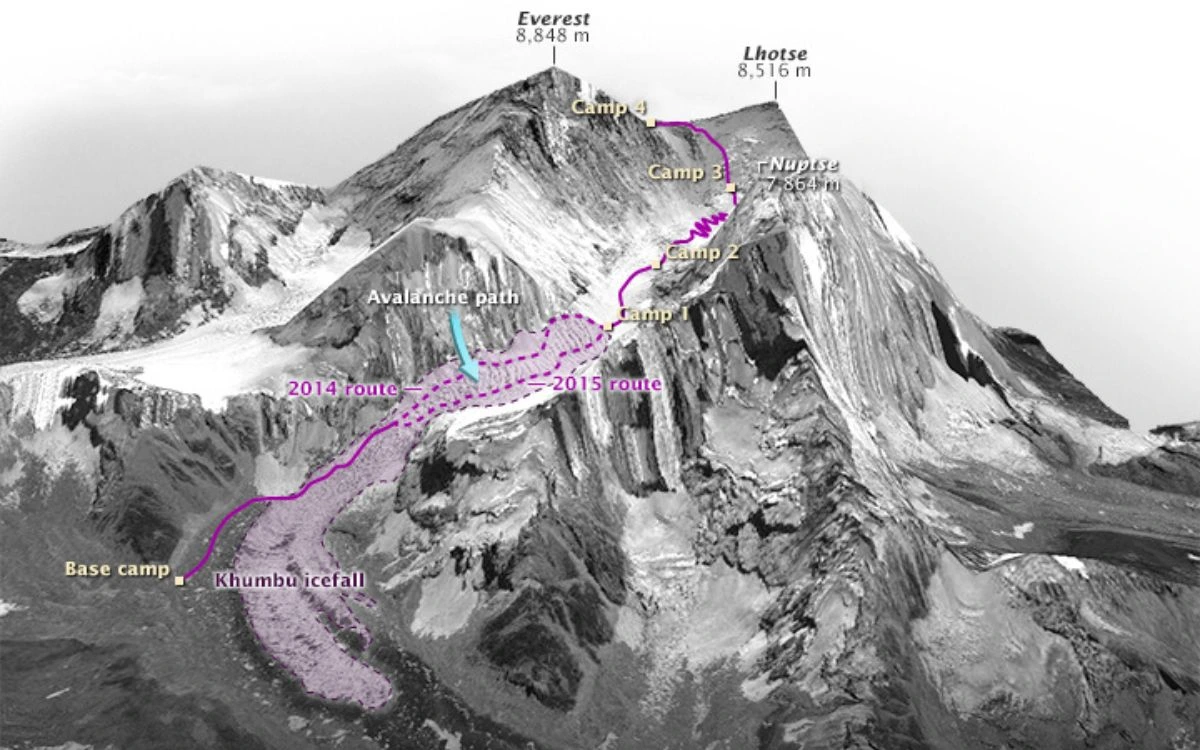
The avalanche in question affected the Khumbu Icefall, which is another name used for the icy river that connects the Everest Base Camp with Camp 1. The glaciers that were disrupted came from hanging glaciers situated high on the West Shoulder of Everest. The part of the West Shoulder that is above the climbers’ route means that researchers and climbers are actually passing under the insecure ice.
Timeline of the 2014 Everest Avalanche
Early Morning: Sherpas Enter the Icefall
Before the break of dawn, teams of climbers began their trek through the Icefall, hauling their gear to higher camps. Here, early morning starts are common, as the cold nighttime temperatures keep the ice from thawing too early in the day.
The Collapse of the Serac
A serac, a massive ice formation that is unstable, collapsed way up on the West Shoulder above the climbing route. The massive block of ice plummeted down, forming a fast-moving avalanche and sweeping through the icefall area where the climbers were present. There was hardly any time for the climbers to react.
The Base Camp teams reacted promptly after the avalanche was reported. The survivors were found, and the injured workers were stabilized. Helicopters played a role in some of the evacuations because the working conditions were not favorable.
The Climbing Season Comes to an End
After some days, it became clear that the season could not take place as planned. The combination of grief on the part of the workers and concerns for their safety, as well as dissatisfaction of Sherpas regarding their salaries, insurance, and compensation, led to the decision to cancel the climbing season. The talks between the climbers, the expedition companies, and the government took a very long time, and ultimately the decision was made to stop the climbing season in Nepal.
What Caused the 2014 Everest Avalanche?
Map of Everest's climbing route showing the 2014 avalanche path near Camp 1 Src. Wikipedia
The Role of the West Shoulder's Hanging Glacier
The direct trigger was obvious: unstable ice was finally falling off Everest's West Shoulder. However, the specific trigger, the serac release, should be distinguished from other factors affecting the broader environment of the Khumbu area, making it vulnerable to accidents like this in the first place. One factor caused the accident, while the other one explains in general why Khumbu Icefall poses dangers every season.
The Khumbu Icefall is not an immobile and predictable barrier but a glacier on the move, full of crevasses and covered with huge ice masses that can move and collapse suddenly. Climbers have to cross it on metal ladders fastened together above the passage across crevasses and linked with ropes below. The danger lies in the combination of plenty of moving ice, deep crevasses, and ice that may fall down.
Did Climate Change Cause the 2014 Avalanche?
It is very easy to conclude that warmer temperatures have led directly to the event in question, and to say otherwise would be to ignore the evidence. We do know that long-term glacial alterations and temperature changes are influencing the overall climate in the Himalayas. Still, we need to point out that the avalanche in question is best explained by the specific local failure of unstable ice in the West Shoulder, with climate change exerting no influence on that event.
Sixteen Nepali workers died during the incident, with nine more wounded. Initial reports in the first few hours may have implied lower casualties than actual numbers, which is typical for high-altitude emergencies when communication is not easy, and rescue efforts are still in process. Nevertheless, the final number of fatalities made this one of the most dangerous accidents in the history of climbing.g
The workers and Sherpas who are credited with the success of Everest expeditions
Mount Everest expedition is not possible without mountain workers who carry goods for climbers, set ropes, create ladders, and pave the way before climbers arrive. They traverse the most dangerous parts of the mountains that are too hard for climbers to pass at this stage of an expedition. Continuous exposure to such risky conditions created a significant danger for many workers on April 18.
The Human Impact on Families and Communities
Behind every person who perished on that fateful day, there was a family that relied on that job and a Khumbu community that mourned their loss. Most of the deceased workers used to be the breadwinners in their respective families, and losing them eroded the support for numerous people from the communities where climbers earn their living.
Avalanche debris cloud rising through the Khumbu Icefall
How the Rescue Operation Unfolded
The Base Camp responders were mobilized quickly, and they rushed to the accident site to find and treat the injured people. A helicopter was used to evacuate the injured to lower elevations where they could be treated properly, while a separate and much more difficult operation had to be started for the dead or those who could not be saved.
Difficulties in Rescue Operations
All aspects of the operation gathered complexities due to the same influences that caused the accident. There was unstable ice, avalanche danger, crevasses below, and altitude that required huge physical effort for performing even simple tasks. Poor weather and limited time of access added to the difficulties.
The rescue teams suffered from very severe conditions after the accident. Some bodies were found in the wreckage of the Icefall; however, it became dangerous to continue recovery at some point.
Reactions to the 2014 Everest Sherpa Tragedy
Sherpa Anger and Calls for Change
In the aftermath, Sherpa workers voiced long-simmering frustrations over inadequate insurance coverage, low compensation for high-risk work, and an imbalance where workers absorbed most of the mountain's danger while earning a fraction of what expeditions charged clients. The tragedy turned those grievances into a public, organized demand for change.
International Climbers and Expedition Operators Respond
Reactions among the international climbing community were mixed. Some expedition operators withdrew from the mountain entirely out of respect for the workers who died, while others stayed and worked to support the Sherpa community through the crisis. For travelers whose plans were disrupted that season, many expedition companies pointed climbers toward alternative routes elsewhere in the country, and interest in the Annapurna Circuit Trek noticeably grew as trekkers looked for other ways to experience the Himalaya that year.
Why the 2014 Everest Climbing Season Ended
A combination of factors brought the season to a close: genuine safety concerns about continuing to send workers through an unstable Icefall, respect for those who had died, direct demands from the Sherpa community, and extended negotiations between workers, operators, and Nepali authorities that simply couldn't be resolved in time to salvage the season.
How the 2014 Avalanche Changed Everest Safety
Changes to the Khumbu Icefall Route
In the seasons ahead, a specialized route-setting team called the Icefall Doctors took charge and altered the path of the Icefall so that it could be shortened and moved to limit the time spent directly beneath the most dangerous ice of the West Shoulder. Route evaluation became even more important for the way each season is organized.
Cutting Down on Sherpa Presence in the Icefall
The expedition companies have now started paying attention to the number of times workers will have to walk across the Icefall and cut down any unnecessary trips to the Icefall by taking advantage of better route planning and timing movements around the safest hours of the day.
Better forecasting and clearer communication have also become standard tools for deciding when it's actually safe to enter the Icefall. None of this eliminates the risk, but it does give teams more informed grounds for making that call each morning.
Everest Climbing Regulations After 2014
Changes in Sherpa Insurance and Compensation
The catastrophe placed insurance and compensation available to workers on mountains in the public eye in an unprecedented manner, triggering a real debate about how much financial protection those who accept Everest's greatest dangers deserve. This discussion is still going on today and continues influencing decisions made in this area.
Government and Expedition Responsibilities
Nepal's Ministry of Civil Aviation and Tourism and Department of Tourism are responsible for the safety and welfare of mountaineers, together with expedition operators and teams fixing paths. Anyone intending to go trekking inthe Himalayas, including those planning Upper Mustang Trek, can find all the necessary information about regulations and permits from the Ministry's channels.
Safety Measures Should Not Be Confused With a Single "2014 Law"
It's a common misconception that the avalanche led directly to one sweeping new safety law. In reality, the changes came gradually and from several directions at once: immediate post-disaster negotiations, shifts in how expedition operators plan their seasons, ongoing improvements to route management, worker compensation discussions, and later regulatory developments that built on each other over time.
Lessons Learned From the 2014 Everest Avalanche
Everest Is Not Just a Summit Challenge
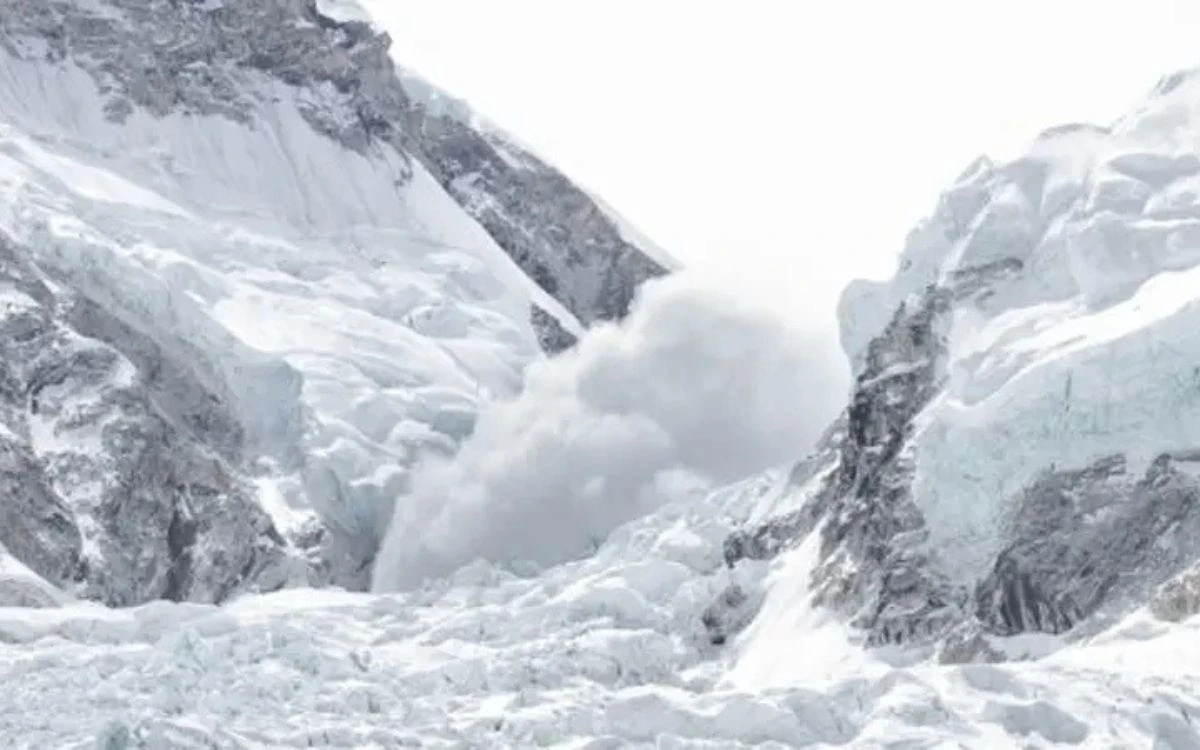
Avalanche sweeping down the Khumbu Icefall on Everest Src. nydailynews.com
For most climbers, the summit push gets all the attention, but the route itself, especially the Khumbu Icefall, can be more dangerous than the final stretch to the top. Even trekkers who only plan to reach Base Camp and go no further should understand that the terrain surrounding the world's highest peak carries real risk. Many travelers looking for a lower-risk Himalayan experience instead choose the Annapurna Base Camp Trek, which offers spectacular mountain scenery without passing through anything like the Icefall.
Mountain Workers Carry a Disproportionate Share of Risk
Sherpas and other Nepali workers cross the most dangerous terrain on the mountain far more often than the clients they support. Any serious approach to expedition safety has to account for that repeated exposure, not just the safety of the paying climbers at the top of the itinerary.
Forecasting, route management, and communication all genuinely help reduce risk, but none of them can make an unstable glacier predictable. The Khumbu Icefall remains, by nature, an unpredictable place, and no amount of technology changes that basic fact.
Safety Must Come Before the Summit
Expedition schedules need to stay flexible enough to respond to changing mountain conditions, rather than pushing forward because of a fixed timetable. That principle now shapes how responsible operators plan every itinerary in the region, from Everest expeditions to a Manaslu Circuit Trek or any other high-altitude route.
FAQ About the 2014 Everest Avalanche
What happened in the 2014 Everest avalanche?
On April 18, 2014, a large serac broke off the West Shoulder of Everest and caused an avalanche that rolled down into the Khumbu Icefall, killing 16 Nepalese mountain workers employed in that year’s expedition.
How many Sherpas died during the 2014 Everest avalanche?
In the avalanche, there were 16 deaths among the Nepalese mountain workers, while nine others suffered injuries, making it one of the most disastrous single incidents in the history of Everest climbing.
Where did the 2014 Everest avalanche take place?
The avalanche hit the Khumbu Icefall on Everest’s side of Nepal, which is a particularly dangerous stretch of glacier ice between Base Camp and Camp 1.
What was the 2014 Everest avalanche reason?
A huge unstable ice formation, or serac, came down from the glacial cliffs of Everest’s West Shoulder and triggered the avalanche down into the Icefall when it crashed down there.
Did the 2014 Everest avalanche ruin the climbing season?
Yes, the tragedy made the lives of Sherpas unbearable as lots of problems arose, and there was a negotiation that allowed the climbing season to be stopped on the Nepal side of Everest.
How did the avalanche change Everest climbing?
It led to gradual changes in route management by the Icefall Doctors, greater attention to reducing worker exposure in the Icefall, improved weather forecasting, and an ongoing push for better insurance and compensation for Nepali mountain workers.
Conclusion
The avalanche incident on Everest in 2014 marked a defining moment for the mountain, one that made climbing trippers realize the dangers faced by the Sherpas and mountaineers who facilitate the expeditions. Almost ten years later, their contribution remains impactful in terms of route management and safety protocols at Everest. Regardless of your interest in Everest or trekking in Nepal, knowing the historical context provides an intriguing factor for tourists. Are you prepared for exploring the Himalayas under safe and hassle-free conditions? Start planning with Himalayan Recreation Treks and Expedition!


-1.webp)


 based on 1 reviews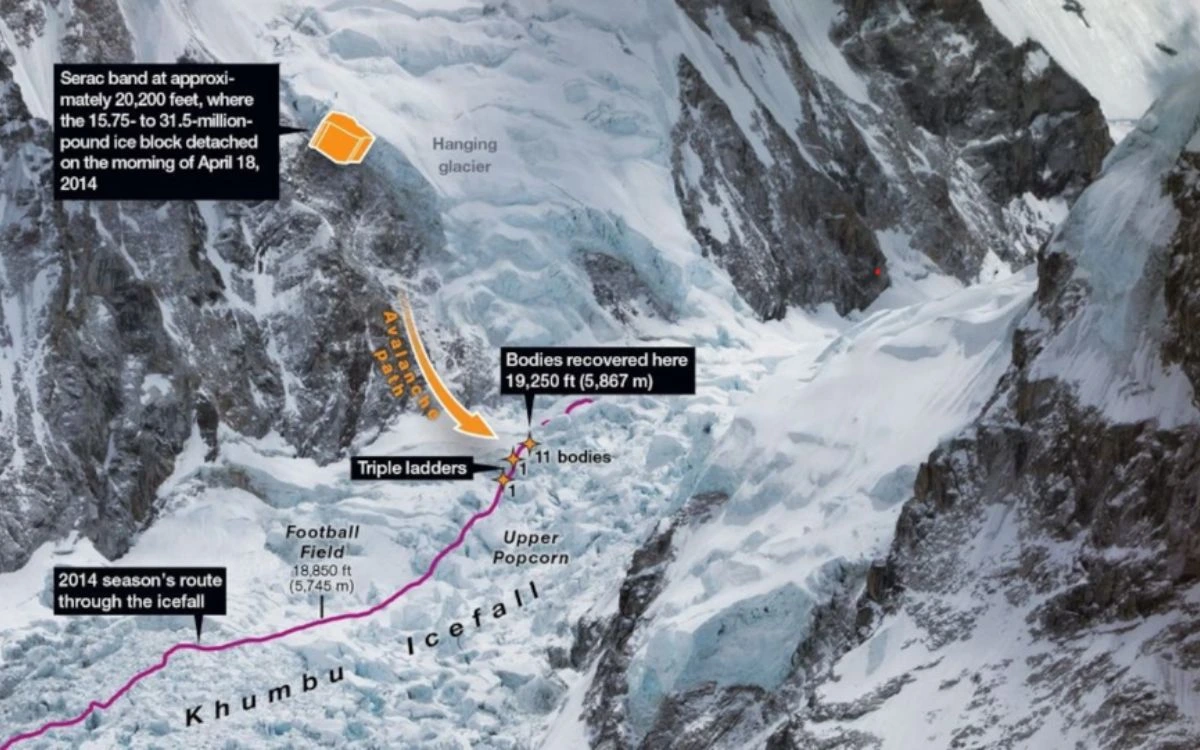







-6.webp)
-1.webp)
-1.webp)