The Khumbu icefall is the first major challenge on the way to the Everest summit. It is a rapidly moving maze of huge ice blocks, crevasses concealed under snow, and frequent avalanches. Moving a few feet every day, this icy course is the link between Everest Base Camp and Camp 1, and every climber has to go through it.
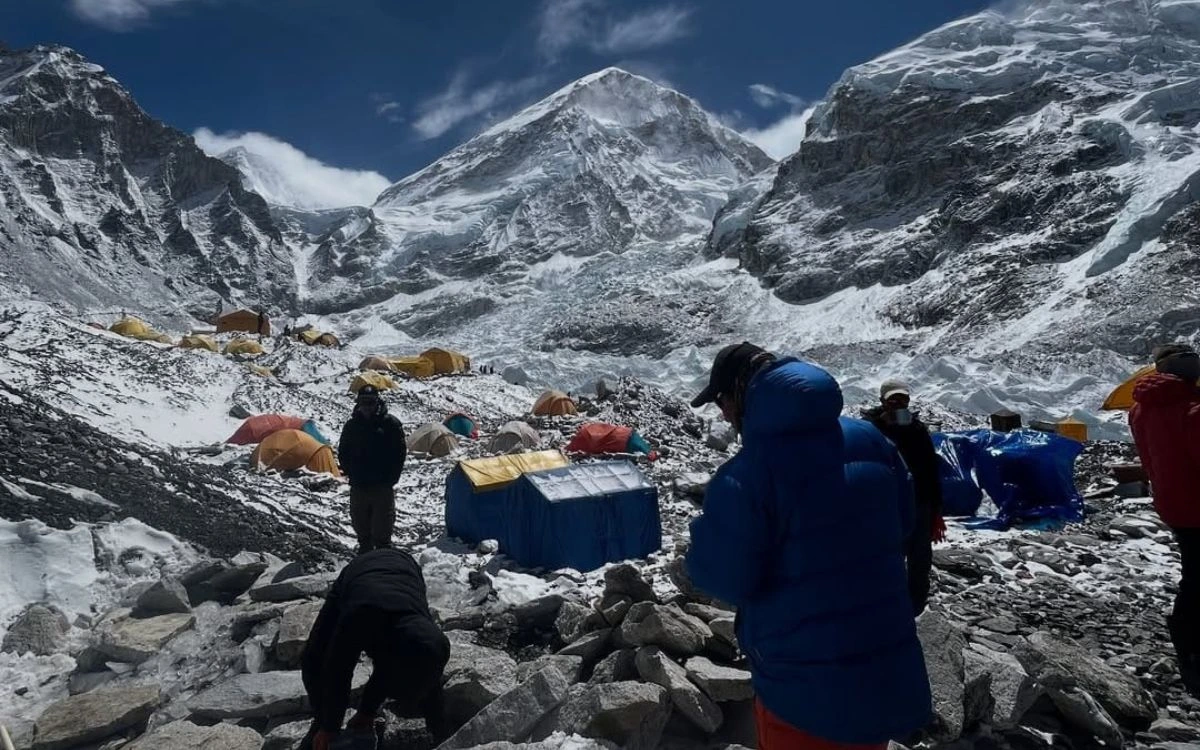
Climbers resting among tents at Camp 1 above the Khumbu Icefall on Everest
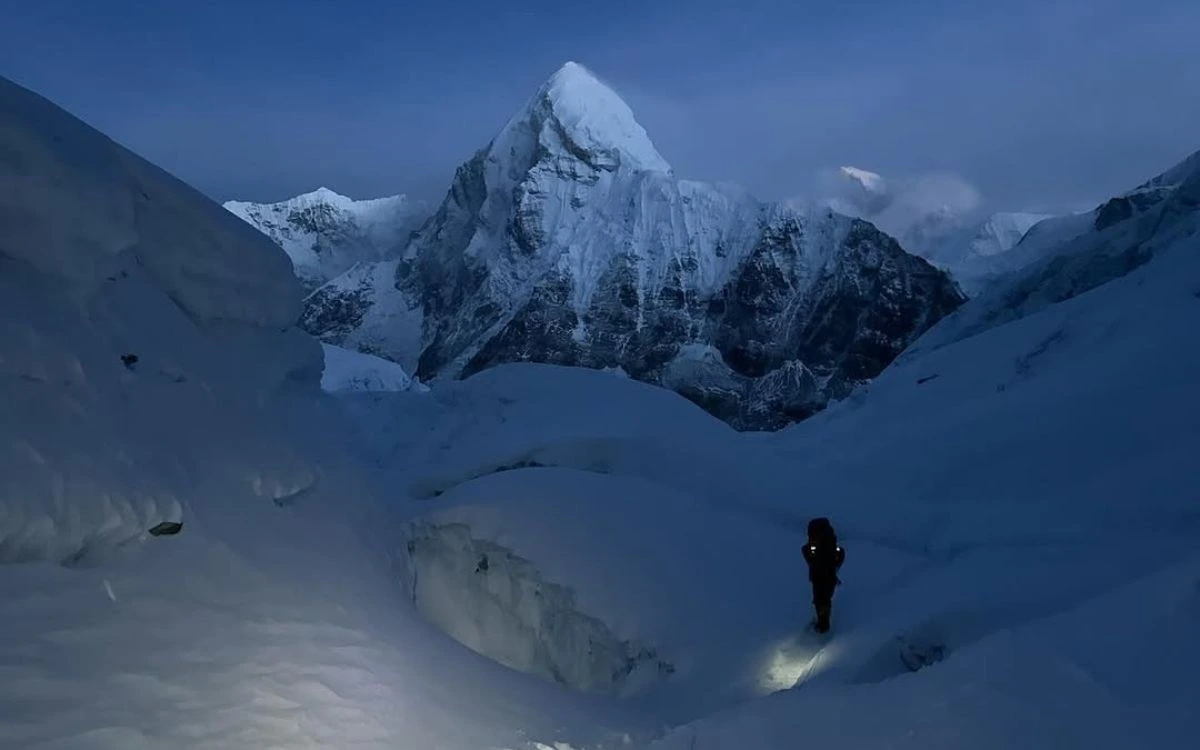
Before the first light of day, the glow of headlamps moves across a surface that seems more like a broken glass sculpture than solid ground. Giant seracs are leaning overhead, metal ladders connect the bodies of some that go deep into the darkness, while a handful of expert Sherpas are working 24/7 just to keep the route open. Here is why this crossing is so scary and how climbers survive it.
Surviving the Khumbu Icefall: A Journey Through Everest's Deadliest Gate
Dark as a pitch, the Khumbu icefall works as a living being, producing groans and cracks. The ice towers move beneath their weight, crevices that are invisible jerk open in the light of a flashlight, and every step forward implies the trust put in a ladder lying across only the hanging void and darkness underneath. Those wishing to take the first step to the roof of the world, hereafter, the real climb begins.
The Khumbu icefall is the unavoidable section of the mountaineering path. It is located directly on the standard South Col route, making it the only practical passage from Everest Base Camp to Camp 1. No climber, regardless of their skill or financial resources, is allowed to skip it. While some popular trekking routes in Nepal, like the classic Everest Base Camp trek, take hikers close to this frozen giant, only mountaineers aiming for the summit actually go through it.
Three things are mainly responsible for not getting killed in the icefall:
The skill of the Sherpa route setters
precise scheduling
and a lot of luck.
What is the Khumbu Icefall? The Science Behind the Chaos
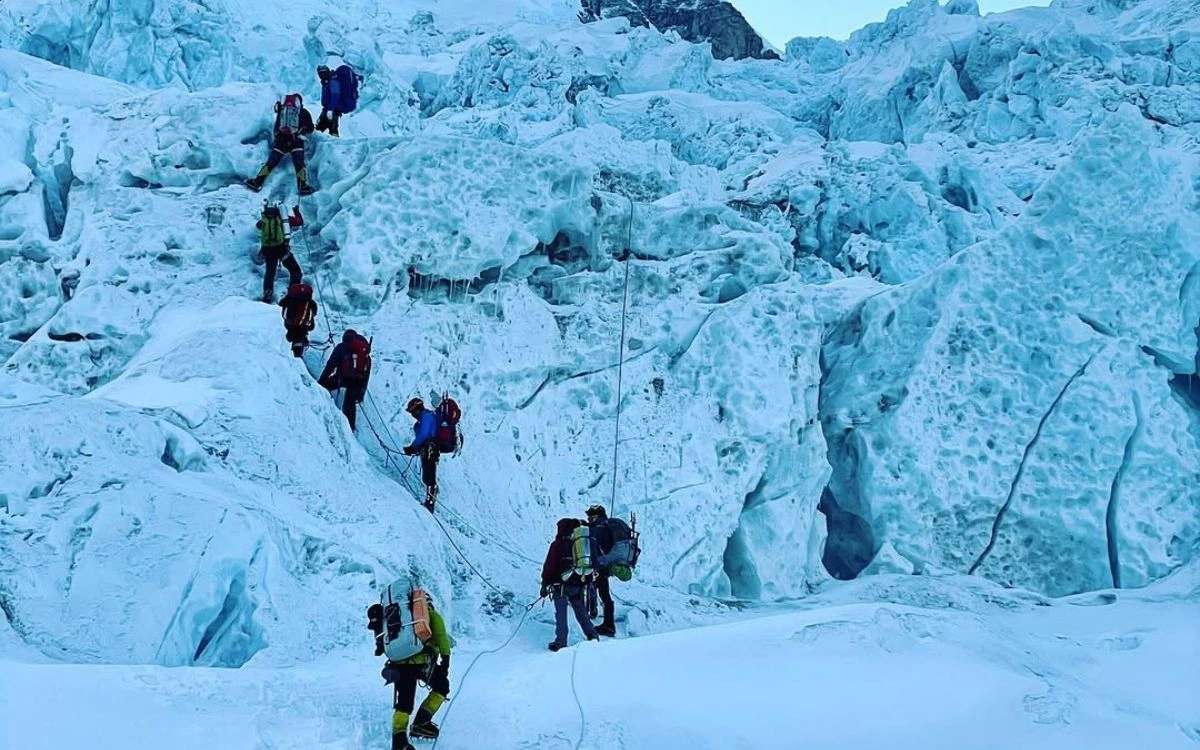
Roped climbers ascending seracs and crevasses through the Khumbu Icefall
An icefall is basically a waterfall turned to ice. Rather than water flowing down a cliff, solid chunks of glacier ice roll down the cliff, albeit much more slowly. The Khumbu icefall happens at the spot where the Khumbu Glacier's flow sharply changes as it moves over a steep drop of the mountain, between approximately 17,600 and 19,900 feet. When gravity pulls this stream of ice down the hill, it breaks, bends, and twists itself, forming one of the most disorderly terrains on Earth.
Not every hiking trip in the Himalayas exposes you to these sorts of glacier dangers. Walkers on the Annapurna Circuit trek, for example, move through valleys and mountain passes without having to deal with a still-working icefall, which is why the Khumbu path is kept for mountaineers instead of casual hikers.
Khumbu Glacier shifts about 3-4 feet or 0.9-1.2 meters daily. It seems slow, but from one climbing season to another, the distance covered by the glacier is really huge. A route identified and marked in the morning can be destroyed, turned, or even taken away by evening, without a trace. The way across the icefall is hardly ever determined for long; it must be inspected, and even dismantled and reconstructed, quite frequently.
Why Is the Khumbu Icefall So Dangerous?
Climber in crampons crossing an aluminum ladder over a Khumbu Icefall crevasse
Towering seracs (the falling blocks). So, what is a serac?
A serac is a huge, massive block of glacier ice that is sometimes as tall as a building block, left behind after the rest of the ice fractures and shifts away. These ice towers lean at unusual angles and can fall suddenly, crushing everything below in seconds. Climbers passing through the icefall generally try to move quickly under the biggest seracs since the only real way to protect oneself is by minimizing the time spent underneath them.
Bottomless crevasses in the Everest Icefall
Besides the seracs, there are deep fissures called crevasses that divide the glacier in every direction. Some are so narrow that you can step over; others are so wide that you need a ladder to cross, and the depth of the crevasse is more than what the beam of the headlamp can reach. Losing your grip just once on the icy ladder hundreds of feet above the floor of the crevasse can end the journey or your life.
The escalating risk of avalanches
The icefall lies in a natural funnel surrounded by the unstable slopes of Mount Everest and Nuptse. From time to time, loose snow and ice come off these walls and plunge onto the path below. Danger was experienced very close in the 2014 Everest avalanche when a serac collapse caused a slide that resulted in the death of sixteen Nepali climbing workers in a single morning, the deadliest single incident on the mountain at that time. It is a stark contrast to adventures at lower altitudes, such as the Annapurna Base Camp trek, where trekkers are able to enjoy panoramic mountain views without having to deal with this kind of overhead hazard.
The Icefall Doctors Everest: Sculpting a Path Through Hell
Icefall Doctors Everest: Long before any climbing team even steps on the icefall, an exclusive few Sherpas who have earned this name have probably been working for some time. Each pre-monsoon season, this group goes ahead of everyone else, finding a way through the tangle of ice, setting kilometers of rope, and attaching aluminum ladders over the biggest crevasses. Their work is a mixture of engineering and mountaineering and totally indispensable; without them, crossing the Khumbu icefall safely would be almost impossible.
Such work contrasts greatly with more tranquil activities like the Langtang Valley trek, where the trails are well established, and locals regularly maintain them instead of rebuilding them from scratch each season. The icefall route, then again, might change completely in a few days, which is why the Icefall Doctors have to keep changing the locations of ladders and ropes throughout the climbing season.
Walking the Khumbu Icefall Ladders
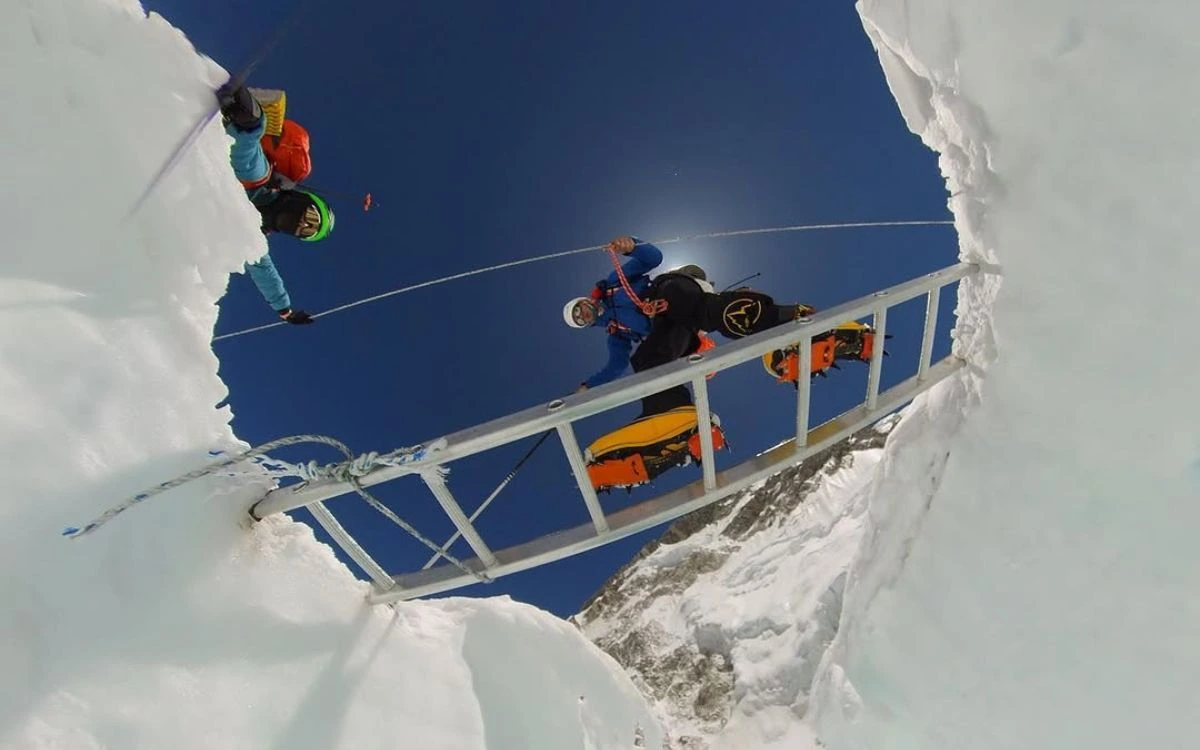
Climbers crossing a horizontal ladder over a deep crevasse in the Khumbu Icefall
For most of the climbers, there really is nothing quite as nerve-wracking as walking across a horizontal ladder stretched over a deep crevasse. Heavy mountaineering boots and crampons make every move even more awkward and insecure, and the ladders move and sway beneath the feet with every step. Although the climbers secure themselves through fixed ropes on both sides, the feeling of hanging over a bottomless abyss, one cautious step at a time, is actually among the most frightening moments of the whole Everest climbing experience.
Climbing Strategy: The Best Time to Cross Khumbu Icefall
You can't underestimate timing when deciding on the best moment to cross the Khumbu icefall. Skilled guides are adamant about tackling the crossing when it's super cold and still dark outside, that is, somewhere between 1:00 AM and 3:00 AM. Climbers get up early, put on their headlamps, and move through the icefall at a time when the temperatures are at their lowest.
What makes this so important? The cold, frozen temperature basically immobilizes the glacier, making the ice chunks and seracs firmer and less prone to a sudden break. But as the sun comes out and warms the ice, the chances of avalanches and serac falls increase Much, which is the reason why the teams are in a hurry to be out of the icefall by mid-morning. This sort of meticulous, weather-based scheduling is a different ball game from a trip like the Upper Mustang Trek, where the trekkers can take a laid-back daily pace without having to race the sun.
The Khumbu Icefall is the most dangerous area on the way to Mount Everest. It is located on the Khumbu Glacier between Everest Base Camp and Camp 1. The Icefall is a very unstable area because it is made up of constantly shifting ice towers and deep crevasses.
The Khumbu Icefall is one of the most dangerous places on Mount Everest because of all of the factors that contribute to its instability. These include constantly moving glacial ice, collapsing seracs (glacier ice blocks), hidden crevasses, and slopes that are prone to avalanche activity.
What is a serac?
A serac is a large block of ice that is formed by a glacier's fracturing. These can collapse suddenly without warning, which makes them very dangerous.
What is the best time to cross the Khumbu Icefall?
The best time to cross the Khumbu Icefall is very early in the morning, between 1:00 AM and 3:00 PM; this is the time when temperatures are the coldest and the ice will be most stable, allowing climbers to traverse safely.
Headlamp-lit climber crossing the Khumbu Icefall in the dark early morning hours
Who are the Icefall Doctors?
The Icefall Doctors are a group of specially trained Sherpas who are responsible for locating, fixing, and maintaining the climbing route through the icefall for climbers each year. This includes making sure that the ladders and ropes used for climbing through the icefall are safe and secure.
The Ultimate Test of Mount Everest
Commercial climbing has made it easier than ever to reach Everest, but the Khumbu icefall is still wild and untamed. Not even money, fame, or physical capabilities can change. Really, this shifting river of ice has a mind of its own. It is a reminder of nature's incredible power, right at the doorstep of the world's highest mountain.
Many trekkers prefer to admire the landscape from a comfortable and safe distance. For such people, the Manaslu Circuit trek offers a sample of the dramatic Himalayan scenery that one can expect, but without any extreme risk.
Want to see the Everest region with your own eyes? Himalayan Recreation Treks and Expedition can plan your next trip, and their knowledgeable guides will lead you safely into the heart of the Himalayas.


-2.webp)


 based on 2 reviews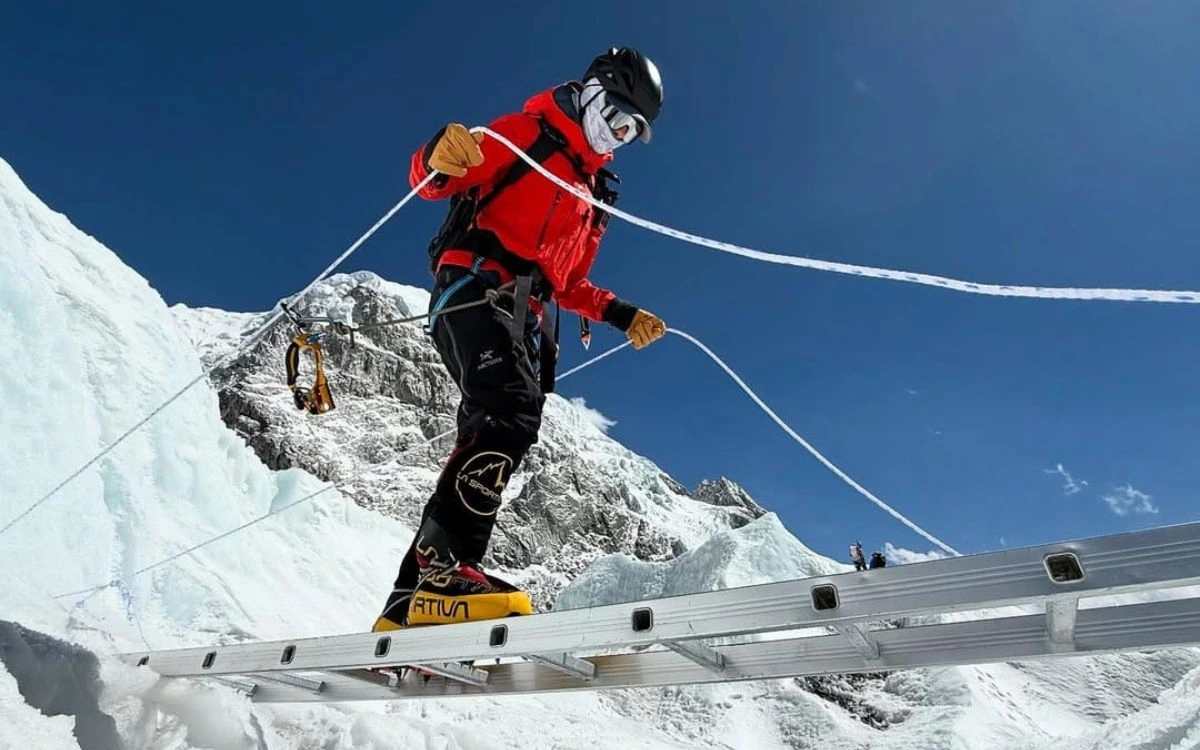




-6.webp)
-1.webp)
-1.webp)