When preparing for your trip to the remote Kanchenjunga region, one of the first items you'll need to consider is food and accommodation on the Kanchenjunga trekking trail. Because this trail is well off the beaten path and away from the busy areas of both the Everest and Annapurna regions, lodging and meals are more basic, and as you gain elevation, there will be many fewer options. Most nights you will be staying at a small family run teahouse, while on some of the more remote sections of the Kanchenjunga trekking trail you may be required to use tented camping while on your trek.
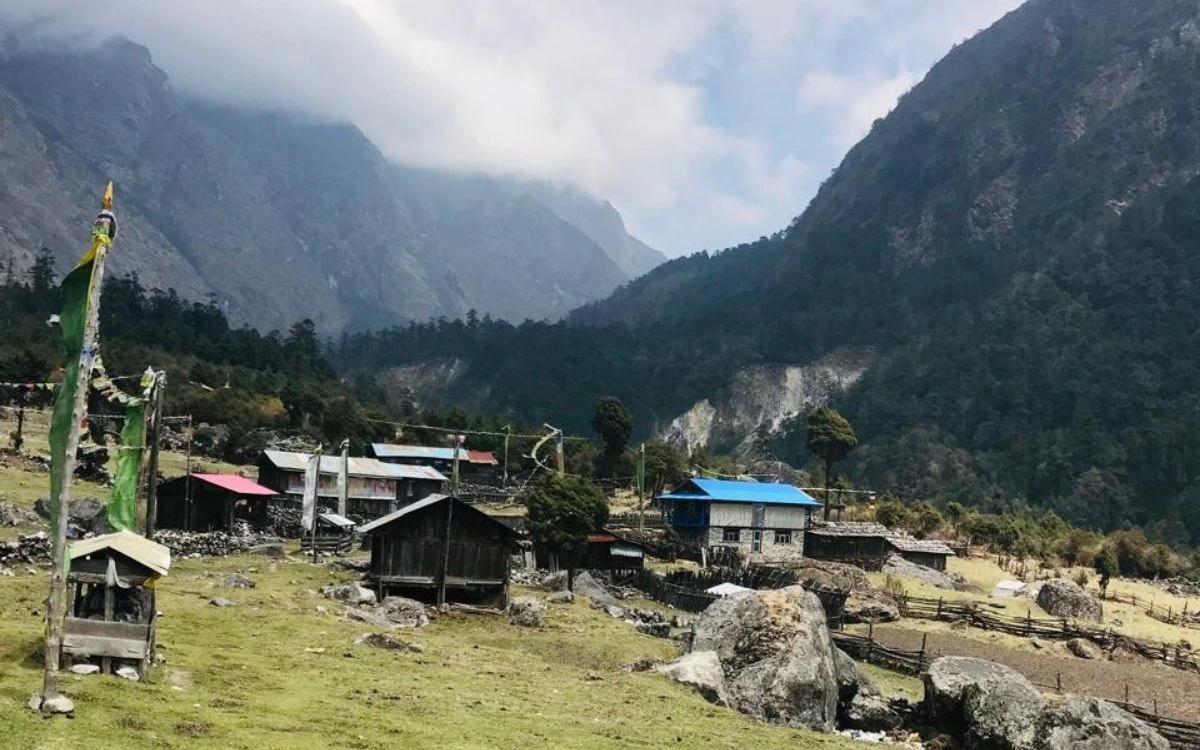
Traditional teahouses and prayer flags in a forested village along the Kanchenjunga trek
Another common question new trekkers have when attempting the Kanchenjunga trekking route is where they will sleep and what they will eat each evening while on their trek. You will mostly be staying in basic teahouses with twin-sharing rooms and eating meals that will be freshly prepared by the teahouse cook using local products such as rice, lentils, potatoes, and seasonal vegetables. However, as you gain elevation in your trek, the availability of both rooms and food will decrease after about 3,500 meters above sea level.
The price of food and lodging at each elevation level continues to increase as porters or pack animals are required for transporting supplies to mountain lodges. If trekkers understand how much they will have to spend on both food and lodging for their trip along the Kanchenjunga trek beforehand, they will have a better idea of how much they can afford per day of their trek without encountering any surprises once they start their trek. In this blog, we look at the different types of lodging available, what teahouse rooms typically look like, and include how to eat while trekking, how to order food while trekking, how to find drinking water while trekking, options for vegans, and the expected cost of food and lodging on the Kanchenjunga trek.
Types of Accommodation on the Kanchenjunga Trek
There are two main types of accommodation along the trail: lodges and camping. Trekkers will stay at teahouses managed by local families in the lower and mid-hill villages of Taplejung, Mitlung, Chirwa, and Sekathum. These teahouses provide basic rooms and dining halls. Compared to larger, more established teahouses on Everest or Annapurna, the teahouses along this trail are more basic; however, they offer a warm bed, a hot meal, and a place to dry your soaked equipment after an exhausting day walking.
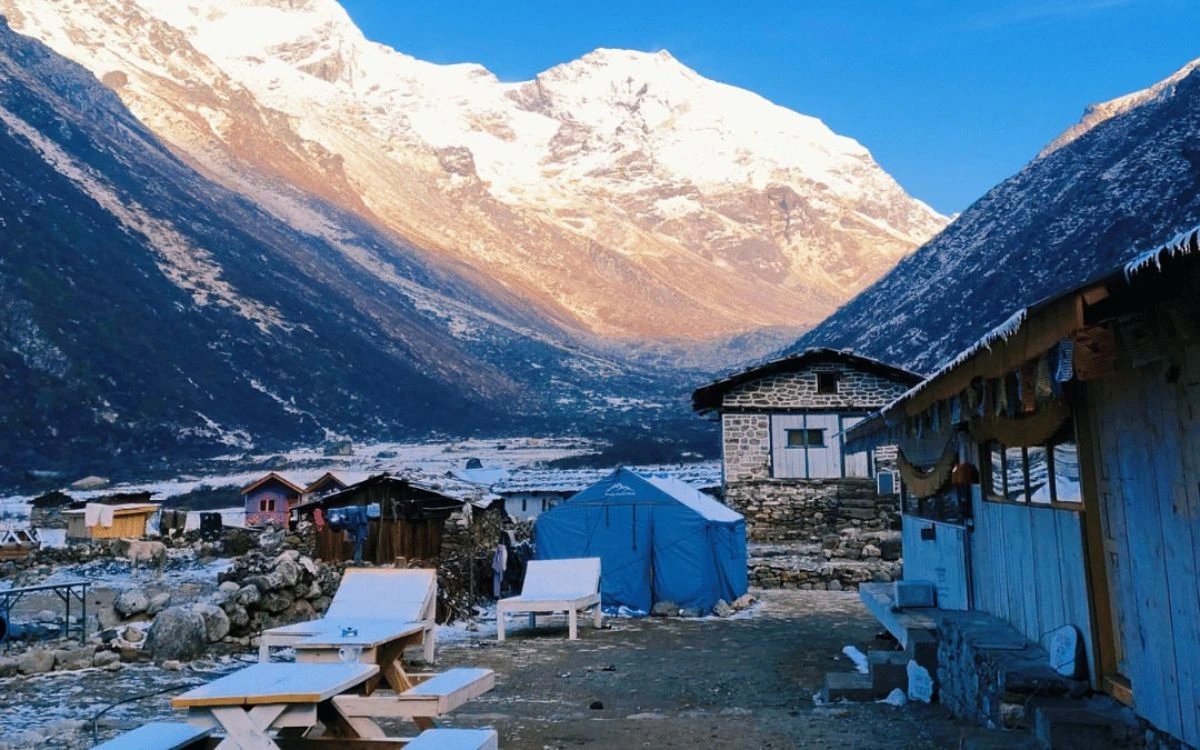
As you progress through the valley of Ghunsa towards the base camps, the teahouses will become less frequent and more dispersed. Some teahouses will still be available at this higher elevation along the Kanchenjunga trekking routes, but their rooms will be smaller and the walls thinner; furthermore, warm areas can only usually be found in the dining area as a single stove will be used for both cooking and heating. Because of the limited number of rooms, trekkers should make advanced bookings if they plan to trek during the busy spring or autumn seasons.
Teahouse Trekking vs Camping in the Kanchenjunga Region
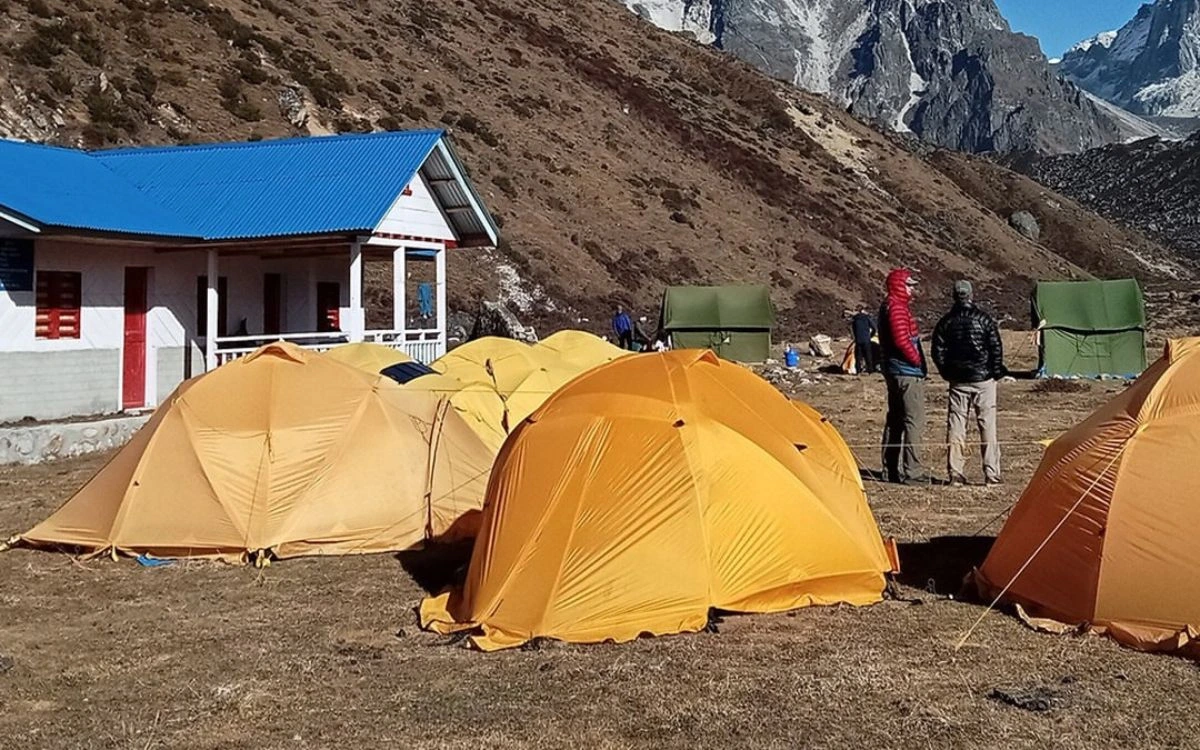
Yellow camping tents pitched near a lodge during a Kanchenjunga trek camping stop
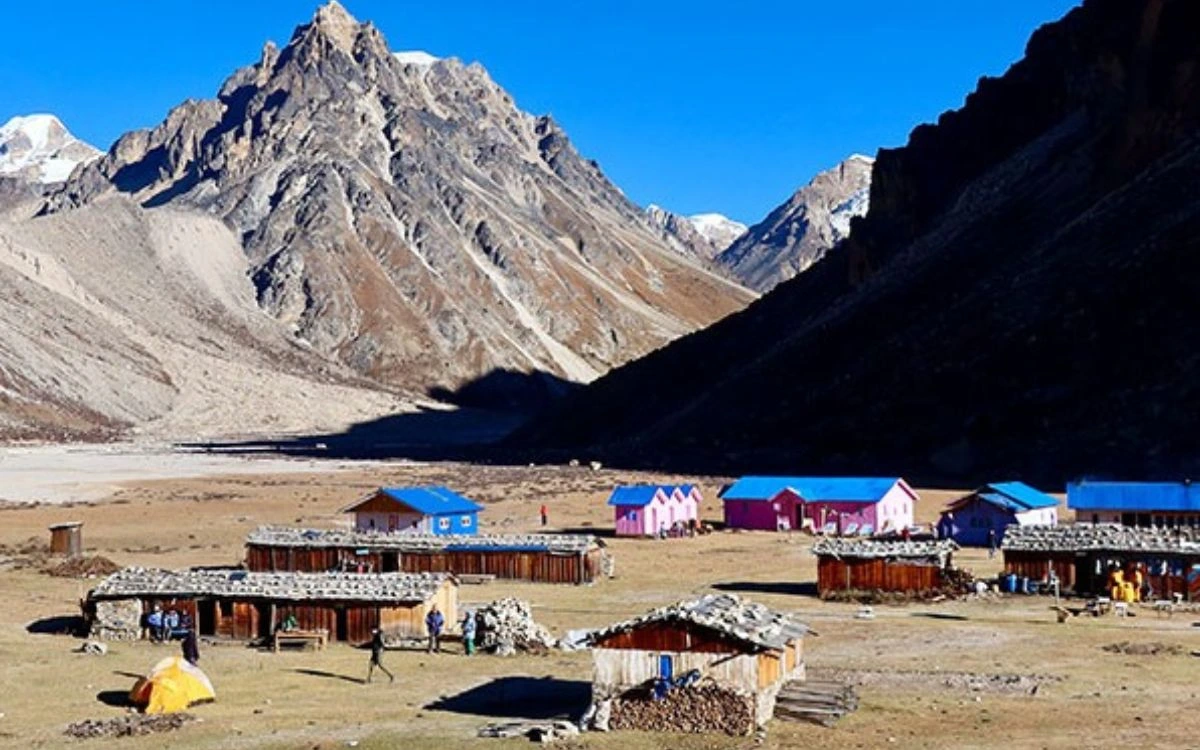
The majority of itineraries on this trail are now conducted as full teahouse treks (completed with accommodation in lodges), as teahouses can be found along both the north and south base camp routes. However, for some high passes and remote link trails between the north and south base camps, it may still be necessary to do a camping trek (with a support crew to carry tents, sleeping pads, and a portable kitchen) on Kanchenjunga. In these sections, a support crew sets up camp wherever flat ground is available.
Camping treks generally cost more than standard teahouse treks, as additional staff, food supplies, and equipment are needed to carry out these treks. Most trekking agencies arrange these treks and take care of logistical arrangements such as securing permits and employing staff for the more remote sections. Trekkers should discuss their trek itinerary in advance with their agency if they prefer a simpler teahouse-only route, because some sections may have no lodges available, depending on the season.
Room Facilities and Comfort in Kanchenjunga Teahouses
On the trek for Kanchenjunga, the Teahouse rooms consist of two beds, a mattress, a pillow & blanket. Although it is possible for it to be sufficient below the tree line and other areas, most trekkers are still encouraged to take a good sleeping bag with them, as it may not be sufficient at higher elevations. The walls are made from wood and or stones with a low amount of insulation, and often will be cold at night, especially once you go above Ghunse.
Most bathrooms are common use, and attached bathrooms are uncommon outside of the lower villages. The price of hot showers (when available) increases with elevation because they are heated over a wood fire. Trekkers should not expect lodge-type comfort in teahouses; trekkers must pack plenty of warm layers and some personal items. Electricity for charging devices or wifi access is usually not included in teahouse costs, nor are they reliable as you travel higher up the trail.
Meals Included with Kanchenjunga Trek Accommodation
The majority of the teahouses you will stay at on your walk will require you to eat your meals in the same lodge where you are staying. Meals on the Kanchenjunga trek are typically served three times daily. Breakfast is usually served from 6:30 am to 8:00 am, lunch generally occurs in the middle of the day, and dinner is traditionally served in the early evening hours. The breakfast choices are normally quite light; examples are: Tibetan bread (known locally as chapatti), porridge, and eggs. Lunch and dinner, however, are typically larger meals consisting of dal bhat, noodles, fried rice, and soup.
Most trekking companies have already included full board in their trekking packages. Therefore, the total cost of your meals is usually included in your room rental rate. If you are an independent trekker (i.e., you do not have a trekking company assisting you), keep in mind that you should check with the lodge owner whether or not the price of the room includes your meals, as many teahouses (particularly in remote locations) will charge lower room rates (or even give you a free room) if you are eating all your meals there.
Local Delicacies and Beverages Worth Trying
Stone teahouse and blue camping tent below snow-capped peaks on the Kanchenjunga trek
There are some dishes to sample in addition to your usual options in Kanchenjunga. Some common comfort foods available at numerous teahouses are Thukpa (a filling noodle soup) and Momos (a dumpling that can be steamed or fried). Other dishes prepared by the Sherpa and Limbu people who live near the route include Shakpa (a noodle stew) and Tongba (a warm fermented millet beverage served in a wooden dish with a bamboo straw).
Both butter tea and yak cheese are part of the high altitude villages' daily diet, but they come from the Tibetan culture. Many of these dishes may not be on the menu of the place you are lodging, so you might ask the owner what local food he or she can make for you that day.
It's not safe for you to drink unfiltered tap or spring water from this trail, nor from streams either. The best way to find safe drinking water while trekking the Kanchenjunga route is either to refill a bottle with boiled or filtered water at a tea house for a small charge, or to treat stream water using purification tablets, chlorine drops, or a water filter. Although there are vending machines for bottled water in many of the lower villages on the route to Kanchenjunga, they will quickly become scarce and more expensive (when found) as you get higher up the mountain. Additionally, buying bottled water contributes further to the growing accumulation of plastic waste in this delicate mountain ecosystem. All trekkers should consume no fewer than three liters of water per day to maintain optimal hydration.
Vegetarian and Vegan Options at Kanchenjunga Teahouses
Most lodges at the Kanchenjunga trek route offer basic vegan meals as they are all prepared without meat, in accordance with the principles of a vegan diet, and can be made without dairy upon request. Vegan trekkers should specify to the lodge kitchen staff that they require their meals to be made without butter, ghee, milk, or egg, as these ingredients are typically included in the preparation of these types of dishes.
As trekkers ascend to higher elevations, their choices become limited for vegans and vegetarians. It is recommended that all those who follow a vegan or vegetarian diet take along additional snacks (such as nuts, dried fruit, and energy bars, etc.) to help make up any deficiencies in their daily meal plans.
Price of Food and Accommodation on the Kanchenjunga Trek
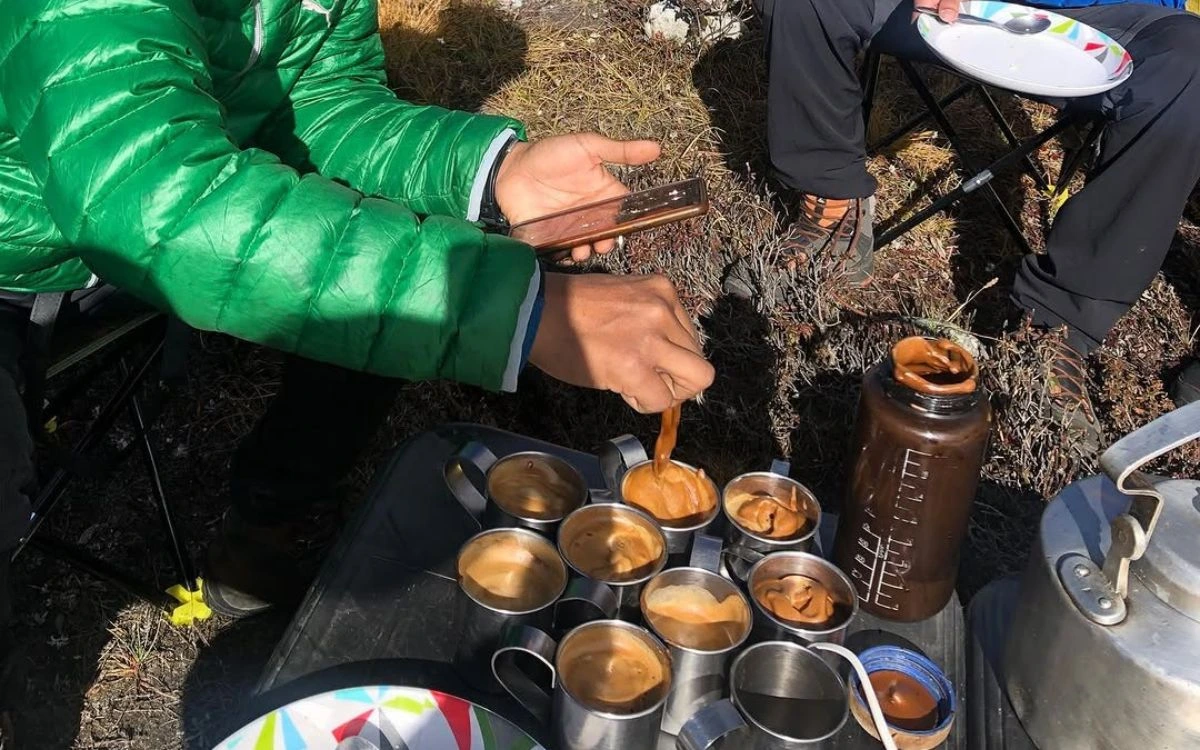
Trekkers pouring hot tea into cups, a typical mealtime scene on the Kanchenjunga trek
The cost of food and lodging on the Kanchenjunga trek increases in accordance with increased height, as all food and accommodation must either be transported by hand or a pack animal. Independent trekkers usually pay for their lodging and meals separately, but most companies that sell trekking packages offer both together in the daily rate. In general, all the approximate prices are:
Teahouse room (twin sharing, lower villages): NPR 300–600 per night
Teahouse room (twin sharing, higher villages): NPR 500–1,000 per night
Dal Bhat (full meal): NPR 400–800
Noodles / fried rice: NPR 300–600
Soup (garlic, ginger, or vegetable): NPR 300–600
Tea (milk or black): NPR 150–300
Hot shower: NPR 200–500
Device charging: NPR 200–500 per hour
Note: Please remember that most lodges will lower the price or give you a free bed if you agree to eat every meal there. Before making any arrangements to have a bed, be sure to inquire about this arrangement. During your trek, you will need cash, as credit cards will not be accepted in this remote area of the world.
How to Choose the Best Teahouses on the Kanchenjunga Trek
For the most part, choosing accommodations on the Kanchenjunga trek at the end of each day is straightforward. Most villages have one or two lodges where you can stay. However, before checking in, it is a good idea to check if my room has a lock. Will they provide me with an extra blanket? Does the dining hall have a stove to keep warm in the evening? If you plan on doing any trekking during the busy times of year (spring and fall), you should try to book ahead with a guide to ensure there is room when you arrive at the end of a long day.
FAQs
Can I find lodgable rest stops during the whole Kanchenjunga trek?
Yes and No! Along the main trail, many tea houses are found. However, once you reach Ghunsa, the tea house accommodations become limited and basic, and in some of the distant linking sections between North and South Base Camps, trekking in Nepal may necessitate carrying all you need and camping on the ground.
Can I make tea house reservations in advance for the Kanchenjunga Trail trek?
Reservations are not usually necessary in advance; however, during high seasons of the year (spring and autumn), reservations are advisable due to the fact that some villages only have 1 or 2 lodging options.
Will meals be included in my Kanchenjunga trek package?
Most packages include all meals (breakfast, lunch, and dinner) along with lodging. For independent trekkers, once they reach the tea houses, these are paid for separately,y and many tea houses will give a discounted lodging rate to trekkers who eat.
Is camping required on the Kanchenjunga trail?
Camping is only needed on some of the higher and more remote sections of the trail at this time, as tea houses are not yet built there; the majority of your hike will also be possible because tea house accommodations have now become established.
Colorful teahouse lodges and camping tent in a remote high-altitude village on the Kanchenjunga trek
Will I be able to take hot showers at tea houses along the Kanchenjunga trail?
Most tea houses offer hot showers but charge extra. The cost typically goes up the higher you go because of having to heat the hot water over a wood fire.
Should you consume municipal water along the Kanchunjunga Trek?
Trekking along Kanchunjunga requires that you boil all surface and ground-sourced water before consuming. The same holds for anything consumed while hiking.
Are vegetarian and/or vegan options available along the Kanchunjunga Trek?
Vegetarian and vegan options are available along Kanchunjunga. Some popular items include dal bhat, veggie curries, and plain rice,e which can all be prepared vegan style if requested. However, er it is wise to confirm this with the kitchen/cook stawhohat prepare the meals.
What budget range will I require for food and accommodation when trekking along Kanchunjunga?
Independent trekkers will budget approximately NPR 2,500 to 4,000 daily for a room and three meals per day, depending on the altitude of your accommodation. Those who are traveling on a full package tour will have already paid for food and lodging.
Conclusion
While food and accommodation on the Kanchenjunga trek are simple, it is adequate to ensure that trekkers are well catered for and comfortable for the duration of this remote trek. The majority of nights provide twin-share accommodation in small tea houses with shared bathrooms and three home-cooked meals per day, while some of the higher altitude locations require camping as well.
You need to bear in mind that as you hike highe,r the cost of lodging and food will increase gradually due to the challenge of transporting supplies, so plan to have some additional money for the higher villages Carrying a warm sleeping bag, cash, and a few extra snacks with you would make this trek much more enjoyable, particularly in those isolated sections where there are not many options available to you.


-4.webp)




-1.webp)
-1.webp)
-1.webp)