Planning a trip to Everest Base Camp, the Annapurna Circuit, or any other secluded place in the Himalayas? Most travelers get stuck at this one question even before worrying about altitude sickness or visa paperwork: what are the toilets and hygiene conditions in the mountains like? toilets and hygiene on Nepal trek change with altitude, trail, and the kind of trekking package you decide on. The simple truth is far more comforting than most guidebooks allow you to believe.
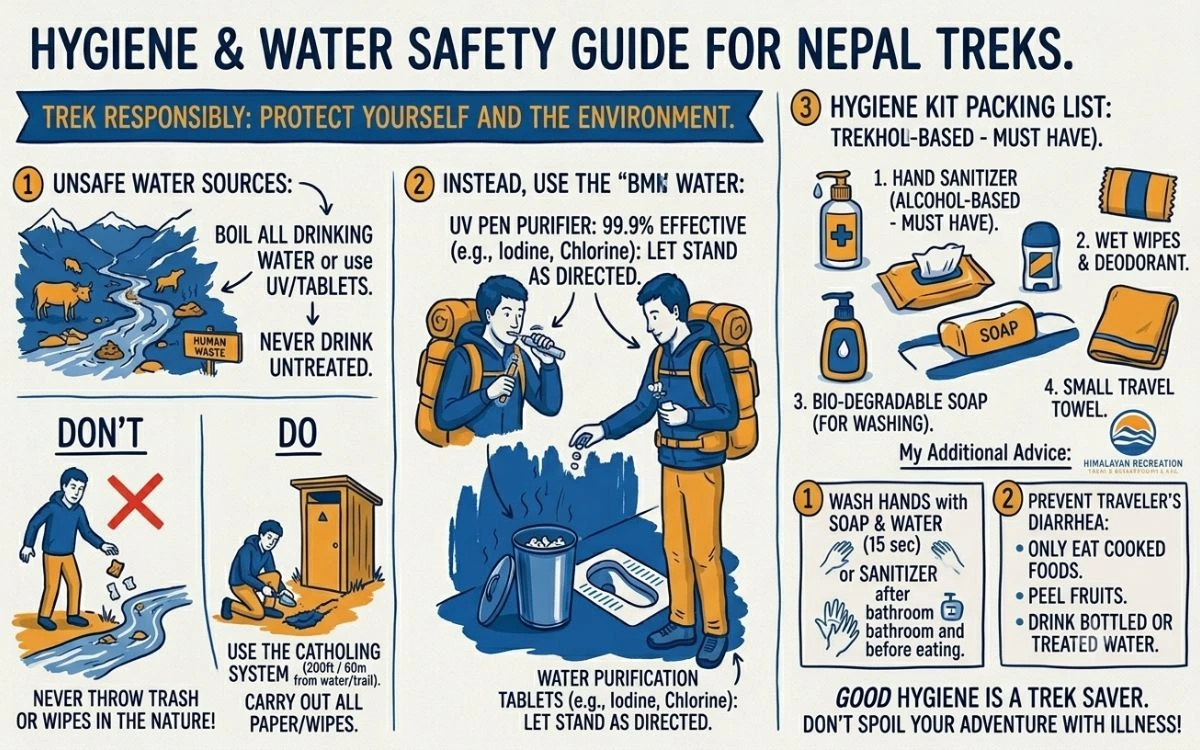
Infographic on hygiene and water safety guidelines for trekking in Nepal
We at a travel agency think that it's only right to tell the truth about the conditions on the trail. Our guides, having traversed these paths hundreds of times, can tell you without a shadow of a doubt that a clean toilet and a few good practices can totally transform a trek. This article tells you exactly what you will find in each region, and the easy practices that will keep you fit all the way from the first to the last day of your trek.
Quick Answer of Toilets and Hygiene on Nepal trek: What to Expect
Western sit-down toilets are common in lower villages like Lukla, Namche Bazaar, and Pokhara.
Squat toilets are the norm higher up the trail, especially above 3,500 meters.
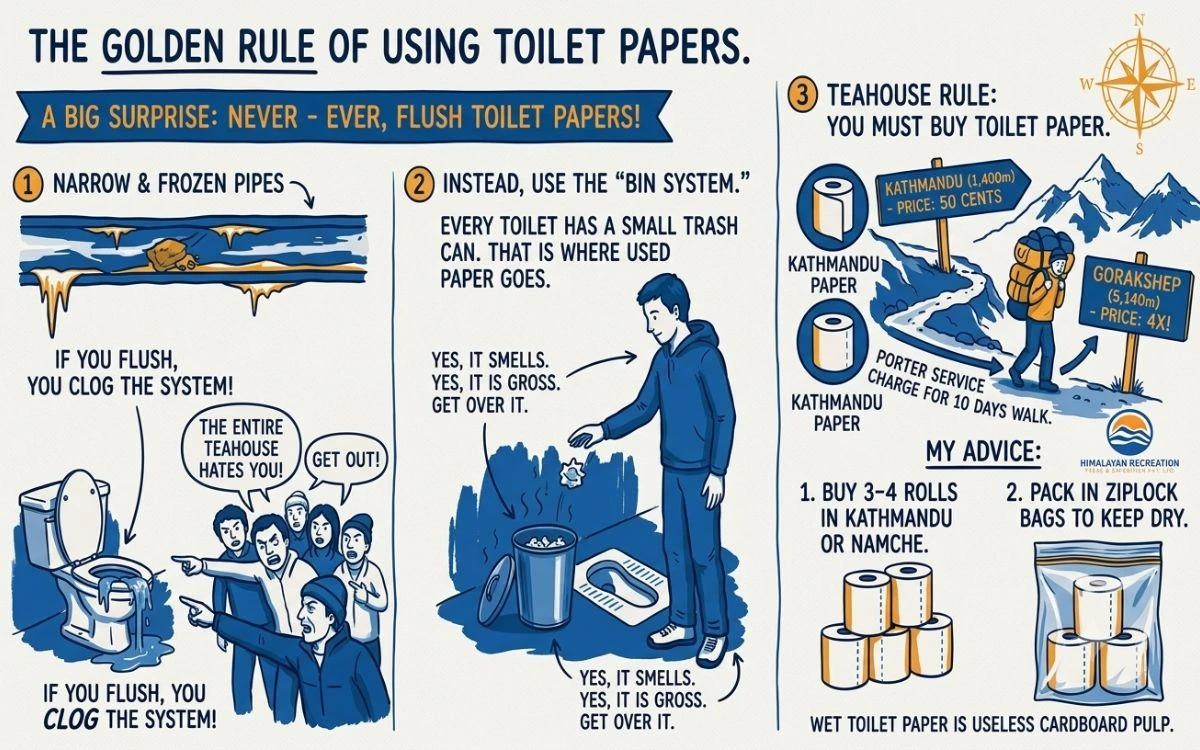
Bring two to three rolls of your own toilet paper, and put used paper in the bin, never down the toilet.
Treat or buy purified water for drinking and brushing your teeth. Never use raw tap or stream water.
Use hand sanitizer after every toilet visit and before every meal. It matters more than food safety.
Want guaranteed western toilets and hot showers every night? Book a luxury lodge trek instead of a standard teahouse trek.
Types of Toilets on Nepal Treks (By Region)
Bathroom standards change with altitude in the Himalayas. Hydropower and piped water facilities are so close to the home that people in lower villages hardly feel the difference. At 4,000 meters and higher, pipes freeze and plumbing is almost nil; this way, the teahouses have to rely on the simpler types of systems. Here is what to expect on six of the most popular hiking routes.
Everest Base Camp Trek: From Sit-Down Comfort to Squat Toilets
On the way to Everest Base Camp Trek, in Lukla, Phakding, and Namche Bazaar, you can usually find private, western-style, sit-down toilets with running water in attached bathrooms in most lodges. Beyond Tengboche toward Dingboche and Gorakshep, toilets become communal, and you will mainly come across traditional squat toilets. The facilities in different lodges may be different, but generally, the squat toilets are quite clean, mostly in the better-run lodges. The flushing mechanism is by hand, through a bucket of water kept by the basin instead of a handle. The temperature at these elevations during the night can often fall below freezing, so the indoor pipes are closed and the washrooms are changed to dry or bucket-flush systems until the sun comes back.
Annapurna Circuit Trek: Squat Toilets and Busy Teahouses
Yaks and trekkers gathered at a green-roofed teahouse settlement with a snowy peak behind
During the Trekking in Annapurna Circuit where you can find village areas near Besisahar and Chame are the places where you can have the western type of toilets. The villages higher up the pass like Manang and Thorong Phedi are mostly dependent on shared squat toilets. Since this route is coming up with the large numbers of trekkers during the peak permit season, the facilities get heavy use. Carrying your toilet paper and hand sanitizer should not be overlooked even more here than on the less busy trails.
Manaslu Circuit Trek: basic facilities in a remote area
The Manaslu Circuit Trek attracts fewer people than Everest or Annapurna, and the infrastructure reflects this. The tea-houses are smaller and simpler, and above the lower villages, squat toilets are almost the norm everywhere. Due to restricted-area permits, the crowds are kept light, but the local shops along this route stock far less than the busier trails, so be prepared to bring a large personal supply of toilet paper, wipes, and sanitizer.
Upper Mustang Trek: High-Desert Hygiene in a Dry Climate
Upper Mustang lies in a rain-shadow desert, so water is the limited resource here rather than warmth. Toilet facilities are commonly simple squat facilities, and some guesthouses even ask trekkers to use water sparingly for flushing. Dust and dry air also make hand moisturizer and lip balm the hygiene essentials since cracked skin is the entry point to infection.
Langtang Trek: Family-Friendly Facilities Close to Kathmandu
The Langtang Trek is an excellent option for a shorter and more relaxed way to get familiar with trekking in Nepal. The valley had to reconstruct almost all of its lodge facilities after the 2015 earthquake and many teahouses now have clean and often attached bathrooms, even higher up, though the facilities may still vary from lodge to lodge. This is why Langtang is a great choice for families and first-time trekkers.
Gokyo Lakes Trek: High-altitude hygiene next to the turquoise water
The Gokyo Lakes Trek reaches an elevation that is almost the same as Everest Base Camp, so the toilet situation goes to the same season-based regime: sit-down toilets at the lower altitudes, squat toilets, and bucket-flush systems near Gokyo village itself. The reward is the opportunity to see some of the highest freshwater lakes in the world. Bring the same cold-weather hygiene kit as you would to base camp.
Standard Teahouses vs Luxury Lodges: Which Bathroom Experience Fits You?
The bathroom experience you get will mainly depend on what type of trek you book. With our classic, standard packages, you stay in traditional teahouses run by local families, where the facilities may include private western toilets at the lower elevations and shared squat toilets at the higher elevations.
Then again, if you like the comforts of home, our luxury trekking packages offer you premium lodge networks like Yeti Mountain Home and Everest Summit Lodges. Most stops on these routes offer a private, attached bathroom with western flush toilets, heated rooms, and reliable hot running water, even at higher elevations, although rare outages can still occur during extreme weather. Advanced insulation and heating allow these properties to remain comfortable far more regularly than standard teahouses.
See our Everest Base Camp itineraries with vetted teahouses, or compare our Standard Teahouse and Luxury Lodge treks side by side to find the right fit.
Hygiene Tips to Avoid Getting Sick on Nepal Treks
Infographic explaining the golden rule of never flushing toilet paper on Nepal teahouse treks
Many travelers fear becoming ill from consuming mountain food; Still, research and trail life both highlight another cause: lack of proper handwashing. If you go trekking with us, our guides insist on following some easy but firm habits that will ensure the health of everyone in the group.
Follow the toilet paper rule. Himalayan plumbing cannot process paper of any kind. Place used toilet paper in the small waste bin next to the toilet, never down the basin. Pack two to three rolls of your own before you fly.
Treat hand sanitizer as non-negotiable. Sanitize your hands after every bathroom visit and right before touching food. Your guide carries medical-grade sanitizer for the group, but keep a personal bottle in your daypack too.
Plan your showers carefully. Hot showers, heated by gas or solar power, are available at standard teahouses for a small fee, but they become rare and inadvisable in the freezing upper zones. On the coldest evenings, a quick wipe-down with biodegradable wet wipes will keep you fresh. Luxury lodges provide hot showers automatically, every night.
Take water safety seriously. Never brush your teeth or rinse your mouth with tap water or river water, even briefly. Our agency serves fully treated, boiled, or filtered water at every meal. If you prefer to manage your own supply, a dual-filtration bottle, such as a Grayl or a Lifestraw Peak, paired with purification tablets, gives you reliable backup between stops.
Cold Season vs. Warm Season: What Changes
Conditions shift noticeably by season, so plan your hygiene routine around when you travel.
Autumn (September to November) and spring (March to May): Hot showers are reliably available at most standard teahouses, trails stay mostly dry, and bathroom floors are rarely icy.
Winter (December to February): Hot water becomes less consistent at higher elevations, snow and ice can make bathroom floors slippery, and a pair of lightweight Crocs or sandals for indoor use becomes genuinely useful gear.
Squat Toilets and Mobility: Tips for Older Trekkers or Trekkers with Knee Issues
Squatting repeatedly at altitude can be tough on aging knees or old injuries. If this concerns you, bring trekking poles for extra balance near the toilet area, and consider booking a luxury lodge route, where western sit-down toilets are available at nearly every stop.
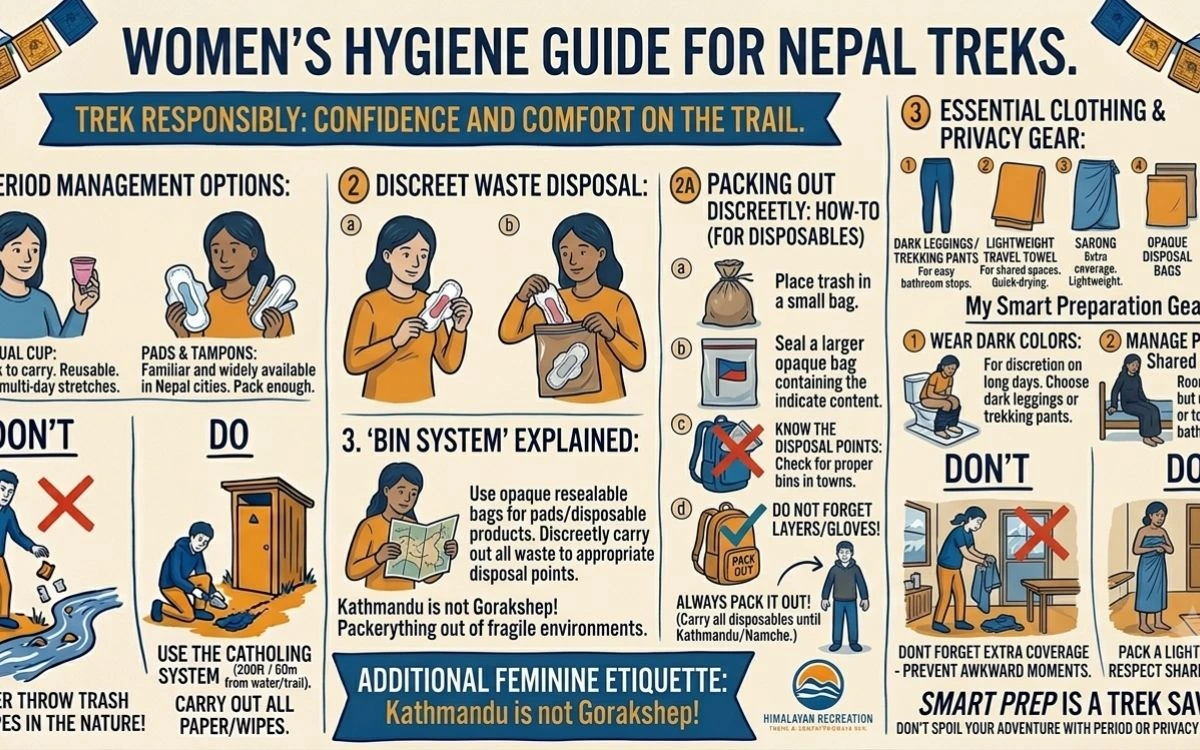
Infographic detailing women's hygiene and period management tips for Nepal treks
A few small preparations make a noticeable difference on the trail.
Managing your period on the trail: Both pads and menstrual cups work well. A menstrual cup cuts down on what you need to carry and pack out, which matters on multi-day stretches with limited waste disposal.
Privacy while changing: Most teahouse rooms offer enough privacy for changing, but pack a lightweight sarong or travel towel for extra coverage in shared spaces or outdoor stops.
What to wear: Dark-colored leggings or trekking pants help on long days between proper bathroom stops.
Packing out waste discreetly: Carry a few small opaque resealable bags for hygienic, discreet disposal where bins are not available, and pack everything out of fragile high-altitude environments.
Toilet and Hygiene Packing List for Nepal Treks
Whether you are roughing it on a remote pass or relaxing in a luxury suite, pack these essentials in your daily backpack:
Two to three rolls of toilet paper. Flatten them and remove the cardboard core to save space.
Two packs of biodegradable wet wipes. Your best friend for staying clean on cold nights without running water.
Two travel-sized hand sanitizers. Look for a formula with at least 70 percent alcohol content.
A pack of small resealable bags. Useful for packing out used paper or hygiene waste between villages.
A quick-drying microfiber towel. Standard teahouses rarely provide towels, though luxury lodges always do.
A high-quality hand moisturizer. Cold, dry mountain air cracks skin fast, and cracked skin lets bacteria in.
Lightweight Crocs or sandals. Handy for icy or wet bathroom floors during the colder months.
Why Book With Us: How We Vet Every Teahouse
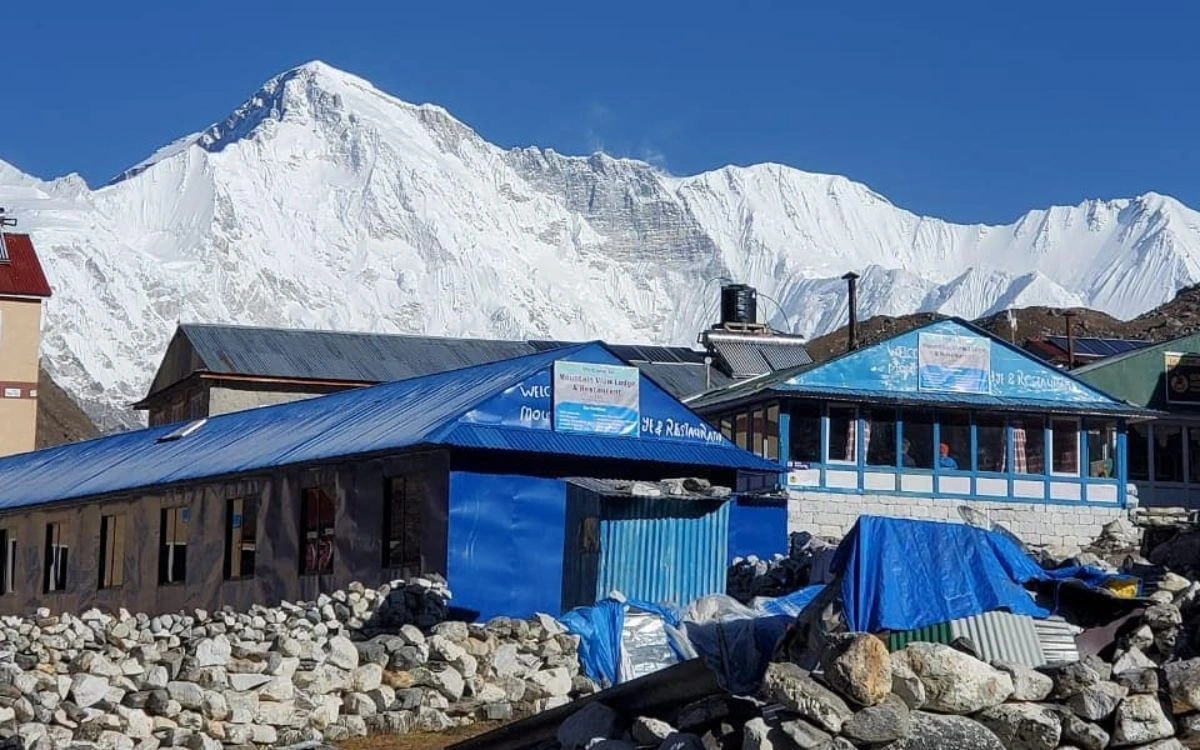
Blue-roofed lodges and restaurants below a massive snow-covered Himalayan peak
Not every teahouse on a trail will have the same level of cleanliness, even in the same village. Our team members not only check if a teahouse has a nice view from the dining room but also personally inspect the lodges for functioning toilets, constant water supply, and basic sanitation before we include any route in our itineraries.
We pre-vet every teahouse for cleanliness and working toilets before adding it to an itinerary.
Our guides brief guests on hygiene every evening at dinner and enforce hand-sanitizer use daily.
We change teahouses mid-season if cleanliness standards drop, and we provide treated drinking water at every meal.
FAQs About Toilets and Hygiene on Nepal Treks
Are toilets on Nepal treks clean?
Generally yes, though the quality of facilities really depends on the teahouse. Most owners will do their best to keep the facilities clean, and squatting toilets and shared ones are usually cleaned and replenished on a daily basis, In particular in well-managed lodges.
Do I need to bring my own toilet paper?
Yes. Most Nepal teahouse facilities don't provide paper, and the few shops along the trail that sell it will have higher prices as you go up.
Is the water safe to drink without treatment?
No. You should always use boiled, filtered, or chemically treated water. This includes the water you use for brushing your teeth. Whether it is provisioned by your agency or you carry a filter bottle and purification tablets, ensure that the water is treated.
Can I avoid squat toilets entirely?
Mostly yes by going for a luxury trekking package that has western bathrooms attached to rooms at every stop. There will be some squat toilets in the standard teahouse routes at the higher mountain elevations.
What happens if a toilet is unusable mid-trek?
This is a possibility but very unlikely on the routes we have approved. Your guide always has a backup plan and he/she can tell you about the next clean facility. Also, your guide has supplies for an emergency stop along the trail.
Trekking in Nepal is a great adventure, but those who are well prepared get the most benefit. It's worth a little effort planning toilets and hygiene to be able to have a comfortable, healthy trip. You can check out our luxury trekking in Nepal packages if you are the type for whom private bathrooms and hot showers are the biggest matters.
Ready to Plan Your Himalayan Adventure?
Whether you want a rugged, authentic teahouse experience or a fully supported luxury trek with hot showers and private bathrooms every night, we have you covered. Our experienced guides manage all the logistics, lodging quality, and clean water for you daily, so you can focus entirely on the views.
Get in touchwith Himalayan Recreation Treks & Expeditionto experience the Himalayas without the stress.Check out our fully supported trek itineraries, where our experienced guides handle every detail of your lodging safety and hygiene from the first day to the last.


-5.webp)


 based on 42 reviews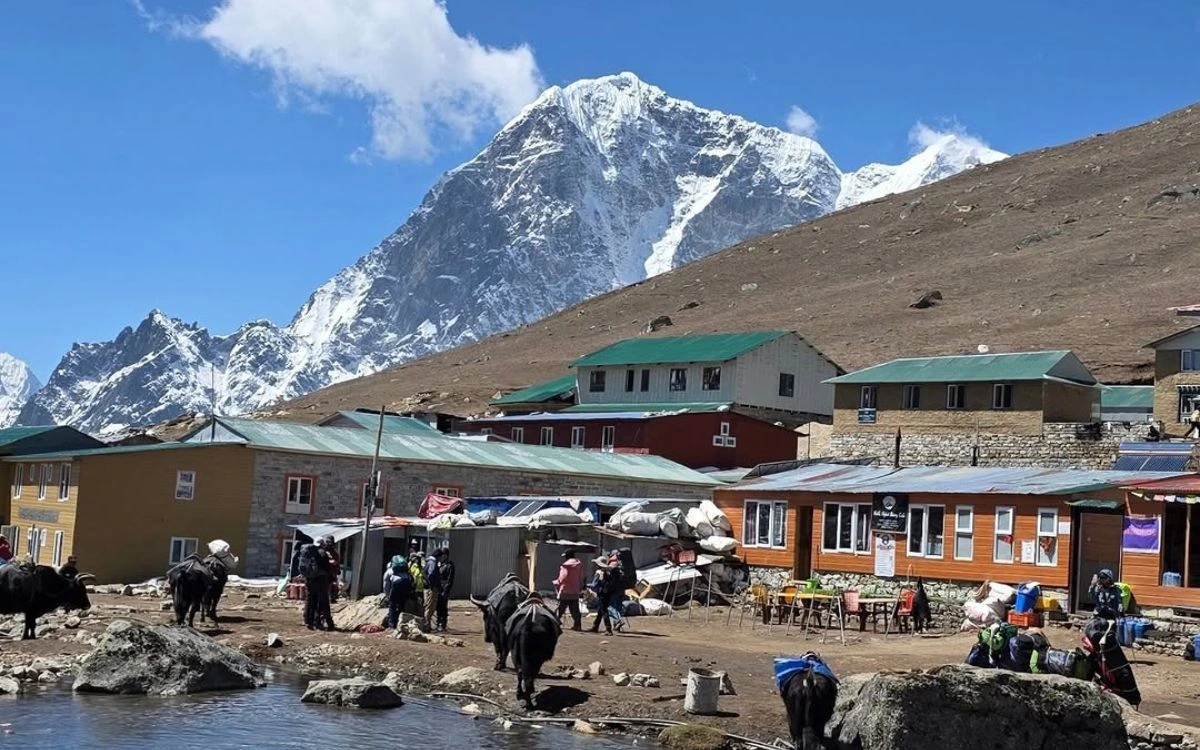




-1.webp)
-1.webp)
-1.webp)