Before you make your way into the Himalayas, knowing what you will eat on your Nepal trek should be considered just as important as packing your gear. The food you consume on the trek will provide much-needed energy for trekking over tough mountain trails and across high-altitude passes. The good news is that there are countless delicious and nutritious options available for all tastes and diets along the trails of Nepal, where the menu of many teahouses has changed to accommodate international trekkers while maintaining local flavor.
In addition, trekking in Nepal has now been made possible for almost anyone due to the teahouse systems that are in place on the major trekking routes, which provide warm meals and accommodation throughout the trek. So, whether you are going to Everest base camp or through the Annapurna region, the Nepal trekking food that you will have while trekking in Nepal is designed to keep you going for long days of trekking. This Guide will provide you with everything that you need to know about the food items available for trekking in Nepal, the cost of food, the safety precautions to take while eating in Nepal, and what type of food should be eaten at altitude to have a successful and enjoyable trek.
Types of Food Available While Trekking in Nepal
Teahouse Food in Nepal
Lodging, meals, and a place to hang out while trekking through the Himalayas are all provided by teahouses. These 'mountain guesthouses' usually provide freshly prepared meals throughout the entire day and include anywhere from 20 to 30 different items on the menu. The menu selections at each teahouse in Nepal will vary depending on the area and also the altitude where you are. However, you will find that most teahouse owners take great care to provide you with a consistent level of quality and service. Most kitchens boast fundamental cooking methods, most often wood or gas stoves and all meals are cooked fresh to order. This is why, especially during peak trekking times, you may find yourself waiting 30-45 minutes for your food, but you'll enjoy it knowing you received a hot, freshly prepared meal that has been prepared with safety in mind.
Local Nepali Meals on Trek
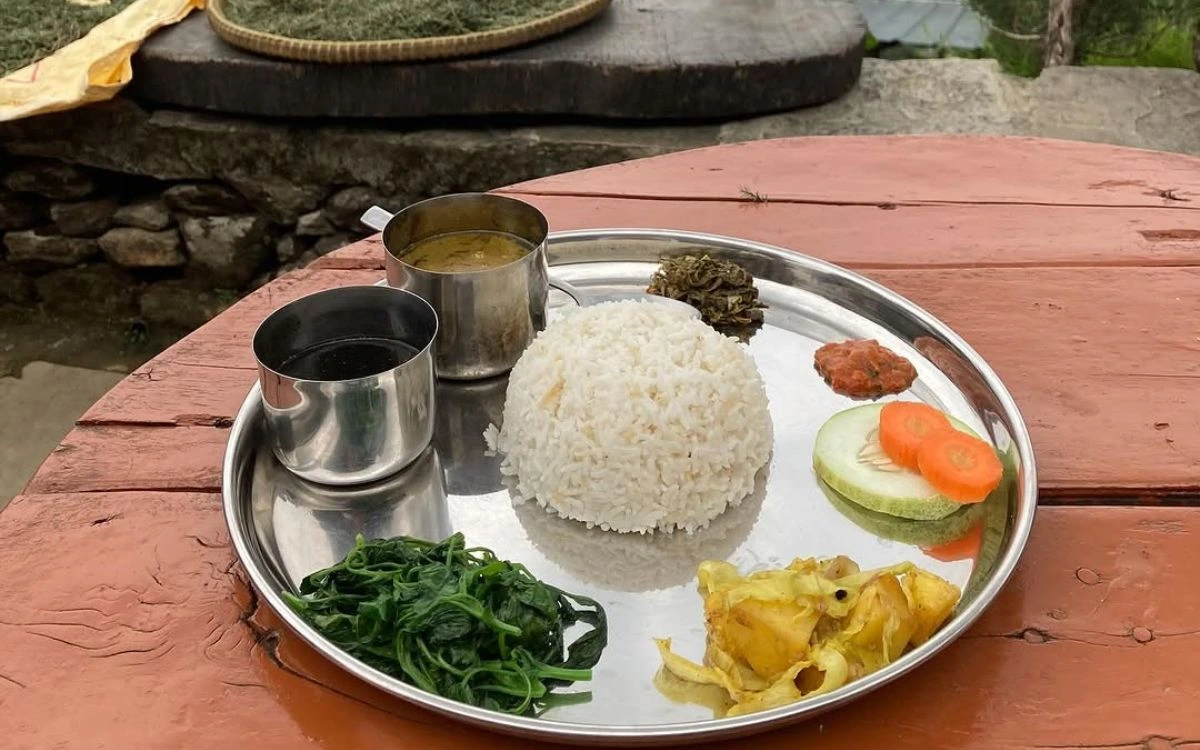
Traditional dal bhat meal with rice, lentils, vegetables, and pickle on metal plate
Trekking menus typically consist of traditional meals from Nepal, or "Dal and Rice," that are authentic to Nepal and are also specifically tailored to meet the high energy requirements of trekking in the mountains. While Dal Bhatt is the most popular option, there are many variations, such as dumplings (Momos), soup (Thukpa), and other regional dishes. Traditional Nepali meals are generally vegetarian or contain limited amounts of simple protein, making them easier to digest at higher elevations. One of the primary benefits of eating locally prepared meals is that teahouses (lodges) have perfected their methods through years of experience providing food for hikers and trekkers in the mountains.
Western and Continental Food Options
To meet the needs of international customers, many tea houses located on popular hiking routes, such as the Classic Route to Everest Base Camp or ABC (Annapurna Base Camp), are now providing Western food regularly. Western menu items include pasta, pizza, pancake, French toast, sandwich, apple pie, etc. Although many of these dishes provide comfort and variety, they are usually more basic than the same dishes prepared at home. Throughout the trekking season, the quality of Western food really improves along more frequented trekking routes, e.g., the ABC trek. Many tea house owners, who have been getting feedback about their food for many years, have improved their recipes over the years based on much of the feedback received. At higher elevations, the types and quantities of Western food available to trekkers decrease, and some, if not all, will not taste very much like they would expect because of the altitude affecting how the food is cooked and/or what ingredients are used in the cooking process.
Popular Trekking Meals in Nepal
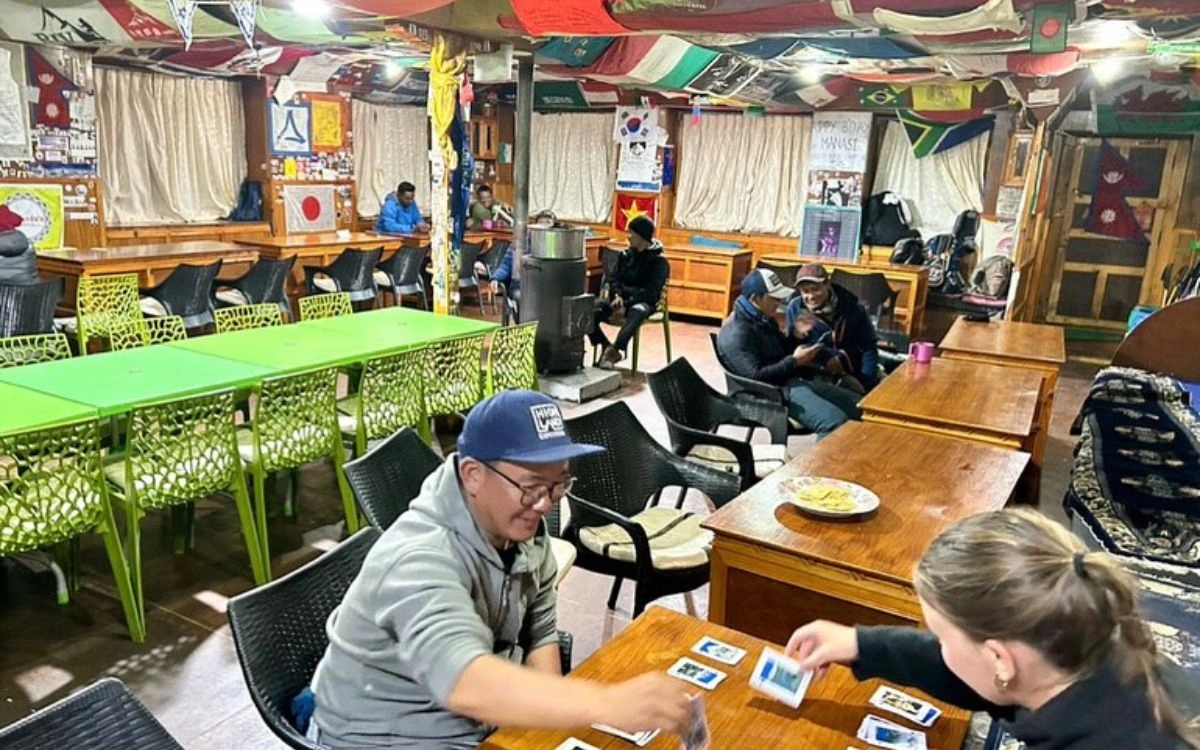
Trekkers relaxing in teahouse dining room decorated with international flags
Dal Bhat: The Ultimate Trekking Fuel
Trekking in Nepal is synonymous with Dal Bhat and Trekking. The traditional meal consisting of steamed rice (Bhat) and lentil soup (Dal) with vegetable curry and accompanying pickles, papad (a crispy wafer made from lentils), is the ‘power dish’ of trekkers throughout Nepal. The “Dal Bhat Power 24 Hour” concept is what makes Dal Bhat the best trekking food. Because most of the time, the Teahouses serve unlimited portions of Dal and Bhat, it gives trekkers the necessary caloric intake to support their eendeavourson the trail without worrying about how many calories they’re consuming. A standard serving of Dal Bhat contains between 600 and 800 calories, and after you take refills multiple times, you can easily double that calorie amount. The complementary nature of carbohydrates (from Bhat) and proteins (from Dal) creates a slow,w constant release of energy throughout the day—ideal for long trekking days. Many experienced trekkers believe eating Dal Bhat at least two times a day prevents them from developing altitude sickness and also has better stamina-enhancing qualities thanWestern-stylee foods.
Noodles, Soups, and Rice Dishes
Noodle and rice-based meals are abundant in Nepal trekking menus, as well as dal bhat. Chow mein (Fried Noodles) and Thukpa are commonly eaten on the trail, along with instant ramen noodles, particularly for lunch or light meals. Fried rice also comes in a variety of styles (vegetable, egg, or mixed) and offers a quick source of energy. Soups are very helpful for staying hydrated and warm at altitude. Garlic soup is a favourite among trekkers because of its alleged ability to prevent altitude sickness, and is used in many trekking areas as a drink for hydration and energy. Vegetable soups keep you warm and offer the same health benefits as garlic soups. Sherpa stew is a hearty mix of vegetables, noodles, and sometimes yak cheese that many trekkers take as it provides a comforting and filling meal that is easy to digest and has enough calories to sustain you on the trail.
Breakfast Options on Nepal Treks
Starting your trek's day with enough energy is why breakfast is significant. Breakfast foods globally include things like porridge/oatmeal, Tibetan bread with honey or jam(s), pancakes, French toast, eggs in many forms, etc., and muesli with milk. Since porridge/oatmeal can be served hot, it is an excellent comfort food, filling, and easily digested. Trekkers, in general, like to order "porridge everything" and ask for custom-designed porridge bowls constructed with nuts, dried fruit, honey, and sometimes even Snickers-sized candies to increase the caloric content. Trekkers eat scrambled eggs (includes boiled eggs), scrambled and fried. Breakfast menus are vast in size at lower-altitude locations, such as Namche Bazaar, but are limited as elevation increases as you ascend toward base camp during the Everest Base Camp Trek.
Food on Major Trekking Routes in Nepal
Everest Base Camp Trek Food
To accommodate decades of international trekking traffic in the Everest region, the food available at Everest Base Camp has developed into one of the best dining cultures in all of Nepal. Menus in lower villages such as Lukla and Namche Bazaar are plentiful and offer a wide variety of Western foods; bakeries and even coffee shops can also be found. As one ascends through Tengboche, Dingboche and Lobuche, food choices become limited, but remain sufficient. A lot of teahouses have indoor heated rooms for dining, which is a great luxury when climbing at higher altitudes. Because of the cost of transporting food, food prices tend to be higher than those in lower parts of the country, as most of the food is either carried up to the teahouses by porters or flown in by helicopter. Despite the higher prices, the quality of food is consistently good, and patrons should feel confident that teahouse owners consider the health and safety of their customers to be paramount—after all, sick trekkers are not good for business.
Annapurna Trek Food
Among the many trek options in Nepal, the Annapurna Circuit and its nearby routes provide perhaps the broadest selection of food available to trekkers on any of the many popular Treks in Nepal. With better roads available inthe lower areas of the Annapurna region, trekkers in these areas can benefit from fresher ingredients and a variety of dishes. Trekkers will be able to find excellent food with fresh vegetables, high-quality coffee, and many excellent bakeries around Pokhara & the approximate starting points of the Annapurna trek. There is a good variety of food options on the Annapurna trek, including traditional Nepali thalis and wood-burning pizza places similar to those in Kathmandu, as well as several villages along the way that are known for their delicious food.
Manang has become a premier destination for trekkers looking to enjoy delicious food while trekking, and many teahouses in Manang specialise in particular food types. Trekkers will still be able to find satisfying meals at Thorong Phedi, the highest point along the Annapurna trek; however, due to the nature of hiking to high-altitude areas, there will be fewer options as a person climbs to a higher elevation.
Langtang and Other Himalayan Treks
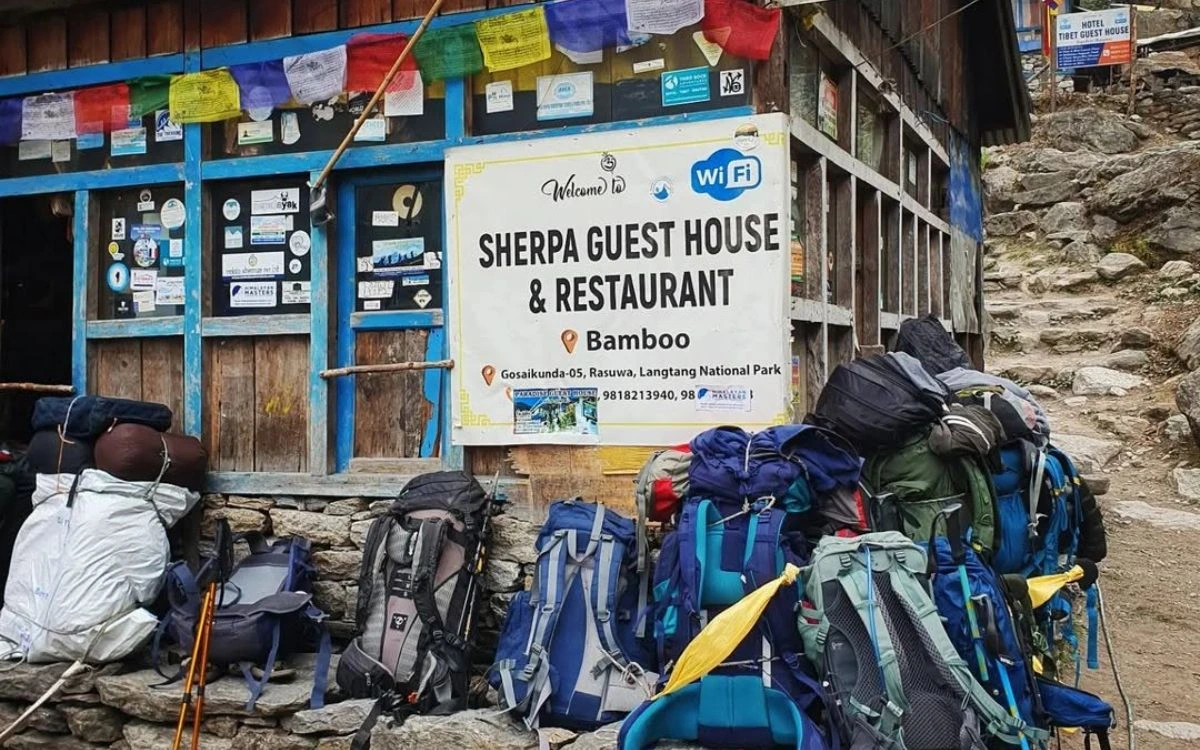
Trekking backpacks outside a Sherpa guesthouse in Nepal with prayer flags
In addition to the opportunities of experiencing authentic foods from Tibet, the Langtang Valley trek will also provide you with easy access to fresh foods due to the proximity of Kathmandu and regular supply shipments. In contrast, trekking in the Manaslu Circuit and Upper Mustang areas will provide you with a more remote trekking experience, where food is usually more basic, yet very nutritious. When travelling on these routes, you will have the opportunity to experience the Tibetan heritage of the communities you pass through and, therefore, receive authentic meals prepared in the traditional manner rather than catered to a predominantly Western audience. Teahouses along these routes generally serve hearty, simple meals made from traditional recipes.
Vegetarian Food on Nepal Treks
Vegan and Jain-Friendly Options
For trekkers in Nepal, vegetarian meals are plentiful, and typically, a vegetarian diet is the recommended diet for a trekker. Nepali cuisine accommodates this diet, as many of the people who live in Nepal are either on a vegetarian diet for cultural and religious reasons. Most teahouse menus have vegetarian options clearly marked, while many of the traditional Nepali dishes could be made without animal products. For vegans, dhaka bht with no ghee or curd makes an excellent choice. Vegetable curries, noodle dishes, soup, and rice recipes can all be made vegan. For Jain trekkers, most teahouses will meet requests for no onions and garlic, so it is beneficial to learn a few basic Nepali phrases to indicate your preference. Because of the wide variety of lentils, beans, and vegetables available, a plant-based trekker will have ample sources of protein and other nutrients.
Is Vegetarian Food Safe at High Altitude?
Many experienced trekkers recommend sticking to vegetarian meals, especially above 3,500 meters. The reasoning is practical: meat is difficult to preserve at high altitudes where refrigeration is often unavailable or unreliable. Vegetables, lentils, and rice don't pose the same spoilage risks. Additionally, vegetarian meals are typically easier to digest when your body is already stressed by altitude. Dal bhat and vegetable-based dishes have proven track records of being safe and satisfying for millions of trekkers. If you do choose meat options in lower regions where supply chains are better, stick to well-cooked chicken or buffalo rather than yak meat, which can be harder to digest.
Understanding the trekking meal cost in Nepal helps with budget planning. At lower altitudes (below 3,000 meters), meals are remarkably affordable. A dal bhat typically costs 400-600 Nepali rupees (approximately $3-4.50 USD), while noodle dishes and fried rice range from 300-500 rupees. Breakfast items like porridge or eggs cost 250-400 rupees. Tea and coffee are 100-200 rupees per cup. Many teahouses operate on a model where accommodation is cheap or free if you eat all meals there, making the overall cost very reasonable. In villages with road access, prices remain low because supplies arrive easily.
Food Costs at High Altitudes
As you ascend, particularly above 4,000 meters, food prices increase significantly. A dal bhat that costs 500 rupees at lower elevations might cost 800-1,200 rupees near Everest Base Camp. This increase reflects the immense effort required to transport supplies to high altitudes, often carried by porters for days or flown in by helicopter. A cup of tea that costs 100 rupees in Lukla might be 300 rupees in Gorak Shep. Despite higher prices, the quality remains adequate, and it's important to remember that these costs support local communities and the incredible logistics of maintaining teahouses in such extreme environments. Budget approximately $25-35 per day for food at high altitudes on popular treks.
What to Eat While Trekking in Nepal
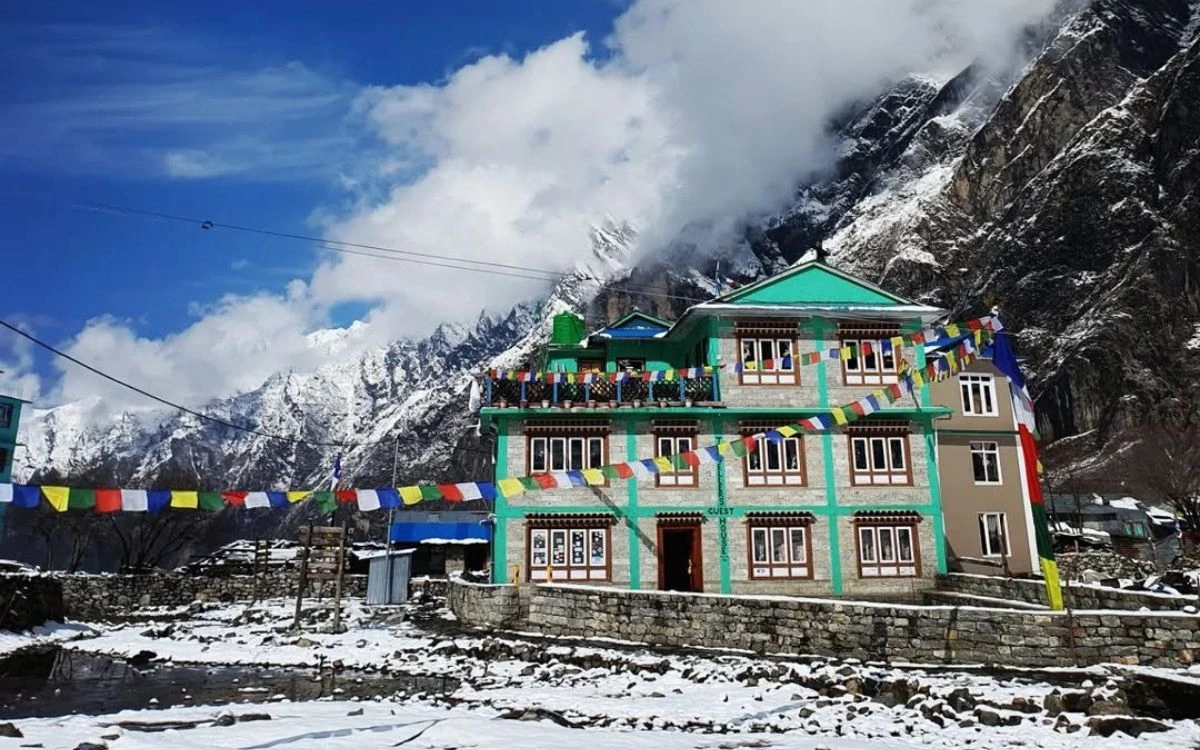
Colorful teahouse lodge with prayer flags in snowy Himalayan mountains
Best High-Energy Foods for Trekkers
What to eat while trekking in Nepal significantly impacts your performance and enjoyment. Prioritise carbohydrate-rich foods that provide sustained energy: dal bhat, rice dishes, noodles, and porridge should form the foundation of your diet. Carbohydrates are easier to digest at altitude than proteins or fats. Add protein through lentils, eggs, and occasional cheese. Soups help maintain hydration while providing warmth and calories. Garlic soup, in particular, has become legendary among trekkers for its taste and purported altitude-sickness prevention properties. Snack on chocolate bars, energy bars, nuts, and dried fruits between meals – these provide quick energy during trekking. Many trekkers also carry electrolyte supplements to add to water, helping maintain proper hydration and mineral balance.
Foods to Avoid During a Himalayan Trek
Certain foods increase risks during high-altitude trekking. Avoid raw vegetables and salads, as they may be washed in contaminated water. Skip meat dishes above 3,500 meters due to preservation concerns. Limit dairy products except in well-established locations, as refrigeration is unreliable. Alcohol consumption is strongly discouraged, especially above 3,000 meters, as it dehydrates you and can worsen altitude sickness symptoms. Avoid excessive caffeine, though moderate tea and coffee consumption is generally fine. Steer clear of overly spicy or greasy foods that might upset your stomach. Finally, don't overeat even though calories are important – altitude reduces appetite naturally, and forcing too much food can cause discomfort.
Food Safety and Hygiene on Nepal Treks
Food safety is a valid concern, but following simple guidelines keeps risks minimal. Choose busy teahouses where high turnover means fresher ingredients. Order freshly cooked hot meals rather than items that might have been sitting out. Stick to bottled or purified water – never drink straight from taps or streams. Vegetarian options are generally safer than meat, especially at altitude. Peel your own fruits if you have them. Watch food preparation if possible – clean kitchens and careful cooking practices are good signs. Use hand sanitiser before meals, as soap and water aren't always available. Most trekkers complete their journeys without stomach issues by following these basic precautions. Teahouses on major routes understand tourist needs and maintain reasonable hygiene standards.
Start your day with a substantial breakfast to fuel morning trekking. Order lunch early at your destination teahouse, as kitchens get overwhelmed during peak lunch hours. Eat dinner early (around 6-7 PM) to ensure proper digestion before sleep. Drink plenty of fluids with meals – warm lemon tea, ginger tea, or hot water aids digestion. Listen to your body's hunger cues but maintain regular eating schedules even if altitude suppresses appetite. Try local specialities,s but don't be too adventurous if your stomach is sensitive. Carry emergency snacks in your daypack for unexpected delays or energy dips. Consider taking a daily multivitamin to supplement your diet. Share meals with fellow trekkers to try different dishes and build community. Finally, be patient with service – remote mountain teahouses are doing remarkable work, and a little understanding goes a long way.
FAQs
What kind of food is available on Nepal treks?
Most Nepal treks offer teahouse meals such as dal bhat, noodles, rice, soups, momos, pasta, eggs, and simple Western dishes. Food availability increases on popular routes like Everest and Annapurna.
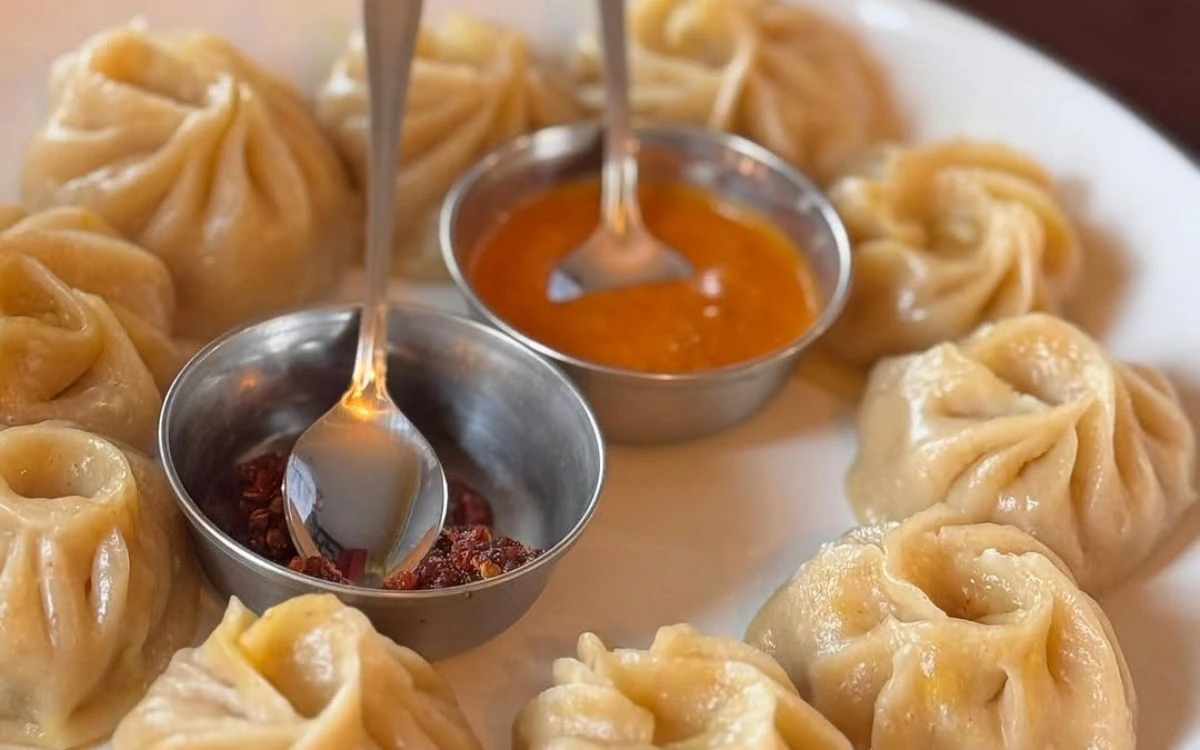
Momo (Nepali dumplings) with tomato and spicy dipping sauces
Is food safe to eat while trekking in Nepal?
Yes, food on Nepal treks is generally safe if you eat freshly cooked meals at teahouses. Vegetarian food like dal bhat is considered the safest option, especially at higher altitudes.
How much does food cost during trekking in Nepal?
Trekking meal costs in Nepal range from affordable at lower altitudes to more expensive at higher elevations. Prices increase due to transportation challenges and altitude.
What is the best food to eat while trekking in Nepal?
Dal bhat is the best trekking food in Nepal because it is nutritious, energy-rich, and refillable in many teahouses. Soups, porridge, and rice-based meals are also excellent choices.
Is vegetarian food easily available on Nepal treks?
Yes, vegetarian food is widely available on all major trekking routes in Nepal. Many trekkers prefer vegetarian meals for better digestion and food safety.
Can I get Western food on Nepal treks?
Western food, such as pasta, pancakes, pizza, fries, and sandwiches,s is available on popular treks like Everest Base Camp and Annapurna, though options become limited at higher altitudes.
What food should I avoid during a Himalayan trek?
Avoid raw vegetables, meat at high altitude, alcohol, and unhygienic street food. These can increase the risk of altitude sickness and stomach problems.
Conclusion
Food on Nepal treks is an integral part of your Himalayan adventure, providing not just sustenance but also cultural connection and memorable experiences. From the endless refills of dal bhat to the comfort of a hot garlic soup on a cold evening, trekking food in Nepal combines practicality with pleasure. The teahouse system has evolved to offer diverse menus that cater to international tastes while preserving authentic local cuisine. By understanding what to eat, where to find the best meals, and how to stay safe, you can focus on enjoying your trek rather than worrying about your next meal. The variety and quality of food available might surprise you, especially on well-established routes where teahouse owners have perfected their craft over decades.
Remember that food costs increase with altitude, so budget accordingly and appreciate the tremendous effort required to feed trekkers in such remote locations. Whether you're planning the Everest Base Camp trek, exploring Annapurna trails, or venturing into less-travelled regions, good food will be there to fuel your journey and warm your spirit. For an expertly organised trekking experience with carefully selected teahouses and knowledgeable guides who understand dietary needs, contact us at Himalayan Recreation to start planning your unforgettable Nepal adventure today.


-3.webp)



-1.webp)
-1.webp)
-1.webp)