Trekking in Nepal is an unbelievably beautiful experience that brings thousands of adventurers each year. Whether you want to trek through a village made up of ancient buildings or underneath the tallest mountain in the world, knowing the appropriate safety precautions can change your adventure from being remarkable to being dangerous. The safety for trekking within the Himalayas is much more than making sure you have good boots, but the different types of considerations. Altitude sickness prevention, emergency planning/evacuation, and having a complete awareness of the weather conditions during your trek are all things to consider.
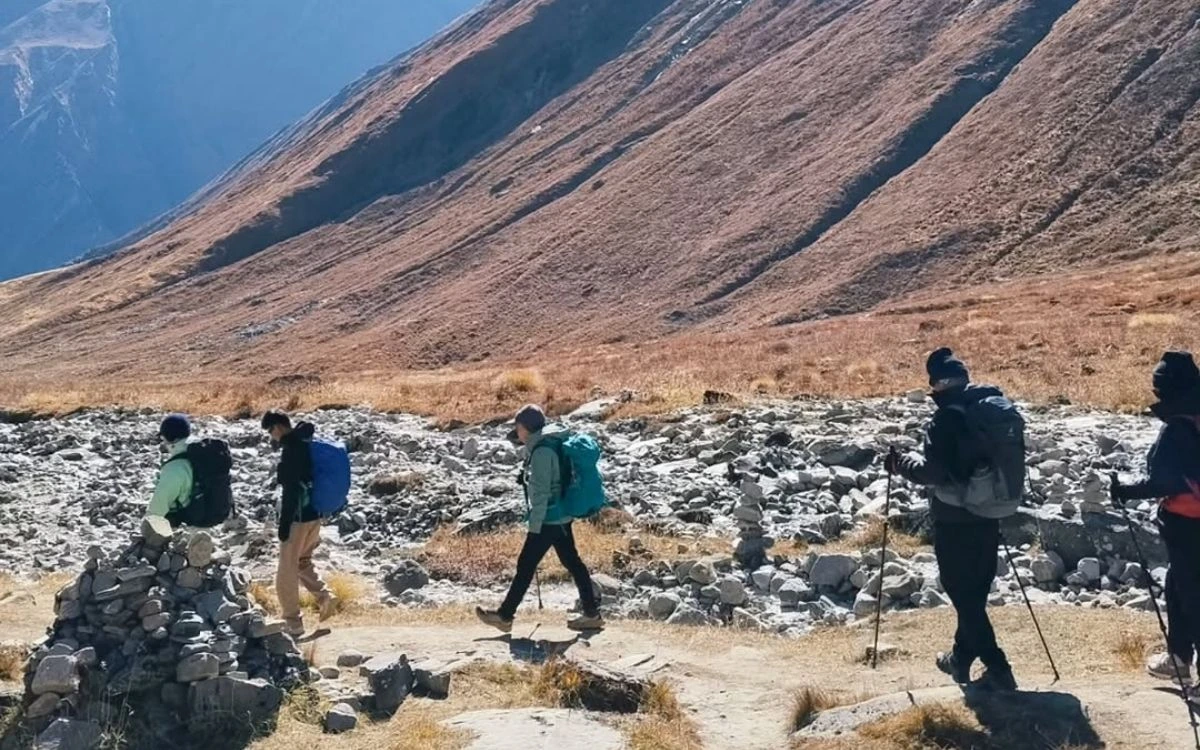
Trekking group using poles while crossing rocky terrain in high-altitude valley
Having a guideline to follow with regard to safety and vice versa (physical fitness, weather awareness, permit compliance, and mental fitness) while on your journey is important. This guide will help you to stay safe, healthy, and confident when you start your venture, whether you are planning on walking the infamous base camp trek for Everest, approx. 1,400 km of the Annapurna region, or hiking off the beaten path into the many valleys of the Himalaya.
Why Safety Matters in Himalayan Trekking
While the Himalayan mountains can be breathtakingly beautiful, they can also be volatile and dangerous to hikers. The high elevation, changing weather conditions, wilderness terrain, and difficulty of accessing medical help make safely trekking in Nepal a major concern for every type of trekker, from novice to advanced. Every year, numerous trekkers have issues with altitude sickness, accidents on the trail, or severe weather while out hiking. Fortunately, with adequate planning and preparation, these risks can be effectively minimized.
Is Trekking in Nepal Safe for Beginners and Solo Travellers?
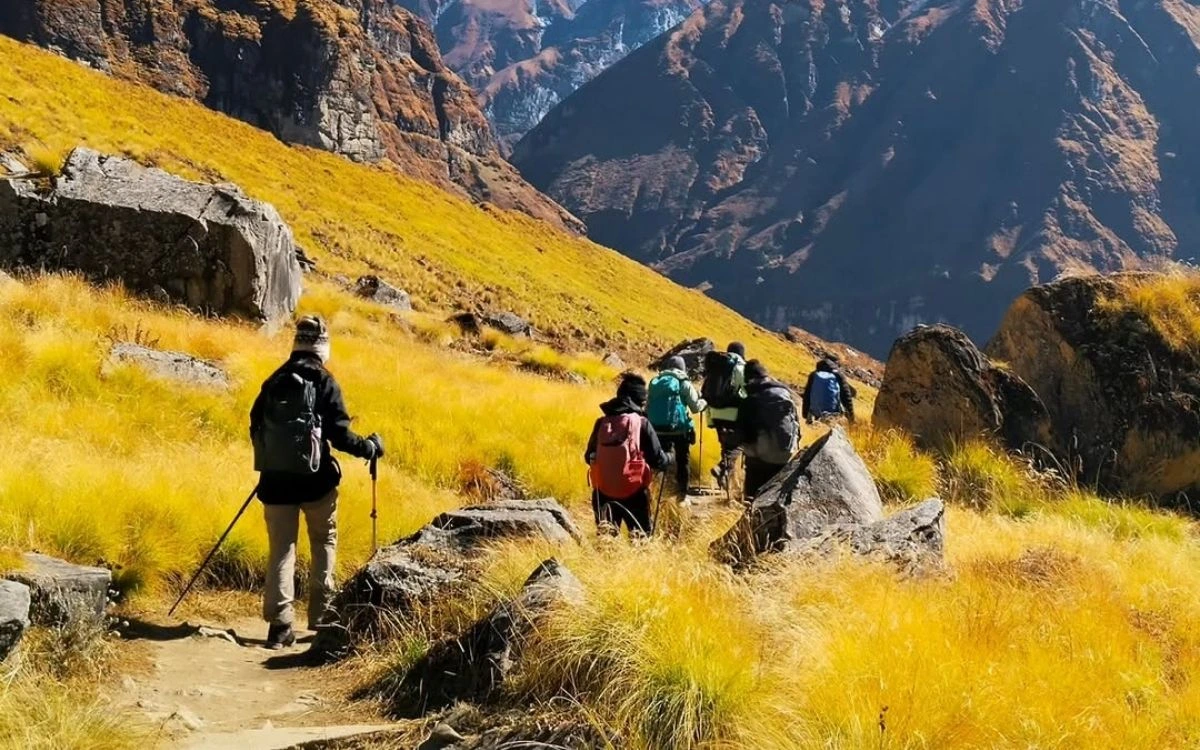
Hikers in single file ascending golden hillside trail with proper gear and poles
A common question from people starting out on their first trek is, "Is trekking in Nepal safe?" Yes, trekking in Nepal is safe if you prepare accordingly. Nepal has very good trekking infrastructure and has trained guides and an official checkpoint system, which has been developed to protect the safety of all trekkers. While it is possible to trek on your own, your risk of danger will be significantly reduced if you are travelling with a licensed guide, especially on high-altitude trails. Those who show the mountains the respect they deserve, plan and practice safety while trekking in Nepal, will be rewarded.
Pre-Trek Preparation
Research Your Trek Route and Difficulty Level
Before you hit the trail, begin your planning. Study the difficulty and elevation gain for your chosen route as well as how far you'll be walking each day. Some of the more well-known trekking routes include the Annapurna Base Camp (ABC), Langtang Valley, Manaslu Circuit, Upper Mustang and Mount Everest. Each trek is unique in terms of the challenges you may encounter, so you need to be sure that you have the physical ability to hike that particular trek before choosing it. This is the most important safety decision you will make while trekking.
Choose the Best Season for Safe Trekking
Weather conditions in the Himalayas you should know before booking: the two safest trekking seasons in Nepal are spring (March to May) and autumn (September to November). These months offer stable skies, clear mountain views, and manageable trail conditions. Monsoon season (June to August) brings heavy rain, leeches, and landslide risks, while winter can make high passes dangerously icy. Picking the right season is one of the most effective Nepal trekking safety tips you can follow.
Physical Fitness and Mental Preparation
Physical fitness alone won't help when taking part in a trek to the Himalayas! You should ideally do some form of endurance training, such as walking, cycling or swimming,g each month before you travel. If there is any area in your area where you can train on the type of terrain you will be trekking on, it will help with your stamina. An equally important part of the preparation is training your mental ability to cope with long hours of walking, discomfort due to high altitude and delays when on the trek. You need to mentally and physically prepare for the trek.
Travel Insurance and Emergency Coverage
When it comes to an adventure trek in the Himalayas, you will need to purchase travel insurance. If you plan to go on a trek over 4000m (high altitude), you should also have a plan that covers emergency medical assistance, helicopter rescue and evacuation. Helicopter rescue may be the only way to get someone to safety after an emergency, and this could cost thousands of dollars, so don't wait until you arrive in Nepal to purchase your insurance policy!
Obtain a copy of your insurance policy and give a copy to your guide as well as an emergency contact(s) at home.
Permits, Rules, and Local Regulations
Essential Trekking Permits You Need in Nepal
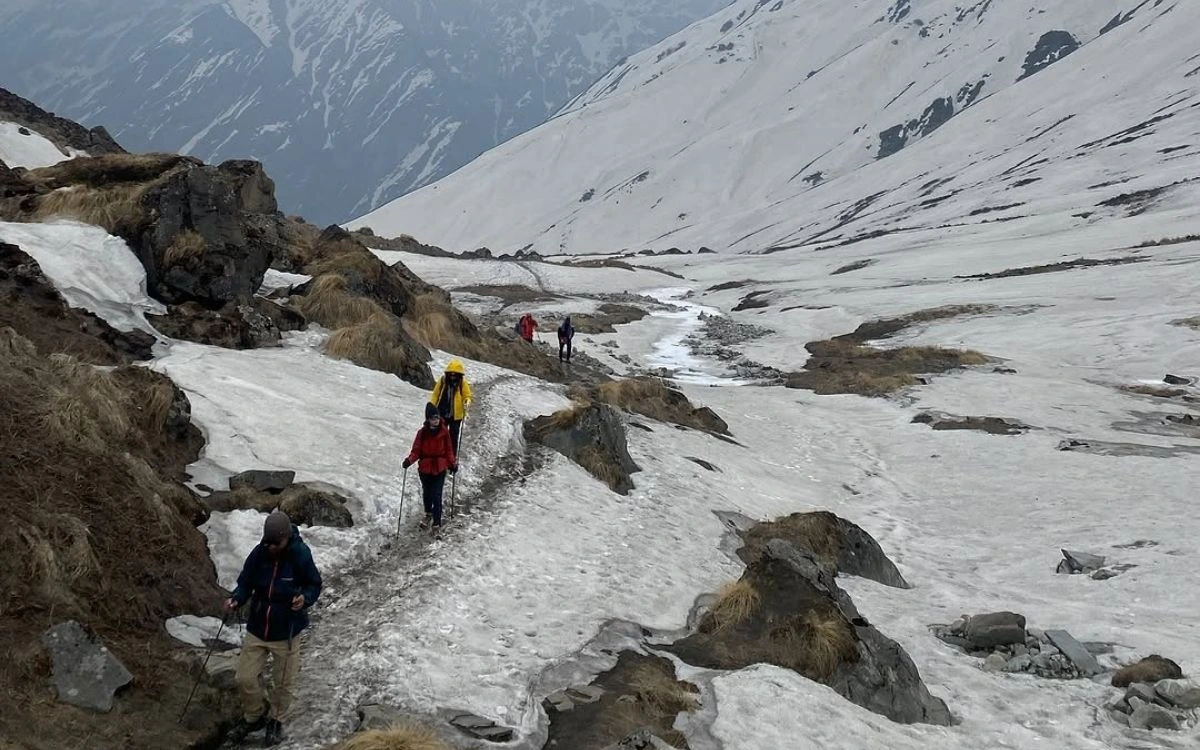
Trekkers carefully navigating icy snow-covered trail using trekking poles for stability
Trekking permission and regulation were created to safeguard the trekkers themselves and the preservation of the environment for all trekkers. To obtain a TIMS, all foreign trekkers must have a TIMS (Trekkers' Information Management System) card prior to their arrival in Nepal. In addition, the type of permit issued will determine the route types from trekking area to trekking area that will issue permit requirements, such as: Annapurna Circuit or Annapurna Base Camp require an ACAP (Annapurna Conservation Area Permit), the EBC area requires a Sagarmatha National Park Entry Permit, and Upper Mustang / Manaslu have restricted area permit requirements. Therefore, ensure all permits are attained before proceeding into restricted areas, as checkpoints will confirm possession of a valid permit prior to entering the restricted areas along the trek.
Why Hiring a Licensed Guide Improves Safety
A licensed guide goes well beyond leading hikers down the path. Guides monitor the hiker's health for altitude sickness, communicate with other villages, perform permit checks, and coordinate emergency evacuations. A registered guide is legally required on technically challenging routes such as the Manaslu Circuit and Upper Mustang treks. A licensed guide will greatly enhance your cultural experience and lower your risk of danger while on a popular trail by providing local knowledge that only someone with their cultural heritage would know.
Health and Altitude Safety
Understanding Altitude Sickness and Its Symptoms
High altitude hiking can lead to Acute Mountain Sickness (AMS), which is one of the most frequent and fatal dangers hikers encounter at high altitudes. Symptoms of AMS include: headache, nausea, poor appetite, tiredness, and dizziness. If, however, you experience confusion, trouble walking straight, or difficulty breathing while at rest, you may be suffering from either High Altitude Pulmonary Edema (HAPE) or High Altitude Cerebral Edema (HACE); both constitute a severe medical emergency that requires immediate descent.
To help avoid AMS during your trip,p use the following methods:
Make sure that your ascent is gradual: never add more than 300 - 500m in sleeping elevation each day above 3,000m.
Follow the climbing rule: ascend above your elevation for the day and then sleep below that elevation.
Drink at least 3 - 4 litres of water daily to remain hydrated.
Stay away from alcohol and sleeping pills for the first few days after ascending to altitude.
After discussing with your doctor before you leave, you may want to take Acetazolamide (Diamox).
Safe Acclimatization on the Everest Base Camp Trek
The Everest Base Camp trek is one of Nepal's most popular trekkinrouteste and requires significant compliance with proper acclimatization preparation. Rest days are incorporated on the trek at both Namche Bazaar (3,440 m) and Dingboche (4,410 m) to facilitate this acclimatization.
Always listen to your body and do not skimp on any days designated as acclimatization. Likewise, if your guide and/or a medical professional instructs you to descend, you must do so immediately. The picture of you at the summit is not worth jeopardizing your health.
Weather and Environmental Risks
Avoiding Landslides, Avalanches, and Trail Hazards
Mountain conditions can change very quickly in the mountains. Each morning, you should consult some sort of forecast and be aware of warning signs like darkening or threatening skies, sudden shifts of winds, or noise of thunder before venturing out, especially when going out into the high passes in poor visibility conditions. During the monsoon season, serious hazards can exist due to excessive trail erosion and rock slides, especially in the high, steep gorge areas. Always carry a headlamp and some sort of emergency rain gear with you when hiking in the mountains, and it is never wise to walk on an unfamiliar trail when it is dark.
Safe Trekking Practices in the Annapurna Region
Home to both the Annapurna Base Camp (ABC) trek and the Annapurna Circuit, the Annapurna Region experiences rapidly changing weather due to afternoon storm conditions. In 2014, the Annapurna region experienced the 2014 season avalanches, and many accidents occurred. It is very important to stay up-to-date on currentweather-relatedd advisories, listen closely to the advice of your guides, and register your itinerary with ACAP checkpoints in order to allow authorities to locate you in case of emergencies.
Gear, Navigation, and Communication
Essential Safety Gear for Nepal Treks
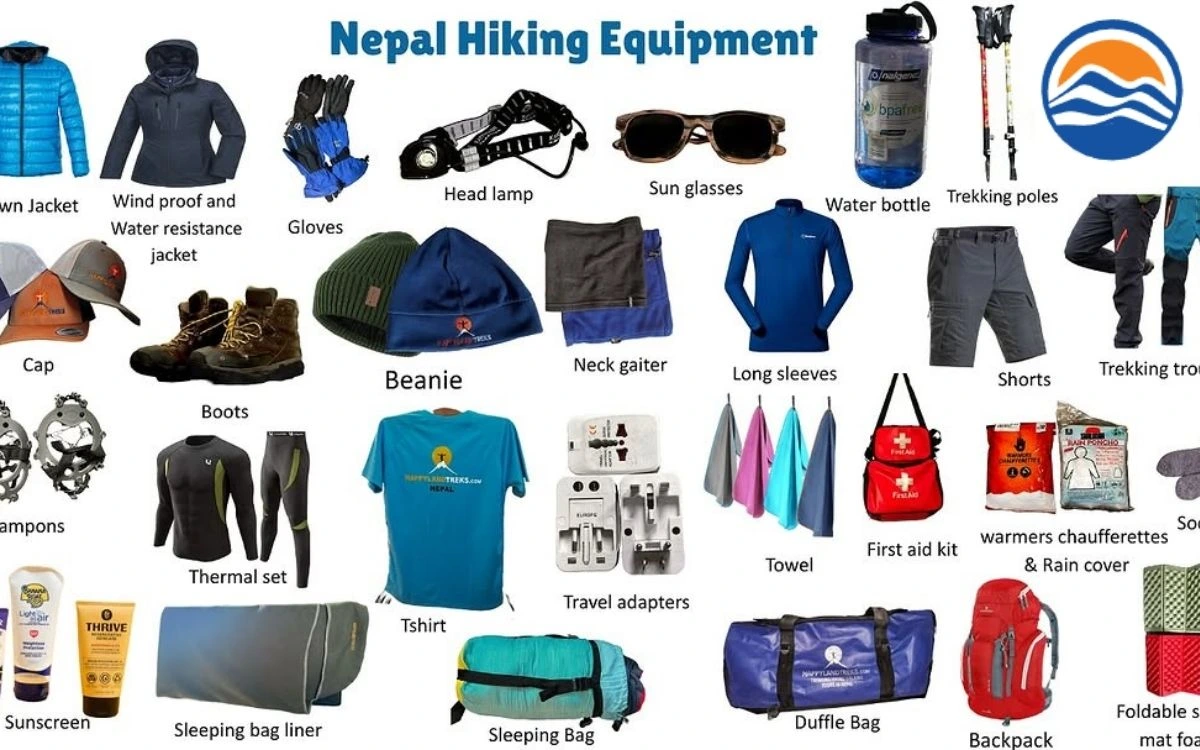
Nepal hiking equipment checklist displaying jackets, boots, first aid, and essential gear
When you're packing your backpack for a hike, consider packing smart instead of packing heavy. Here is a list of essential safety equipment that should be included in your bumps gear:
First-aid kit with blisters, pain relief, dehydration solution, and AMS medications.
Trekking poles for steep descents and river crossings.
Sun protection: high SPF sunblock, UV sunglasses and a broad-brimmed hat.
Water purifying tablets or UV pen.
Staying Connected: SIM Cards, GPS, and Emergency Contacts
Although there has been an improvement in mobile coverage for trekking corridors of Nepal for the roads connecting Pokhara to Jomsom and Jomsom to Muktinath, some areas, such as Upper Mustang and Langtang Valley,y continue to be dead zones. You can get Ncell or Nepal Telecom local SIM cards to connect in areas where there is coverage. Download an offline map (such as Maps.me) as a backup if you have no cell service, and consider renting a satellite communicator (e.g., Garmin inReach) for your trip if you're going to a very isolated place. You should give a trusted friend a copy of your day-to-day itinerary before leaving home.
Emergency Preparedness
Helicopter Rescue Procedures in Nepal
Emergency rescue trekking in Nepal is a well-organized system, but it requires you to act quickly. If a trekking emergency occurs, contact your guide immediately — guides can radio or call for helicopter rescue through their agency or directly through Nepal's Tourism Board emergency lines. Helicopters can land at a specific altitude window,ws and in clear weather only, so early reporting is critical. Always carry your insurance card details and emergency contact numbers in your daypack.
Emergency Numbers and Local Support Systems
Keep these contacts saved and accessible:
Nepal Police Emergency: 100
Nepal Tourism Board Trekkers Helpline: 01-4256909
Himalayan Rescue Association (HRA): clinics in Pheriche (EBC route) and Manang (Annapurna)
Your trekking agency's 24-hour emergency line (Himalayan Recreation Treks and Expedition)
Responsible and Safe Trekking Behaviour
Respecting Local Culture and Environment
Safe trekking is not just about your physical wellbeing — it also means respecting the communities you pass through. Greet locals with a warm "Namaste," dress modestly near religious sites, always walk clockwise around mani stones and stupas, and ask permission before photographing people. These practices build goodwill with local communities, who are often first responders in mountain emergencies.
Sustainable Trekking Practices for Safer Travel
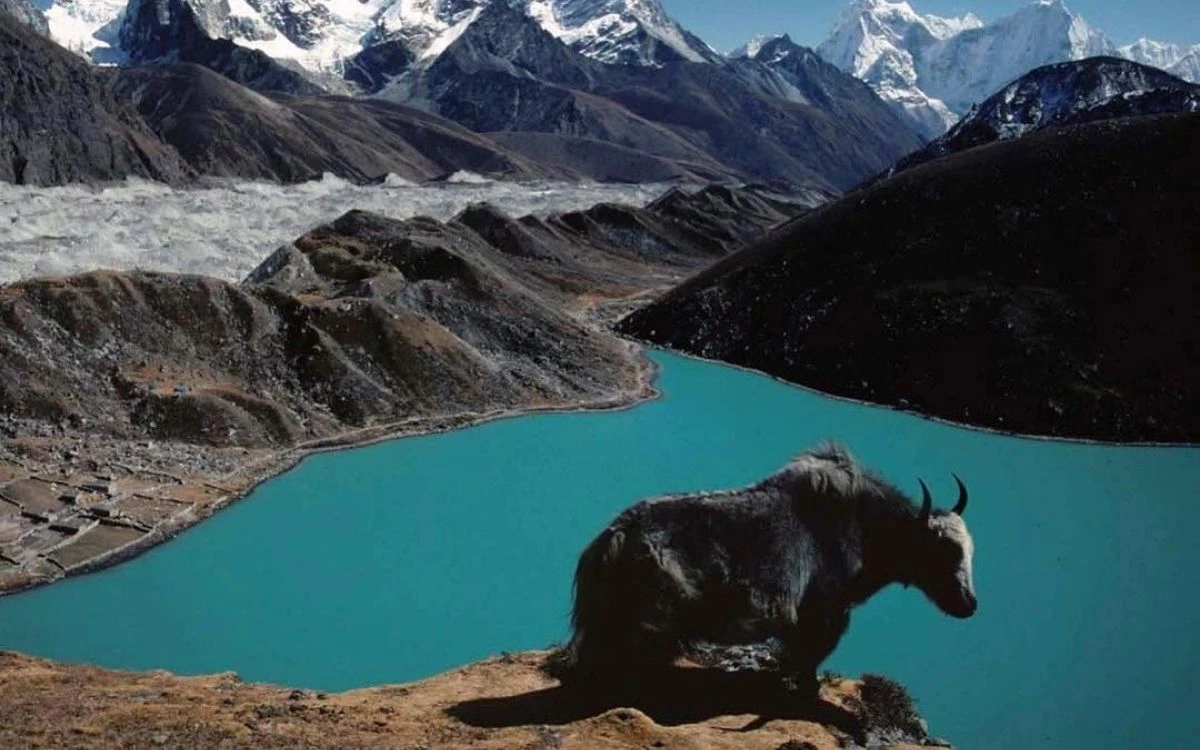
Black yak standing above turquoise glacial lake with Himalayan peaks and glacier behind
Sustainable trekking keeps trails safe and accessible for everyone. Carry out all your waste, use refillable water bottles, and stay on marked paths to prevent trail erosion and maintain clear navigation markers. Choose eco-certified teahouses and agencies that employ local guides and porters at fair wages. A healthier mountain ecosystem means better infrastructure and safer trails for every trekker who follows you.
Final Safety Checklist Before You Start Your Trek
Route researched and matched to your fitness level
Best trekking season confirmed — spring or autumn recommended
All required permits obtained (TIMS, national park, restricted area)
Licensed guide and porter hired through a registered agency
Emergency contacts saved — including HRA clinics on your route
Essential safety gear packed — layers, first aid, navigation tools
An acclimatization schedule is built into your itinerary
Itinerary shared with a trusted contact at home
FAQs
Is hiking in Nepal safe if you're new to it?
Yes, as long as you are appropriately equipped with adequate training and an experienced guide, many of the popular hiking routes throughout Nepal can be accessed by first-time hikers, including the Annapurna Base Camp and Langtang Valley hikes.
In addition to needing a TIMS card, you may also require either a national park entry permit or a restricted area permit (for areas such as Upper Mustang or Manaslu), depending upon which hike you are doing.
How do I avoid altitude sickness when hiking to Everest Base Camp?
Follow a slow ascent schedule with sufficient hydration and ensure that you take mandatory rest days at both Namche Bazaar and Dingboche; abstain from consuming alcohol while hiking; and, if you experience severe altitude sickness symptoms at any time, descend immediately. Before leaving for your hiking trip, you should talk to your doctoraboutg taking Acetazolamide.
When is the best time of year for hiking in Nepal?
For the best weather conditions and most beautiful views of the mountains are between March and May (spring) and September and November (fall), as during these seasons the weather conditions are generally stable, with little precipitation, and great visibility of the Himalayan Range.
Do I need travel insurance to go hiking in Nepal?
You definitely need to have travel insurance covering at least helicopter rescue and high-altitude injuries, and reputable hiking agencies typically require this as a prerequisite.
Conclusion
The mountains in Nepal provide some of the most stunning trekking experiences in the world, and with proper planning, they are accessible to people from all backgrounds. You can help ensure your trek is a safe and fulfilling one by following these Himalayan trekking safety tips, respecting local customs and regulations, preparing your body and equipment, and being aware of the risks associated with altitude and weather.
Ready to make your Himalayan dream a reality? Trust the experts and contact us at Himalayan Recreation to plan a safe, well-supported, and unforgettable trekking adventure tailored just for you.


.webp)



-6.webp)
-1.webp)
-1.webp)