Budhanilkantha Temple is a famous Hindu temple dedicated to Lord Vishnu, located ten kilometers north of Kathmandu city at the bottom of Shivapuri Hill with one of the most stunning stone sculptures in Nepal.
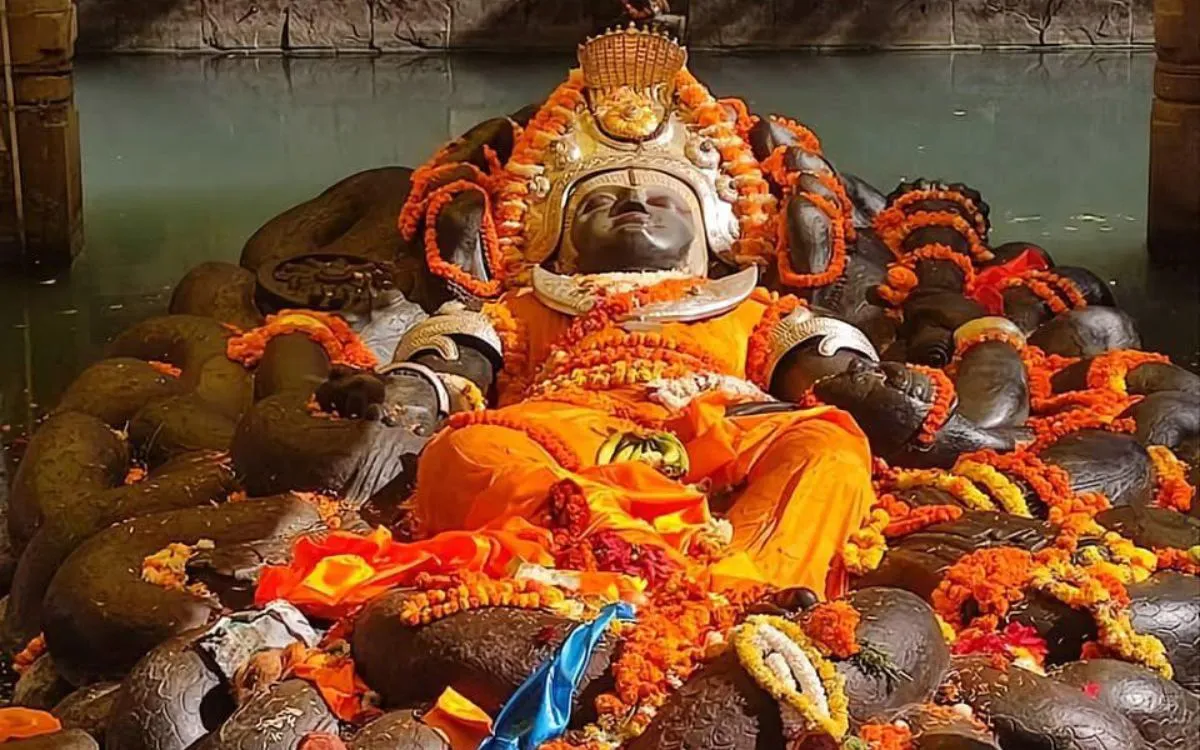
Carved from a single block of dark basalt stone from an unknown source, the 5-meter length Budhanilkantha sculpture reclines in a leaning-back posture in an incised water tank (depicting the cosmic sea), which is 13 meters long. The statue is also known as the Sleeping Vishnu or Jalakshayan Narayan. The statue depicts the deity lying on the curling coils of the cosmic serpent Shesha (Shesha is the boundless, multi-headed lord of the snake god known as Nagas, and also the servant of Vishnu). Vishnu's legs crossed and his head was on Shesha's eleven heads. Vishnu's four arms have demonstrations showing his divine attributes: the chakra, or circle (the brain), the conch shell (the four elements), the lotus flower (the rolling universe); and the club (ancient knowledge).
Sleeping Vishnu statue at Budhanilkantha Temple decorated with orange marigold garlands, resting on the cosmic serpent Shesha in a sacred pond
Altogether, Budhanilkantha Temple is among the examples of Nepal's religious and cultural legacy, a tranquil sanctuary for the seekers of communion, understanding, and enlightenment. Let’s enter the pages of history, describing the origin and evolution of this holy shrine. We will explore the architectural wonders of the temple, each a story of craftsmanship and devotion. And, most importantly, we shall soak up the spiritual atmosphere that fills the air and learn why this temple continues to be a spiritual hub for millions of followers and tourists.
Highlights of Budhanilkantha Temple in Kathmandu
Reclining Vishnu Statue (Main statue): A 5-meter-long statue of Lord Vishnu resting on a bed of cosmic serpents (Sheshanaga).
Sacred Pond: The statue of Vishnu floats in a water tank that symbolizes the cosmic ocean.
Annual Haribodhini Ekadashi Festival: A festival celebrated at Budhanilkantha.
Peaceful Natural Setting: The temple lies on the foot of Shivapuri Hill with lush greenery.
History of Budhanilkantha Temple
Ancient religious beliefs intertwined with local folklore form the core around which Budhanilkantha Temple's history revolves. Numerous historical narratives suggest that Budhanilkantha Temple emerged as a result of a supernatural meeting.
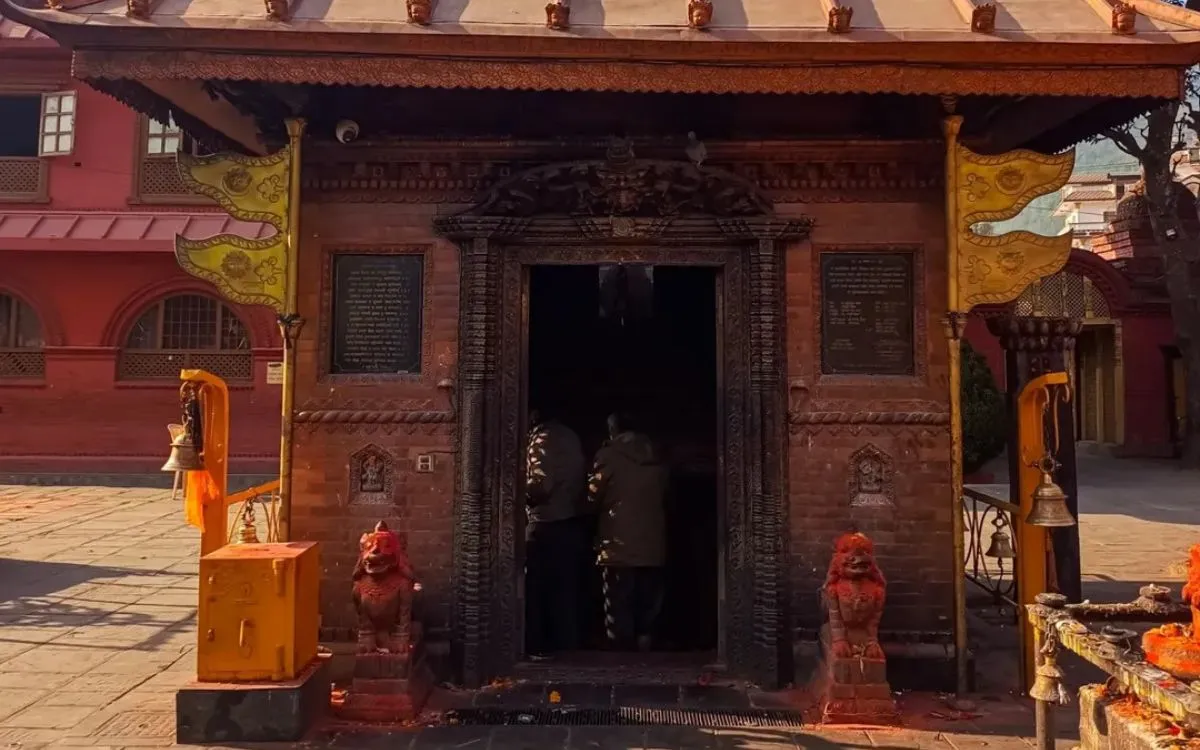
Budhanilkantha Temple entrance with carved wooden doorway, stone lion guardians, and devotees entering the shrine, Kathmandu, Nepal
The Mythological Tale
Budhanilkantha has various myths. It is said that a farmer and his wife unearthed the statue of Lord Bishnu while field plowing a long time ago. The farmers' plow hit a solid object which revealed an enormous submerged statue of Lord Vishnu causing them great astonishment. The location transformed into a spiritual worship destination at that time.
Another legend states that King Vishnugupta from the 7th-century Licchavi dynasty constructed the statue. The largest stone carving in Nepal stands as a monumental achievement of artistic and religious significance among the nation's statues.
Architectural Significance
The Budhanilkantha Temple has a well-made open-air shrine, under which the gigantic body of Lord Vishnu rests on the multi-headed snake bed (Sheshanaga) in a rectangular tank. The water's calmness symbolizes the ocean of the universe, while the snake represents eternity and divine protection.
The fine engravings on the statue, from Lord Vishnu's crown to his weapons and the serene expression on his face, are proof of the finer skills of Nepali artisans of the past.
Walkthrough: What would you find at Budhanilkantha
Main Temple Complex
The main temple lies on the foot of Shivapuri Hill with the most spectacular stone sculpture in Nepal. The main complex area includes:
Giant Reclining Vishnu: The main Lord Vishnu Statue of 5 meters long.
Devotee Area: An open courtyard reserved for devotees to gather during prayers or offerings.
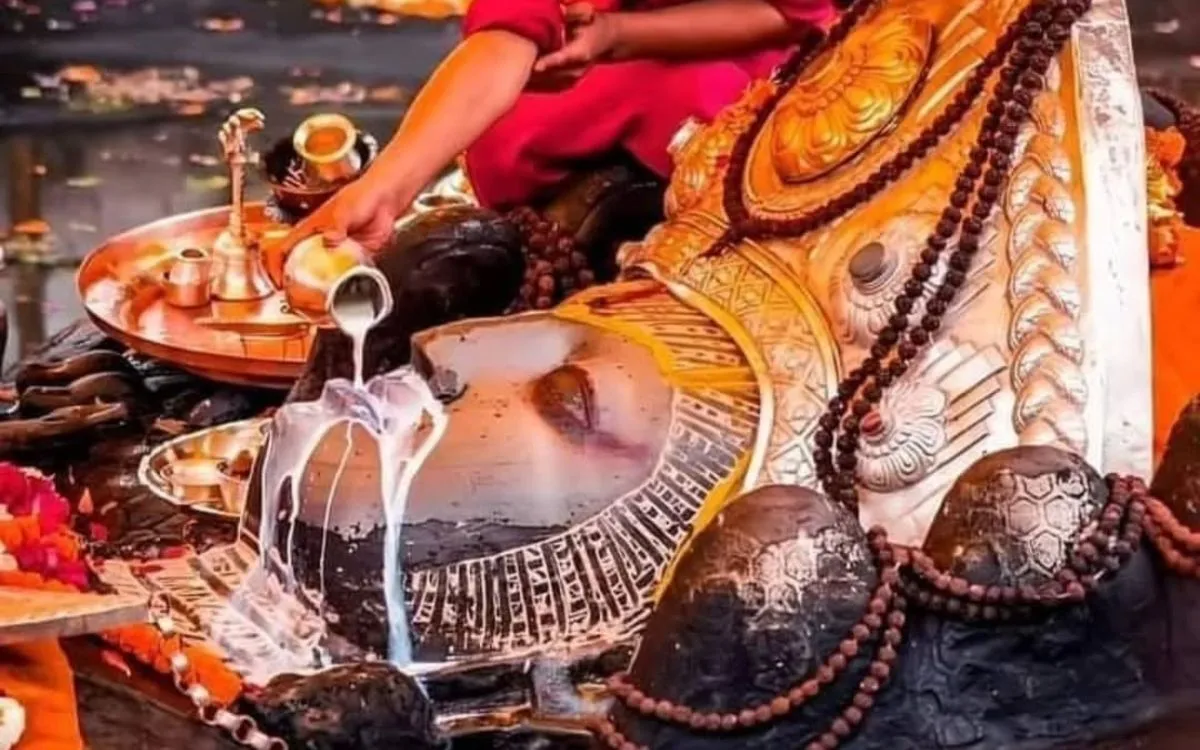
Priest Services: Dedicated priests perform daily rituals, including the sacred bath of Lord Vishnu and special offerings.
Sacred Pond
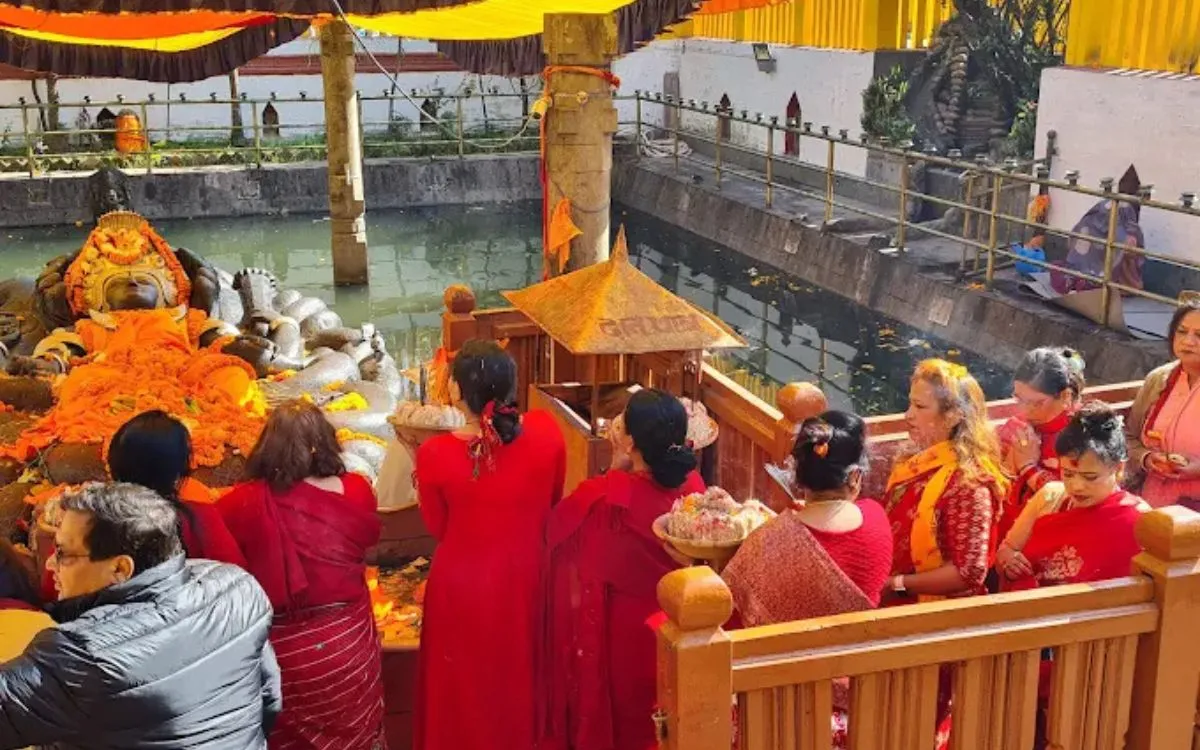
Lord Vishnu's statue hovers in the holy pond, representing the cosmic ocean. It is said by the devotees that the water possesses magical powers, and it is the practice of offering flowers, coins, and other items as offerings into the pond.
The Shivapuri Hill Backdrop
The temple area is beautifully enhanced by the lush greenery of Shivapuri Hills. You can meditate, and relax enjoying the greenery of the Shivapuri Hills. If you have time you can visit Shivapuri National Park which is near the temple.
Hindu priest performing milk abhishek ritual on the Jalashayana Vishnu statue at Budhanilkantha Temple, Kathmandu
Things to do at Budhanilkantha Temple
Attend Ritual Offerings
See this unique rite and perform sacred offerings in the pond. The temple celebrates several Hindu festivals throughout the year. Attend and experience the rituals where the priest bathes the statue.
Explore the Serene Surroundings
The atmosphere is peaceful around the temple complex. The place is perfect for short nature walks and to relax. You will enjoy the lush greenery of the place.
Shivapuri Nagarjun National Park Visit
Shivapuri National Park is located a minute away from the temple. It is a one of kind escape from the busy area of Kathmandu into pure wilderness.
Photography
Capture the magnificent environment while exploring the complex and serene atmosphere of the temple. The statue's craftsmanship surely demands your attention through its intricate carvings and luminous expressions which collectively induce a peaceful aura.
Learn Local Culture
You can interact and learn the religious importance of the temple with local people and priests. You will find the people here are very friendly.
How to reach Budhanilkantha?
From Kathmandu
Taxi or Ride-Sharing Apps: Taxi is available easily. The taxi rides from Kathmandu may take around 30 to 40 minutes and may cost around 500-800 NPR.
Public Bus: Buses are available from different areas of Kathmandu. You’ll get buses from Ratnapark, Gongabu, Kalanki, and many other places to the Budhanilkantha, and from there, a short walk leads you to the temple.
Private Vehicles: Visitors can also drive their vehicles as the road condition is good. You can also rent vehicles easily if you want a comfortable ride.
From Tribhuvan International Airport
The taxi ride would take about 45 minutes from the airport.
Hindu devotees in red sarees offering prayers to the reclining Vishnu statue at Budhanilkantha Temple pond, Kathmandu, Nepal
Climatic Condition of Budhanilkantha
Budhanilkantha has a temperate climate, with typical seasons providing very different experiences. The present weather in Budhanilkantha provides information about which seasonal pattern is under influence.
Spring (March-May): It’s a beautiful time of the year with wonderful temperatures. It’s a great time for hiking and seeing clear mountain views around Shivapuri. The day starts with a chill in the morning then cool and later becomes warm and comfortable in the afternoon which is best for sightseeing.
Summer (June-August): The monsoon season promotes greenery but also results in rain showers. The trails may be slippery, but the foggy landscapes are alluring. Cafes guarded by rain lend a warm vibe to the cold confines.
Autumn (September-November): Autumn is regarded as the ideal time to plan a trip to different places around Kathmandu Valley. The sky is clear, allowing unobstructed views of the Himalayas, and it’s comfortably cool.
Winter (December to February): The winter season is quite cold with a minimum temperature of approximately 1°C/2°C. But you will find the air extra crispy and the skies extra clear, which makes it a great time for photography. An insulated jacket is required for evening walks.
Budhanilkantha offers something altogether unique at any time of the year.
Festivals and Events at Budhanilkantha
Haribodhini Ekadashi
The festival is celebrated in the month of November when Lord Vishnu emerges out of his four months' sleep. The devotees feel that if they fast and perform special pujas on this day, they gain a divine power in their prayer. The event is also famous in Changu Narayan Temple, as both temple is dedicated to Lord Vishnu.
Dashain and Tihar
The celebrations at Budhanilkantha for Dashain and Tihar, in reality, the greatest festival in Nepal, see people thronging. The temple is decorated with oil lamps. People visit this Temple and pray for blessings, while the surroundings will be decked out with all traditional music, and cultural events for the occasion.
Harishayani Ekadashi
Harishyani Ekadashi is celebrated in various Hindu temples including Budhanilkantha Temple. It is an important Hindu festival celebrated in Nepalese and Indian temples. The festival is celebrated on the eleventh day also known as Ekadashi in Nepali of the Hindu lunar month Ashad(June and July). The day is regarded as “Chartumus”, Lord Vishnu’s cosmic rest in such a way that a stone statue in the temple is positioned.
Entry Fees for Budhanilkantha Temple
There is no entry fee to visit the temple. Opening time might vary. Research properly before visiting.
Traveling Tips
Carry cash for offers and donations if possible. Also, many shops still prefer cash over cards.
The weather can change rapidly, so bring layers to stay comfortable.
Respect local cultures.
Visit early morning to avoid crowds.
Respect the sacred places.
Keep the environment clean.
Photography is allowed but maintain the temple’s sanctity.
Accommodations options at Budhanilkantha Temple
If want to stay in Budhanilkantha, here are some good picks:
Park Village Resort
Park Village Resort is a peaceful and luxurious resort located near the temple. The resort provides stunning views of nature. The resort provides you a comfortable and enjoyable hospitality.
Shivapuri Heights Cottage
Shivapuri Heights Cottage is the traditionally designed cottages located on the edge is Shivapuri National Park. Shivapuri Heights Cottages provide an ideal escape from the hustle and bustle of the City whilst having the advantage of being only 30 30-minute drive plus a short walk away from the city center. The hotel welcomes you 24 hours and provides true Nepalese hospitality.
Lemon Tree Premier
Lemon Tree Premier is a premier quality hotel located in Nepal at Taulung Chautara Marg, Budhanilkantha, Kathmandu. Best known for hotel Lemon Tree's quality rooms, food, friendly service, and as fresh as air can get. You are provided various facilities such as a swimming pool, a spa, free wi-fi and many more.
Hotel Sabrina Kathmandu
The Hotel Sabrina Kathmandu is situated at Ganesh Chowk, Bhudhanilkantha near to the temple premises. The hotel offers decent rooms and comfortable beds. The hospitality volunteers and services are quite good. The hotel is just 10km away from popular tourist destination, Thamel.
Frequently Asked Questions (FAQ)
Why is Budhanilkantha Temple famous?
It is famous for its large reclining statue of Lord Vishnu, which is the largest stone sculpture in Nepal.
When is the best time to visit Budhanilkantha Temple?
Autumn is the best season because of optimal weather and clear views, making it the best time to visit.
What nearby attractions are there to Budhanilkantha Temple?
Nearby attractions include Shivapuri National Park, Kapan Moastries, etc.
Are there any festivals celebrated at Budhanilkantha Temple?
Yes, the largest festival here is Haribodhini Ekadashi, and attracts thousands of devotees.
Can I take a photo inside the temple complex?
Photo is generally allowed in the temple complex, but make sure to ask local guides or devotees before taking pictures.
What is the entry fee to enter the temple?
No, there are no entrance fees to visit the temple.
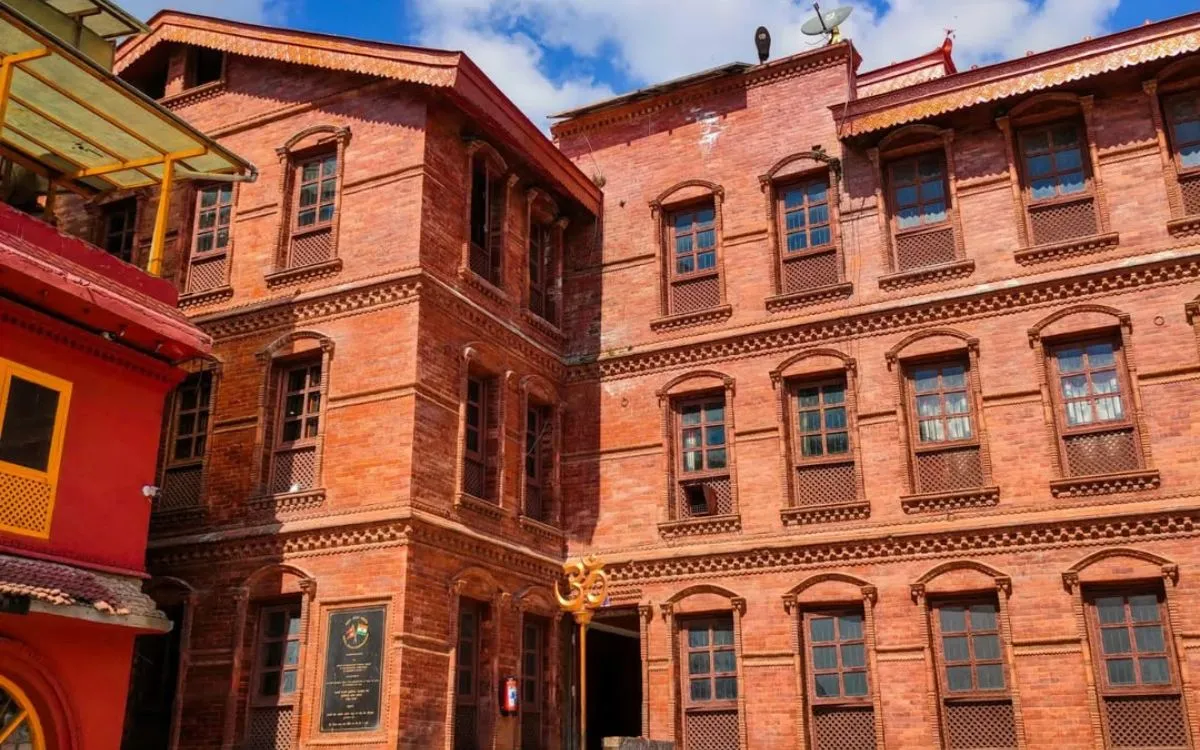
Traditional Newari brick architecture of Budhanilkantha Temple complex with multi-story red brick building and carved wooden windows, Nepal
Conclusion
As we conclude our article on the Budhanilkantha Temple, we hope to remind you that the temple is more than an architectural wonder, or a temple, it is a living history of Nepal where harmonious culture is sustained within the arms of Hinduism and Buddhism in harmonious embrace. The magnificent reclining image of Lord Vishnu, the superb artistry that created it, and the tranquil pond it inhabits are evocative symbols of religious devotion and cultural pride.
But the temple is also a sincere spiritual experience in conjunction with its beauty and its history. It is a sacred refuge for the pilgrim, there are rituals and festivals to revive ancient customs, and there are spiritual pilgrims who might also feel that exquisite spiritual sensation of merging with the divine. Budhanilkantha Temple is a discovery of the essence of Nepal, a country where spirituality is seamlessly intertwined into existence.
As we prepare to leave, let the brilliant memories of visiting the historical, cultural and spiritual significance of this temple speak to us about the lasting lure of spiritual abundance in Nepal and the unifying strength of faith. So, come, contact us and we will certainly make something of every last moment.




-1.webp)
-1.webp)
-1.webp)