The Kapan Monastery is located 3 km north of Boudha at the top of the beautiful Kapan hill and is a peaceful oasis for anyone who seeks a peaceful time away from the hustle and bustle of normal daily routine. Whether you are meditating or simply breathing fresh air while looking down at the Kathmandu valley wrapped in greenery, you can chill at Kapan Monastery. The monastery beautifully depicts the rich Buddhist traditions and cultures. It is primarily known for the courses that it offers on Buddhism. Every year, people come from all over the world to take part in these courses and relish the spiritual ambiance for study and practice.
Kapan Monastery is the largest Gelug school monastery in Nepal, with over 360 monks, lamas, teachers, and staff. These monks are not only from all parts of Nepal but also from Tibet and pass their lives by studying, reading, and practicing the teachings of Shakyamuni Buddha, primarily on Lama Tsong Khapa (a founder of the Gelug Lineage). Under Lama Zopa Rinpoche, the monastery currently aims to serve all sentient beings in reaching their full potential of limitless wisdom and compassion as it was discovered by its founder, Lama Thubten Yeshe.
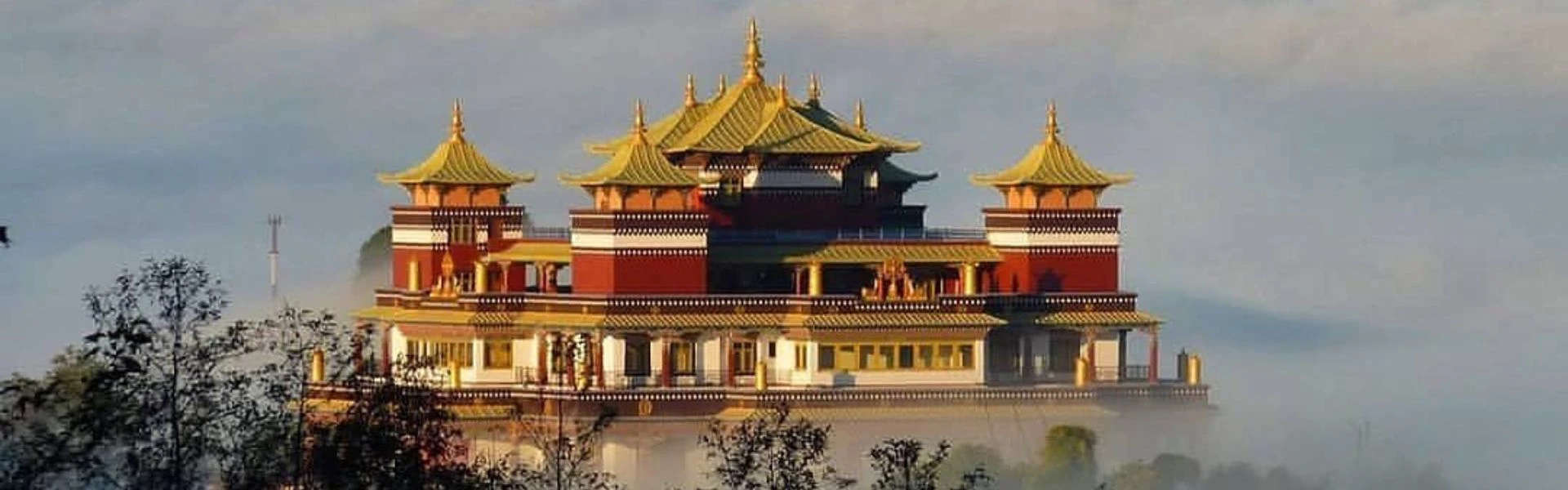
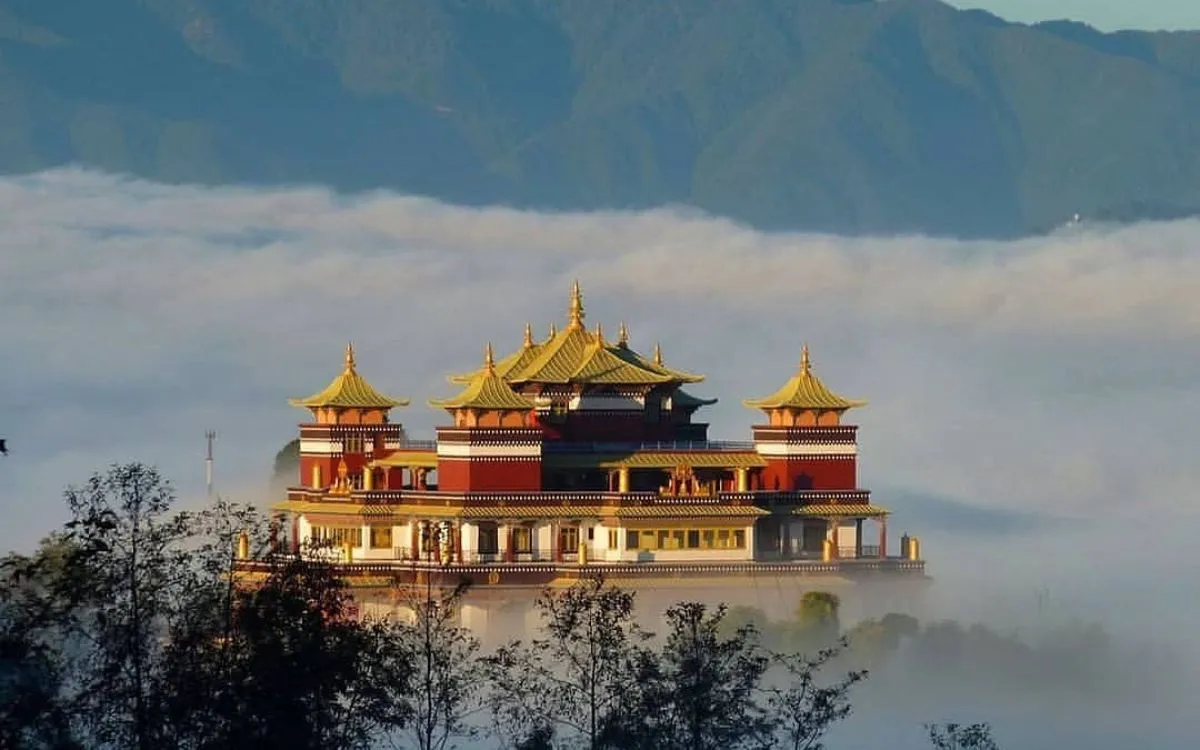
Aerial view of Kapan Monastery rising above a sea of morning clouds with the Himalayan mountains in the background, Kathmandu Valley
The visitors have the privilege of having a once-in-a-lifetime experience learning about Buddhism. Regular classes are held here. Shrines, paintings, thankas, statues, and stupas enhance the charm of visiting. The visitor can visit the monasteries in case there are no classes being conducted. Let's go into the details of visiting Kapan Monastery, from where it is located, nearby accommodations, and best visiting time.
Highlights of Kapan Monasteries
Buddhist Teachings
Serene Hilltop Location
Meditation Retreats
Sacred Stupa and Prayer Wheels
Peaceful Environment
Library and Bookshop
Volunteer Opportunities
Historical Background of Kapan Monastery
Kapan Monastery is a Tibetan Buddhist monastery near Boudhanath Stupa, on the outskirts of Kathmandu, Nepal. Kapan Monastery was established in 1971 by a couple of monks of the Tibetan Buddhist lineage Lama Thubten Yeshe and Lama Zopa Rinpoche. The mystical monastery is nestled in a serene hilltop near the city of Kathmandu, Nepal. This is bound up with the brushes with time that Tibetans experienced in the late 1950s. As we are all well aware, Tibet was occupied by China in 1959 and most of the Tibetans living in Tibet, the monks are no exception, fled their country, seeking to save their culture and religion. Yeshe Lama and Lama Zopa Rinpoche were also among them. They started teaching Buddhism to local children as well as international students with the objective of preserving their culture.
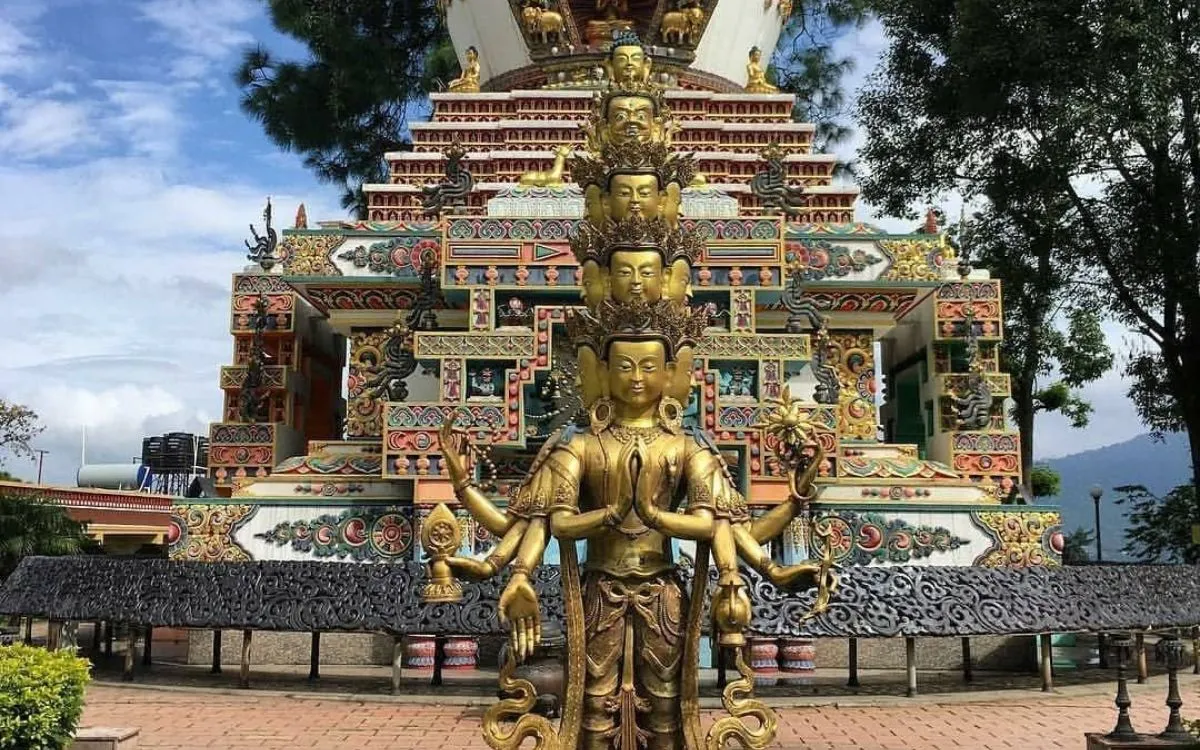
Golden multi-armed Avalokitesvara (Chenrezig) statue with multiple heads standing in front of the ornately decorated stupa at Kapan Monastery
Later on, the concept of opening Kapan monasteries was formed, where everyone would have a chance to learn and practice meditation. In 1971, a piece of land was purchased on Kapan Hill north of the mythic Boudhanath Stupa in the Kathmandu Valley. They began from scratch, they started a small monastery that later became a center for learning and spiritual practice. The monastery organized its first major month-long meditation course in November 1971 which was led by Lama Zopa Rinpoche. The course was a huge success and became an annual tradition, drawing attention from corners of the world.
The Kapon Monastery grew rapidly over the years. The infrastructures were added, including stupas, classrooms, living quarters, and a library. The place also became the headquarters of the Foundation for the Conservation of the Mahayana Tradition (FPMT), an international Buddhist organization established by Lama Yeshe and Lama Zopa Rinpoche in 1975. The FPMT now has more than 160 centers worldwide, but the Kapan monastery survives its spiritual heart.
Activities to do in Kapan Monastery
Attend a Meditation Class or Retreat: Check the monastery’s official schedule in advance and register for short-term (3–7 days) meditation retreats or the popular month-long November Course if you want structured learning.
Join the Morning Chanting Ceremony: Arrive around 6:00 AM to quietly observe monks during daily prayers; wear modest clothing and remain respectful inside the prayer hall.
Explore Tibetan Buddhist Teachings: Take time to learn about Tibetan Buddhism through guided sessions, introductory courses, or by speaking with resident teachers when available.
Visit the Library and Bookshop: Stop by during office hours (usually 9:00 AM–4:00 PM) to read or purchase books on meditation, philosophy, and Tibetan Buddhism.
Volunteer (Long-Term Visitors): Apply in advance if you wish to assist in teaching, administration, or retreat support programs, as volunteer spots are limited.
Walk Around the Monastery Grounds: Explore the gardens, spin prayer wheels, visit stupas, and enjoy panoramic views of Kathmandu Valley which is best experienced in the early morning or late afternoon.
Stay as a Residential Guest: Book accommodation in advance to experience simple monastic living and daily spiritual routines.
Observe Monastic Life: Respectfully watch the daily routines of monks to understand traditional monastery life and Tibetan culture in Nepal.
Location and How to Reach Kapan Monastery
Kapan Monasteries are situated to the northeast of Kathmandu Valley. You can drive here from the city in less or no time. The Monastery is located close to the Bouddhanath Stupa, one of the biggest stupas in the world. From this point, there are lovely views over Kathmandu Valley, and from this point, the area is so peaceful and seems to be miles away from the heaving streets of the city.
Kapan can be easily reached from Thamel, other parts of Kathmandu, Bhaktapur, or Lalitpur by taxi. It will be a 30-minute to 1hr ride depending on the traffic in the city.
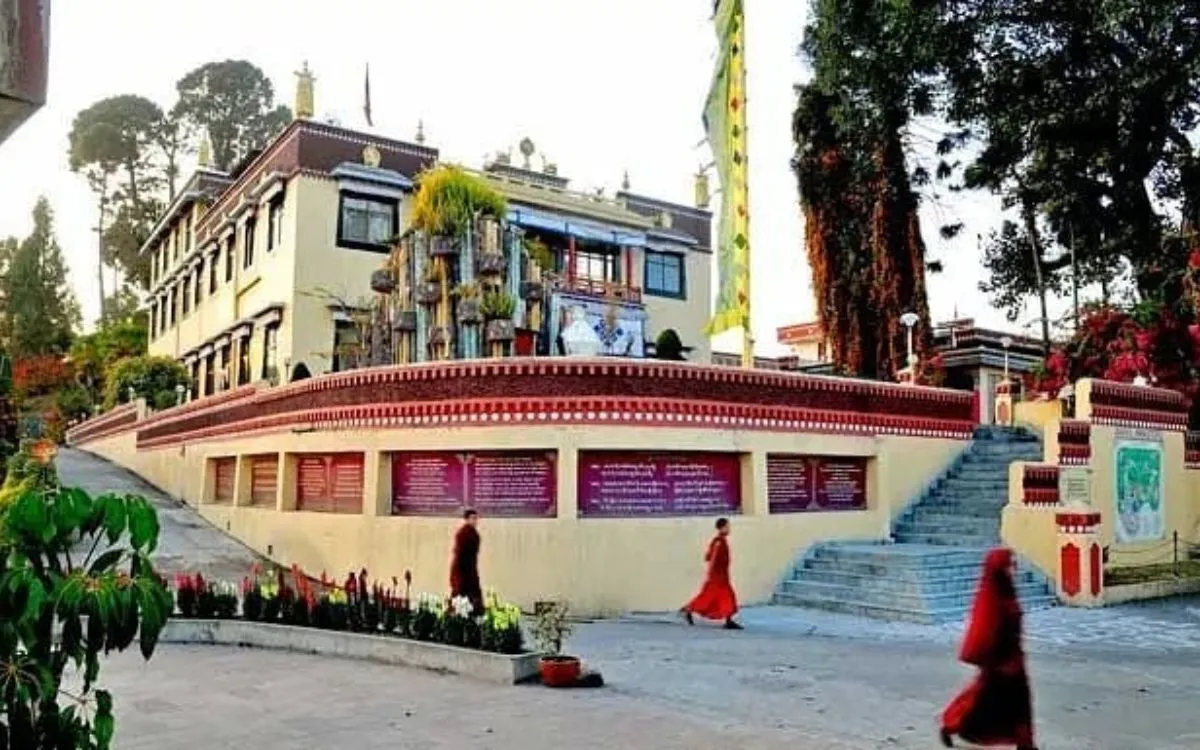
Buddhist monks in traditional red robes walking past the Tibetan-style buildings and prayer inscription walls of Kapan Monastery
Means of Transportation
Taxi/Car: You can also get a taxi from anywhere in Kathmandu Valley. For convenience, you can book a taxi using various ride-sharing apps like Pathao, Jumjum, Indrive, etc. The second option is that Kapan Monastery also provides a pickup facility for which a booking has to be made.
Public bus: Local buses are available easily in different parts of Kathmandu Valley. The bus ride is inexpensive, but an adventure. You have to walk up hill from the drop-off to the monastery.
By Bike/ Bicycle: You can hire a motorcycle through ride-sharing apps such as Pathao, Indrive, etc. You could also hire a bike or cycle privately.
By Walking: Walking is also a great option for all adventure seekers.
Courses Available for Visitors in Kapan Monastery
Kapan Monastery is famous for the variety of courses it offers, teaching and practicing Tibetan Buddhism, meditation, and mindfulness. The courses are for people of all levels, from those who are complete beginners to experts, right through to people who would like to gain deeper spiritual insight. The Kapan Monastery courses are divided into various levels:
Annual November Meditation Course
Duration: One month (typically in November)
Audience: Open to beginners and experienced practitioners.
Description: The most popular course offered at Kapan Monastery is this particular course. The course covers Buddhist teachings, meditation techniques, life guidelines, group discussions, private interviews, etc.
Short-Term Meditation Retreats
Duration: Ranges from a few days to a week.
Audience: Open to beginners and those with limited time.
Description: The learner this time learns an introduction to Buddhist meditation and philosophy. They will learn mindfulness, loving-kindness meditations, and basic Buddhist concepts.
Discovering Buddhism Course
Duration: Varies (each module can be taken separately).
Audience: Beginners.
Description: The class is intended to give an overall grasp of the Buddhist way. The classes involve such subjects as the character of the mind, karma, developing compassion, and wisdom. The course is very beneficial for beginners.
Children’s Program
Duration: Short-term courses (especially for children).
Audience: Designed for children and young teens.
Description: The simple and basic courses introduce young learners to basic meditation practices, and positive behavior through storytelling and simple exercises.
There are various other courses like Basic Program (Five-Year Course) for full-time study, Lamrim (Graduated Path) Meditation Retreats, Vajrayana Teachings and Initiations, Private Retreats who want to practice in solitude, etc.
Traveling Tips for Visitors in Kapan Monastery
Always carry cash. Many shops still prefer it over cards.
The weather can change rapidly, so bring layers to stay comfortable.
Respect local cultures.
Accommodation in Kapan Monastery
You can experience your stay at Kapan Monastery with comfort and serenity. Staying at Kapan Monasteries is itself a beautiful experience, which offers you a peaceful and spiritual environment. Here's what you should know.
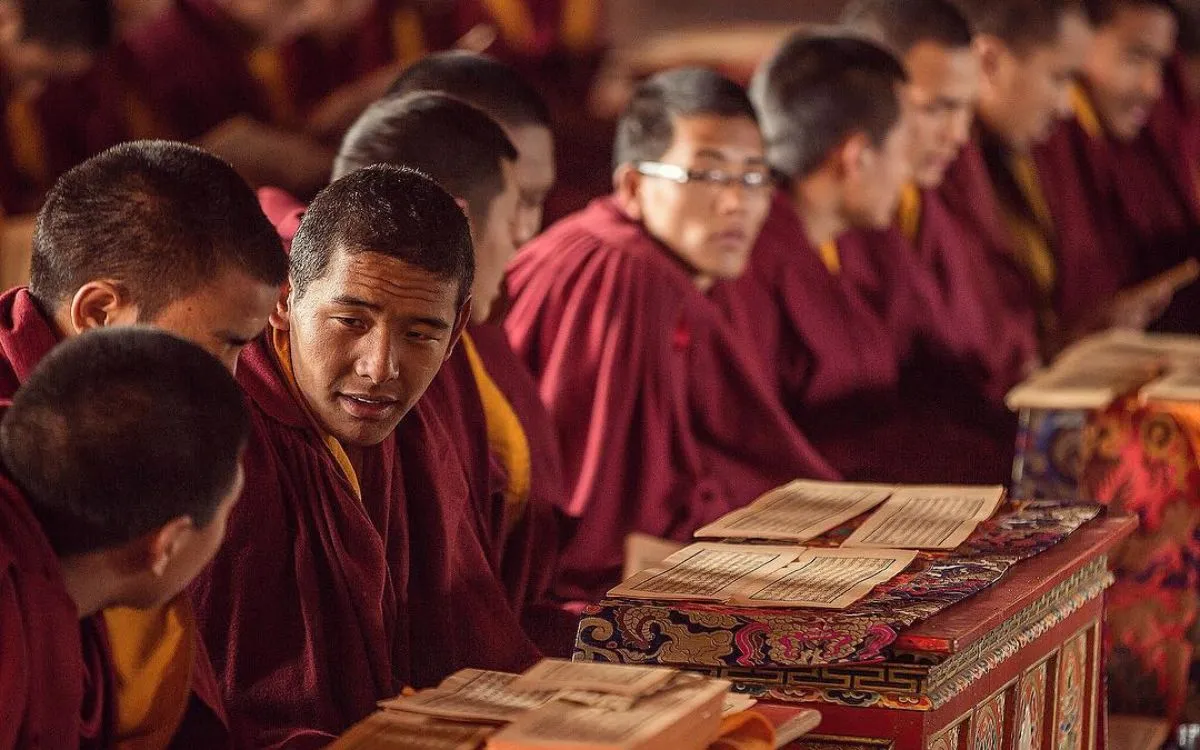
Tibetan Buddhist monks in maroon robes chanting and reading sacred scriptures during a prayer session inside Kapan Monastery, Nepal
Dormitory Rooms
This type of room is ideal for budget travelers or who join the class in groups. The room is shared with other participants(separate for males and females). You will get basic facilities, shared beds, bathrooms, and simple furniture.
Standard Single Rooms
If you want privacy, this type of room is ideal for you. They offer a room with a single bed, a study table, and a window with a view of the beautiful monastery’s gardens.
Private Rooms with Attached Bathrooms
It is ideal for those who want more comfortable and privacy. The room offers a better view of the surroundings.
Amenities Provided
Clean bedding and towel
Basic toiletries (soap, toilet paper).
24-hour access to water (including hot water in select rooms).
Electricity and Wi-Fi (limited in some areas).
Meditation cushions and mats (available for those attending courses).
Dining Facilities
Three meals a day are consumed in the communal vegetarian dining hall and are shared with residents.
Each meal is simple, yet very healthy in accordance with Buddhist practices, meaning no meat or alcohol is served.
Tea and coffee are served during breaks.
Special diets can be catered for by prior arrangements.
Additional Facilities
There's a shop selling local art alongside literature the monastery holds such as meditation guides and local handicrafts.
Serene gardens are available for calmer self-reflection exercises.
Meditation halls and open spaces for personal practice.
Best Time to Visit Kapan Monastery and Climatic Condition
If you are interested in the popular November Course on Buddhism, plan your visit in November. For a quiet getaway with fewer tourists, winter (December to February) is the best. Spring (March to May) is best if you prefer gardens full of blossoms and good weather.
Winter becomes quite chilly, especially on the summit where the monastery stands, while summer is characterized by torrential rain, which may limit your activities outdoors. Planning a visit during the finest months will ensure you have the most pleasant and rewarding experience.
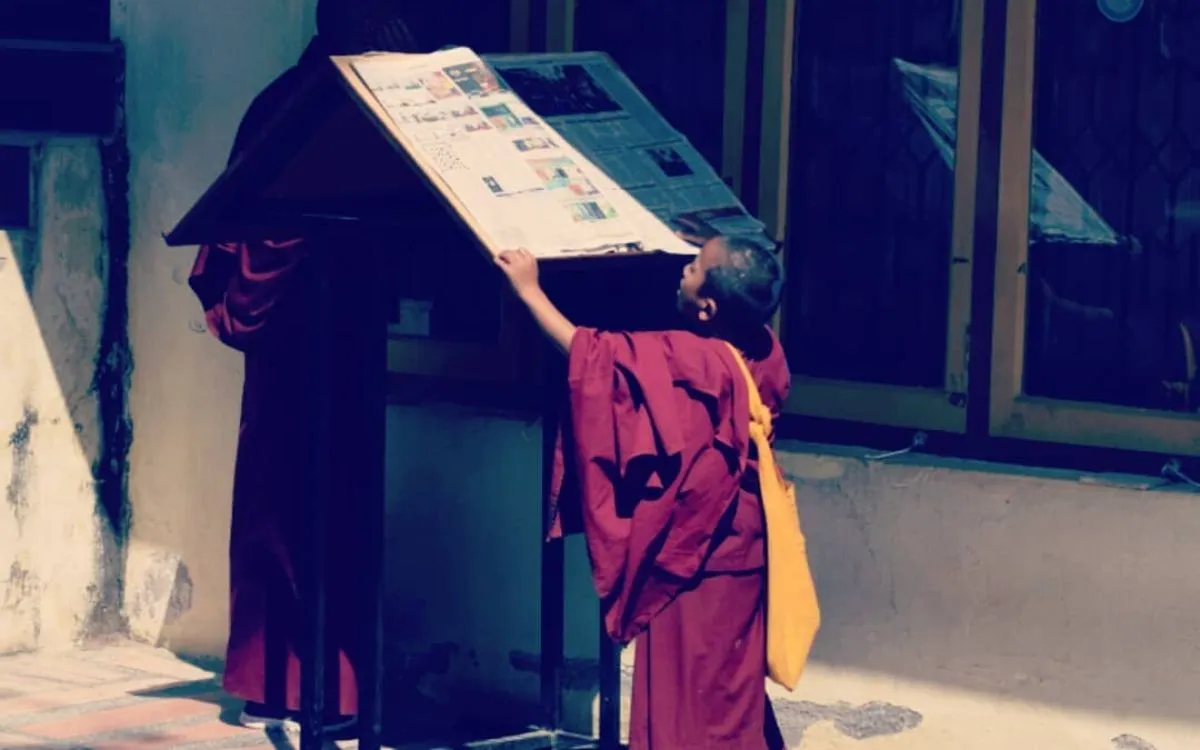
Young novice monk in red and yellow robes reading a notice board outside Kapan Monastery
Frequently Asked Questions (FAQ)
What makes Kapan Monastery famous?
Kapan has become especially famous for teaching Buddhism to visiting Westerners.
How do I get to Kapan Monastery?
Taxis are plentiful in Kathmandu. Public buses go from Ratna Park directly to Kapan village. And short walk from Kapan will lead you to the monasteries.
Can I take pictures at Kapan Monasteries?
Yes, photography is allowed in most areas, but be respectful to the traditional ceremonies.
Is Kapan Monastery open all day?
Yes, Kapan Monastery is open to visitors all day but are not allowed after 5:00 PM.
Conclusion
In summation, Kapan Monastery is not just a place where you come to learn and meditate, it’s a place where you feel you belong, at least for a while. The practices shared here lead to mindfulness, compassion, and an insight into oneself. People often come away with new perspectives and a greater sense of purpose after spending time reflecting in a peaceful environment with guidance from the resident monks.
In addition to its teachings and spiritual practices Kapan Monastery has always been involved in community service programs which are in the spirit of the Buddhist tenant of engagement in compassionate activities. This commitment to service creates a sense of community, connecting every guest with insight into the value of serving others and living in harmony with the world around us.
Kapan Monastery is a reminder of balance and tranquility in this world full of chaos and distractions. Lessons learned from this sanctuary mix with the experience of structured courses or personal retreats back at the monastery and last long after returning to civilization. The breathtaking views over the valley of Kathmandu are simply an added bonus. The monastery stands as a true gem in Nepal that helps to flourish one’s individual spiritual journey while providing unparalleled guidance on how to be more empathetic and present.
Not to forget, the comment part is open as well, or contact us, and we'll make the most time out of every moment!





-6.webp)
-1.webp)
-1.webp)