Imagine being on a hiking trail in Nepal, surrounded by huge mountains with their tops covered in snow all the way up into the sky above. The views are incredible, but it isn’t just the beauty of the vistas that makes you feel as if you're out of breath when you're up there. As you go higher, you may also begin to feel breathless because of something else: altitude sickness!
This is something that many people experience during their trip to Nepal. Trekkers will be suffering from altitude sickness in Nepal, even if they are in great physical condition and have previous hiking experience! At these high elevations where there's less oxygen in the air due to the low temperature, altitude sickness does not discriminate against anyone; it affects everyone differently and may come and go at random times.
Acute mountain sickness is not simply a condition that affects unhealthy people; rather, it is a body response to changing oxygen levels and can affect any person at elevations above 2,500 meters. Fortunately, with an understanding of acute mountain sickness, the proper acclimatization method, and the ability to recognize the signs of acute mountain sickness, you can prevent becoming ill and have a pleasant trek up the Himalayas.
In this guide, you will learn everything you need to know about acute mountain sickness: how it occurs, how to avoid it, and what to do if symptoms develop during your trek. Your ideal trek does not have to turn into a hazardous experience.
Understanding Altitude Sickness in Nepal
"Altitude sickness", known as "Acute Mountain Sickness" (AMS) in medical terms, is caused by the body's inability to adjust to high-altitude areas with lower levels of oxygen. Nepal has eight of the highest mountains in the world and attracts thousands of tourists who venture to high elevations where oxygen levels are extremely low. While trekking and climbing in Nepal, altitude sickness is a common medical condition that can happen to anyone; it will affect anyone who travels to a high altitude regardless of their age, fitness level, or whether or not they have trekked before. Altitude sickness can affect professional athletes and seasoned mountaineers if they ascend too quickly without allowing their bodies to adjust to the altitude.
Trekkers will have various levels of altitude sickness risk based on how familiar they are with the area and their level of physical preparation prior to the trek. Those who understand how altitude sickness occurs and who can identify potential symptoms during the early stages of altitude sickness are better prepared to prevent altitude sickness from developing into a serious condition.
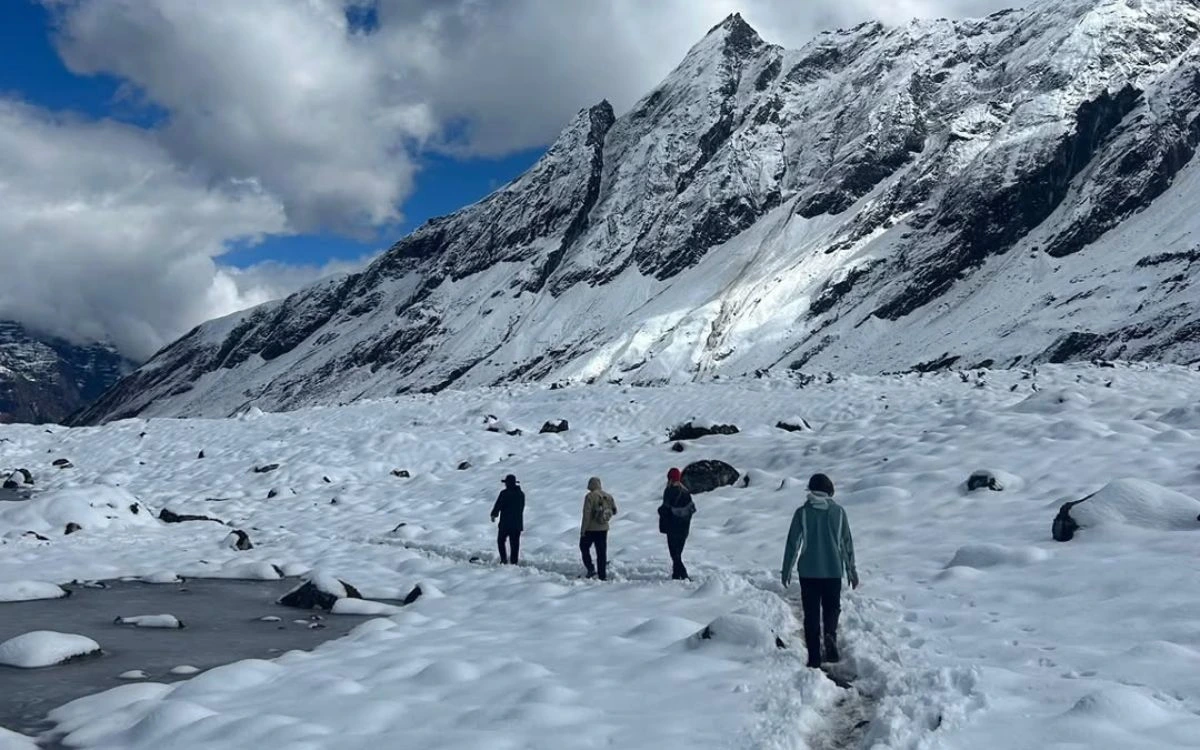
Four trekkers walking across snowy terrain with dramatic snow-covered peaks behind them
Oxygen levels drop dramatically with increasing altitude. As you go higher, atmospheric pressure drops, which results in less oxygen being present in the environment, resulting in less oxygen available for your body with each breath. There is approximately 65% of the oxygen available at sea level at 3,500 meters (11,500 ft). At 5,500 meters (18,000 ft), there will be approximately 50% of the oxygen available at sea level.
The leading cause of altitude sickness is going to high-altitude locations too quickly without proper acclimatization. When a person ascends too quickly to a high-altitude location, their body does not have time to adjust to the reduced amount of oxygen, which can cause their heart rate to increase, breathing to become more rapid, and cellular mechanisms (i.e., respiration) to be stressed.
Genetics and individual susceptibility play a large role in how well somebody will be able to adapt to the lower levels of oxygen at higher altitudes. An individual's ability to acclimatize to high altitude is based on their family's characteristics, previous experiences at high altitude, as well as physical condition. Even someone who runs marathons can suffer at a higher altitude, while someone who often hikes at lower altitudes may not suffer.
Types of Altitude Sickness
Acute Mountain Sickness, or "AMS", occurs most often and most mildly. Symptoms are generally seen between 6-12 hours after arriving at higher altitudes, including headaches, nausea, tiredness, and dizziness. AMS doesn't usually cause long-term harm in most cases, but it will typically go away with rest and appropriate acclimatization.
High Altitude Pulmonary Edema, also called "HAPE", is very serious and can result in the loss of life due to fluid build-up in the lungs. Its symptoms include extreme shortness of breath, an ongoing cough producing foamy (frothy) mucus, pressure in the chest, and fatigue. If diagnosed, HAPE requires immediate medical treatment and descent to lower altitudes as soon as possible.
High Altitude Cerebral Edema, or "HACE", refers to the accumulation of fluid in the brain leading to confusion, incoordination, an inability to walk, and altered consciousness. It is considered an emergency, requiring evacuation from the higher altitude as soon as possible.
Headaches that do not subside are usually the earliest indication that you've experienced an altitude change, along with nausea, lack of appetite, fatigue, dizziness/lightheadedness, and difficulty sleeping (insomnia). Typically, individuals will experience these and other symptoms of altitude sickness anywhere from 6 to 24 hours after ascending to their location.
If you experience any of the following severe symptoms (e.g., persistent headache that does not improve with the use of over-the-counter medications; shortness of breath at rest, inability to stand straight, lack of balance, confusion, disorientation; severe vomiting) you should descend immediately (even if it's the middle of the night) to an area where you can breathe easier until you have recovered.
Altitude sickness will not improve if allowed to worsen. Symptoms of mild altitude sickness (AMS) will progress quickly to either High Altitude Pulmonary Edema (HAPE) or High Altitude Cerebral Edema (HACE) within hours; therefore, do not attempt to push yourself to continue ascending when you experience severe altitude sickness symptoms.
When and Where Altitude Sickness Occurs in Nepal
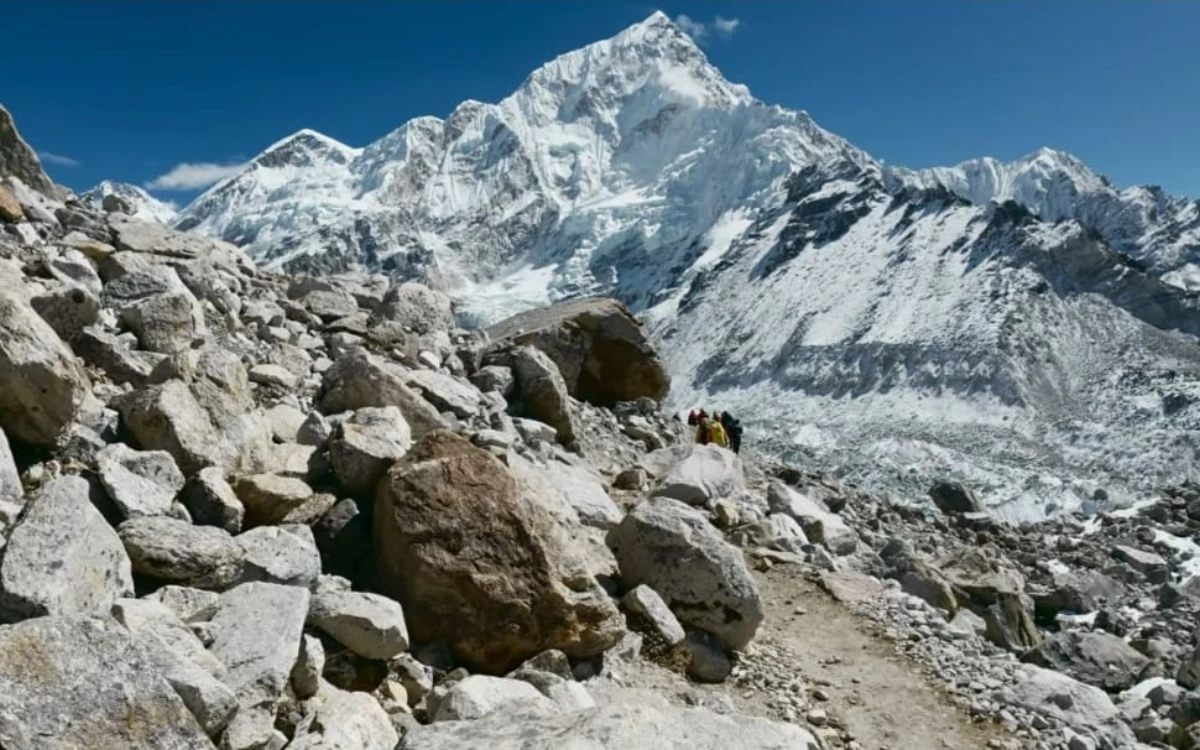
Hikers approaching rocky trail with glaciated mountain and ice formations visible
Altitude sickness symptoms typically begin at elevations above 2,500 meters (8,200 feet), though some people experience discomfort as low as 2,000 meters. The risk increases significantly above 3,500 meters, and almost everyone requires careful acclimatization above 4,500 meters.
High-risk famous regions for trekking in Nepal include the EBC Trek, where trekkers rapidly gain altitude, reaching Namche Bazaar at 3,440 meters within days. The Annapurna Circuit crosses Thorong La Pass at 5,416 meters, presenting substantial altitude challenges. The Manaslu Circuit Trek reaches similar heights with theLarkya La Pass. The Langtang Trek, though lower than the Everest routes, still brings trekkers above 4,000 meters. Even the Poon Hill Trek, considered moderate, reaches elevations where some trekkers feel effects.
Most Affected Trekking Routes in Nepal
Annapurna Conservation Area stands out as Nepal's most affected trekking region for altitude sickness, with 21 deaths reported in the 2023-24 fiscal year, primarily around Muktinath in Mustang district. In 2024-25, 18 tourists died, including eight Indians, one each from the US, South Korea, Germany, and Switzerland, as well as six Nepalis, often due to rapid road access from low-lying areas like Pokhara. Improved jeep tracks enable quick ascents to over 3,800 meters, bypassing essential acclimatization on routes like Jomsom-Muktinath, making this area a high-risk hotspot for trekkers and pilgrims.
Manang district on the Annapurna Circuit sees frequent fatalities, with three porters and trekkers dying from high-altitude sickness in October 2025 alone at elevations around 4,500 meters near Yak Kharka and Thorong La Pass. These incidents involved locals carrying loads for foreign tourists in Narpabhumi Rural Municipality, highlighting risks on the classic Thorong La trek crossing 5,416 meters without gradual adjustment. Rapid group ascents during peak seasons amplify cases here, as porters often ignore symptoms to meet tight schedules.
While Everest Base Camp reports around 30% incidence rates due to its 5,364-meter vantage, recent data from 2024-25 shows fewer deaths compared to Annapurna, although severe risks persist above 4,500 meters, such as at Gorak Shep. Annapurna Base Camp trails also claimed lives, such as one Nepali trekker in 2025, underscoring vulnerability on shorter high-elevation hikes. For "altitude sickness Nepal" searches, prioritize these routes with proper itineraries limiting daily gains to 500 meters above 3,000 meters.
How to Prevent Altitude Sickness in Nepal
The most effective preventative measure against altitude sickness is proper acclimatization. The main rule to follow is "climb high, sleep low." You can hike to an elevation, but sleep at a lower altitude to allow your body time to adjust.
Gradually ascending saves lives. After 3,000 meters of elevation gain, do not climb more than 300-500 meters (1,000-1,600 feet) in elevation to sleep each day. After 3 to 4 days, schedule a rest day on your trek to high altitudes. You can take advantage of the rest day to hike to higher elevations; however, you should return to the same altitude to rest.
Hydration and nutrition are critical. Drink 3 to 4 liters of water per day to allow your body to process the change in altitude. Carbohydrates are also important. Eating carbohydrates uses less oxygen when metabolized than other foods. Do not drink alcohol or use sleeping pills, as both can slow down your breathing. Control your pace and walk slowly and steadily. Remember that this is not a race.
Altitude Sickness Medicines and Treatment Options
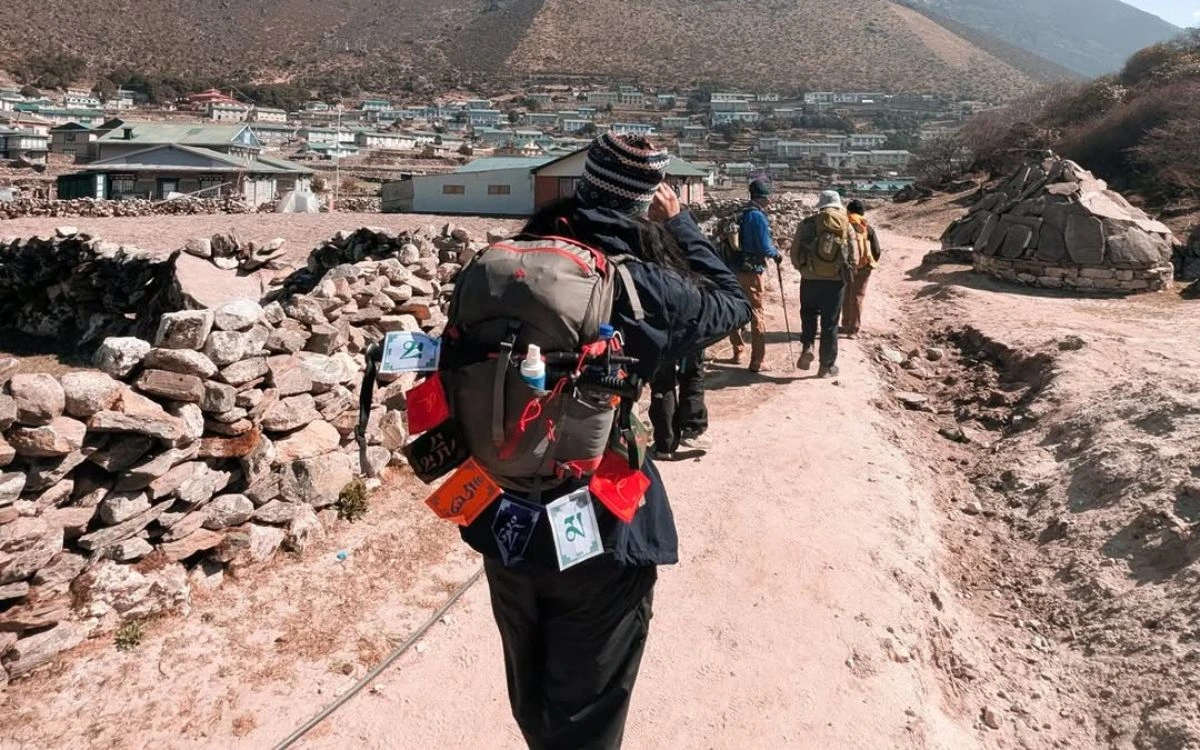
Trekker with backpack walking through mountain village with traditional buildings
Diamox (Acetazolamide) is the most commonly used altitude sickness medicine in Nepal. This medication helps speed up acclimatization by increasing breathing rate and oxygen levels in the blood. Many doctors recommend starting Diamox 24 hours before ascending above 3,000 meters. The typical dose is 125-250mg twice daily. Common side effects include tingling in fingers and toes and increased urination.
Other medications include Dexamethasone for treating severe AMS, HACE, and HAPE, though this should only be used under medical supervision. Ibuprofen can help manage headaches. Some trekkers use natural remedies like ginger tea for nausea and garlic for general altitude adjustment, though these lack strong scientific evidence.
Oxygen therapy provides immediate relief for altitude sickness symptoms. Many teahouses along popular trekking routes now offer portable oxygen cylinders. While oxygen helps manage symptoms, it's not a cure; descent remains the definitive treatment for serious cases.
What to Do If Altitude Sickness Hits
Take immediate action at the first signs of altitude sickness. Stop ascending and rest at your current altitude. If symptoms are mild, wait 24-48 hours to see if acclimatization occurs. Drink plenty of fluids, eat carbohydrates, and avoid strenuous activity. Take pain relievers for headaches and anti-nausea medication if needed.
Descend when symptoms don't improve after 24 hours, when symptoms worsen despite rest, or when severe symptoms appear. Even descending 300-500 meters can bring dramatic improvement. Don't delay descent, hoping to continue your trek—your life is more valuable than reaching your destination.
Seek medical or emergency evacuation immediately if you experience symptoms of HAPE or HACE, if someone becomes unconscious or severely confused, or if descent doesn't improve the condition. Helicopter evacuation services operate throughout Nepal's trekking regions, which is why comprehensive travel insurance is essential.
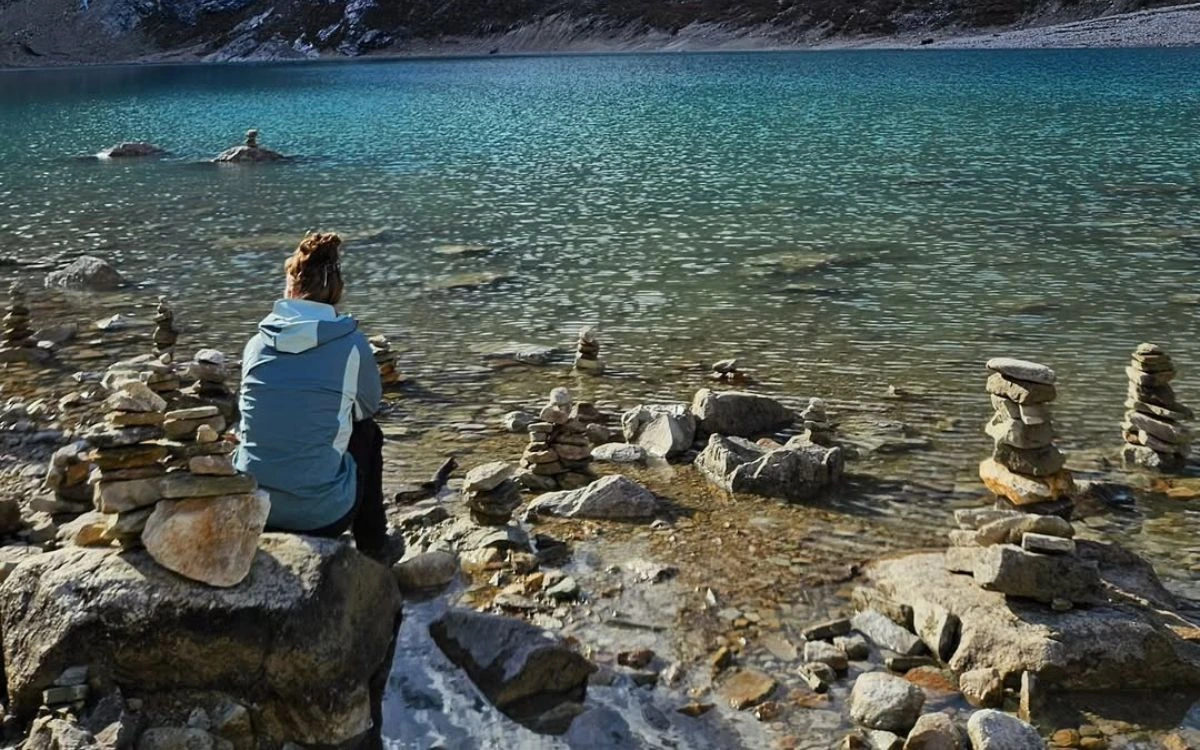
Person sitting by turquoise mountain lake surrounded by stacked stone cairns
Breathing techniques can maximize the amount of oxygen consumed. Use the technique of deep and slow breathing through your nose, and practice "Pressure Breathing" or the technique of blowing out with pursed lips, which allows more oxygen to flow into your bloodstream from your lungs. Some trekkers have found that the use of rhythmic breathing when taking a step is helpful.
Sleep with your head elevated when resting in order to help you continue to breathe better while sleeping. You can do this by either using extra pillows or changing your body position while sleeping. Stay away from using any type of sleeping medication or alcohol before going to bed because both depress respiratory functioning. If available, use supplemental oxygen while sleeping at extremely high camps.
Food and lifestyle choices can affect how well a person adapts to the change in altitude. You should not push yourself too hard in the first few days after arriving at high altitude because of the stress it creates on your respiratory system and your body as a whole. You also should not smoke because of decreased oxygen absorption; however, some studies indicate that doing physical activities shortly after arriving at high altitude can assist with better acclimatization than doing nothing at all. Listen to your body during this adjustment period and find an acceptable balance between enough gentle activity and proper levels of rest for your body's needs.
Essential Tips for Trekkers in Nepal
Trek with an experienced guide who understands altitude sickness and can recognize symptoms. Guides know when to slow down, when to take rest days, and when to descend. They also handle emergencies and can arrange evacuations if necessary.
Purchase comprehensive travel insurance that covers helicopter evacuation from high altitude. Standard policies often exclude trekking above certain elevations. Confirm your policy covers evacuation costs, which can exceed $5,000 for a helicopter rescue from remote areas.
Listen to your body and communicate with your team. Never hide symptoms out of fear of disappointing others or ruining the trek. If you feel unwell, speak up immediately. Similarly, watch your fellow trekkers for signs they might be struggling but hesitant to mention. The mountain will always be there—prioritize safety over summit success.
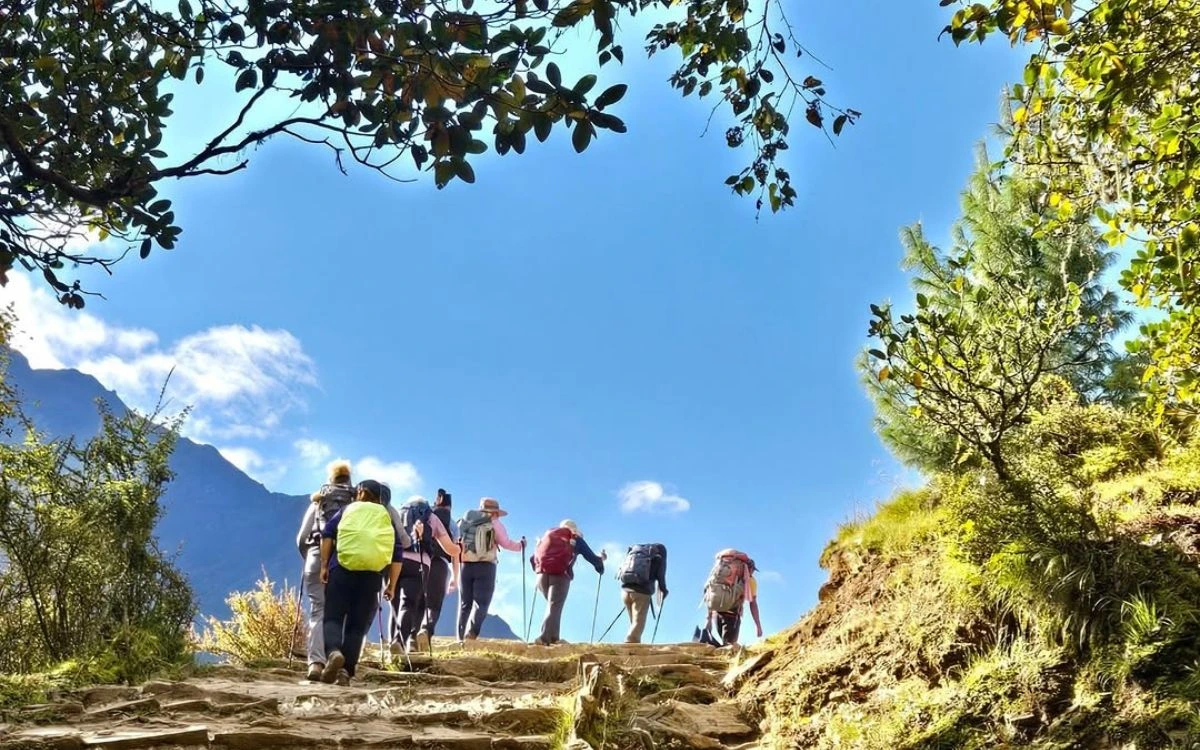
Trekkers hiking uphill on stone steps with mountains and blue sky in background
FAQs
Can altitude sickness affect anyone?
Yes, altitude sickness can affect anyone regardless of age, gender, or physical fitness. Being in excellent shape doesn't provide immunity. Factors like genetic predisposition, rate of ascent, and previous altitude exposure matter more than cardiovascular fitness. Even people who've trekked at altitude before can develop symptoms on subsequent trips.
How fast does altitude sickness develop?
Symptoms typically appear within 6-24 hours after reaching a new altitude. Some people feel effects within a few hours, while others might not notice symptoms until the next morning. Severe forms like HAPE and HACE can develop rapidly, sometimes within hours, especially if early warning signs are ignored.
Is altitude sickness preventable?
While you cannot guarantee prevention, you can significantly reduce your risk through proper acclimatization, gradual ascent, adequate hydration, and potentially using medications like Diamox. Following established acclimatization schedules and including rest days in your itinerary are the most effective prevention strategies.
Does physical fitness protect against altitude sickness?
No, physical fitness doesn't protect against altitude sickness. Highly conditioned athletes can suffer just as much as casual hikers. In fact, fit individuals sometimes face a higher risk because they tend to ascend faster, not allowing adequate acclimatization time. Altitude affects everyone based on how quickly they ascend and their individual physiology.
Conclusion
Before going on a trek to Nepal and the Himalayas, it is important to understand altitude sickness in Nepal. Early detection of the symptoms, following the correct acclimatization protocol, and being aware of when to descend are all factors that allow you to safely experience the beautiful views of the high mountains. It's important to remember that the key to a successful trek isn't just speed but also being prepared as much as possible, taking your time with the ascents, and paying close attention to how your body is feeling.
If you do start to experience any of the symptoms of altitude sickness, it's important to go back down the mountain immediately. Always make sure to prioritize your safety over getting to your final destination. If you are looking for professional assistance and safe trekking opportunities across the majestic mountains of Nepal, contact us at Himalayan Recreation today.


-4.webp)



-1.webp)
-1.webp)
-1.webp)