What would you do if you or one of your trekking friends suddenly felt dizzy, short of breath, or had a severe headache at 5,000 meters on Everest Base Camp? How would you get help if the closest medical facility is hours away and the weather is deteriorating? Knowing how emergency rescue works in Nepal is vital knowledge for every trekker in the Himalayas.
Rescue operations in Nepal are designed to quickly respond to situations involving altitude sickness, deathly injuries, and other types of sudden illness. When an emergency occurs in the Himalayas, an experienced guide will provide immediate first aid before contacting a rescue team to provide additional help. Rescue helicopters are often used to assist victims at high-altitudes, in addition to other support from local aid-posts and assistance from trekking agencies and insurance companies.
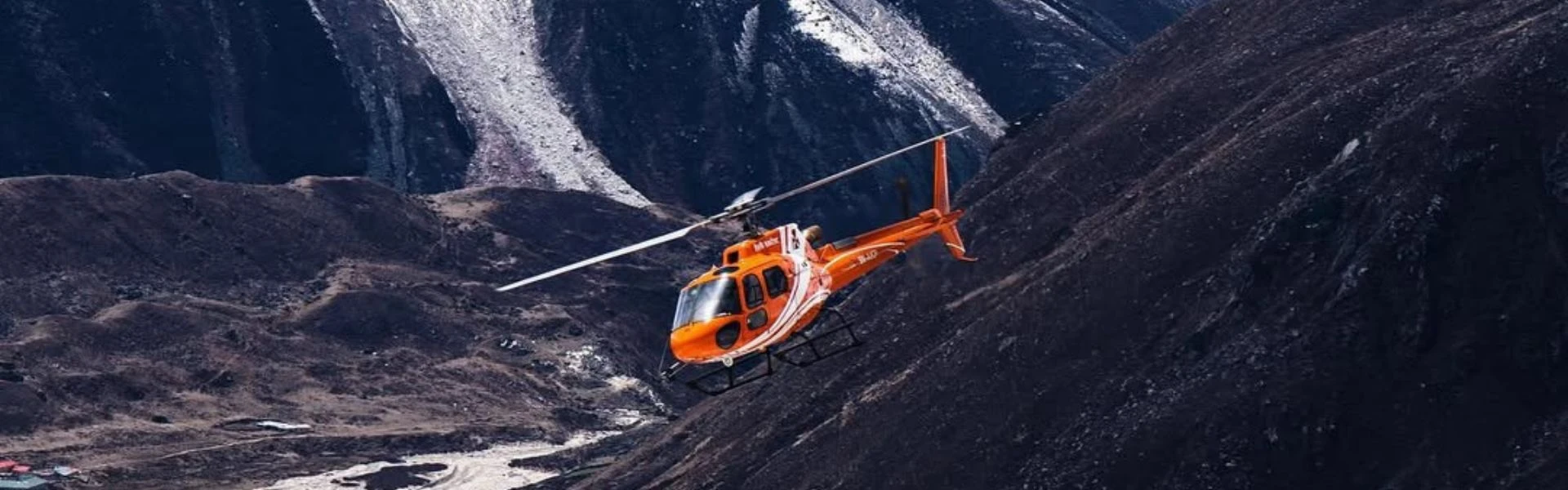
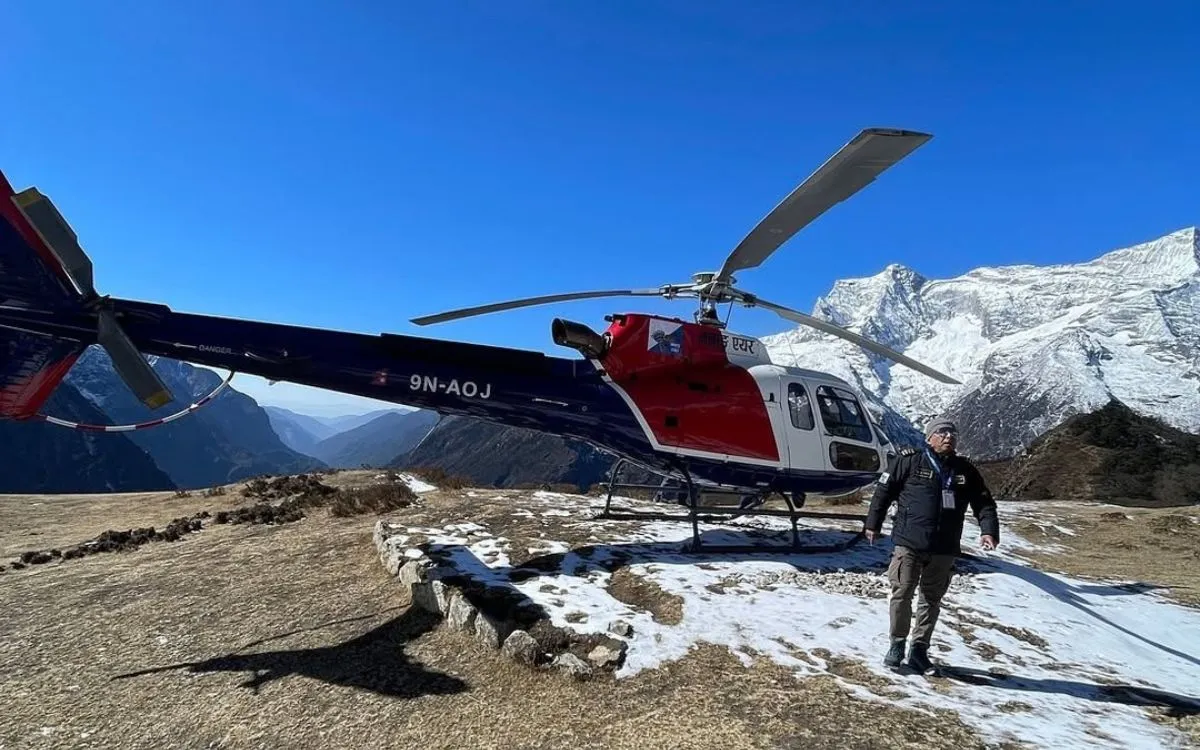
Manang Air helicopter used for high-altitude rescue and medical evacuation in Nepal
Carrying basic medical supplies, knowing your way to your destination, and using experienced and certified trekking guides can all save your life if you need to make an emergency call. This guide will explain the rescue process as it relates to emergencies, what to do in an emergency and the necessary step all trekkers must take to remain safe while trekking in the high-altitude mountains of Nepal.
When High Altitude Rescue Is Actually Needed in Nepal?
Altitude-related illnesses (AMS, HAPE, HACE)
Altitude sickness is the most common medical emergency that occurs in high-altitude trekking in Nepal. The routes that are commonly affected include the Everest Base Camp trek, the Annapurna Circuit, and the Manaslu Circuit. The initial signs of altitude sickness include headaches, nausea, fatigue, and dizziness. In most cases, altitude sickness is ignored by the trekkers and ascent continues.
In severe cases such as HAPE, there is breathlessness even at rest, while in HACE, there is confusion and loss of balance. The solution adopted by the Nepalese guides is to stop the climb, descend immediately, provide oxygen, and check vital signs. If there is no improvement, helicopter evacuation to Kathmandu or a hospital at a lower altitude is required.
Injuries from falls and trail accidents
Falling is common, especially on icy and uneven terrain. On the Everest Base Camp route, there are sections around the Khumbu Glacier, Lobuche, and shaded sections in the early morning that can be slippery due to ice and frozen ground, and fatigue can make one prone to falling, especially during long descents.
The guides offer first aid, secure the injured, and determine whether a person can be walked out or not, especially in cases of serious injury, which may require stretcher or helicopter evacuation due to terrain difficulties.
Illness in remote high-altitude areas
Medical facilities are not readily available in remote trekking areas of Nepal. Among the most frequent medical problems are stomach infections, dehydration, chest related issues and complications of pre-existing conditions. Simple illnesses can rapidly become serious complications if no medical assistance is available.
When a trekker suffers from a medical issue, the guide will monitor the symptoms and change the itinerary accordingly. If a trekker cannot recover on the trekking route, the guide will arrange for the trekker to be evacuated.
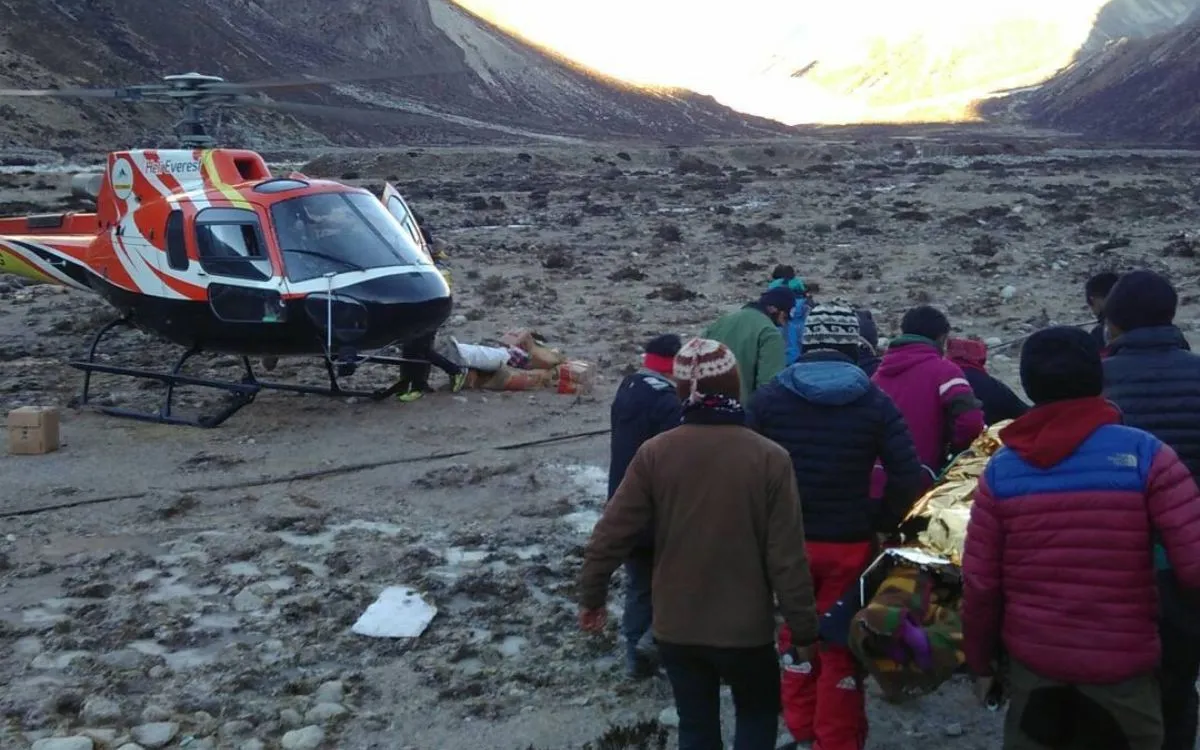
Emergency helicopter rescue of a trekker on the Everest Base Camp trail in Nepal
Weather-related emergencies
The weather in the mountains of Nepal is often uncertain. A sunny morning can quickly change to snow, fog or powerful winds by the end of the day. Such sudden changes in weather may halt helicopter flights and delay rescue operations. Guides will watch the weather forecasts, select places of safety, and coordinate a rescue after conditions have improved.
Lost or disoriented trekkers
When trekkers have no perceptual cues from their surroundings (e.g., fog, rain), are fatigued, or do not have a guide, they are a high risk to get lost. Bad weather and poorly marked trails seem to contribute greatly to this situation.
Rescue teams use communication devices, GPS tracking, and local support to locate lost trekkers as fast as they can.
Organizations Responsible for High-Altitude Rescue in Nepal
Trekking agencies and licensed guides
Trekking companies and licensed guides are the first line of response in case of trekking emergencies. Guides closely monitor trekkers on a daily basis and look for signs of altitude sickness, injuries, or exhaustion. When an emergency arises, the guide immediately notifies the trekking company. The company then contacts insurance companies and requests rescue services. Guides and companies also work with helicopter services to arrange for evacuation and assistance for the trekker until medical aid is available.
It is not advisable to trek alone in the high-altitude and remote areas of Nepal. It is hard to cope with health issues and rescue services in case of emergencies without proper assistance. It is always better to trek with a reliable local trekking company.
Authorized Helicopter Evacuation Operators in Nepal
Emergency medical evacuations are conducted among helicopter rescue companies providing emergency medical evacuations from remote and high altitudes where ground access is unavailable. Companies approved to operate include Simrik Air, Fishtail Air, Altitude Air, Shree Airlines, Manang Air, and Air Dynasty. The companies will evacuate sick or injured hikers from trekking to a hospital in Kathmandu or in proximity thereof. Rescue flights are dependent on visibility, weather, safe landing zones and insurance approval. In instances where it is required, helicopters also carry medical personnel to care for the patient during transportation.
Himalayan Rescue Association (HRA)
Licensed guides and trekking agencies are the primary first responders in case of a trekking emergency. Every day, the guides assess each trekker's physical condition by monitoring for effects of altitude sickness, a sustained injury, or extreme fatigue. If an emergency occurs, the guide immediately contacts the trekking agency to inform them. From there, the agency is able to obtain insurance coverage for the emergency and arrange for the appropriate medical assistance. The guide and agency then work together with helicopter companies to evacuate the trekker and continue to assist until the medical personnel have arrived.
Trekking solo in high-altitude, remote areas of Nepal is highly discouraged. The amount of support provided by an agency will better help mitigate health risks, and allow for faster response in the event of an emergency. Trekkers should verify the agencies' government registration, whether or not the guides are licensed to lead treks, and look for customer reviews online before selecting a guide.
Medical Support Provided by the Himalayan Rescue Association (HRA)
Emergency coordination and reporting for tourists are managed by both the Tourist Police and local authorities. In Kathmandu, trekkers or trekking agencies can report incidents and seek assistance by contacting the Tourist Police at +977-1-4247041. In the Everest region including the Everest Base Camp rescue system, the Tourist Police Office in Lukla can be reached at +977-38-540111 for local emergency coordination.
In case of a critical emergency anywhere in Nepal, travelers can call the Nepal Police emergency number 100 for immediate assistance. During serious incidents, the Tourist Police work closely with the Nepal Police and the Nepal Army to coordinate search and rescue operations.
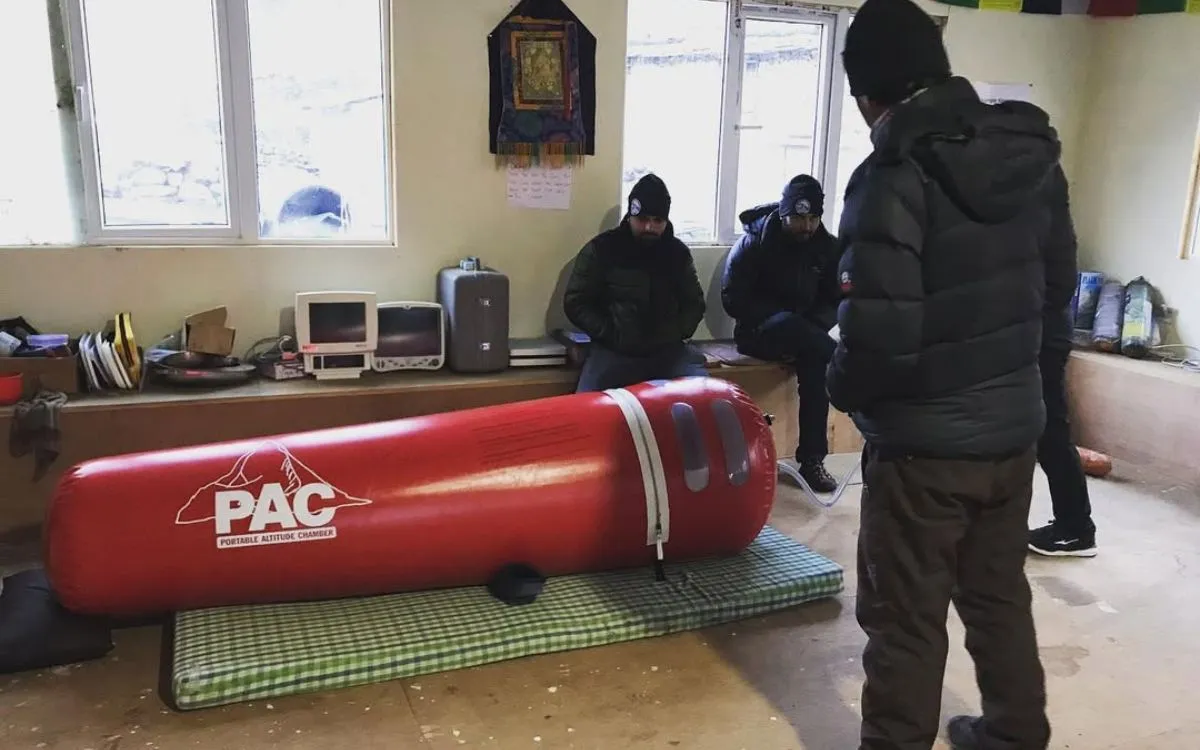
Portable altitude chamber used for altitude sickness treatment on Everest Base Camp and Annapurna treks.
Medical Facilities and Emergency Aid Posts Along Trekking Routes
Trekking Region
Location
Medical Facility / Aid Post
Altitude
Services Available
Contact Number
Everest
Pheriche
HRA Aid Post
4,371 m
AMS/HAPE treatment, oxygen, consultation
HRA: +977-1-4440292
Everest
Kunde
Kunde Hospital
3,840 m
Emergency care, surgery, X-ray
HRA: +977-1-4440292
Everest
Machermo
Machermo Clinic
4,470 m
Basic altitude illness treatment
HRA: +977-1-4440292
Everest
Namche Bazaar
Namche Hospital
3,440 m
Injury treatment, outpatient care
HRA: +977-1-4440292
Annapurna
Manang
HRA Aid Post
3,540 m
High-altitude care, oxygen, medication
HRA: +977-1-4440292
Annapurna
Ghandruk
Ghandruk Health Post
1,940 m
First aid, minor medical care
977-9863941030
Annapurna
Chhomrong
Chhomrong Health Post
2,170 m
Basic illness treatment
977-9846213314
Manaslu
Sama Gaun
Health Post
3,520 m
Altitude sickness care, oxygen
Guide / Local contact
Manaslu
Namrung
Health Post
2,630 m
Basic altitude medication
Guide / Local contact
Manaslu
Bhimtang
Health Post
3,720 m
Post-pass injury treatment
Guide / Local contact
Langtang
Dhunche
Rasuwa District Health Post
1,920 m
Emergency and general medical services
977-9851275555
Langtang
Langtang NP HQ
Park Medical Support
Varies
First aid and rescue coordination
977-9802030061
Mustang
Lo Manthang
Local Council Health Post
3,840 m
Basic medical care, emergency referral
Guide / Local contact
Kanchenjunga
Gyablam
Basic Aid Post
3,000 m
First aid
Guide / Local contact
Annapurna
Lumle
Lumle Health Post
1,640 m
Trailhead medical care
977-9857620538
How Helicopter Rescue Works in Nepal
Rescue request and assessment
When a medical emergency takes place while trekking, the search and rescue will begin with an on-the-ground assessment. Licensed trekking guides or agencies will assess whether the problem is due to an injury or altitude sickness. Examples of altitude sickness could include extreme headaches, confusion, labored breathing, or a lack of coordination; and all of these conditions must be dealt with quickly.
For commonly trekked routes such as the Everest Base Camp, the Guiding team usually liaises with medical professionals at Himalayan Rescue Association (HRA) aid posts at locations such as Pheriche. If the condition is severe enough, the guide or agency will look into a helicopter evacuation Nepal, with the guide or agency providing the helicopter with essential information such as the person's location, elevation, weather conditions, and condition to ensure that appropriate action can be taken.
Insurance approval process
Before a helicopter evacuation can be carried out in Nepal, approval from the travel insurance company is normally needed. The trekking company or rescue organizer contacts the insurance company and provides medical information, passport information, and the trekking area. Doctors can also verify that a helicopter evacuation is required from a medical point of view, especially in altitude sickness patients.
The insurance company reviews the application and provides authorization to the helicopter company. This is important since helicopter evacuations in the remote mountain regions of Nepal can be expensive. There may be delays if information is not available or if communication is a problem, which is why it is important to trek with a reputable trekking company.
Helicopter Evacuation and Transfer to Approved Hospitals
After getting the necessary approvals and the right weather conditions for flying the helicopter, the helicopter will make its way to the closest, safest area where it can land. In high altitude areas such as Everest Base Camp, helicopters can either use a designated helipad or they might land in a nearby village depending on the type of terrain and how well you can see.
Once the patient is safely located within the helicopter, they will be transported to an appropriate hospital typically located in Kathmandu.
During the rescue process at Everest Base Camp, helicopters will often evacuate patients from villages such as Gorak Shep, Lobuche and Pheriche. After a transfer to the hospital in Kathmandu by helicopter, the medical staff will continue to provide medical care for the patient in the hospital and any insurance companies will take care of all paperwork associated with ongoing care
Costs Associated With High-Altitude Helicopter Rescue
Estimated Helicopter Evacuation Costs
The cost to evacuate a helicopter from Nepal depends on the route taken, altitude, weather, and the provider (e.g., Simrik Air, Fishtail Air, Altitude Air). A typical flight will be charged hourly and at a cost of $2,500. All payments for the flights must be made in advance.
Route
Approx. Cost Range (USD)
Everest Base Camp → Kathmandu
$4,000–$15,000
Annapurna/Manang → Pokhara
$5,000–$10,000
Manaslu → Kathmandu
$10,000–$18,000
Langtang/Upper Mustang
$8,000–$15,000
Medical Treatment and Hospitalization Costs
Evacuation is most often due to high altitude illnesses like AMS, HAPE, or HACE. Hospitalization in Kathmandu may cost $500-$5,000 depending on oxygen requirements, medications, ICU facilities, and duration of stay. Aid posts along the trekking trails offer free or basic medical care, but evacuation services contribute to about 90% of the cost.
Emergency Rescue Without Insurance Coverage
If you don’t have insurance, hikers are responsible for covering the entire costs of helicopter transportation and healthcare ($10k to $20k). Payment must be made by credit card or wire transfer in full before the helicopter can be sent out and waiting could mean death. Helicopter companies often refuse to evacuate someone unless they have a way to guarantee that payment will be made. Trekking companies will sometimes help their clients negotiate a payment plan with the helicopter company, but independent hikers typically pay much more than other hikers.
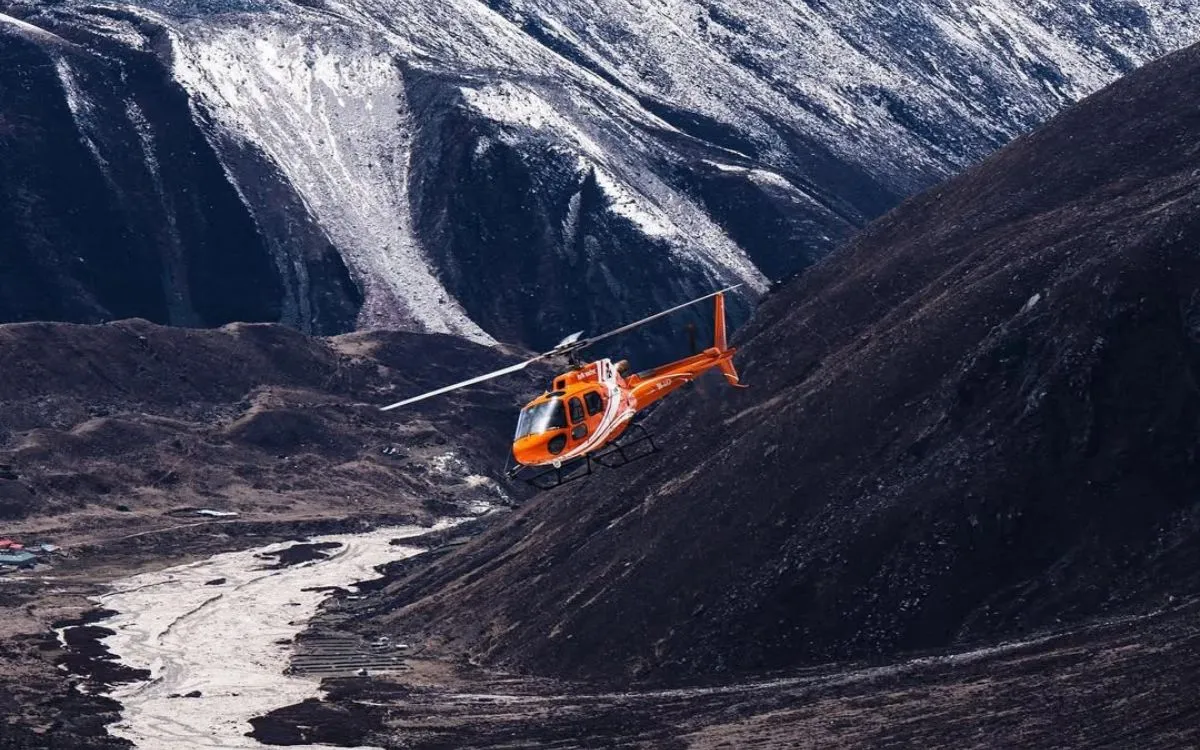
Simrik Air helicopter providing mountain rescue and medical evacuation services in Nepal.
Trekking Insurance and Emergency Coverage
Some trekking insurance policies, like Allianz and World Nomads, will cover your helicopter evacuation if you decide to trek in Nepal, along with high-altitude medical treatment and hospital costs. Coverage ranges from $50,000 to $100,000, depending on how high your trek (up to 6,000m). You'll typically pay between $100 and $300 for two weeks of coverage, depending on your age and length of the trek.
Once you require evacuation services, you must call your insurance company's emergency number first for approval to remove you from the area. All insurance policies will provide reimbursable evacuation and treatment costs, but pre-existing conditions and treks above 6,000 meters will not be covered, unless you purchase an add-on rider to the policy. Proof of valid insurance is required for trekking in restricted areas such as Manaslu.
Why Trekking Insurance Is Mandatory in Nepal?
When trekking in Nepal, you will most likely be trekking at altitudes between 3000-5000m. The biggest risk associated with trekking at these elevations is altitude sickness, which can affect anybody regardless of fitness level and amount of prior experience. Symptoms of altitude sickness can go from mild to severe quickly if proper medical treatment is not received on time.
Additionally, you may need to be airlifted to receive treatment at a hospital if you experience altitude sickness while out trekking in Nepal. Due to this risk, all trekkers are required by law to have trekking insurance, regardless of whether they are trekking to Everest Base Camp or Annapurna, or Manaslu or Langtang or Upper Mustang.
Your insurance will need to cover at a minimum, high-altitude search and rescue, as well as medical treatment after a high-altitude search and rescue, such as oxygen therapy and emergency medical care once either a search and rescue is performed or if you visit a doctor after having experienced altitude sickness. Without a proper insurance policy, you may be liable for anywhere from $10,000-$20,000 to receive a helicopter for altitude sickness. If your insurance provider does not provide timely payment or authorization, your life may be placed in jeopardy. Reliable trekking agencies and rescue operators will not allow you to participate in a high-altitude trek without having confirmed that you have valid insurance coverage.
Can High Altitude Rescue in Nepal Be Fake? Understanding Real Emergency Evacuations
Most of the helicopter rescue operations in the Nepalese mountains are genuine and life-saving, but recent investigations in 2026 have revealed that some of these rescue operations were misused. The Central Investigation Bureau of Nepal discovered a massive insurance fraud ring in the rescue system, where unnecessary helicopter evacuations were staged to claim insurance payments from foreign insurance companies.
Between 2022 and 2025, six persons involved with three travel and mountain rescue companies allegedly made false helicopter rescue claims of almost USD 20 million (approximately NPR 2.9 billion). The authorities examined about 2,320 rescue missions, of which 317 were identified as possible cases of fraud. In one instance, a company made claims for more than 1,200 rescue missions, of which 171 were identified as fraudulent, resulting in over USD 10 million in unjustified claims.
However, it should also be noted that most of the helicopter rescues in Nepal are genuine and necessary. In fact, genuine evacuations are conducted when experienced guides or medical professionals have confirmed serious conditions such as severe AMS, HAPE, HACE, major injuries, or sudden illnesses. After such incidents, the authorities have stepped up their vigilance and verification to ensure that the rescue service is reliable and continues to serve trekkers when they need it.
How to Avoid Unnecessary or Rescue Situations in Nepal
To acclimatize safely to high altitudes, you should follow a plan for gradual altitude gain and regularly stop at designated rest points. Make sure not to ascend more than about 300–500 meters per day for every 3,000 meters you have already trekked to minimize your chances of needing altitude sickness emergency rescue in Nepal.
It is recommended that you trek with a licensed and reputable guide or trekking company. A guide who is experienced will monitor your health on a daily basis and be able to recognize the early signs of illness. They will be able to make sound medical decisions before your condition becomes an emergency.
Be aware of the symptoms of altitude sickness, including headaches, nausea, dizziness, confusion, and unusual breathing difficulties. Report any symptoms to your guide immediately rather than pressing on.
Drink plenty of fluids and eat well. Dehydration, poor nutrition, and fatigue can exacerbate altitude sickness and lead to evacuation.
Monitor weather and trail conditions. Do not trek in bad weather, including storms, heavy snow, or treacherous trail conditions, and follow your guide’s advice on route choices.
Be properly equipped for your trek by bringing adequate layers of warm clothing, trekking poles, proper boots, and a first-aid kit. Have emergency equipment available, including oxygen cylinders, pulse oximeters, and means of communication, to save lives.
Always have a list of emergency contact numbers, i.e., tourist police (Kathmandu): +977-1-4247041, tourist police (Lukla): +977-38-540111, Nepal police: 100.
Obtain proper trekking insurance that covers helicopter evacuation, medical services, and high-altitude emergencies in Nepal so that you receive faster and easier rescue and treatment if necessary.
Most practical tip: Before agreeing to a helicopter evacuation, it is always important to ask for a medical reason from your guide or a medical professional. A real rescue is based on serious and deteriorating symptoms such as severe AMS, HAPE, HACE, serious injury, or low oxygen levels. Fatigue or a headache does not always require evacuation. If your symptoms are improving, then a helicopter evacuation may not be necessary.
FAQs
Is helicopter rescue guaranteed during high-altitude trekking in Nepal?
Helicopter rescue is not guaranteed in Nepal. The rescue depends on weather, daylight, and availability of helicopters.
Up to what altitude can helicopter rescue operate in Nepal?
Helicopter rescues in Nepal extend up to 6,000+ meters, covering major trekking routes such as Everest Base Camp, Annapurna and Manaslu. The success of the rescue depends on good weather.
Can rescue be done without travel or trekking insurance?
Yes, but it is extremely costly. The fees, without insurance, can exceed $5,000. It is highly recommended for trekkers to buy insurance that covers their trek.
How long does it take for a helicopter rescue to arrive?
The rescue can take anywhere from 1-3 hours, depending on the distance, weather, and location.
What information is required to request a high-altitude rescue?
You should provide your name, passport number, insurance information, GPS coordinates, or locations, as well as a description of the situation. This information can usually be provided by the trekking agency or guide.
Who usually initiates the rescue request?
Licensed guides, trekking agencies, lodges, or companions make the request for rescue. They contact helicopter operators using satellite phones or radios for the quickest response.
Are solo trekkers eligible for high-altitude rescue in Nepal?
No, as solo trekking is prohibited in major trekking areas like Everest, Annapurna, and Manaslu. Guides are mandatory to ensure effective coordination of rescue operations.
Can bad weather stop a helicopter rescue completely?
Yes, due to heavy clouds, fog, snow, or strong winds, helicopter rescue operations may not be feasible. Operations resume when the weather and visibility are favorable.
Are there emergency services available at night?
No, most helicopter rescue operations are conducted during daylight hours. Operations at night are rare and are carried out only when the weather is favorable.
Does the Himalayan Rescue Association (HRA) provide helicopter rescue?
No, HRA provides medical assistance, oxygen, and ground support, but helicopter operations are carried out by private operators.
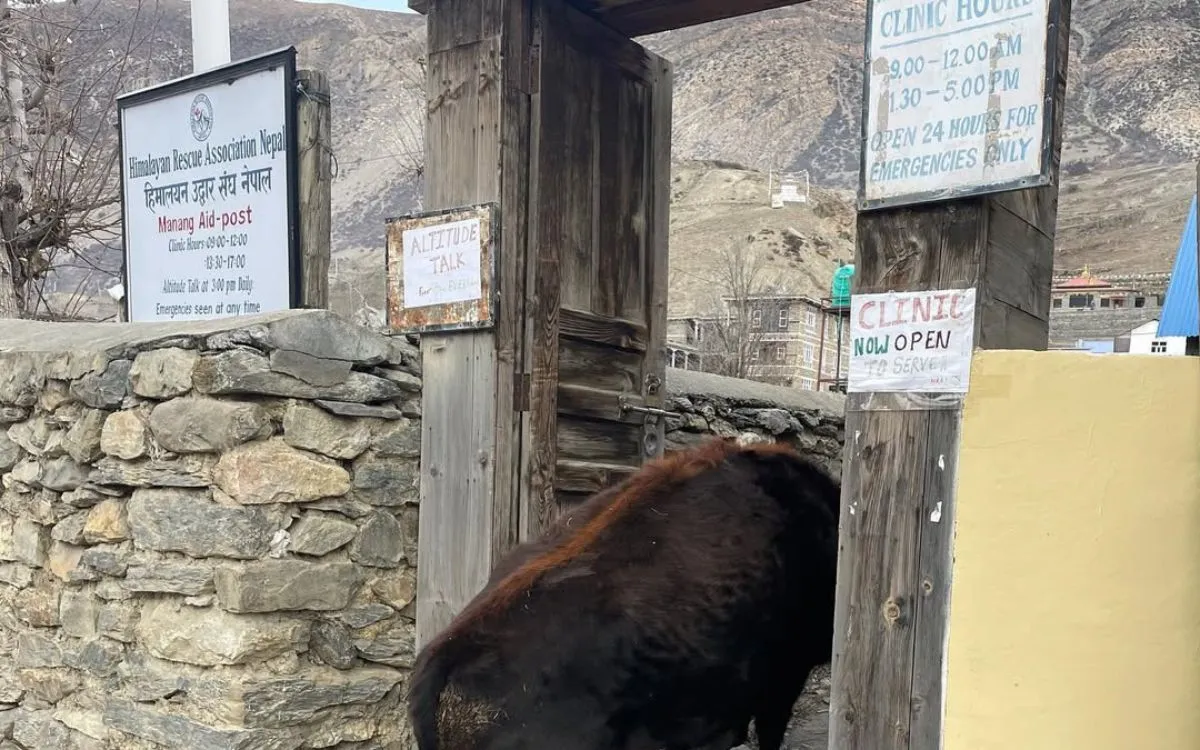
High-altitude medical clinic in Manang providing emergency care for Annapurna Circuit trekkers
Conclusion
Trekking at high altitudes in Nepal can present very real dangers, including altitude sickness, injury and become ill suddenly while trekking. All trekkers should always go with a licensed guide and a reputable trekking company, monitor their health daily and follow their acclimatisation schedules.
Rescue by helicopter in Nepal will depend on weather and daylight and can only be coordinated after receipt of insurance approval from local authorities, contracting trekking companies and contracting helicopter companies. Medical facilities in remote areas of Nepal are limited, making time of the essence to getting treatment and preparing ahead of time.
It is important to have the right trekking insurance to provide liability coverage for helicopter evacuation, high-altitude emergencies and hospital treatment. The likelihood of timely rescuing is significantly increased by adhering to the above-described safety measures, keeping your emergency equipment close at hand and having the proper insurance. For reliable advice, safety tips and assistance on your trek, contact Himalayan Recreation today.





-6.webp)
-1.webp)
-1.webp)