Think about standing at the top of the world, at approximately 29,000 feet, when your oxygen supply is low, and you see ahead of you climbers moving extremely slowly. You cannot go back because hundreds of climbers are also pushing up from behind you. Your fingers are beginning to get numb—a far cry from the vision of Everest that you had previously envisioned—and at this level, the tremendous number of climbers in your path becomes an Everest traffic jam; every year, people lose their lives due to severe overcrowding on Everest.
When photographs of climbers all stuck behind each other in the "death zone" of Everest were released to the public in 2019, many watched in horror. The long line of climbers in the death zone resembled shoppers waiting in line for Black Friday bargains! Unfortunately, this was a situation in which people were waiting in line to reach the summit and dying while doing so.
The issue of overcrowding on Mount Everest has transformed it from a once-severe mountaineering challenge into a dangerous bottleneck for climbers. Money will buy you a spot in line on Mount Everest, but whether or not you live to tell about your experience will depend solely on how well experienced you are at climbing; only the most experienced climbers will live past the bottleneck. So, what was it about the top of the world that created this nightmare situation? Why do climbers continually line up behind each other, regardless of the extreme dangers that exist?
What Is the Everest Traffic Jam?
Imagine being stuck in traffic on a highway, with cars piled up five miles above sea level, and the congestion is capable of killing you. On Everest, during the two to three-week short spring climbing season, it becomes one large traffic jam as climbers all try to get to the summit of Mount Everest at the same time.
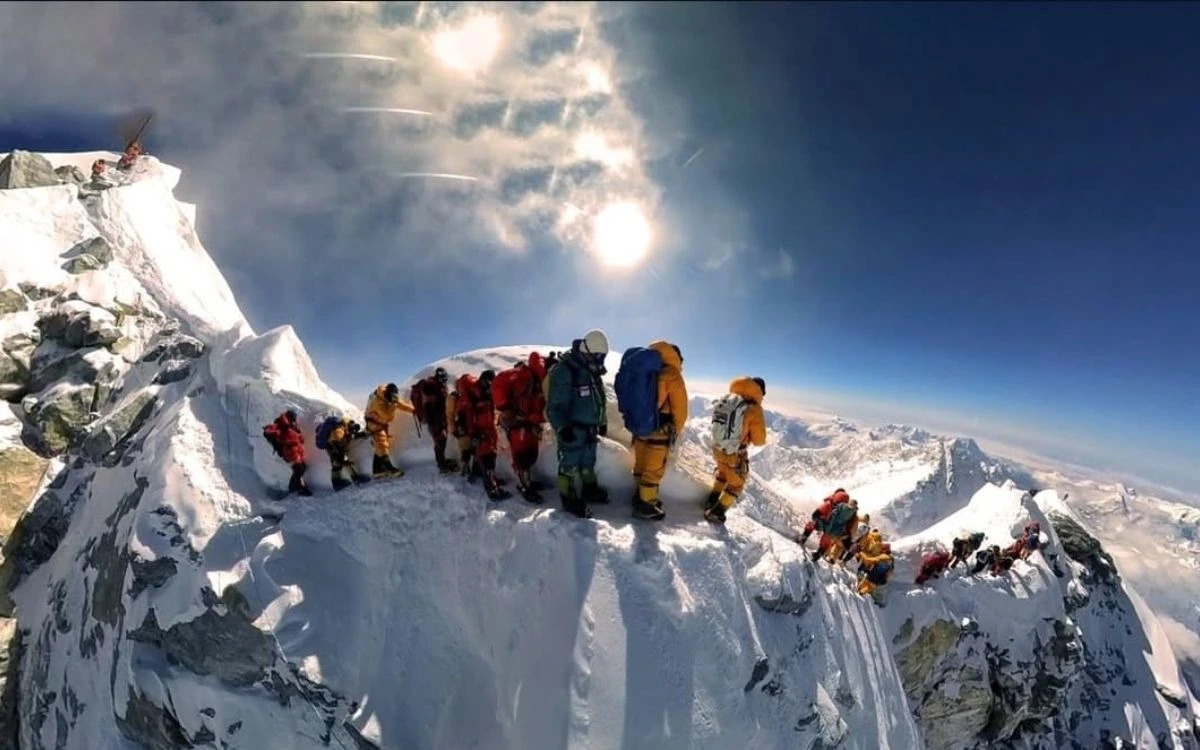
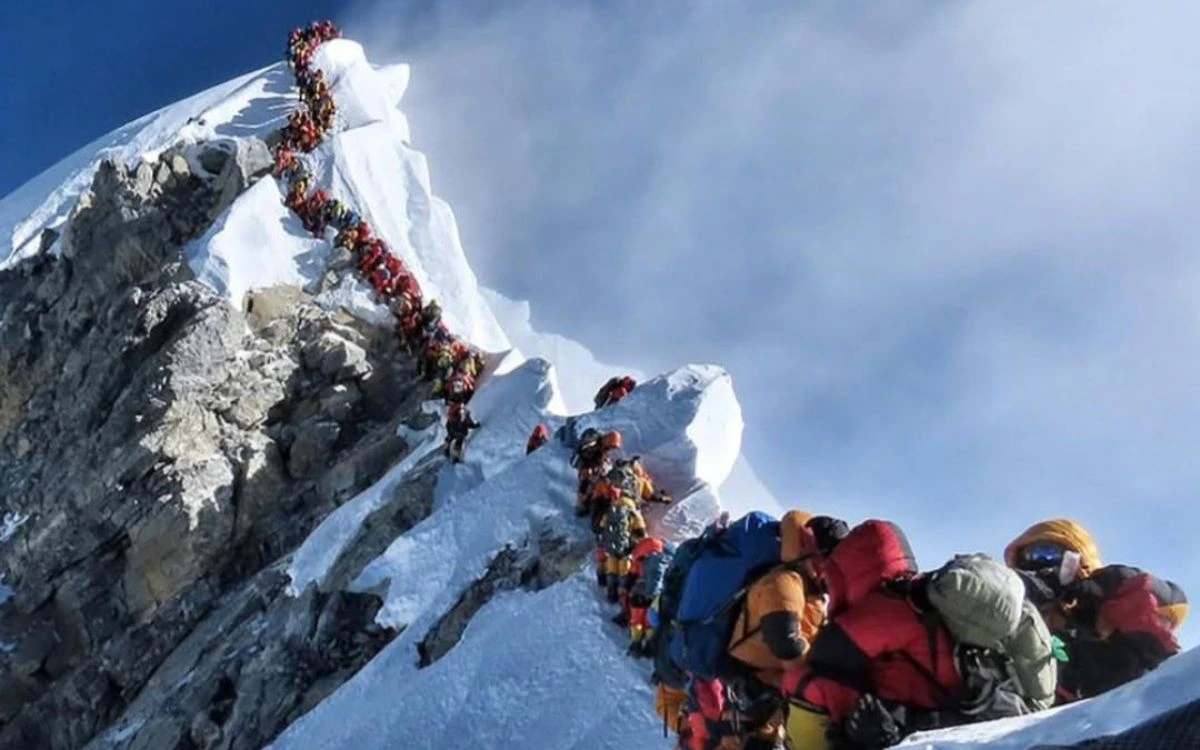
As climbers reach the summit and begin their descent, they will arrive at the same time when there is limited room on the narrow ridgelines right below the summit. These climbers form dangerous lines which occur in the "death zone," where climbers' bodies begin to disconnect and shut down due to lack of oxygen. Climbers connect themselves to fixed ropes as they slowly move forward and wait for hours, gradually losing the ability to breathe as their oxygen supply decreases, while frostbite begins to eat away at their exposed skin. One image that became viral in 2019 illustrated the shocking reality of what Everest has turned into.
The image sparked international outrage and raised the question of whether or not everyone with enough money to pay to climb should have the opportunity to climb Everest. It has highlighted the responsibility of inexperienced climbers who slow other climbers down. The Mount Everest traffic jam exposes some of the harsh realities of commercial climbing and how mankind participates in the most extreme of nature's environments. Every delay costs oxygen, and every second in a stationary position increases the chance of frostbite, while every climbing season, there is a larger number of climbers to accommodate, and the weather remains brutal and unpredictable.
The Real Reasons Behind Overcrowded Summit Attempts
Everest traffic jam showing long line of climbers queuing on narrow summit ridge in death zone
The perfect storm of congestion at the top of Everest occurs due to several factors.
Limited Weather Windows
Climbers have approximately five to seven days per year to climb Everest due to unpredictable weather patterns. The strong winds that normally hit the summit of Everest can exceed 100 mph. The period of late May is when the winds typically die down, so many climbers will attempt to summit Everest around the same time. The Annapurna Base Camp Trek allows for flexible scheduling, but those hoping to summit Everest have no alternative but to go or come home empty-handed.
Too Many Climbing Permits:
Based on an $11,000 permit fee, climbing permits can be obtained from Nepal by nearly anyone who pays. In 2019, authorities on the Nepalese side of Mount Everest issued a total of 381 climbing permits. When all guides and Sherpas are included, it is estimated that by the end of May 2019, nearly 800 people will be attempting to reach the summit of Mount Everest in a single week. These climbing permits represent a considerable source of revenue for entire communities, and therefore, managing them becomes a significant political issue.
Geography Creates Bottlenecks
The last section of the climb to the summit of Mount Everest is restricted to a single line of climbers. The ridges are very tight and have vertical drops from either side; therefore, any climber having difficulty will create a bottleneck through which others must wait and hope their oxygen supply does not run out before they are able to pass.
Technical Sections Slow Everyone Down
Near the summit, the Hillary Step and surrounding areas require careful climbing with ropes and ice axes. When a less-skilled climber freezes up, everyone behind them pays the price. The 2015 earthquake changed the rock formation, but narrow passages still channel all traffic through deadly chokepoints.
A Look Back: The Famous 2019 Everest Traffic Jam
Dozens of climbers in colorful gear waiting in dangerous Everest traffic jam queue near summit
The month of May 2019 was a time to enjoy the gorgeous weather, but unfortunately, it turned out to be a huge disaster. It created an opportunity for most expeditions that were on Everest that year. The image and picture of what happens during the climbing season was taken by Nirmal Purja; his picture displayed hundreds of different colours of jackets side-by-side, covering the last ridge of Everest all in one line. The world could not believe how easily this picture went viral over social media networks from all over the world. One of the most significant aspects of the 2019 climbing season was that eleven climbers died. Most climbers who died on the descent ran out of supplemental oxygen while they waited in line. In addition, due to excessive time spent waiting in line, many climbers suffered from altitude sickness that was worsened by extended exposure; others succumbed to frostbite that required them to have some of their limbs amputated. It proved that all the training and skills of the most prepared climbers do not mean anything if they find themselves trapped in a log-jam in unnatural circumstances.
Illusions of climbing Everest were shattered during the 2019 climbing season. The mountain is no longer a test of human limits; instead, it has become a tourist attraction, where crowds are overwhelming infrastructure and where the experience of climbing is secondary to the experience of paying for the privilege to climb.
Route Bottlenecks: Where and Why They Happen
On Mount Everest, some areas are similar to valves; these locations regulate the climbing flow, and make areas where climbers become trapped in dangerous positions and are unable to climb higher.
The Hillary Step and the South Summit Ridge
Climbing these sections requires special technical climbing skills, and three separate systems of fixed ropes must be attached to the rock; climbers must pass one at a time. The surrounding ridge of the South Summit Ridge is very narrow and difficult to maneuver; also, since the earthquake that altered the shape of the Hillary Step, the area is even more treacherous. The difficulties in this area are similar to some of the more difficult sections of the Everest Base Camp Trek—only worse, due to being so much higher. When a climber has difficulties, he causes all climbers below them to wait in the death zone, where there is little to no oxygen in the air.
The Balcony
At 8400 meters, the Balcony is the last rest stop before the final section of the ascent. During peak times of traffic, it becomes a staging area for all the climbers to gather; this area is where a large amount of time will be lost, and bodies will get worn out.
Climbers roped together ascending steep icy slope during overcrowded Everest climbing season
Technical Sections Expose Skill Gaps
The upper mountain demands competence with crampons, ice axes, and rope systems. Unlike accessible adventures such as the Langtang Trek, where beginners can learn as they go, Everest punishes inexperience with deadly consequences. One hesitant climber creates delays affecting dozens behind them.
No way to go anywhere in the Queue
Ropes create a single line with a limited number of passes. There is no ability to turn around because there are climbers behind you occupying the area that you would need to go through on the way up. While allowing more people to attempt to summit Everest also creates conditions that will ultimately trap climbers in a traffic jam.
The dangers associated with the Everest Traffic Jams
Reasons for traffic jams on Everest provide direct means for the death of climbers each season; therefore, the perception of an adventurous expedition should be viewed differently.
Physical Breakdown at Altitude
Above 26,246ft (8,000m), your human body will start to decompose. The body is using the muscle tissue in your body for energy. There is fluid leaking from your lungs into the brain, and the brain is losing its ability to function; in layman's terms, your brain is literally dying every minute while you are in a traffic jam and standing idle on the summit of Mount Everest. Every minute of waiting for a traffic jam to clear is costing you your strength, your ability to think clearly, and your chances for survival.
Depletion of Oxygen Supply
Most climbers on Everest will carry 2-3 canisters of supplemental oxygen; climbers base their calculations of the amount of oxygen that they will need on the predicted amount of time that they will take to reach their final destination. If, for example, your projected time takes twice as long to reach the summit of Everest, this means that if there were a traffic jam, your oxygen will run out, as was the case for many climbers who died on Mount Everest due to suffocation after depleting their canisters while stuck in a queue. The body will have, on average of 3 minutes before you will lose consciousness.
Keep Moving To Avoid Hypothermia
Single-file line of mountaineers crossing crevasse-filled glacier on crowded Everest route
Cold Exposure saps your body's ability to produce heat. When you stop moving your body, Hypothermia will creep up on you in just minutes. If you are stopped for a long period of time, you can get Frostbite on your fingers or toes, which causes them to become black and die. Many people who survived the climbing season in 2019 lost fingers or toes from being stuck in the freezing temperatures caused by the heavy flow of traffic.
The Impact of Overcrowding On The Mountain
The climbing season of 2019 demonstrated the impact of overcrowding on climbers. Some climbers became unable to continue due to extreme fatigue, while other climbers became disoriented and fell off precarious ridges when extreme cold made it difficult for them to maintain their coordination. The extreme amount of traffic climbing Mount Everest converts every danger associated with high-altitude climbing into an even worse form of danger—unpredictable and unavoidable.
How Crowd Management Works
Governments, climbing companies, and climbers need to work together to resolve the problem of overcrowding on Everest. Progress towards a solution is being delayed due to the competing interests of the various parties involved.
Nepal Government Sets Qualifications
The Nepal government has implemented guidelines for climbers who wish to summit Everest. They require climbers to demonstrate prior climbing experience at elevations above 6,500 m. The government uses liaison officers stationed at base camp to check the readiness of climbers. There has been some discussion regarding a limit on the total number of permits issued each season; however, the government's strong economic reliance upon the income generated through mountaineering will continue to create a conflict with safety concerns.
Expedition Companies Control Climbing Flow
The most reputable climbing companies utilize a staggered approach to beginning their climbs; they each depart from base camp on staggered times throughout several days to spread the climbers out across multiple days. Reputable companies perform rigorous screening of their clients; if a climber does not demonstrate sufficient preparedness, they refuse to accept the client. Many Everest expedition companies, however, operate in an unethical manner and accept any client who pays for the trip because their focus is to generate profit rather than provide safe climbing experiences. Similar to the way that guides manage their groups on the Manaslu Circuit Trek, Everest guides attempt to strategically time their departures; however, there are many expedition companies that do not follow this practice.
Improved Climbing Infrastructure Is Beneficial
Climbers queuing on exposed Everest ridge with summit pyramid visible in background
Teams have begun to install more fixed ropes earlier in the climbing season, with the additional use of more anchoring systems. Some experts are recommending that a second rope line be installed within bottleneck areas having more than one way to go up and down the same area. Technical improvements regarding climbing infrastructure help improve the flow of climbing traffic through an area; however, the congestion of climbers attempting to use the small number of climbing routes that are available over a small amount of time can not be avoided.
Forecasts for Weather Are a Problem
Today's meteorologists can predict summit windows accurately. Therefore, each expedition receives a forecast showing essentially the same flawless days to summit. Although this level of detail is excellent for predicting a summit window, it has been a major contributor to increasing congestion because expeditions are forced into a few identical summit windows due to their dependence on the same weather forecasts.
Quota Systems Risk Resistance
Some people are suggesting implementing a quota system, like the Upper Mustang Trek issuance of permits. Such a quota would require the coldest intervention and cooperation between China and Nepal, scheduling logistics that are very complicated, and enforcement strategies that do not exist yet.
FAQs
Everest Traffic Jams: How Many People Have Died Due to Traffic Jams on the Mountain?
The 2019 climbing season resulted in at least 11 deaths that stemmed directly from the overcrowding conditions - like low levels of oxygen, prolonged exposure to the elements, and aggravated altitude sickness from the delays. Since 2010, many more individuals have died as a result of complications caused by overcrowding. Exact numbers are still being debated since many factors play into how someone died; however, it is known that overcrowding significantly increases the risk of being killed.
When do crews have to face the worst traffic conditions while climbing to the summit of Mount Everest?
The most severe climbing traffic conditions occur at the end of May, typically between May 20-27. The winds die down for a short period, and therefore, the narrow time span results in hundreds of climbers attempting to reach the summit simultaneously. It creates the most hazardous conditions for congestion.
Is there any way to prevent traffic jams on Mount Everest?
While it seems that there is no definite way to eliminate traffic jams on Mount Everest without very substantial changes to the regulations put into place by the government of Nepal, some changes could significantly reduce the number of climbers that congregate simultaneously and result in death from traffic jams. Heightened experience requirements (i.e., requiring more experience than simply being an expert climber), requiring skill tests to be completed before being assigned to a team, setting the number of permits allowed per mountain, and improving the facilities on the mountain will dramatically reduce the number of climbers who are killed from overcrowding.
What Should Climbers Know before Attempting Everest?
Climbers need to be aware of certain facts about climbing Everest, such as: you are likely to have a traffic jam when you attempt to summit; you must have extensive experience at high elevation, and not just a few weeks. It could take you hours to stand still in the death zone. You may run out of oxygen even if you have planned and purchased enough. Additionally, simply paying the fees does not guarantee success or survival. Mental preparation for the worst-case scenario will be equally as important as physical training.
Is there another Peak besides Everest where the Climb is not so clogged?
Yes! Cho-Oyu, Manaslu, and Lhotse provide incredible peaks that do not have the dangerous traffic of Everest. Each of these peaks allows one to test their skills as a mountaineer in spectacular environments while having room to climb at their own pace. If you do not want to climb technically, but want a treacherous trek through the Himalayas, the Annapurna Circuit Trek may be for you; it gives you beautiful views of the mountains and immerses you in the rich culture of the area without the risk of the death zone or traffic jams.
Conclusion
The traffic jam on Everest illustrates how human ambition and the limits of nature have come into direct conflict. While money provides individuals with the means to access this mountain, it does nothing to widen the narrow ridges, prolong the short weather windows, and add more oxygen to the thin air of the death zone. The current system, which is based almost entirely on profit and access, prioritizes the safety and sustainability of climbers while putting many climbers' lives at risk and negatively impacting the way that climbing is experienced.
To truly solve this issue requires cooperation from not only the Nepalese Government, but also the Chinese Authorities, the Expedition Operators, and the International Climbing Community. Without substantial reforms such as limiting the number of permits issued, implementing stricter permit requirements, and improving how permits are managed, the extremely high levels of overcrowding will continue to claim lives each year.
The Himalayas are home to many amazing experiences beyond the overcrowded summit of Everest, including a variety of challenging peaks and treks that provide an opportunity to experience the astonishing beauty of these mountains without having to endure the fear of standing in line at an altitude of 29,000 ft.
Contact us at Himalayan Recreation to help you experience the incredible beauty of the Himalayas safely and responsibly, and provide you with experienced mountain guides who will ensure your safety and provide you with authentic mountain experiences.


.webp)



-1.webp)
-1.webp)
-1.webp)