Mount Manaslu, at 8,163 meters above sea level, is one of Nepal's most impressive peaks and has considerable spiritual significance. It is the eighth-highest mountain in the world and derives its name from the Sanskrit word “Manasa,” which means “intellect” or “soul,” giving it the nickname “Mountain of the Spirit.” The mountain sits in the remote Mansiri Himalaya Range of central-west Nepal and offers climbers and trekkers a unique blend of challenging mountain experiences and the rich culture of the area. The mountain is less travelled than the popular Annapurna and Everest regions.
Nepal has long been known as a destination for trekking and mountaineering, due to the skills of the guides and porters who help make each Himalayan expedition a success. These experts know the area they work in, the weather, and all of the rules around safety when dealing with some of the world’s highest peaks. This complete guide will give you everything that you need to know about Mount Manaslu, including its unique history as a summit, the different routes up Mount Manaslu, the beautiful Manaslu Circuit Trek, and all of the costs associated with permits and conservation of the area. If you would like to visit this incredible mountain or just want to see what is required to make it there, then this guide will provide you with all of the necessary information to help you on your journey to the Himalayas.
Manaslu at a Glance – Essential Facts
Where is Mount Manaslu Located?
Mount Manaslu is located in the Manaslu Himal range, along with many other notable peaks, in Central-West Nepal, approximately 64 kilometers east of Annapurna. It sits in the Gorkha District of Nepal close to the Tibetan border, which makes it geographically isolated, but it is easily accessed through established trekking routes. The area around Manaslu has dramatic contrasts in the landscape; the lower elevations are Sub-Tropical Forests, while higher elevations are Glaciers; therefore, Mt Manaslu has both subtropical forests and glaciers near its summit.
Nearby peaks include Himalchuli (7,893 meters) and Ngadi Chuli (7,871 meters), which are both part of the same massif as Mount Manaslu. The nearest larger village is Arughat, which acts as the main starting point for treks, and Samagaon, a traditional Tibetan-influenced village located at the base of Mount Manaslu and serves as an important acclimatization point for climbers preparing to summit.
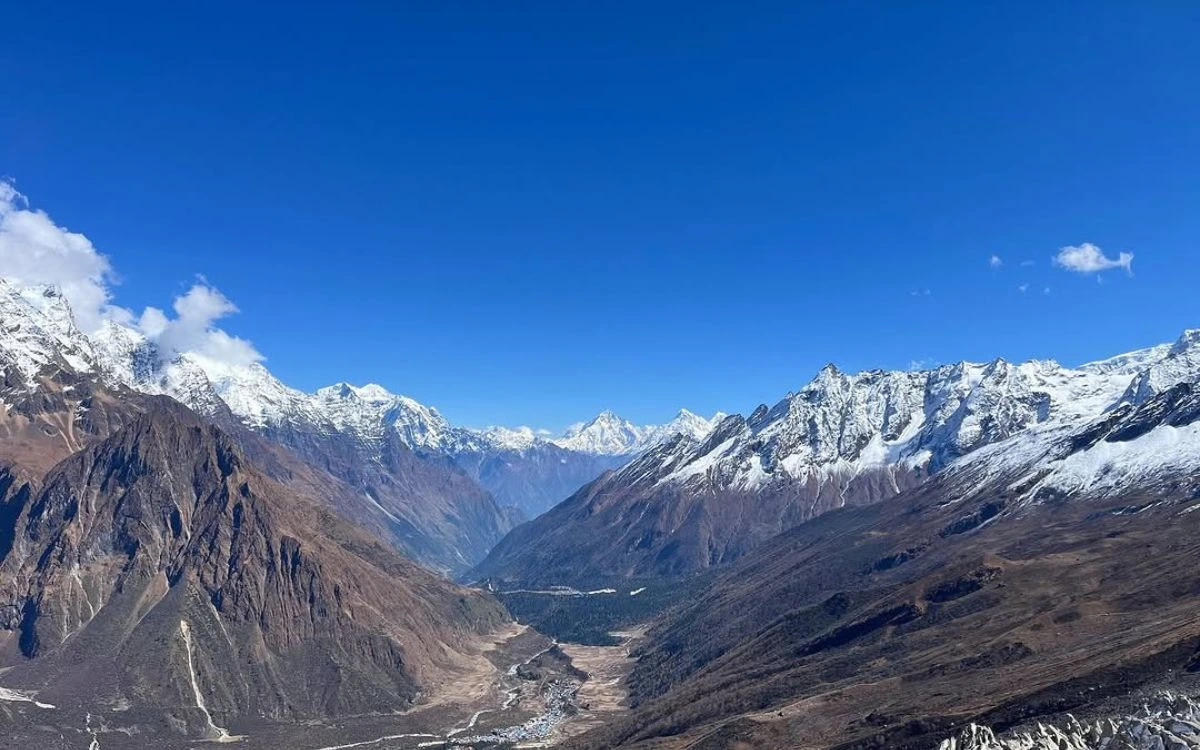
Wide valley view with Manaslu massif and snow-capped Himalayan peaks under clear blue sky
At 8,163 meters (26,781 feet), Mount Manaslu is ranked as the 8th-tallest mountain out of 14 total mountains over 8,000 meters (26,247 feet) in the world. It has an elevation that is only slightly less than Dhaulagiri (8,167 meters/26,804 feet), and slightly higher than Nanga Parbat (8,126 meters/26.665 feet) on the world's tallest mountains list.
Quick Facts at a Glance
First Ascent: May 9, 1956, by Toshio Imanishi and Gyalzen Norbu (Japanese expedition)
Best Climbing Season: September to November (post-monsoon)
Best Trekking Season: September to November and March to May
Nearest Major Town: Arughat (trek starting point)
Key Village: Samagaon
Mountain Range: Mansiri Himal
Country: Nepal
Province: Gandaki Province
A Journey Through Time: Manaslu's Summit History
The first successful ascent of Manaslu was accomplished by a Japanese Expedition led by Toshio Imanishi and Sherpa Gyalzen Norbu in 1956. The successful ascent happened on May 9 of that year and represents an important development for the Japanese Mountaineering community and their relationship with Manaslu. Manaslu developed a reputation for being an extremely difficult mountain to climb due to a number of unsuccessful attempts made by Japanese climbers before 1956. The beliefs of the local people surrounding Manaslu at the time also made climbing the mountain difficult, as many villagers believed that they would upset the spirits of the mountain if they climbed it. As such, when Toshio Imanishi and Sherpa Gyalzen Norbu were able to reach the summit in May 1956, this not only represented a significant mountaineering achievement but also represented a landmark cultural event where climbers were able to develop a trusting relationship with the local people of the area.
In the subsequent decades, there were a number of important milestones regarding the history of climbing Manaslu. In 1971, a Japanese Expedition ascended Manaslu via a new route: the Northeast Face. This route has since become the most frequently used route by climbers today. The mountain has produced many other wonderful climbing achievements, including but not limited to solo ascents, winter ascents, and speed records. There has also been a growing number of female climbers; one of the earliest distinguished women climbers to summit Manaslu is Japanese climber Mieko Mori.
There have been many advancements in the style of climbing the Manaslu Mountain and in the style of expedition to the Manaslu Mountain during the last few decades. Modern-day climbers have access to much better weather forecasting (high-accuracy), equipment, and much better prepared campsites and fixed route systems. The Manaslu Mountain has become a very popular training ground for future Everest climbers, with most people using the Manaslu Mountain as a way to gain experience at higher altitudes while having the advantage of a slightly less technical climb than other 8000-meter peaks.
Conquering the Giant: Climbing Mount Manaslu
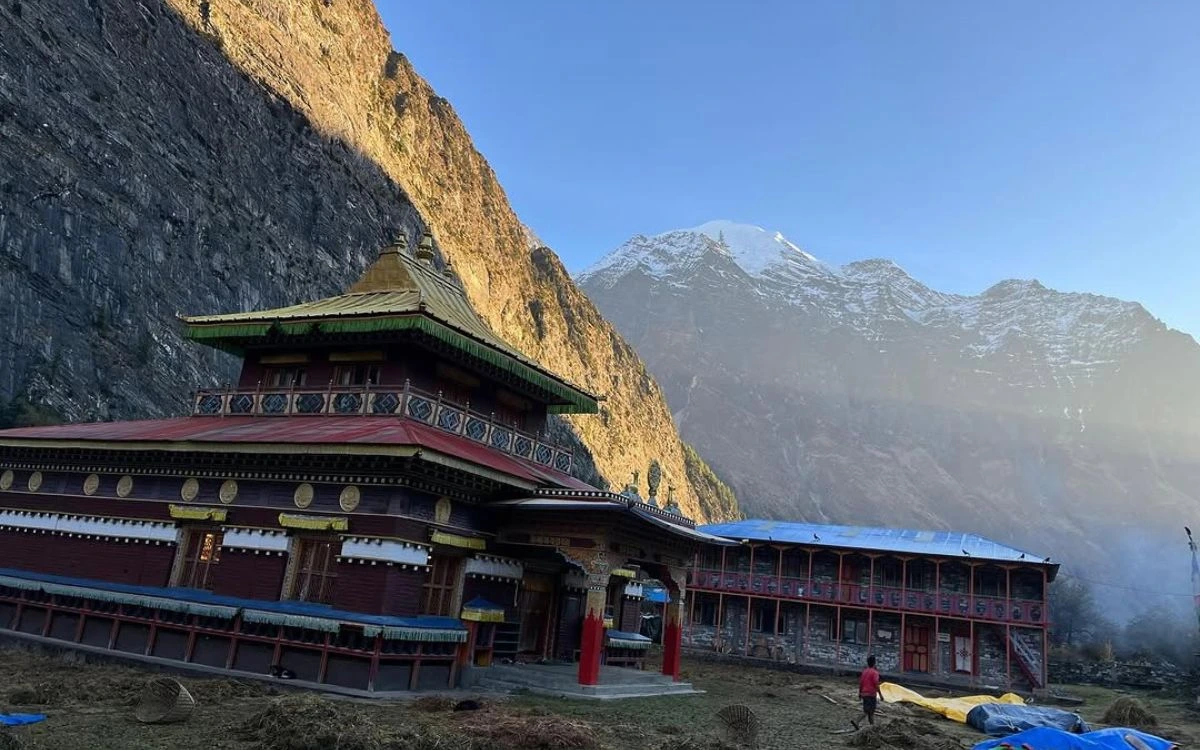
Traditional Tibetan monastery with golden roof against dramatic cliff and Mount Manaslu backdrop
The Standard Route: Northeast Face
The northeast face of Mount Manaslu is the standard climbing route leading from the Manaslu Base Camp (approximately 4,800m). This route was first climbed in 1971 and remains the most popular and direct way to reach the summit; however, it still requires respect and careful planning.
The climbing of Mount Manaslu will present several technical issues related to mountaineering skill level and overall fitness level. This climbing route has many sections of crevassed glacier, vertical, frozen terrain of 45 to 50 degrees, as well as many points that require the use of fixed ropes. The last stretch to the summit is through very exposed ridges where the weather can change at an alarming rate, and winds can be extremely strong.
The typical expedition follows a carefully planned acclimatization cycle spanning 4-6 weeks. Climbers establish four camps above base camp:
Camp 1 (5,700 meters): Positioned on the glacier below the ice cliffs
Camp 2 (6,400 meters): Set on a plateau offering spectacular views
Camp 3 (6,800 meters): The advanced camp before the final push
Camp 4 (7,400 meters): The highest camp used for summit attempts
Climbers will make several trips back and forth from these camps to help each climber acclimatize, as they also resupply their higher camps with supplies and oxygen. Summit day normally starts around midnight from Camp 4, with climbers hoping to make it to the summit by mid-morning and get back down to base camp before the weather becomes bad in the afternoon.
Experience Guides Matter
The professionalism of mountain guides and Sherpa teams is critical in all Manaslu climbs. Professional mountain guides will prepare the routes, fix ropes on tricky sections, establish base camps, and provide invaluable assistance to climbers trying to reach the summit. Mountain guides can identify incoming weather systems, identify the signs of altitude sickness, and make life-or-death decisions concerning team safety.
The Legendary Trek: The Mount Manaslu Circuit Trek
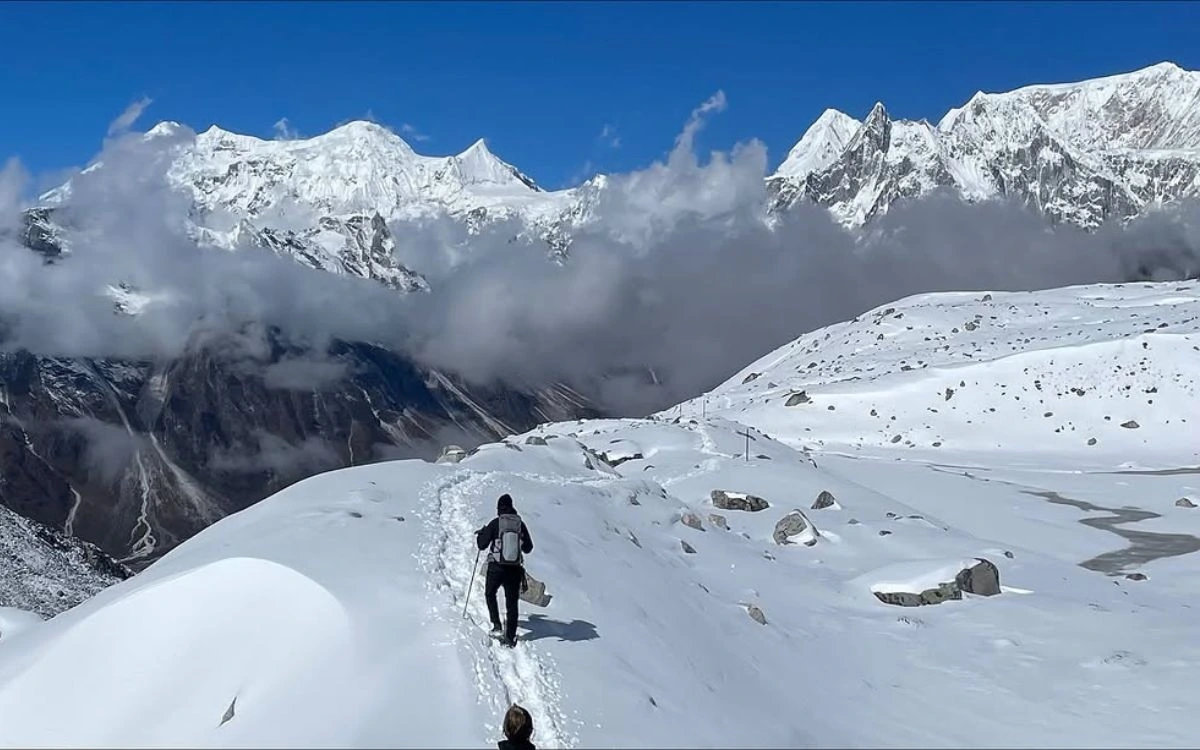
Trekker ascending snowy trail toward Manaslu peaks shrouded in clouds
The Mount Manaslu Trek has quickly become one of Nepal’s top trekking experiences and one of the best alternatives to the increasingly congested Annapurna Circuit. A stunning trek around the incredible Manaslu massif, the Manaslu Circuit gives trekkers spectacular views of Mount Manaslu (the 8th highest mountain in the world), and also exposes them to diverse and beautiful landscapes along the way, as well as many traditional Tibetan-style villages.
Why Choose the Manaslu Circuit?
This trek will satisfy the desires of all adventurous trekkers; it contains dramatic views of the mountains, cultural experiences of the Tibetans, high passes, and other activities, but there are far less numbers of trekkers than the more popular routes. Because of the area being designated as a restricted area, the traditional culture and environment of the area remain untouched and offer trekkers a unique opportunity to view an unspoiled Himalayan culture.
Trek Highlights
The trek starts in subtropical forest at the base of the Arughat region and climbs up through terraced farmland and bamboo forests. As the trek reaches higher elevations, the terrain will transform into lush alpine meadows, then into a barren, wind-swept valley floor similar to the Tibetan plateau.
The cultural experiences offered by the trek are a highlight. Samagaon and Samdo are traditional Tibetan Buddhist villages with ancient monasteries, prayer wheels, and mani walls along the trail. The warmth of the local people creates a fond memory of this trek in spite of the cold mountain conditions.
The most unforgettable moment of the trek comes at Larkya La Pass (5,106 m), where you will experience the thrill of crossing an impressive high-altitude pass and be rewarded with an incredible panorama of the entire Manaslu range, including Himalchuli, Cheo Himal, etc. You will then descend into the Annapurna region, where two of the most stunning mountain regions of Nepal meet.
Typical Itinerary
The Mount Manaslu Circuit Trek normally lasts between 14 and 18 days, depending on the acclimatization and rest days taken by each individual involved in the expedition. Trekkers can expect to walk anywhere from 5 to 8 hours each day while gradually climbing in elevation to reduce the chance of developing altitude sickness throughout their ascent. Additionally, while many trekkers will climb other "popular" routes such as the Annapurna Base Camp Trek or the Everest Base Camp Trek during their time in Nepal, the Mount Manaslu Circuit provides them with a much more genuine and remote trekking experience than these two other well-known options.
Practical Planning: Permits, Cost, and Preparation
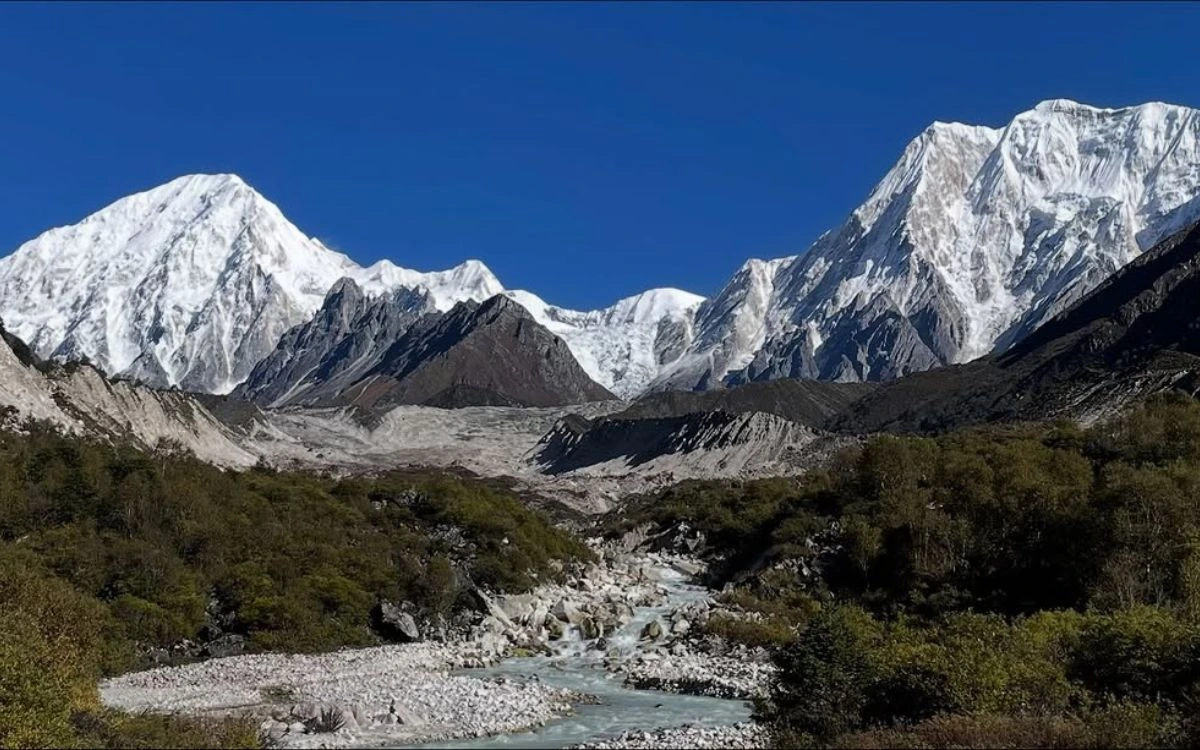
Glacial river flowing through green valley with Mount Manaslu massif towering above
Permits: Navigating the Requirements
Trekking permits for the Manaslu region are essential and more complex than unrestricted areas. Trekkers require three permits:
Manaslu Restricted Area Permit (RAP): The cost varies by season—$100 per person for September-November, $75 for December-August. This permit requires booking through a registered trekking agency and traveling with a minimum of two people plus a licensed guide.
Manaslu Conservation Area Permit (MCAP): Costs NPR 3,000 (approximately $30), supporting conservation efforts in the region.
Annapurna Conservation Area Permit (ACAP): Required if your trek route enters the Annapurna region after crossing Larkya La Pass, costing NPR 3,000.
For climbing expeditions, additional permits include the Nepal Mountaineering Association climbing permit, with costs varying significantly based on season and team size, ranging from $1,800 to $2,500 per person for the peak season.
Expedition Costs: What to Budget
Mount Manaslu trekking costs typically range from $1,500 to $2,500 per person for the full circuit, depending on service level, group size, and inclusions. This covers permits, guide and porter services, accommodation in teahouses, and most meals.
Summit expedition costs are substantially higher, ranging from $35,000 to $60,000 per person for fully supported climbs. These packages include climbing permits, base camp services, high-altitude support, Sherpa assistance, oxygen supplies, and all necessary equipment. Budget variations depend on operator reputation, client-to-guide ratio, and included services.
Factors influencing costs include group size (larger groups reduce per-person expenses), expedition duration, oxygen usage, helicopter support availability, and the level of personal Sherpa support.
Best Time to Visit
For trekking, autumn (September-November) offers stable weather, clear skies, and comfortable temperatures, making it the premium season. Spring (March-May) provides another excellent window with blooming rhododendrons adding color to lower elevations, though afternoon clouds may obscure mountain views.
Climbing expeditions concentrate in autumn (September-November), when post-monsoon conditions provide stable weather and lower avalanche risks. Spring climbing is possible, but sees fewer teams due to increased snowfall and avalanche danger.
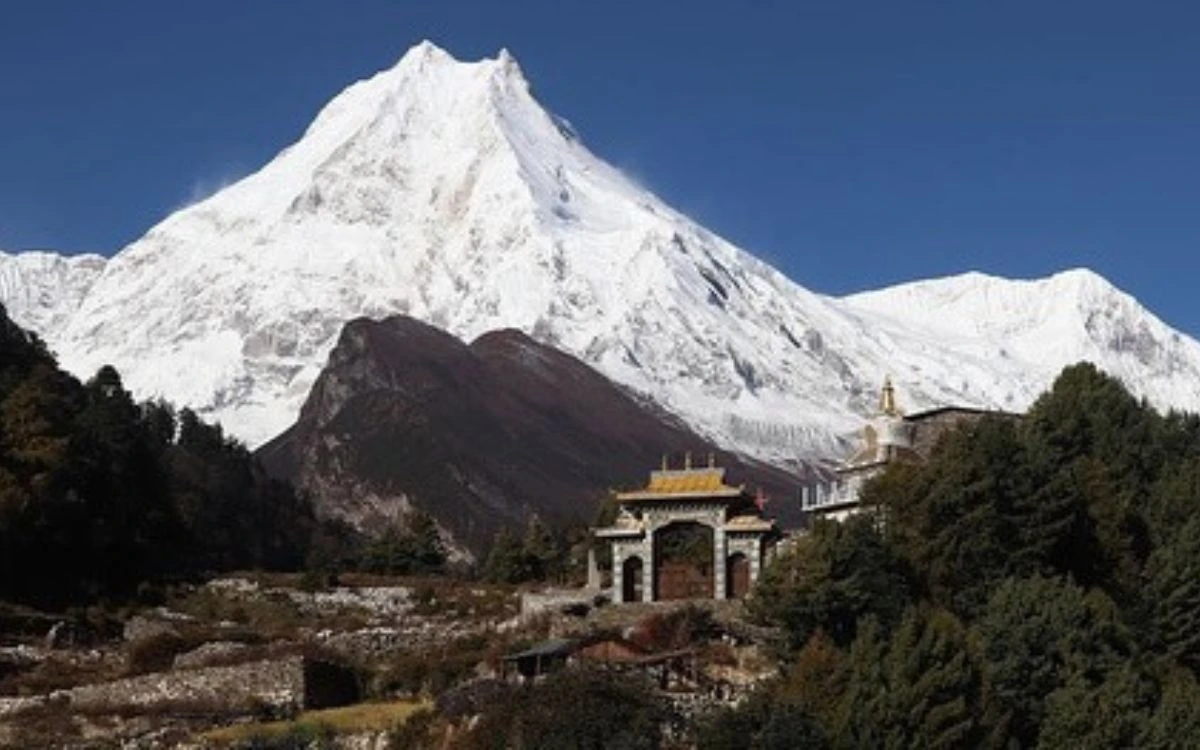
Mount Manaslu summit rising above Buddhist monastery gateway and forested hillside
The Manaslu Conservation Area
Established in 1998, the Manaslu Conservation Area protects 1,663 square kilometers of diverse ecosystems ranging from subtropical forests to alpine tundra. This protected area safeguards endangered species, including snow leopards, red pandas, and Himalayan tahr, while supporting sustainable tourism development.
Leave No Trace Principles
Responsible trekkers and climbers minimize environmental impact by packing out all waste, using designated toilet facilities, avoiding single-use plastics, and staying on established trails. Many operators now organize clean-up expeditions to remove accumulated waste from popular routes and base camps.
Respecting Local Customs
The Manaslu region's predominantly Buddhist communities maintain strong cultural traditions. Visitors should respect religious sites by walking clockwise around monasteries and stupas, asking permission before photographing people, dressing modestly, and supporting local economies by purchasing handicrafts and services directly from villagers.
Tips for Ethical Travel
Choose operators committed to fair wages for guides and porters, environmental protection, and community development. Minimize your ecological footprint by carrying reusable water bottles with purification systems, limiting shower frequency, and supporting lodges using solar power. Your trekking permits fees directly fund conservation and community programs, making every visit a contribution to preserving this remarkable region.
FAQs
How difficult is the Mount Manaslu Circuit Trek?
The Mount Manaslu Circuit Trek is considered moderately difficult to challenging. While it doesn't require technical climbing skills, trekkers should have good fitness levels and previous high-altitude trekking experience. The highest point, Larkya La Pass at 5,106 meters, demands proper acclimatization. Daily walking ranges from 5-8 hours over varied terrain, including steep ascents, rocky paths, and glacier crossings.
What is the success rate for climbing Mount Manaslu?
Mount Manaslu has a relatively high success rate compared to other 8,000-meter peaks, typically ranging between 30-40% depending on seasonal conditions. The mountain is often considered one of the more accessible 8,000ers, making it popular for climbers preparing for Everest. However, the mountain still presents serious dangers, including avalanches, crevasses, and extreme weather.
Do I need prior mountaineering experience to climb Mount Manaslu?
Yes, climbing Mount Manaslu requires solid mountaineering experience. You should be proficient in using crampons, ice axes, and fixed ropes, comfortable with high-altitude camping, and experienced with glacier travel. Most expedition operators require previous experience on peaks above 6,000 meters. Physical fitness equivalent to running 10 kilometers comfortably is essential.
What altitude sickness risks should I be aware of?
Altitude sickness is a serious concern on both the trek and the climbing expedition. The Mount Manaslu Circuit Trek crosses 5,106 meters at Larkya La Pass, while the summit reaches 8,163 meters. Symptoms include headaches, nausea, dizziness, and fatigue. Proper acclimatization, gradual ascent, adequate hydration, and descending immediately if severe symptoms occur are crucial preventive measures.
What accommodation options are available on the Manaslu Circuit?
The circuit offers teahouse accommodation in most villages, providing basic rooms with beds and communal dining areas. Facilities become more rustic at higher elevations, with limited electricity and cold-water washing. Some villages have no lodges, requiring camping arrangements. Your trekking agency typically arranges all accommodation in advance.
Conclusion
The journey to Mount Manaslu will require everything from extensive preparation, the right permits, proper budgeting, and, most importantly, the utmost respect for not only the mountain, but also for the people who live in this beautiful part of the world." With the growth of interest in mountaineering, the Mountain Manaslu establishment is bound to be met with continued enthusiasm. Most expeditions to date rely heavily on highly experienced Sherpas.
Contact us at Himalayan Recreation now, and we will assist you with planning how you will have your thrilling adventure at Mount Manaslu, assisted by experienced guides who will focus on ensuring a safe, successful, and memorable trip in the Himalayas!


.webp)



-6.webp)
-6.webp)