Everyone dreams of trekking the stunning Himalayan range at least once. One of the most common inquiries of travelers going to Nepal to trek is the age limit for trekking in Nepal. You could be planning a trek with the entire family, be a senior adventure seeker, or simply be a novice hiker, and be wondering whether there are going to be limitations for trekking based on the age of the person. This article will answer your questions.
Nepal welcomes trekkers of all generations. This includes active children, older adults, seniors, and everyone in between. Provided adequate planning is done in advance, anyone can participate in trekking in Nepal. Understanding the age limitations for trekking in Nepal and the maximum age limit to trek in Nepal will help all trekkers plan safe, enjoyable experiences trekking in the world’s most breathtaking mountain scenery.
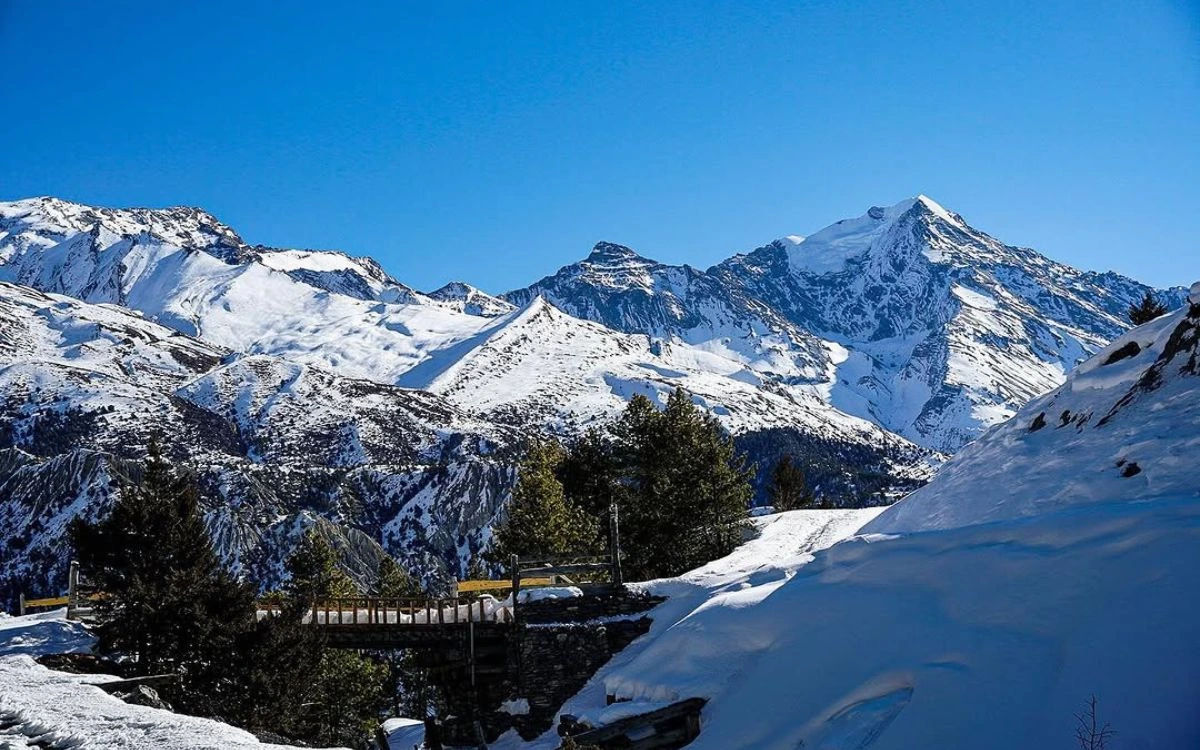
Snow-covered Himalayan peaks with a wooden bridge in winter
This blog post captures everything you need to be aware of as it relates to Nepal trekking rules and guidelines regarding age restrictions for trekking in Nepal, family trekking with children in Nepal, senior trekking tips for trekking in Nepal, and beginner-friendly treks in Nepal based upon level of fitness and age. Be sure to read below to learn how (regardless of your age) trekking in Nepal can be a trip of a lifetime.
Is There an Age Limit for Trekking in Nepal?
Nepal does not enforce specific trekking age restrictions; however, if you are injured or ill, you will need to be at least age five to trek with your group. The type of trekking you can do will also impact your expected physical demands. Trekking in Nepal can include everything from leisurely walks through the valleys at lower elevations to rigorous climbs and many different styles in between. Therefore, the answer to the question about an age limit for trekking is less about an age limit and more about your personal health and fitness level, along with the type of trek you choose to do.
Minimum Age for Trekking in Nepal
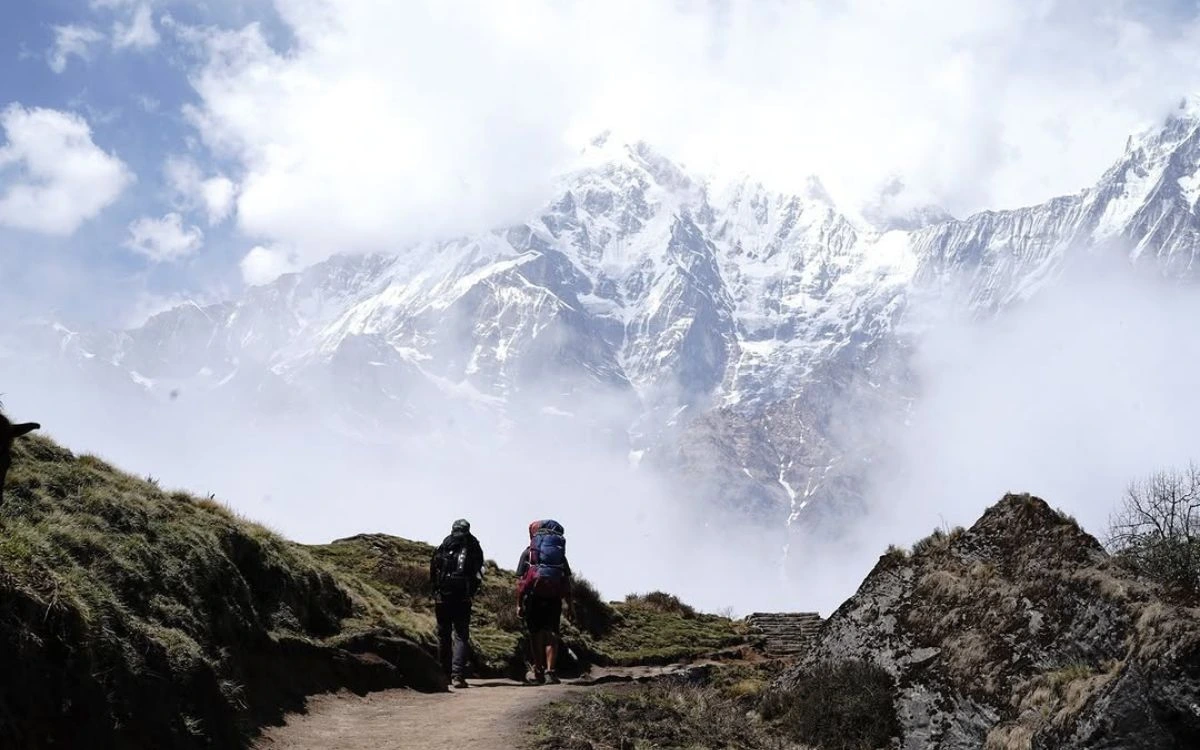
Two trekkers with backpacks on trail toward misty Himalayan peaks
Generally speaking, the minimum trekking age in Nepal is between 5 and 7 years old on easy trip routes (low elevation), with a few children as young as 5 having been able to complete treks in the gentler foothills of Nepal. For example, moderate-level treks like the Annapurna Base Camp (ABC) trek are normally considered suitable for children aged 10 and older, assuming they are physically fit and travelling with a knowledgeable person (guide).
For higher elevations like the Everest base Camp (EBC) trek, most trekking companies will not accept bookings for children less than 12 to 14 years old due to the higher possibility of altitude sickness at elevations greater than 3500 meters, the increased risk of altitude sickness to young children, and continual changing weather. Always check with your child's paediatrician before attempting any high-altitude trekking.
Maximum Age for Trekking in Nepal
There is no official maximum trekking age limit in Nepal; everything will depend upon how well prepared you are! Many trekkers aged in their 70s, even into their 80s, have successfully trekked on a few of the popular established routes in Nepal; therefore, age does not necessarily need to be an issue. Increased numbers of seniors are trekking in Nepal, and there are operators who provide seniorised itineraries to accommodate this growing market.
The primary considerations for seniors are: CV health/joint mobility/altitude acclimatisation. Various treks, such as the Langtang Valley Trek or the Ghorepani Poon Hill Trek,k are ideal options for seniors who wish to do the Himalayas with less exposure to altitude. When seniors have longer acclimatisation periods, knowledgeable guides, and appropriate equipment, they can trek through Nepal's wilderness comfortably and safely.
Is Trekking in Nepal Safe for Children?
Yes, children can go trekking in Nepal safely if you pick a proper trekking route and take all necessary precautions. Trekking with your family while in Nepal offers kids great experiences, from a chance to learn about different cultures and see gorgeous scenery, to enjoying outdoor activities. The Ghorepani Poon Hill Trek (3,210 m) and the Chitwan or Pokhara region offer fantastic family-friendly trekking experiences.
The primary safety concern related to trekking with children is altitude sickness. Altitude sickness often occurs as a result of rapidly increasing the elevation where the child is walking, so it's important to watch for children exhibiting signs of altitude sickness, such as headache, nausea, and extreme tiredness. When selecting a family-friendly trek for your children, try to plan to limit elevation change to approximately 150 m (500 ft) or less each day and ensure there are additional days in between each elevation increase to give kids a chance to acclimatise. A good licensed guide will make a world of difference when it comes to trekking with your children; not only are they familiar with the area they are leading you to, they will be able to recognise the signs of altitude sickness and arrange to have your child brought down if it occurs.
Tips for Trekking in Nepal with Kids
Here are practical tips to make family trekking in Nepal a success:
Choose low-to-moderate altitude treks (below 3,500 m) for children under 10.
Pack light but include essentials: warm layers, waterproof gear, snacks, and a first-aid kit.
Maintain a slow, steady pace and take frequent breaks to keep energy levels up.
Hire an experienced guide who has worked with families before.
Acclimatise properly — never rush to higher elevations.
Keep children hydrated and well-fed throughout the trek.
Book the Mardi Himal Trek for a shorter, visually stunning route perfect for older kids.
Can Seniors Trek in Nepal?
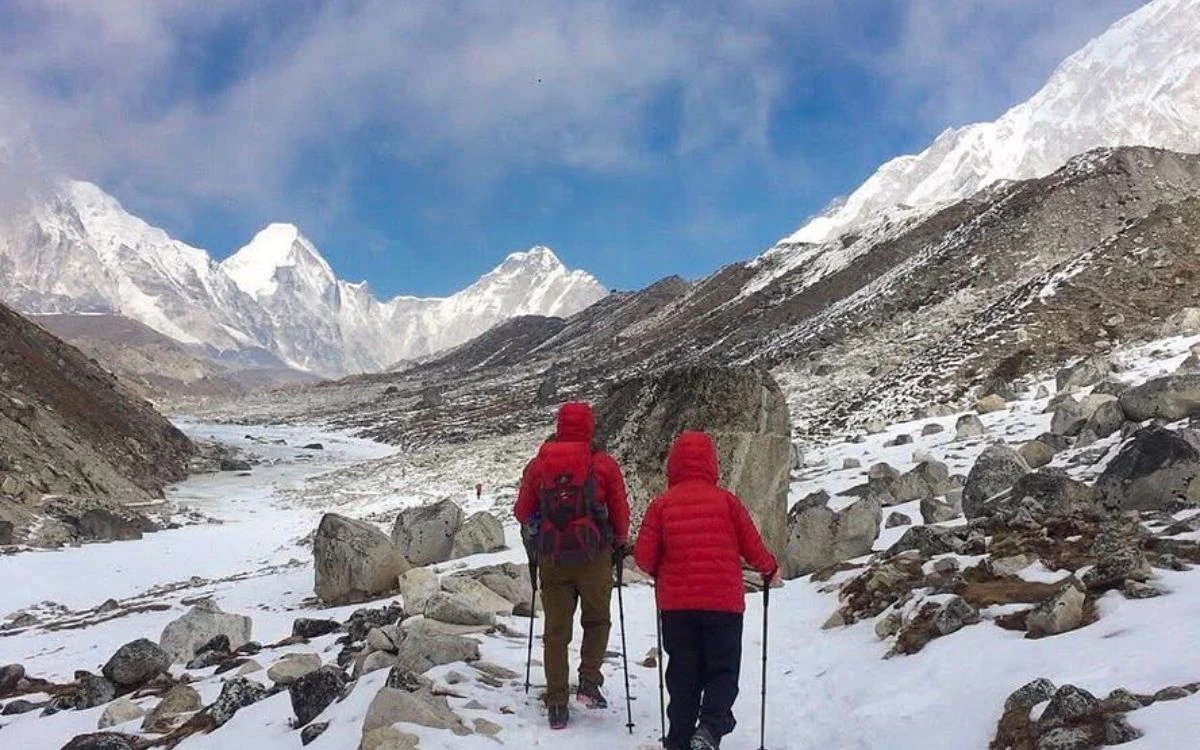
Two trekkers in red jackets on a snowy Everest region trail
Yes! They can trek in Nepal with appropriate route, pacing and health checks are a combination of factors. There are numerous easy treks in Nepal that can be done by older people. Older trekkers typically have patience and ability, which will assist them greatly on a trek requiring endurance or going over high altitudes.
There have been many trekkers ranging from their mid-60s to early-70s who have successfully made it to Everest Base Camp, which is one of Nepal's most famous treks. While the Everest Base Camp trek is a difficult trek,ek it is certainly doable for Seniors in good shape with the assistance of guided tours that provide the flexibility to adjust the pace of the trek depending on weather or other considerations.
Senior trekkers should follow these guidelines to stay safe:
Get a full medical check-up, including cardiovascular and joint assessments, before departure.
Consult your doctor about altitude sickness medication (e.g., Acetazolamide/Diamox).
Opt for longer itineraries with built-in acclimatisation days.
Choose teahouse treks where accommodation and meals are readily available.
Always carry travel insurance that covers high-altitude trekking and medical evacuation.
Trek with a licensed, experienced guide who knows first-aid and emergency procedures.
Stay hydrated, eat well, and avoid alcohol at altitude.
Best Treks in Nepal for Beginners and Families
For those starting trekking through the spectacular mountains of Nepal, the best treks often offer magnificent views while being easy enough for most people to complete safely and successfully. Here are five well-known trekking options along these beautiful trails, which are appropriate for all ages and fitness levels:
Ghorepani Poon Hill Trek
The Ghorepani Poon Hill trek is one of Nepal's easiest treks for novices, as well as a family-friendly walk for elder trekkers and children (highest elevation of 3,210m). The trail leads through lush rhododendron forests, welcoming Gurung villages, and has the potential for beautiful sunrises over the Annapurna and Dhaulagiri ranges. It takes 4 to 5 days.
Annapurna Base Camp (ABC) Trek
Annapurna Base Camp (ABC) Trek is a moderate challenge suitable for trekkers ages 12 and older with an adequate level of fitness, and the trek takes the trekker into the heart of the Annapurna Sanctuary - 4,130 m. The ABC trek has diverse landscapes, including subtropical forests, glaciers, and incredible mountain views, and it usually takes 10 to 12 days.
Everest Base Camp Trek (EBC)
The Everest Base Camp (EBC) trek is a world-renowned bucket list trek for trekkers. The highest point on the EBC trek is 5,364 m and passes through the Khumbu Valley, charming Sherpa villages, and the stunning glacial landscape. EBC is best suited for trekkers ages 14 or older who are in good physical shape. Older (senior) hikers in excellent health may do EBC with an extended acclimatisation schedule. Trekking the EBC usually takes 14 to 16 days.
Langtang Valley Trekking
This is an unconventional popular trek located near Kathmandu. The maximum altitude reached on this trek is approximately 4,984 meters (Kyanjin Ri), but the primary trail does not exceed 3,900 meters (all other trails have lower elevations). This makes the Langtang Valley one of the more reasonable trekking destinations for individuals with moderate levels of fitness (all ages). The Langtang Valley is ideal for family and more mature walking groups because of its cultural richness and less crowded nature than other,r more popular treks in the Himalayas. Duration: 7–10 Days
Mardi Himal Trek
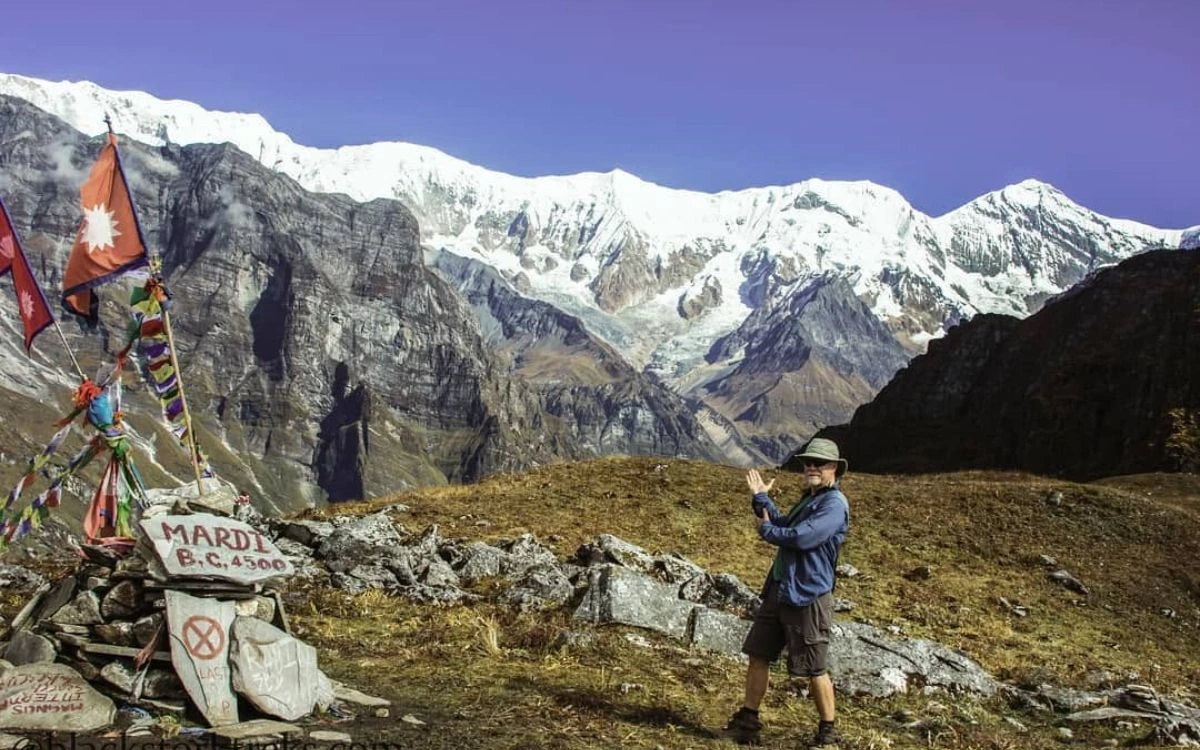
Trekker at Mardi Base Camp sign with Annapurna range, Nepal
The Mardi Himal trek is another space between treks in the Annapurna region. This trek has a relatively low maximum elevation of 4,500 meters but offers some of the best views of Machhapuchhre (Fishtail Mountain) and the surrounding Annapurna Range. This trek is well-suited for adolescents and active adults. This trek can also be adjusted to accommodate older trekkers with gentle gradient trekking. Duration: 5–7 Days
Easy Treks in Nepal for All Ages
While Nepal is well-known for its high-altitude trekking experiences, it is also full of stunning scenery and opportunities for anyone to experience them on easier trails in Nepal. There are many great trails close to Pokhara, the Shivapuri trek (just north of Kathmandu), and the Ghandruk loop (in the Annapurna area) that can easily accommodate almost any age group. These low-altitude climbs take you through terraced fields, traditional villages, and subtropical woods, providing you with a real glimpse of life in Nepal while allowing you to go at a slower pace than a higher-altitude trek.
Fitness and Preparation for Trekking in Nepal
Physical fitness is important for a successful and safe tr,ek regardless of your age. You should begin your training at least 2 to 3 months prior to the date of the trek. This can be accomplished by participating in hiking, cycling, swimming, and strength-training activities that focus on developing your cardiovascular fitness and leg strength.
Children who will be trekking in Nepal with their parents should have developed a pattern of walking on a regular basis, ideally on hilly terraibefore to their trek. Otherwise, seniors need to maintain their endurance through daily walking and low-impact cardio exercises.
It is also very important to be mentally prepared for the long days of hiking, the basic teahouse accommodations, and the unpredictable weather that may occur on the trek. You should train for this by gaining experience in dealing with longer trekking days while having to stay in a basic teahouse and experience dealing with changing weather conditions.
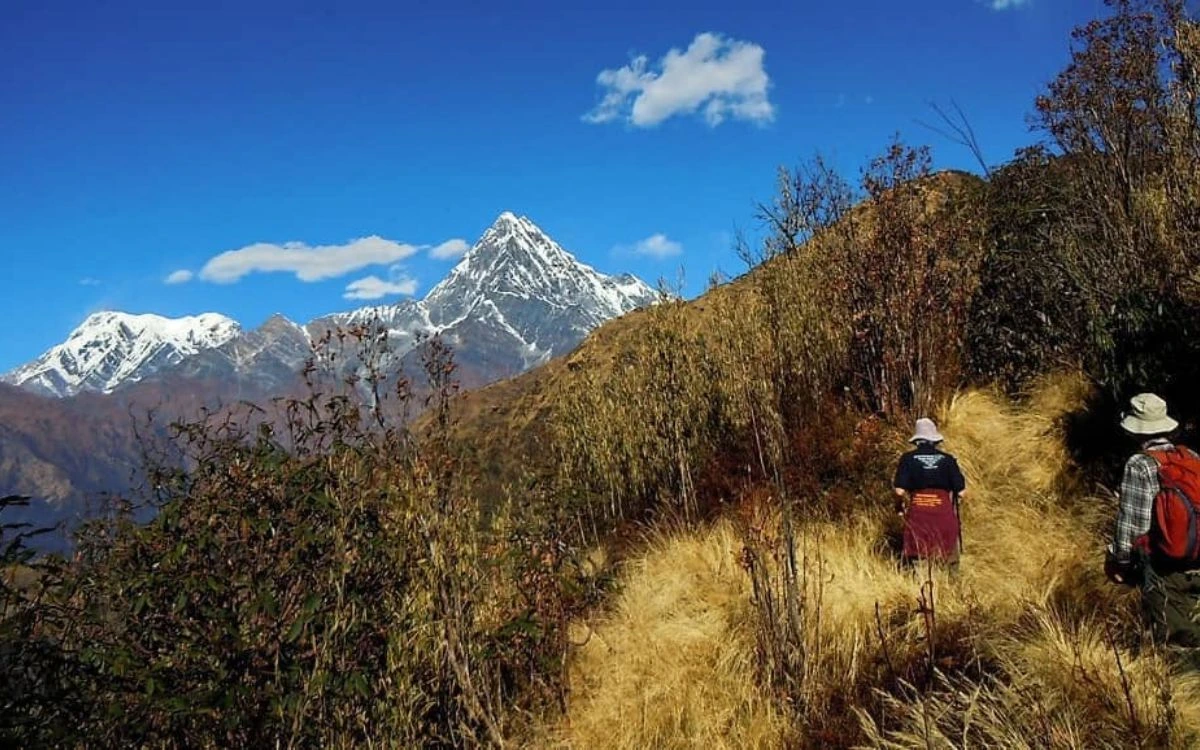
Hikers on a grassy ridge trail with Machhapuchhre peak in the distance
Nepal does not impose a general restriction on the age of people who can trek, but some conservation areas and restricted areas have different rules about permits. For instance, Upper Mustang and the Manaslu Circuit both require special permits to trek in those regions. As they are remote areas at high elevations, these treks are typically only recommended for individuals 16 years or older, with a fair amount of trekking experience.
Most people need to have a TIMS (Trekkers' Information Management System) card in order to trek, and those under 16 years old also need to have a TIMS card. Trekking companies and guides are aware of these permit regulations and will assist you in obtaining the correct permits for any trek you choose. A licensed guide is always recommended when trekking with children or older adults.
How to Choose the Right Trek Based on Age
Here's a quick age-based guide to help you match the right trail:
Ages 5–10: Ghorepani Poon Hill Trek, Ghandruk Loop, Pokhara area walks (below 3,500 m).
Adults (18–60): All major treks are accessible based on fitness level.
Seniors (60+): Poon Hill Trek, Langtang Valley Trek, and ABC Trek with extended itineraries.
The key is to be honest about your fitness level, consult your doctor, and work with a reputable trekking company that understands your group's specific needs.
FAQs
Is there any age restriction on who can trek in Nepal?
The youngest children who can trek in Nepal are 5 – 7 years old. For higher altitude treks, the recommended minimum age is 12 – 14 years.
Can an individual over a specified age participate in treks in Nepal?
No, there is no maximum age for trekking in Nepal. People in their 70s and 80s are able to complete treks in Nepal. Age is not as important as good health, fitness level and proper physical condition.
Is it okay to take my elderly parents on a trek in Nepal?
Yes, when considering whether or not to take your elderly parents on a trek in Nepal, choose treks that are at a lower altitude, have a qualified trekking guide and build in additional rest days. An older person should have a doctor's note signifying their capability to withstand the rigours of trekking.
Which treks in Nepal are appropriate for first-time trekkers?
The following treks in Nepal are well known for being great beginner treks. Ghorepani Poon Hill Trek, Langtang Valley Trek and Mardi Himal Trek, all of these areas have awesome views with easy to moderate difficulty.
Conclusion
Nepal's beautiful mountains are ready for exploration; they welcome you at any age. There’s plenty of adventure available regardless of whether you are an 8-year-old who is just curious or a seasoned citizen who likes to take it easy! Instead of being a restriction, your age serves as a helpful guideline. The important factors are your health, your level of preparation, and your love for adventure!
Nepal has everything from the famous Everest Base Camp trek to quiet trekking in the Langtang Valley; family-friendly morning hikes to see the sunrise on Poon Hill; and stunning views in the Annapurna Sanctuary. All ages can find out how magical the Himalayas are by being guided properly. Contact us at Himalayan Recreation Treks and Expedition to learn more about how we can help you create the perfect age-appropriate trek for you and your family today.


.webp)



-1.webp)
-1.webp)
-1.webp)