Thorong La Pass or Thorung La is a mountain pass at an elevation of 5,416 meters above sea level in the Damodar Himal, which is in the northern part of the Annapurna Himal in central Nepal. It is situated between Thorong Ri, at the foot of Khatung Kang, and Yakawa Kang in the Annapurna Himal. It serves as a link for the Manang Village in Nepal on the east and the Muktinath Temple and the village of Ranipauwa in the west in the Mustang District. It is the highest point in the Annapurna Circuit Trekking Route, a 300 km trek around the Annapurna Massif, used for trekking by tourists as well as traders.
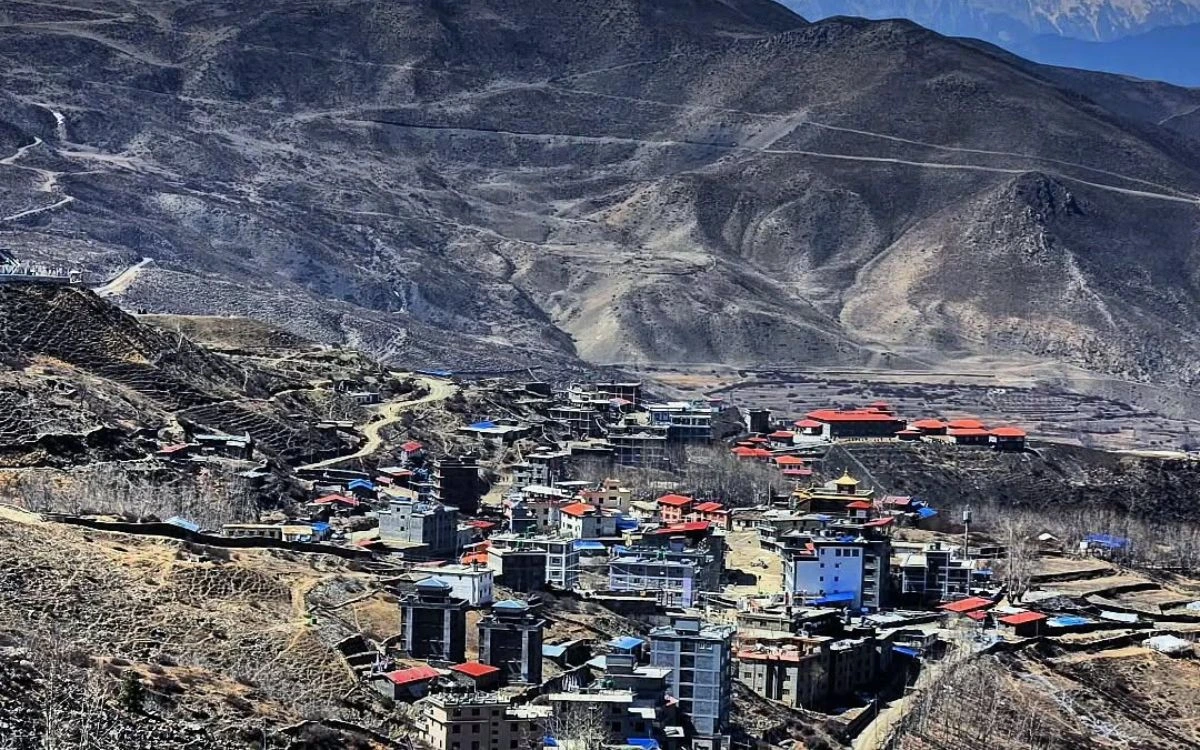
Aerial view of Manang village with red-roofed buildings on an arid hillside on the Annapurna Circuit
The Thorong La Pass is crossed from east to west, and most trekkers trek from Manang. The section cannot be covered in a day. The normal overnight stops taken by trekkers while crossing this section are to Yak Kharka, where one overnight is taken, followed by another overnight stop at Thorong Phedi, which is at 4,540 meters, or Thorong High Camp, which is at 4,880 meters.
The terrain changes during the Thorong La Pass trek, from lush green valleys to barren landscapes. On your way to the Thorong La Pass, the oxygen level decreases with the increase in altitude, which slows down your pace. Sometimes, the Thorong La Pass weather may change suddenly; otherwise, a Thorong La Pass early morning crossing is a must. This is so because starting the morning trek allows for good weather, which is safe for crossing the Thorong La Pass.
Given the experience of years in trekking through the Annapurna Circuit, this guide tells readers what to expect in Thorong La Pass, how to properly acclimatize, and how to plan the crossing for trip success.
Where is Thorong La Pass located on the Annapurna Circuit?
Thorong La Pass is situated in the northern part of the Annapurna Circuit Trek route and falls between the Manang District to the east and the Mustang District to the west. As the highest pass on the Annapurna Circuit route, it links the villages of Manang, Muktinath, and Ranipauwa. The route to the Thorong La Pass trails into the later stages of the Annapurna Circuit route, where trekkers trek from the Manang District and then through the Yak Kharka route, followed by the trek to Thorong Phedi or High Camp, and then the ascent to the Thorong La Pass and the descent into the Mustang District.
In order to acclimatize better and see more of the Annapurna region, trekkers make the detour to Tilicho Lake, which allows them time to acclimatize better and visit Tilicho Lake, which is considered one of the highest lakes in the world, located at 4,919 meters. On their return, they join their trekking route, continuing to Yak Kharka, Thorong Phedi, or High Camp, to better acclimatize themselves for crossing Thorong La Pass.
Thorong La Pass Altitude, Distance, and Acclimatization Tips
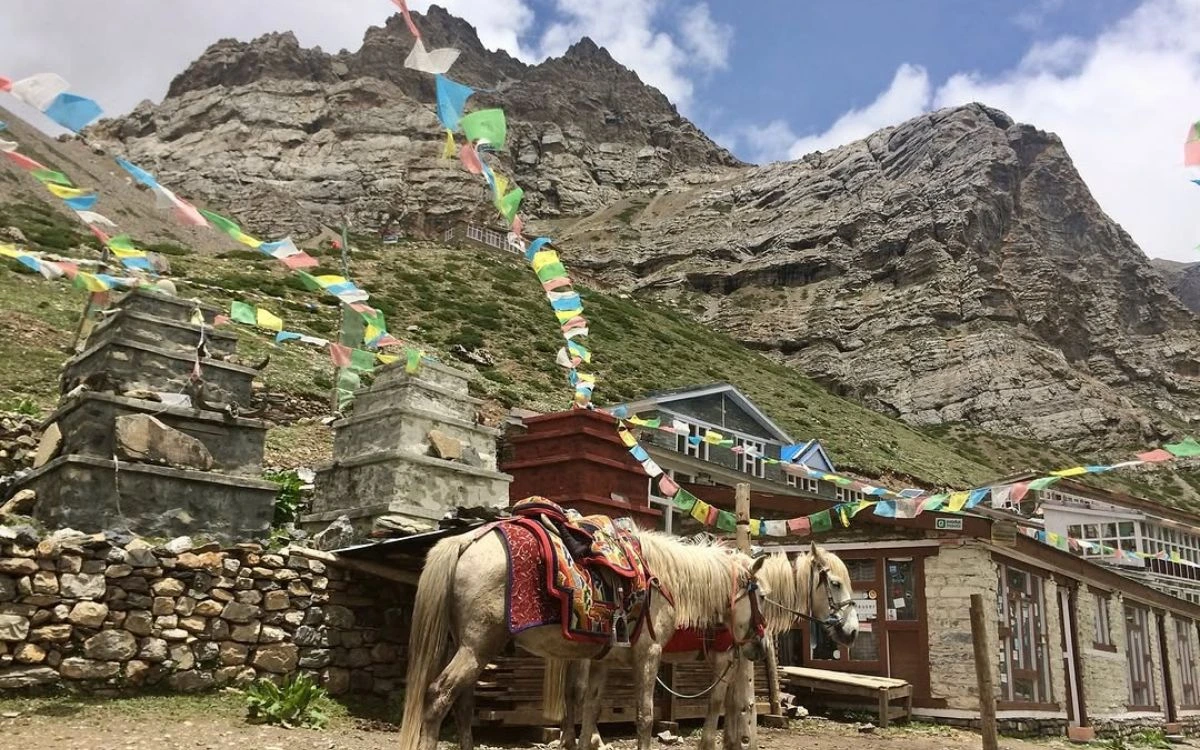
Saddled horses resting at Thorong Phedi teahouse with prayer flags and rocky peaks above
The altitude of Thorong La Pass is 5,416 meters (17,769 ft); hence, it's regarded as the highest point of the Annapurna Circuit. Trekkers usually get high altitude sickness at Manang (3,500 m) onwards, towards Yak Kharka and Thorong Phedi, with headaches, nausea, dizziness, tiredness, and short breathing. There are medical facilities only in Manang, so proper acclimatization and monitoring of your health are a must before going to attempt the pass.
The total distance from Manang to Muktinath via Thorong La Pass is about 20-21 km, usually done in 2-3 days. Normally, trekkers go from Manang to Yak Kharka on the first day and then from Yak Kharka to Thorong Phedi or High Camp. On the final day, at the time of an early morning ascension, it requires 4-5 km to reach Thorong La Pass, followed by a 15-16 km descent down to Muktinath, which usually takes around 5-6 hours.
Take one or two days in Manang, which is at 3,500 meters, before heading further up.
It is recommended to ascend gradually and not skip Yak Kharka and Thorong Phedi/High Camp.
The pass crossing should start early in the morning to avoid changes in the weather in the afternoon.
Walk slowly and at a steady pace rather than rushing.
Drink plenty of water and stay hydrated even if you don’t feel like it.
Eat small meals on a regular basis to retain your level of energy.
Be aware of the signs and symptoms of AMS, including headaches, nausea, dizziness, fatigue, and shortness of breath.
Avoid alcohol and smoking, as they will perpetuate the effects of high altitude.
If you have the time, consider extending to Tilicho Lake for acclimatization.
It is advised to seek further assistance in Manang in case the symptoms increase, because medical facilities are available in Manang only.
Rest whenever you need to and don’t push yourself to get to the next camp if you don’t feel well.
Best Time of Year to Cross Thorong La Pass in Nepal
The best times to trek through the Thorong La Pass in Nepal are the pre-monsoon season (March to May) and the post-monsoon season (September to November). At this time, it is possible to view Annapurna, Dhaulagiri, and Nilgiri peaks during the trek through this pass. The maximum daytime temperature at the top would be -5°C to 5°C, while the minimum night-time temperature would be as low as -15°C or even lower.
It is best to avoid the monsoon season, which is from June to August, when the trails are wet and slippery, and the winter season, which is from December to February, unless you are experienced, as the pass will be filled with snow.
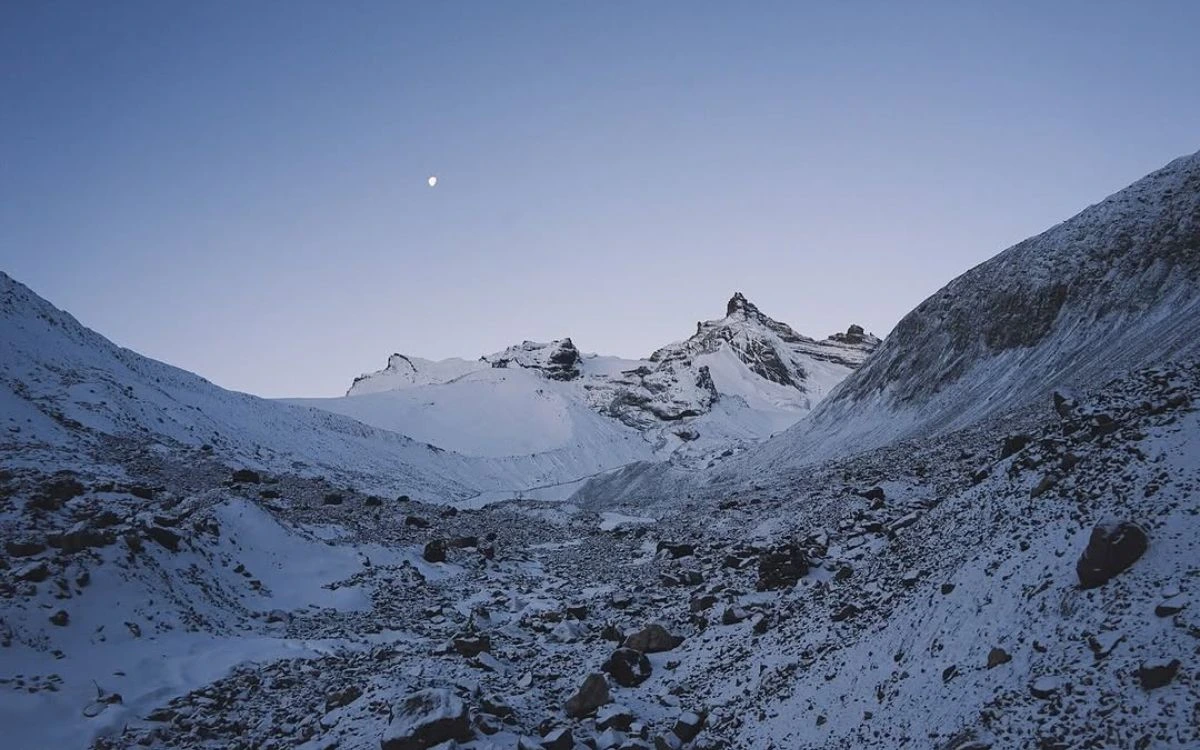
Pre-dawn view of the snow-covered Thorong La Pass approach with the moon in a twilight sky
The crossing of the Thorong La Pass is rated as challenging but feasible, even for first-time trekkers, with adequate preparation. The main challenges lie in the high altitude, which is at 5,416m, and the lack of oxygen, along with the long day while crossing, which includes a climb to the top and then a descent to Muktinath. Additionally, specialized climbing techniques are not necessary; however, first-timers need to be effective in acclimatization. With adequate physical as well as mental preparation, with the support of a licensed holder, first-timers are able to cross the pass successfully.
Common Health Risks and Altitude Sickness at Thorong La Pass
The most common danger faced by trekkers on Thorong La Pass is Acute Mountain Sickness (AMS), considering the extremely high altitude of 5,416m. AMS displays symptoms such as headache, nausea, dizziness, tiredness, loss of appetite, and difficulty in sleep, which may appear above 3,000m.
High Altitude Pulmonary Edema, or HAPE, is another critical situation that happens when there is the accumulation of fluid in the lungs. Its symptoms include difficult breathing even at rest, tightness and pain in the chest, coughing, extreme weakness, and the presence of blue lips or fingernails. Immediate descent is needed.
High Altitude Cerebral Edema (HACE) is the most serious form of altitude sickness. It affects the brain and presents with symptoms like confusion, loss of balance, severe headache, hallucinations, and even unconsciousness. This is a serious condition requiring immediate evacuation.
Extremely cold weather and strong winds may cause hypothermia, particularly during the early morning crossing of the Pass, where temperatures are normally lower than freezing.
At high altitude, dehydration is common since the body loses more fluids while breathing and exercising. Lack of sufficient water consumption makes altitude sickness worse.
Digestive problems like loss of appetite, nausea, constipation, or diarrhea may arise because of altitude, lack of food variety, and unhygienic conditions.
Permits Required for Trekking to Thorong La Pass
To trek to Thorong La Pass, trekkers are required to obtain two major permits:
Annapurna Conservation Area Permit (ACAP): USD 30 for foreign nationals.
Trekkers’ Information Management System (TIMS) Card: USD 20 for foreign nationals.
Note: To trek in the Annapurna region, which includes Thorong La Pass, you must have both permits. We can obtain them for you before your trek begins. We recommend bringing photocopies of your passport and permits because you will need to present them at various stops along the way.
Should You Hire a Guide or Porter for Thorong La Pass
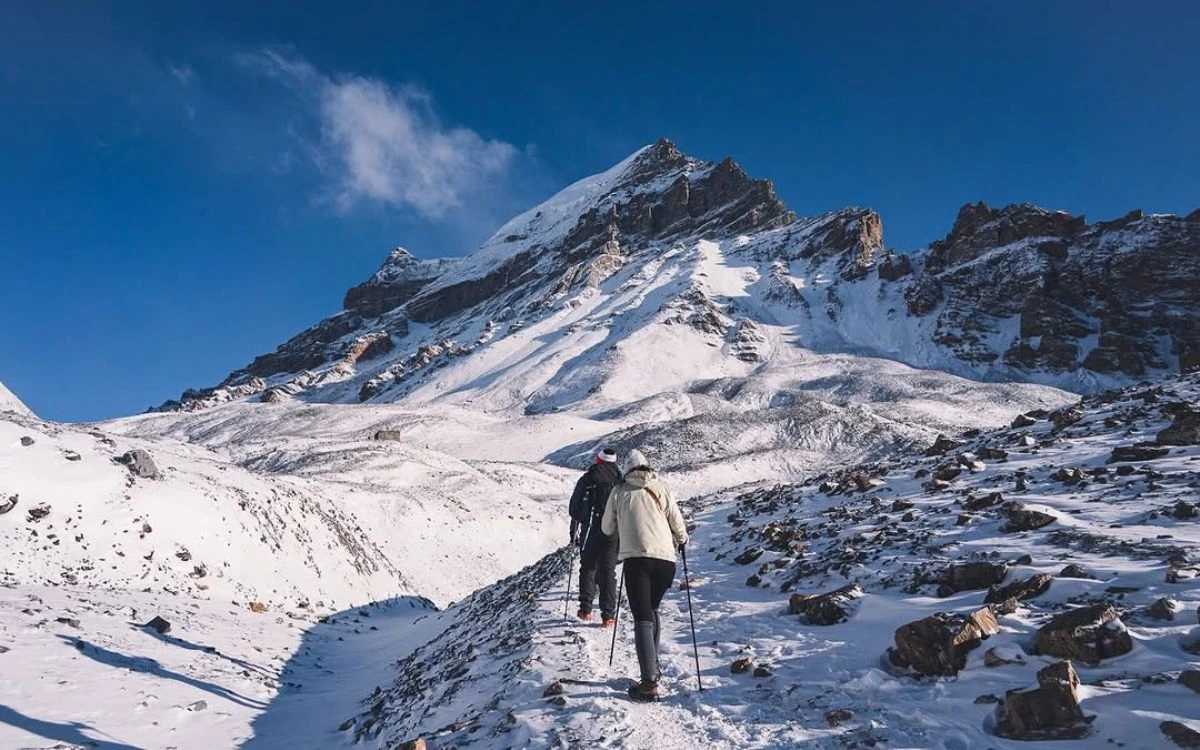
Two trekkers with poles ascending the steep snowy trail toward Thorong La Pass at 5,416m
It is a must to hire a licensed trekking guide while trekking in Nepal, especially in the Thorong La Pass section of the Annapurna Circuit trek. A guide will be useful in handling altitude sickness, AMS, weather, as well as route and accommodation planning. The guide will cost around USD 25 per day.
It is not legally required to hire a porter, but it is strongly recommended, as the trip is long and challenging. Having a porter helps to ease the fatigue, especially after arriving at the place called Manang, as the oxygen levels are low. It costs about USD 20 per day to hire a porter. Most trekkers hire a guide and a porter to make it both easier and safer for them.
Packing Essentials for Thorong La Pass Trek
Clothing
Down jacket or heavy insulated jacket
Waterproof and windproof jacket
Thermal base layers (top and bottom)
Fleece or warm mid-layer
Trekking pants
Waterproof pants
Warm hat or beanie
Sun hat or cap
Gloves (inner + insulated outer gloves)
Neck gaiter or buff
Trekking socks (wool or thermal, multiple pairs)
Comfortable trekking shoes (well broken-in)
Camp shoes or sandals
Trekking Gear
Backpack (40–60 liters)
Daypack (if using a porter)
Trekking poles
Headlamp with extra batteries
Crampons or microspikes (especially in winter or early spring)
Sunglasses (UV protection)
Water bottles or hydration bladders
Thermos flask (optional but useful in cold conditions)
Sleeping & Personal Items
Sleeping bag (rated to at least -10°C to -15°C)
Sleeping bag liner (optional)
Quick-dry towel
Toiletries (toothbrush, toothpaste, wet wipes)
Sunscreen and lip balm with SPF
Health and Safety
Personal medications
Basic first aid kit
Diamox (if prescribed)
Blister treatment (band-aids, tape)
Water purification tablets or a filter
Energy snacks (nuts, bars, chocolate)
Day-by-Day Thorong La Pass Trek Route Overview
Day 01: Drive from Kathmandu to Syange or Jagat
Day 02: Trek from Jagat to Dharapani
Day 03: Trek from Dharapani to Chame
Day 04: Trek from Chame to Pisang
Day 05: Trek from Pisang to Manang
Day 06: Acclimatization day in Manang with options to explore nearby areas
Day 07: Trek from Manang to Yak Kharka
Day 08: Trek from Yak Kharka to Thorong Phedi
Day 09: Trek from Thorong Phedi to Muktinath via Thorong La Pass
Day 10: Trek from Muktinath to Jomsom
Day 11: Drive from Jomsom to Pokhara
Accommodation Options Along the Thorong La Pass Route
Accommodation along the way up to Thorong La Pass is basic, available in teahouses and lodges. From Manang, some of the popular lodges are Hotel Tilicho, Himalayan Singi, and Yeti Hotel. Usually, room prices range from USD 5 to 10 per night. In Yak Kharka, the popular options for trekkers are generally Yak Kharka Lodge and Thorong Base Camp Lodge, both with room prices similar to the previous options. New Phedi Lodge and Thorong Phedi Lodge are two options at Thorong Phedi, while High Camp has very limited accommodations and mainly consists of High Camp Lodge; the cost of the rooms might be a bit higher than usual because of the altitude and the demand. The availability of rooms is limited during peak seasons, so arriving early or trekking with a guide will help in booking rooms.
High Camp or Thorong Phedi – Which Is Better Before the Pass
High Camp
Staying at High Camp offers trekkers a head start for an early departure the next day towards Thorong La Pass. The trek from High Camp to the pass is 1–1.5 km, which normally takes 1–2 hours depending on your pace. This allows you to reach the pass early in the morning, witness the sunrise over Annapurna, Dhaulagiri, and Nilgiri, and begin the long descent toward Muktinath. High Camp is generally not preferred by most trekkers, as there is a higher chance of altitude sickness at this elevation. It is suitable only for trekkers who are well-acclimatized and comfortable with steeper, high-altitude climbs while carrying a small backpack in cold conditions.
Thorong Phedi
Staying at Thorong Phedi makes the morning climb to the pass longer but less steep, providing a more gradual ascent for first-time trekkers or those still adjusting to altitude. The climb from Thorong Phedi to the pass is about 4–5 km, which requires 3–5 hours, of time so an early departure is necessary. The option decreases AMS symptoms while providing additional time to observe your health status before attempting the challenging last part. The additional acclimatization, together with the more accessible morning ascent, decreases danger while increasing comfort during the day because the views from the pass remain more distant.
What Crossing Day at Thorong La Pass Is Really Like
Trekkers usually begin the trek from Thorong Phedi by 4:30 to 5:00 AM. The reason for beginning early in the morning is that the trails and weather when it snows would be better. The Thorong La Pass receives 50-55% of the oxygen available at sea level, making breathing and feeling fatigued more pronounced. The next stop, after beginning the trek from Thorong Phedi, would be High Camp, which would take 1 to 2 hours. The altitude would be approximately 4,900 m. The next part of the journey from High Camp would be a steep trek for approximately 1 to 1.5 km to reach the Thorong La Pass, which has an altitude of 5,416 m.
The distance to Muktinath (3,760m) is about 15-16 km, taking 5-6 hours. On the way to Muktinath, one passes through some villages, including some high-altitude terrain. Rest and food breaks occur along the way, specifically in Ranipauwa. After passing through these challenging terrains, one finally reaches Muktinath village.
Common Problems Trekkers Face at Thorong La Pass
The most common issue is altitude sickness, which includes symptoms such as headaches, nausea, dizziness, fatigue, and difficulty breathing.
The trekking trail is very steep and long, since the height from Thorong Phedi/High Camp to the pass is about 4-5 km, and the length from the pass to Muktinath is about 15-16 km, which is generally more challenging than people imagine.
Cold weather, especially during the night and early morning, may constitute discomfort if one is not appropriately dressed.
The strong wind on top makes walking hard and also contributes to cold feelings.
Fatigue and exhaustion caused by long hours of trekking and carrying heavy backpacks.
Basic food options, particularly breakfast options, may be lacking in high-altitude tea houses.
Also, trekkers often forget to bring a headlamp, which is required as this climb is typically initiated very early in the morning.
On slippery or icy paths, as in winter, crampons can be helpful.
Unexpected changes in weather, such as snowfall, rain, and storms, might impede the process and make it more challenging on the trail.
Lack of medical facilities, with assistance only being made available in Manang, and hence, serious issues need planning.
Dehydration and lack of energy are usually associated with failure to drink enough water, as well as failure to eat meals.
Crowds of people during peak season may impede the progress of the ascent and put strains on accommodations.
Mental stress or fear, particularly for first-trekkers who have to navigate the high pass and the descent:
What to Do After Crossing Thorong La Pass (Muktinath & Transport)
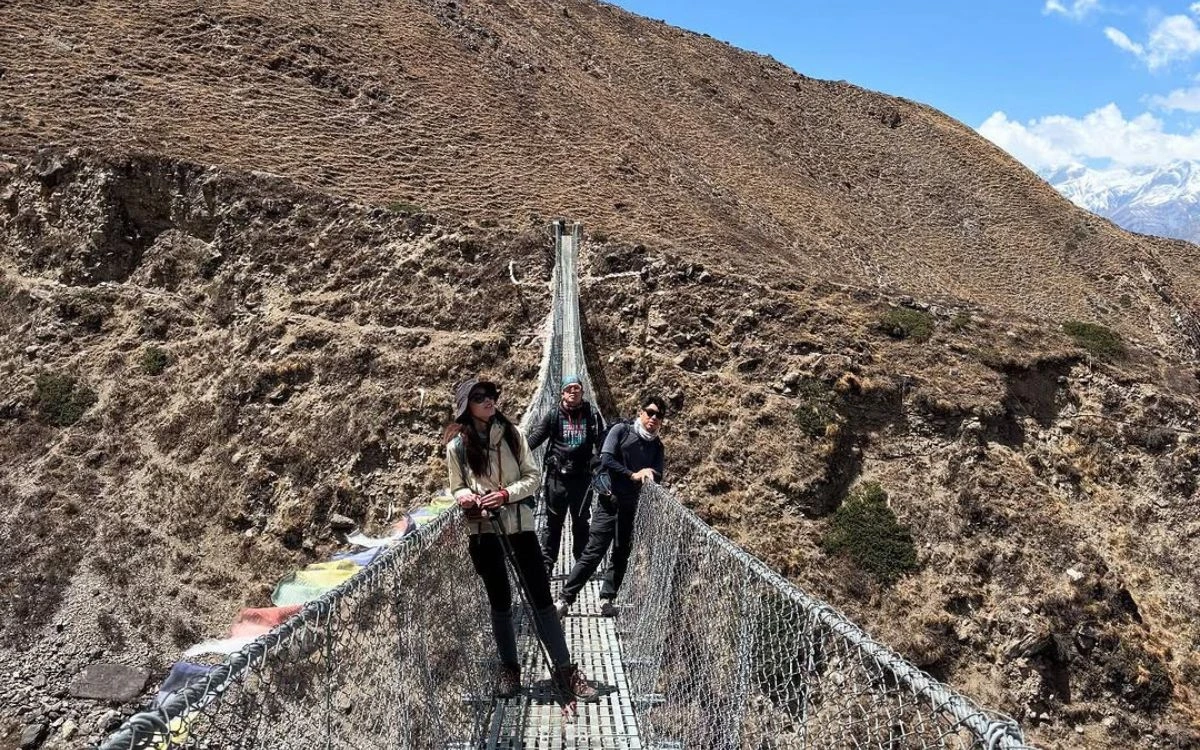
Three trekkers crossing a suspension bridge on the Annapurna Circuit trail toward Thorong La Pass
Once you have gone over Thorong La Pass, you will descend to the town of Muktinath, where you can rest, eat local food, and also have a chance to go to the Muktinath Temple. Many trekkers will stay one night in Muktinath while they are waiting for transport to Jomsom, Pokhara, or Kathmandu. If you want, you can extend your trek from here onto Ghorepani and Poon Hill and finally Ghandruk to do more exploring in the Annapurna region. If you need assistance with reliable transfers, guiding, or logistical support, rt please contact Himalayan Recreation. We can assist with your vehicle, lodging, and trekking arrangements.
FAQs
Is Thorong La Pass the highest trekking pass in Nepal?
No. Thorong La Pass (5,416 m) is not the highest pass in Nepal. The highest pass in Nepal is Sherpani Col Pass (at approximately 6,135 m), but that requires mountaineering expertise. Thorong La Pass is a popular pass that most hikers cross during a standard teahouse trek and thus happens to be the highest pass that they cross.
How cold does it get at Thorong La Pass during crossing day?
Temperatures on crossing day usually range from –°C to –15°C, sometimes colder due to strong winds. The temperature during the early morning is the coldest, especially prior to sunrise. Proper layering, gloves, and wind protection are important.
What time should you start crossing Thorong La Pass?
Most trekkers start their trek between 3:00 and 5:00 am. This allows trekkers to avoid strong winds and sudden changes in weather that may occur later in the day. A slow, steady pace is more important than speed.
How long does it take to walk from High Camp to Thorong La Pass?
It commonly takes up to 3 to 4 hours to walk from High Camp to Thorong La Pass. Another 3 to 4 hours of descending goes down from the pass itself to Muktinath, depending on the conditions and one's fitness level.
Can Thorong La Pass be crossed in winter?
Yes, but only in good weather and with the right experience. Winter crossings-December to February-are typically heavy snowfall, very cold, and increased risk of pass closure. Novices are not advised to attempt Thorong La Pass in winter.
Is there a mobile network or internet at Thorong La Pass in Nepal?
No, actually, there isn't any mobile network or internet in Thorong La Pass itself; just a little mobile signal may be available in some villages, such as Manang or Muktinath; expect no connectivity on crossing day.
Are yaks or horses available for crossing Thorong La Pass?
On occasions, horses may be available at High Camp or Thorong Phedi, but this is generally for emergencies. This depends on the weather and season. Yaks are not usually available on the crossing day.
What happens if Thorong La Pass is closed due to weather?
If the pass is closed, it is normally best to wait in Thorong Phedi/High Camp until the weather clears. After a delay of a few days, guides may even recommend going back or taking a different route. Safety is paramount, however.
Can you turn back if you feel unwell while crossing Thorong La Pass?
Yes, going down could always be a choice; in fact, it would be a safe choice. If symptoms of altitude sickness or extreme exhaustion are experienced, descending immediately is highly advised.
What is the success rate of crossing Thorong La Pass?
Success rate is very high for trekkers who acclimatize well, move slowly, and trek during good seasons. Failure is largely due to rushing, bad acclimatization, and bad weather, rather than lack of physical conditioning.c
Conclusion
The highest and most challenging section of the Annapurna Circuit trek is Crossing the Thorong La Pass, with an altitude of 5,416 m (17,769 ft), the extremely low level of oxygen, and its long day of crossing. Most trekkers who are well-acclimatised in Manang, who start their crossing early on the morning of crossing, and who walk at a good, steady rate will safely make the crossing, but it will be the first high altitude crossing for many. The choice of the right season and preparing for the cold and changing weather at the pass greatly enhances your chance of a successful crossing.
Crossing the Thorong La Pass can be done safely and enjoyed more with proper planning. Staying at Thorong Phedi, carrying the appropriate gear to cross the pass, and trekking with a licensed trekking guide help reduce your risks of completing the crossing. If you need any assistance with permits, guides, or making arrangements for the trek, please feel free to contact Himalayan Recreation.


.webp)



-1.webp)
-1.webp)
-1.webp)