If you’ve been dreaming of walking through dramatic Himalayan landscapes, the Annapurna Circuit Trek Difficulty is probably the first question on your mind. This legendary route winds through deep gorges, terraced rice fields, alpine meadows, remote Gurung and Manangi villages, and over the mighty Thorong La Pass at 5,416 m — one of the highest trekking passes in the world. The Annapurna Circuit trek difficulty level ranges from moderate to strenuous, depending on your pace, fitness, and acclimatization strategy. While the trek is undeniably demanding, thousands of trekkers complete it every year with the right preparation. Whether you are planning trekking in Nepal for the first time or you’re a seasoned hiker returning for another Himalayan adventure, understanding the Annapurna Circuit trekking difficulty guide before you set off will make all the difference.
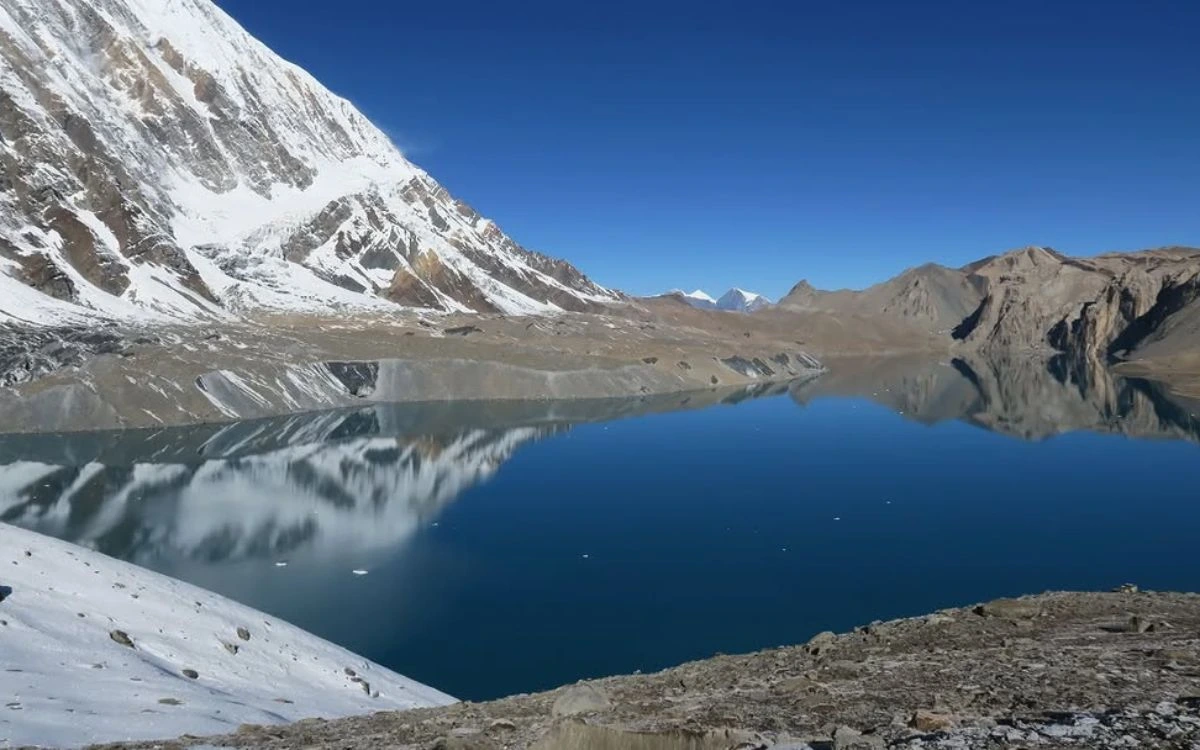
Tilicho Lake reflecting snow-covered peaks under a clear blue sky on the Annapurna Circuit
The Annapurna Circuit Trek Guide covers everything: the obstacles of Thorong La Pass, the risk of altitude sickness on the Annapurna Circuit, the fitness required to complete the Annapurna Circuit & preparation to trek safely in Nepal. The guide describes how the Annapurna Circuit compares to other popular treks in Nepal, what to pack for the Annapurna Circuit, and answers frequently asked questions from beginner & experienced trekkers. This guide will provide beginners and experienced trekkers with a realistic overview of what they'll face while completing the Annapurna Circuit.
Overview of Annapurna Circuit Trek Difficulty
What Makes the Annapurna Circuit Trek Challenging?
The Annapurna Circuit trek is rated moderate to strenuous. The trail covers roughly 160–230 km, depending on the route you choose, crossing multiple high-altitude passes and remote terrain. The sheer length of the trek, combined with dramatic elevation changes, makes it physically demanding. Unlike shorter treks such as the Annapurna Base Camp trek, the circuit requires sustained effort over 12 to 21 days.
Key Factors Affecting Trek Difficulty
Total elevation gain and loss across the route
Crossing Thorong La Pass at 5,416 m
Long daily walking hours (5–8 hours on average)
Altitude sickness risk above 3,500 m
Remote trail sections with limited medical facilities
Rapidly changing mountain weather
How Difficult is the Annapurna Circuit Trek?
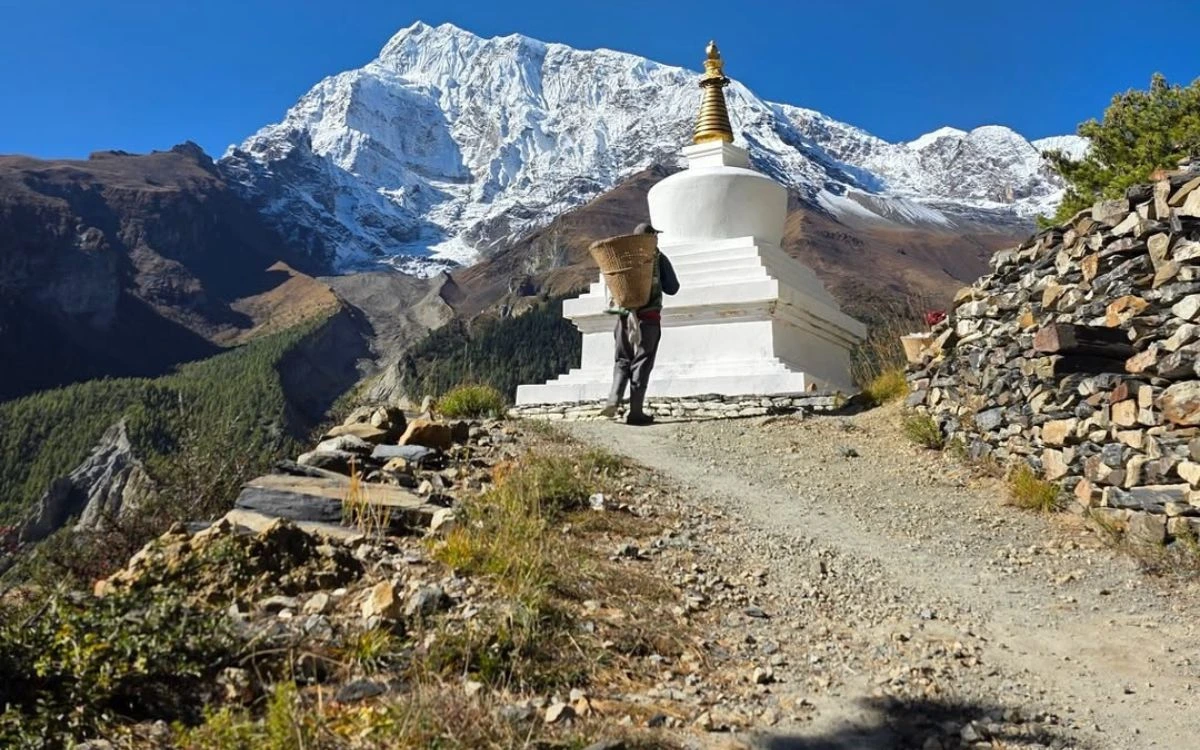
A porter carrying a doko basket past a white Buddhist stupa on the Annapurna Circuit trail
Difficulty Level for Beginners vs Experienced Trekkers
The trek is best described as a moderate to challenging adventure. Experienced trekkers with prior high-altitude experience will find it very manageable with proper acclimatisation. For beginners, the Annapurna Circuit trekking difficulty is still achievable, but it demands solid physical preparation and mental resilience. Unlike the relatively gentle Ghorepani Poon Hill Trek, the circuit involves longer trail days and higher altitudes.
Comparison with Other Popular Nepal Treks
Many trekkers ask: Is the Annapurna Circuit harder than the Everest Base Camp Trek? Both are comparable in altitude, but the Annapurna Circuit is longer and more physically tiring due to the daily distance. The Manaslu Circuit Trek is often considered a wilder and harder alternative. The Langtang Valley Trek is shorter and less demanding, making it a great option for those building up their fitness before attempting the Annapurna Circuit.
Annapurna Circuit Trek Distance and Duration
Total Distance of the Trek
The full Annapurna Circuit trek covers approximately 160 to 230 km. Many trekkers now take jeep rides through the Mustang section to cut distance, but purists prefer to walk the entire route for maximum reward.
Daily Walking Hours and Trekking Duration
Expect to walk 5 to 8 hours per day. A standard itinerary runs 14 to 21 days, including acclimatisation days. Most guided packages recommend 16 to 18 days for a comfortable pace that reduces altitude sickness risk.
Altitude and Acclimatisation Challenges
Maximum Elevation and High Passes
The Annapurna Circuit trek elevation profile rises steadily from around 760 m at Besisahar to 5,416 m at Thorong La Pass. This elevation gain is one of the most critical aspects of the Annapurna Circuit altitude challenge.
Annapurna Circuit Altitude Sickness Risk
Altitude sickness, or Acute Mountain Sickness (AMS), is a genuine concern above 3,500 m. Symptoms include headache, nausea, dizziness, and fatigue. The risk increases if you ascend too quickly without proper rest days. This is especially important around Manang (3,519 m), where most trekkers spend an extra acclimatisation day.
Acclimatisation Tips for Safe Trekking
Follow the golden rule: climb high, sleep low
Spend an extra night at Manang before ascending to High Camp
Stay hydrated and avoid alcohol above 3,000 m
Descend immediately if severe AMS symptoms develop
Carry Diamox (acetazolamide) after consulting your doctor
Thorong La Pass Difficulty Explained
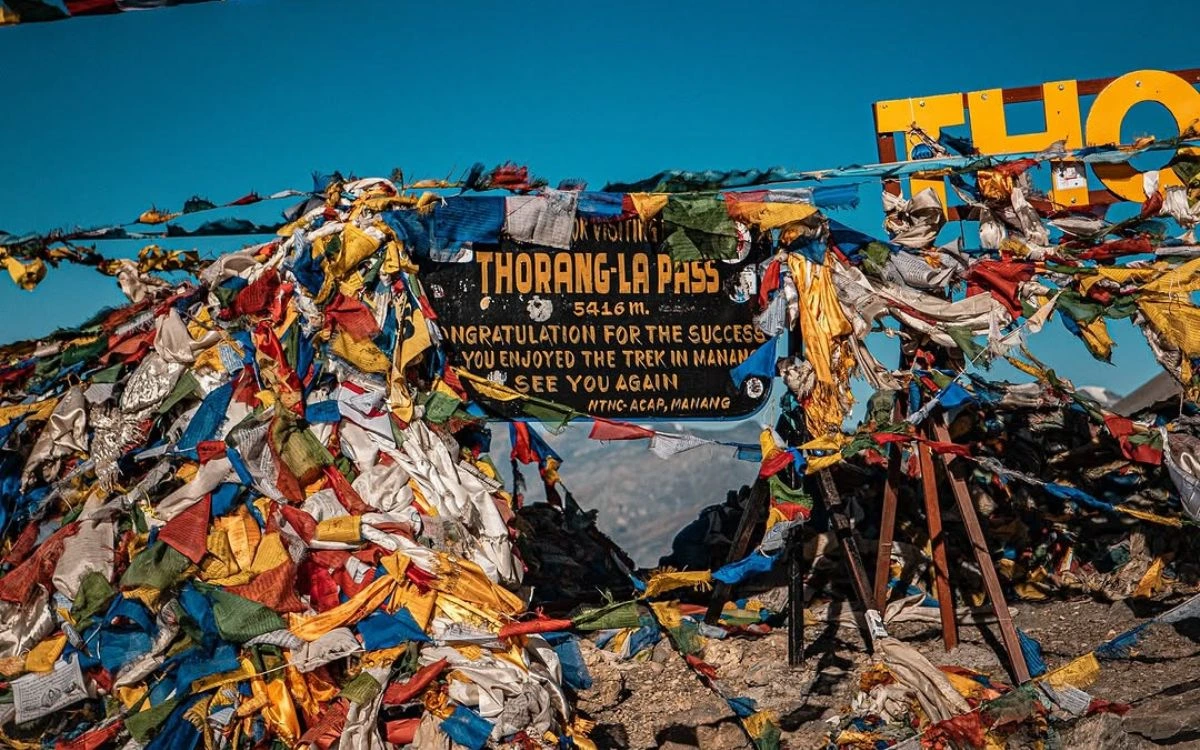
olorful prayer flags surrounding the Thorang La Pass summit sign at 5,416m on the Annapurna Circuit
Why Thorong La Pass is the Toughest Section
The Annapurna Circuit Thorong La Pass difficulty is the single biggest challenge on the trek. You climb from High Camp (4,925 m) to the summit at 5,416 m in the early morning hours, then descend steeply to Muktinath (3,760 m). The total effort on this day can take 6 to 10 hours, making it the most gruelling day of the entire journey.
Weather and Terrain Conditions
Weather changes fast at this elevation. Strong winds, snowfall, and freezing temperatures are common even in peak seasons. The trail becomes icy in winter, significantly increasing the Annapurna Circuit trek challenges. Always start before dawn to complete the crossing before afternoon clouds move in.
Tips to Cross Thorong La Safely
Start at 3:00–4:00 AM from High Camp
Wear layered, windproof clothing and gaiters
Carry enough snacks and warm liquids
Turn back if the weather deteriorates suddenly
Never cross alone; stay with your group or guide
Physical Fitness Requirements for Annapurna Circuit
Fitness Requirements
Athleticism is not necessary for this trek. However, you should have a reasonably good level of fitness for cardiovascular fitness. The Annapurna Circuit Trek requires a person to have the ability to walk for approximately 5–8 hours per day while carrying a daypack for 2 or more weeks on varied and difficult terrain.
You should begin training for your trek approximately 3 months in advance—this should be focused on classifying endurance, leg strength, and flexibility. If feasible, try to practice hiking up and down a hill with a loaded backpack before your trip.
Recommended Exercises for Trekkers
Hiking and stair climbing with a weighted pack
Cycling and swimming for cardiovascular fitness
Squats, lunges, and step-ups for leg strength
Yoga or stretching for flexibility and injury prevention
Major Challenges on the Annapurna Circuit Trek
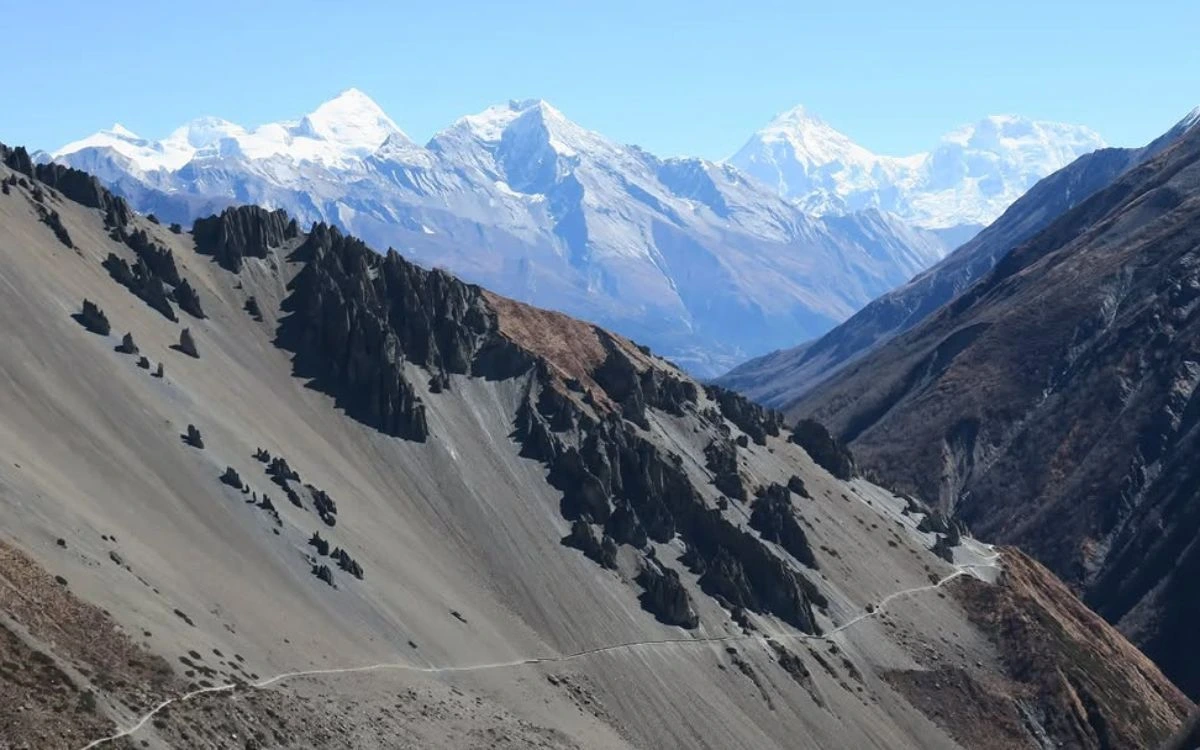
Jagged eroded ridgeline on the Annapurna Circuit with snow-capped Himalayan peaks in the distance
Long Days of Walking and Tiredness
Fatigue builds gradually while walking for multiple days; rest days are absolutely critical and not something you should try to save money by cutting back on. If possible, make sure you plan your trek so that you aren’t forced to walk all day, every day.
Bad Weather and Potential for Bad Weather
From June through August (monsoon), the trail becomes muddy and can lead to landslides. From December through February, there is usually snow and extreme cold. The best time of year for this trek would be from March through May (spring) and September through November (autumn). Those are generally the safest times of year to be on the trail.
Remote and Not Many Services
In the upper parts of the Annapurna Circuit, the teahouses are very basic, and there are very few locations where you can get medical assistance. While the lack of services in those locations is part of the reason many people want to trek to the Annapurna Circuit, it also contributes to the challenges of the Annapurna Circuit trek. Take first aid supplies, water purification tablets and emergency contact numbers with you.
Is the Annapurna Circuit Trek Suitable for Beginners?
Pros and Cons for First-Time Trekkers
Pros: Well-marked trails, plenty of teahouses, a strong trekking culture, and stunning rewards. The Annapurna Circuit trek for beginners is possible with the right mindset and preparation. Cons: The altitude, distance, and duration are demanding for those with no prior trekking experience.
Choose a longer, more comfortable itinerary (18–21 days)
Hire a licensed guide for safety and navigation
Take acclimatisation days seriously
Start with shorter treks like the Ghorepani Poon Hill Trek to build confidence.
Annapurna Circuit Trek Preparation Tips
Essential Packing List
Layered clothing: base layer, fleece, down jacket, waterproof shell
Sturdy trekking boots and trekking poles
Sleeping bag rated to −15°C
Sun protection: sunscreen, sunglasses, hat
First-aid kit with AMS medication, blister care, and rehydration salts
Best Time to Trek for Easier Conditions
Spring (March–May) and autumn (September–November) offer the clearest skies, stable weather, and the safest conditions for crossing Thorong La Pass. These are also the busiest seasons, so book accommodation in advance.
A licensed guide significantly reduces risk on remote and high-altitude sections. They manage logistics, navigate safely, and can respond quickly if altitude sickness strikes. Solo trekking is possible but not recommended for less experienced trekkers.
Annapurna Circuit Elevation Profile Explained
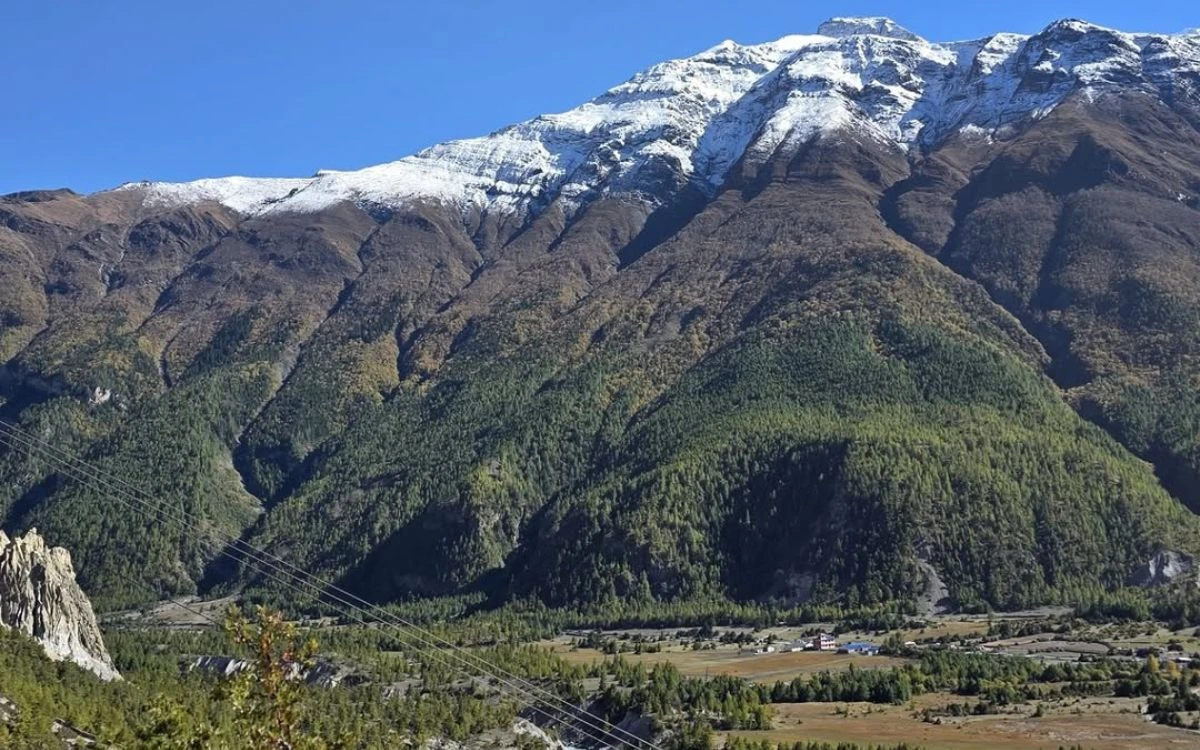
A sweeping Annapurna Circuit valley view with dense forest, a village, and a snow-capped peak above
Gradual Ascent and Descent Overview
The route climbs gradually from the subtropical lowlands near Besisahar, ascending through temperate forests, alpine zones, and finally into the high-altitude arid landscape around Manang. After Thorong La, the descent to Mustang and onwards to Pokhara is dramatic and rewarding.
Critical Points Along the Route
Besisahar: 760 m (trek start)
Chame: 2,710 m
Manang: 3,519 m acclimatisation hub)
High Camp: 4,925 m (Thorong La base)
Thorong La Pass: 5,416 m (highest point)
Muktinath: 3,760 m (post-pass reward)
Tips to Reduce Annapurna Circuit Trek Difficulty
Proper Acclimatisation Strategy
Never skip rest days. The ‘climb high, sleep low’ principle works. Spend extra time at Manang and avoid rushing to High Camp without adequate rest.
Choosing the Right Itinerary
A longer itinerary reduces daily mileage and gives your body more time to adapt. If you feel the trek is too hard, options to cut the route short via jeep or alternative exits exist throughout the circuit.
Staying Healthy and Hydrated
Drink 3–4 litres of water daily. Eat well, even when altitude reduces appetite. Avoid alcohol and cigarettes above 3,000 m. Listen to your body—it is your most reliable guide.
FAQs
Is Annapurna Circuit Harder than Everest Base Camp?
The maximum altitudes for both the Annapurna Circuit and Everest Base Camp Treks are very close; however, the Annapurna Circuit is a much longer trek in terms of both distance and duration. The Everest Base Camp Trek ascends to 5,364 m, while the Annapurna Circuit reaches a maximum elevation of 5,416 m at the Thorong La Pass. The Annapurna Circuit is a more physically challenging trek overall due to the extended duration of the trip (i.e., the amount of time spent moving).
Can Beginners Trek the Annapurna Circuit?
Yes, beginners can trek the Annapurna Circuit if they are adequately prepared and use a longer itinerary. Beginners should train for at least 3 months before their trek. Beginners are advised to use a guide and to allow 18-21 days for completing their trek to ensure they have enough time to acclimatise and rest.
How Fit Do You Need to Be to do the Annapurna Circuit?
You need to have a sufficient level of cardiovascular fitness, as well as the ability to walk for 5-8 hours, 5-7 days per week on uneven ground. It is highly recommended that you regularly hike, cycle, or run for 3-6 months before going to the Annapurna Circuit.
What is the Most Difficult Section of the Annapurna Circuit?
Most trekkers will agree that the most difficult section of the Annapurna Circuit is the crossing of the Thorong La Pass (5,416 m). The ascent from High Camp to the Peak of Thorong La Pass is extremely steep; therefore, trekkers are often forced to navigate through cold, windy, and possibly icy conditions and must be highly motivated in order to succeed.
Conclusion
Certainly! There are many reasons why the Annapurna Circuit trek is one of the world’s best long-distance treks. Each step you take on the Annapurna Circuit trek from subtropical valleys to the wind-swept heights of Thorong La will reward you with unbelievable scenery, an opportunity to meet many different cultures, and an overwhelming sense of personal accomplishment.
Whether you are comparing the Annapurna Circuit Trek to the Everest Base Camp Trek, the unpredictable Manaslu Circuit Trek, or a shorter classic trek like the Langtang Valley Trek, the Annapurna Circuit is truly in a league of its own. Plan smart, prep properly and be patient with the process!
Are you ready to begin your journey? Reach out to Himalayan Recreation Treks and Expedition today so our knowledgeable staff can create your ideal Annapurna Circuit experience!


.webp)



-1.webp)
-1.webp)
-1.webp)