Kanchenjunga is the third-highest mountain in the world and it is in the eastern part of Nepal. Quite frequently, trekkers ask whether they can trek Kanchenjunga independently, but it is essential to note that solo trekking is not permitted here. The Government of Nepal has very strictly stated that all trekkers, when visiting the Kanchenjunga Circuit Trek, must hire the services of a guide and, if required, some porters too. This is for trekkers' safety, as the route goes through villages, forests, and high mountains that may be difficult to access.
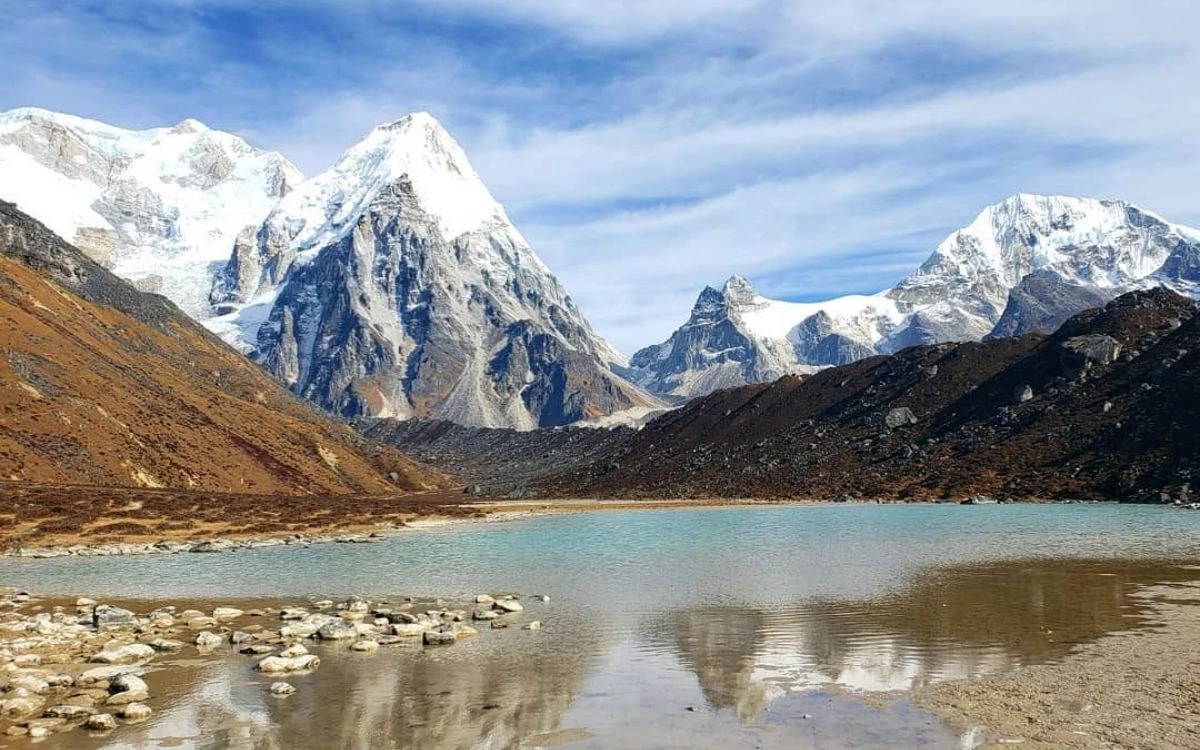
Turquoise glacial lake reflecting snow-capped Kanchenjunga peaks in a remote high-altitude valley
A TIMS card and a Kanchenjunga Conservation Area Project (KCAP) permit are required to trek Kanchenjunga, which can only be issued through a licensed guide or through a registered trekking agency. The terrain, climate, and culture are well-known to the guide, which means a safer and more feasible journey. No trekker, regardless of his/her experience, can undertake the journey without a guide. Doing so may result in a penalty citation or some sort of legal complications.
In this blog, we will detail the regulations concerning Kanchenjunga treks without a guide, why guides are required, and what permits and preparation one needs. If you plan on a Kanchenjunga trek, you will need to understand these regulations to have a safe, smooth journey through this very remote and high-altitude region.
Is Solo Trekking to Kanchenjunga Allowed in Nepal?
Solo trekking in Kanchenjunga (Nepal) is not permitted. The Kanchenjunga region is considered a Restricted Trekking Area under Nepal's trekking regulations, which require trekkers to be accompanied by a licensed guide and trek in groups of at least two people.
You cannot apply for a Restricted Area Permit (RAP) on your own. The RAP must be obtained through a registered trekking agency, and a government-licensed guide will also need to be assigned to your trek. Therefore, the regulations preventing a solo trek to Kanchenjunga make independent/solo trekking in the area illegal.
The regulations were developed because of the Kanchenjunga's extreme remoteness, the lack of immediate rescue facilities, and the sensitivity of the Indian and Tibetan border in the region. If you are interested in a solo trek in Nepal, you should consider the Langtang, Everest, and Annapurna regions instead.
Why Kanchenjunga Is Classified as a Restricted Trekking Area
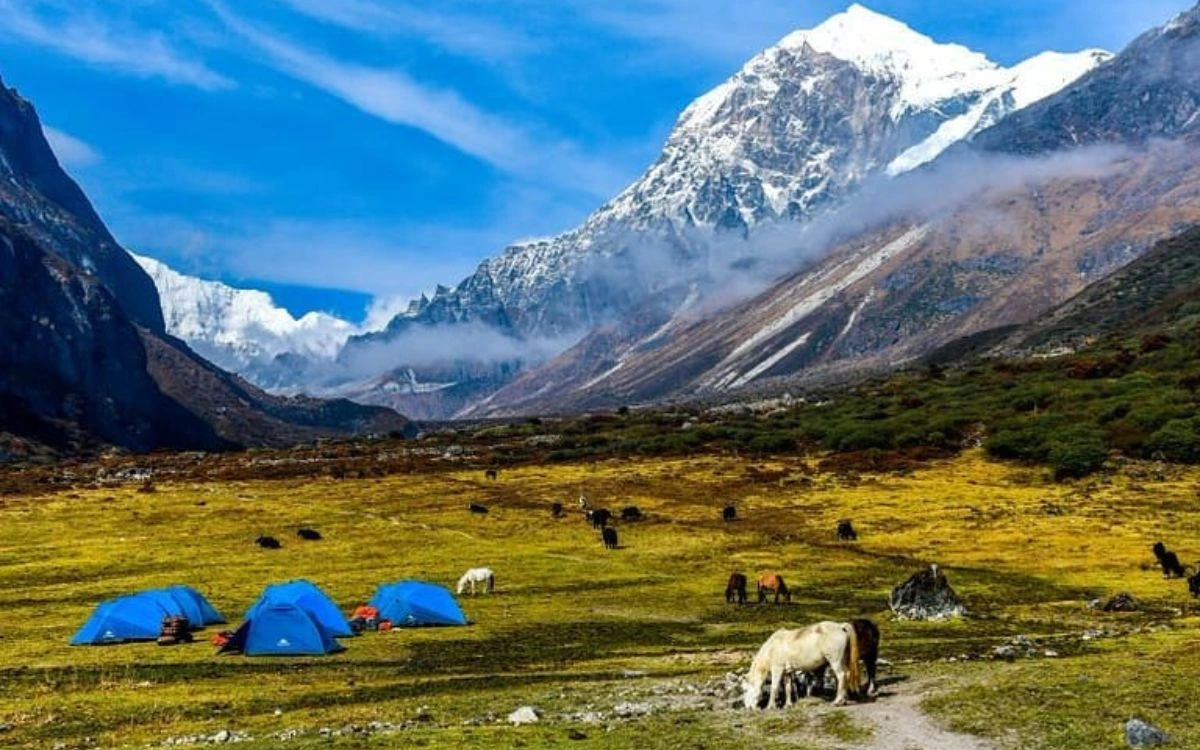
Blue camping tents on a green alpine meadow with horses grazing and Kanchenjunga's snow-draped slopes behind
Due to its geographical significance and location near the border between China and India, Kanchenjunga is recognised as one of the most historically sensitive areas in the Himalaya. As such, trekking in this region requires special permission because of the controlled travel required to maintain national security.
As this area is considered one of the remotest locations in the world, access by roads, means of communication and other types of transportation along the trekking route is limited at best.
Medical and emergency response options are also extremely limited as a result of this area's extreme remoteness. Evacuation will be delayed in the event of either severe weather or challenging terrain.
Kanchenjunga's sensitive ecosystem also has significant biodiversity, which encompasses many species of flora and fauna, and should be protected against the impact of mass tourism.
Limited access to Kanchenjunga will aid in protecting and preserving local cultural heritage. This includes protecting local people's lifestyles from the negative impacts that come with mass tourism. These effects may detract or even erase local culture.
By requiring trekkers to obtain trekking permits from the government, permission will ensure that trekkers follow designated routes and only travel with a licensed guide while being responsible in their behaviour within the Kanchenjunga region.
Government Rules for Trekking in the Kanchenjunga Region
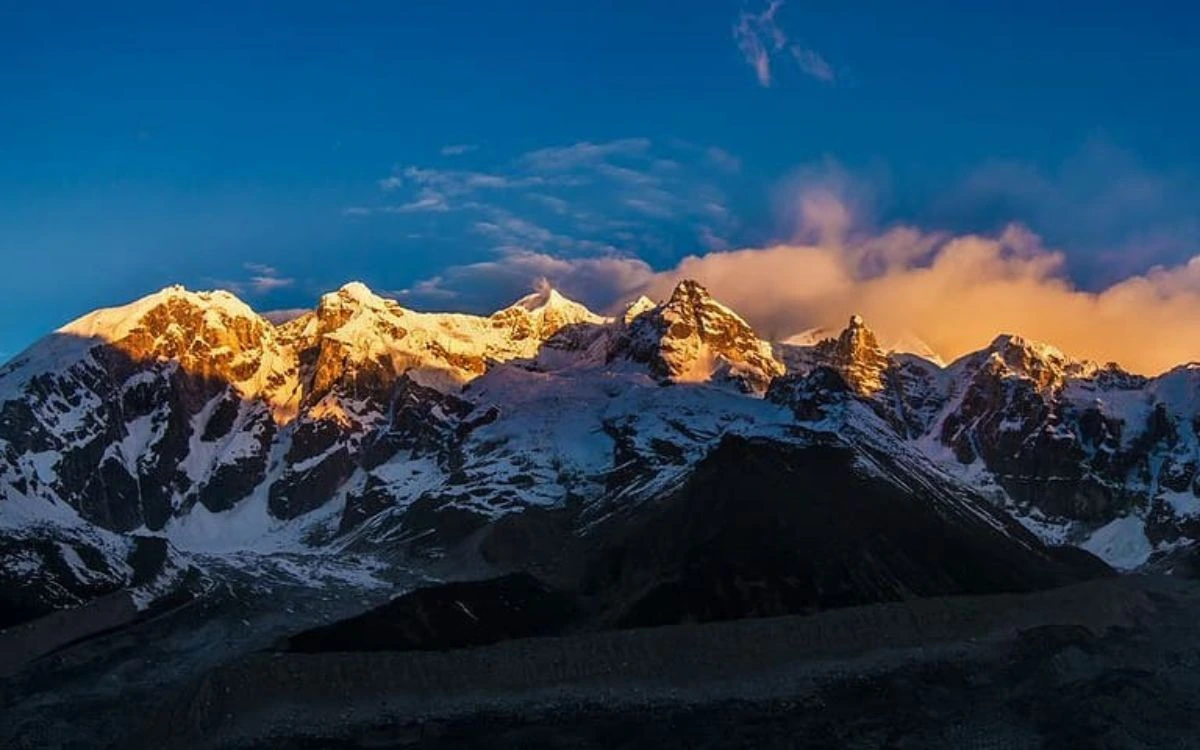
Golden alpenglow lighting the snow-covered Kanchenjunga massif at sunrise against a deep blue sky
The Nepal government has imposed strict regulations on trekking in the Kanchenjunga region to protect both the environment and the safety of trekkers. The Kanchenjunga region has been designated as a Restricted Area; all trekkers wishing to trek in the region will need to acquire a Restricted Area Permit (RAP) and a Kanchenjunga Conservation Area Permit (KCAP) before starting their trek. All permits can only be acquired through a registered trekking agency; individual trekkers will not be allowed to submit independent applications for these permits.
No individual trekking is allowed; a minimum of two trekkers (excluding the guide and porter) must travel together and must have a registered guide who travels with the group at all times. Trekking groups must also follow specifically designated routes, which enable monitoring of where trekkers move across the rugged terrain, thus lowering risks associated with trekking in these remote and rugged areas.
The regulations also help protect the fragile and delicate ecosystem, as well as the unique wildlife that inhabit the Kanchenjunga region. Additionally, trekkers are expected to treat local communities with respect and to avoid environmentally sensitive areas while trekking in Nepal specially in the Kanchenjunga region.
Guide and Group Requirements for Kanchenjunga Trek
To trek in the Kanchenjunga region, you will need to be part of a group and have a guide approved by the Nepalese government. All treks in this area require a licensed guide because the region is difficult, remote and classified as a restricted area. It is the responsibility of your guide to assist you in following the established trails, working with permissions and assisting in any emergencies that occur while trekking.
In addition to your licensed guide, you also need to be a minimum of two trekkers (not including your guide or porter). Solo trekking is strictly prohibited in this region, which ensures that if something happens to you on the trail (accident, sudden illness, etc.), there will be other trekkers with you who can assist.
While these requirements may seem like they are limiting your freedom and flexibility while hiking, they do actually protect both the environment and the culture of the Kanchenjunga region. The licensed guides that accompany you have been trained to provide education on the local customs, wildlife and conservation practices, which preserve the legacy of the Kanchenjunga region.
If you book your trek with us, we will provide a licensed guide that is trained in wilderness navigation and has first aid certification, ensuring a safe and enjoyable Kanchenjunga experience.
Permits Required for the Kanchenjunga Trek
Foreigners trekking in the Kanchenjunga region must acquire two primary permits before beginning the trek.
Restricted Area Permit: All foreign nationals trekking in Kanchenjunga need this permit. The amount charged for this permit varies based on the nationality and group size of the trekkers. This permit permits access to the Kanchenjunga restricted area.
Kanchenjunga Conservation Area Permit (KCAP): Issued by the Kanchenjunga Conservation Area Management Council for NPR 3,000 per person. The KCAP aids with the support of conservation efforts and local communities.
Both permissions are required before trekking in Kanchenjunga. We will organise both permissions for you prior to your trek commencing. To ensure compliance with government regulations, all trekkers must be accompanied by an approved licensed guide. Solo trekking is not permitted. It's advisable to carry copies of your permits and passport with you; they will be checked at various points along the trekking route.
Why Trekking Kanchenjunga Without a Guide Is Not Permitted
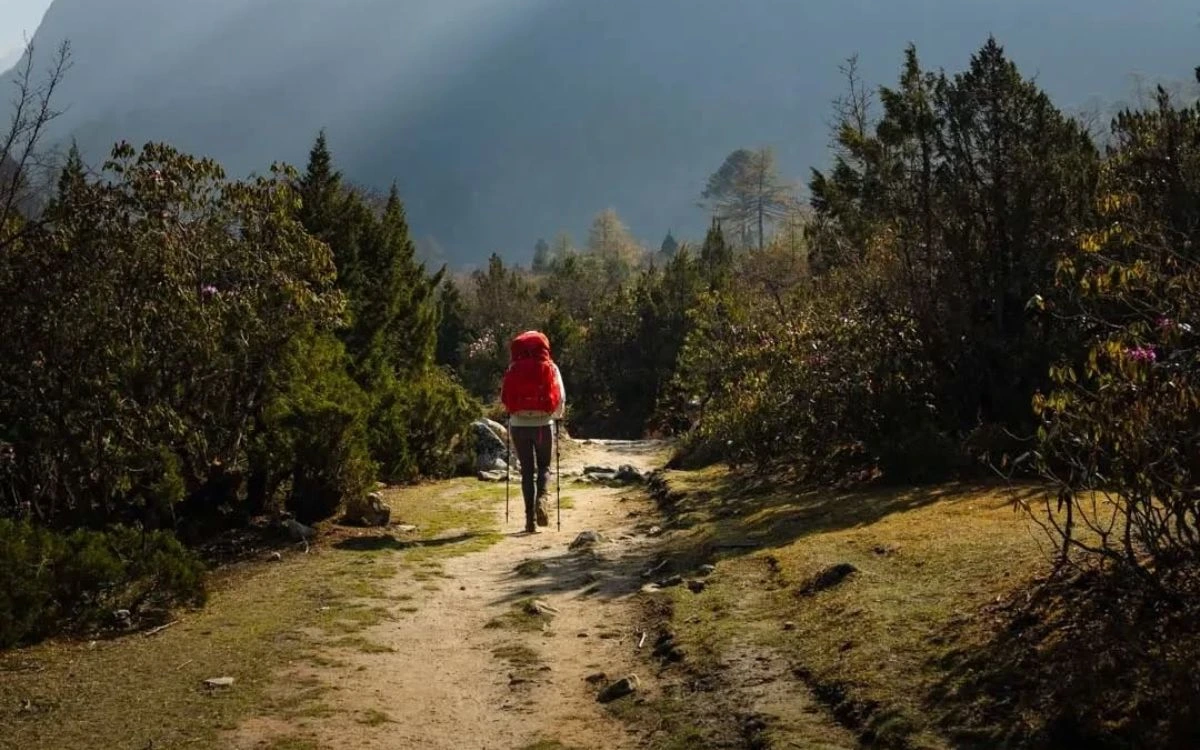
Solo trekker with a red backpack walking a sunlit forest trail in the Kanchenjunga region
Because of Kanchenjunga's remote location, tough terrain, and its position near the boundaries of India and Tibet, trekking without a guide is prohibited. With very few access points, minimal means of communication, and a lack of medical assistance, travelling alone may prove hazardous.
A trekking party must be accompanied by a qualified guide who will ensure that participants are safe, manage all necessary permits, and assist trekkers in following local traditions and helping to preserve the fragile ecosystem. By adhering to these rules, trekkers protect themselves, as well as the local populations of Limbu and Sherpa.
Risks of Attempting a Solo Trek in Kanchenjunga
Kanchenjunga is located in a remote and inaccessible area. Varying greatly in distance between villages and support facilities creates considerable distances between these locations, which makes emergency medical and rescue services very difficult to obtain. Due to the very limited availability of medical and rescue services, it is possible for helicopter evacuations to be impossible due to the geography and weather conditions of the area.
The trails in Kanchenjunga are extremely steep and include many river crossings, landslide-prone areas and unstable weather conditions, which increase the chances of having an accident while trekking through the area. Navigation is a little tricky, and without a guide, it would be very easy to get lost.
Solo trekking is prohibited in the restricted area of Kanchenjunga, as one must have a permit, which will require you to have a licensed guide.
While trekking in this area, you may come in contact with wildlife and sudden storms, or you may sustain an injury; without immediate assistance, these incidents may become serious.
If you do not have a guide,e it is possible that you could unintentionally disrespect local customs or endanger or disrupt the fragile ecosystem in Kanchenjunga.
Role of Licensed Guides in Kanchenjunga Trekking
To trek to the remote Kanchenjunga area, a licensed guide is required. The guide assumes many important roles, including: leader, navigator, safety officer, and cultural interpreter. A qualified guide will provide all necessary permits, arrange for accommodation, maintain lines of communication with local authorities, and provide expertise on the treks' many less-mapped and more dangerous sections.
In addition to these essential functions, guides assist with altitude sickness, manage emergency situations, and ensure trekkers remain on the designated routes as required by local governments; solo trekking is prohibited within the boundaries of this protected area. In addition to promoting safety, guides provide insight into the culture and traditions of the local people and promote the preservation of the wildlife and fragile ecosystem.
Can Nepalese Citizens Trek Kanchenjunga Circuit Without a Guide?
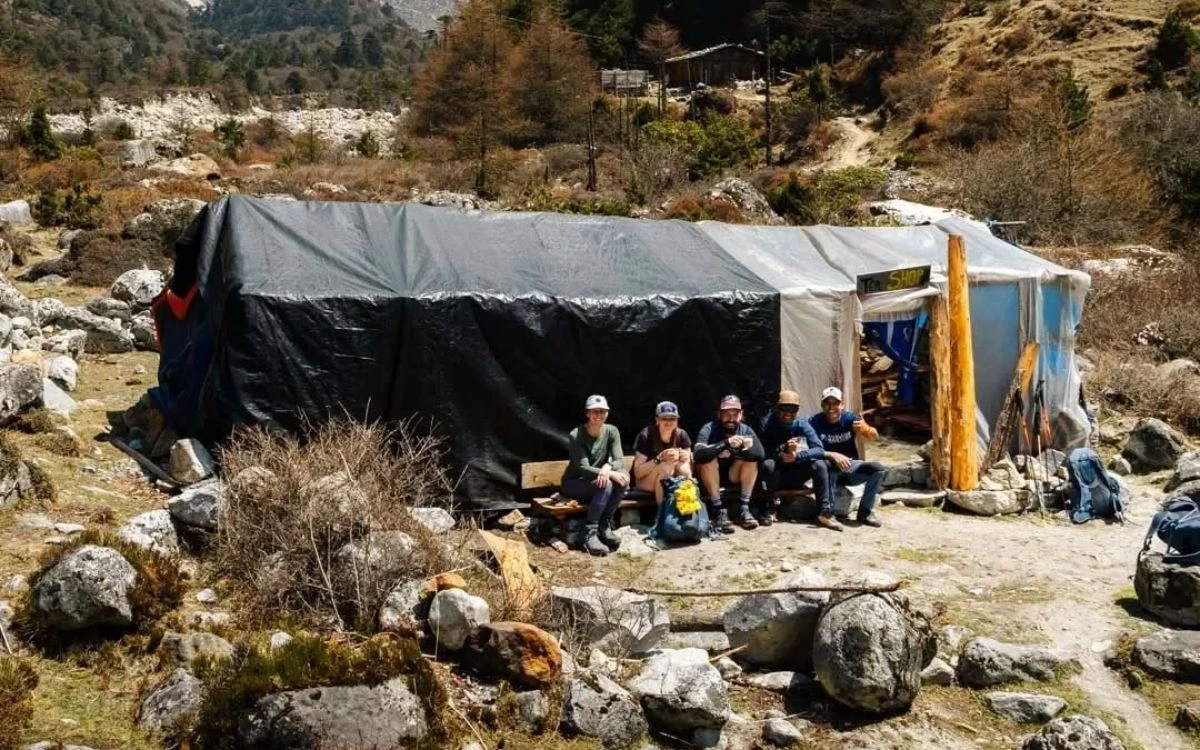
Group of trekkers resting outside a makeshift tea shop shelter on the remote Kanchenjunga trail
As a citizen of Nepal, you have the right to trek Kanchenjunga circuit without a licensed guide. The Kanchenjunga area is considered a Restricted Area for foreign trekkers, and licensed guides must accompany foreign trekkers in order for them to enter the area. Local Trekking is generally permitted with Local Trekking Permits only.
Although local trekkers can trek the area unaccompanied, it is advisable to follow the official routes and limit solo trekking as far as possible. Even though experienced trekkers are very familiar with the area, they should respect the established rules and regulations and be aware that the terrain is remote and can be difficult to navigate without proper preparation or guidance. They should also make sure they take all reasonable safety precautions for themselves and others, and to protect the fragile ecosystems of the Kanchenjunga area, including the Limbu and Sherpa communities.
FAQs
What is the minimum number of trekkers required for Kanchenjunga?
For foreign trekkers, the minimum number required for the trekking of Kanchenjunga is two trekkers. Climbing Kanchenjunga solo is not permitted in the Kanchenjunga region, and you must be accompanied by at least one other person and a guide.
Can experienced trekkers request fewer guides or porters?
No, guided treks, even for seasoned trekkers, are a necessity, along with porters when necessary. This is also mandatory for foreign trekkers, since Kanchenjunga is a Restricted Area, thereby requiring treks by regulation to maintain safety standards.
What is the best season to trek to Kanchenjunga safely?
The best seasons to visit are the spring season (March to May) and the autumn season (September to November). The monsoon season (June to August) is not a good time to visit because of landslides and rain.
Are there any medical facilities along the Kanchenjunga trekking route?
Medical facilities are scarce along the trek to Kanchenjunga. There are a few small health posts in remote villages. In the case of a serious medical problem, a helicopter evacuation may be necessary; these can be delayed because of the weather or terrain. It is essential to take a first-aid kit along.
How long does a typical Kanchenjunga trek take?
The standard Kanchenjunga trek typically lasts between 18 and 24 days, depending on the route taken, how acclimatised you are (and what your scheduled acclimatisation days are), as well as the weather conditions along the route.
Is altitude sickness a concern on the Kanchenjunga trek?
As with all treks to high altitudes (over 7000 metres), there is always an increased risk of developing altitude-related illnesses. Therefore, it is critical that any trekker slowly ascends to the altitude of 7000 metres and is properly acclimatised to the altitude and has a licensed trekking guide with him/her who can monitor his/her health throughout the trek.
Can Nepali citizens trek Kanchenjunga without a guide?
Nepali Citizens are permitted to trek the Kanchenjunga region without the requirement of being accompanied by a trekking guide. However, it is highly recommended that even if you are a local, you should always follow your country's official trekking routes, and use appropriate safety precautions, because the terrain is very rugged, remote and at a high-altitude.
Are there accommodation options along the Kanchenjunga route?
Trekking villages offer some basic teahouses and lodges. However, there are few facilities available for trekkers, and we suggest being prepared to stay in basic accommodation, with limited amenities. A basic meal is generally available at each stop.
Conclusion
Foreign trekkers are not permitted to trek Kanchenjunga without the assistance of a guide. This is due to the fact that this area is classified as a Restricted Area, which restricts solo trekking because of its remoteness, complexity of terrain, limited ability for communication and minimal availability of emergency support. All foreign trekkers must therefore be accompanied by a licensed guide, must travel as a minimum of a group of two and must have the required permits, specifically the RAP (Restricted Area Permit) and KCAP (Kanchenjunga Conservation Area Permit) before they can trek in this region. This ensures both the trekkers' personal safety and the protection of this delicate ecosystem and the local communities.
For individuals who wish to complete a trek in Kanchenjunga, Himalayan Recreation provides a full service that includes arranging for the necessary licensed guides, securing the required permits and providing assistance and support during the entire trek. Trekkers will receive experienced guidance in order to complete a safe and fully compliant trek in this remote and high-altitude region.
Popular trekking packages provided by Himalayan Recreation:


.webp)



-6.webp)
-1.webp)
-1.webp)