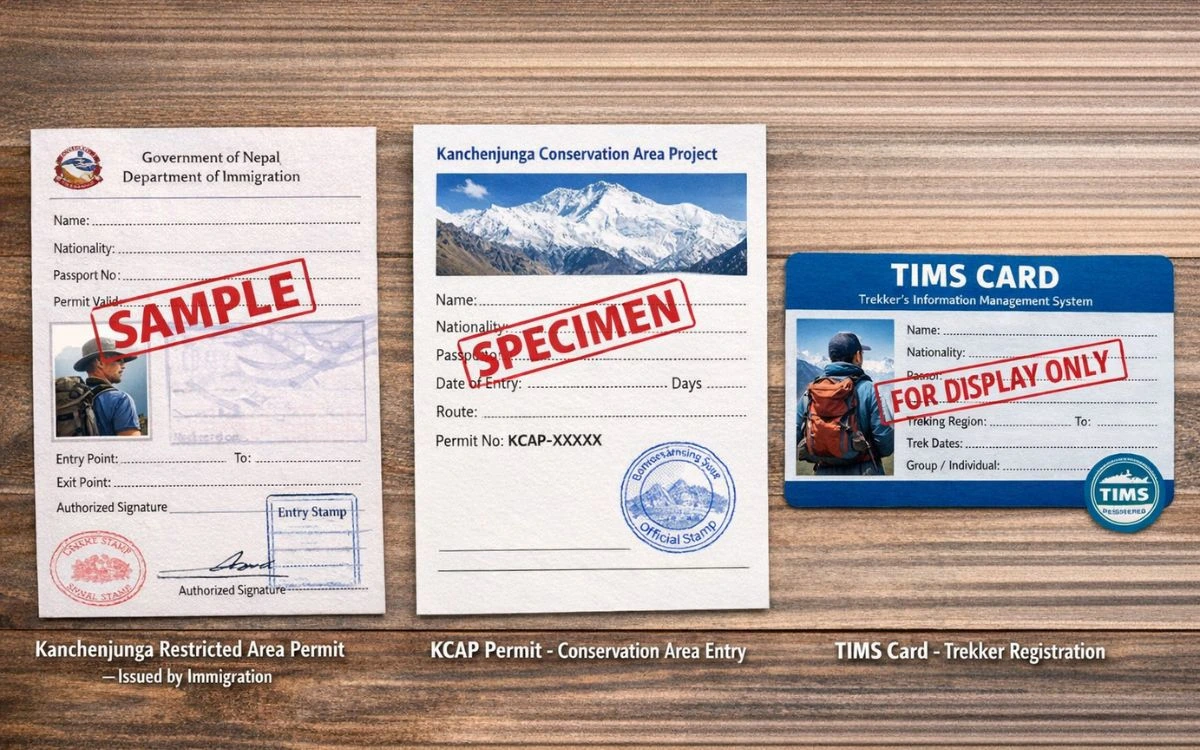
Kanchenjunga trek permits are necessary for anyone who wishes to visit this unrestricted and isolated area, i.e., the Kanchenjunga Conservation Area in eastern Nepal. The Kanchenjunga Trek is located near the border with Tibet and Sikkim. It goes through restricted and conservation areas, therefore trekkers must get three separate permits: a Special Restricted Area Permit (SRAP), a Kanchenjunga Conservation Area Project (KCAP) permit, and a Trekkers' Information Management System (TIMS) card.
All Kanchenjunga Trek permits are obtained through an authorized local trekking company, registered with the government, and approved by the Department of Immigration in Kathmandu, similar to the permit process for popular treks like Everest Base Camp. You will need to present your original passport that has a valid Nepal visa when applying for the permits, as the validity of the visa and your personal details will need to be confirmed. The Kanchenjunga trek permit fees differ according to the period of stay and the season of travel.
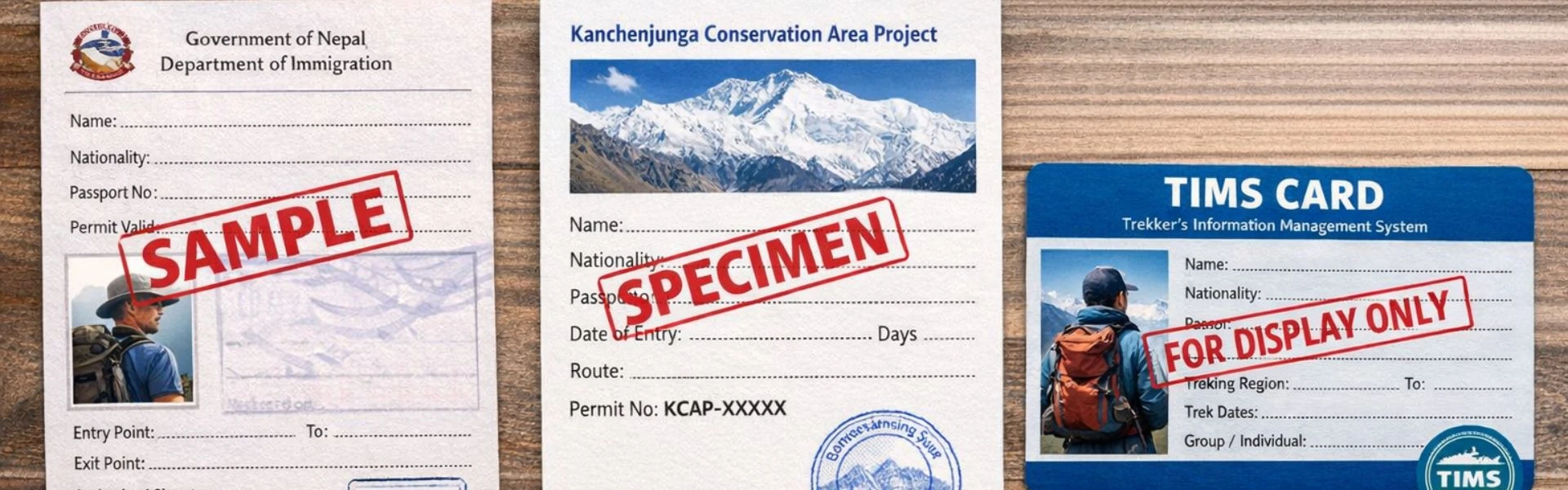
Three trekking permits for trekking in Kanchenjunga - restricted area permit from Immigration, KCAP conservation area entry permit, and TIMS registration card
The permits for the Kanchenjunga trek allow for the management of tourism and protect the delicate Himalayan ecosystem and local animals and cultures in the Kanchenjunga Conservation Area. The restrictive entry regulation assists in preserving the natural balance of one of Nepal's most beautiful trekking areas, which is also one of the least visited trekking areas.
Trekking solo in the Kanchenjunga area is prohibited. A minimum of two trekkers with a licensed guide is required for safety and responsible tourism purposes in this highly remote region of the Himalayas. While getting the Kanchenjunga trekking permit takes a little preparation, it allows for an incredible trek in the Himalayas that is sure to provide access to untouched nature, superb biodiversity, and rich Limbu and Rai cultures, making it just as appealing as the Everest Base Camp Trek for those wanting to experience unforgettable adventures in the Himalayas.
Things You Should Know Before Kanchenjunga Trek
Before beginning on the Kanchenjunga Trek, it is worth knowing that the trek starts from one of the most remote areas of eastern Nepal, close to the borders with Tibet and India. Facing a remote region means that there will be less comfort, fewer trails, and poor access to communication. To have an enjoyable and safe experience, preparation and an understanding of what to expect are essential.
The Kanchenjunga area is a restricted zone, as set by the Government of Nepal. Trekkers should be organized through a registered local trekking agency and have all Kanchenjunga trek permissions through a licensed guide, as solo travel is not allowed.
The Kanchenjunga trek is a tough trekking route and a high-altitude trek, often over 5,000 m. It is strongly suggested that trekkers are in good physical shape and have trek experience, such as with the Everest Base Camp Trek.
There are fewer teahouses on Kanchenjunga than on some of the other well-traveled routes. Most of the villages have basic lodges and local meals for a simple meal away from home. Trekkers should be ready to have fewer comforts and facilities and camp now and then in remote parts.
The best time to trek Kanchenjunga is during Spring (March to May) or Autumn (September to November). During these two periods we see stable weather, unobstructed mountain views and passable trails.
The trekking trail crosses high elevations, and you must acclimatize your body to the higher altitude levels to prevent altitude sickness. Be sure to always account for rest days in your itinerary, and stay as hydrated as possible.
There are limited or no mobile networks in the higher sections of the trail, with ATMs only in Taplejung or Bhadrapur areas. Bring fully enough cash and consult with your family or friends about your itinerary ahead of your trip.
The Kanchenjunga Conservation Area is noted for its biodiversity. As a trekker, you must adhere to Leave No Trace guidelines, avoid plastic waste, and be respectful to the local culture and wildlife.
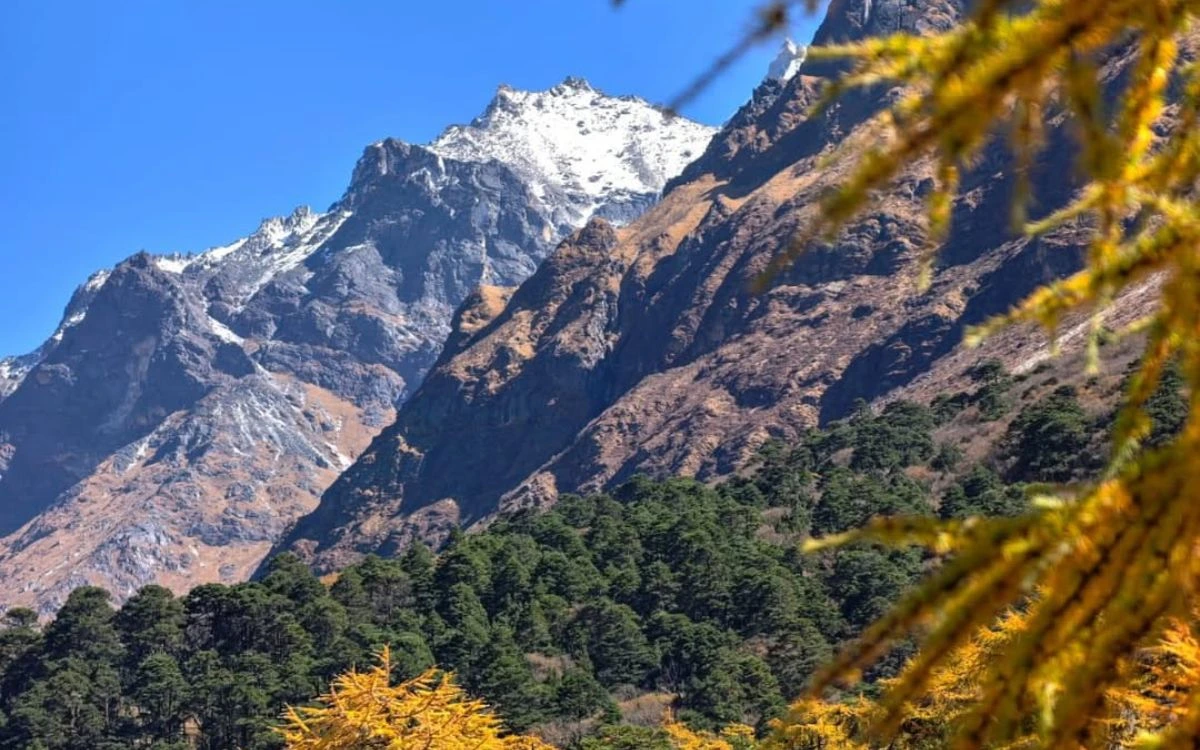
Snow-capped Kanchenjunga mountain peaks rising above dense pine forest with golden autumn leaves in foreground
Requirements for Obtaining the Kanchenjunga Trekking Permits
Trekkers must apply for the Kanchenjunga trekking permits through a registered Nepal trekking company, as independent travelers are not allowed to apply themselves.
In order to obtain the Kanchenjunga Restricted Area Permit (RAP), there must be at least two trekkers in the group. Solo trekking through the RAP is strictly not permitted.
It is compulsory to have a licensed trekking guide when traveling through the Restricted Areas of the Kanchenjunga Region.
An original passport with at least six months' validity is required. The passport will be required to present in person when the trekking company applies for permits.
Trekkers will be required to have a valid Nepal tourist visa, which should cover the duration of the Kanchenjunga trek days.
At least two current passport-sized photos are required to issue the Kanchenjunga Conservation Area Project (KCAP) and TIMS permits.
The Kanchenjunga trek permit fee needs to be paid in Nepali Rupees through the trekking agency. The fee will depend upon the season and the trekking days.
Comprehensive travel insurance that covers high-altitude trekking and emergency evacuation is strongly advised for all trekkers, even though it is not a required document for the permit itself.
After you have sent all necessary documents and payments to the trekking company, they will proceed with the application for the Kanchenjunga trekking permits at the Department of Immigration in Kathmandu and it usually takes one working day to complete.
Essential Kanchenjunga Trekking Permits
Kanchenjunga Restricted Area Permit (RAP)
The northern and southern part of the Kanchenjunga region are classified as a restricted area in order to protect the delicate ecosystem and secure the borders. Trekking in these areas without a RAP is forbidden. Trekkers must show the RAP at various check posts for entry and exit into the area.
Permits are issued by the Department of Immigration, Government of Nepal, in Kathmandu, or Pokhara, but must be acquired through a government-registered trekking company.
Cost of Kanchenjunga Restricted Area Permit:
USD 20 per person per week ($20USD for first four weeks), then USD 25 per week thereafter.
Kanchenjunga Conservation Area Project (KCAP) Permit
The Department of National Parks and Wildlife Conservation and the WWF Nepal manage the Kanchenjunga Conservation Area. All trekkers entering the conservation zone must pay for and obtain a KCAP Permit.Unlike the restricted area permit, this one does not limit the number of days you can spend inside the area.
The permit must be obtained from either the Nepal Tourism Board office in Kathmandu or the KCAP entry checkpoint in Taplejung. Most trekking agencies do this for trekkers as part of their service.
The cost for the KCAP Permit is:
NPR 3,000 for other foreigners
NPR 1,000 for SAARC nationals
NPR 100 for Nepali citizens
TIMS (Trekkers’ Information Management System) Card
The TIMS card promotes the safety of trekkers and allows authorities to monitor trekking routes and movements in case of emergency siuations. Trekking in most regions of Nepal, including Kanchenjunga, requires the TIMS card as one of the mandatory permits.
The TIMS card can be obtained from either your registered trekking agency or the Nepal Tourism Board offices in Kathmandu or Pokhara.
Cost of TIMS card:
USD 20 for individual trekkers
USD 10 for group trekkers
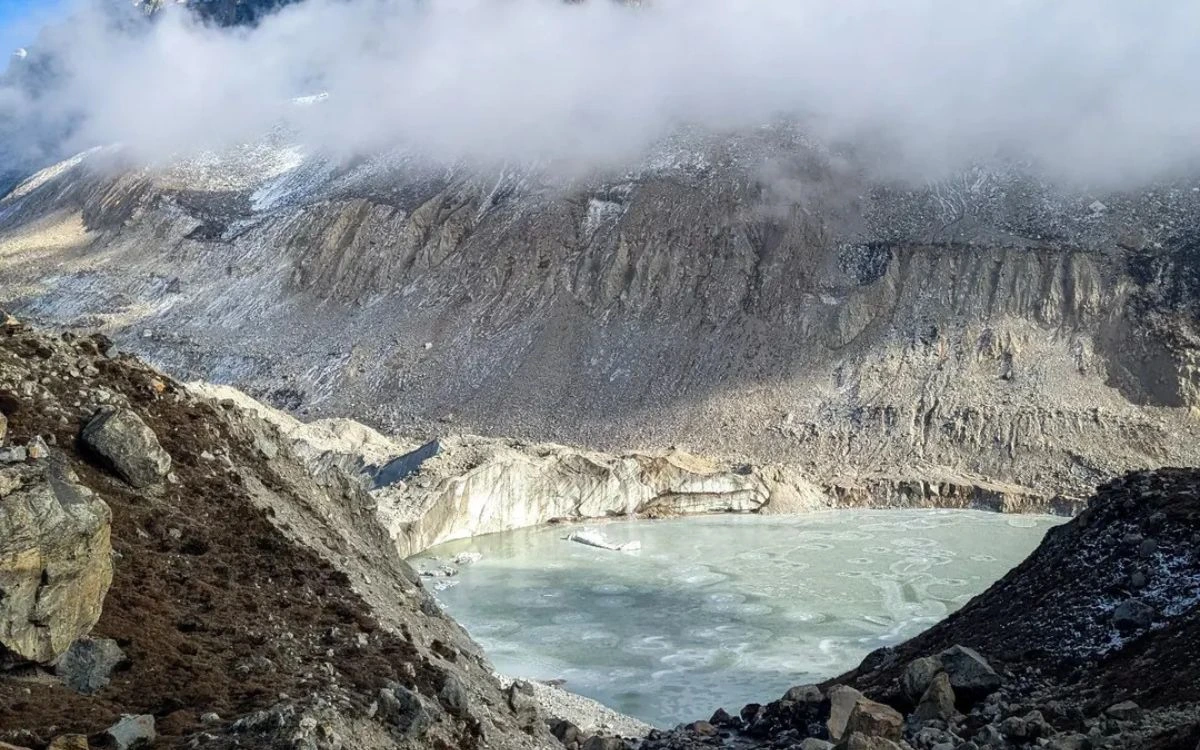
Frozen glacial lake surrounded by rocky moraine with glacier and misty mountain slopes in Kanchenjunga region
Kanchenjunga Trek Permits Fees and Costs for 2026
Type of Permit
Cost per Person
Kanchenjunga Restricted Area Permit (RAP)
USD 20 per week (first 4 weeks) USD 25 per week (beyond 4 weeks)
Kanchenjunga Conservation Area Project (KCAP) Permit
NPR 3,000 for foreigners NPR 1,000 for SAARC nationals NPR 100 for Nepali citizens
TIMS (Trekkers’ Information Management System) Card
USD 10 for group trekkers USD 20 for individual trekkers
This is the latest information available; however, the costs may change. Therefore, it may be better to keep up to date on charges through your trekking agency ahead of the time.
Essential Documents to Get the Kanchenjunga Trek Permit
To obtain the Kanchenjunga Trek Permits, trekkers must prepare and submit a few requisite documents. All trekkers are required to submit the documentation in order to obtain the Restricted Area Permit (RAP), Kanchenjunga Conservation Area Project (KCAP) Permit, and TIMS Card.
Valid original passport with a valid Nepal visa (minimum six months validity).
A photocopy of the passport and the Nepal visa pages.
Two recent passport-sized photographs for the application forms.
Travel insurance coverage for high-altitude trekking and emergency evacuation.
Precise trekking itinerary which shows entry and exit points of the Kanchenjunga region.
Trekking agency information (must be registered by a local company and authorized by the Tourism Board of Nepal).
Required permit fees; in USD for foreign nationals or home currency for SAARC or Nepali citizens.
Two or more trekkers are required to apply together for the restricted area permit.
The documents must be submitted via a registered Nepal trekking agency. Independent trekkers cannot independently apply for Kanchenjunga trekking permits.
Where and How to Obtain the Kanchenjunga Trekking Permits
If you are wondering “where to get Kanchenjunga trek permits in Nepal?”, you will need to obtain Kanchenjunga trekking permits through a registered trekking company in Nepal. Solo trekkers are not permitted because this is a restricted region.
Here's how it works:
First, you'll need a Special Restricted Area Permit (SRAP). This permit is issued by the Department of Immigration in Kathmandu. Your trekking company will also obtain this permit for you, and all you'll have to provide is your original passport, valid Nepal visa, and trekking itinerary.
The second permit is the Kanchenjunga Conservation Area Project (KCAP) Permit. You can obtain this permit from either the Nepal Tourism Board (located in Kathmandu), or in Taplejung which is the final destination/last town, or in Singhalila where the trek actually begins.
The third permit you'll need is a Trekkers Information Management System (TIMS) Card. This can also be obtained through your trekking agency in Kathmandu or in Taplejung. The TIMS card is required for use in order for the Trekking Administration to track the movements of national and foreign trekkers for safety and emergency purposes.
A couple tips to make this easier:
If you are trekking during the peak trekking season, we recommend submitting your documents to your trekking company agency at least a few days before your trek.
Check that all information on the permits for example: names, passport numbers, itinerary and trekking dates are all correct.
It's smart to carry an electronic (a picture on your phone) and/or printed copy of all the permits. The permits will be checked multiple times during the trek at checkpoints.
Note: Getting your Kanchenjunga trek permits through a trusted local agency ensures a smooth, legal, and safe trekking experience while supporting local tourism. We can help you arrange all your permits quickly and hassle-free, so you can focus on enjoying the trek safely and comfortably.
Details on Kanchenjunga Restricted Area Rules and Regulations
The Government of Nepal has designated the Kanchenjunga region as a restricted area to protect its delicate ecosystem and unique cultural environment. Trekkers will be expected to adhere to specific regulations for safety and environmental conservation details including:
Permits Required: All trekkers must hold legitimate Kanchenjunga trek permits which include the Special Restricted Area Permit (SRAP), KCAP permit and a TIMS card. All permits must be issued to you from a registered local trekking agency.
Solo Trekking is Prohibited: Solo trekking is not allowed. You must be in a minimum of a pair of trekkers, with a registered licensed guide.
Permit is Valid for a Period: The SRAP is usually valid for 10 days, with an extension possible for a fee. Your KCAP permit, and your TIMS card, will be valid for your entire trek.
Permit is Not Transferrable: The permits will be issued under your name individually, they are not transferable under any circumstance, meaning they will not be valid for others.
Checkpoint Verification: Trekkers will be inspected outside and inside the Kanchenjunga Conservation Area by officials at various checkpoints. Trekkers must display a hard copy or digital copy of their permits upon request.
Environmental Regulations: Trekkers should comply with Leave No Trace principles, dispose of litter appropriately, respect wildlife and local culture.
Legal Consequences: Trekking without the relevant permits is illegal and can result in fines or deportation and/or legal action.
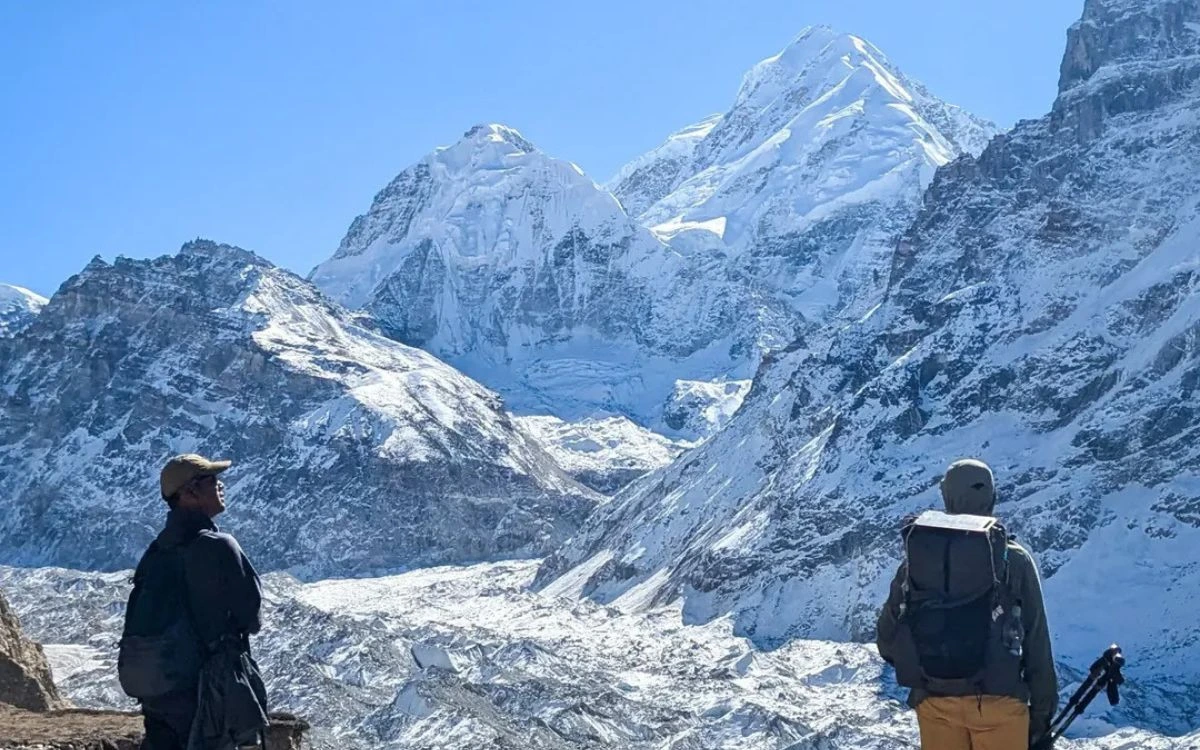
Two trekkers with backpacks standing on rocky terrain viewing snow-covered Kanchenjunga mountain peaks and glacier
Can I do the Kanchenjunga Trek Solo?
Independent trekking in the Kanchenjunga region is prohibited. Trekkers must travel in a minimum of two individuals along with a licensed guide. The trails are quite remote and difficult, it is not safe to travel independently due to extreme altitudes and unpredictable weather. Traveling in groups with a guide provides proper assistance, security and aid in case of emergencies. This rule also protects the very fragile environment and cultural heritage in local communities.
If you are planning to trek in the Kanchenjunga area, we can assist and recommend some group treks. In addition, we have numerous set group departure dates annually for trekkers to join organized trips and provide a safe and enjoyable trek in the region and allow trekkers to receive the best experience possible.
FAQs
Can I get the Kanchenjunga Trek permit as a solo traveler?
Solo trekking in the Kanchenjunga region is not permitted. A group of at least two trekkers and a licensed guide must be present. Permits can only be obtained through the local registered trekking company, which is the only acceptable way to obtain them.
Where can I apply for the Kanchenjunga Trek permit?
All Kanchenjunga trek permits much be applied for through a government registered trekking company in Nepal. The Special Restricted Area Permit (SRAP) is issued in Kathmandu by the Department of Immigration. The KCAP permit and TIMS card can be obtained at the Nepal Tourism Board in Kathmandu or at Taplejung, the starting point of your trek.
How long does it take to get the Kanchenjunga Trek permit?
These permits are usually processed in 1–2 working days when completed through the agency. During popular trekking seasons, it is always best to complete these a few days in advance of your plan.
Is the Kanchenjunga permit fee the same for foreigners and SAARC nationals?
No, the permit fee is dependent on the nationality of the trekkers. Foreign trekkers pay in USD, while SAARC nationals will pay a decreased fee in Nepalese Rupees. There are at least two permits, and all fees are different depending on trip time.
Can I extend my Kanchenjunga Restricted Area Permit if I stay longer?
Yes, the SRAP is typically valid for 10 days, and it can be extended for an additional daily fee paid through your trekking organization.
Are children required to pay for the Kanchenjunga Trek permit?
Children under the age of 10 are generally free to trek if they are included in the group and properly documented.
What happens if I trek in Kanchenjunga without a permit?
It is illegal to trek without the Kanchenjunga trekking permits. Fines, deportation, and other legal consequences can be imposed by authorities. Always have printed or digital copies of your permits with you while trekking.
Can I apply for Kanchenjunga Trek permits online?
No, currently, it is required to obtain all Kanchenjunga trekking permits person through a registered trekking agency in Nepal. Online applications are not available.
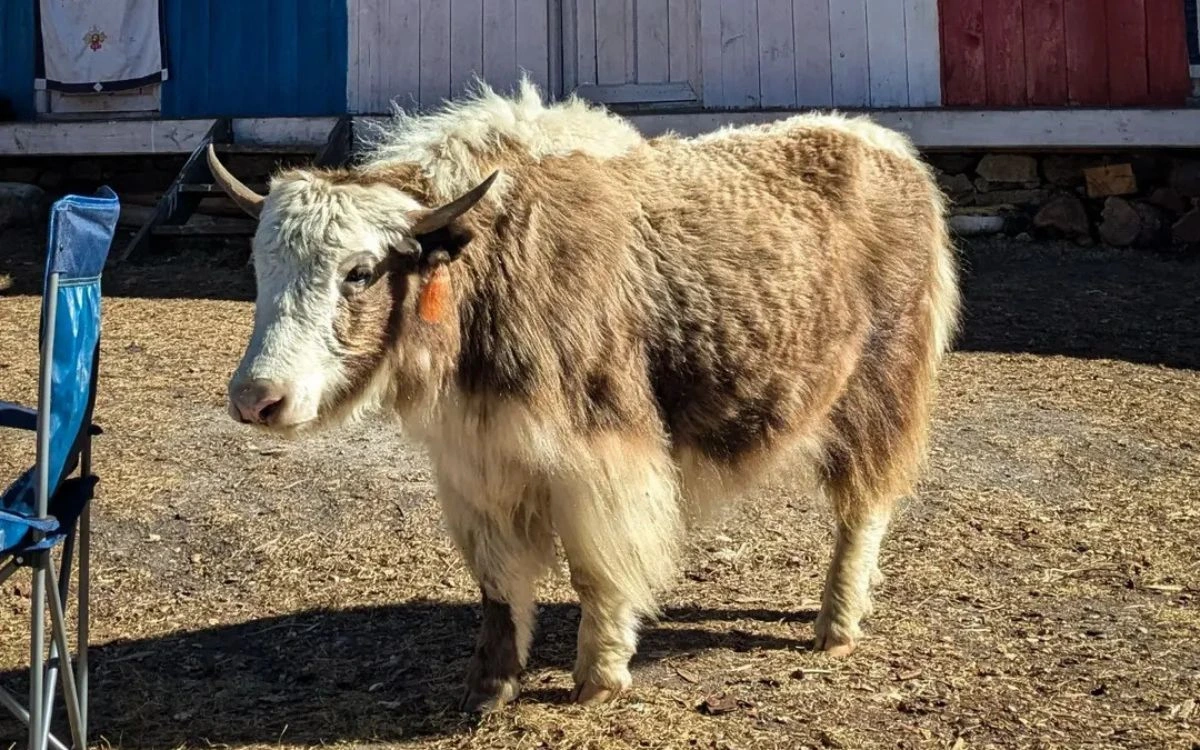
CaptionBrown and white yak with curved horns standing in mountain village with traditional wooden buildings in background
Conclusion
A trek in the Kanchenjunga region is an incredible journey to one of Nepal’s most pristine and isolated trekking areas. It is a restricted zone, therefore all trekkers have to purchase a permit to trek in this area, including the Special Restricted Area Permit (SRAP), Kanchenjunga Conservation Area Project (KCAP) permit, and TIMS card. All permits must be acquired through a registered local trekking agency. Solo treks are not permitted and you will be required to purchase a permit with a licensed guide for safety, as well as for responsible tourism. Valid permits assist in protecting the delicate ecosystem, local culture, and fauna; while also ensuring your trek is safe and legal. When you prepare your paperwork, understand the permit fees, and abide by the rules and regulations, you will have a pleasant trekking experience.
For hassle-free permit arrangements and expert guidance, you can contact Himalayan Recreation to plan your Kanchenjunga trek safely and comfortably.





-6.webp)
-1.webp)
-1.webp)