Yak Kharka is a very important place for trekkers to stop overnight while on their journey to the Annapurna Circuit Trek; it is located at approximately 4,018 meters (13,182 ft) in the Mustang District of Nepal, which is considered a high-altitude grazing area. Upon entering the Annapurna region, trekkers will quickly find that this small and quiet settlement is not just a dot on their map; it also serves as the last true place to rest before continuing onto Thorong La Pass. Many committed mountain trekkers will consider Yak Kharka a vital stage in their acclimatisation process.
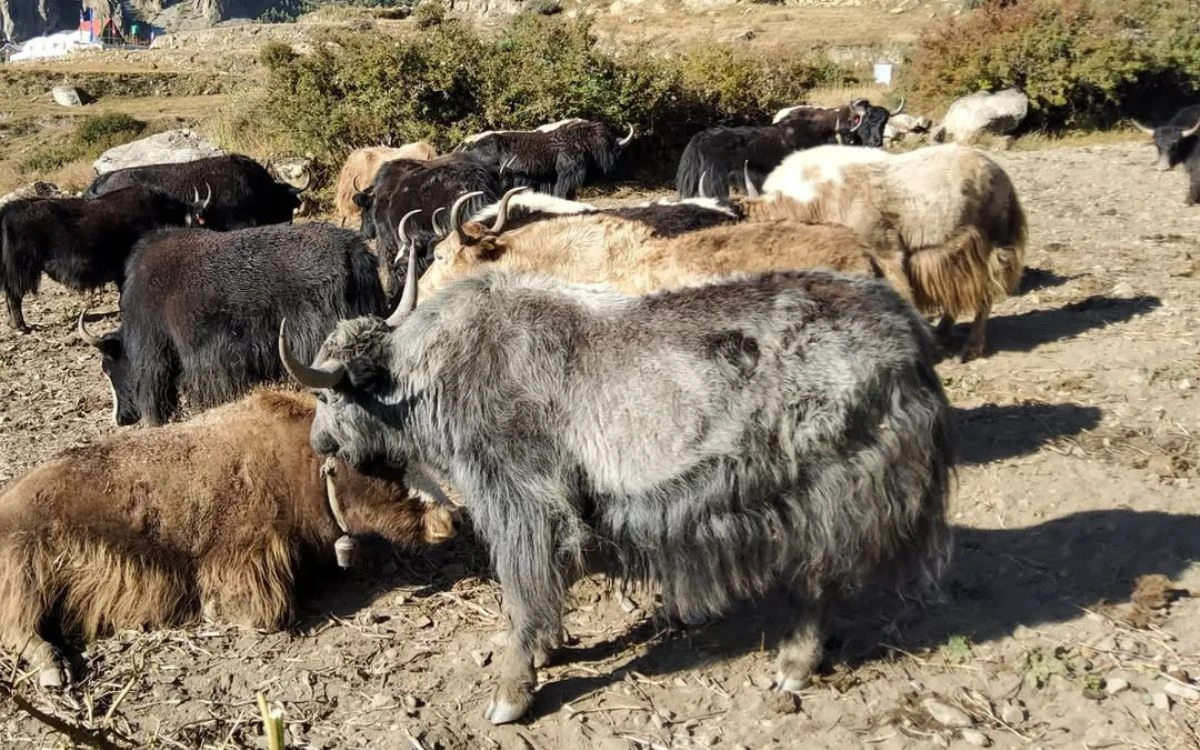
A herd of yaks grazing on dry terrain at Yak Kharka on the Annapurna Circuit
Being surrounded by the sweeping expanse of the alpine meadows, glacial streams, and the dominating massifs of both Annapurna and Chulu, Yak Kharka offers a high-Himalayan trekking experience that very few locations around the world can provide. This unique destination will provide an unforgettable experience for every experienced traveller who has trekked to Everest Base Camp or for someone who has just started their first trek in Nepal's Himalayas.
Where is Yak Kharka Located?
The village of Yak Kharka is located in the Manang District of Gandaki Province, Nepal, and is situated in the upper Marsyangdi River valley on the classic Annapurna Circuit trekking route. The village is located between the larger acclimitization centre of Manang (3,519 metres) and Thorong Phedi (4,450 metres), which are located to the south and north of Yak Khark, respectively.
4,018 m
Elevation
13,182 ft
In Feet
8 km
From Manang
7 km
To Thorong Phedi
The settlement takes its name from the Tibetan words for “yak” and “pasture”, and true to its name, you will spot herds of shaggy yaks grazing on the surrounding grasslands throughout the trekking season. The area forms part of the Annapurna Conservation Area, one of Nepal’s most ecologically diverse protected zones.
Yak Kharka Altitude and Elevation
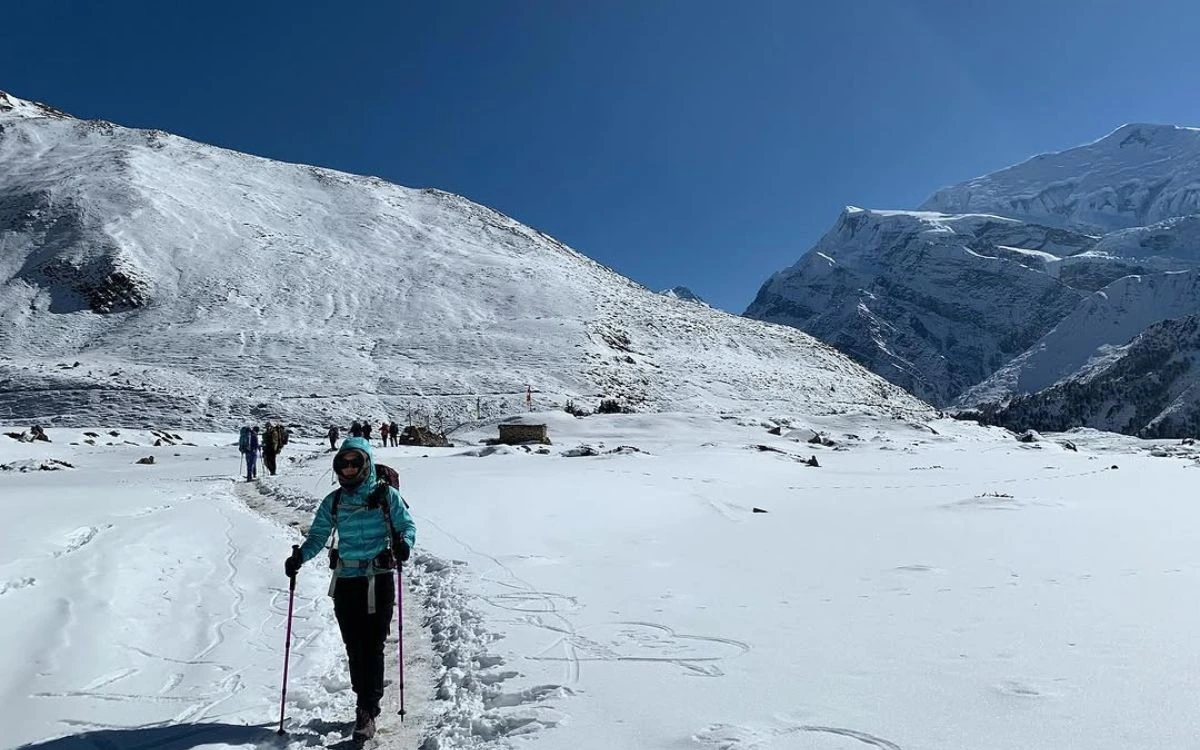
A trekker with poles walking through deep snow toward Thorong La Pass on the Annapurna Circuit
Yak Kharka is located at an elevation of roughly 4,018 m (13,182 ft) and is thus in the range of altitude sickness and discomfort (such as headaches, nausea, and fatigue) for hikers who come to this area quickly. Trekkers travelling from Manang will have an elevation gain of about 500 m for their day's trek.
At over 4,000 metres, Yak Kharka sits above the threshold where acute mountain sickness (AMS) becomes a genuine concern. Trekkers must never skip the acclimatisation day in Manang before continuing upward.
The altitude at Yak Kharka (4,000 m) is a lot higher than that of other famous stops along the route, including Pisang (3,300 m) and Braga (3,475 m). Trekkers who take the Annapurna Base Camp Trek will come to the Annapurna Sanctuary from the south and will not travel through Yak Kharka. As such, this is a stop unique to the Annapurna Circuit.
Trekking Route to Yak Kharka
Manang to Yak Kharka Distance and Duration
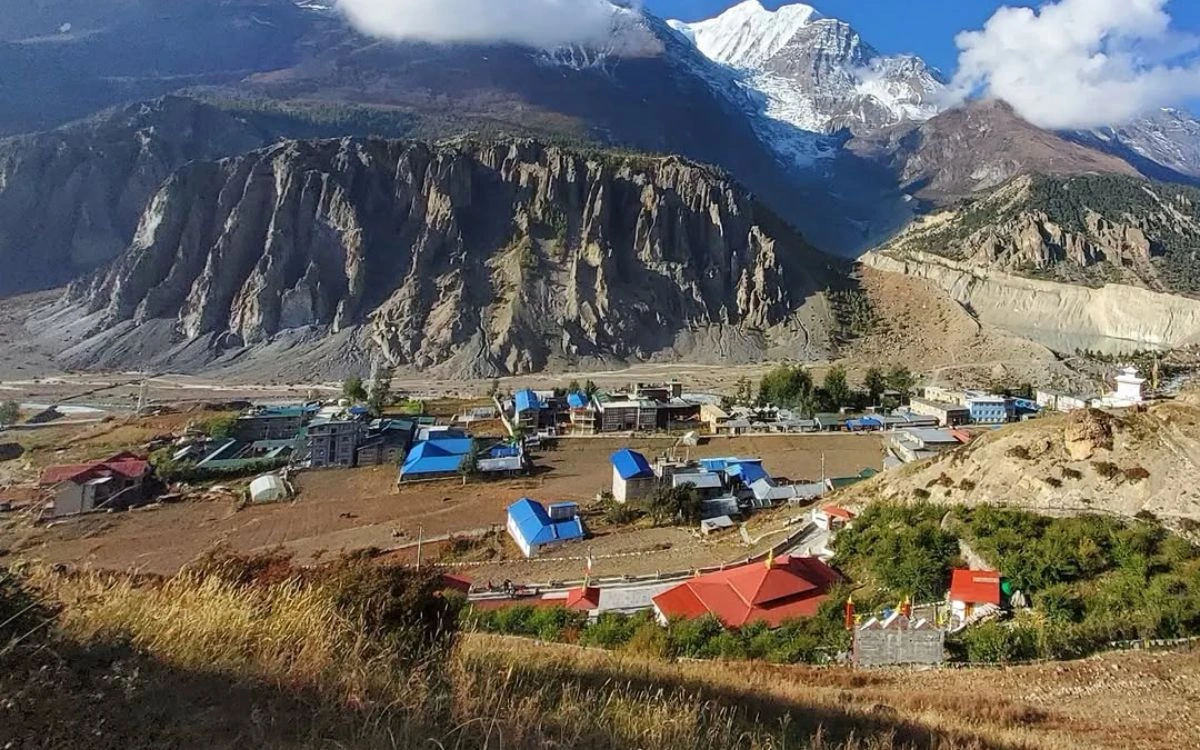
Aerial view of Yak Kharka village with colorful rooftops set against dramatic Himalayan cliffs and snow-capped peaks
The route between Yak Kharka and Manang is around 8 km long and takes most trekkers about 3-4 hours to walk at a comfortable pace. The trek winds its way through a large, open valley with an easy climb heading towards the next village, Gunsang, which is made up of stone houses.
The trail conditions are generally quite simple as the terrain is rocky (well-marked) and starts to become moderately steep at higher elevations. The rate at which our body can adjust to the higher altitude will determine how quickly you can walk the route.
For trekkers coming off of more physically demanding trails (for example, from the Langtang Valley Trek, or the Gokyo Lakes Trek), the incline will not be an obstruction. However, due to the higher altitude, lower levels of oxygen, and vast openness of the terrain, all of which can easily confuse anyone on the trail, no matter how familiar they are with different trails.
Scenic Highlights Along the Way
Upon reaching Yak Kharka, trekkers are treated to a plethora of excellent views of the peaks of Gangapurna (7455 m) and Annapurna III (7555 m), as well as the long winding glacial moraines in the Manang Valley. As you walk, you will see prayer flags flapping in the wind, mani walls by the side of the path, and with every step towards the horizon, you will see the nearby snow-covered ridges slowly becoming visible.
Yak Kharka to Thorong Phedi Distance
The distance from Yak Kharka to Thorong Phedi is about 7 km (approximately 4 mi) and usually takes between 2 and 3 hours of walking time, with an elevation gain of another 432 m as the trail continues to be very rugged in this section approaching the base of Thorong La. The name Thorong Phedi is literally the foot of the steep slope; therefore, this is the last staging site before you cross over the high pass.
Most trekkers will spend the night at Yak Kharka prior to travelling onto Thorong Phedi, allowing for one additional night of acclimatisation and greatly decreasing the chances of high-altitude sickness when crossing Thorong La. Trekkers who are following a combined Nepal itinerary to the Everest Base Camp Trek very often consider this staged ascent as one of their biggest decisions on a Himalayan adventure.
Pro tip: Start the Thorong La crossing no later than 4 a.m. Afternoon winds on the pass can reach dangerous speeds. Leaving from Yak Kharka or Thorong Phedi at dawn keeps you safe.
Accommodation in Yak Kharka
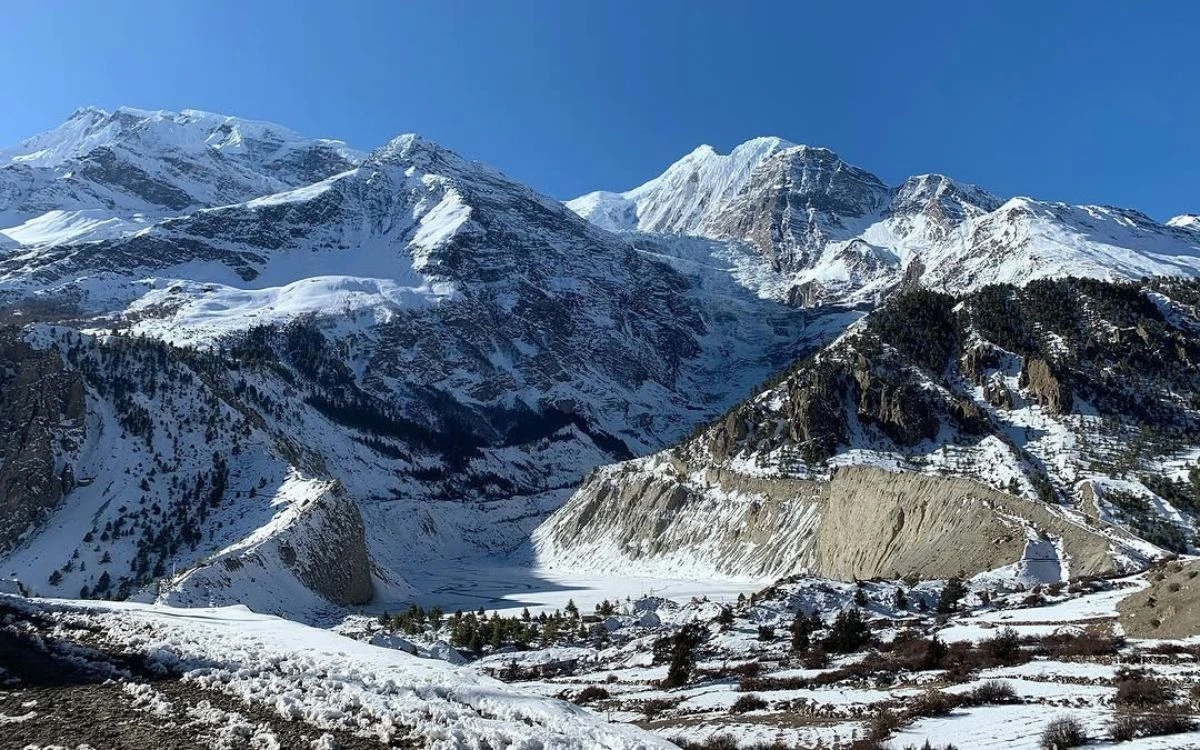
now-covered Himalayan peaks and a frozen lake in the valley near Yak Kharka
There are several simple teahouses and lodges available for accommodation in Yak Kharka, which are suitable for people who are trekking along the Annapurna Circuit. The accommodation is somewhat basic compared to larger settlement areas further down the valley, but it will suffice for one night. Most lodges have dormitory beds and/or private rooms with bedding, and all will offer hot food and drinks in the evening to warm you up. Expect dal bhat, noodle soup, pasta, and Tibetan bread on most menus.
Hot showers available at an extra charge — typically NPR 200–400
Wi-Fi exists at some lodges,s but connectivity is unreliable at this altitude
Accommodation costs range from NPR 300–600 per person per night; meals are extra
Sleeping bags are recommended even in the summer months due to sub-zero nights
There’s something really enjoyable about experiencing life at the teahouses on the Annapurna Circuit. Yak Kharka has kept its quiet frontier feel, and is a great location for trekking groups to relax by a wood stove and swap trail stories while getting ready for tomorrow’s trek.
Yak Kharka Weather and Best Time to Visit
The weather in Yak Kharka can change all year round very quickly. Temperature drops significantly after sunset, even though peak trekking season is usually warm, causing many nights during these times to be below freezing. Generally expect daytime highs between 5°Cando 12°C; however, during winter, temperatures will often fall below -10°C or lower.
Spring (Mar–May) Best
Stable skies, wildflowers, excellent visibility toward Annapurna. Rhododendrons in bloom lower on the circuit.
Autumn (Sep–Nov) Best
Post-monsoon clarity brings the sharpest mountain views. Busy trails but ideal conditions for Thorong La.
Winter (Dec–Feb)
Extreme cold. Thorong La can close under heavy snowfall. Only experienced cold-weather trekkers should attempt this.
Monsoon (Jun–Aug)
Heavy rain lower down. The rain shadow keeps Manang and Yak Kharka drier, but muddy trails are common.
Acclimatisation Tips for Yak Kharka
One of the key elements for enjoying and staying safe during your trek along the Annapurna Circuit is acclimatisation. The "golden rule" of trekking, which says "climb higher and sleep lower," applies to those climbing to Yak Kharka in particular. To assist with acclimatisation, many trekkers will spend a day in Manang and then hike to a higher altitude to exceed their rest day, before returning to sleep in Manang. After climbing to Yak Kharka, acclimatising due to previous hikes at a higher elevation may prove beneficial.
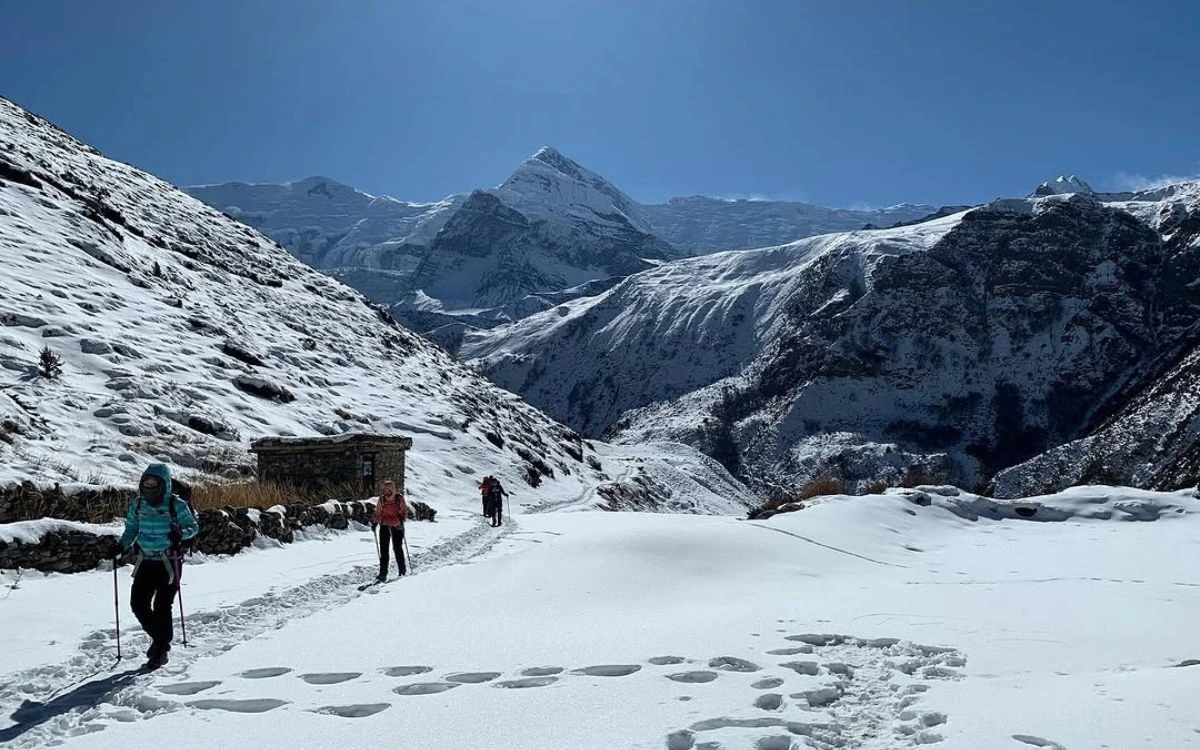
Trekkers hiking a snow-covered trail toward Thorong Phedi with a sharp mountain peak in the background
Drink at least 3–4 litres of water per day; dehydration worsens altitude sickness.
Avoid alcohol and sleeping pills — both suppress breathing at altitude
Walk slowly and take regular rest breaks on the ascent from Manang
Carry Diamox (acetazolamide) only after consulting a doctor; it aids acclimatisation
Know the AMS symptoms: persistent headache, vomiting, loss of coordination
Descend immediately if symptoms worsen — never push through serious AMS
Popular trekking routes in Nepal,l such as the Manaslu Circuit Trek, required similar acclimatisation discipline. The difference at Yak Kharka is that the Thorong La crossing ahead is non-negotiable in its demands on the body. Taking your time here is not optional; it is essential.
What to Expect at Yak Kharka
When you arrive at Yak Kharka, you enter a completely different universe; one of large open spaces with vast alpine meadows lying underneath giant skies. The silence in this area is so peaceful that there are no sounds except for your own footsteps on the gravel or the occasional sound of yaks ringing their bells in the distance. There are only a few buildings at this location; just a few stone tea houses, a row of prayer flags, and a couple of chortens built above the valley floor.
If you are an animal lover, you will find a variety of wildlife, including the Himalayan tahr (marmot), blue sheep (bharal), and,d on rare occasions, the harsh but beautiful snow leopard.
High-altitude trekking offers an opportunity for many adventurers to explore new terrain with a long-standing tradition of advancing into the mountains as an adventure; a spirit that inspires and motivates trekkers to undertake the trek to Kanchenjunga Base Camp, mp located further east in Nepal’s mountain region of the world.
Packing List for Yak Kharka Trek
Packing correctly for the Yak Kharka stage of the Annapurna Circuit is non-negotiable. Temperatures plummet after dark, and the high altitude amplifies every oversight in gear selection.
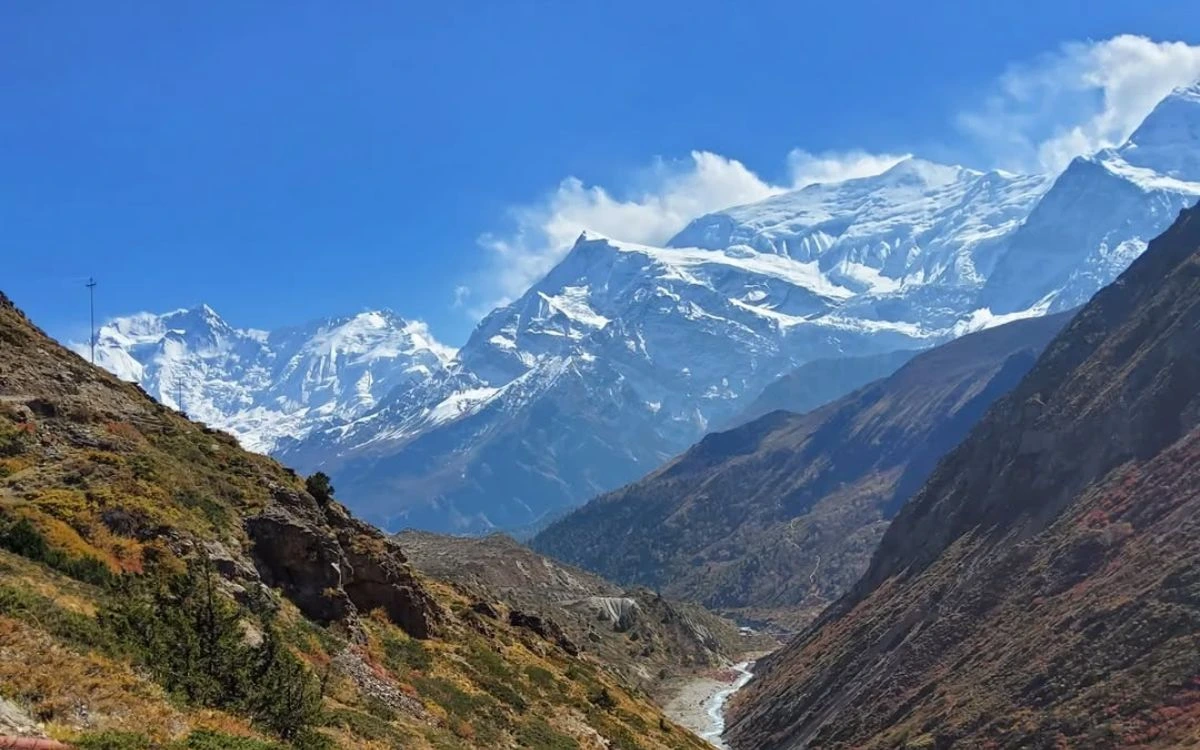
Valley view from Yak Kharka with a glacial river and towering snow-capped Annapurna peaks
Down jacket (rated to at least -10°C) and thermal base layers
Waterproof trekking boots with good ankle support
Trekking poles — essential on the rocky ascent to Thorong La
Headlamp with spare batteries (early morning pass starts require it)
Water purification tablets or a Steripen
Sunscreen (SPF 50+), glacier glasses, and lip balm — UV radiation is intense
First aid kit including blister care, Ibuprofen, and rehydration salts
Snacks: energy bars, trail mix, and chocolate for the pass crossing
Sample Annapurna Circuit Itinerary Including Yak Kharka
Day 1–2
Kathmandu → Besisahar → Chame (2,710 m) — Drive to Besisahar and begin the circuit through lower forest villages.
Day 3–5
Chame → Pisang → Manang (3,519 m) — Trek through pine forest and open valley. Stunning views of Annapurna II and IV.
Day 6
Acclimatisation day in Manang — Rest and take a day hike to Ice Lake (4,600 m) for altitude adjustment.
Day 7
Manang → Yak Kharka (4,018 m) — 3–4 hour climb through open grasslands. Overnight for acclimatisation.
Day 8
Yak Kharka → Thorong Phedi / High Camp (4,925 m) — Short trek to the base of Thorong La. Rest and prepare.
Day 9
Thorong La Pass (5,416 m) → Muktinath (3,800 m) — The epic high-pass crossing. An early start is essential.
Frequently Asked Questions
What elevation does Yak Kharka sit at?
Yak Kharka is situated at an altitude of 4018 meters (or 13,182 feet) and is one of the highest places trekkers can stay overnight on the Annapurna Circuit before continuing towards Thorong Phedi.
How far is Yak Kharka from Thorong Phedi?
Yak Kharka is located approximately 7 kilometres (or 4.3 miles) from Thorong Phedi, which will take you between 2-3 hours to reach on foot. The trail climbs an additional 432 meters (or 1,418 feet) on this trek to Thorong Phedi.
Is it safe to trek to Yak Kharka?
Yes, if you prepare adequately for your trek to Yak Kharka, it will be a safe place to visit. Altitude sickness is the main risk when trekking to Yak Kharka. Ensure that you acclimate properly in Manang before making the ascent, and stay properly hydrated, along with any additional fluids you may need. If you do experience serious AMS symptoms after arriving at Yak Kharka, you must descend immediately.
What type of accommodation does Yak Kharka provide?
Yak Kharka has several teahouses available for lodging along with hot meals, boiled water and limited access to Wi-Fi. While facilities are simple, there are more than enough teahouses to provide you with sufficient comforts if you are planning to stay overnight while trekking between Thorong Phedi and Yak Kharka.
Conclusion
Yak Kharka is more than just a stop along the trail. It’s also a significant part of one of the greatest trekking adventures on the face of the earth. As an example of raw high-altitude beauty, it challenges every trekker to use their own self-discipline while passing through. It is the last significant rest place before crossing Thorong La and is truly a life-changing experience in the Himalaya.s If you are an experienced adventurer or just beginning your first long-distance trek, you will understand why so many people travel across the world to hike in the Nepalese Himalayas after spending one night at Yak Kharka.
Plan your trek on the Annapurna Circuit and all aspects of your trekking adventure in Nepal with Himalayan Recreation Treks and Expedition, your trusted travelling companion on the mountain.


.webp)



-1.webp)
-1.webp)
-1.webp)