If you're going on a trek in the Nepal Himalaya, understanding how long you'll be walking each day is one of the most important things to do when planning your trip. If you're dreaming of being at the base of the world's highest mountain on the Everest Base Camp trek, crossing a dramatic high/low pass on the Annapurna Circuit, or traveling through the tranquil valleys of Langtang, knowing the amount of time you'll be spending trekking per day allows you to plan better for your trip, keeps you safer while trekking, and allows you to enjoy all aspects of your trekking experience. There is a lot of variation in the number of hours you will be trekking each day and how far you will be walking each day, depending on the trail you choose, what elevation you will be trekking at, and your personal fitness level; this guide will give you all of the information you need.
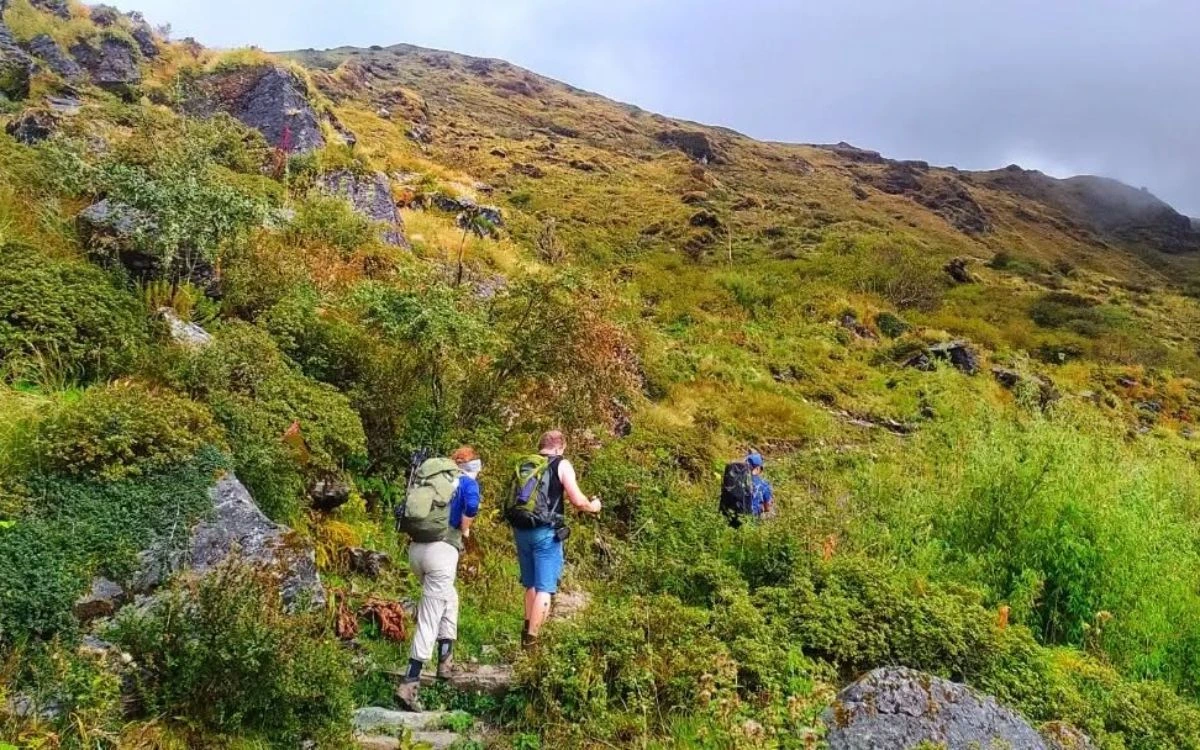
Three trekkers with backpacks hiking up a lush mountain trail in Nepal
Trekking in Nepal is a very unique experience, as it offers very different opportunities than hiking in most other areas of the world. When discussing trekking in this country, we must consider three things: the steepness of the mountains and the terrain you'll cross; the time it takes to travel some distance on foot; and the altitude you'll reach each day (this is vital because altitude sickness can set in quickly). For these reasons alone, experienced trekkers and their guides typically keep track of their distance traveled by counting the number of hours it takes to do so. This book includes information you need regarding how many hours you may trek every day while trekking in Nepal, factors that will affect the number of hours you will trek, and how best to pace yourself as you go so that you can have a safe and enjoyable trek through the Himalayas.
Average Daily Walking Hours on Nepal Treks
Most popular trekking routes in Nepal require trekkers to expect a daily average of 4 - 8 hours of walking time. This is the common amount of time that trekking itineraries built for Nepal are designed around. Easy trails and acclimatisation days will commonly consist of 3 - 5 hours walking, while more strenuous routes and days with a single long pass can be as much as 7 or 8 hours of continuous movement. Therefore, the estimated average number of kilometres in a day of trekking in Nepal goes from 10 km to 20 km/day, but this number can be very deceiving in the mountains. A 12 km trail with a climb of 1,000 m vertical will seem much harder and take much longer than walking 12 km on an equally flat road. This is the reason why experienced trekkers and professional guides always estimate daily trekking hours using time rather than distance.
Key Factors Affecting Trekking Hours in Nepal
When planning the length of your daily walking for a trek in Nepal, there are a number of different factors to take into consideration. Understanding these factors can help you to develop a realistic and pleasurable trekking itinerary as follows:
Acclimatisation to Altitude
Your body will require more time to adjust to the thinner air at higher altitudes than it does at lower altitudes. As well, when your altitude reaches above 3,500 metres, your natural walking pace will slow down; therefore, it is necessary to allow acclimatisation days for your body to adjust. You may find many trekkers will take short walks of about 2 - 3 hours on those acclimatisation days to ‘climb high, sleep low’ so as to help their body adjust to the altitude. Many of the high-altitude trek routes, including the Everest Base Camp Trek, will have several acclimatisation days built into the trek itinerary.
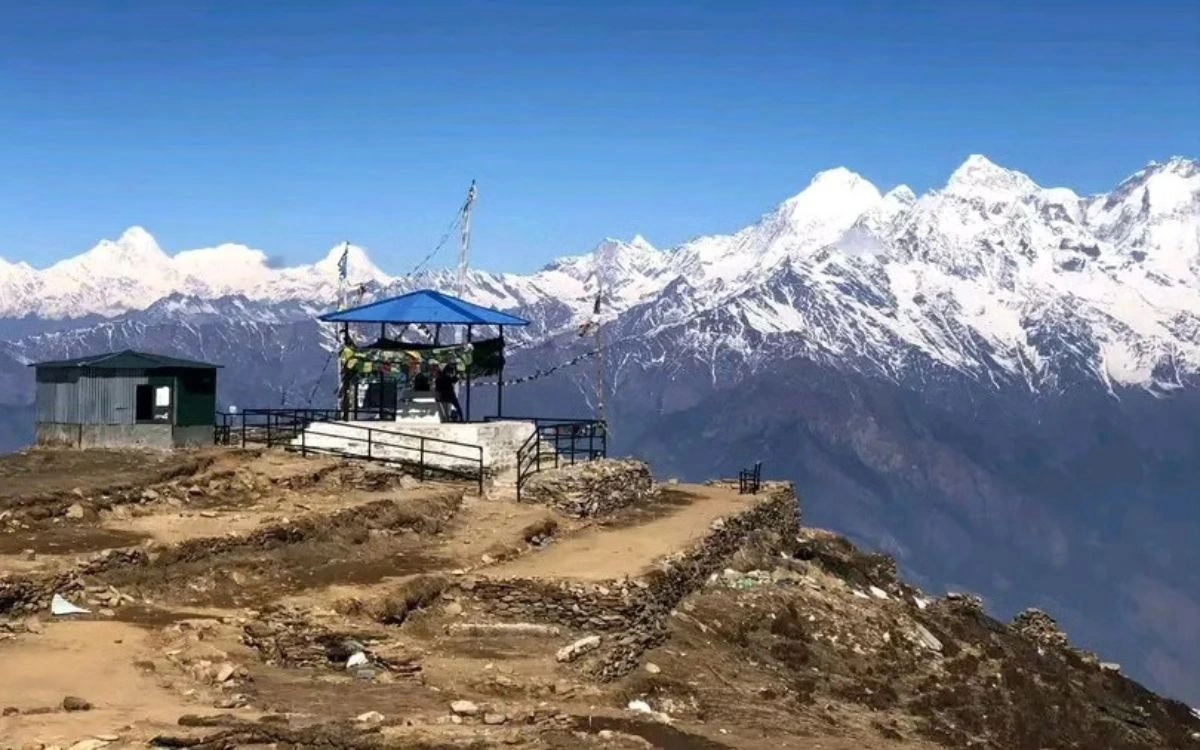
A hilltop rest stop with prayer flags and sweeping Himalayan mountain views
If the trek you are taking is comprised of rocky, steep, or technical type trails, the difficulty of the trail will slow your daily walking considerably. For example, if you were trekking across the Thorong La Pass on the Annapurna Circuit, it would take you approximately 8 hours to reach the high altitude, while trekking through a more gentle valley would only take approximately 4 - 5 hours.
Weather and Seasonal Conditions
Spring (March – May) and autumn (September to November) trekking seasons provide you with the best weather and most predictable walking conditions for trekking in Nepal. As for trekking in Nepal during the monsoon season, you will find that there may be slippery or slower conditions on the trek route. Conversely, in winter, there could be snow at higher altitudes, which would add considerable time to the trek route.
Pacing & Fitness
Someone who is a healthy and knowledgeable trekker will be able to walk faster on average than someone who is new to trekking and walking. Treks with guides typically pace the group according to the speed of the slowest member; therefore, groups may take longer to complete their treks than if you were to be trekking alone or with a private guide.
Private vs. Group Treks
If you are trekking solo or with a private guide, you have the luxury of determining your own pace and schedule, as opposed to when you are trekking as part of a group, where you must follow the schedule regardless of your level of fitness. For instance, when you go for an Annapurna Base Camp Trek as part of a group, the schedule will be the same every day, regardless of how fast/slow your level of fitness is compared to other members of the group.
Daily Walking Hours on Popular Nepal Treks
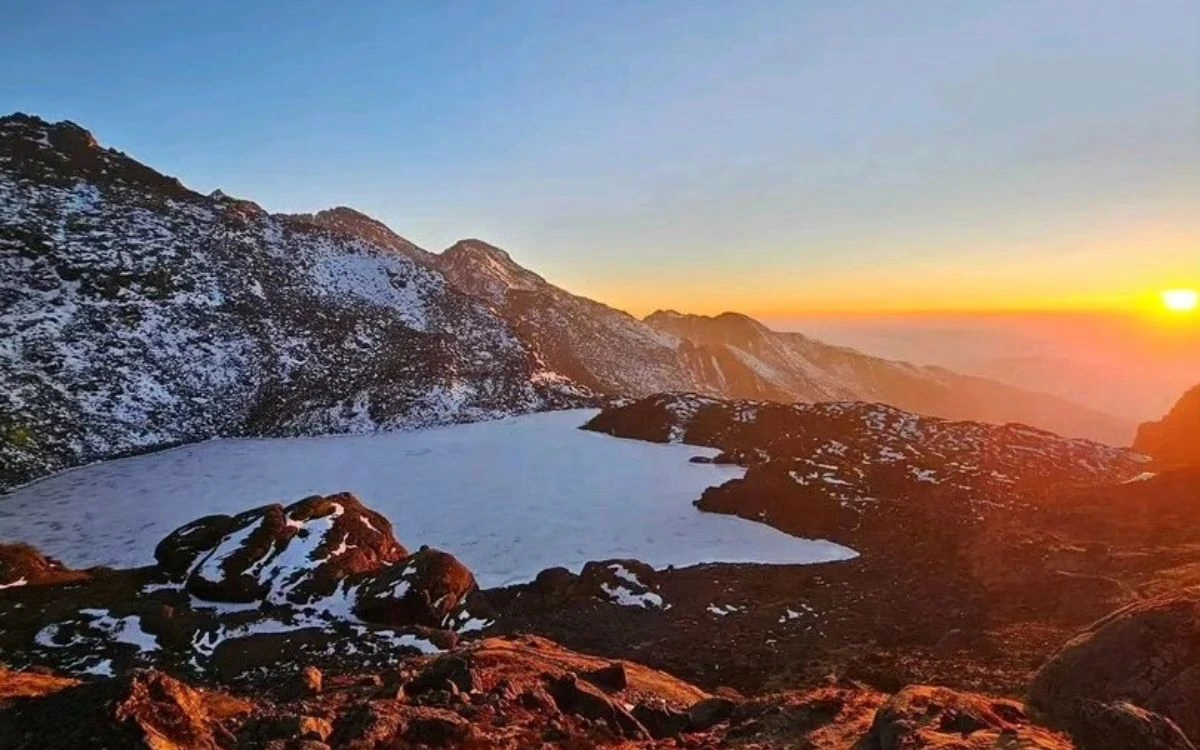
A frozen alpine lake at sunrise with snow-dusted peaks in Nepal
Everest Base Camp Trek Daily Walking Hours
Of all the treks in Nepal, one of the most famous is the Everest Base Camp Trek. The average EBC itinerary is 14 days long, and during the course of those 14 days,s you’ll be “walking” for approximately 5-7 hours daily (again), depending on your level of fitness and experience as a hiker or trekker. On days that you’re acclimatising (in Namche Bazaar and Dingboche), the “walks” are typically a little shorter (2-3 hours) than your “long” days (going to the top of Kala Patthar, 5545 m), which are typically 7-8 hours long total. While the daily walking time on the EBC trail is relatively average, the change in altitude will significantly affect your physical ability to complete the trek.
Annapurna Circuit Trek Daily Walking Time
Annapurna Circuit is one of the greatest long-distance trekking routes in the world. The average trekking time on the Annapurna Circuit is between five and seven hours per day; however, crossing the Thorong La Pass (5,416m) is the most difficult single day and requires an approximate eight-hour trek, leaving at or before dawn. Trekkers generally finish the trek in twelve to eighteen days, hiking through a variety of landscapes from subtropical jungle to high-altitude desert.
Langtang Valley Trek Walking Hours
The Langtang Valley Trek is one of Nepal's most accessible and scenic routes. Langtang trek daily walking time typically ranges from 4 to 6 hours per day, making it ideal for beginners and trekkers with limited time. The Langtang Valley Trek offers spectacular views of Langtang Lirung and warm Tamang hospitality, all within a shorter trekking itinerary of 7 to 10 days.
Other Popular Treks at a Glance
The Ghorepani Poon Hill Trek is one of the best trekking options in Nepal, particularly for someone limited on time, since it has an average amount of walking each day between 4-5 hours and most trekkers will complete the trek within 4 to 5 days.
The Manaslu Circuit Trek is very remote and offers a great challenge, with daily walking time from 6-8 hours per day; the Larkya La Pass (5,160 m) is the most demanding single day of trekking recorded on the circuit.
The Upper Mustang Trek is known as the “forbidden kingdom”, where visitors can experience a culture that is unlike any other, due to having an average amount of walking each day from 5 to 6 hours, although it is all on desert terrain and at higher elevations.
Nepal Trekking Daily Distance vs. Time
Distance isn't the only thing to consider when designing your itinerary for trekking in Nepal. A 10 km downhill section could take you three hours to do when you're coming down from base camp, while an 8 km uphill at 4,500 m could take five or more. The best way to strategise your day(s) of trekking in Nepal is by making the number of hours per day your focus.
Most trekkers will follow Naismith's Rule as a guide for calculating hours — one hour for every five kms (in horizontal travel) travelled plus one hour for every 600 m of ascent on the last leg of the trek. As you gain elevation (above 4,000 m), this becomes increasingly slow. Thus, operators will include extra time for high-altitude hiking in their itineraries.
Sample Daily Trekking Schedule in Nepal
Here is what a typical trekking day in Nepal looks like for most trekkers on a guided itinerary:
06:00 AM — Wake up, breakfast at the teahouse
07:00 AM — Start walking for the day (early start is key at high altitude)
10:30 AM — Short tea break and snack stop
12:30 PM — Lunch at a teahouse along the trail
01:30 PM — Continue walking
03:00–04:00 PM — Arrive at destination teahouse
Evening —Rest, hot meal, acclimatisation, and an early night
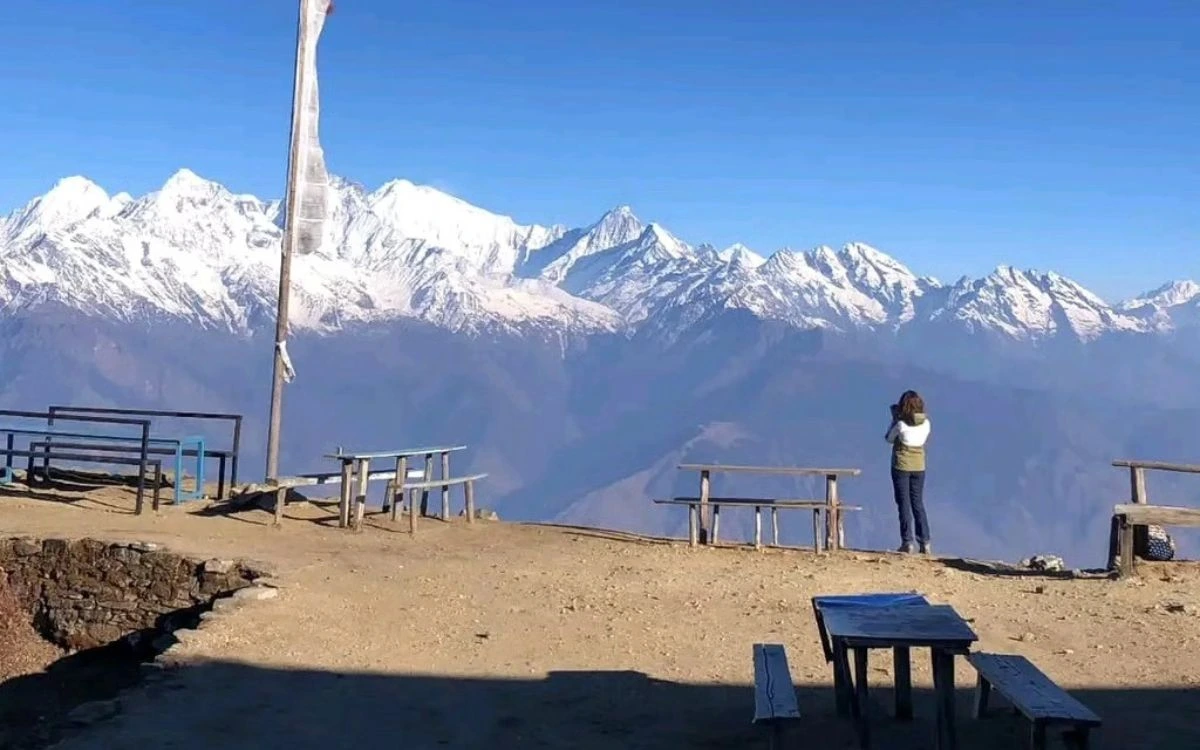
A trekker photographing a panoramic Himalayan mountain range from a high-altitude viewpoint
Approximately 5 to 7 hours of actual hiking time will be needed for your daily walk on this schedule. Regular breaks throughout your trek will allow for self-rehydration, eating and admiring the stunning mountain views. There will be no exact answer to how many hours of walking you do each day while trekking in Nepal, as the answer will vary based on your route and the elevation of your trek.
Estimating your personal trekking pace before you arrive in Nepal is genuinely helpful. Here is a simple guide:
Beginners: If you are new to multi-day trekking, plan for 4 to 5 hours of walking per day on easier routes such as Poon Hill or the Langtang Valley Trek. Build up your fitness with regular hikes and stair climbing in the months before your trip.
Intermediate Trekkers: With some hiking experience and a reasonable fitness base, you can comfortably handle 5 to 7 hours per day on moderate routes like the Annapurna Base Camp Trek or the Everest Base Camp Trail.
Experienced Trekkers: Those with strong mountain fitness can tackle 6 to 8 hours per day on demanding routes like the Manaslu Circuit or the Three Passes Trek around the Khumbu region.
Tips to Manage Daily Walking Hours Effectively
Start early. Mountain weather is most stable in the morning. Starting by 7:00 AM gives you the best light, the calmest conditions, and allows you to arrive at your teahouse before afternoon clouds or rain set in.
Pace yourself. The golden rule of Himalayan trekking is to go slowly — 'pole pole' as trekkers say. Walking at a steady, sustainable pace burns less energy, reduces the risk of altitude sickness, and helps you enjoy the landscape.
Stay hydrated. Drink at least 3 to 4 litres of water daily at altitude. Dehydration dramatically increases fatigue and the risk of altitude-related illness, and it will significantly slow your daily trekking hours.
Use trekking poles. Good poles reduce knee strain on descents and improve stability on rocky, uneven trails. They can shave significant time off your day and reduce overall fatigue.
Listen to your body. If you feel unusually tired, short of breath, or develop a headache at altitude, rest immediately. Never push through the warning signs of altitude sickness — descend if symptoms worsen.
Common Mistakes Trekkers Make
Overestimating fitness: Many trekkers arrive in Nepal fit at sea level but struggle at altitude. Altitude affects everyone differently, and even elite athletes can feel the effects above 4,000 metres. Always build more time into your itinerary than you think you need.
Ignoring acclimatisation days: Skipping rest days to save time is one of the most dangerous mistakes on a Nepal trek. Proper acclimatisation is not optional — it is the single most important factor in preventing altitude sickness and completing your trek safely.
Walking too fast at high altitude: Moving quickly at altitude triggers hyperventilation, exhaustion, and the rapid onset of altitude sickness. Slow and steady always wins in the Himalayas.
Best Treks Based on Daily Walking Hours
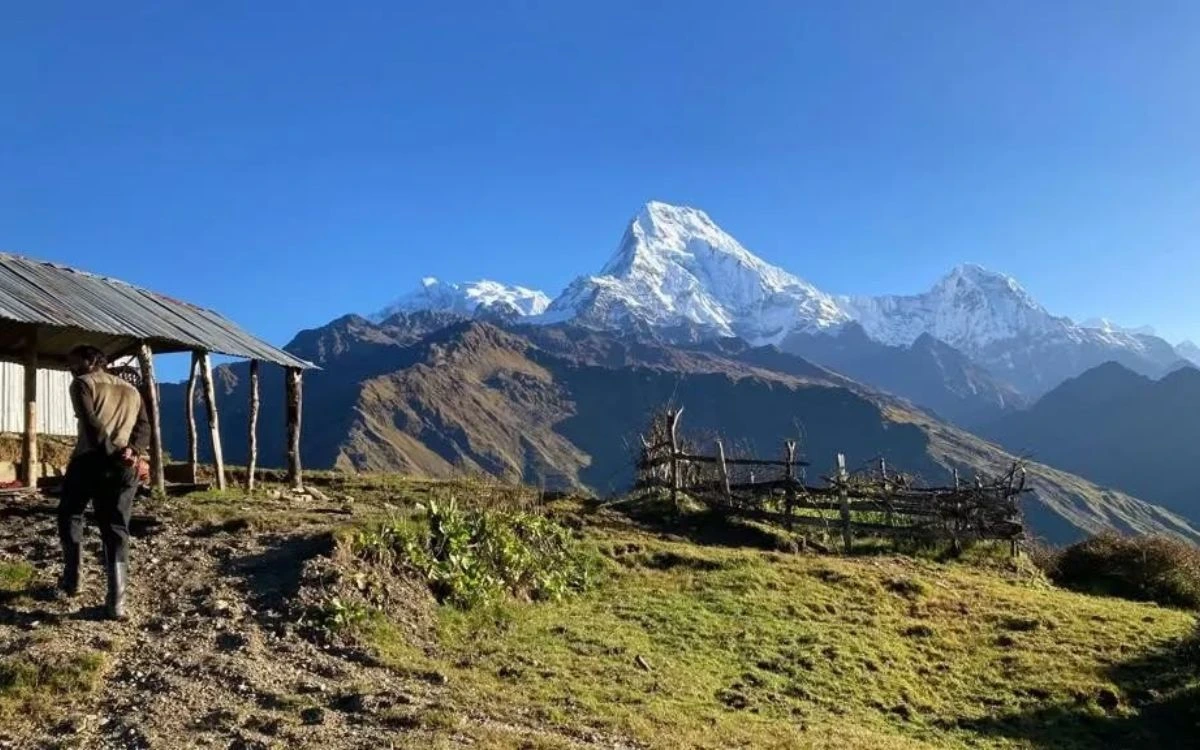
A mountain village teahouse with Annapurna South dominating the skyline
Easy treks (3–5 hours/day): Ghorepani Poon Hill Trek, Nagarkot to Dhulikhel hike, Shivapuri Day Hike. Ideal for first-timers, families, or those with limited time.
Moderate treks (5–7 hours/day): Langtang Valley Trek, Annapurna Base Camp Trek, Helambu Trek. Great for trekkers with some hiking experience and reasonable fitness.
Challenging treks (6–8+ hours/day): Everest Base Camp Trek, Annapurna Circuit, Manaslu Circuit, Three Passes Trek, Upper Mustang Trek. Suited for experienced trekkers with strong fitness and high-altitude experience.
FAQs About Daily Walking Hours on Nepal Treks
How long do you generally walk each day while trekking in Nepal?
Trekkers in Nepal generally do 4-8 hours of walking each day. Depending on the trek, terrain, altitude and fitness, the amount of time walked can vary. Poon Hill, for example, has a typical walking time of 4-5 hours each day, whereas the Everest Base Camp Trek will likely average 5-7 hours of walking per day.
Is trekking in Nepal something for someone who has never trekked before?
Trekking in Nepal can be enjoyed by those who may have never trekked before. If you are just starting, you should choose a trek that is conducive to first-timers. Treks that are typically lower and shorter, such as Ghorepani Poon Hill and Langtang Valley, will have a maximum daily walking distance of 4-5 hours, which is doable for someone starting their trekking experience.
Can I change my daily walking distance if I have a private guided trek?
Yes! When you have a private guide, you have complete control over how much time you want to walk each day. You can start later, take longer breaks, or have shorter treks if you wish. These are very large advantages of trekking with a private guide compared to a group package.
What is the hardest day on the Everest Base Camp Trek?
The majority of people who hike Everest believe that the day of reaching Base Camp (5,364 m) and then climbing to Kala Patthar (5,545 m) is the most challenging of their adventure on the trail to Base Camp because this day will typically require you to walk between 7 and 8 hours at an incredibly high altitude with a lot of elevation to gain.
Plan Your Trekking Days Smartly
Understanding the daily walking hours on Nepal treks is the foundation of any successful Himalayan adventure. Whether you are planning a gentle Poon Hill sunrise walk or a full Annapurna Circuit crossing, knowing what to expect each day allows you to train properly, pack right, and set realistic goals. Remember: in Nepal, the mountains reward patience. Walk slowly, breathe deeply, and take the time to absorb the incredible landscapes and cultures that make Nepal trekking so unforgettable.
The key takeaways are simple: plan for 4 to 8 hours of walking per day, always respect acclimatisation days, pace yourself at altitude, and choose a route that matches your fitness level. Nepal's trails are among the most beautiful in the world — give yourself the time to truly enjoy them.
Ready to plan your dream trek?Contact Himalayan Recreation Treks and Expedition today to get expert guidance, customised itineraries, and professional support for every step of your Nepal trekking journey.


.webp)



-6.webp)
-1.webp)
-1.webp)