Manang Valley Nepal, one of the country's most breathtaking and culturally rich places, is tucked away in the heart of the Himalayas. Approximately 3,519 metres (11,545 feet) above sea level, this high-altitude Himalayan Valley draws visitors, trekkers, nature lovers, and spiritual seekers from around the world. Manang Valley is an area to be explored,d whether you are embarking on a classic Nepal trekking journey or simply want a retreat into the mountains.
Manang Valley is located in the Annapurna Conservation Area, the largest protected area in Nepal. The Manang Valley is characterised by towering snow-capped mountains, including Annapurna II, III, and IV, as well as Gangapurna and Tilicho Peak. The turquoise waters of Gangapurna Lake create a scene that is almost too beautiful to believe, and it is surrounded by glaciers.
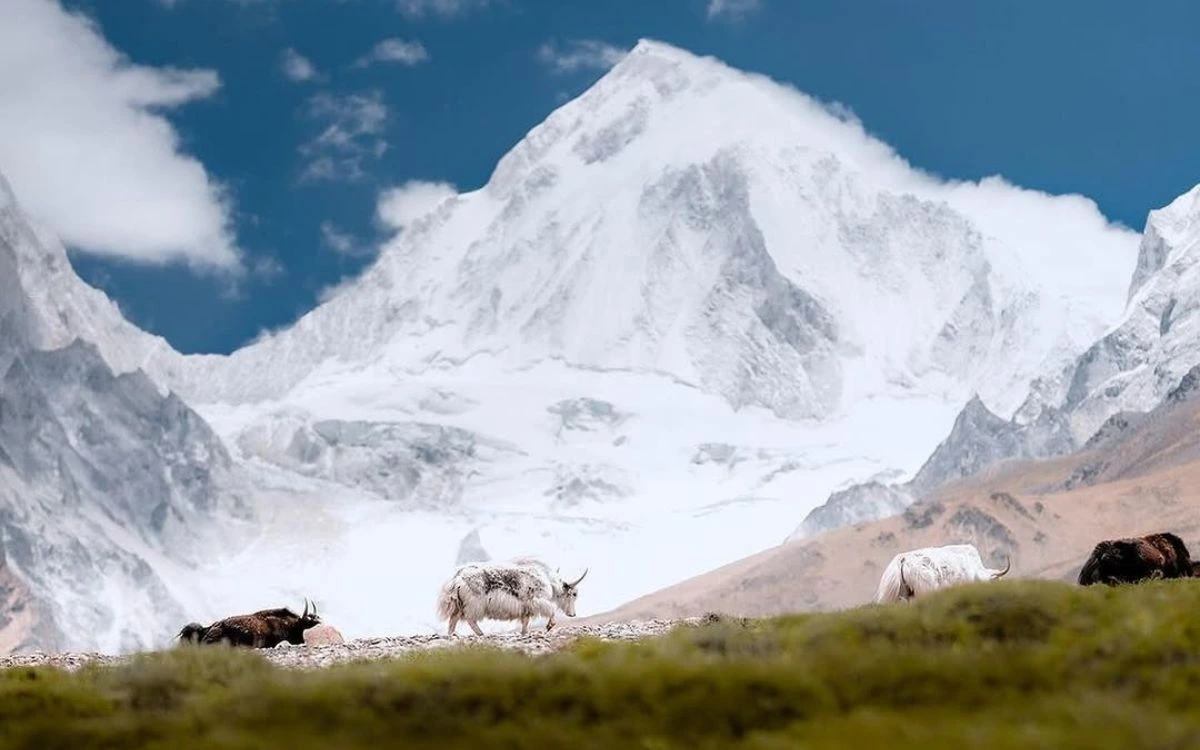
Yaks grazing on alpine meadows with a massive glaciated Annapurna peak filling the background
While Manang can serve as an airport for your trek, it is much more than a pit stop along the way. Manang is a must-visit destination, as it contains everything that you will need to do:
Annie’s stunning mountains are at your doorstep; Ancient Tibetan culture is alive and well in Little Tibet; all types of incredible monasteries dot the landscape; and all major international airports are within reachable distance and have fantastic flights to other parts of the world. If you are serious about exploring the Annapurna Region, or any portion thereof, then there is no reason why you should not enjoy Manang Valley as your gateway to the rest of the Annapurna region.
Where Is Manang Valley Located in Nepal?
Manang Valley is located in the Manang District of Gandaki Province in north-c central Nepal and runs along the upper Marshyangdi River valley. The valley is located on the north side of the Annapurna massif and therefore receives less precipitation than the southern side, due to being on the southern side of the Himalayas, which results in a forbidding rain shadow, thus it has a much colder, drier climate than lower parts of the valley. This is because of its remoteness and geographical location and because it is located in a Tibetan-like environment.
The village of Manang is approximately 177 km to the northwest of Kathmandu, via a combination of road and trail systems. Trekkers usually access Manang via trails travelling around the Annapurna Massif on the Annapurna Circuit, completing the circuit to get into the valley from either Chame (north to south), or Pisang (south to north) with the intention of walking across the valley to Thorong La Pass from the northern end of the valley (at 5,416 m). Many trekkers who end their treks to Mount Everest Base Camp include the Annapurna Circuit as part of their itinerary in Nepal, highlighting the Manang region.
Manang Valley and the Annapurna Circuit
The Annapurna Circuit has gained international status as one of the best trekking routes in the world. Located in Nepal, it circles the massive Annapurna mountains and passes right through the centre of Manang village, so it is used by many thousands of trekkers every year as a place to rest before continuing onto the Thorong La Pass on the circuit. Most trekkers stay a minimum of two nights in Manang, which is recommended for a number of reasons.
Acclimatization is extremely important before trekking from Manang to Thorong La Pass due to the drastic altitude increase from each of the lower villages along the circuit. By taking an additional day in Manang to allow your body to adjust to the decrease in oxygen as you reach higher altitudes helps to prevent Acute Mountain Sickness (AMS). Most trekking guides encourage trekkers to take a day-hike while staying in Manang to Ice Lake (4,600 m) or Gangapurna Lake as part of this acclimatization process. Without having a rest day in Manang, the risk of developing AMS is much higher.
Many trekkers consider the Annapurna Circuit Trek to be one of the best treks in the world. Trekkers who also do the Annapurna Base Camp Trek commonly compare the two trekking experiences. Ultimately, ABC Trek has much more limited trekking opportunities compared to the Annapurna Circuit due to both the shorter length of the ABC Trek and the limited amount of cultural and geographical diversity encoun-tered compared to that of the Annapurna Circuit.
How to Reach Manang Valley Nepal
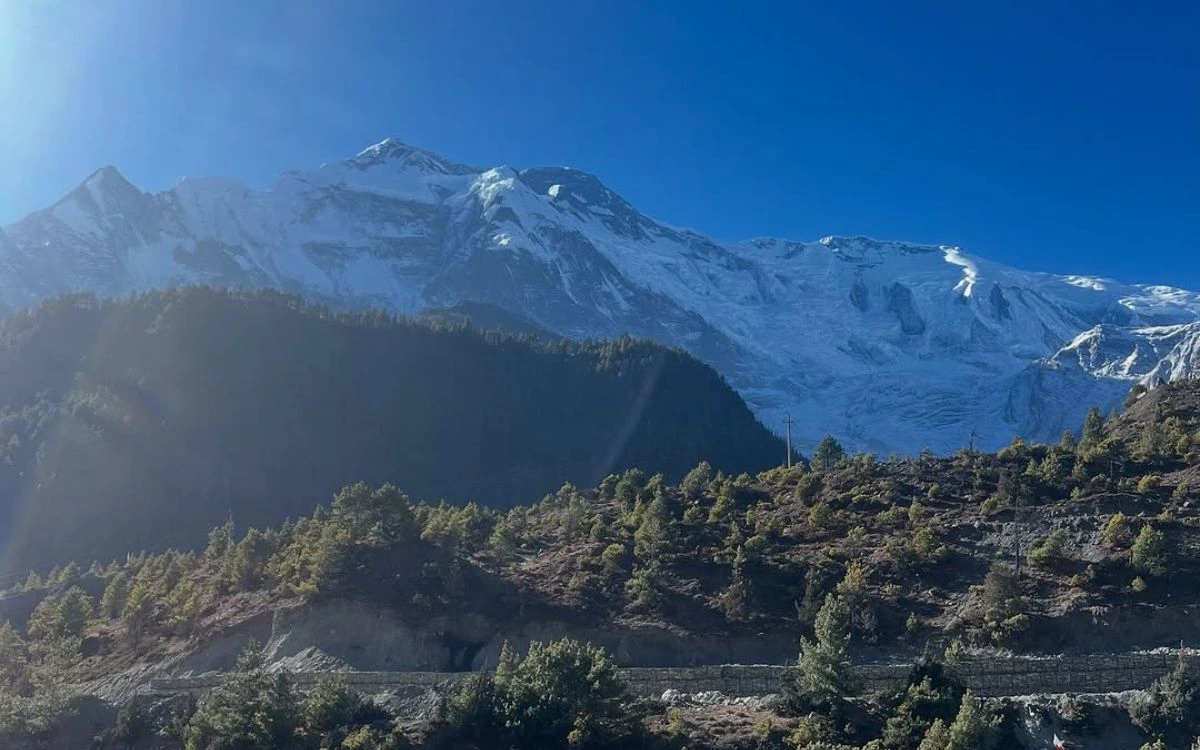
Pine forest on a rocky hillside below the broad snow-covered face of Annapurna III on a sunny morning
Reaching Manang Village, which requires some planning prior to your trip, is an experience in itself. The first leg of the journey will include traveling by bus or jeep from Kathmandu to Besisahar (the starting point for the Annapurna Circuit) for approximately 7-8 hours. After arriving in Besisahar, you will take a combination of local jeeps and trekking while passing through Bahundanda, Chame, and Pisang before arriving at Manang.
The construction of part of the road has allowed some jeeps access into Manang from Chame, allowing trekkers to save significant amounts of time. However, many seasoned trekkers would prefer to complete the entire trek to fully experience the diversity of landscapes (from lush tropical to alpine to desert) that exist on their journey through the Annapurna Circuit. For anyone comparing many different adventures in the Himalayas, include Langtang Valley Trek as an alternative and consider that Manang is still too large and great of an experience to be compared to any other location in the Himalayas.
Best Time to Visit Manang Valley
The two seasons that are suggested for visits to Manang Valley are Spring (March to May) and Autumn (September to November). The weather during both of these periods is clear; views are excellent; trails are in good condition for trekking; and the temperature/wind conditions are stable.
In addition, Spring provides opportunities to see magnificent blooming rhododendrons on many of the lower trails, and stable weather conditions in the high-altitude areas. Autumn is also a very popular time to visit due to the coolness of the air; high visibility; and general energy associated with trekking in Nepal and to the Annapurna area. Even though Manang receives heavy monsoon rains in lower Nepal during the summer (June to August) months, traveling in and around Manang during the monsoon season is still an option because of Manang's location in a rain shadow; travel is probably not viable after mid-December through mid-February because of cold weather (freezing or below) and/or heavy snow conditions resulting in the closure of Thorong La Pass.
Manang Village Altitude and Weather
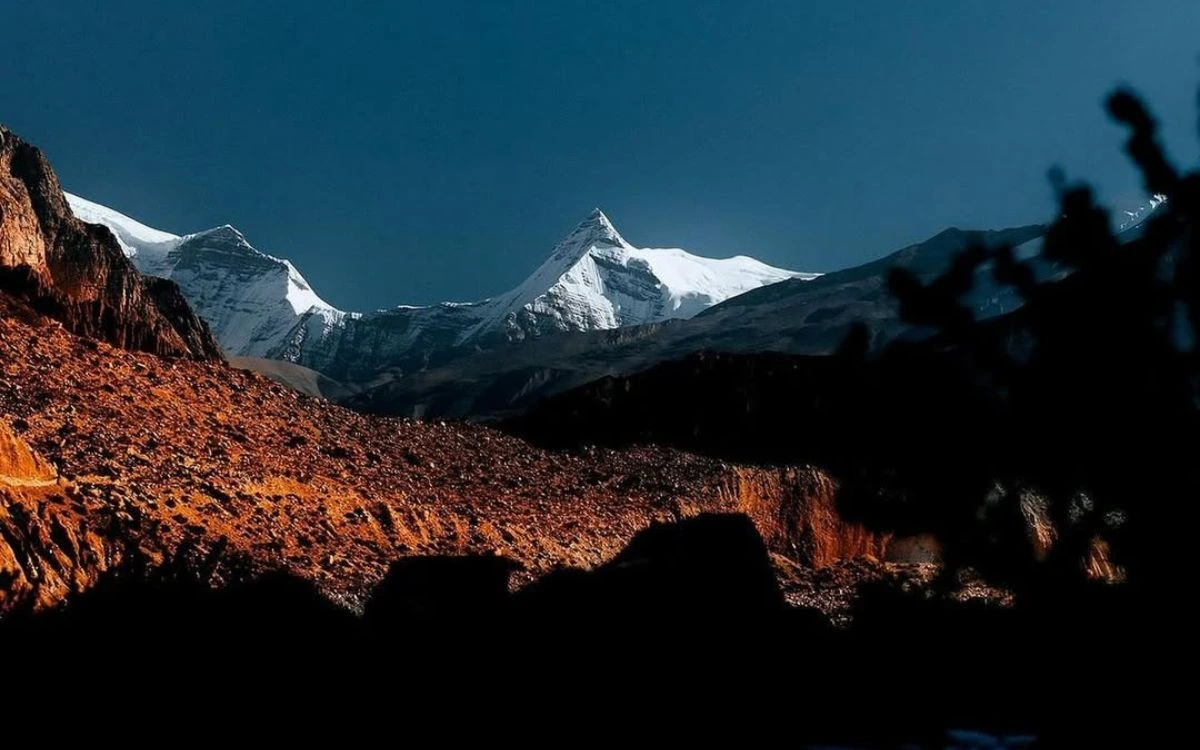
Dramatic dusk view of sharp snow-capped peaks above rust-red rocky slopes in the Manang Valley
Manang village, located in high-altitude territory at 3,519 meters (11,545 feet) above sea level, has a wide range of temperatures from season to season - summer highs reach no more than 15 degrees Celsius, while winter night time low can drop to minus 20 degrees Celsius. During the other 2 seasons (spring and autumn), night time temperature generally drop below freezing.
Due to the high altitude, altitude sickness can occur; to help prevent this, the golden rule of thumb is "climb high, sleep low". Additionally, maintaining proper hydration and not consuming alcohol during the first nights at elevation; as well as allowing enough time for gradual ascents; are all important ways to prevent altitude sickness. It is also recommended to carry Diamox (Acetazolamide) as a preventive measure and to pay attention to your body; if you start to feel worse with symptoms, you should descend.
Top Things to Do in Manang Nepal
Manang Valley is packed with attractions that go well beyond trekking. Here are the top experiences you should not miss:
Explore Manang Village — Walk through the ancient stone-walled village, browse local shops, and admire traditional Gurung and Tibetan-influenced architecture.
Visit Gangapurna Lake — A short walk from the village rewards you with stunning views of the glacial lake set against Gangapurna Peak.
Hike to Ice Lake (Kicho Tal) — A popular acclimatization hike that climbs to 4,600 m and offers panoramic views of the Annapurna range.
Braga Monastery — One of the oldest monasteries in the Annapurna region, perched dramatically on a rocky outcrop above Braga village.
Horse Racing Festival — Held annually in autumn, this vibrant local festival showcases traditional Gurung culture.
Tilicho Lake Day Trip — An extension hike from Manang leads to Tilicho Lake (4,919 m), one of the highest lakes in the world.
Trekkers who wish to explore more of Nepal's high country also consider the Upper Mustang Trek and the Gokyo Lakes Trek, both of which share Manang's wild, remote character.
Manang Village Nepal: Culture and Lifestyle
Most of the inhabitants of Manang are Gurungs and Tibetans, with a rich culture that has evolved over many centuries as a result of living at high altitudes and conducting trade across the Himalayas. The economy of Manang Village was historically dependent on trade with Tibet and the local population continue to maintain many special rights to trade with Tibet under law of the Government of Nepal.
A very fascinating aspect about Manang Village is how self-sufficient this village is. The people of Manang have flat-roofed stone houses, yaks for transporting goods and for their milk supply, as well as follow Tibetan Buddhism. Each roof has colourful prayer flags flying from it, mani stone walls line the outlying paths to the village, and every morning you will hear the sound of monks chanting from the village goma.
Food in Manang combines traditional Nepali foods with traditional Tibetan foods; for example, try the tsampa (roasted barley flour), thukpa (noodle soup) and butter tea while you are there.
The Annapurna Circuit includes Manang, the crown jewel of the Annapurna Circuit, as one of the starting points for many non-Annapurna Circuit adventures. The standard Annapurna Circuit itinerary includes the following: Besisahar → Chame → Pisang → Manang (two nights) → High Camp → Thorong La Pass → Muktinath. The entire trek can take 12 to 20 days, depending on your walking speed.
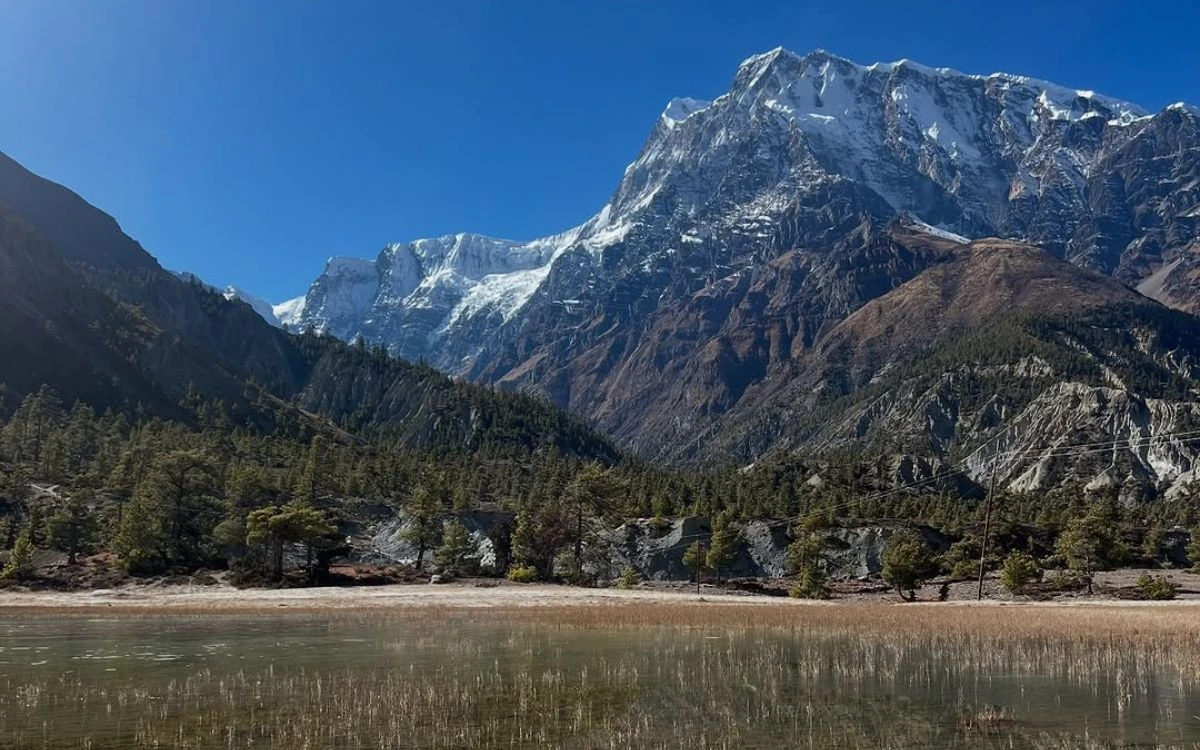
Calm lake reflecting pine trees and a sheer snow-capped peak at the entrance to Manang Valley
For those comparing Himalayan treks, here are some differences between Annapurna Circuit-based trekking and other treks, such as:
ABC ALSO TREK: The Annapurna Base Camp Trek (ABC Trek) - which is better for beginners and a shorter trek than the Annapurna Circuit (7-12 days) compared to the Annapurna Circuit (12-20 days).
EBC TREK: The Everest Base Camp Trek is a worldwide trek; it is a 12-14 day trek.
LANGTANG TREK: The Langtang Valley is less crowded and quieter.
UPPER MUSTANG TREK: The Upper Mustang Trek is a long distance into the large, ancient Lo Kingdom beyond Thorung Pass.
Each area offers a classic Nepal trekking experience; however, trekking the Annapurna Circuit through Manang offers the most complete trekking experience throughout Nepal.
The difficulty of trekking from Manang is "moderate to strenuous." To complete this trek, you should have a reasonable level of fitness, have a good pair of hiking boots, and dress in layers. You will need to have a TIMS Card and an Annapurna Conservation Area Permit (ACAP) to complete this trek; you can obtain both, in either Kathmandu or Besisahar.
The Manang to Mustang trek goes over the famous Thorong La Pass (5,416 m), which is the Annapurna Circuit's highest point and one of the highest trekking pass on Earth. As part of this trek, you ascend from Manang to Thorong High Camp (4,925 m) and then make a difficult pre-dawn push up to the top of Thorong La, before descending down to Muktinath (3,760 m) in the Mustang region of Nepal.
The direct distance from the village of Manang to Muktinath (gateway to the Mustang) is approximately 22 km, however the elevation gain makes this one of the most challenging one-day hikes on the Annapurna Circuit. After reaching Muktinath, you can carry on into Upper Mustang, a trekking area that has restricted access and requires special permits to enter.
Accommodation and Food in Manang
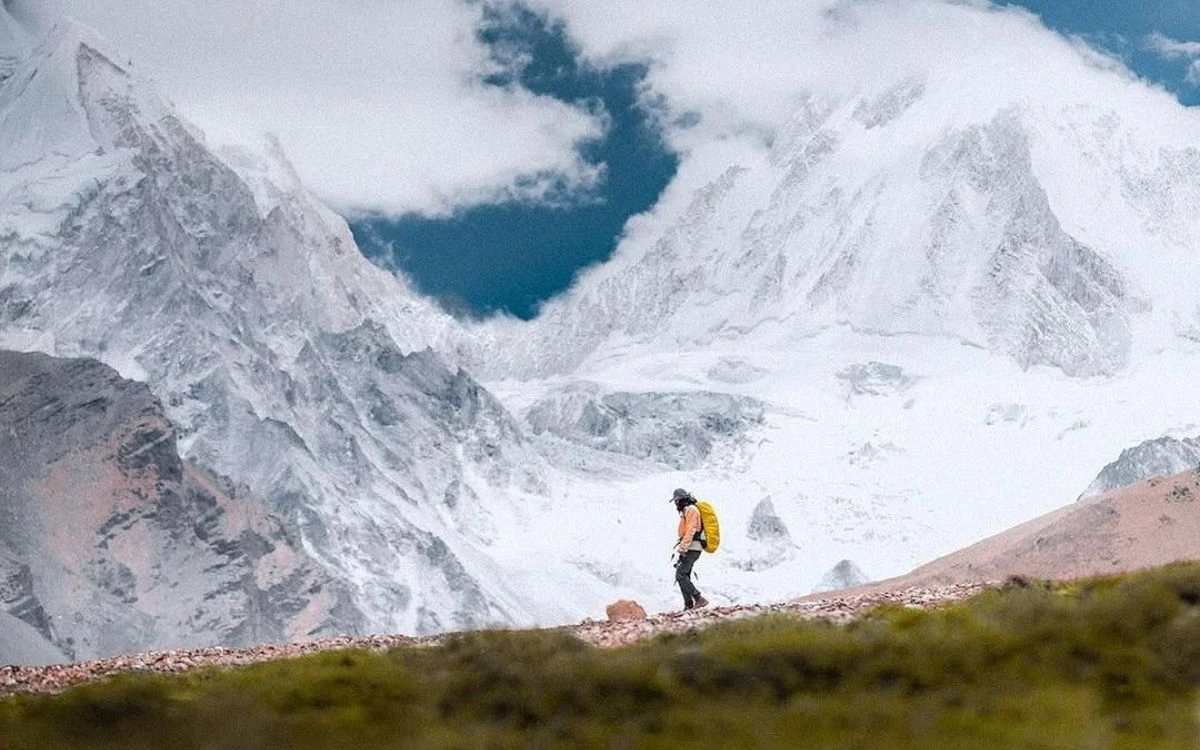
Lone trekker with a yellow pack walking a high ridge dwarfed by towering snow and glacier walls near Manang
The trekking center of Manang is well equipped for your trek and offers a wide selection of tea houses and lodges/guesthouses for all budgets — from basic dormitory-style beds to private double rooms with attached baths and hot showers. Businesses have to charge more for food accommodation simply because of the cost of transport, however, the prices are still very cheap.
When you consider the fact that Manang is this far into the mountains, what impresses many people is the remarkably large selection of food in the area. Most lodges will offer dal bhat with rice and lentils, pasta, pizza, fried rice, soup, and many will even serve apple pie (thanks to the famous Manang apple orchards). The bakeries in Manang are one of the highlights of the village as well — fresh bread, cinnamon rolls, and hot coffee provide fuel for many trekkers who have an early start to their trek. You can budget on having enough to eat and a place to sleep for about NPR 1,500–3,000 per day.
Travel Tips for Manang Valley Nepal
Packing Essentials
Warm down jacket and thermal base layers (temperatures drop below 0°C at night)
Good-quality trekking boots with ankle support
Sun protection: high-SPF sunscreen, sunglasses, and lip balm
Personal first-aid kit including Diamox for altitude sickness prevention
Water purification tablets or a portable filter
Trekking poles for steep descents
Permits Required
TIMS Card (Trekkers' Information Management System)
Annapurna Conservation Area Permit (ACAP)
Upper Mustang Restricted Area Permit (if continuing beyond Thorong La)
Safety Tips
Do not hurry your climb up to Thorong La from Manang. You should stay in Manang for at least two nights before starting to ascend to Thorong La. Learn the symptoms of Acute Mountain Sickness (i.e., headaches, nausea, and dizziness) and turn back if they get worse. Always utilize an experienced guide/porter, as they have experience on that course and would be able to help if you are in an emergency. Make sure to have cash with you, as there is an ATM in Manang village; however, it may not be reliable.
Frequently Asked Questions
Where is Manang Valley located?
Manang Valley is located in Manang District, Gandaki Province, north-central Nepal, within the Annapurna Conservation Area along the upper Marshyangdi River valley.
What is the best time to visit Manang Valley Nepal?
Spring (March–May) and Autumn (September–November) are the best seasons. Skies are clear, views are spectacular, and trails are in prime condition.
How high is Manang village?
Manang village sits at approximately 3,519 metres (11,545 feet) above sea level.
Do I need a permit for Manang Valley trekking?
Yes. You need a TIMS Card and an Annapurna Conservation Area Permit (ACAP). Both are available in Kathmandu or at the trailhead in Besisahar.
How far is Manang from Mustang?
From Manang, trekkers cross Thorong La Pass (5,416 m) to reach Muktinath in Mustang — approximately 22 km by trail and one of the most dramatic single-day hikes in Nepal.
Is the Annapurna Circuit through Manang suitable for beginners?
The Annapurna Circuit is rated moderate to strenuous and requires good fitness. First-timers with reasonable physical conditions can complete it with a proper acclimatization schedule and experienced guidance.
Conclusion
The Manang Valley is much more than just a way stop on the Annapurna Circuit; it is like an individual town. The Manang Valley will forever remain a part of you after your visit — from the beautiful surface of Gangapurna Lake, to the historic stones of Braga Monastery, the friendly hospitality shown to all by the Gurung teahouse owners, to the satisfying feeling in your bones after crossing the Thorong La pass, there is something in each of these experiences awaiting you that you cannot help but feel thankful for having spent time there. The effort required to journey to the Manang Valley far exceeds that of any similar destinations throughout Nepal, including the Everest Base Camp and Annapurna Base Camp treks.
If you are wishing to fulfill your dream and see the Manang Valley for yourself, contact Himalayan Recreation Treks & Expedition today and begin your journey to the most unforgettable adventures possible in the Himalayas!


.webp)



-6.webp)
-1.webp)
-1.webp)