Adventurers can experience an amazing chance to traverse some of the world’s greatest Himalayan mountain passes, which stand at more than 5,000 m high, during High Pass Trekking in Nepal. As you journey through pristine natural terrain, ancient glaciers, and stunning cols that separate isolated valleys, you will find challenging and technical trails that will test your endurance while giving you incredible views of some of the world’s highest peaks. The high pass treks in Nepal are some of the most spectacular treks in the country, and regardless of whether you choose one of the renowned climbs, such as the Everest Three Passes Trek, or lesser-known routes, you should be well prepared for the trek, acclimatized to the altitude, and respectful of the mountain environment.
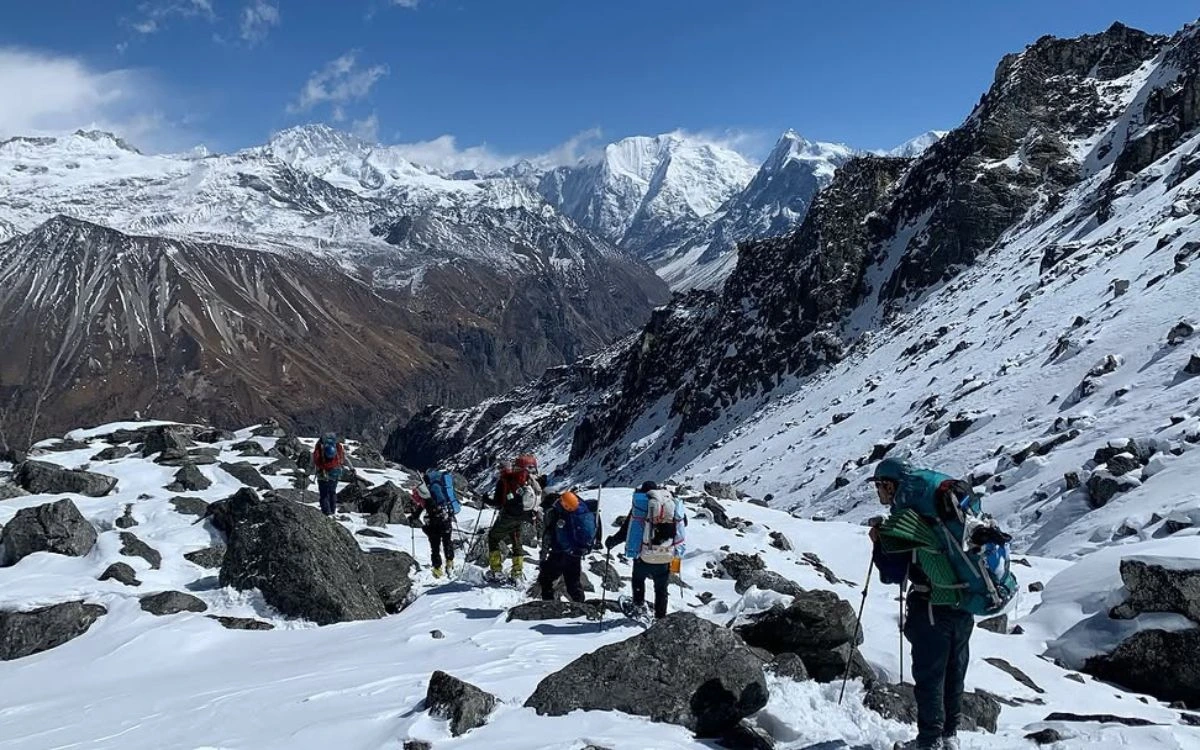
Trekking group ascending rocky snow-covered Ganjala Pass with Himalayan peaks behind
For those who love adventure and want a bigger challenge than just trekking, Nepal is an amazing destination to visit while attempting the high pass trek in Nepal. Each year, thousands of people visit Nepal for high pass trekking to experience the challenges of crossing high mountain passes that most tourists will not attempt due to the remoteness of the area and the extreme changes in weather during high pass trekking in Nepal. Many high pass treks in Nepal follow historic trade routes once used by merchants trading goods from Tibet to Nepal, making many high pass treks in Nepal a historical as well as natural experience. Most of the landscapes along these high pass trekking routes were very similar to what they are today when they were originally established hundreds of years ago, and there will still be little or no sign of human activity after you have completed your trek in Nepal.
What is High Pass Trekking? Understanding Himalayan Mountain Passes
Crossing high-altitude passes (also known as cols) means going over mountain passes above 5000m/16400ft. In terms of hiking, these cols serve as natural pathways connecting two distinct mountain ranges. The hiking trails we normally hike run through valleys; therefore, on a pass, you must gain altitude by climbing to the highest point (saddle) between two peaks (summits) before descending into the next valley.
The types of passes that are high in elevation can be broken down into three broad categories: well-established routes with clearly defined trails, technical crossings requiring mountaineering techniques, rope work, and crampons, or travelling over a glacier as part of the crossing.
The primary challenge presented to you by high altitude is that there is much less oxygen to breathe than if you were at sea level, approximately half. You should also be aware of how quickly the weather can change in areas of high elevation due to temperature drops of 20 degrees Celsius or more within just a few hours and winds exceeding 50 km/hr.
Why Nepal is the World's Best Destination for High Pass Treks
There are a number of reasons why Nepal has the largest concentration of high passes within easy reach of people trekking in its mountains. It also has eight of the fourteen highest mountains on the planet, so the concentration of fantastic passes in Nepal is without comparison anywhere else in the world! The development of a strong trekking infrastructure in the region provides trekkers with a means to experience the high passes while still having a true mountain adventure. Trekkers in Nepal can connect their high passes to visiting Sherpa villages, Buddhist monasteries, and colorful rhododendron forests at lower elevations. Nepal's teahouse system provides a support structure that makes trekking between high passes easier than any other area in the Himalayas; the use of qualified guides and porters adds an enormous amount of local knowledge to the high pass trekking experience.
Most Popular High Pass Treks in Nepal
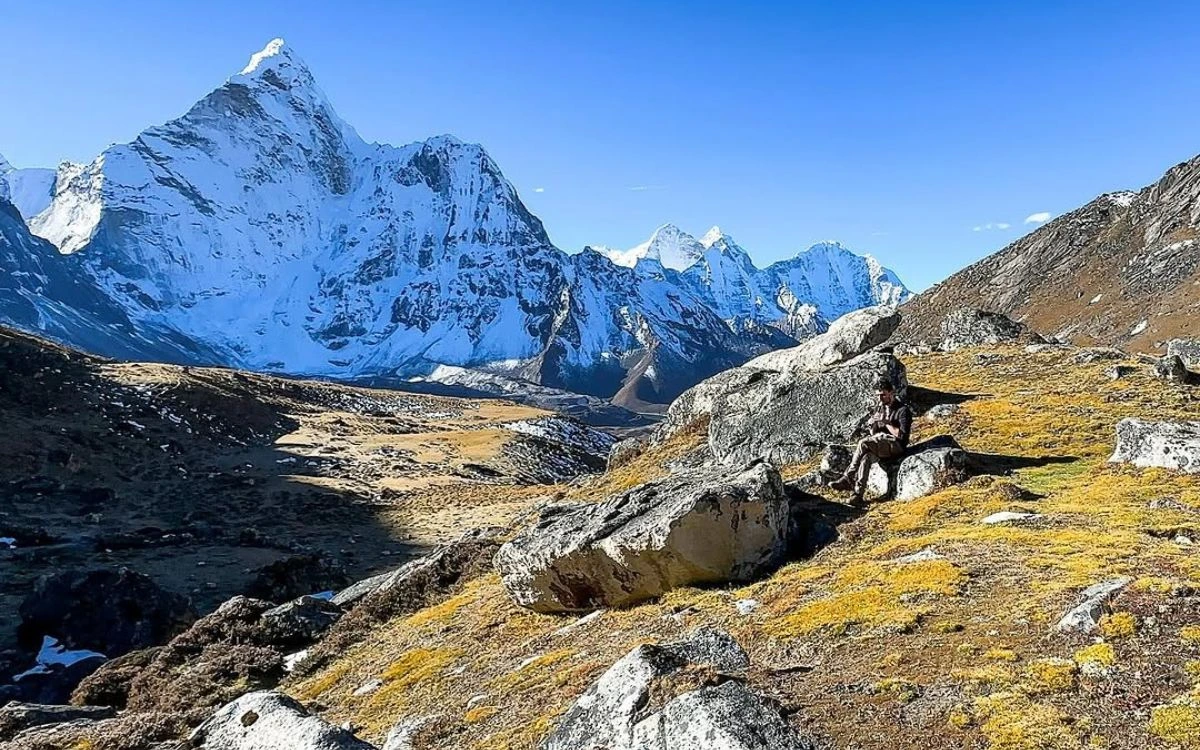
Golden alpine meadow below Ama Dablam peak on Kongma La Pass approach
Everest Three Passes Trek Overview
The ultimate challenge of high passes in Nepal, the Everest Three Passes trek consists of 3 main passes, Kongma La (5,535 m), Cho La (5,420 m), and Renjo La (5,360 m), that require 18-21 days of trekking through the Everest region in a homologous loop and are combined into a complete traverse of the area's majestic mountains and habitats; this means although there are many famous points such as Everest Base Camp along with phenomenal panoramic mountain scenery, the trek gives trekkers the chance to see (and hence experience) every part of the Khumbu region, from the lively Namche Bazaar to very remote valleys where yaks graze in high meadows. Trekkers must be in good shape and have previous experience at high altitude before attempting this trek. The Annapurna Base Camp trek is a good way to prepare for those intending on completing the Three Passes trek.
Thorong La Pass Trek Guide
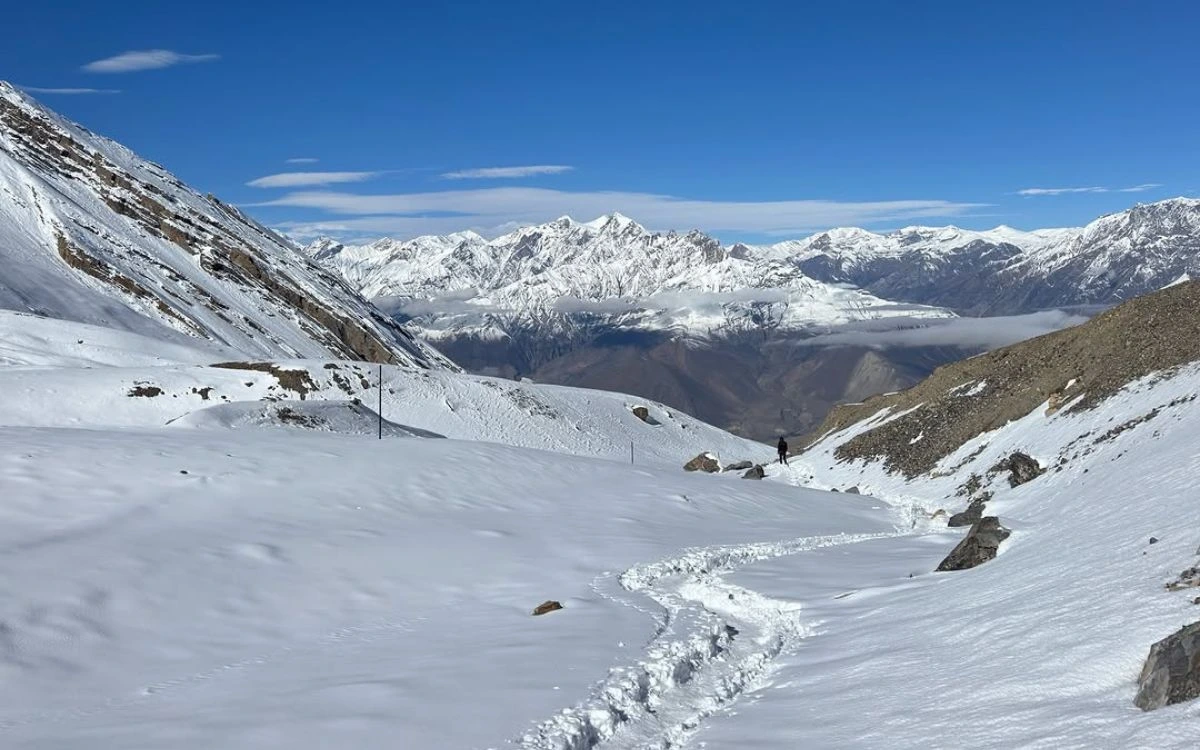
Lone trekker descending snowy Thorong La Pass with Annapurna range panorama
At a remarkable elevation above sea level of 5,416 m, Thorong La Pass is an awe-inspiring ending point to the Annapurna Circuit, one of the most famous trekking routes in the world. It connects Manang Valley with the Mustang region, offering trekkers a breathtaking transition from dense forests to the dry Trans-Himalayan desert landscape. Trekkers typically spend 2 to 5 days acclimatizing in Manang (at high elevations) prior to attempting to cross to Mustang via Thorong La Pass.
The crossing actually begins before sunrise, when trekkers start their ascent with just the heads of their headlamps lighting up their trail. It is an unforgettable experience to reach the top of the pass (where the summit is adorned with prayer flags) just in time to see the first rays of sunlight make the Annapurna and Dhaulagiri Ranges glow. Weather conditions are strongly recommended to be checked frequently, as heavy snow combined with wind can prevent vehicles from passing over Thorong La Pass for extended periods of time.
Kongma La Pass Route Details
The third of the Everest Three Passes is Kongma La; it is the highest pass of the three and offers trekkers a sustained altitude and boulders that present a challenging terrain. Kongma La connects the Chukhung Valley and Lobuche, providing a different route that does not require backtracking. For trekkers ascending the pass, they will need to be very careful when traversing boulder fields - they will need to place their feet carefully and go at a steady pace. Because of the elevation of Kongma La, you will also be able to see many other peaks, including Makalu, Lhotse, and Nuptse, and as such, your effort will be well-rewarded.
Ganja La Pass Trek Highlights
The Langtang Ganjala Pass trek provides a technical high pass trek in a fairly easy-to-access area close to Kathmandu. The Ganjala Pass is at 5,122 meters and connects the two valleys of Langtang and Helambu, creating a very scenic but difficult circuit through the Langtang trekking region. Ganja La requires basic mountaineering skills, including the use of crampons and rope handling, and with glacier crossings and the potential for crevasses, having an experienced guide is a must. Even with the technical requirements, trekking at Ganjala Pass is a great way to begin your experience crossing high Himalayan passes without the extreme heights of passes in the Everest region. Trekking in this area is also helping to support the rebuilding of the community after the earthquake in 2015.
List of Major High Passes in Nepal (Altitude & Region Comparison)
The numerous high passes in Nepal cover a vast expanse of land, with three high passes (Kongma La, Cho La, Renjo La) located within the Everest region. The Annapurna region consists of both Thorong La and Tilicho Pass. Within the Langtang region, you will find both Ganja La and Laurebina La. The Larkya La pass is one of the featured high passes along the Manaslu Circuit. There are also remote passes that can be accessed by skilled trekkers only (Sherpani Col, West Col, Amphu Laptsa), which require expedition-quality skills and can be trekked while acclimatizing at Everest Base Camp over multiple high passes within the Khumbu region.
Most Difficult High Passes in Nepal for Adventure Trekkers
Sherpani Col and Technical Crossings
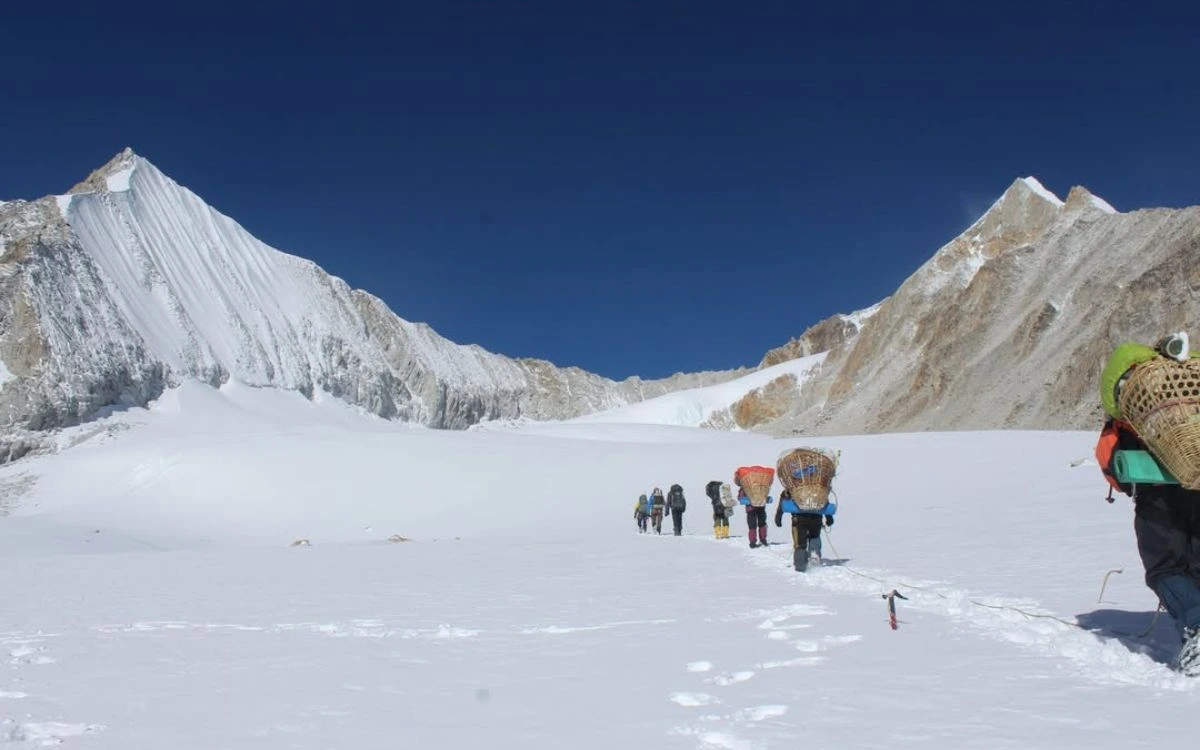
Expedition team with heavy loads crossing pristine snowfield between steep mountain walls
The Sherpani Col is the hardest high mountain pass in Nepal that can be traversed by expert trekkers with mountaineering experience. As the highest point on the pass at 6135 meters, this pass requires not only technical climbing abilities but also good expedition gear, as well as extensive mountain safety knowledge. Traveling to the pass will depend on traveling through glaciers, where many significant crevasses require the use of roped teams and climbing gear such as ice axes and crampons. Conditions on the pass can change very quickly, which may put your life in danger due to the environment. Only hundreds of people attempt the Sherpani Col each year, while thousands of people cross typical high mountain passes.
Technical vs Non-Technical High Passes Explained
If you can differentiate between technical and non-technical types of passes, it becomes easier to select which routes match your capabilities/level of skill. Non-technical crossings, such as Thorong, require trekking fitness and good acclimatization capacity but are also all on “established” trails (without needing climbing equipment). Technical crosses will require familiarity/ability to use crampons, knowing how to use your ice axe, ability to walk safely with a rope team on glaciers, and basic understanding of how to rescue someone from a crevasse. Many trekkers gain competency progressively by completing less complex high passes first before putting their skill sets to the test with technical crossings.
Best Time for High Pass Trekking in Nepal
Success at high-pass treks depends on the timing of your trek. During the spring months of March to May, you will enjoy stable weather and steadily rising temperatures as the snow melts progressively to enable pass openings around the end of April. The autumn months of September through November are regarded as the optimal months for crossing the high passes; the post-monsoon rains create clear skies with the highest probability of success in cross-passing.
The winter months of December through February are suitable for only the most experienced of high mountain trekkers (due to very low temperatures and deep accumulations of snow). Most attempts to traverse high mountain passes during the summer months of June through August are not recommended due to heavy rain and low visibility. However, trekkers can access the rain shadow regions, such as Upper Mustang, during the summer months.
Permits Required for High Pass Treks
Permits are generally necessary for high pass routes. A TIMS card is utilised by the notice of example's authorities to help monitor the movement of trekkers for safety purposes. Additionally, national park permits will be required in the Sagarmatha, Annapurna, or Langtang regions. A restricted area permit will be required for Upper Mustang, Manaslu, and similar areas; these can only be obtained through registered agencies. Additionally, local area permits are for use by the communities that benefit from the conservation areas. The Annapurna Circuit trek is an example of how these permit requirements will be similar in order to help gain experience in understanding the types of documents needed for trekking.
Altitude, Acclimatization & Safety Tips
On high pass treks, altitude sickness is usually the main danger involved. Do not exceed 500 meters in one day when going higher than 3,000 meters. After climbing for 3-4 days, you need to take a rest day using the "climb high, sleep low" technique. Learn to recognize symptoms of altitude sickness: headaches, nausea, fatigue are mild, while confusion and trouble walking would require that you move back down. Hydration is critical, so drink 4-5 liters of water each day to avoid dehydration. Speak with your doctor about using Acetazolamide (Diamox) to assist with acclimatization. Determine what your insurance will cover for emergency helicopter evacuations, and carry satellite communication devices if you will be in the back country.
Training and Preparation for High Pass Treks
Begin training 3-4 months before departure, focusing on cardiovascular endurance through hiking, running, or cycling for 45-90 minutes. Build leg strength with squats, lunges, and step-ups while developing core stability for balance. Weekend-long hikes with weighted backpacks simulate trekking conditions. Mental preparation proves equally important for managing discomfort and making sound decisions under stress. The Mardi Himal trek offers excellent training for more challenging high pass adventures with altitude exposure in a shorter timeframe.
Packing List for High Altitude Pass Crossings
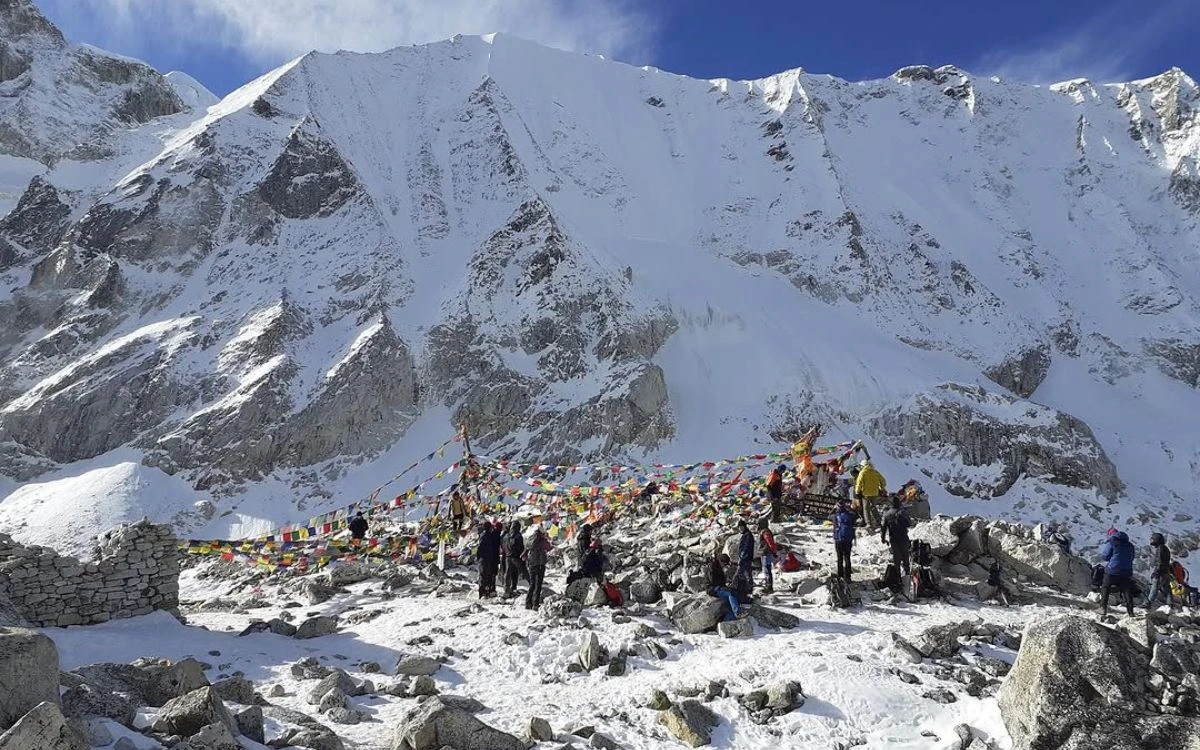
Trekkers celebrating at Larkya La Pass summit with prayer flags and snow peaks
Essential base layers can be merino wool or synthetic; insulation can either come from down or synthetic materials, depending on whether it is cold weather (sub-zero). Shell layers should also be made of waterproof material (either shell or non-shell). For footwear, the general requirements are already broken in trekking boots, camp shoes, warm socks, and gaiters. Technical passes will require crampons (ice climbing), ice axes (ice climbing), a climbing harness, a climbing helmet, and a rope. Hence, the following critical accessories are required: sleeping bag rated to -15 degrees C, trekking poles, headlamp, high SPF sunscreen, glacier glasses, water purification, anda personal first-aid kit.
Cost of High Pass Trekking in Nepal
Budgeting varies significantly based on trek duration and comfort level. Basic costs include permits ($50-200), guide services ($25-35 daily), porter services ($20-25 daily), teahouse accommodation ($3-10 nightly), meals ($15-25 daily), and internal flights where applicable ($150-200). Equipment rental in Kathmandu or Pokhara costs significantly less than purchasing. Total estimated costs: budget treks run $800-1,200 for two weeks, mid-range treks with guide support cost $1,500-2,500, while premium full-service treks range $3,000-5,000. Don't forget hidden costs like hot showers ($3-5), battery charging ($2-3), WiFi ($3-5 daily), and tips for guides and porters ($50-150 total).
FAQs About High Pass Trekking in Nepal
Which high-pass trek in Nepal is the least difficult?
The Laurebina La Pass (4,610 m) along the Gosaikunda Trek is one of the easiest high pass treks; it provides for the easiest high pass experience with moderate fitness levels and no technical skills required.
Are there many high pass treks in Nepal that require mountaineering skills?
Most High Pass Treks that are non-technical (e.g., ThoroLaLa) require only trekking skills/fitness. However, technical high pass treks (e.g., Cho La) require mountaineering skills such as the ability to utilize a crampon and travel on a glacier.
How long is the trek along the Everest Three Passes Trek?
The entire circuit through Mount Everest requires approximately 18-21 days to complete, depending on acclimatization and any additional rest days due to weather.
What is the biggest challenge when trekking through high passes?
Acclimatization is the biggest challenge when traveling across High Passes and can be different for each person depending on how his/her body reacts to altitude. Slow and steady pacing, adequate hydration, and having rest days are all important to being successful in a high pass trek.
When should I book a high pass trek?
Booking a High Pass Trek should be done between 3-6 months before your desired trip, for trip dates in peak season (October/November; April/May), in order to secure a guide and allow adequate time to train.
Conclusion
The high mountain passes of Nepal present incredible opportunities for people to embark on amazing adventures that will help them discover their limits, all while exploring the most beautiful mountain scenery in the world. Are you looking for a very technical challenge (like the Sherpani Col), classic beauty (like the Thorong La Pass trek), or a complete trekking experience (like the Everest Three Passes)? You can find all types of excellent high-altitude trekking opportunities in Nepal. Preparing properly through honest self-assessment will be critical to your success and enjoying the experience of trekking and climbing mountains in Nepal.
Get started planning your high mountain pass trekking adventure now with Himalayan Recreation Treks and Expeditions, where you can work with us to find the best route to fit your needs and keep you safe on this amazing trip.


.webp)



-6.webp)
-6.webp)