My group of seven trekkers from Germany trekked through Tengboche last year. We went there during the Mani Rimdu festival, which turned out to be a life-changing experience for all of us. Here is an account of my experience and some things that every trekker should keep in mind before attending the festival.
What I experienced at the Mani Rimdu Festival
Last year, I was in the courtyard of a monastery with a group of seven German tourists, watching the Mani Rimdu festival. Although I had trekked in the Everest region for many years, the Buddhist festival in Nepal fascinated me. As we trekked to Tengboche Monastery, we decided to take a detour to visit Upper Tengboche Monastery and learn more about it. As fate would have it, we ended up arriving right in the middle of the festival. Sherpa culture was alive all around us, with families dressed in traditional clothes and monks in masks dancing to drums and horns.
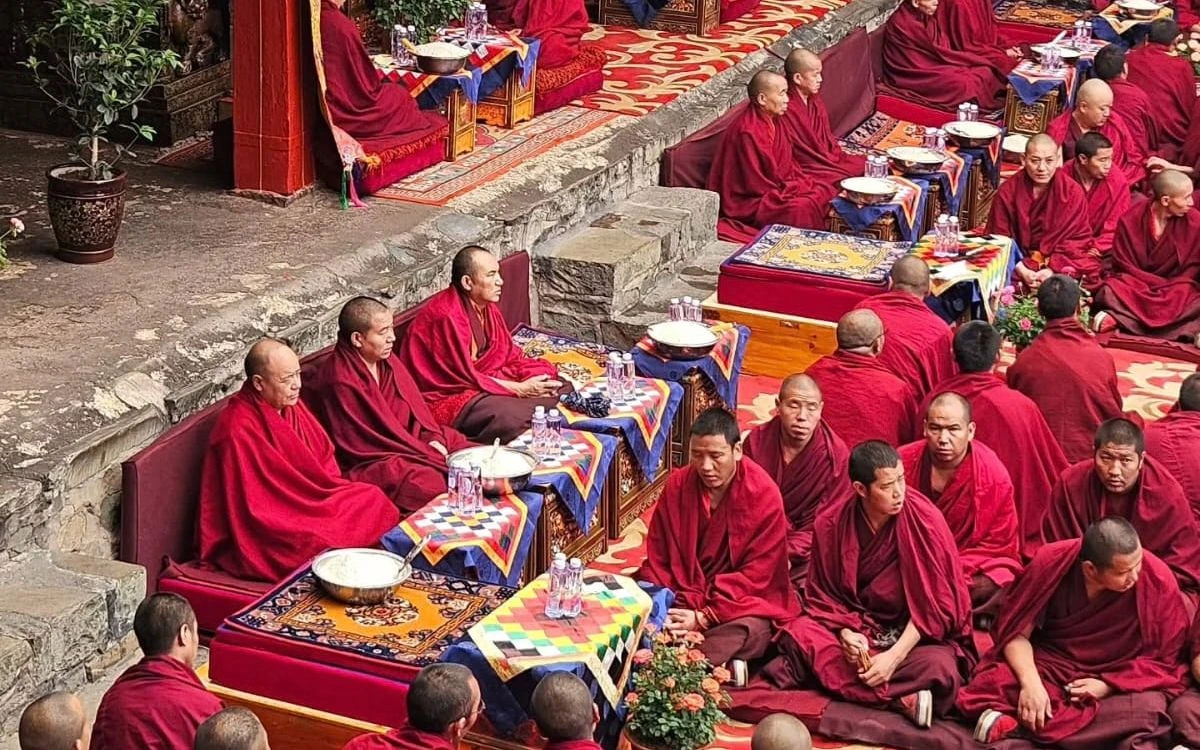
Monks in red robes seated at a Mani Rimdu ceremony
Then the chanting started. The sound of the chanting filled the courtyard, and I saw my group turn silent. We felt peaceful. No one was willing to leave, so we lingered on. After the experience, I got to understand what this festival in the Everest region actually is. It is not merely a spectacle for trekkers. It stands for the tradition of the Sherpas that has 19 days of history. Its very name explains it. "Mani" is the name of the chant that stands for compassion.
[package(116)]
Here is the story as we lived it.
Silent preparation.Prior to the public visit, monks have spent days meditating inside the monastery. They create their sand mandala with thousands of grains of colorful sand. At this time, the mandala serves as a holy palace for inviting the compassionate deities.
The blessing (Wong). Sherpas from all over the regions of the Khumbu Valley gather at the monastery. The head Lama (Rinpoche) gives blessings and gives the holy rilwu pills and blessed water to the people. The people receive blessings for long life, good health, and protection for the next year.
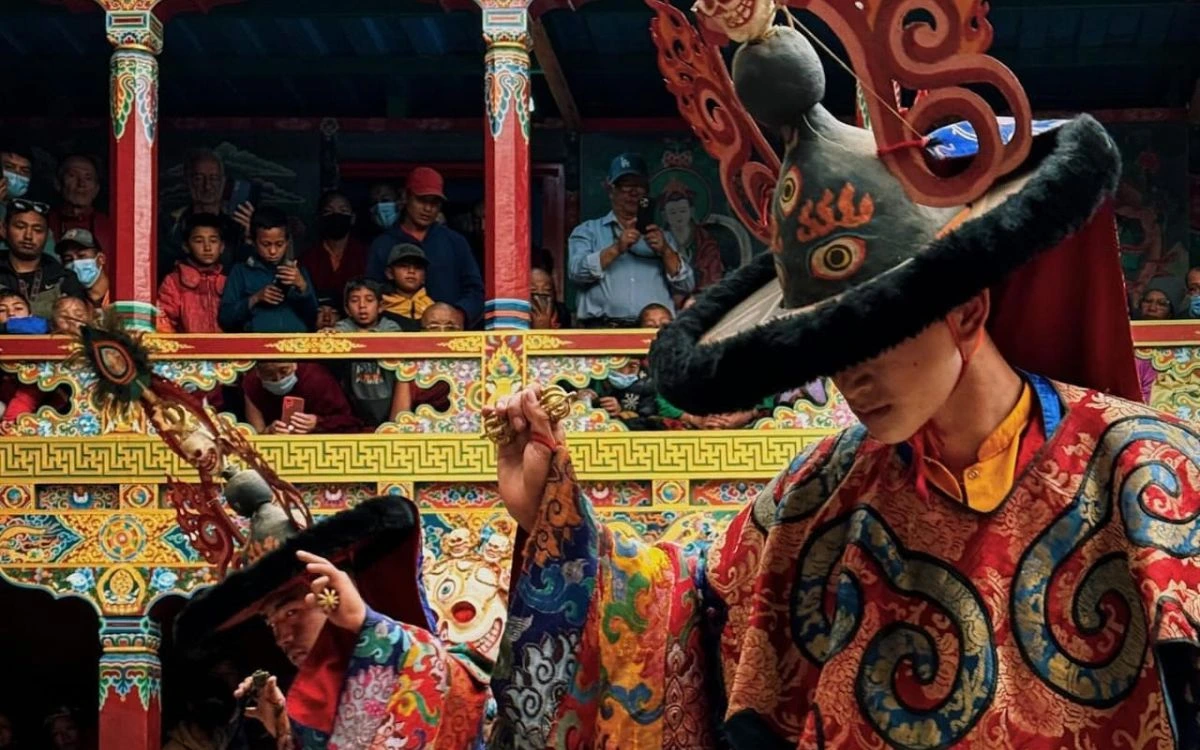
The masked dances (Cham).At this time, the culmination is reached. The monks are dressed in heavy silk robes and are wearing the carved wooden masks that portray the gods and the demons. The dances tell the story of how Guru Rinpoche, who brought Buddhism to Tibet, defeated the evil spirits and ignorance in the Himalayas and transformed them into Buddhist assistant deities.
Fire and parting (Jinsak).On the last day, certain monks carry out sacred fire rituals that incinerate all impediments and negativity. After that comes the cleaning up of the man-made eco-friendly mandala, made with patience. The meaning is simple: nothing lasts in this world, and peace comes from letting go.
In this blog, I will share what I learned from that trip, so you can plan your own visit with confidence.
What Is the Mani Rimdu Festival?
Mani Rimdu is one of the most important monastery festivals of the Sherpa community in the Khumbu region. UNESCO recognizes it as such.
The name carries meaning. “Mani” refers to part of the chant of Chenrezig, the Buddha of Compassion. “Rimdu” refers to the small red pills blessed during the festival.
What to expect:
A religious and monastic tradition, not a tourist show
Sand mandalas, prayers, blessings, a fire ceremony, and masked dances
Monks, local families, and trekkers sharing the same courtyard
One of the best-known Sherpa festivals in Nepal
When Is the Mani Rimdu Festival?
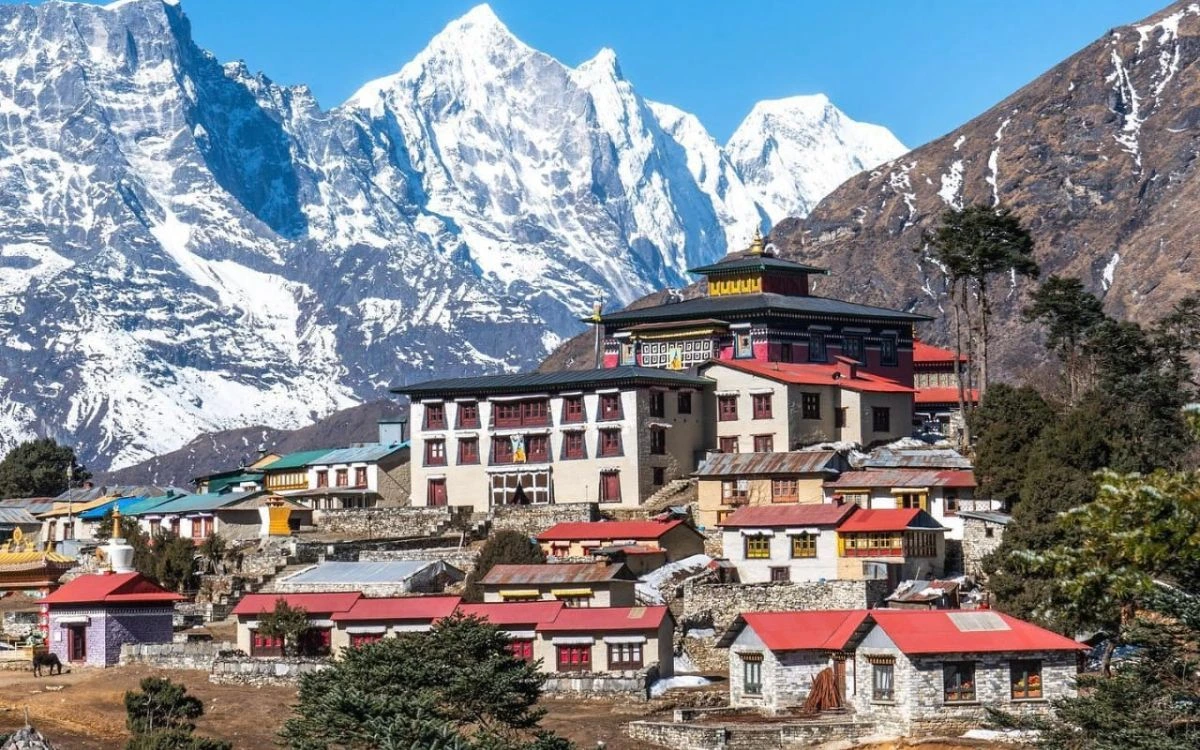
Tengboche Monastery below snow-capped Himalayan peaks
The date follows the Tibetan lunar calendar, so it shifts every year. The head lama at Tengboche announces it.
Mani Rimdu Festival Dates 2026
Most operators list October 26–28, 2026, as the public celebration days at Tengboche. These days fall around the late-October full moon.
The full ritual cycle runs about 19 days. The public celebrations take place in the final three days, so when people ask “when is Mani Rimdu,” they usually mean those days.
A few sites list different dates, so confirm the final schedule with your trekking operator or the monastery before you book.
Mani Rimdu 2026 Public Schedule at Tengboche
The public days run October 26–28, 2026, after the private monastic ritual cycle that leads up to them. The full cycle lasts 19 days, from October 10 to October 28, 2026. Monks spend October 10–25 on private rituals inside Tengboche Monastery: they build the sacred sand mandala, prepare the blessed Mani Rilwu pills, and pray.
Date
Day
Ceremony
What happens
Oct 26
Day 1 (full moon)
Wong (Empowerment)
The head lama consecrates and distributes the blessed “Mani Rilwu” pills for protection and good fortune.
Oct 27
Day 2
Chham (Masked Dances)
Monks in colorful costumes and masks perform ritual dances. The dances symbolize the triumph of Buddhism and compassion over negative forces.
Oct 28
Day 3
Jinsak (Fire Puja)
The closing ritual and fire offering. Monks dismantle the sand mandala, a sign of the impermanence of all things.
Thame and Chiwong hold their own Mani Rimdu on separate dates set by the Tibetan lunar calendar.
The tradition is held at three monasteries: Tengboche, Thame, and Chiwong (also written Chiwang).
Mani Rimdu at Tengboche Monastery
The Tengboche Mani Rimdu festival is the one most visitors attend. Tengboche is a major center of Sherpa Buddhism, and it sits in the Khumbu region on the classic Everest Base Camp Trek. If you have heard of the Tengboche Monastery festival, this is it.
Mani Rimdu at Thame Monastery
Thame holds its own celebration in the fourth Tibetan lunar month, around May and June. That makes it a good alternative if you cannot trek in autumn.
Mani Rimdu at Chiwong Monastery
Chiwong lies in the Solu region, and its dates vary by year. Trekkers who like quieter trails often pair this lower-altitude area with the Pikey Peak Trek.
History and Origin of Mani Rimdu
Tibetan Roots of Mani Rimdu
The tradition traces back to Rongbuk Monastery in Tibet, which UNESCO describes as the “Mother Monastery.” From there, it traveled across the Himalayas into the Khumbu.
Mani Rimdu and the Sherpa Community
In Khumbu, the festival became part of religious life. The Sherpa people of the Everest region keep the rituals alive through their monasteries, passing them from one generation to the next. Today it helps preserve both Buddhist practice and cultural identity.
What Does “Mani Rimdu” Mean?
“Mani” points to the chant of Chenrezig, the Buddha of compassion. “Rimdu” points to the red pills that monks bless repeatedly. On Blessing Day, those pills go to everyone who attends.
Why Is the Mani Rimdu Festival Celebrated?
Religious significance: it honors Buddhist teachings and Guru Rinpoche (Padmasambhava).
Compassion and purification:the rituals aim at spiritual cleansing.
Community well-being: blessings reach local people and visitors alike.
Cultural identity:it keeps Sherpa traditions strong.
Mani Rimdu Rituals and Ceremonies
The Mani Rimdu festival rituals give the dances their meaning.
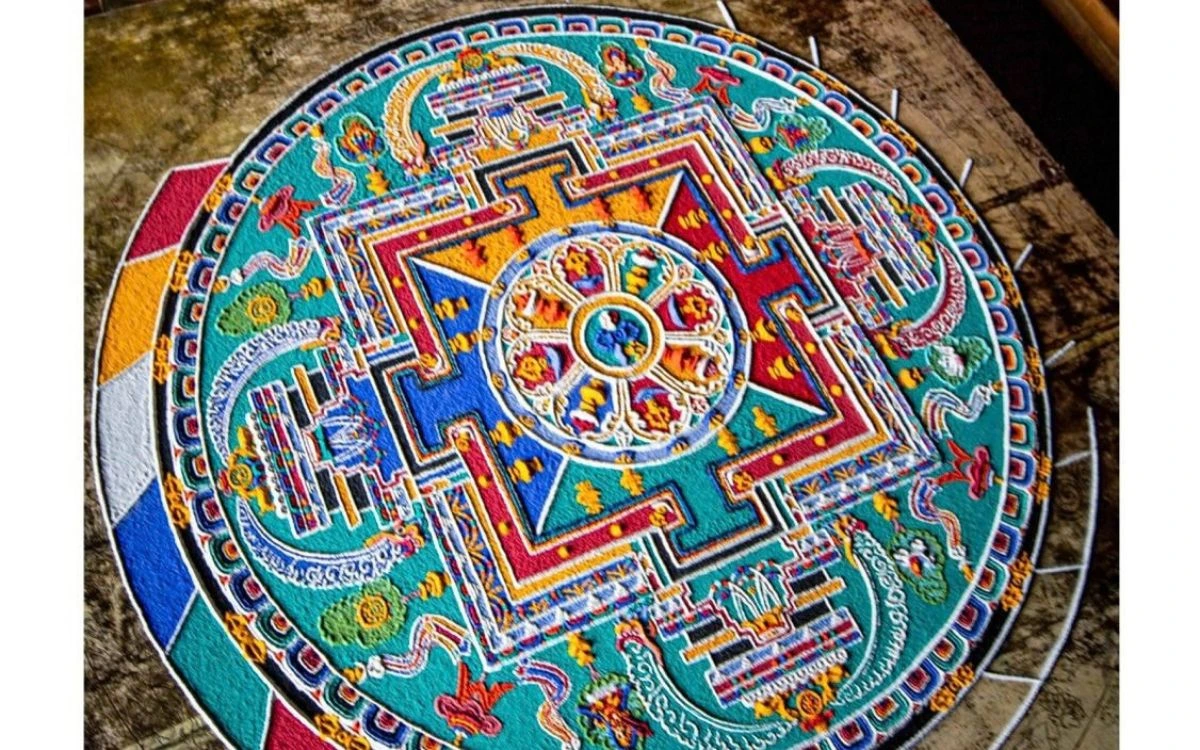
Sand Mandala
Colorful Buddhist sand mandala made by monks
Monks build an intricate mandala from colored sand. The sand comes from specified holy places, and the finished mandala anchors the ceremonies that follow.
Prayers and Meditation
Monks prepare through chanting, mantras, and meditation. Much of this happens quietly, before the public days begin.
Wong: The Blessing Ceremony
On Wong, participants receive blessings. The blessed red pills are shared with everyone attending.
Jinsak: The Fire Ceremony
Jinsak is a fire offering. It comes near the end of the festival, and it is meant to remove negativity.
Cham: The Sacred Masked Dance
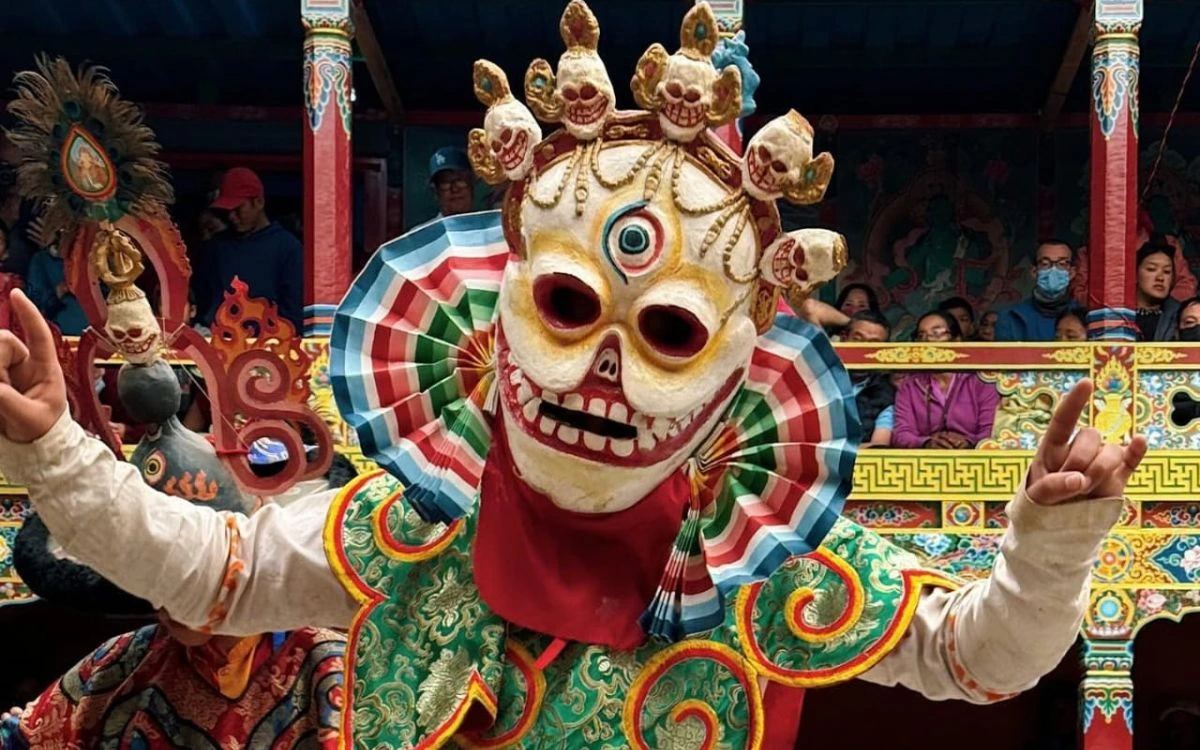
In Cham, monks perform in elaborate masks and costumes. Every movement is part of the ritual. These dances are not ordinary entertainment.
What Happens During the Mani Rimdu Festival?
Preparatory monastic rituals
Sand mandala creation
Prayers and meditation
Wong blessing ceremony (Day 1)
Cham masked dances (Day 2)
Jinsak fire ceremony (Day 3)
Dismantling of the sand mandala and closing rituals
The Famous Mani Rimdu Masked Dance
The Mani Rimdu masked dance is what visitors remember most. Each mask and gesture ties back to Buddhist teachings. Drums, horns, and colorful costumes fill the courtyard, and the mountains frame it all. Photograph only where the monastery allows it.
Tengboche village lies within Khumjung, so a visit to Khumjung Village, Nepal helps you see the same culture in everyday life. This is a different world from the Annapurna Circuit Trek, where the cultural mix and landscapes vary.
Why Visit Tengboche During Mani Rimdu?
Witness a living religious tradition.
Explore Tengboche Monastery
Meet Sherpa culture up close
Combine the festival with an Everest-region trek
Enjoy the mountain scenery around the monastery
If you want a shorter route, the Everest View Trek offers similar scenery with less effort. Whichever route you choose, watch respectfully. This is a place of worship first.
How to Attend the Mani Rimdu Festival
Getting to Tengboche
Most visitors walk in along the Everest Base Camp route. Experienced trekkers sometimes add the Everest Three Passes Trek after the festival. Plan to reach Tengboche before the public days begin.
Where to Stay
Teahouses and lodges are the main option. Rooms fill fast during festival days, so book early.
What to Bring
Warm clothing
Comfortable trekking gear
A camera (where allowed)
Personal essentials
Respectful Festival Etiquette
Follow monastery instructions
Dress respectfully
Never interrupt ceremonies
Ask before photographing people or restricted rituals
Respect all religious spaces
Best Time to Visit Mani Rimdu Festival
Dancing monk in brocade robes as spectators watch
The festival falls in the autumn trekking season, when weather and mountain views are generally good. Because dates follow the lunar calendar, check them before you book. Other regions, such as the Langtang Valley Trek, are lovely in autumn too, but only the Khumbu hosts this festival at Tengboche.
Mani Rimdu Festival vs. Other Sherpa Festivals
Festival
Main Location
Cultural Context
Mani Rimdu
Tengboche, Thame, Chiwong
Sherpa/Tibetan Buddhist
Dumji
Khumbu
Sherpa community tradition
Losar
Himalayan communities
Tibetan New Year
Mani Rimdu is the festival most closely tied to monastery ritual and trekking routes. Trekking in Nepal during festival season adds a cultural layer to the mountain views.
FAQs
What is the Mani Rimdu Festival?
A sacred Sherpa monastery festival of Tibetan Buddhist origin, celebrated in Nepal’s Everest region.
When is the Mani Rimdu Festival celebrated?
It follows the Tibetan lunar calendar. Tengboche’s festival usually falls in October or November.
Where is Mani Rimdu celebrated?
At Tengboche, Thame, and Chiwong monasteries.
When is Mani Rimdu Festival 2026?
Most operators list October 26–28, 2026, at Tengboche. Confirm before booking.
Why is Mani Rimdu celebrated?
It honors Buddhist teachings and Guru Rinpoche, promotes compassion and community well-being, and preserves Sherpa identity.
What happens during Mani Rimdu?
Monks create a sand mandala, pray, give blessings, perform a fire ceremony, and dance in masks.
What is the Mani Rimdu masked dance?
Cham is a ritual dance in which monks wear masks and costumes with religious meaning.
Is Mani Rimdu celebrated at Tengboche Monastery?
Yes. Tengboche hosts the most prominent celebration for visitors.
Can tourists attend Mani Rimdu?
Yes, as respectful observers who follow monastery rules.
How long does the Mani Rimdu Festival last?
The full ritual cycle runs about 19 days. Public celebrations fill the final three days at Tengboche.
Final Thoughts on the Mani Rimdu Festival
The Mani Rimdu festival is a deeply religious tradition and a cornerstone of Sherpa culture. Tengboche gives it a setting no other place can match, with sacred rituals under towering Himalayan peaks. Come with respect, and you will leave understanding the Everest region far better.
Ready to experience it yourself? Plan your Everest-region journey with Himalayan Recreation today.


-6.webp)

.webp)

 based on 9 reviews



-1.webp)
-1.webp)
-1.webp)