The village of Khumjung is found in the Everest region and is a true representation of a classic Sherpa community. At an elevation of nearly 3,790 m (12,434 ft), it is located just above the bustling Namche Bazaar and thus offers travelers valuable insight into traditional Himalayan life. Due to Khumjung's location away from the large crowds of trekkers often found on the majority of the other trekking routes, you will experience and take in majestic mountainous scenery and breathe in some of the freshest mountain air in the world, as well as an opportunity to see and experience the original and traditional Sherpa way of life, away from the busy tourist areas.
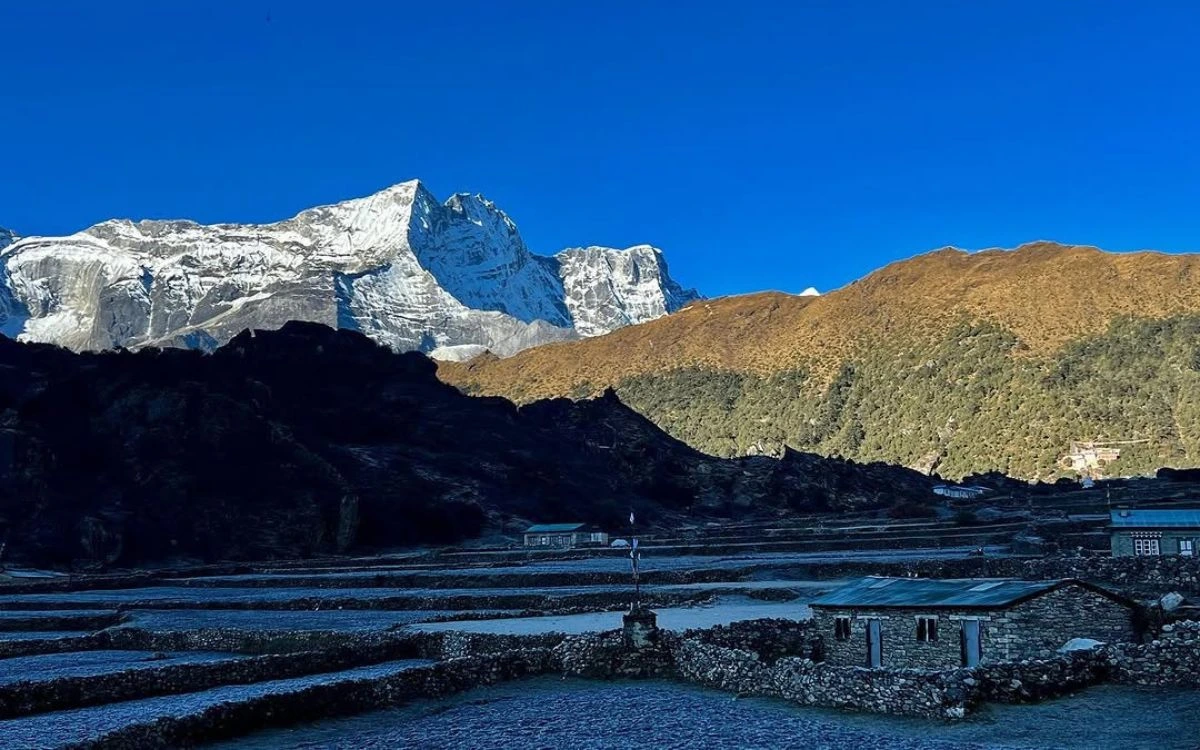
Stone-walled fields of Khumjung village at dusk with snow-capped Himalayan peaks rising against a deep blue sky
If you are interested in trekking (either going to the Everest base camp or just using Khumjung village as a base for other treks) or cultural experiences (such as visiting the ancient monasteries and celebrating local festivals) in the Everest region, you should put Khumjung village on your list when you are planning your trip to Nepal. Read on for all the necessary information regarding this incredible Himalayan village.
Where is Khumjung Village Located in Nepal?
Where Is Khumjung Village?
Khumjung village is located in the Solukhumbu district of Eastern Nepal, high above the Namche Bazaar in a wide valley. It is contained within Sagarmatha National Park, a UNESCO World Heritage Site, and surrounded by some of the greatest Himalayas on Earth, such as Ama Dablam, Kongde Ri and the magical mountain that is Everest.
How Far Is Khumjung from Namche Bazaar?
Khumjung is just about 4-5 km (about 2-3 miles) from Namche Bazaar, making it a simple day trip or an easy acclimatization hike. The pleasant walk from Namche takes between 45 minutes and one hour and passes through pine forests and yak pastures, offering hikers spectacular views along the way. Many hikers on other major treks, such as the Annapurna Base Camp trek, will clearly plan on visiting Khumjung as part of their cultural experiences while in the Himalayas.
Khumjung - Altitude and Geography
Khumjung is located at just under 3,790 m (12,434 ft) above sea level and therefore falls into the high-altitude category with significantly less oxygen than a lower altitude would contain. The geography contains terraced potato and buckwheat farms, stone houses, prayer flags, and a beautiful natural amphitheatre built by nature where the sun rises and reflects on each peak as it changes from grey to gold.
How to Reach Khumjung Village
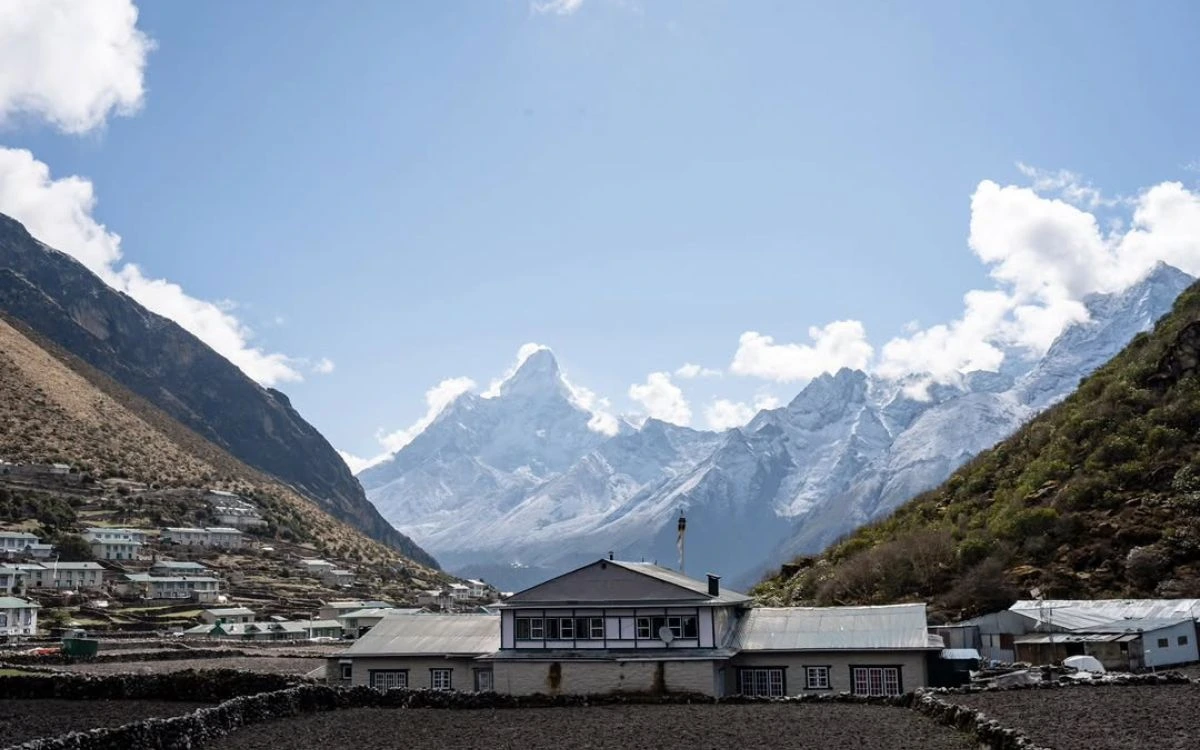
Khumjung village school building with Ama Dablam's distinctive peak rising sharply between valley walls in the background
Lukla Airport Trekking Route
Tenzing-Hillary Airport (Lukla), the ultimate entry point to Khumjung, is a common first step on that trek northward via the famous Khumbu Valley. This is the path taken by most trekkers trekking to Everest Base Camp and trekking to Khumjung through Phakding and Namche Bazaar. In addition to the Base Camp trek, expect to trek 3 to 4 total days from Lukla to Khumjung if you trek at an appropriate rate for acclimatization.
Namche Bazaar Route
Once you've reached Namche Bazaar, a well-marked path carries you up a gradual incline through pine trees and juniper trees to the Syangboche plateau, and then down into the Khumjung Valley. This path is easy for trekkers of any level, my guide will be able to provide you with assistance should you require it, depending on your level of fitness, along with dozens of local Sherpas, yaks and other trekking-related groups along the way.
The Difficulty and Length of Trekking to Khumjung
The difficulty of trekking to Khumjung is classed as 'moderate' according to the guide you will see throughout Khumjung. The major difficulty of this trek is the altitude, not the ground. If you are a beginner or have prepared for the trek by completing a previous trek, such as the Langtang Valley Trek, you should feel comfortable on these trails during your trek. Although many trekkers only spend one day in Khumjung, they may benefit significantly from multiple nights in Khumjung if they choose to stay longer.
History of Khumjung Village
Establishment of Khumjung as a Sherpa Settlement
The Sherpa settlement of Khumjung is one of the oldest in the Khumbu Region. The Sherpa people who settled here have lived as farmers and herders while also establishing trade routes between Tibet and the lower valleys of Nepal. As time passed, Khumjung became one of the most prosperous Sherpa communities with a rich culture in the Everest Region.
Contribution of Sir Edmund Hillary
Sir Edmund Hillary was a New Zealand mountaineer who summited Everest with Tenzing Norgay Sherpa in 1953. He had a close bond with the Sherpa people and used his notoriety to take action, returning to Khumjung to build the infrastructure that helped improve local peoples’ lives for many generations.
Establishment of Khumjung Hillary School
Hillary built the Khumjung Hillary School in 1961 as his most significant contribution to the Sherpa people. The school is one of the very first schools established in the Everest highlands. Khumjung Hillary School has provided children from Khumjung an opportunity for formal education and is still operating today. The Khumjung Hillary School is evidence of cross-cultural friendship and humanitarian work. Visiting the school is one of the top things to do in Khumjung.
Sherpa Culture in Khumjung Village
The Sherpa culture is very much alive in the heart of Khumjung. The villagers of Khumjung live a traditional lifestyle that is closely connected to the land and the mountains. The homes are made from natural materials such as stone and wood, with intricate hand-painted mandalas and other symbols of Buddhism decorating the outside. The main industries in this village are pasture-based yak herding, potato farming, and some trade.
Festivals and Customs Among the People
Khumjung's residents celebrate many seasonal festivals, such as Mani Rimdu and Losar (the Sherpa New Year). These celebrations are large community gatherings involving the use of ceremonial masks with many activities to include dance, offering butter lamps, sharing food, etc. Many locals attend these events, and there are also many visitors to the area during this time, so if you are trekking in Nepal at the same time as these festivals, it will be an amazing experience to remember.
The Daily Life of People Who Live Near Mt. Everest
The daily life of the people of Khumjung is a continuous cycle of prayer, farming and community work. An example of this is the morning routines of people from Khumjung, who burn juniper incense and spin prayer wheels first thing in the morning. Women are weaving traditional fabric and men are herding yaks along ancient paths; these men are leading the yaks to market for sale or pasture. People trekking through the Khumjung region to reach Gokyo Lakes are able to watch this very slow-paced mountain life-style of the village people.
Khumjung Monastery and the Yeti Scalp
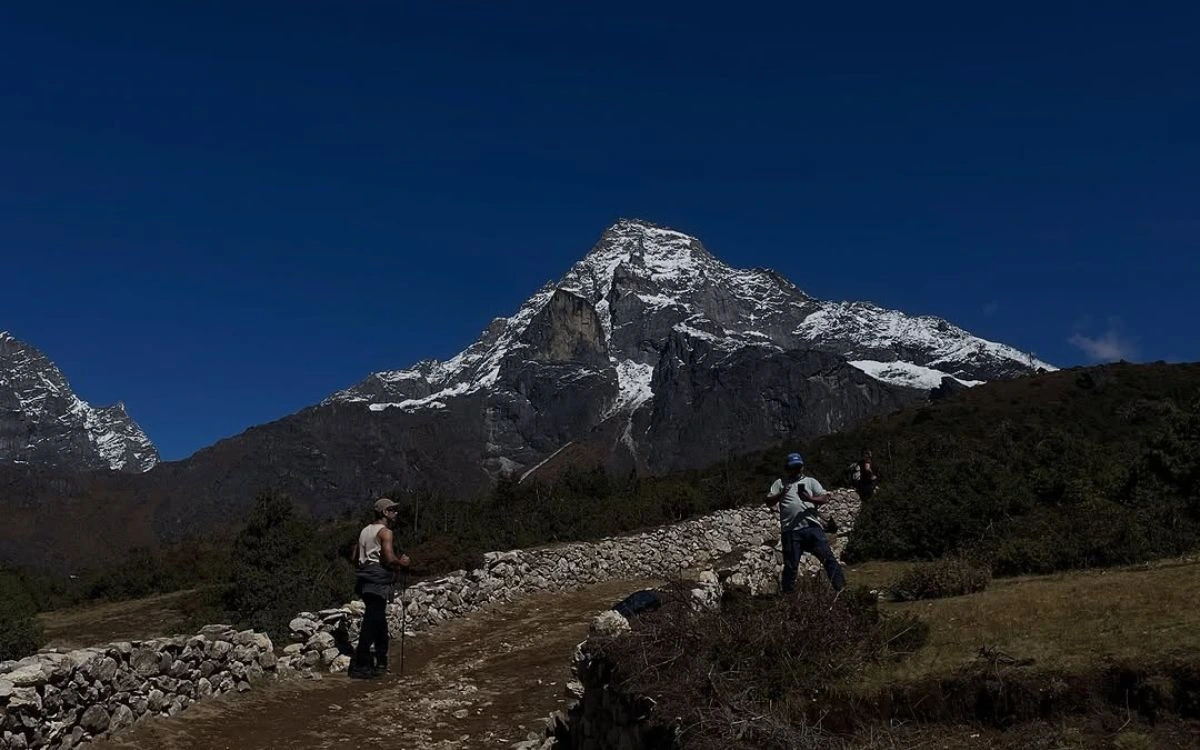
Trekkers hiking a stone-walled trail near Khumjung with a dramatic snow-dusted peak dominating the skyline
History of Khumjung Monastery
The Khumjung Gompa is a revered Buddhist monastery that anchors the spiritual life of the village. Believed to be several hundred years old, the monastery is a center of prayer and community gathering. Its whitewashed walls and fluttering prayer flags stand against the dramatic backdrop of Khumbila peak, considered sacred by local Sherpas.
The Mystery of the Yeti Scalp
The monastery's most famous treasure is its alleged Yeti scalp — a relic that has captivated explorers and scientists for decades. The scalp, which appears as a cone-shaped furry object, was famously examined by Sir Edmund Hillary and Marlin Perkins in 1960. While many scientists believe it is made from the skin of a Himalayan serow (a goat-antelope), its true origin remains shrouded in mystery, adding a thrilling layer of legend to the Khumjung monastery Yeti scalp story.
Cultural and Religious Importance
Beyond the Yeti intrigue, the monastery is a functioning place of worship where local monks and villagers gather for daily prayers and seasonal ceremonies. Visitors are welcome to enter respectfully, observe rituals, and absorb the deeply spiritual atmosphere that permeates every corner of this ancient place.
Top Things to Do in Khumjung Village
The Whole New Experience of Visiting Khumjung Hillary School
The experience at the school has been both education and humbling, having walked the same grounds as many Sherpa children have learnt for over sixty years, meeting the local students and teachers, and seeing first hand what fundamental education can do in remote Himalayan villages.
On the hills surrounding the Khumjung Gompa you will find smaller chapels and prayer sites, each having its own character, paintings on walls, old statues, and peaceful environments conducive to quiet reflection. The times of day to best experience the small chapels and prayer sites are dawn and dusk. You will see golden light shine through the windows of the monasteries during this period.
Great Views of Mount Everest and the Surrounding Peaks
The superb location of Khumjung allows an outstanding view of the Himalayas. If the sky is clear on the day of your visit, you will see the summit of Mount Everest above the ridge, as well as the picturesque pyramids of Ama Dablam, Thamserku, and Kantega. Also, the nearby Everest View Lodge, located above Khumjung Village, provides all lodges with a magnificent view of Mount Everest.
Experience Sherpa Hospitality
Nothing defines Khumjung more than its people. Stay the night in a family-run tea house, share dal bhat around a warm hearth, and listen to stories of generations who have guided climbers up the world's highest peaks. Trekkers who also explore routes like the Manaslu Circuit trek frequently note that Khumjung offers an especially intimate cultural encounter.
Khumjung vs Namche Bazaar: Which is Better?
Atmosphere and Experience
Namche Bazaar is the Everest region's commercial hub — busy, loud, and full of gear shops and Wi-Fi cafés. Khumjung, just a short hike above, feels like a different world. The pace is slow, the streets are quiet, and you feel truly immersed in traditional Sherpa life rather than in a mountain tourist town.
Accommodation and Facilities
Namche offers more accommodation variety and amenities, from budget tea houses to mid-range lodges with attached bathrooms. Khumjung's lodges are simpler but incredibly cozy — basic rooms, thick yak-wool blankets, and home-cooked meals made with local ingredients. The simplicity is part of the charm.
Which One Should You Choose?
The answer depends on what you seek. For convenience and a lively atmosphere, Namche wins. For authenticity, tranquility, and a deeper cultural experience in the hidden villages of Everest region, Khumjung is unmatched. Ideally, spend time in both — they complement each other perfectly.
Accommodation and Food in Khumjung Village
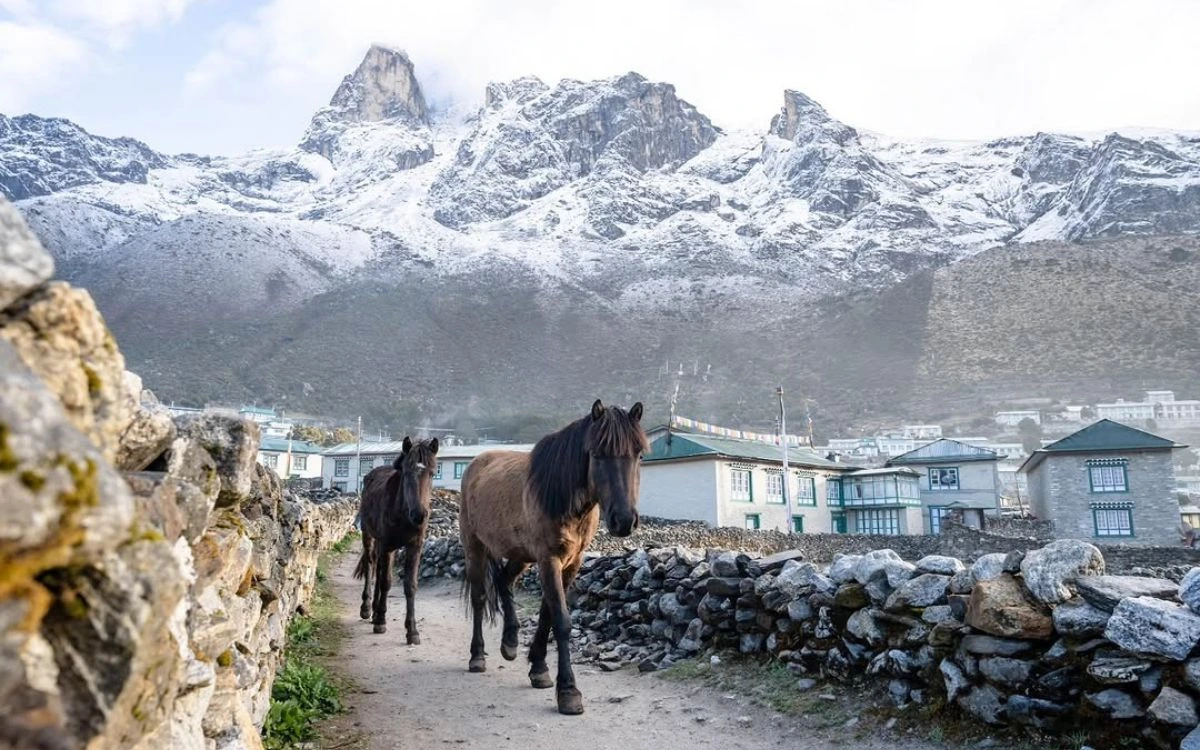
Two horses walking along a narrow stone-walled lane through Khumjung village with snow-covered jagged peaks behind
Types of Lodges and Tea Houses
Khumjung has a handful of well-run tea houses and small lodges catering to trekkers. Accommodation is basic but comfortable — wooden beds with thick blankets, shared bathrooms, and a central dining area warmed by a bukhari (wood-burning stove). Booking in advance during peak season (October–November) is advisable.
Local Food and Dining Experience
Meals in Khumjung are wholesome and hearty. Dal bhat (lentil soup with rice and vegetables), tsampa porridge, thukpa (noodle soup), and butter tea are staples. Many tea houses also serve momos (dumplings), pancakes with local honey, and Sherpa stew — simple comfort food perfectly suited to cold mountain evenings.
Cost of Staying in Khumjung
Khumjung is notably affordable compared to more commercialized stops on the Everest trail. A night's accommodation typically costs between USD 5–15, with meals ranging from USD 3–8 per dish. Budget trekkers will find Khumjung one of the most economical overnight stops in the Khumbu valley.
Best Time to Visit Khumjung Village Nepal
Weather by Season
Khumjung experiences four distinct seasons. Spring (March–May) brings blooming rhododendrons and stable trekking weather. Summer/Monsoon (June–August) delivers heavy rain and leeches on lower trails, though the valley above Namche stays relatively dry. Autumn (September–November) is peak season — clear skies and perfect visibility. Winter (December–February) is cold and quiet, with snowfall adding a magical quality to the village.
Best Months for Trekking
October and November are the golden months for visiting Khumjung village. The post-monsoon air is crystal clear, temperatures are pleasant during the day, and mountain views are at their absolute best. March and April are a close second, with wildflowers adding color to the trail.
Seasonal Travel Tips
Pack layers regardless of season — temperatures can swing dramatically between day and night at high altitude. Carry a quality sleeping bag rated to -10°C, apply sunscreen liberally (UV is intense at altitude), and always carry water purification tablets or a filter bottle.
Why Khumjung is One of the Best Hidden Villages in the Everest Region
A More Relaxing Hiking Option
You’ll find both trails leading to and from the Everest Base Camp to be like walking along an interstate highway; people are everywhere on the main trails. A trail up through the Khumjung valley is less traveled and allows for a more enjoyable experience with Mother Nature. For this reason, Khumjung can be considered a hidden valley when compared to the other villages located closer to the main trail.
Experience Authentic Culture
Khumjung is not highly touristy; you will see that the way of life for the Sherpa has stayed the same as it was many generations ago. The sheer number of old Sherpa houses and their way of life create a fantastic example of Sherpa culture and way of life.
Scenic Landscapes and Views
There are few places in Nepal where the scenery is as beautiful. Khumjung is located in a natural bowl that has snow-covered mountains on all sides. The moment the sun rises above the mountain range will be something you will never forget!
Travel Tips for Visiting Khumjung Village
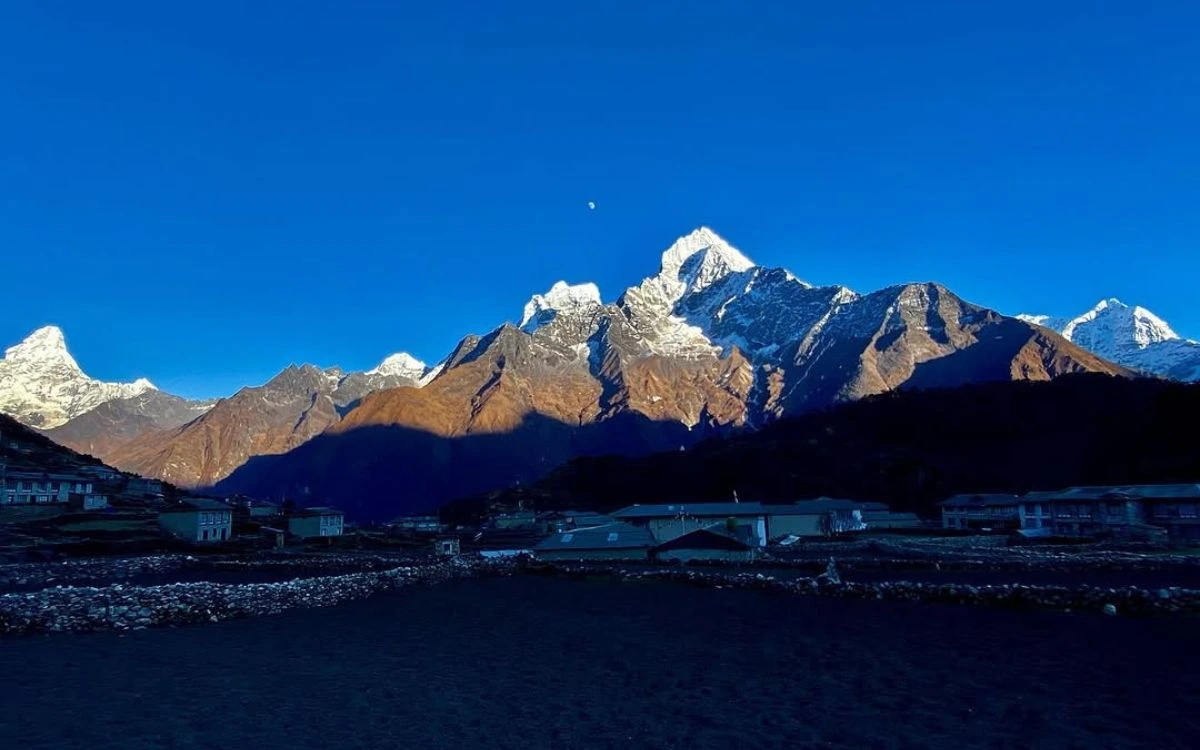
Early morning panorama of Khumjung village with moonlit snow-capped Himalayan peaks glowing above the quiet settlement
Permits Needed
When trekking to the Khumjung village, you will need two permits: the Sagarmatha National Park Entry Permit (which can be gotten either at Monjo or Kathmandu) and the TIMS card (Trekkers' Information Management System card). Both of these can be easily arranged through a registered trekking agency in either Kathmandu or Lukla.
Packing Essentials
When packing for your trek to Khumjung, remember to pack good-quality down jackets; thermal, base layer clothing; a trekking pole; a headlamp with an extra battery; first-aid kits, blister plaster; and high-SPF sunscreen. It is also a good idea to bring along battery banks because charging facilities are limited in the village of Khumjung. Above all else though, remember to pack your patience and open-mindedness because the mountains reward those who take their time.
Health and Safety
At Khumjung, altitude sickness is the main health concern due to its elevation, so you need to ascend gradually, stay well hydrated, avoid alcohol for the first few days and follow the Golden Rule, "Walk High, Sleep Low." You should also carry Diamox (acetazolamide) as a precautionary measure after consulting with your physician. High altitude evacuation cover should also be included in your travel insurance plan.
FAQs About Khumjung Village
What is the altitude of Khumjung Village?
Khumjung village sits at an altitude of approximately 3,790 meters (12,434 feet) above sea level. This places it firmly in the high-altitude trekking zone, requiring careful acclimatization from lower-elevation trekkers.
Is Khumjung Village worth visiting?
Absolutely. Khumjung village is worth visiting for its rich Sherpa culture, the iconic Hillary School, the mysterious Yeti scalp at the monastery, and its stunning Himalayan panoramas. It is one of the most authentic and rewarding stops in the entire Everest region.
How far is Khumjung from Namche Bazaar?
Khumjung is approximately 4–5 km from Namche Bazaar, which translates to a comfortable 45-minute to 1-hour uphill walk. The trail is well-marked and can be done without a guide.
Can beginners trek to Khumjung Village?
Yes, beginners with reasonable fitness can trek to Khumjung. The trail from Namche is not technically difficult. However, proper acclimatization, gradual ascent, and physical preparation are essential. Completing a lower-altitude trek beforehand, such as the Annapurna Base Camp trek, is highly recommended.
Conclusion
Khumjung Village in Nepal isn't merely a point along the trek — it's an experience that will stay with you. In Khumjung, you'll find more than just a small village. From the famed Khumjung Monastery Yeti Scalp and the storied Hillary School, to the hospitality of the Sherpas and the raw beauty of the Everest area, Khumjung has an abundance of things to offer.
Moreover, Khumjung is where history, spirituality and nature all come together in the most stunning landscape in the world! Whether you're travelling to Khumjung as part of a side trip on the Everest Base Camp trek, the Gokyo Lakes trek or as its own destination, your visit will be memorable. Contact us at Himalayan Recreation Treks & Expedition now, and one of our professionals will assist you in creating your ideal trekking tour!


.webp)



-6.webp)
-1.webp)
-1.webp)