May is a fascinating, high-stakes month to experience one of the world’s greatest treks. Positioned at the very tail end of the pre-monsoon spring window, trekking the Annapurna Circuit during this time offers an entirely different rhythm than the crisp days of October or early April.
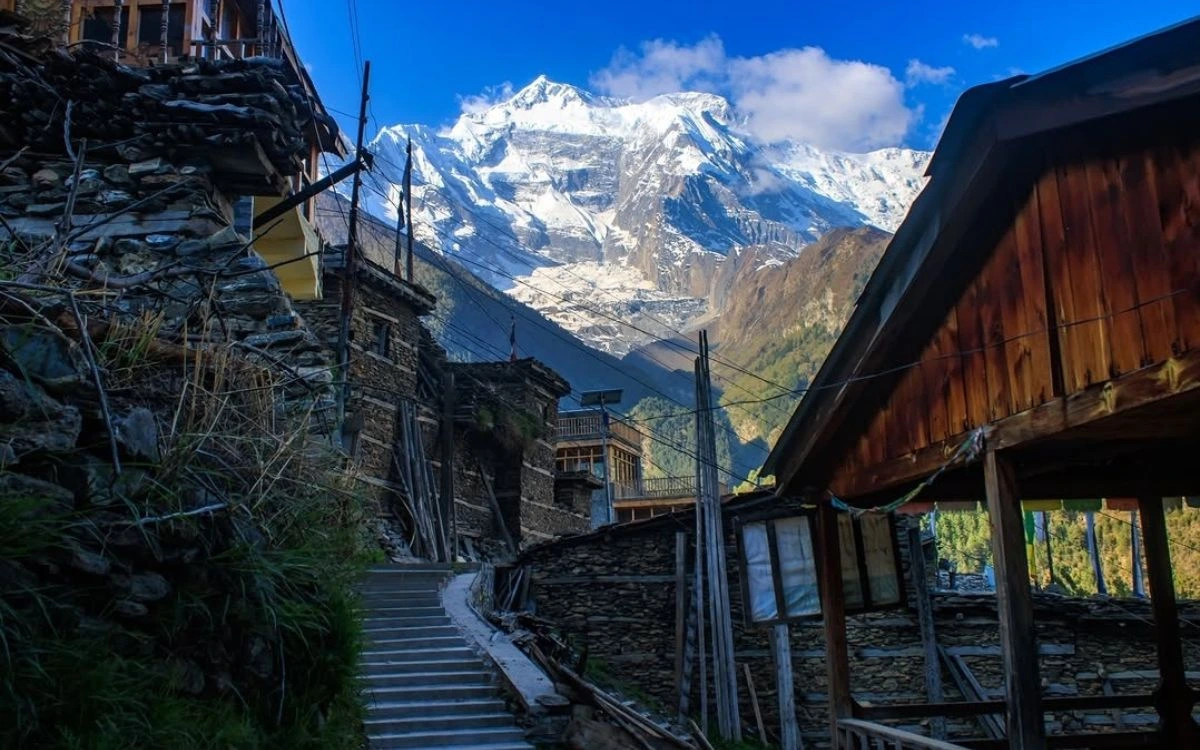
Narrow stone-paved village lane with traditional houses and a snowy Annapurna peak at the end
The rhododendrons at lower elevations have given way to lush summer greens, the high passes are finally clear of heavy winter snows, and the trails are remarkably quiet. However, nature is also gearing up for a change.
If you are looking for an optimal balance of clear high-altitude crossings and quiet trails, timing your trek to the Annapurna Circuit in May requires tactical planning. Here is your definitive logistical blueprint to making it a success.
The Golden Rule of May: Beat the Midday Cloud Cover
The defining characteristic of late spring in the Himalayas is the predictable buildup of afternoon convective clouds. While your mornings will typically start with piercing blue skies and crisp, glowing peaks, moisture rising from the lower valleys tends to roll in by midday, bringing overcast skies and sporadic afternoon showers.
The practical rule of thumb for May is simple: become an early riser.
By hitting the trail by 6:00 AM, you ensure that the bulk of your day's trekking occurs under clear skies. This strategy maximizes your mountain views and gets you safely to your next teahouse before the afternoon rain or mist sets in.
Annapurna Circuit vs. Regional Alternatives
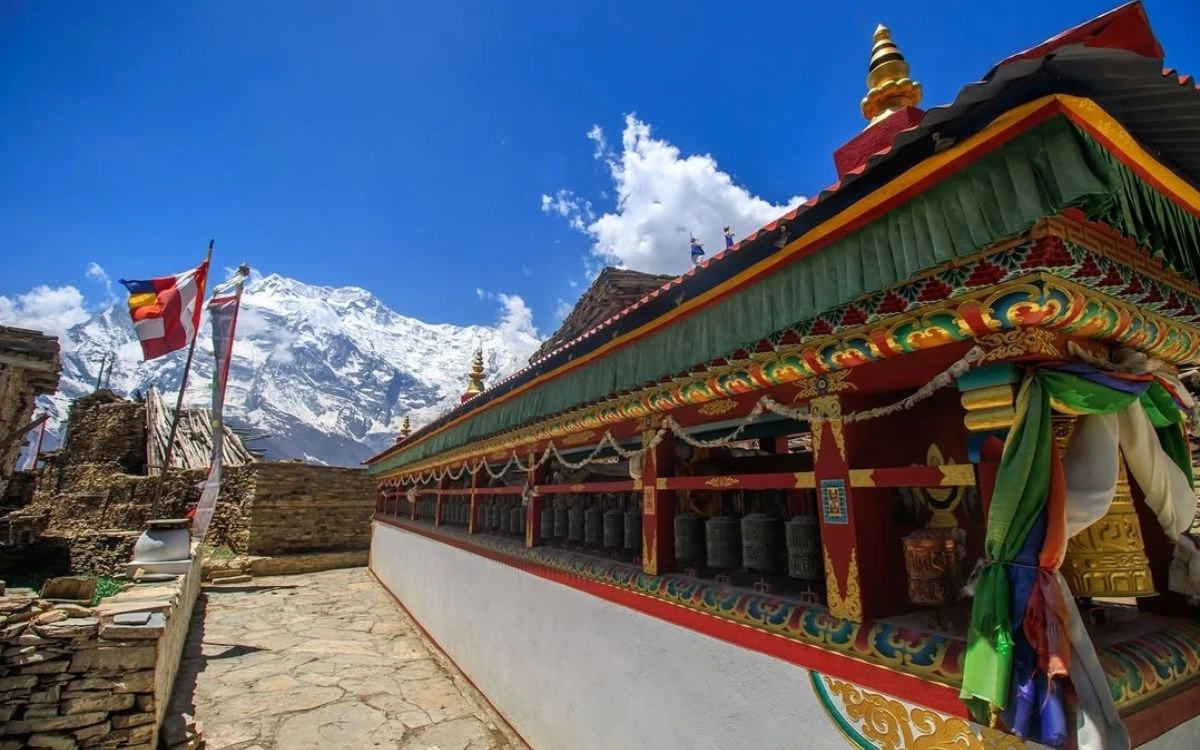
Colorful Buddhist monastery with prayer wheels and flags below a snow-capped Annapurna peak
The Annapurna Circuit is actually the best way to witness the dramatic transition of Nepal's landscape from the sub-tropical river valleys to the high-alpine desert, but it is not necessarily the only trekking option during the pre-monsoon season. Here are some other famous treks that you might compare for your schedule and willingness to take risks:
Manaslu Circuit Trek
If you are looking for a more isolated wilderness route that also experiences the late spring season, then the tough Manaslu circuit loop will offer you an authentic and culturally less-commercialized experience.
Everest Base Camp Trek
If your drive is only to experience high altitude and world-famous mountains, theEverest Base Camp trek remains somewhat cooler in May. But it does not have the same level of ecological variety as the Annapurna region.
Langtang Valley Trek
Those on a tight schedule can trek in Langtang Valley, which packs a spectacular alpine landscape and a strong Tamang culture in a trip that will not require you to spend a long time acclimatizing as you would on a circuit trek.
High-Altitude Highlights You Can't Miss
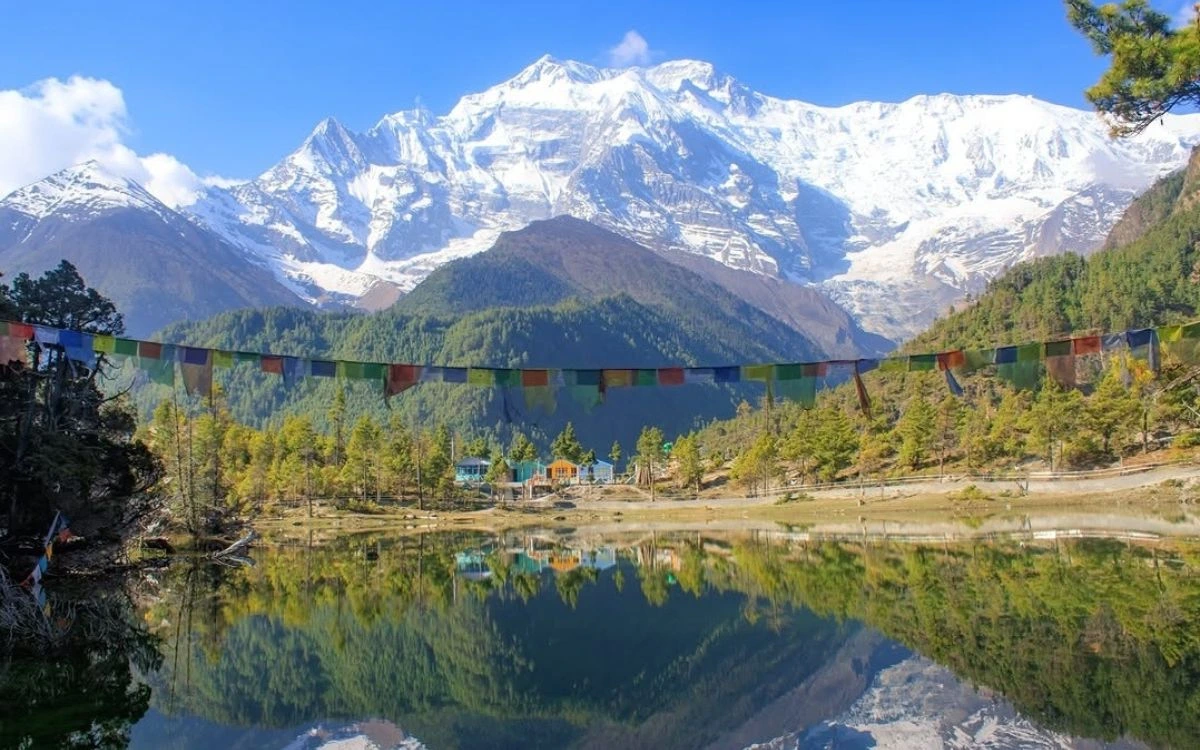
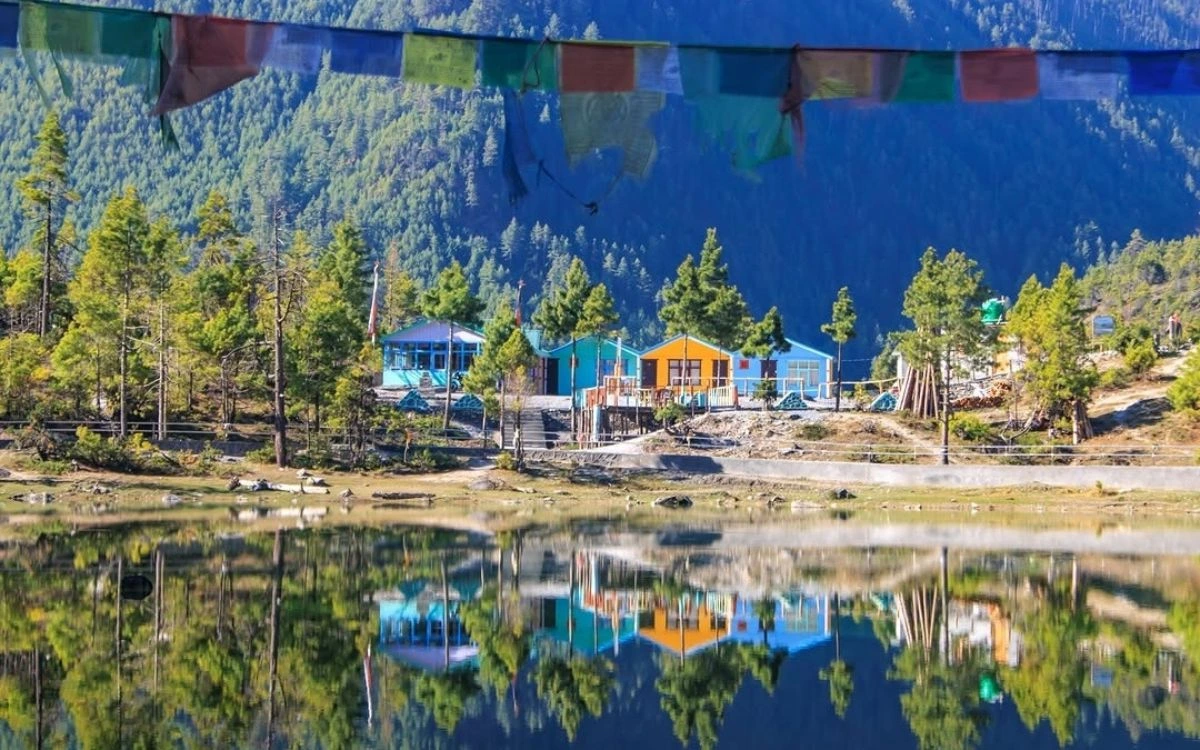
Prayer flags strung over a still lake reflecting Annapurna II and pine forest in the Annapurna Circuit
The circuit's wonderful cultural diversity is where the real magic of the trek lies, aside from the physical demand of the trail:
Upper Pisang (3,300m)
Perched on a limestone ridge, this gorgeous old Tibetan village gives you fabulous views of Annapurna II and IV.
Manang Valley (3,540m)
The prayer-flag-filled Manang village is the biggest town on the route. It is the place for required acclimatization, abundant with local bakeries, old monasteries, and a mesmerizing sight of the glaciers.
Muktinath Temple (3,760m)
After descending the pass, you will arrive at the holy place, which is a spiritual haven for both Hindus and Buddhists. It is known for its 108 sacred water jets.
Marpha (2,650m)
Situated in the windy Kali Gandaki Valley, this whitewashed stone settlement is the apple production center of Mustang - make sure to have the local apple pie or apricot brandy before you leave.
Packing Smart: A Microclimate Gear Strategy
Trekking in May means packing for two entirely different worlds. You will start your journey in intense heat and end it in freezing alpine terrain.
Altitude Range
Average Temperature
Weather Conditions
Core Gear Required
Lower Elevations
(Besisahar to Chame)
20°C to 30°C
Humid, sunny, with localized afternoon showers.
Lightweight trekking shirts, breathable shorts, a high-quality sun hat, and an accessible rain shell.
Mid-Altitude Zones
(Manang to Yak Kharka)
10°C to 18°C
Mild, pleasant mornings; breezy, overcast afternoons.
Merino wool base layers, a fleece mid-layer, and durable trekking pants.
The High Pass
(Thorong La: 5,416m)
-5°C to 5°C
Freezing winds, intense UV exposure, and potential late-season snow.
Down jacket, windproof outer shell, thermal gloves, beanie, and polarized sunglasses.
The May Advantage: The Gates to Tilicho Lake are Open. Because May has nice weather and the trails are clear, it's a great time to include the Tilicho Lake extension in your trip. This stunning lake, at an elevation of 4,919 meters, lies right under huge ice cliffs. It adds 2–3 days to your hike but is one of the most gorgeous side trips in the Himalayas.
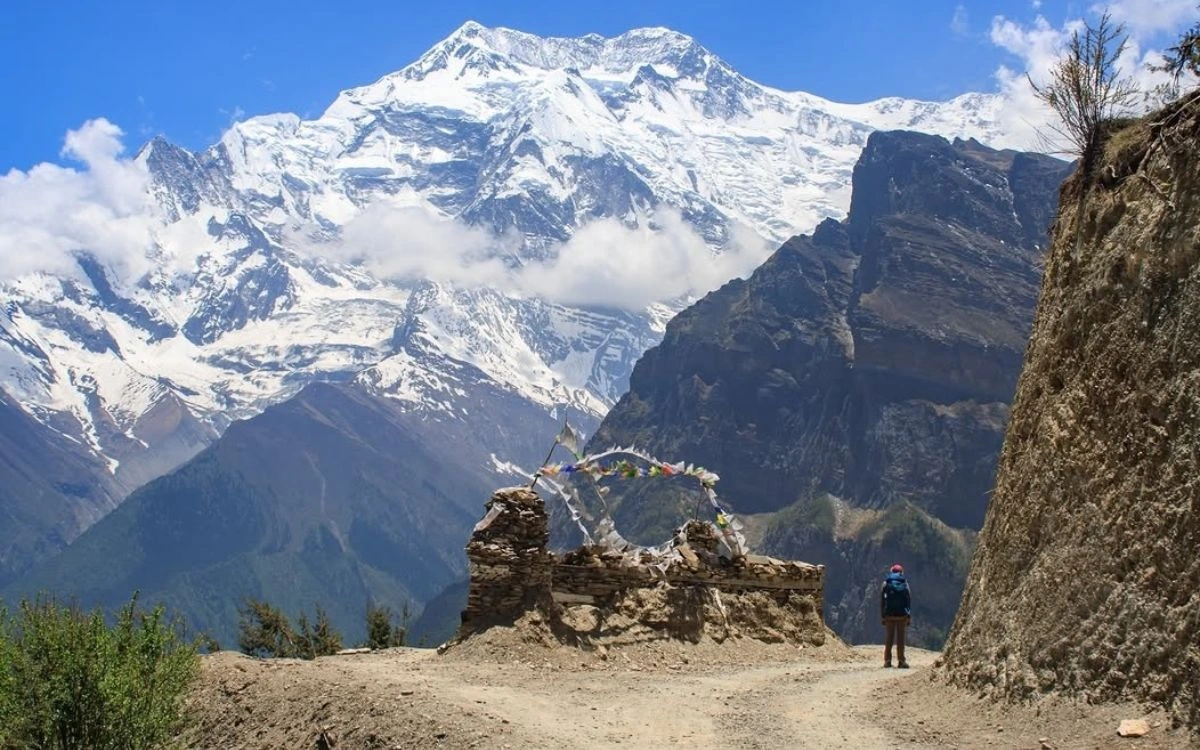
Trekker passing a stone mani wall with prayer flags and Annapurna massif towering above
Essential Permits & 2027 Logistics
Before you begin, make sure your paperwork is in order. To pass the checkpoints legally, you need these permits:
Annapurna Conservation Area Permit (ACAP): NPR 3,000 (~$22–$25 USD)
Trekkers' Information Management System (TIMS) Card: NPR 2,000 (~$15–$17 USD)
Pro-Tip for 2027: Only registered trekking agencies can get these permits for you, and they come with a certified guide. Going solo is mostly not allowed, so plan your trip with a licensed local agency well in advance.
FAQs:
Is May a good month for trekking the Annapurna Circuit?
Really, May is a very nice time for the trek in the Annapurna Circuit if you are looking to sidestep the heavy crowds of early March and still enjoy a warm atmosphere with high passes that are clear. In fact, it happens to be a season of pre-monsoon during which the paths are green and calm. Though one has to begin their trek early to beat the formation of clouds in the afternoon.
How is the weather on the Annapurna Circuit in May?
May indicates the presence of a wide array of microclimates along the trekking trail. The lower levels (from Besisahar to Chame) experience hot and damp weather with temperatures from 20°C to 30°C. The regions at the middle altitude (such as Manang) stay pleasant in the range of 10°C to 18°C. However, the high-altitude pass of Thorong La sees the temperature falling to between -5°C and 5°C with freezing winds.
Why is starting early at 6:00 AM a must when trekking in May?
The Himalayan weather during late spring has somewhat of a pattern that is very reliable; it is marked by a morning of blue sky being followed by the increase of moisture in the valleys around noon time. Reaching the trail by 6:00 AM means you will be able to complete your day's trekking without the clouds getting in your way. Surprisingly enough, you will also have the advantage of maximum mountain visibility, and you will be able to reach the teahouse safely before the mist or showers that are very localized come.
Can I hike the Annapurna Circuit on my own without a guide?
No, going solo for the Annapurna Circuit trek is, in fact, not allowed. With the current tourism policies, your compulsory permits—the ACAP and TIMS card—have to be officially issued through a trekking agency that is registered and will be linked to a certified, licensed guide.
Colorful teahouse lodges reflected in a calm lake with pine forest and prayer flags above
How much do permits for the Annapurna Circuit cost?
You will need to get a couple of main permits if you plan to do the circuit:
Annapurna Conservation Area Permit (ACAP): NPR 3,000 (roughly $22–$25 USD)
Trekkers' Information Management System (TIMS) Card: NPR 2,000 (around $15–$17 USD)
Is it possible to do the Tilicho Lake side-trek in May?
In fact, May is a perfect month to do the Tilicho Lake (4,919m) side trek. The winter snows have completely melted, and the high altitude trails leading to the lake are clear and very accessible.
It is an amazing 2- to 3-day extension of the standard circuit.
How long does the Annapurna Circuit trek take?
The modern Annapurna Circuit, a typical trek, takes approximately 12 to 14 days and covers a distance of about 110 to 170 kilometers. The overall time also largely depends on whether you use local jeep transport to skip some sections of the newly constructed dirt roads or if you go for the longer, scenic footpaths.
How can I avoid walking on the dirt roads along the trail?
If you want to keep away from vehicle traffic and at the same time have a proper trekking experience, always use the High Route alternatives as indicated on the most updated trail maps. Taking the route like the upper loop connecting Upper Pisang through the traditional villages of Ghyaru and Ngawal to Manang will guarantee you a completely vehicle-free mountain experience.
What are the main cultural highlights on the Annapurna Circuit loop?
The circuit has four distinct and major cultural attractions:- The medieval Tibetan-style village of Upper Pisang- The large acclimatization valley of Manang- The sacred multi-faith pilgrimage site at Muktinath Temple- The whitewashed, stone-paved apple capital of Marpha in the lower Mustang valley.
Conclusion
The Annapurna Circuit Trek in May rewards trekkers who understand the season and plan around it. Start early each day, pack for the full elevation range, respect the acclimatization schedule, and you will experience one of the most complete Himalayan treks available — spring wildflowers, sweeping mountain views, a genuine high-pass crossing, and the kind of trail quiet that October simply cannot deliver. May is not the most famous month on the circuit, but it might be the smartest one. Contact Himalayan Recreation Treks and Expedition today to start planning your Annapurna Circuit adventure in May.


-4.webp)



-1.webp)
-1.webp)
-1.webp)