A situation all travelers wish to avoid is "arriving at a busy Kathmandu hotel after a long flight and having only 2% battery remaining on their phones, only to find that their charger does not fit into the wall socket." Knowing the proper electric plugs in Nepal is just as important as bringing your hiking boots with you when traveling to Nepal. For those traveling to Nepal for the first time, the different types of Nepal plug types and electrical outlets used in Nepal may be surprising.
So what type of electric plugs does Nepal use? The most common electric plugs in Nepal are Type C and Type D. The voltage used is 230V with a frequency of 50 Hz. Knowing what kind of electric plugs are in Nepal and how to charge your devices will save you a lot of hassle while traveling. Many of your electrical devices, including phones, cameras, and laptops, will require an adapter in order to be charged. Consequently, you will be able to charge your electrical devices at either a hotel in Kathmandu or when trekking in beautiful rural tea houses.
We will discuss in this guide everything from plug and socket types to voltage and frequency, give some tips on how to safely use foreign electronics, and recommend which adapters are best to be taken. At the end of this, you will know exactly which electric plugs for Nepal to pack and how to stay powered throughout your trip, whether walking down the city streets or trekking in the Himalayas.
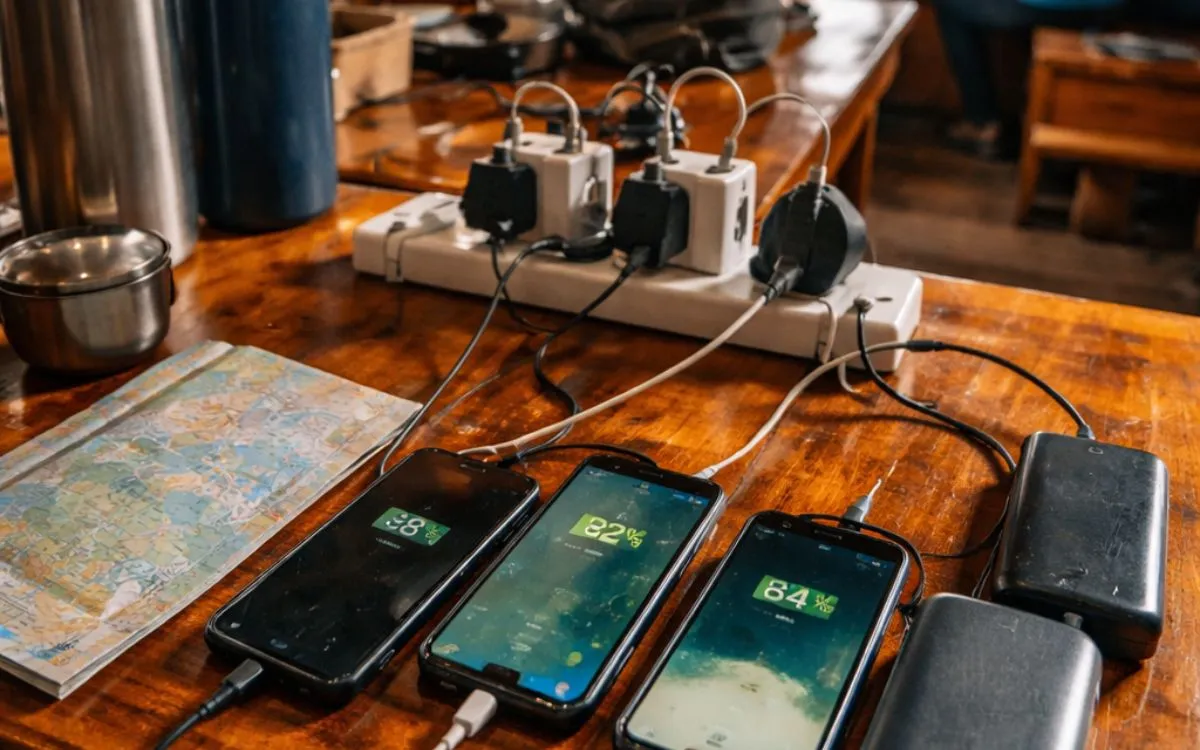
Multiple phones and power banks charging at teahouse in Nepal
What Kind of Electric Plugs Are Used in Nepal?
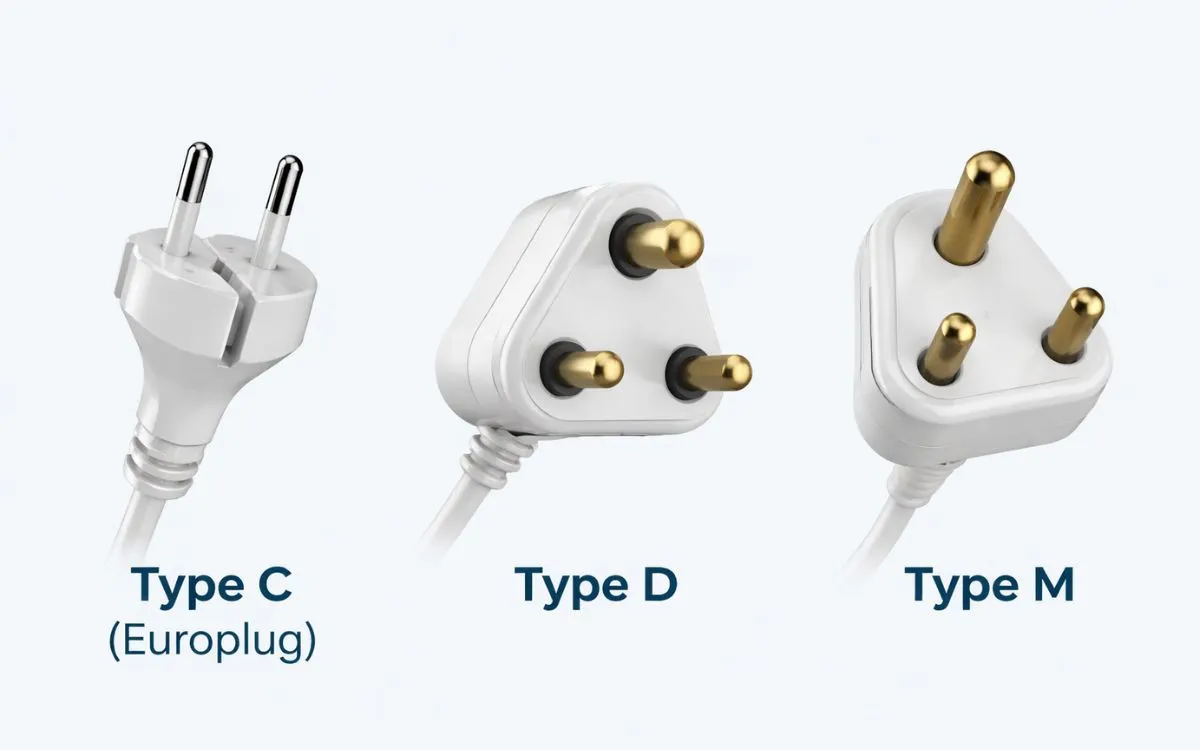
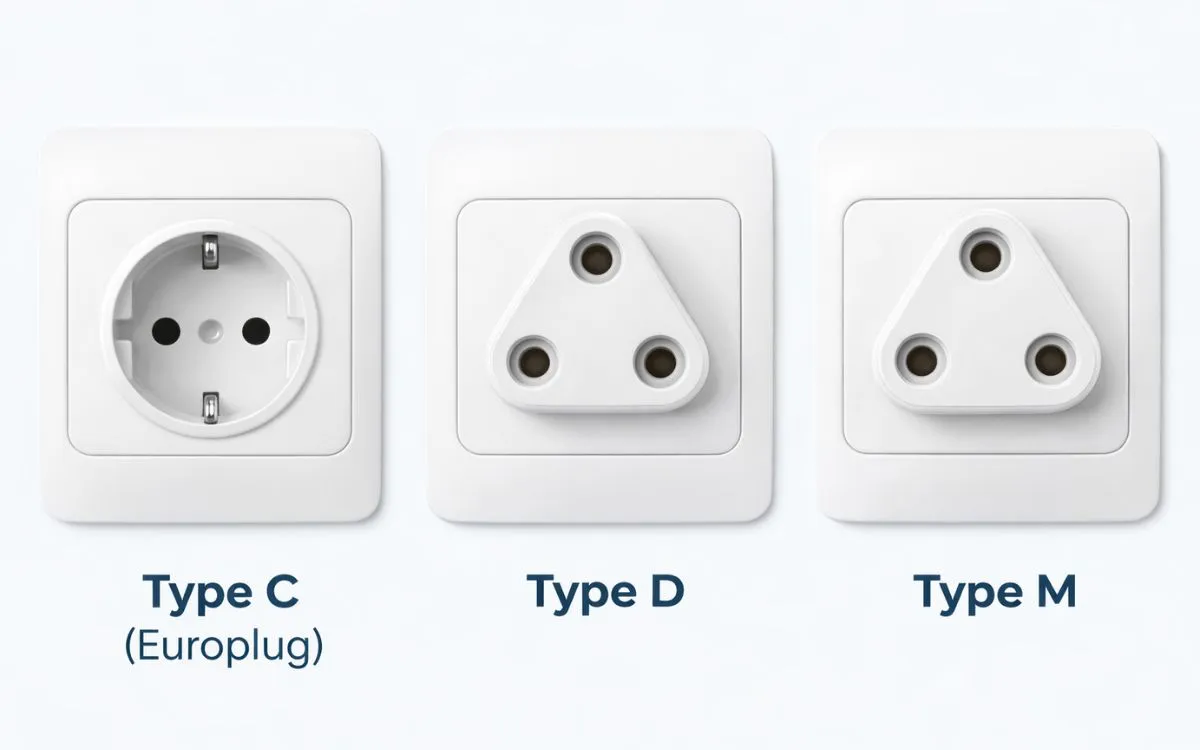
Nepal has an uncomplicated way to connect to energy, yet the design of their electrical outlets may be different to what you are accustomed to seeing within your own country. In Nepal there are three different plug types that are predominantly in use i.e. Type C, Type D and Type M. If you are familiar with these different types of plugs, then it will answer your most frequently asked question, what kind of electric plugs are used in Nepal.
Type C (Europlug)
This is the most common plug that you will encounter in Nepal. It has two round pins and is very common throughout Europe and Asia. Hence, most hotels, new apartments, cafes, coworking spaces, and trekking tea houses have at least one Type C outlet, so many travelers have no issue charging phones, cameras, and laptops.
Three types of electrical plugs - Type C Europlug, Type D, and Type M
Type D
This plug consists of three round pins arranged in a triangle pattern. This plug type is an old variant and can be found in local homes, guest houses, and small shops, which are mostly outside of the main cities like Kathmandu and Pokhara. This plug type is very common, and most tourists notice it when they see that their charging plug fits in one spot but not in another.
Type M
The Type M is similar to the Type D but has larger and thicker pins. It is usually installed for high-power appliances such as heaters or water boilers but some accommodations also use it as regular wall outlets.
Electrical Outlets in Nepal: What to Expect in Hotels and Guesthouses
Electrical outlets in Nepal are highly location-dependent. The cities including Kathmandu and Pokhara, for instance, have most hotels equipped with standard sockets of Type C, while some others may even come up with Type D and M, outlets that are trustworthy and perfect for recharging phones, laptops, and cameras.
The scenario is different on trekking routes. You won't find sockets in the majority of the rooms above 3,000 meters. There are one or two outlets in the high altitude tea houses but they are usually kept for the main charging points in the dining hall where hectic travelers plug in their devices at the same moment. Most of the providers have a multipluck which enables the charging of multiple devices simultaneously. This multipluck is mostly compatible with Type C plugs, and sometimes Type D or M. Charging can take a while and some lodges may ask for a small payment. Since many tea houses depend on solar energy, the supply of electricity may vary with the weather and the time of day.
Voltage and Frequency of Electricity in Nepal
Nepal follows the same voltage standard as most European countries, which is 230 volts (V) with a 50 hertz (Hz) frequency. This voltage is compatible with modern electronics, but the power supply in Nepal may be unstable at times, particularly in the less developed areas and at the top of the mountains. Therefore it is advisable to protect your devices with a surge protector or a good-quality adapter. Europeans and some other countries' travelers will not have any trouble charging their devices in Nepal as it is the most commonly used Type C (Euro), Type D, and Type M that they can carry with a universal plug adapter or a compatible one.
Three types of electrical sockets - Type C Europlug, Type D, and Type M
Can You Use Foreign Chargers and Electronics in Nepal?
Mostly, foreign chargers and electronic devices can be used in Nepal without any problems. The voltage and frequency of the electricity supply in Nepal are 230V at 50Hz, which is the same as in most modern chargers used for mobile phones, laptops, digital cameras, tablets, and power banks. Such devices are generally dual-voltage and they detect the voltage range and operate automatically. However, it is advisable to look at the label on the charger and verify if the input range is mentioned as 100–240V. If it is, then a plug adapter will be the only thing you need.
The Type C, D, and M sockets are the ones that Nepal is using, and in addition, many hotels and guesthouses are equipped with multi-plug sockets. The simplest solution is to have a universal travel adapter with you. Voltage fluctuations may occur, particularly in the trekking areas and small towns, so it is a good idea to use a high-quality adapter or surge protector to safeguard your devices. Devices operating only on 120V like older hair dryers or electric shavers are to be avoided while traveling as they require a voltage converter.
Best Travel Adapter for Nepal (What Actually Works)
Nepal has three different types of sockets, Types C, D, and M. The best way to travel to Nepal is to buy a universal travel adapter that will work in all three types of sockets. The Epicka brand is a very popular brand of universal travel adapters that can be used in many different countries and have the ability to charge multiple devices via USB-A and USB-C ports. Devices such as cell phones, cameras, and portable power banks can be charged using an Epicka brand universal travel adapter.
Ceptics adapter is an excellent option as they are durable and offer a higher level of protection for your devices against electrical surges associated with voltage surges in Nepal. Tessan is another brand of adapters that is well-respected due to its small compact size with multiple USB ports for use while travelling. Anker travel adapter is an excellent choice when you want to charge your cellphone or smaller electronics. As a general rule of thumb, when selecting a travel adapter for use in Nepal, you should ensure that your charger is rated 100-240 volts.
Charging Phones, Cameras, and Power Banks on Treks
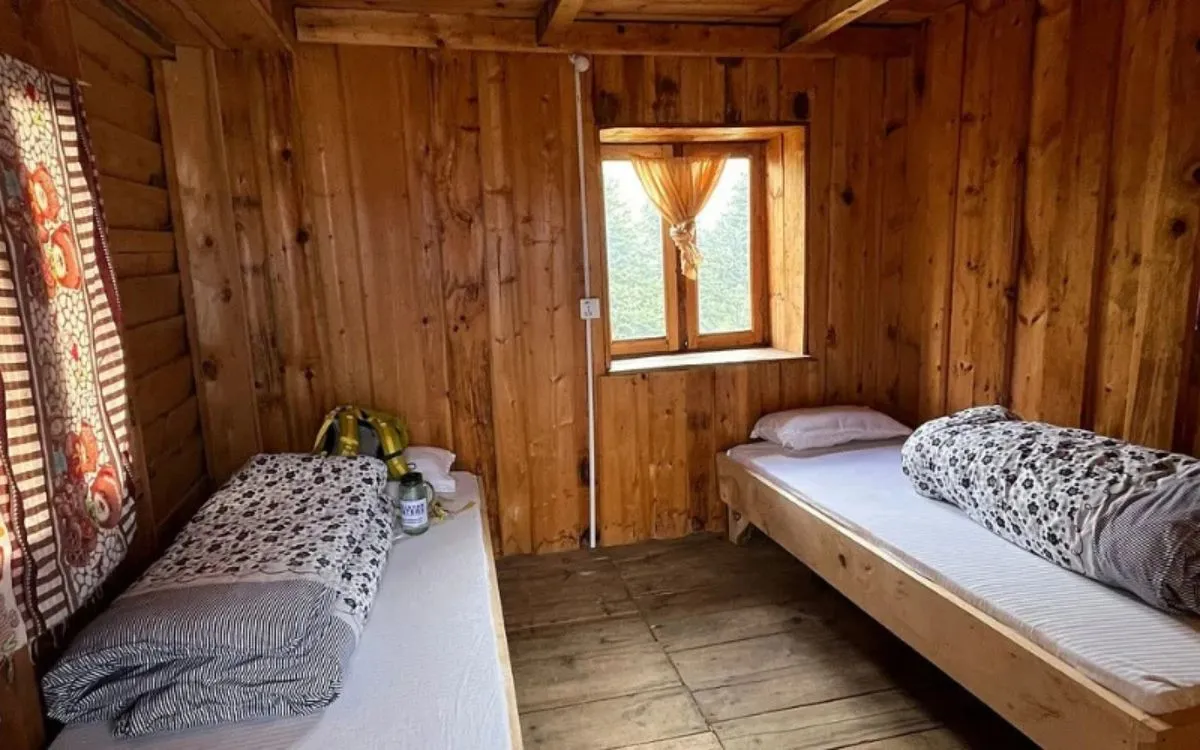
In most treks around Nepal, you can charge your phone, camera, and power bank, but availability varies depending on the region and altitude. Tea houses in popular trekking areas like Everest, Annapurna, and Langtang usually provide charging facilities, often in the dining area rather than in the rooms.
Wall socket in rustic wooden teahouse room in Nepal
In lower-altitude regions, charging is generally free, but at higher elevations, there is usually a small fee of around 500 NPR for an hour of charging or 700 NPR for a full charge. Charging can also take longer at high-altitude lodges where electricity often relies on solar power. Carrying a power bank with a capacity of at least 10,000 to 20,000 mAh is highly recommended to stay connected and keep devices charged during long days on the trail.
Electrical Outlets in Trekking Regions vs Cities
Feature
Cities (Kathmandu, Pokhara, etc.)
Trekking Regions (Everest, Annapurna, Langtang)
Outlet Type
Type C, D, M; multi-plug sockets common
Mostly Type C, D, M; fewer multi-plug sockets
Avaibility
Widely available in hotels, cafes, and restaurants
Limited to tea houses and lodges; sometimes only one outlet per room or shared area
Power Realibility
Generally stable; occasional short outages
Less reliable; often solar-powered at high altitudes, may fluctuate
Charging Fees
Usually free in hotels
Often charged per device (USD 2–5), sometimes included in room cost
USB Charging
Common in modern hotels
Rare; usually need your own adapter or power bank
Voltage
230V, 50Hz
230V, 50Hz, but may fluctuate more at higher altitudes
Electric Plugs in Nepal vs India: Are They the Same?
Nepal and India are using almost the same electric systems which means that their plugs and voltage are mostly compatible. The electrical specifications of both countries are 230 volts at 50 Hz and the same Type C, D, and M sockets are mostly used. That is the reason the majority of chargers, devices, and adapters from India will get along with Nepal without any problems. On the other hand, even though the plug types are identical the travelers must verify the support of their devices for dual-voltage and take a plug adapter along if necessary especially in the case of staying in secluded areas or trekking sites where the power outlets may be scarce.
FAQs
Do I need a voltage converter in Nepal?
A voltage converter is not required for most travelers to Nepal since the country operates at 220v-240v; therefore, most modern phone chargers will accept this voltage range. If your device has a label stating it can operate from 100v-240v, then most likely all you need is an appropriate plug adapter; only those appliances rated exclusively for 120v will require a converter.
What is the best travel adapter for Nepal?
Universal travel adapters are the most versatile and will work well in every area of Nepal regardless of whether you are in the cities or on the trek. Nepal uses Type C, Type D and Type M and most hotels will have multi-plug sockets which will allow you to charge multiple devices at once.
Can I charge phones, cameras, and power banks on treks?
Many tea houses provide charging facilities, but, as usual with most things in Nepal, you will have to pay to charge your device and most likely it will take longer to charge, especially at higher altitudes. Therefore, I highly recommend bringing along a power bank.
How reliable is electricity in Nepal?
Electricity in Nepal is reliable in major cities like Kathmandu and Pokhara; however, the electricity is sporadic sometimes. On the other hand, power in trekking regions is unreliable and often relies on solar energy, especially at higher elevations.
What safety tips should I follow when using electricity in Nepal?
Always use a good quality adapter, do not overload sockets, and always unplug your devices immediately after they finish charging. Keep your chargers dry and try not to use the charger when there are fluctuations in the electrical current.
What is three-phase voltage in Nepal, and do travelers need to worry?
Industries are the primary users of Three-phase Power. This power is useful for travelers because hotels and lodges provide this type of electrical supply using standard household electricity.
What is the voltage in Kathmandu?
Kathmandu uses 220–240 volts AC at a frequency of 50Hz (the same as the rest of Nepal), which should be suitable for most modern travel electronics.
Can we use 120v in Nepal?
If traveling with any 120V device, make sure it has a dual-voltage capability; otherwise, you will need a step-down transformer to convert 240V AC to 120V AC, otherwise, you may damage your device.
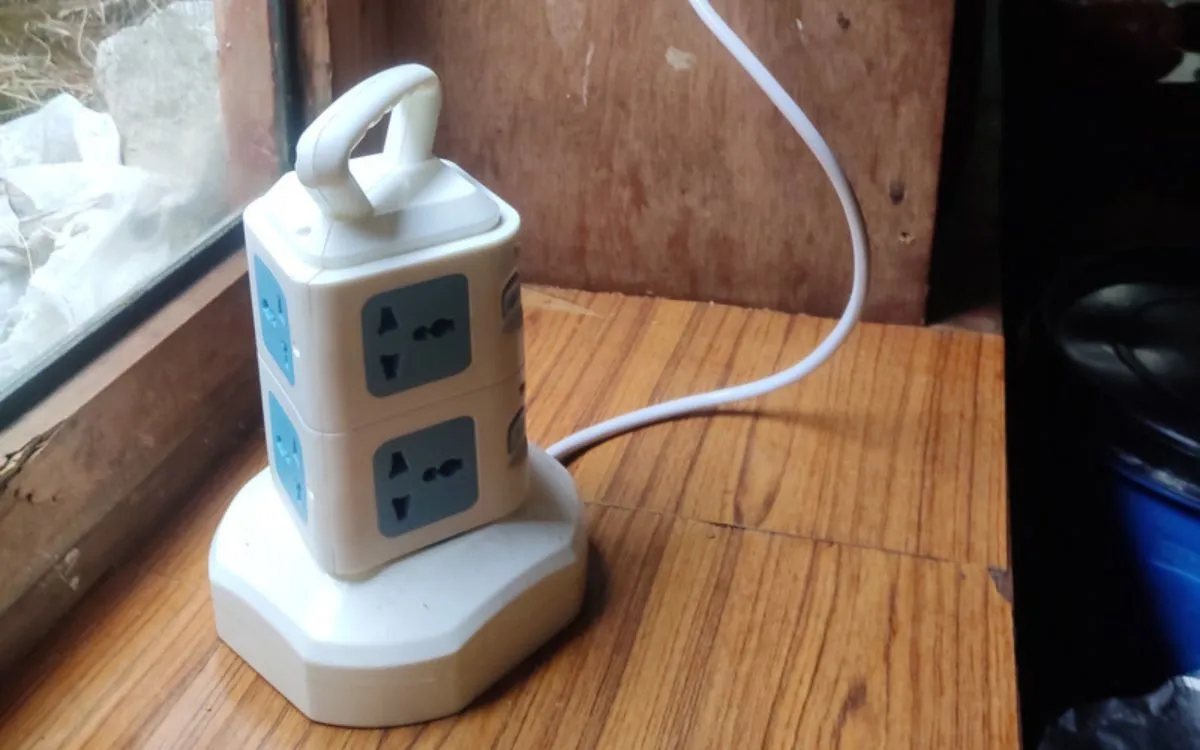
White vertical power strip with multiple sockets on wooden table
Conclusion
To stay connected while traveling in Nepal, it's helpful to have an understanding of the types of plugs used and how to access power outlets. In general, you'll find three types of plugs in Nepal: Type C, Type D, and Type M. The standard voltage is 230V at 50Hz, which matches up with the voltage (230V) and frequency (50Hz) used in many European countries and in India. Most urban areas of Nepal, such as Kathmandu and Pokhara, have good access to power outlets.
During your trek in the Himalayan region, you may not have as much access to electricity as you will have access to solar power. Most modern electronic devices use dual-voltage settings, and therefore you will probably only need a universal travel adapter to charge your electronic devices. It's also a good idea to purchase a surge protector because of the higher voltage in Nepal. For treks, it's also beneficial to bring along a power bank as an alternative power source. By using a universal travel adapter and being prepared for what type of power source to expect while traveling in Nepal, you will be able to keep your electronic devices charged up and connected during your travels. If you'd like more tips about traveling in Nepal, please feel free to contact the Himalayan Recreation.


-15.webp)



-1.webp)
-1.webp)
-1.webp)