Is Kanchenjunga harder than Everest? This is one of the most common questions among climbers and trekkers who dream of standing close to the world’s highest mountains. The answer depends on whether you are comparing the expedition (mountaineering) side or the trekking experience. While Everest is taller and attracts thousands of climbers every year, Kanchenjunga is often considered more remote, isolated, and technically demanding. From difficult weather conditions to rescue limitations, many adventurers believe Kanchenjunga presents a tougher challenge in several ways.
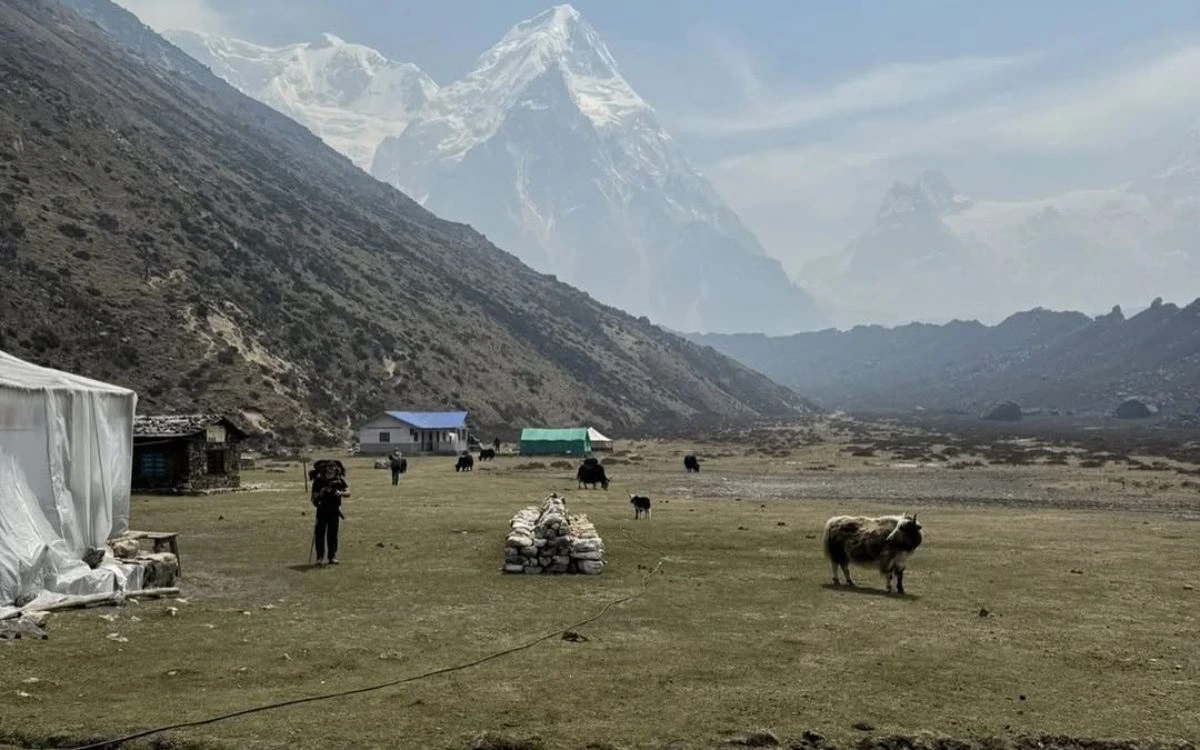
A remote Himalayan valley campsite near Kanchenjunga with grazing yaks and dramatic peaks
Although many people compare Kanchenjunga and Everest only in terms of height (elevation), there is much more that goes into making a mountain difficult to climb than just how high it is. Things like technical climbing, logistics involved with getting to the mountain and climbing on it, weather conditions, how remote the mountain is from civilization, the physical endurance needed to climb up to the top of the mountain, and access to rescue services all have a large impact on how difficult a mountain is to climb. Trekkers often want to compare Kanchenjunga Base Camp to Everest Base Camp to determine which one is the more difficult trek and the more pleasurable experience.
In this guide, we will examine the level of difficulty for climbing both Kanchenjunga and Everest when looking at them from a trekking perspective as well as an expedition perspective. Additionally, we will cover how many climbers consider Kanchenjunga as being one of the hardest mountains in the world, and whether or not it is the most difficult mountain to climb in comparison to K2.
Overview of Mount Kanchenjunga and Mount Everest
At 8,848.86 meters (29,031 feet), Mount Everest is the tallest mountain on Earth. As the tallest peak, it draws climbers, trekkers, photographers, and adventure enthusiasts from all over the world to the Khumbu region of Nepal. The trail leading to Mount Everest is essentially fully commercialized with fixed ropes, fully trained Sherpa teams, and established support camps assisting climbers.
Mount Kanchenjunga is the second-highest mountain in the world; it has a height of 8,586 meters (28,169 feet), which is 2,262 feet shorter than Nepal's tallest mountain, Mount Everest. As a result, Mount Kanchenjunga is visited much less frequently than Mount Everest. The main reason for this difference is that Mount Kanchenjunga is in a much more remote location in eastern Nepal, lacks any form of large expedition infrastructure, and can therefore be much more difficult to access than Mount Everest.
Both Mount Everest and Mount Kanchenjunga attract adventurous souls for different reasons. People want to climb Mount Everest for the prestige associated with being recognized as having climbed the highest point on earth. People who want to trek to and ultimately reach Mount Kanchenjunga are attracted to the more primitive, natural, and remote experiences offered by the mountain. If you have an interest in Trekking in Nepal, each of these areas provides a very different kind of adventure to the trekkers who visit.
How Hard Is Kanchenjunga Than Everest From an Expedition Perspective?
When comparing the Kanchenjunga expedition vs the Everest expedition, many mountaineers believe Kanchenjunga is harder despite Everest being taller.
Technical Difficulty
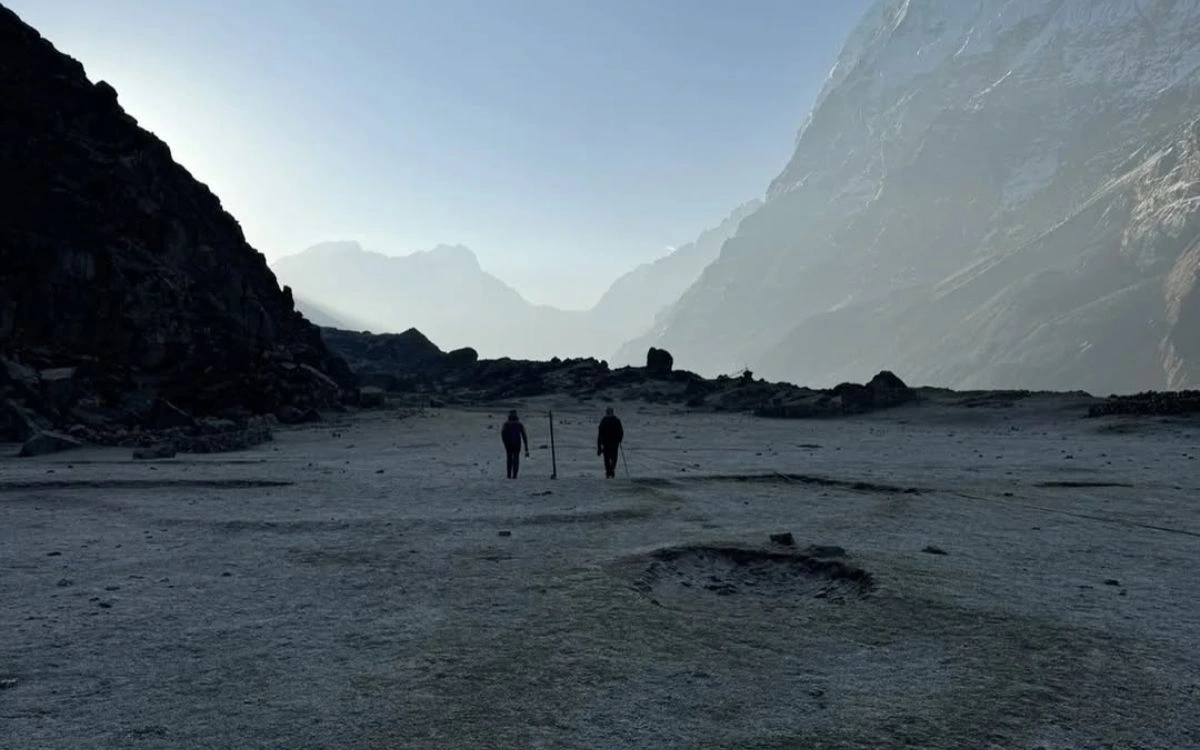
Two trekkers walking through a vast, isolated plain valley flanked by high mountain ridges.
The established route onto Everest utilizes the South Col, and climbers typically have fixed ropes, ladders, and other forms of expedition support. Despite the danger associated with climbing on Everest, the infrastructure makes it comparatively more user-friendly to climb.
Kanchenjunga, by contrast, demands stronger technical and mountaineering skills from those who attempt to climb it. Climbers will commonly encounter much steeper ice sections than on Everest, unstable terrain, avalanche-prone areas, and much more unpredictable climbing conditions. If help is required, very little help can be provided because of the lack of evacuation or rescue support.
As a result, many people ask how hard Kanchenjunga is compared to Everest. Technically, Kanchenjunga requires much greater self-reliance and climbing skills to succeed than Everest does.
Weather and Isolation
Everest has an abundance of weather monitoring support and nearby support, but climbers at Kanchenjunga must face storms and rapidly changing weather conditions with little management support available.
Kanchenjunga differs from Everest in terms of the amount of climbing traffic from climbers, who may enjoy solitude but find that, at times, climbing in isolation may be mentally exhausting.
The experience of climbing Kanchenjunga is similar to trekking remote areas such as the Manaslu Circuit Trek, where trekkers enjoy peaceful environments with little crowds and unspoiled terrain.
Fatality and Risk
Kanchenjunga is known for having more deadly accidents than Everest because of some new climbing tools that help climbers be safer in general now, but because of its technical nature and limited rescue opportunities, Kanchenjunga is still much more dangerous than Everest.
Many climbers are uncertain about whether or not Kanchenjunga is tougher to climb than Everest due to these known hazards. Most experts would say that they believe Kanchenjunga is indeed more difficult to climb from an expeditionary perspective.
How Hard Is Kanchenjunga Than Everest From a Trekking Perspective?
Trekking tells a different story. Comparing the Kanchenjunga trek vs the Everest trek depends on your trekking experience, fitness, and expectations.
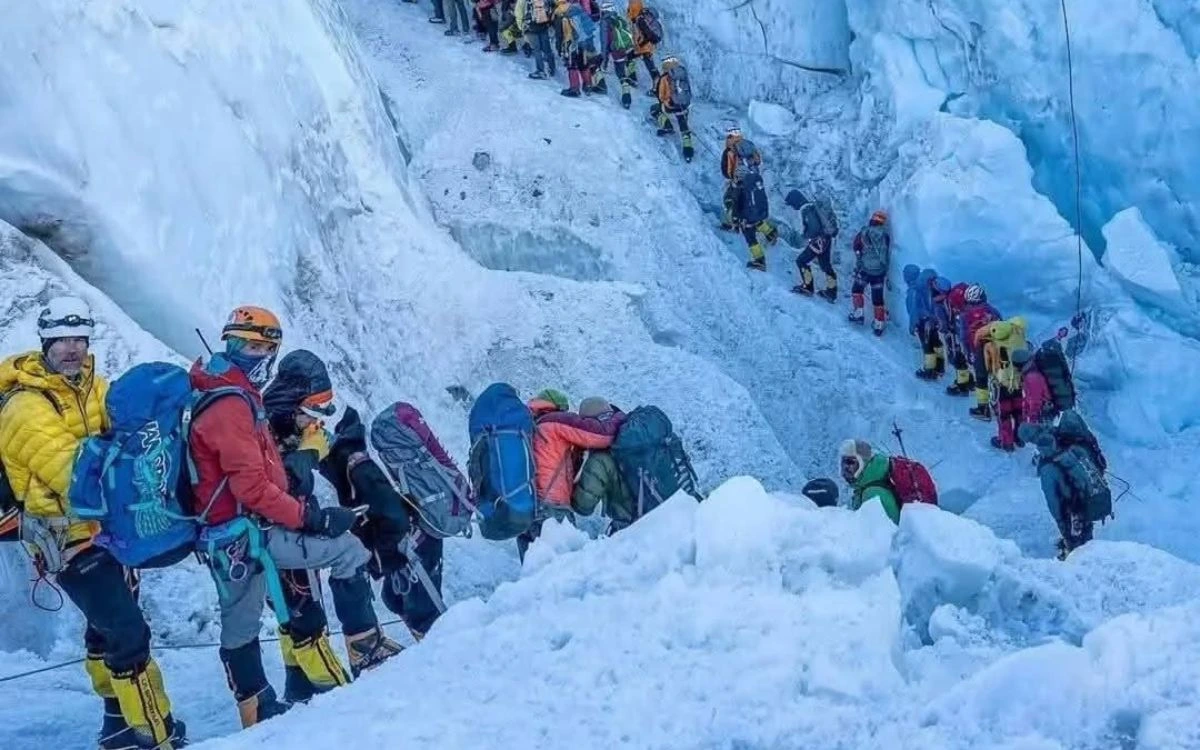
A long line of climbers wearing high-altitude gear waiting in a queue on a steep, snowy Everest slope.
Kanchenjunga Base Camp Trek Difficulty
Trekking to Kanchenjunga Base Camp involves an extended journey that is remote and challenging both physically and mentally; many trekkers take an average of over 3 weeks to complete. There will also be limited amenities available in the form of accommodations and facilities. Due to the low number of other trekkers using the routes, you may find the trails to be very genuine and quiet. Be aware that when trekking, you will likely experience more walking hours daily and much less luxury than a typical trekker may expect in a more traveled region. For those adventurous enough to find wilderness and solitude to be rewarding, Kanchenjunga provides a sense of accomplishment.
Everest Base Camp Trek Difficulty
Despite being challenging, trekking to Everest Base Camp is now less difficult than before. Better tea houses, more dependable guides, medical services for emergencies, and helicopter evacuation systems are now available along the route.
Altitude sickness will always pose a serious issue, yet the trail is extremely well-managed,d making the logistical requirements for reaching Everest easier than at Kanchenjunga.
In comparison, the Kanchenjunga Base Camp trek is similar to the Everest Base Camp trek. Kanchenjunga will almost always be perceived as a more arduous effort due to the isolation of the Kanchenjunga area versus that of Everest. When talking about altitude and crowding, Kanchenjunga will be perceived as the tougher to complete due to the altitude and amount of foot traffic compared to Mount Everest.
If you are new to trekking in the Himalayas, you will find the Everest Base Camp Trek to be a much more doable experience than that of Kanchenjunga.
Why Many Climbers Consider Kanchenjunga More Difficult
Extreme Remoteness
The Kanchenjunga area is not visited regularly by people because it is one of Nepal's most remote trekking regions. Transportation takes longer, logistics are more expensive, and emergency rescue will likely take longer.
This remoteness poses a greater challenge than even climbing Mount Everest.
Fewer Rescue Options
For climbers on Mount Everest, there is the possibility of being evacuated by helicopter and/or having an organized expedition support company on hand. This does not exist for climbers on Kanchenjunga.
In extreme situations, these differences in support options will mean the difference between life and death.
Less Commercial Support
Mount Everest has hundreds of climbing teams during each climbing season. Because Kanchenjunga is relatively untouched, there are far fewer commercial expeditions.
Because of this, climbers are responsible for planning their own routes and ensuring their own survival.
Mental Challenge of Being Alone
Many climbers have reported that Kanchenjunga feels like it is a much tougher climb mentally. Unlike Mount Everest, you will spend weeks climbing in complete silence without the bustling activity of other climbers around you and their camp(s).
Trekkers who have undertaken the Upper Mustang Trek often draw similarities between that silent trek and this experience of solitude and connection to nature on Kanchenjunga.
Why Everest Is Still Extremely Challenging
Even though Kanchenjunga may feel tougher in some ways, Everest remains incredibly difficult.
The Death Zone
Above 8,000 meters, Everest enters the dangerous “death zone,” where oxygen levels become dangerously low.
Even experienced climbers struggle at this altitude.
Crowds and Traffic Jams
Everest’s popularity creates long queues near technical sections. Waiting in freezing temperatures can increase danger.
High Altitude Exposure
Altitude sickness affects many climbers and trekkers. Even reaching Everest Base Camp requires proper acclimatization.
This challenge also exists in routes like the Annapurna Circuit Trek, where trekkers cross high mountain passes and experience altitude-related difficulties.
Unpredictable Weather
Sudden storms, snow, and strong winds can delay summit attempts and increase risk.
For this reason, Everest still deserves respect despite having better infrastructure.
Kanchenjunga Trek vs Everest Trek: Which One Should You Choose?
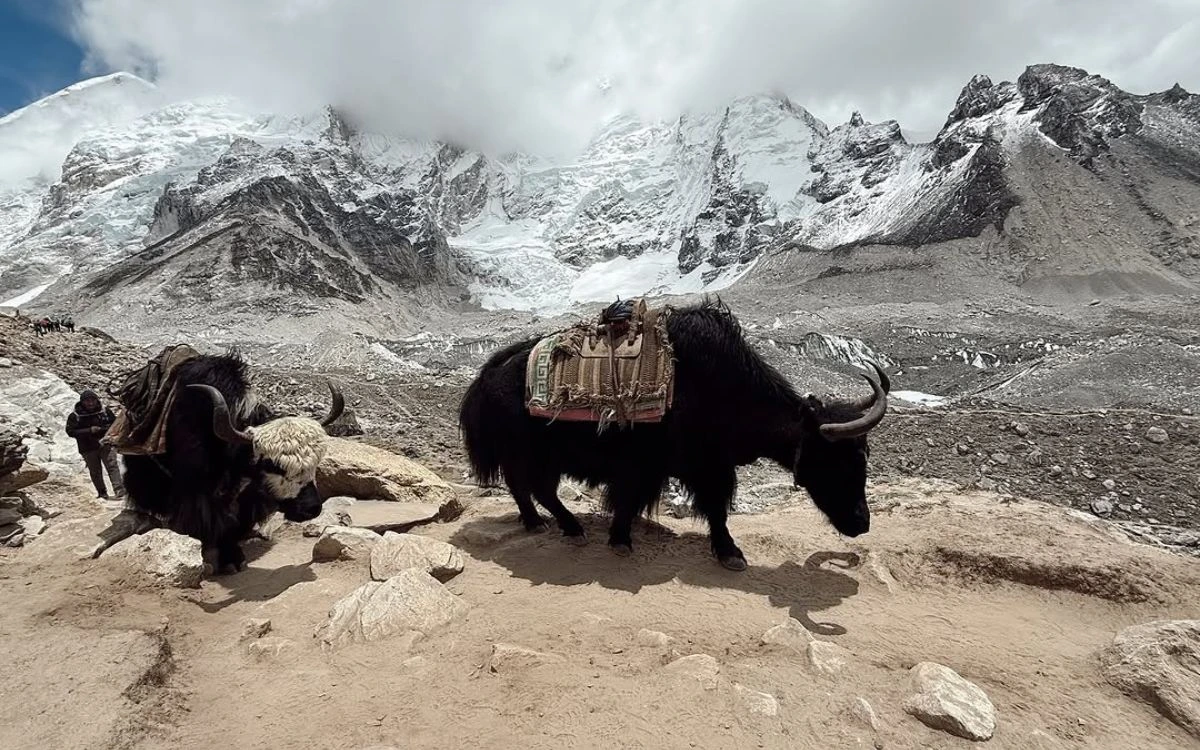
Two yaks carrying gear on a rocky Himalayan trail with snow-covered mountains in the background.
Best for Beginners
Everest Base Camp works better for beginners because of the developed infrastructure, guide availability, and better accommodations.
Treks like the Langtang Valley Trek also suit beginners who want shorter Himalayan adventures.
Best for Experienced Trekkers
Kanchenjunga is ideal for trekkers seeking a longer and tougher experience. If you enjoy remote landscapes and fewer crowds, Kanchenjunga can be deeply rewarding.
Experienced trekkers who have already completed routes like the Annapurna Base Camp Trek may enjoy the challenge of Kanchenjunga.
Best for Remote Adventure Seekers
If your goal is solitude, untouched trails, and authentic Himalayan culture, Kanchenjunga wins.
If you prefer better facilities, social trekking experiences, and famous viewpoints, Everest becomes the better choice.
Budget and Logistics Comparison
Everest often costs more because of flights to Lukla and premium services. However, Kanchenjunga’s longer itinerary and remote transport can also increase expenses.
In terms of convenience, Everest usually feels easier to organize.
Is Kanchenjunga Harder Than K2 and Everest?
K2 is widely considered the most technically difficult of the world’s highest mountains. Its steep terrain, technical sections, and harsh weather make it extremely dangerous.
A simple comparison looks like this:
K2 – Most technically difficult
Kanchenjunga – Highly technical, remote, and psychologically demanding
Everest – The highest mountain with extreme altitude and heavy traffic
So, while Everest is the tallest, many mountaineers believe Kanchenjunga feels harder in terms of technical difficulty and isolation.
FAQs
Is Kanchenjunga more difficult than Everest?
Yes, Kanchenjunga is tougher to climb than Everest in terms of technical climbing, isolation, and limited rescue availability.
How is Kanchenjunga dangerous?
The avalanches, unstable terrain, and poor weather make it difficult for rescuers to get to the area of Kanchenjunga.
Is Kanchenjunga Base Camp more challenging than EBC?
Yes, Kanchenjunga Base Camp is relatively hard to come by in the following ways: It is remote, it is a longer trek, and there are fewer facilities.
Is it possible to trek to Kanchenjunga as an inexperienced trekker?
Kanchenjunga can be trekked by beginners, but great fitness and previous trek experience will be a great help.
Which mountain is more dangerous in terms of the number of deaths?
Kanchenjunga has had a higher fatality rate than Everest in the past.
Is K2 harder than Kanchenjunga and Everest?
Yes, as for climbing, it is harder than both due to the technical climbing elements of K2.
Conclusion
So, is Kanchenjunga easier or harder than Everest? It depends on one's point of view. From an expedition standpoint, the Kanchenjunga can be challenging because of technical terrain, remoteness, and lack of support. As far as trekking is concerned, both the Kanchenjunga trek and the Everest trek are dependent on your experience level and adventure style. Everest has more infrastructure, and Kanchenjunga is more for the trekkers who prefer wilderness and solitude.


-5.webp)



-6.webp)
-1.webp)
-1.webp)