Kyanjin Ri is among the best viewpoints in the Langtang region of Nepal. It is located above Kyanjin Gompa, a popular tourist destination, and provides spectacular views of several mountains without requiring technical climbing experience. The Kyanjin Ri trek has become an additional trek for many trekkers when planning their Langtang trek because it fits nicely into their route and can be completed in just one day. Like Kala Patthar during the Everest Base Camp trek, Kyanjin Ri is also the highest point likely to be reached by most trekkers within the Langtang Valley.
The Kyanjin Ri hike is easy from the Kyanjin Gompa because it’s a one-way route from the village where many trekkers are acclimatizing. The path rises gradually along rocky ground and grassy slopes, gaining approximately 1000 m in elevation. While most trekkers take between three to five hours round-trip, many of them like to begin their hike early so they do not have to contend with clouds in the afternoon and dampness. The Kyanjin Ri Langtang hike provides access to arguably one of the best vistas in the Langtang Valley Region.
Hiker trekking to Kyanjin Ri peak in Langtang Valley, Nepal, surrounded by Himalayan mountains and snow-covered trails.
The view from Kyanjin Ri is stunning, with an incredible view of all the peaks in the Himalayas, such as Langtang Lirung (7,227 m), Langtang II, Yala Peak, Dorje Lakpa, Naya Kanga (also known as Ganjala Peak), Gangchempo, and Tsergo Ri. You'll also see the enormous glaciers and icefalls of Langtang, spread throughout the valley.
Kyanjin Ri altitude is about 4,773 m, so this hike is a great way for trekkers to acclimatise before ascending to the high peaks or going back to lower elevations. Many trekkers who are concerned about the length of time they will have to climb up to the summit may choose to go only to the Kyanjin Ri lower peak; this lower peak resembles the summit when seen from below, but it's located approximately two-thirds of the way up to the summit. However, this lower section provides fantastic views of the entire valley and spectacular mountain views.
This blog article will provide all of the information that you need in order to fully understand the Kyanjin Ri hike, including details on how to get from Kyanjin Gompa to Kyanjin Ri, information about elevation and distance along the trail, viewpoints along the route, differences between the lower peak and main summit, and assistance in safely and effectively preparing for your hike.
Where Is Kyanjin Ri Located?
Kyanjin Ri is situated in north central Nepal in the Langtang Valley, which is part of the Langtang National Park. It can be found above Kyanjin Gompa, which is the last substantial village on the Langtang Valley trek and lies close to the Nepal-Tibet border. The summit of Kyanjin Ri is located northeast of Kyanjin Gompa, meaning it can be directly accessed from there and is regularly hiked as a side excursion while on the Langtang trek.
Kyanjin Gompa to Kyanjin Ri Distance
Kyanjin Gompa to Kyanjin Ri is about 2.5 to 3 km each way, depending on the route. The trail runs straight from Kyanjin Gompa and follows a constant uphill path to reach Kyanjin Ri's summit. Most trekkers will complete their ascent in 2-3 hours and their descent in 1.5-2 hours, making this a comfortable hike that should take half a day on average.
Lower Kyanjin Ri to Upper Kyanjin Ri Distance
The walk from Lower Kyanjin Ri to Upper Kyanjin Ri spans about 500 to 600 meters. Even though it's a short distance, this part is steeper and more open. Even though it's a short distance, this part is a bit steeper and more exposed. It usually takes around 30 to 45 minutes to get from the lower peak to the upper summit. If you keep going up to upper Kyanjin Ri, you'll get even better views of the Langtang Valley and the mountains around it.
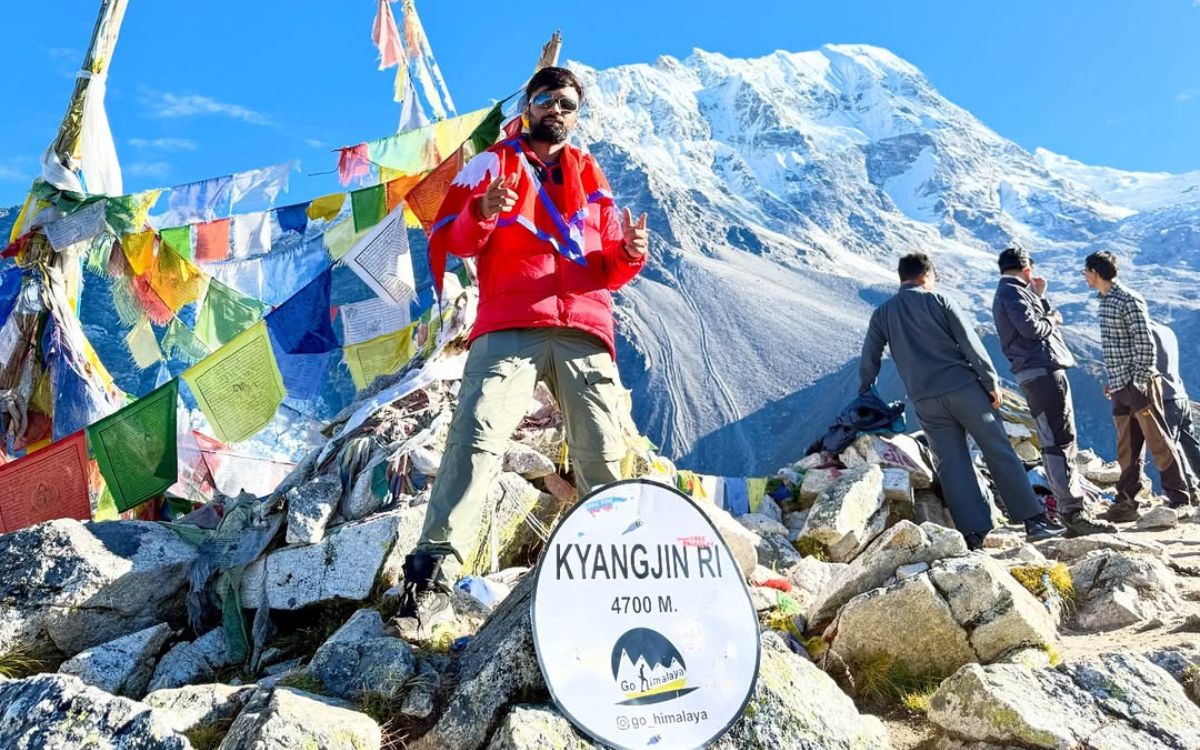
Hiker at Kyanjin Ri summit sign at 4700m with prayer flags and mountain backdrop
How to Reach Kyanjin Ri? (From Kathmandu to Kyanjin Gompa)
Kathmandu → Syaphrubesi → Lama Hotel → Langtang Village → Kyanjin Gompa → Kyanjin Ri
From Kathmandu you will take a drive to Syaphrubesi, which is where the Langtang Valley trek starts. The first part of this trip is trekking from Syaphrubesi along the Langtang Khola River, and you will reach Lama Hotel after the first day of trekking. After Lama Hotel, you will continue on the trail to Langtang Village, and then from there continue on the trail to Mundu Village. From there you will arrive at Kyanjin Gompa, the last major settlement in the Langtang Valley.
Once at Kyanjin Gompa, you will then have the option to hike Kyanjin Ri by taking an uphill trail to the lower peak and then to the main peak of Kyanjin Ri.
We frequently organize treks in the Langtang Region, and if you are interested in joining our treks to Kyanjin Ri or creating your custom experience, please do not hesitate to contact our dedicated specialist for comprehensive information and assistance.
Accommodation and Facilities in Kyanjin Gompa Village
Accommodation
Most teahouses and lodges have simple accommodation that consists of two single beds, along with a mattress, pillow and blanket. It is unusual to find en-suite facilities for the bathroom, whereas almost all lodges have a communal toilet. The only place you will normally find heating facilities are in the dining room areas; therefore, trekkers should bring their own sleeping bag for warmth while sleeping. Room rates will typically vary between 1,000 to 2,500 NPR, depending on the season in which you are trekking as well as the type of room.
Food
All teahouses menu includes typical trekker meals of dal bhat, noodles, fried rice, momos, pasta, eggs, pancakes, tea and coffee. Locally made products such as yak cheese and butter tea are also available. Average prices for meals from each teahouse is about 500–800 NPR each while drinks of tea and coffee range between 150–300 NPR.
Charging Facilities
Charging electronic devices such as phones, cameras, power banks typically cost between 500 NPR and 800 NPR for each device to charge. Most lodges are also powered by solar-energy; therefore, charging items may be limited to sunlight conditions and availability.
Hot Shower
Many lodges provide hot showers that are heated using solar heat. Showers typically range in prices between 300 NPR and 500 NPR depending on the available amount of hot water.
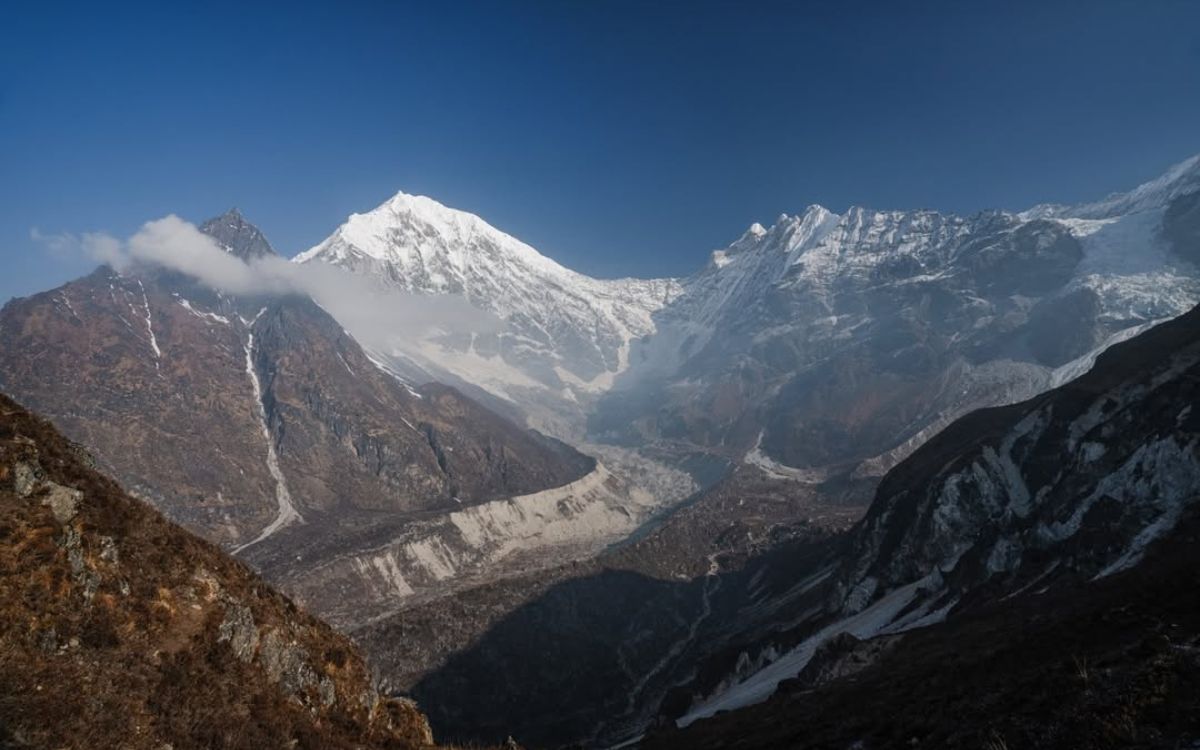
Kyanjin Ri mountain panorama with snow-capped Himalayan peaks and glacier valley in Nepal
Wi-Fi and Network
Wi-Fi is available at almost every lodge, but you will pay between 500 and 1,000 NPR to use them each hour. In addition to using Wi-Fi, you can access mobile networks that provide intermittent service through NTC and Ncell SIM cards. Signal will vary.
Weather and Temperature Around Kyanjin Ri
Spring (March to May)
Spring is such a perfect time to go hiking at Kyanjin Ri. The weather stays pretty steady with clear skies, which is great for enjoying the mountain views. During the day in Kyanjin Gompa, it usually ranges from 10°C to 18°C. However, up at Kyanjin Ri (4,773 m), temperatures can dip to around -5°C to 5°C. Along the trail, you'll spot flowers blooming, making the valley look lively. However, do keep in mind that mornings and evenings can still be quite chilly, so make sure to have some warm clothing handy.
Autumn (September to November)
Langtang trek is mostly undertaken in the Autumn, with clear skies and stable weather being ideal conditions for trekking in this area. Daytime temperatures in the villages of the Langtang Region vary from 12°C up to 20°C at the average daily high, while at the summit (Kyanjin Ri's Highest Point), the temperature usually falls between 0ºC to 7ºC. This allows for the clearest possible views of surrounding peaks, such as Langtang Lirung, Dorje Lakpa, and Yala Peak. The nights are quite chilly thus you'll require appropriate insulation.
Winter (December to February)
Winter up at Kyanjin Ri gets super chilly with lots of snow. During the day at Kyanjin Gompa, it's around 0°C to 8°C, but up at the summit, it can plunge to between -15°C to -5°C. The path might be all snowy and icy, which can definitely up the difficulty of the hike. If you're thinking of tackling Kyanjin Ri during this time, it's best to be an experienced trekker equipped with the right winter gear.
Popular Things to Do Around Kyanjin Ri
Hike to Kyanjin Ri Viewpoint
Kyanjin Ri is the most popular trek in Langtang Valley, starting at Kyanjin Gompa and gradually climbing toward the peak of Kyanjin Ri with fantastic views of Langtang Valley and many glaciers plus peaks like Langtang Lirung, Yala Peak, Dorje Lakpa, and Naya Kanga. The trek typically takes 3–5 hours round trip and offers trekkers a chance to stop at the lower Kyanjin Ri peak for an easier way to enjoy wonderful scenery if they run short on time.
Explore Kyanjin Gompa & Cheese Factory
Kyanjin Gompa is located in a small village that has a very old monastery and gives trekkers an idea about the Buddhist way of life in that area. In addition, there is a local yak cheese factory near Kyanjin Gompa where trekkers can watch farmers create traditional yak cheese and sample some freshly made cheese. This activity provides both cultural insights and a taste of locally produced goods.
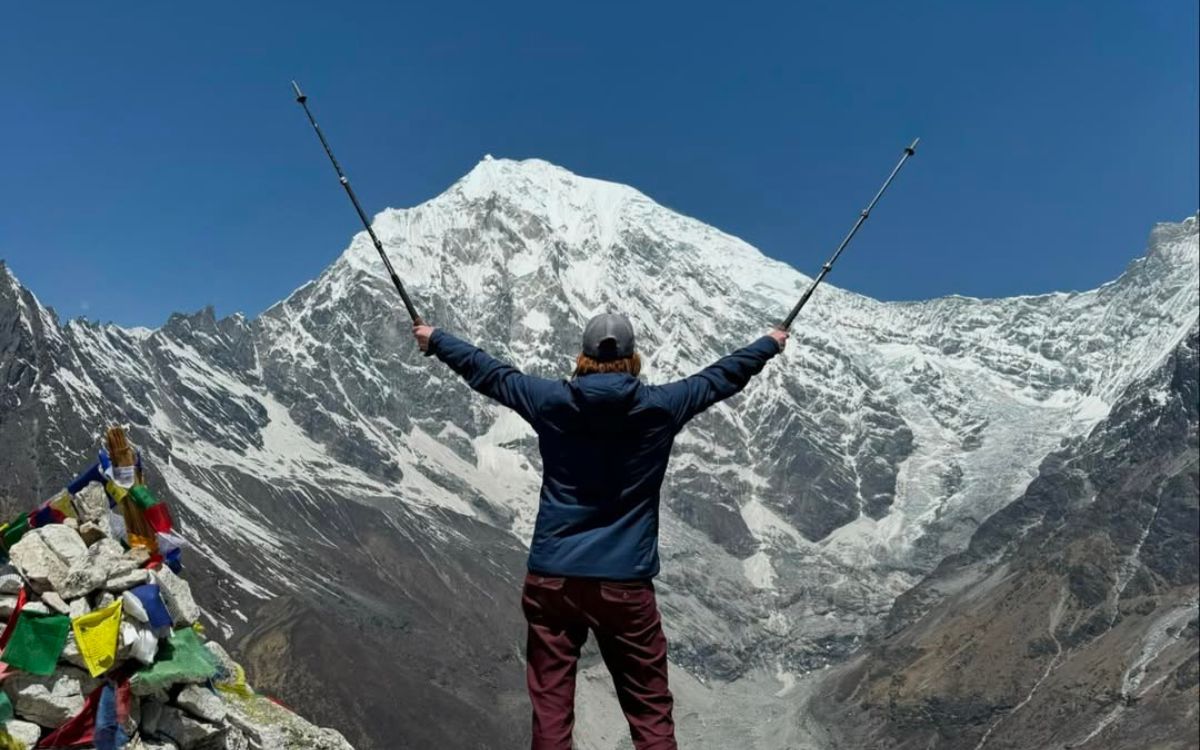
Trekker celebrating at Kyanjin Ri viewpoint with arms raised facing Langtang Lirung peak
Visit Langtang Glacier
The Langtang Glacier is located directly above Kyanjin Gompa. The glaciers provide great opportunities for photographers to capture breathtaking photographs of this amazing place and also provide an educational opportunity about mountains and glaciers in the Himalayas.
Walk to Langshisha Kharka
Langshisha Kharka is a high altitude pasture located above Kyanjin Gompa where local yak herders often take their herds to graze. Walking in this area offers panoramic views of the surrounding valley, colourful meadows and an array of wild flowers blooming in spring time. This area is also a nice place to take pictures and enjoy a leisurely walk.
Try local Yak cheese tasting
Kyanjin Gompa is famous for its yak cheese, a staple product of the region. Trekkers can taste different varieties, including fresh cheese and butter, directly at the factory or local teahouses. This is a unique way to experience the local culture and cuisine.
FAQs
How difficult is the Kyanjin Ri hike?
The Kyanjin Ri hike is considered a moderate trek. The trail steadily climbs from Kyanjin Gompa to the summit, gaining nearly 1,000 meters in elevation. The path is rocky and steep in some sections, especially near the upper summit, but it does not require technical climbing skills. Trekkers should have basic fitness and some prior experience with high-altitude walking.
How long does it take to complete the Kyanjin Ri trek?
On average, it takes three to five hours to hike from Kyanjin Gompa to the highest point for a total distance of about 21 km. If you follow the lower Kyanjin Ri peak (5,000m), the trek would take approximately two to three hours to complete. Most hikers start in the early morning when visibility is usually good and there is less chance of fog, which often rolls in later in the day.
What permits are required for Kyanjin Ri or Langtang Trek?
When hiking to Kyanjin Ri, you will need to have your Langtang National Park entrance permit as well as a TIMS (Trekkers’ Information Management System) card. These permits can either be obtained in Kathmandu before your trek or in Syaphrubesi.
What kind of gear is needed for Kyanjin Ri?
Gear needed for hiking the kyanjin ri are sturdy hiking boots, warm clothing (such as long pants and sweat shirts), gloves, hats, trekking poles, sunglasses, sunscreen, and good backpacks are essential items for trekking. Depending on the weather, you may need an insulated jacket, gaiters, and crampons to protect yourself from wet snow or icy conditions on established trails.
What is the best time of day to hike Kyanjin Ri?
For optimal results, start your hike early in the morning, generally between 5:30 a.m. and 7:00 a.m., so that you can reach your destination before the clouds roll in and be safe from slippery trails that may become difficult to navigate as the day progresses.
Is Kyanjin Ri suitable for beginners or kids?
Kyanjin Ri is suitable for active beginners and older children with trekking experience but the elevation (4,773m) combined with steep sections near the summit make it unsuitable for young children and anybody not accustomed to hiking at high altitudes.
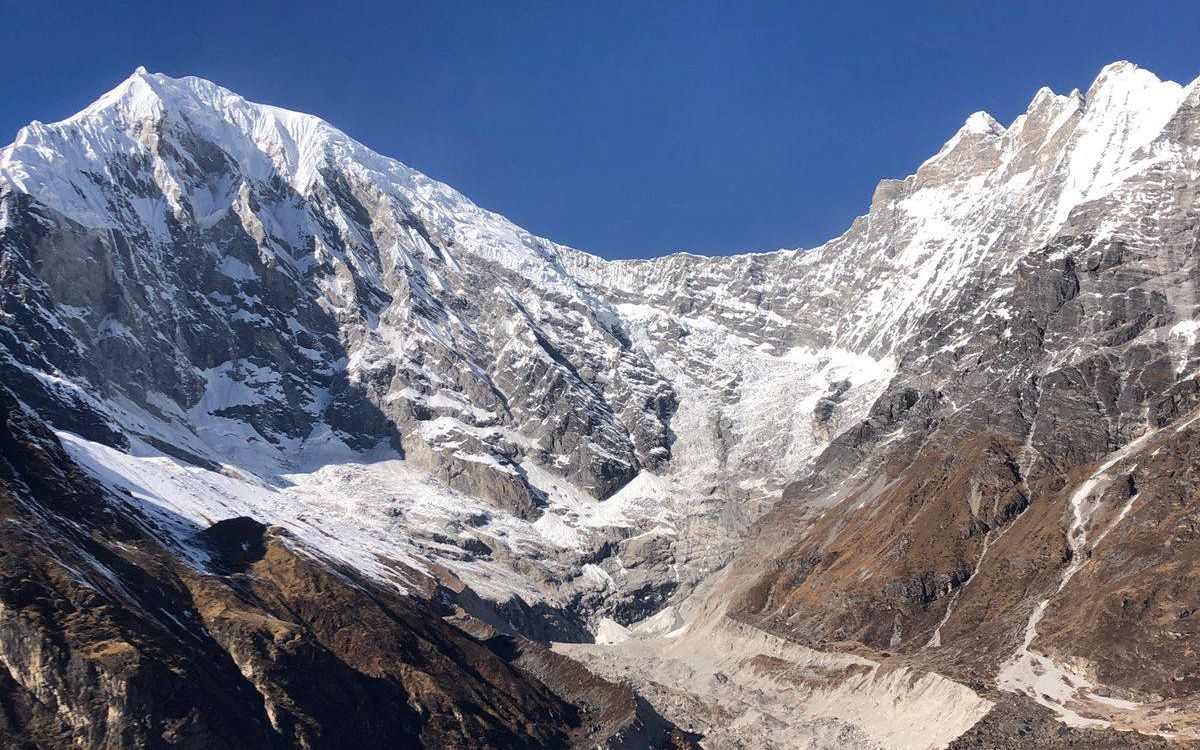
Close-up view of Langtang glacier and ice fall from Kyanjin Ri trekking route Nepal
Conclusion
Kyanjin Ri, at an impressive 4773m above sea level, is the easiest and most rewarding place to view the majestic peaks of the Langtang region of Nepal. It is home to many famous mountains including Langtang Lirung, Yala, Dorje Lakpa, Naya Kanga, Gangchempo, and Tsergo Ri, as well as the large glaciers of the Langtang Valley.
The hike to Kyanjin Ri can be completed in one day starting from Kyanjin Gompa, or you may choose to do a shorter hike to a lower peak. While trekking, you will have the opportunity to explore Kyanjin Gompa Monastery, visit the Yak cheese factory, walk to Langshisha Kharka, and sample local foods and culture. The best time for trekking is during spring and autumn; however, if you are thinking of doing this trek in winter you will need the appropriate gear and experience.
We provide guided treks in the Langtang region, including Kyanjin Ri. For personalized itineraries, assistance or bookings please reach out us via WhatsApp for qiick support to start planning your Himalayan adventure.


-1.webp)




-1.webp)
-1.webp)
-1.webp)