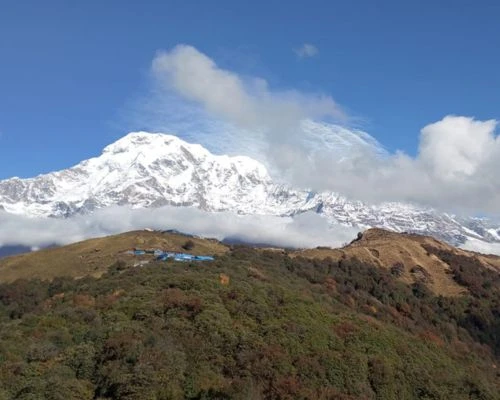
Trekking in Nepal in December is often a revelation for most people who thought the trails were closed for the winter. Still, winter is a time for some of the clearest skies, least busy trails, and most refreshing winter air. So it's one of the most pleasant hiking seasons here in Nepal.
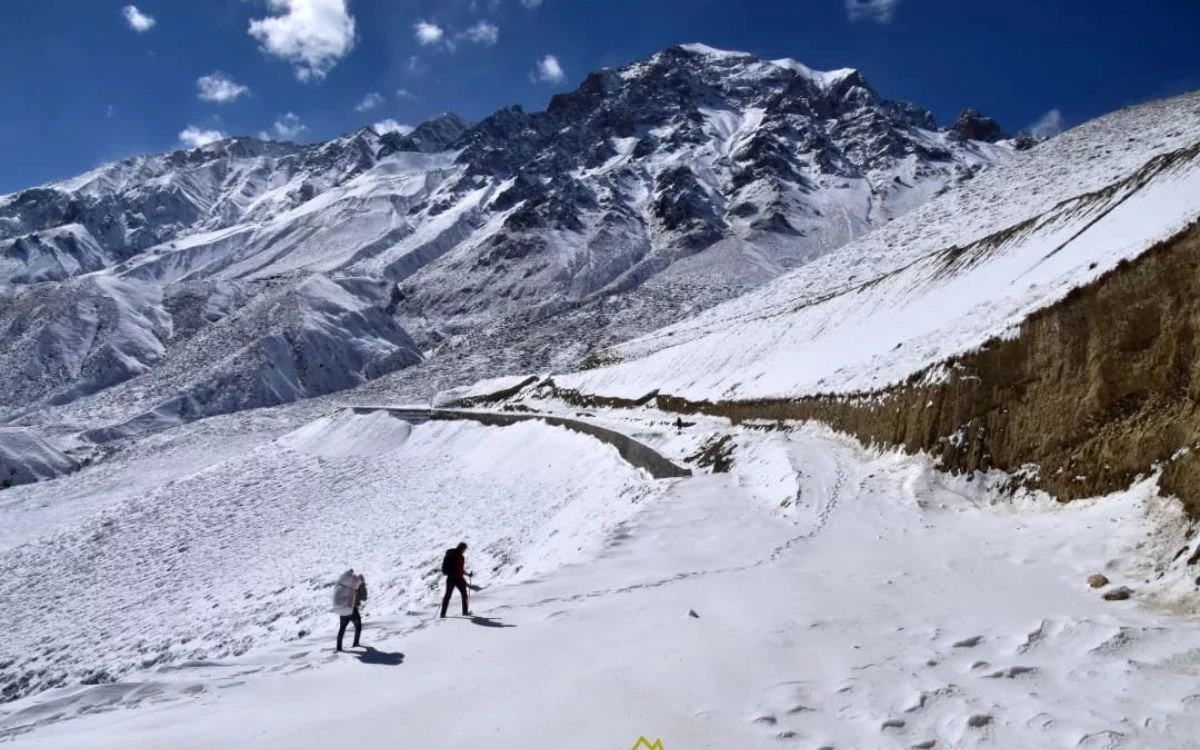
Snow-covered trail below high peaks on a December trek in Nepal
This article provides everything you need to plan your trekking in Nepal, including December weather, the best trekking routes, essential packing tips, permit costs, and important safety guidelines. Whether you are an experienced trekker or a first-time hiker, and regardless of your fitness level, you can find a winter trekking itinerary that suits your travel plans. During December, the Himalayas generally experience dry and stable weather, while higher-altitude regions such as Annapurna and Everest remain cold and windy. Therefore, you should pack warm clothing and carry proper cold-weather trekking gear to stay safe and comfortable throughout your journey.
Trekking in Nepal in December: What to Expect
After a thinning out of the large crowds during autumn, it is in December that the authentic winters of trekking in winter really begin in Nepal. Weather remains mostly clear and dry throughout December, so mountain landscapes might appear crisper than usual compared to peak seasons. Starting your first trek in Nepal in December at this time can be a bit overwhelming, but lower valleys remain just warm enough to make for a very pleasant walking experience. You have to be quite high up for the real cold to set in. It is a great time for trekking if you aren't really minding a few cold nights and short days. The biggest benefit is privacy: places that felt very crowded in October are now quite empty; you can actually find an extra room and a quiet place to have dinner. The downside is that some high passes may become inaccessible when snow gets too heavy or some very remote accommodation will shut down for the season. Elevation and weather condition monitoring are the keys to converting these obstacles into just minor problems.
In December, Nepalese weather changes drastically at different altitudes. The temperature in Kathmandu and Pokhara is usually pleasant, with mild days of 18-20°C and cool nights around 2-5°C. Villages mid-hill will generally be a few degrees cooler than those. On peaks above 4000 m, one might face temperatures below 0°C in the day while temperatures during the night regularly get down to below -15°C or much colder right nearby at the base camps. During the initial part of December, snowfall tends to be relatively mild; it often reaches its greatest level, when it causes high passes to be shut for a day or two after fresh snow. The blue skies between the storms provide great opportunities for trekkers as they get the clearest views of the mountain range in the entire year. The length of daylight decreases to around ten hours. Because of this, most trekking days begin quite early and finish soon after midday. Keeping an eye on mountain weather forecasts allows you to plan when to cross rivers or pass through high mountain passes related to when the skies will be clearest.
Why Choose Trekking in Nepal in December?
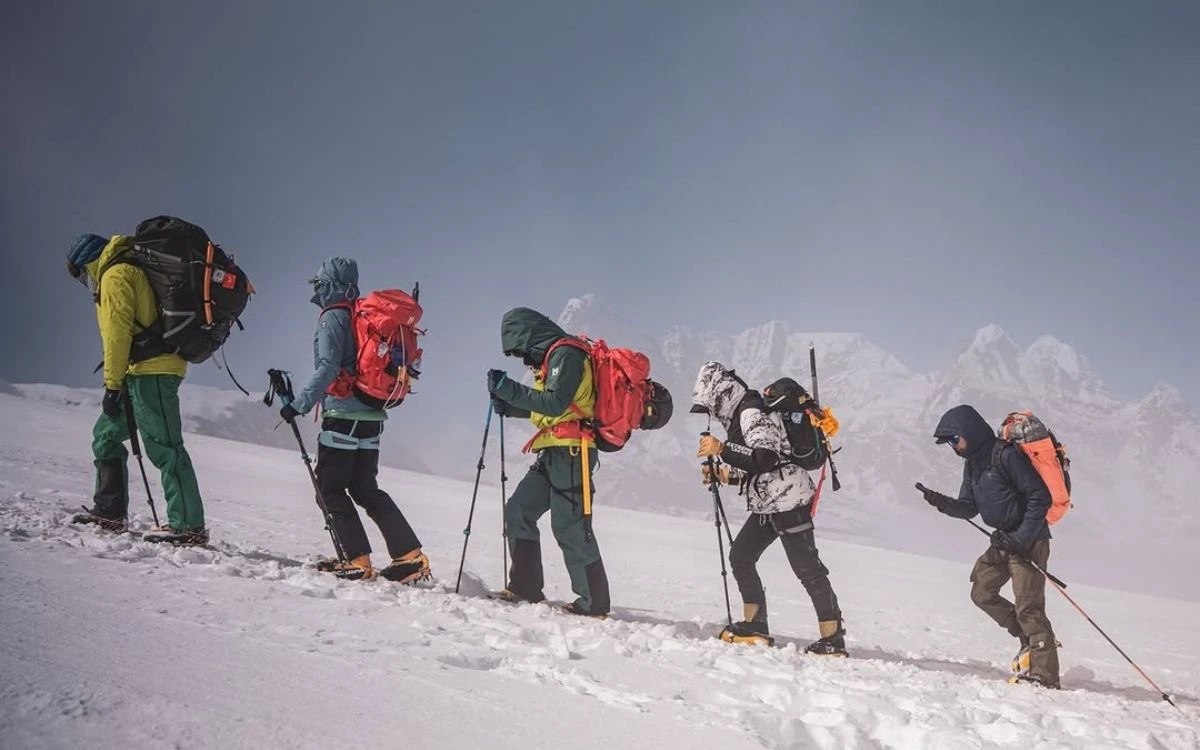
Trekkers descending a snowy slope in Nepal in December
December trekking in Nepal is a perfect match for those who can cope with the cold, as the winter conditions offer a unique experience for the well-bundled traveler. The popular hiking trails that were busy with hundreds of hikers in the autumn suddenly become so silent that it feels like the whole world has disappeared. So the teahouses will only need one guest, mountain summits with incredible views of the surrounding valleys will not be crowded, and even monasteries with their colorful walls will only have the sound of prayer bells and chanting monks. The dry winter air is another big plus - it rarely gets cloudy in the mornings or afternoons. As a result, the vista and mountain view at daybreak frequently remain pure and untarnished. Daytime treks stay comfortable with a warm jacket, as long as they are below 3500 meters. Besides that, it is not very cold, and it is possible to keep moving and walking the entire time. Most of the major hiking trails will have a lodge for a night stop. The forest is sprinkled with small amounts of snow that will change everything, and the terraced landscapes and stone villages seem entirely new in this winter landscape compared with the brown dusty trails of spring. This transformation makes it possible that winter trekking in Nepal offers a fresh, different perspective of the well-known hiking routes.
During the month of December, people who want to trek in Nepal and look for the best trekking options most prefer lower and mid-altitude trails to avoid the harshest cold. The Everest Base Camp Trek still tops the December list mainly because of the dry trails and clear skies that can often give you better views of Everest in the mountains during the winter than the more crowded autumn season, but that means you have to be willing for your nights near the Gorak Shep area to be below zero degrees Celsius.
The Langtang and Annapurna shorter trails also do well at this time, as they stay snow-free mostly below the 3,000 meters level. A few other famous December trekking destinations in Nepal are mentioned later in this article quite thoroughly, and they almost equally perform as trekking experiences, each having its own terrain map of altitude and permit necessities. Essentially, choosing one depends on the amount of challenge you are able and willing to take for the trek in the sense of altitude and cold weather you can bear.
Best Trek in December in Nepal for Beginners
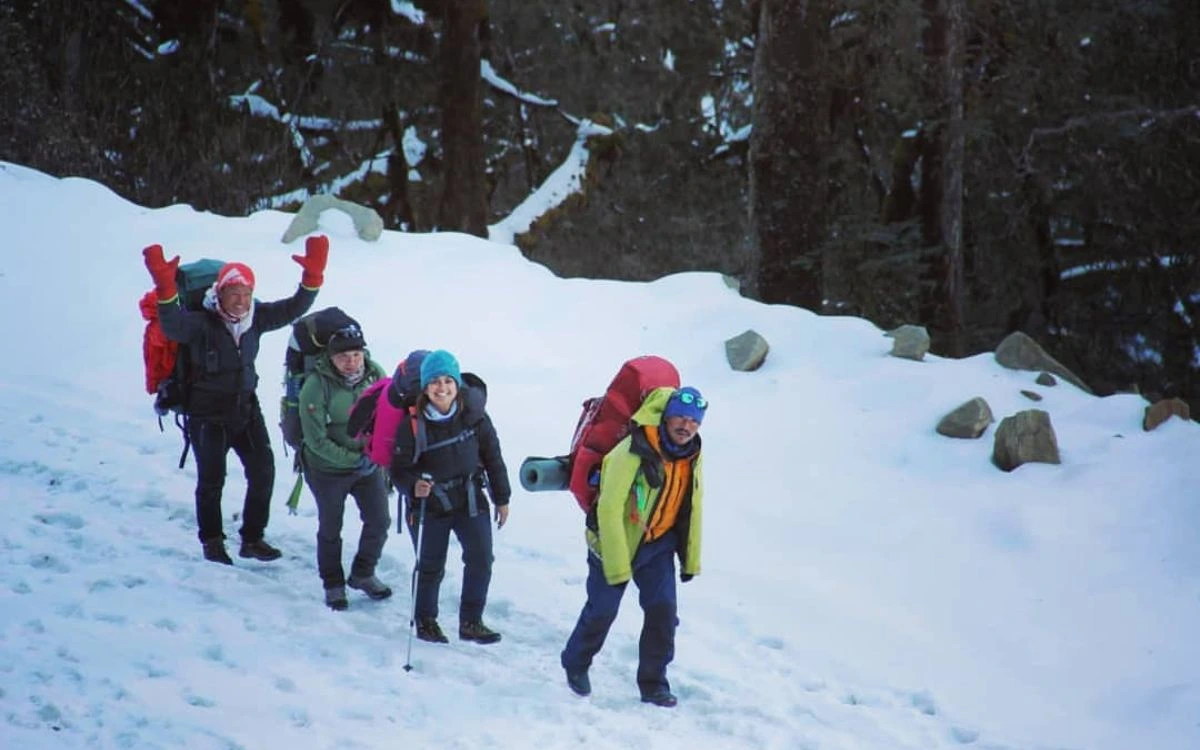
Happy trekkers on a snowy forest trail in Nepal in December
One way to ensure a wonderful experience is to select a mild trail if this is you are going for a winter hike for the first time. Both Ghorepani Poon Hill and Mardi Himal are below 4,000 meters and offer short hiking days together with warm teahouses, which makes them the best choices for winter treks. The Annapurna Base Camp Trek is suitable for slightly fit beginners as well. The path climbs gently, and at the same time, the lodges are closed for the entire December period. Older children with families usually choose the very same ways so that they are pairing reasonable hiking hours with stable teahouse comfort. First-time winter trekkers must pack the right insulated gear, begin early each day to avoid late-afternoon cold, and leave space for a trail to get snow-blocked.
Trekking in Nepal in December for Beginners
Trekking in Nepal in December for beginners is not about having the highest level of fitness; But, the more you get used to walking or hiking, the better your body will be able to handle the cold and altitude. Getting used to altitude, or acclimatization, is actually even more crucial in winter, because a cold season may hide the early symptoms of altitude sickness, so make sure you include when planning a trek of more than 3000 meters, include rest days. For those who are new to trekking, the Langtang Valley Trek is a good choice as it is situated not so far from Kathmandu, the trail is clearly marked, and the peak altitude is not overwhelming compared to those of Everest or Annapurna trails. The key is to be aware of your own fitness and cold-tolerance level when deciding on a trek rather than just choosing a route based on the pictures you are seeing. A winter guide or porter is another reason apart from physical help in a trek; in winter, your team must have local knowledge, which will inform them of which teahouses are functioning, which areas of the route are snow-prone, and, because of this, require caution.
Trek Difficulty in December
Winters alter trek difficulty only in certain respects. Trails that look easy to walk in October can become slippery once frost sets in overnight, so you must wear the right shoes, and carrying trekking poles should be a habit. High-altitude areas at elevations of 4,500m plus are the trickiest ones because lower oxygen levels plus really low temperatures slow down altitude acclimatization. The Manaslu Circuit Trek is the best example of this change in season affecting the way one can approach the trek. Its restricted-area permit and the remoteness of the high pass make it a very satisfying but at the same time much harder trek in winter. So, it is advised only for those trekkers who have had previous high-altitude experience. It is also not uncommon for the trail to remain frozen in shaded areas and near stream crossings until the sun rises and the ice starts melting. This way, trekkers need to have enough precautionary measures to protect them against the cold. Also, if any trekker has any of the symptoms related to altitude sickness, e. g,. headache or nausea, ea then they had better take a break or go back because in such a case the cold weather can mask the symptoms of dehydration and fatigue, gue making them difficult to detect in the first place.
Essential Packing List for Winter Trekking
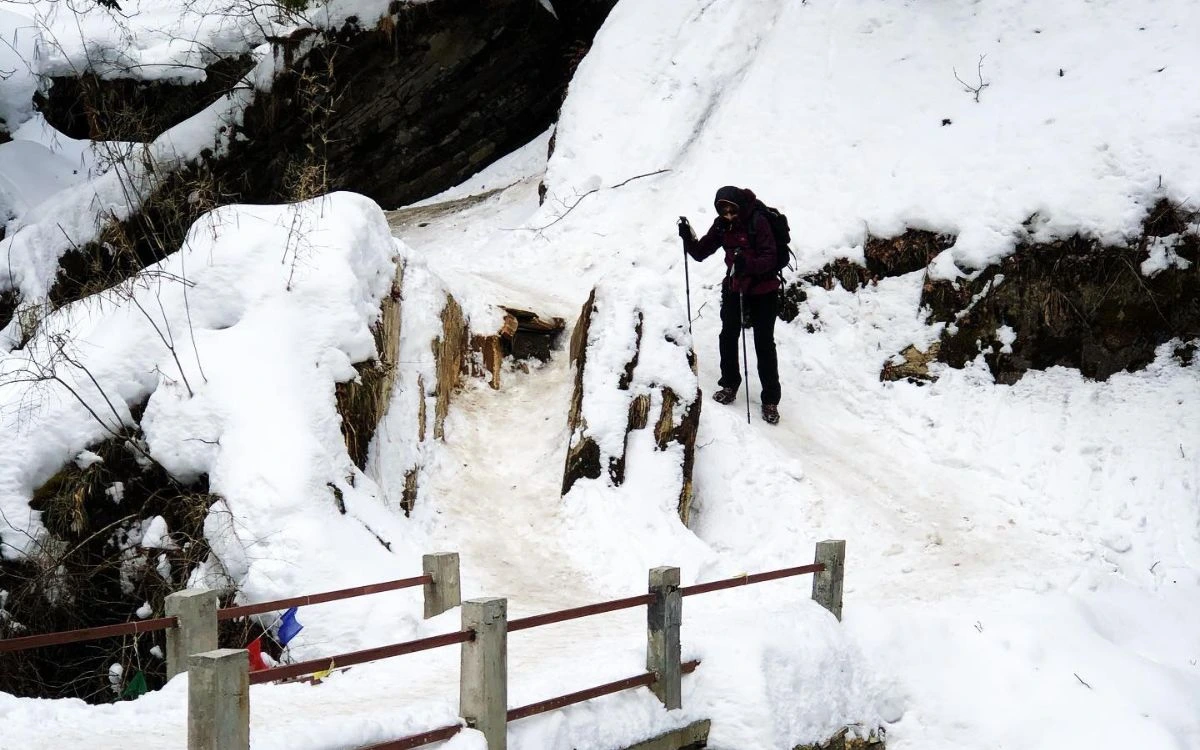
Trekker crossing a snowy footbridge on a December trek in Nepal
A well-balanced list of items to bring will help keep mountain hiking through snow fun, not suffering. The key point is wearing clothes in layers: first layer that wicks sweat away from the skin, e. g. a long-sleeved T-shirt, second that will trap body heat, a. k. a. sweater or a down jacket, and lastly, a raincoat jacket with a storm flap which is also resistant to wind. For winter boots, you need good ankle support; insulated, ed waterproof boots are much more important during the cold months than at any other time. Wool socks are a natural choice, as gaiters will help keep dust and snow from reaching your ankles. To cover your body when you sleep after nightfall, a sleeping bag that has a comfort rating of -15°C or higher should help you through most of the teahouse nights above 3,000 meters, although heating is very minimal after dark at many lodges. If you are trekking in winter in Nepal, you'll need a headlamp, hiking poles, sunglasses that cut the intensity of snow, and a basic first aid set to complete the list of your gear. The cold very quickly drains the charge of batteries of phones and cameras. So it is advised to carry along a power bank and to place the spare batteries in the inner compartment where the temperature is warmer overnight.
Permits Required for Trekking in Nepal
Trekking in Nepal requires getting a trekking permit in December, the same way as getting it in other months. The government offices in Kathmandu and Pokhara can process the documents faster, as the crowd around that time is smaller. Most of the routes require you to have TIMS, which also has a National Park or Conservation Area entry permit; both can be easily handled by a registered trekking company.
If the route is restricted, additional requirements apply: for example, the Upper Mustang Trek needs a special permit for the restricted area and is usually only available through a local guide, besides the standard fee for the Annapurna Conservation Area. Price differences in trekking permits mainly depend on a tourist's country of origin and the region; it usually costs between USD 20 and USD 100 per permit, and most trekking agencies will handle your permit as part of paying for the trek to save you the time of having to sort out your documents.
Accommodation and Food During December Treks
Tea house trekking in Nepal is perfectly possible in December, and although there are noticeably fewer available lodges at some of the highest camps compared to the peak season, most of the teahouses along the Everest, Annapurna, and Langtang trekking routes operate as excellently as they do during the height of the trekking season. Every evening, the dining halls get heated up using some kind of wood or yak-dung stove, while bedrooms usually don’t have any heating systems, which is why the quality of the sleeping bag becomes as important as that of the teahouse itself.
The menu includes meals that are quite filling and warming, and among them one can find some really popular Nepali dishes – dal bhat, different kinds of noodle soups, garlic soup, and hot ginger-lemon-honey tea. It’s also worth noting that bottled/boiled water is the safest drinking option, and in case of emergency there could be some water purification tablets available since they are not expensive and weigh nothing.
Cost of Trekking in Nepal in December
The costs of trekking in Nepal during December tend to remain similar to autumn, but can sometimes be lower when demand for guides, porters, and transportation gets lower. The permits required usually cost USD 20-100, depending on the area. A licensed guide can be hired for USD 25-35 per day while a porter for USD 20-25 per day. A teahouse room price is around 3-10 USD, but most teahouses expect you to order meals there.
Overall cost of meals is around USD 20-30 per day. Domestic flights or jeep rides to trailheads would cost you another USD 150-300 depending on the distance. Gear items such as a sleeping bag or down jackets would also cost a few dollars a day for rentals. For two weeks of hiking in November, including permits, a guide, and food, you can expect to spend some USD 900-1,400 per person.
If you want to spend more time in the mountains, check this trekking package
As winter trekking in Nepal is the most preparation-intensive season, it is important to wear several layers of clothing that are easy to take on and off based on fluctuating temperatures during the day and night. It is also necessary to keep an eye out for frostbite symptoms, which may include numbness or white spots on the fingers, toes, and chin. When it comes to hypothermia, it develops faster than people usually think, and this means that it is not enough to only change wet clothes later. Examine the weather forecast before going to the pass in order to be prepared for unfavorable conditions because the weather in the mountains can change within minutes. Make sure that you have all the contacts of your guide in order to use them in case of an emergency.
Winter Trekking Gear Checklist
Trekkers crossing a snowy ridge in Nepal during December
In addition to the standard essentials for a winter trek, there are many extra items to consider bringing along to make the experience run smoothly. Non-electronic GPS equipment, like paper maps printed for the trail ahead, should be included in your supplies because snow can sometimes cover trail markers in exposed areas. A small first-aid kit should also be packed, as it has all minor problems covered—blister plasters, altitude pills, and painkillers will help take care of the trouble spots. With the help of trekking sticks, walking on snow-covered and uneven terrain becomes so much easier. Such optional items as micro-spikes for hiking on icy trails, a thermos, and hand warmers will be useful.
Sample 10-Day Winter Trekking Itinerary
A ten-day period works quite well for many trekking routes in December. The Annapurna Circuit Trek is particularly well suited, as it can be shortened to cover its beautiful and the most dramatic mid-section, with two days spent getting to the start of the trek and settling down, followed by four days walking gradually up through mid-hill settlements and having one acclimatization stop (as well as a rest day before crossing), one day of crossing and two or three days of descending through forests and cultivated fields back to the road. Not less short routes such as Poon Hill and Mardi Himal can also be completed safely within the same time frame, with a buffer day included just in case of inclement weather.
Responsible Trekking During Winter
It is even more important to practice responsible habits in winter, in the months that see a decline in the number of trekkers. Carry all rubbish, including food wrappers and batteries, out of the area as waste collection slows down. Go for local teahouses and employ local guides and porters to contribute to trekking incomes.
Himalayan wildlife, such as pheasants, blue sheep, and the rare snow leopard, depend on their undisturbed winter habitats. Keeping to the established trails and maintaining adequate distance is vital for the protection of such delicate ecosystems in winter.
FAQs
Is December a suitable month to go trekking in Nepal?
Yes, trekking in Nepal in December is an excellent choice. The month offers clear mountain views, dry trails, fewer crowds, and stable weather. Although temperatures are colder at higher elevations, proper winter gear makes December one of the best months for trekking in Nepal.
Which is the best trek in Nepal in December?
The best treks in Nepal in December include Annapurna Base Camp, Mardi Himal, Ghorepani Poon Hill, Langtang Valley, and Everest Base Camp. Lower-altitude routes are ideal for beginners, while Everest Base Camp suits trekkers with good fitness and cold-weather preparation.
Does it snow on Nepal trekking trails in December?
Yes, snowfall is common on trekking trails above 3,500 meters during December. Popular high-altitude regions like Everest, Annapurna, and Manaslu may receive snow, especially later in the month, while lower trekking routes usually remain accessible.
Is trekking in Nepal in December suitable for beginners?
Yes, trekking in Nepal in December is suitable for beginners if they choose lower-altitude routes such as Ghorepani Poon Hill or Mardi Himal. Hiring a guide, trekking at a comfortable pace, and carrying proper winter clothing make the experience safer and more enjoyable.
How cold is Nepal in December?
Temperatures vary by altitude. Kathmandu usually ranges between 2°C and 18°C, while popular trekking regions often experience daytime temperatures of 5°C to 10°C and nighttime temperatures below -15°C at higher elevations.
What should I pack for trekking in Nepal in December?
Pack warm layered clothing, a down jacket, thermal base layers, insulated gloves, a wool hat, waterproof trekking boots, sunglasses, sunscreen, and a sleeping bag rated for sub-zero temperatures. Proper winter gear is essential for a comfortable trek.
Is a guide necessary when trekking in Nepal during the winter?
A guide is highly recommended for trekking in Nepal in December because winter weather can change quickly. Guides improve safety, assist with navigation, and help manage logistics. Restricted trekking regions also require a licensed guide.
Are tea houses open in December?
Yes, most tea houses remain open throughout December on major trekking routes, including Everest Base Camp, Annapurna Base Camp, and Langtang Valley. However, some lodges at the highest elevations may close during periods of heavy snowfall.
Is travel insurance necessary for December trekking?
Yes, travel insurance is strongly recommended for trekking in Nepal in December. Choose a policy that covers high-altitude trekking, emergency medical treatment, trip interruptions, and helicopter evacuation in case of illness or accidents.
Which regions receive the most snowfall in December?
The Everest, Manaslu, and Annapurna regions generally receive the most snowfall in December, particularly on high mountain passes above 4,000–5,000 meters. Lower-altitude trekking trails usually experience little or no snowfall, making them more suitable for winter trekking.
Conclusion
December proves that winter doesn't close Nepal's trails; it just changes them. Clear skies, quiet paths, and crisp mountain air make this one of the most rewarding times of year for trekking in Nepal, as long as you choose your route and gear wisely.
Ready to plan your winter adventure? Contact us at Himalayan Recreation Treks and Expedition today to book a guided December trek suited to your fitness level and travel dates.


-1.webp)


 based on 7 reviews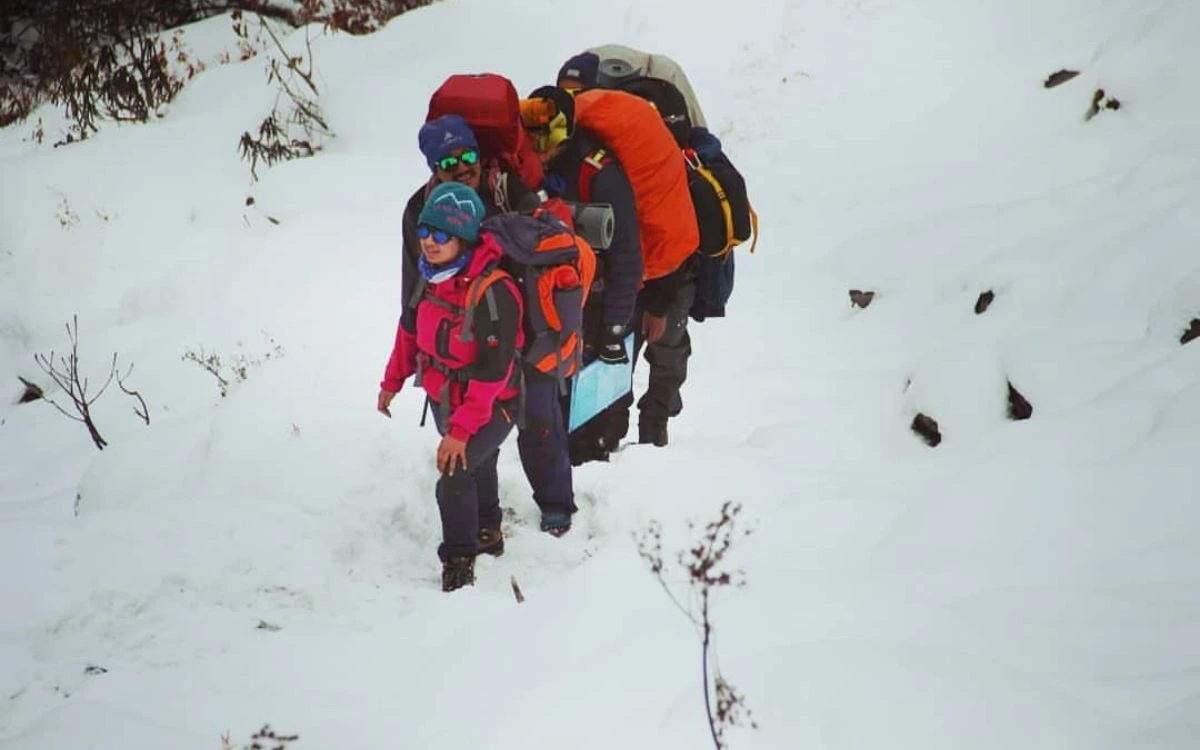



-1.webp)
-1.webp)
-1.webp)