Communication and internet on Nepal treks is one of those topics most trekkers Google the night before they fly out — and by then, it's almost too late to prepare properly. Whether you're planning an Everest Base Camp Trek or a short loop in the Annapurna foothills, staying connected while trekking in Nepal looks very different from scrolling through Instagram on your home Wi-Fi. Mobile networks in the Himalayas are patchy, teahouse Wi-Fi can be painfully slow, and your phone battery will drain faster than you expect when the temperature drops.
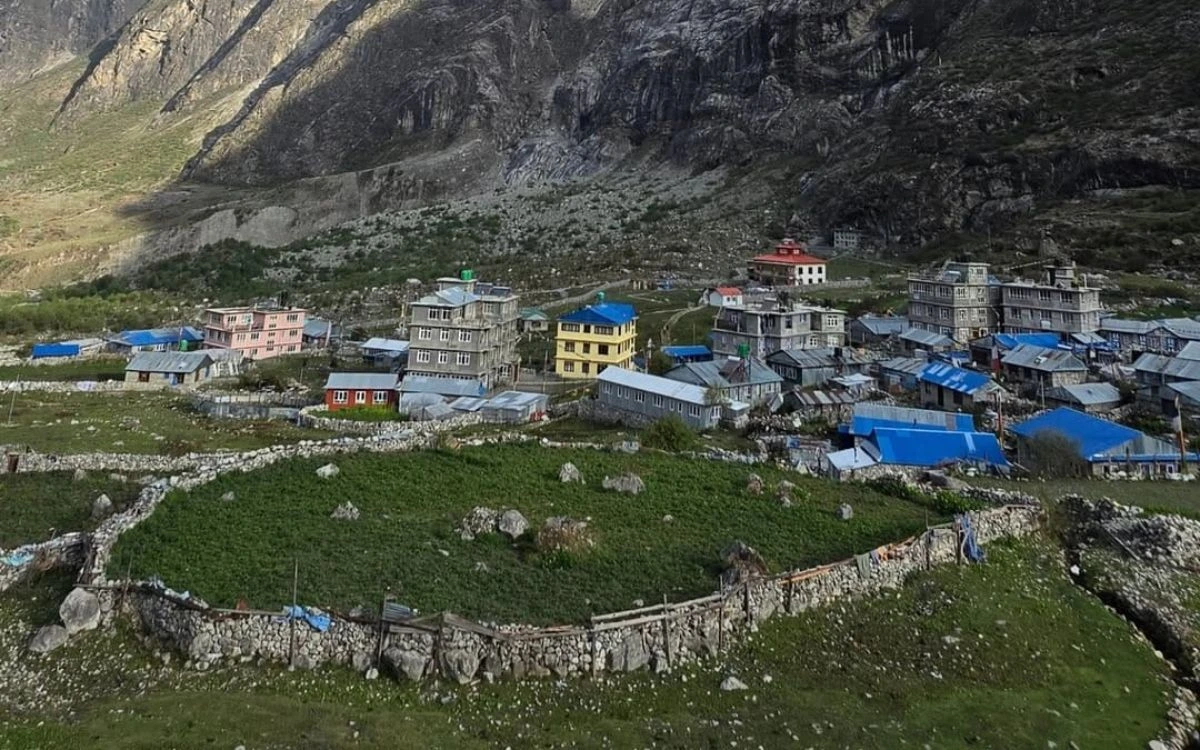
A small Himalayan teahouse village nestled at the foot of massive, rugged stone cliffs.
This Blog details will provide everything one actually needs to be aware of: the right SIM card to purchase, where the coverage totally disappears, the approximate price of internet, and how to proceed and what to do after all other options are exhausted. Without the useless stuff. Only useful, route-specific details.
Communication & Internet on Nepal Treks: What to Expect
Trekking in Nepal is synonymous with walking through the most isolated terrains of the earth. Definitely, there is a mention of internet access along the trekking routes in Nepal — but it is quite patchy, mostly reliant on altitude, and at many times, the signal is shared among a large number of trekkers.
Here is the real scenario: mobile data below 3,500m is quite frequently usable. Above this level, you will be almost entirely reliant on teahouse Wi-Fi — and the quality of that Wi-Fi can be drastically different based on your distance from the relay tower, the time of the year, and how many other users are simultaneously online.
The trekking route also plays a big role in the level of connectivity. The areas around Everest and Annapurna are quite developed compared to remote locations such as Upper Mustang or the Manaslu Circuit, where one can walk an entire day without getting any mobile signal at all.
Mobile Network Coverage in Nepal's Himalayas
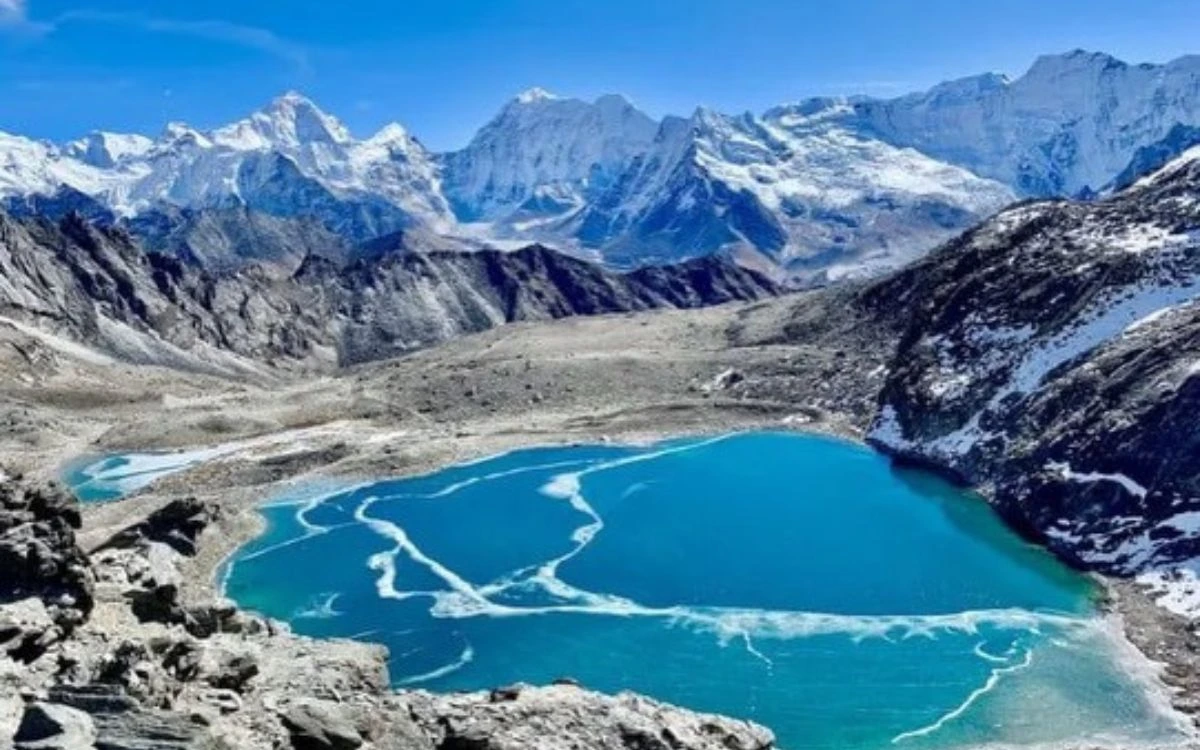
A bright blue glacial lake partially covered with patterns of white ice, surrounded by high snow peaks.
Nepal has two primary cellular providers: NTC and Ncell. Both provide 4G LTE service in the lower elevation zones, but their network performance is markedly different in the mountain regions; this is important for trekkers and climbers. The disparity between the two state-owned and private cellular networks is considerable.
The mobile signal in the regions where we trek relies on a mixture of hillsides and solar-powered relay stations. The coverage is usually along the creek bottom and will be almost non-existent above the crest of certain high passes or in some deep canyons.
High-Altitude Limitations on Coverage
Dropouts are an unavoidable reality of connectivity while travelling in Nepal. When you cross the Thorong La high pass on the Annapurna Circuit trek or cross the Kongma La high pass on the Everest Base Camp trek, plan on no connectivity for a day or two. The dropouts are attributed to the fact that the line of sight between the mobile phone and tower has been blocked by a high ridge with an elevation of above 5,400 m.
Even where you may be able to receive a signal, the colder temperatures found at high altitudes can further diminish the amount of power available in the mobile phone. In fact, at some high-altitude locations, the built-in batteries of mobile phones will discharge to 0% after only a few hours of use. Therefore, a power bank is considered essential equipment for your trek!
NTC vs. Ncell: Which SIM Card Is Better for Trekking in Nepal?
This is the question every trekker asks at Tribhuvan Airport. The short answer: it depends on your route. The longer answer requires understanding what each network does well.
Feature
NTC (Nepal Telecom)
Ncell
Mountain coverage
Stronger above 3,500m
Better in lower valleys and cities
EBC route
Recommended
Limited above Namche
Annapurna Circuit
Good in most sections
Good up to Manang
Langtang Valley
Works well
Patchy above Lama Hotel
Remote routes (Dolpo, Mustang)
Best option
Minimal coverage
Tourist SIM cost
~NPR 100–200
~NPR 100–200
Data packages
From NPR 100 (1GB/day)
From NPR 99 (1GB/day)
eSIM support
No
Yes (limited)
To conclude, NTC has superior coverage for high-altitude/remote trekking, while Ncell is excellent for Kathmandu and Pokhara but lacks coverage above 3500m. It is common for trekkers to purchase both SIMs and switch between them to get service.
Where to buy a Nepal Trekking SIM card
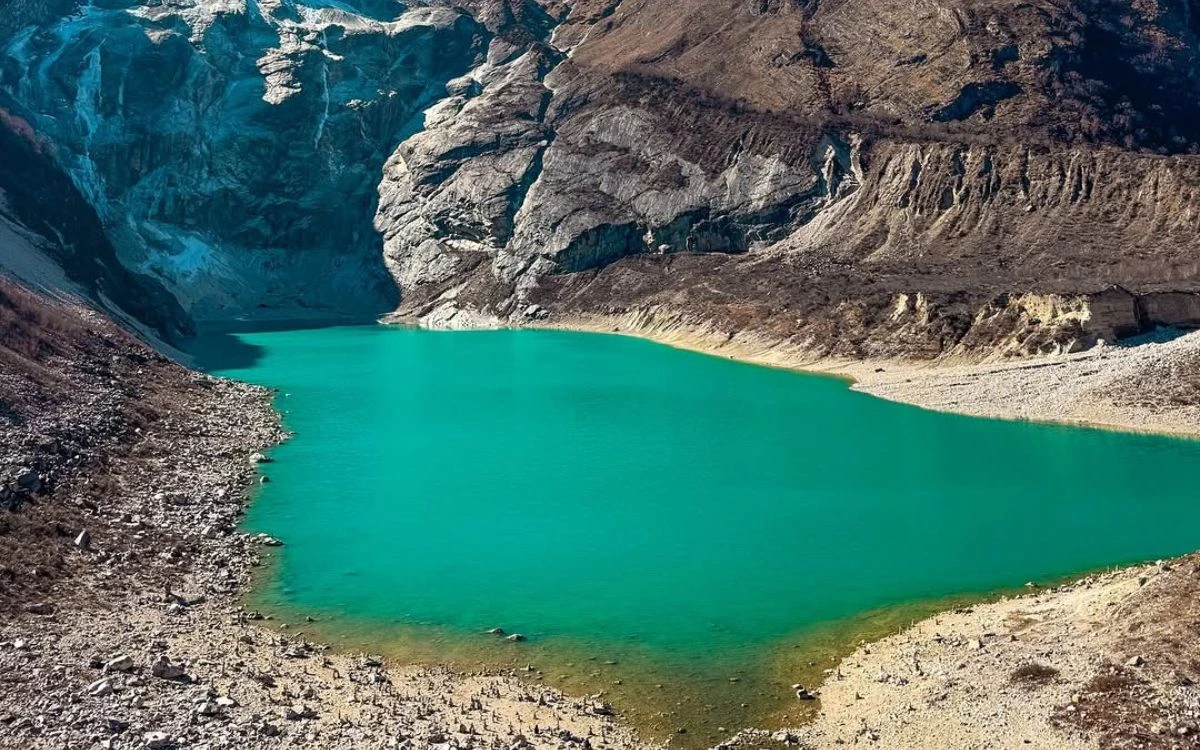
A pristine, turquoise alpine lake surrounded by steep, rocky mountain slopes.
You can purchase a Nepal SIM card either when you arrive at Tribhuvan International Airport or from a store in either Thamel (Kathmandu) or Lakeside (Pokhara). The buying process is easy.
What you need to purchase: You must have your passport and a passport-sized photo. Your SIM will need to be registered according to the law in Nepal; the store will do this for you when you arrive, which takes about five minutes.
NTC SIM: available at Telecom offices and registered retailers
Ncell SIM: widely available at airports, hotels, and street shops
Tourist SIM data packages start from NPR 100 for 1GB daily
Top-up recharge cards are available at most teahouses on busy routes
Tip: Buy your SIM in Kathmandu or Pokhara before heading to the trailhead. SIMs are not available in most trekking villages, and you will pay premium prices if you wait.
Wi-Fi on Nepal Trekking Routes: The Honest Picture
On the more travelled trekking paths, almost every tea lodge typically has Wi-Fi available; however, the term “has” in this case requires considerable caution. A large source of frustration can be attributed to purchasing an NPR 300–500 card to access Wi-Fi at a teahouse, only to find out that it only allows your WhatsApp message to go through, whilst dozens of other trekkers are trying to do the same.
A prepaid system is commonly used. You purchase a card, scratch off the back to expose the code,e and go to the Internet. Some popular providers are Everest Link (EBC Region) and Air DNS or local ISPs (Annapurna / Langtang regions).
Typical Wi-Fi Costs on Trekking Trails
Altitude Zone
Expected Speed
Typical Cost per Session
Below 2,500m
2–5 Mbps (usable for video calls)
NPR 100–200
2,500m – 3,500m
0.5–2 Mbps (basic messaging)
NPR 200–400
Above 3,500m
Very slow or satellite-only
NPR 400–800+
Remote routes (Manaslu, Mustang)
Extremely limited or none
NPR 500–1,000+
The honest expectation: Wi-Fi on the trail is for sending messages and checking in with family. Don't plan on streaming video, joining video calls, or sending large files above 3,500m. It's not what this infrastructure was built for.
Internet Access on Popular Trekking Routes
Everest Base Camp Trek
The Everest Base Camp Trek has the most developed internet infrastructure of any trekking route in Nepal — thanks largely to Everest Link, a dedicated Wi-Fi provider that runs fiber-optic cable up the Khumbu Valley to Gorak Shep. NTC has the strongest mobile coverage here, with signal reaching as high as Lobuche (4,940m) on a clear day.
Namche Bazaar: Strong Wi-Fi and good NTC mobile data
Dingboche: Patchy mobile data; teahouse Wi-Fi available at cost
Gorak Shep: Everest Link cards available; expect 0.3–1 Mbps
Base Camp itself: Very limited. Most communication is via satellite.
Annapurna Circuit Trek
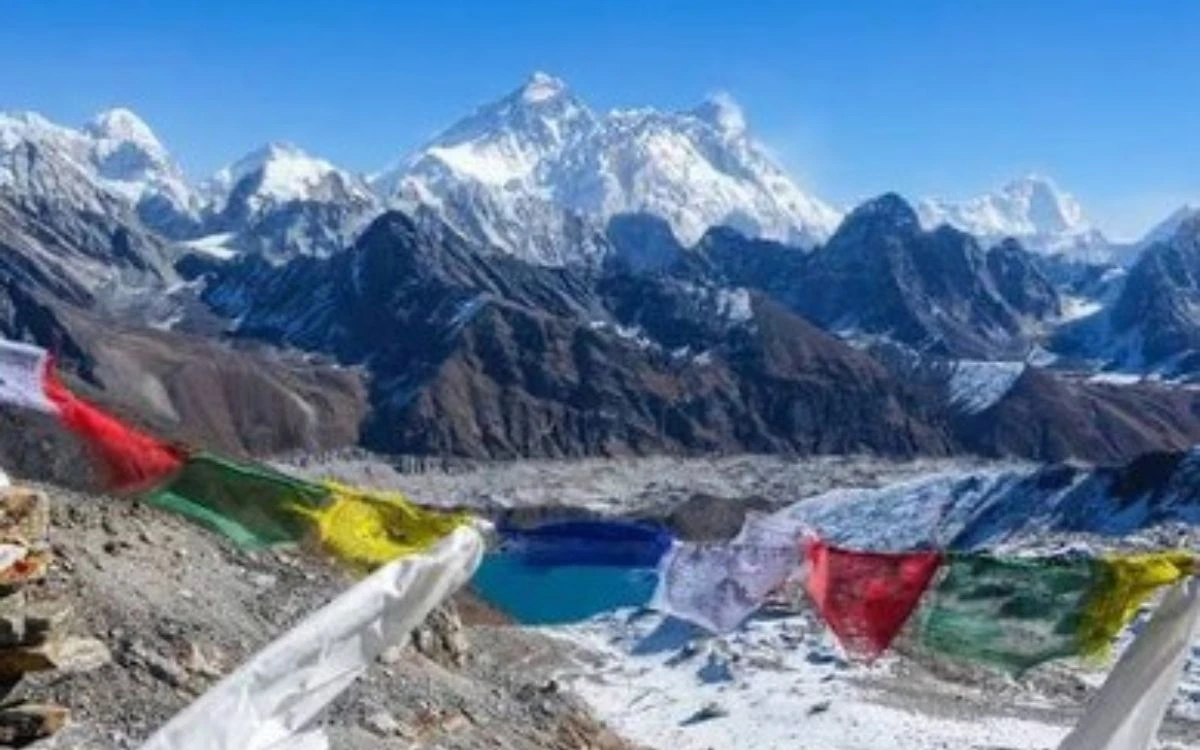
Buddhist prayer flags fluttering in the wind on a high mountain pass overlooking a distant glacier and lake.
The Annapurna Circuit Trek has solid connectivity in its lower and mid-sections. Both NTC and Ncell offer decent data in towns like Chame, Pisang, and Manang. The connectivity challenge is Thorong La Pass (5,416m) — signal disappears completely on the approach and is unreliable for a full day's walk on the other side into Muktinath.
If you're continuing north into Upper Mustang from Jomsom, expect connectivity to thin out dramatically as you move beyond Kagbeni.
Langtang Trek
On the Langtang Trek, NTC works reasonably well up to Langtang village (3,430m). Above that, at Kyanjin Gompa, mobile data becomes unreliable, and teahouse Wi-Fi is your only real option. The route is close to Kathmandu, so evacuation communication is easier here than on more remote treks.
Manaslu Circuit Trek
The Manaslu Circuit Trek is where connectivity gets genuinely challenging. The restricted area around the Manaslu Conservation Area has very limited infrastructure. NTC SIM is your best bet — Ncell coverage is largely absent above Arughat. Expect multiple full days with no signal between Jagat and Samagaun. Trekkers doing this route should download offline maps (Maps.me or AllTrails) and set up a check-in schedule with family before departure.
For the Manaslu Circuit and Upper Mustang Trek, a satellite communication device (like a Garmin inReach) is worth serious consideration — not just for emergencies, but for peace of mind.
Upper Mustang Trek
The Upper Mustang Trek is a restricted area trek that runs through the ancient Trans-Himalayan kingdom of Lo. Mobile coverage is extremely limited once you pass Kagbeni. Lo Manthang, the walled capital, has a single teahouse Wi-Fi option that is satellite-based and expensive. NTC is the only network worth carrying, and even if it is unreliable above Ghami.
Satellite Communication in Nepal Treks
With the increased popularity of satellite communication devices among serious trekkers traveling to isolated areas, it is becoming more common for teams to utilize satellite communications for their expeditions, as opposed to solely relying on them in emergencies. There are now several types of satellite communications available to enable trekkers to communicate and share locations with others, even when out of cellular reach. These include:
Garmin inReach Mini (two-way messaging, SOS, GPS tracking) – subscription costs start at approximately $15 a month.
SPOT Gen4 (one-way messaging and SOS) – does not provide two-way messaging abilities
Satellite Phones (Iridium or Thuraya) – offer full voice communication but can be extremely expensive to rent (between $5-$7 per minute)
Although satellite devices are primarily used for solo trekking, they can also be utilized by groups on restrictive routes, such as during an expedition. Trekking gear rental shops located in Kathmandu in Thamel offer rental options for travelers needing satellite devices while they are trekking.
Can You Use eSIM in Nepal While Trekking?
Although eSIM is steadily gaining traction in Nepal, it is still not very dependable for use while trekking. Currently, eSIMs can only be activated with the Ncell network, making it a feasible option for phone users who wish to avoid swapping out physical SIMs when traveling. However, since the eSIM coverage maps have the same physical environment as the regular Ncell SIM, you will not have improved mountain coverage with eSIM.
NTC does not currently provide eSIM as of 2026. Thus, a physical NTC SIM continues to be the most dependable form of cellular communication for trekkers traveling above 3,000 meters.
How Much Does Internet Cost on Nepal Treks?
You must consider your connectivity expenses separately from your trek budget, as they can add up quickly and may not be anticipated to do so. The following items will incur connectivity-related costs during the course of a trek to EBC:
Mobile Data (NTC or Ncell): Rates vary from approximately NRP 100 to 500 for daily or multi-day packages.
Teahouse Wi-Fi Cards: Rates vary from approximately NRP 200 to 800 for each session, depending on the altitude.
Device Charging: Rates will vary from approximately NRP 200 to 500 for each device in remote lodges (solar).
Satellite Messaging (Rental of a Garmin InReach): The cost of satellite messaging will vary from approximately USD 15 to 30 per month with a basic plan.
With regard to a 14-day EBC trek, a realistic budget for internet and device-charging would be approximately NRP 5,000 to 8,000, or USD 35 to 60. On more remote trekking routes such as Manaslu or Upper Mustang, these costs can be higher, and availability may be lower.
Practical Tips for Staying Connected While Trekking in Nepal
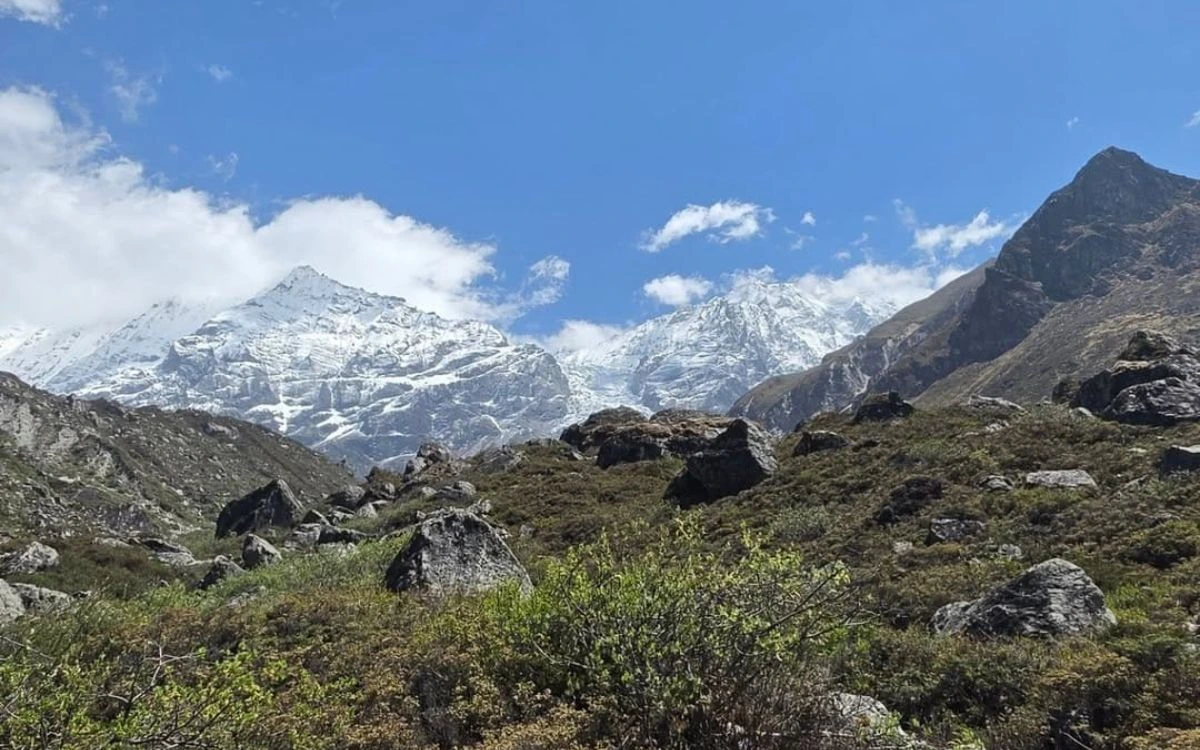
Rocky, green hillsides in the foreground looking up toward snow-covered Himalayan mountain ridges.
Being well-prepared before going on a trek avoids significant frustration later on. Some methods really do work:
Before departing Kathmandu, download offline maps for the region – two great options for Nepal coverage are Maps.me and AllTrails (both are free)
Bring along a power bank with a minimum capacity of 20,000mAh because the cold will quickly drain the batteries above 3,000m.
Use WhatsApp or Messenger instead of cellular calling; voice calls can consume a lot of data, while sending messages requires minimal data usage.
When you’re in a teahouse, switch to Airplane Mode, with Wi-Fi only until you are ready to use it again, to conserve battery life.
Let someone back home know when you're expected to check in and the days on which you'll be checking in.
At high elevations, keep your cellphone inside your sleeping bag while you sleep; the cold will kill the lithium batteries in your cellphone.
High-altitude cold is the most underestimated connectivity killer. A fully charged phone can read 0% within 90 minutes in sub-zero temperatures. Protect your device and your power bank inside your jacket or sleeping bag.
Communication for Safety and Emergencies
This is where good preparation matters most. Trekking in Nepal does carry real risks — altitude sickness, weather, injury — and your ability to call for help depends entirely on your preparation.
Nepal Police emergency: 100
Tourist Police Kathmandu: 01-4247041
Share your itinerary with your trek agency before you set off
Check in at TIMS checkposts along the route — rangers can initiate a rescue if you go missing
During bad weather, all networks become less reliable. Storms disrupt satellite links, heavy snow can topple relay towers, and cloud cover degrades the line-of-sight signal. This is when a satellite device earns its rental cost.
Common Connectivity Challenges Trekkers Face
Even well-prepared trekkers run into these:
Power outages at remote lodges: Solar-powered lodges can't charge devices during multi-day cloud cover
Peak season bandwidth crush: October and April bring hundreds of trekkers to the same lodges, all trying to use one Wi-Fi router
SIM registration failure: if your SIM wasn't registered properly at the shop, it may stop working after 24 hours
App updates draining data: turn off auto-updates before you leave — a single iOS update can wipe your entire data package
WhatsApp delivery failures: messages will show one tick until you're back in coverage — don't assume they're lost
Frequently Asked Questions (FAQs)
Is there internet access during Nepal treks?
Yes, but it varies by route and altitude. Lower sections of popular treks like EBC and Annapurna Circuit have mobile data and teahouse Wi-Fi. Remote routes like the Manaslu Circuit and Upper Mustang have very limited connectivity.
Which SIM card is ideal for hiking in Nepal?
NTC (Nepal Telecom) is generally better for trekking above 3,000m. It has stronger coverage on the Everest, Langtang, and remote routes. Ncell is better in cities and lower-altitude areas.
Is Wi-Fi available on the Everest Base Camp Trek?
Yes. Everest Link provides prepaid Wi-Fi cards from Namche Bazaar up to Gorak Shep. Speeds are slow above Dingboche, but basic messaging and email work. Expect to pay NPR 300–600 per session.
Does NTC or Ncell have better mountain coverage?
NTC has significantly better coverage above 3,000m on most trekking routes. Ncell performs better in Kathmandu, Pokhara, and the lower sections of trekking valleys.
Can I work remotely while trekking in Nepal?
Realistically, no — not above 3,000m. Video calls and file uploads are not reliable at altitude. If you need to work remotely, plan acclimatisation days in Namche Bazaar (EBC) or Manang (Annapurna Circuit), where connectivity is strongest.
Is mobile data reliable in the Himalayas?
It's workable on the lower and mid sections of major routes. Reliability drops above 3,500m and disappears entirely around high passes. Think of mobile data as a bonus, not a guarantee.
Do I need a satellite phone for trekking in Nepal?
For standard routes like EBC and Annapurna Circuit, no. For remote restricted area treks like Upper Mustang, Manaslu Circuit, or Dolpo, a Garmin inReach or similar device is strongly recommended.
How much does Wi-Fi cost on trekking routes?
Between NPR 100 at lower altitudes and NPR 800+ at high-altitude remote lodges. Budget around NPR 300–500 per session as a realistic average on popular routes.
Conclusion: Plan Your Connectivity Before You Leave Kathmandu
With proper preparation, you can comfortably navigate communication and the internet in Nepal while trekking. Purchase your NTC SIM card in Kathmandu (where it’s least expensive), download online maps for offline use, and charge all devices completely the night before each day’s trek. Additionally, bring along a large enough power bank to account for the elements (i.e., cold weather) when charging your devices.
It’s also important to set realistic expectations when trekking in the Himalayas. Because of the remoteness of the Himalayas, there is no reliable 4G service, which makes trekking in Nepal an authentic, raw experience; however, that does not mean you need to completely disconnect – rather, you should understand what the infrastructure is and how to use it before your trek.
For the more remote trekking routes (i.e., Manaslu Circuit Trek and Upper Mustang Trek), you will need to prepare more. Satellite messaging, sharing a detailed itinerary, and having proper offline maps on these trails are not optional; rather, they are basic safety practices.
Plan your Nepal trek with the knowledge that you have experts working on your behalf at Himalayan Recreation Treks and Expedition to assist you in securing your permits and in establishing your safety communication plan.


-5.webp)



-1.webp)
-1.webp)
-1.webp)