Have you ever imagined waking up to beautiful golden sunlight shining down upon snow-covered Himalayan peaks while enjoying a cup of traditional tea in a village that has stood for over two centuries in the mountains? If so, Ghandruk Village will provide this unique experience for you and much, much more! Located at an altitude of 1940 meters in the Annapurna Region, Ghandruk is located in the center of the Annapurna Region and is an idyllic Gurung village to visit where you can experience beautiful stone paths through terraced hillsides along with some of the friendliest people you will find in Nepal. Whether you are an outdoor adventure enthusiast taking on your first trek to the Himalaya, a culture lover who wants to be part of the true culture of the mountain people, or just someone who wants to get away from it all in the great outdoors, Ghandruk Village offers all of this and so much more!
This detailed guide includes all the information you will need when planning a trip to Ghandruk Village, Nepal. We include details on the area's rich Gurung culture, how to plan your trekking routes, where to find the best homestay accommodations, and how to time your visit appropriately for optimal weather. In addition, we explain why Ghandruk is an excellent starting point for popular treks such as Poon Hill and Annapurna Base Camp, provide practical information about getting from Pokhara to Ghandruk, and explain what types of permits you will need before visiting. This guide also provides information regarding local food and activity recommendations and answers to some of the most common questions visitors may have about this region of Nepal. After reading this guide, you will be ready to start your own memorable adventure in Ghandruk.
Where Is Ghandruk Village Located?
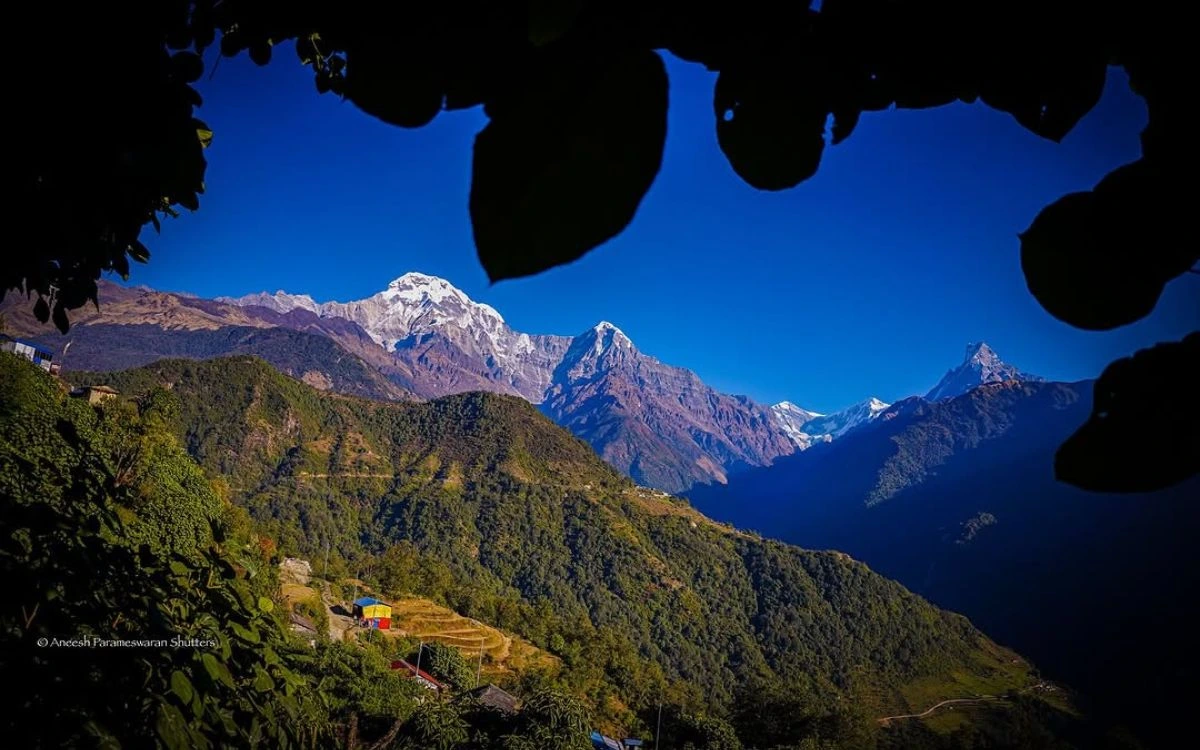
Situated atop Ghandruk Village at 1,940 meters (about 6,365 feet) above sea level in the Kaski district of Gandaki Province, Nepal, Ghandruk Village is perfectly placed within the Annapurna Conservation Area, located only 32 kilometres northwest of Pokhara. Ghandruk Village has extensive terraced agricultural lands that extend to the south and a forest composed entirely of Rhododendron trees, as well as incredible views of the Annapurna South, Hiunchuli, Machhapuchhre (Fishtail), and Gangapurna mountains. Due to its remote location, Ghandrukis also a wonderful place to stop or start any number of trekking routes through the Annapurna region.
Snow-capped Annapurna mountains framed by foliage with terraced hills and traditional houses in Ghandruk village
Why Visit Ghandruk Village in Nepal?
The unique beauty and diversity of Ghandruk village in Nepal are unmatched by other locations because of the combination of natural beauty, cultural diversity, and trekking experiences offered at Ghandruk. Ghandruk village has always maintained a strong sense of authentic Gurung culture, unlike many of the more developed tourist areas,s where there is a great deal of commercialization. Visitors to Ghandruk will have the opportunity to see the traditional way of life and customs that have been in practice for centuries anare d still maintained today by many of the residents. Moreover, Ghandruk is a great spot to use as a base for acclimatization before embarking on high-altitude treks because it is readily accessible compared to many of the more remote villages in the Himalayas.
For centuries, the Gurung Community has lived in Ghandruk with its own unique culture, traditions, and customs, which it has maintained since its establishment as an Indigenous Peoples' Territory. The culture of Ghandruk revolves around agriculture, livestock-rearing, and tourism. One way to learn more about this proud Gurung Ethnicity is to visit the Gurung Museum, where you will find traditional costumes, weapons, and other items that tell the story of this unique culture. Many Gurung men have served in the British and Indian Gurkha Regiments throughout history, providing their families with both honor and economic support. Travelers can also experience Gurung hospitality at traditional dance shows, festivals, and community gatherings.
Ghandruk Village Trekking Overview
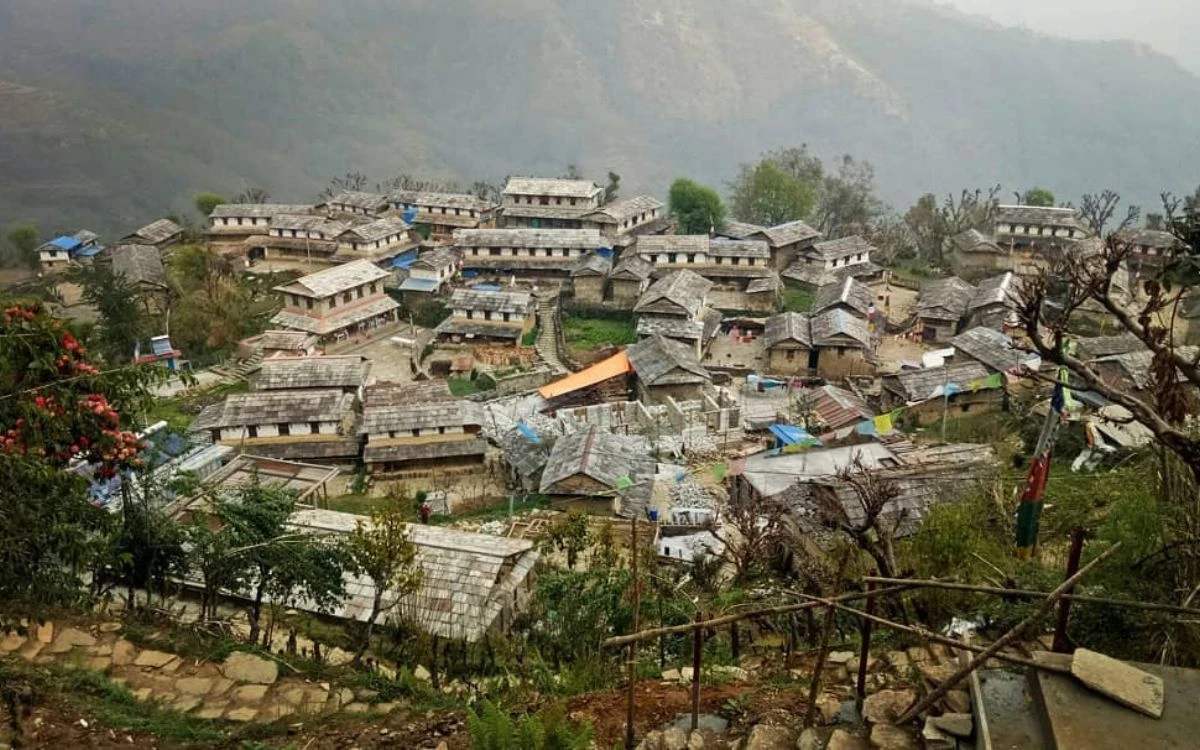
Aerial view of traditional stone houses with slate roofs clustered together in Ghandruk village
Every year, Ghandruk Village Trekking brings thousands of adventurers from around the world to one of Nepal's most famous treks. With well-kept walking paths, comfortable teahouses, and stunning views of the Himalayas, Ghandruk Village Trekking has everything you need, whether you are an experienced or a beginner trekker. It is here that you will begin your journey along many of the different trekking routes inthe Annapurna Region.
As a novice or experienced trekker, you'll never be bored with the variety of terrain you will encounter while on this trek in Nepal. From subtropical forests to alpine meadows, you will encounter a wide variety of ecosystems as you climb to new heights. Enjoy!
Popular Treks Starting from Ghandruk Village
Ghandruk to Poon Hill Trek
While the Ghandruk to Poon Hill Trek is one of the most stunning short treks in Nepal, it is only 4-5 days long. During your trek, you will visit the scenic villages of Tadapani and Ghorepani, which both offer incredible views of the Himalayas. When you reach the top of Poon Hill at an elevation of 3,210 m (10,866 ft), you will be rewarded with breathtaking sunrise views over both the Annapurna and Dhaulagiri Mountain Ranges bathed in stunning golden light. You will never forget this unique experience. This fairly simple trek is perfect for newcomers to trekking and families who want to have a comfortable hiking experience.
Ghandruk to ABC Trek
From the village of Ghandruk, the ABC Trek travels through many different ecosystems and environments, leading people to the base of the 10th-highest mountain in the world. Trekking to ABC (4,130 meters) typically takes about 7-10 days. Along the way, trekkers will pass through bamboo forests, lush alpine meadows, and areas of glacial moraine. The terrain along this route offers an incredible array of environments, from subtropical plants (like banana trees) to high mountains (over 4000m+). The variety of landscapes makes the Annapurna Base Camp Trek one of the most diverse trekking routes in the Himalayas.
Ghandruk Loop and Short Treks
Visitors who don't have the luxury of time should consider the Ghandruk Loop and shorter treks as an excellent option. The 2-3 day circuit from Pokhara to Ghandruk and back gives you a glimpse of village life as well as views of the mountains, yet allows you to complete your journey without having to commit to longer treks. For those interested in trying out Himalayan treks but who also wish to retain flexibility in their schedules, shorter routes work well.
Best Time to Visit Ghandruk Village
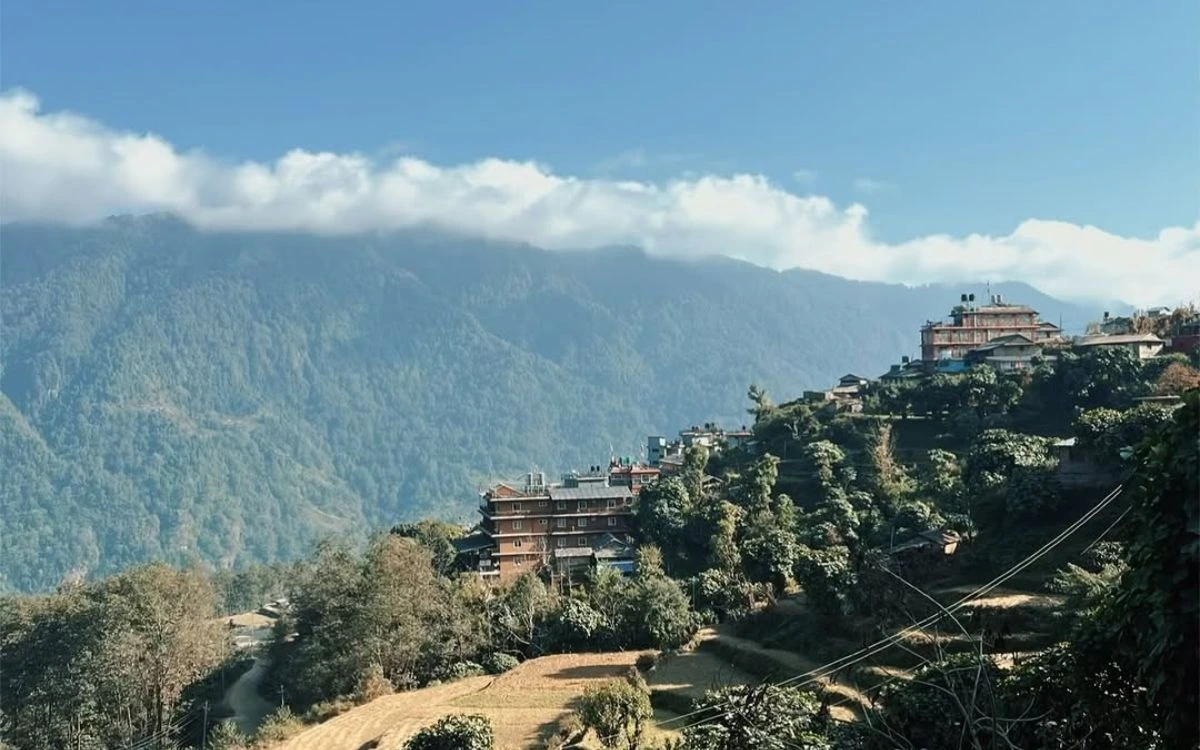
Multi-story traditional lodges and buildings on hillside in Ghandruk with forested mountains in background
Spring Season
For travelers planning to visit Ghandruk village, the spring season of March to May typically provides the best experience. This is the time when the hill sides are blooming with rhododendrons that add beautiful colours to the landscape (reds and pinks). In addition, throughout the spring season, the weather is warm and clear (with great visibility of the mountains). Additionally, several of Ghandruk’s local festivals occur in the spring, adding an additional cultural element to your experience while visiting.
Autumn Season
Just like Spring, Autumn (September to November) also provides excellent weather conditions for travelling to Ghandruk. After the heavy rains during the monsoon season (June to August), the air becomes clear. Crystal clear views of the mountains, stable weather,r and comfortable temperatures are must-haves for Autumn trekking. Ghandruk sees its highest number of trekkers during this time, and the trails and teahouses will be much busier. Many trekkers consider Autumn to be the best time for the Everest Base Camp Trek as well as all other high altitude treks.
Winter Monsoon Consideration
When it comes to traveling to Ghandruk in Winter (December to February) and the Monsoon Season (June to August), things change. Winter brings cold temperatures and the potential for snowfall to Ghandruk; however, the lower elevations remain open and available. During the Monsoon season, heavy rainfall and leeches will make Ghandruk less than ideal for treks (because of the high level of moisture), and the mountains will be obstructed from view. Although many trekkers do take advantage of the quiet season to enjoy solitude and significantly lower rates for accommodations, others may face challenges with less-than-desirable mountain viewing conditions.
The majority of the routes heading to Ghandruk start with a drive to Pokhara - Nepal's adventure capital / first stop-off for the Annapurna region. When travelling from Kathmandu, you have several different options, which include taking a scenic 6 - 7 hour scenic bus ride on the Prithvi Highway or a quick 25-minute flight over the beautiful Himalayas - both options will take you to Pokhara for your trip to Ghandruk, where you can purchase extra supplies before hiking to Ghandruk.
Pokhara to Ghandruk (Road & Trek Options)
There are a variety of ways to get to Ghandruk, Nepal, from Pokhara, Nepal. The most direct way to get there is by taking a jeep directly to Ghandru,k which takes about 2-3 hours via a bumpy mountain road. An alternative method for trekkers is to travel by car to Nayapul or Kimche, where they can then hike for 3-4 hours up to Ghandruk and enjoy stunning views as they hike through the mountains. Using this method helps you to gently acclimatise yourself and experience the environment as you begin your trek.
Ghandruk Village Homestay and Accommodation Options
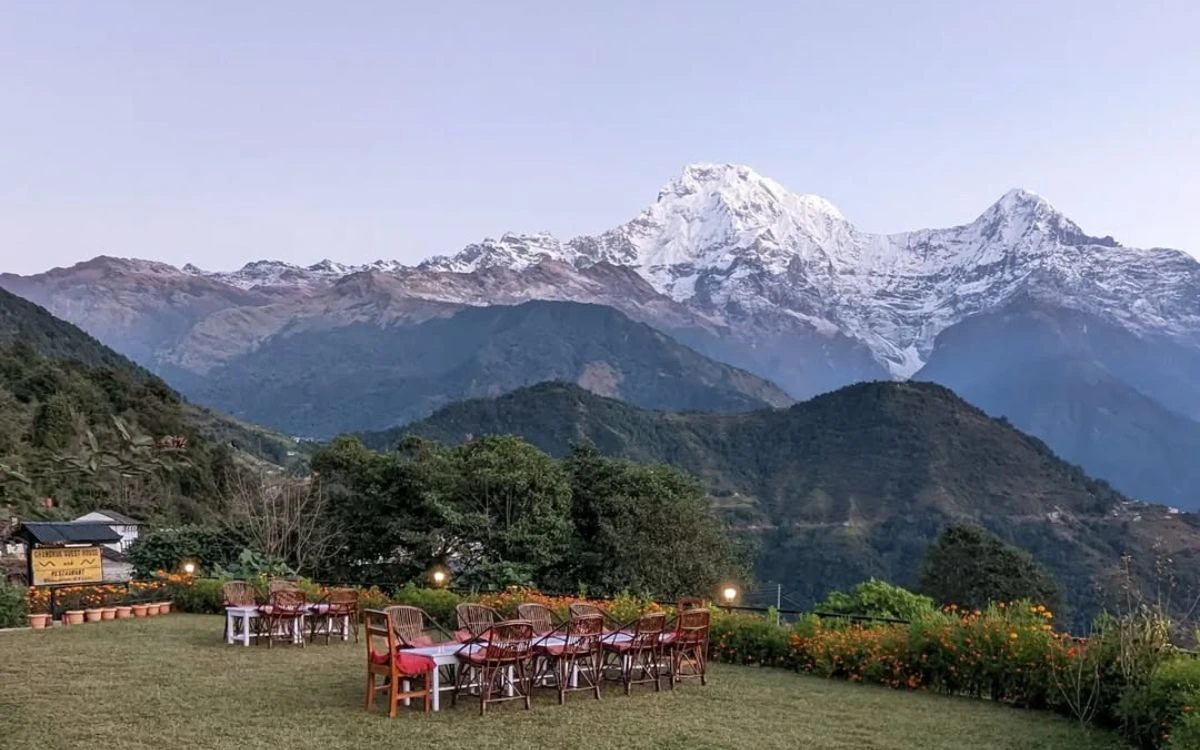
Outdoor dining area with mountain view of snow-covered Annapurna range at sunset in Ghandruk
Visitors who want to experience genuine cultural immersion in the Ghandruk area can do so through the various homestays with Gurung families available there, providing you with an opportunity to share traditional meals and get a feel for what life is like at home in Ghandruk. Visitors can also stay at teahouses and lodges, which vary from basic accommodations to more comfortable accommodations. While most of these places have clean rooms and overlapped dining areas as well as provide incredible views of the mountains surrounding the village, visitors should book as early as possible during the busy seasons to receive the best options available; however, visitors will usually find places to stay without having to make a reservation.
Food and Local Cuisine in Ghandruk Village
In Ghandruk, travelers are offered authentic Gurung cuisine in addition to their usual trekking food. Dal bhat (lentil soup with rice) is the traditional dish and is available in unlimited servings. It is commonly eaten while trekking to give you energy. Other local foods are dhindo (buckwheat porridge), gundruk (fermented vegetable soup), and sel roti (sweet rice bread). Most lodges provide international cuisine such as pasta, pizza, and pancakes to accommodate different preferences. You can also find fresh buffalo milk products and chang (millet beer), which adds authenticity to the local dishes.
Things to Do in Ghandruk Village
While trekking is the primary activity in Ghandruk, there is much more to do. You can visit the Gurung Museum, which provides insight into the area's history and culture, as well as see the old village, where you will find stone houses and many narrow cobbled streets. You can see traditional Gurung dances and songs at cultural performances that are regularly scheduled. Photography lovers should be able to find many opportunities to take amazing mountain views and photographs of village life and everyday activities. You can also take short nature walks around the terraced fields or through the forests near Ghandruk for a peaceful alternative to long treks. In addition, many people visit and share with local farmers on how they grow organic produce, create traditional craft products, and work to protect their environment.
Ghandruk Village Views and Surrounding Mountains
Ghandruk provides some of the best views of the mountain ranges of Nepal. The mountains: Annapurna South (7,219 m), Hiunchuli (6,441 m), Machhapuchhre (6,993 m), and Gangapurna (7,455 m) all rise about Ghandruk and form the northern skyline. When the sun rises or sets on these mountains, the color of the mountains changes from gold to pink, andit is one of the most dramatic scenes that visitors can experience. On clear days, you can see the entire Annapurna Mountain Range from Ghandruk, and sometimes as far as the Dhaulagiri Mountain Range, which is hundreds of miles away. These views from Ghandruk provide it with views similar to the views found in the Manaslu Circuit trek's popular viewpoints.
Permits Required to Visit Ghandruk Village
Two permits are required to visit Ghandruk: the Annapurna Conservation Area Permit (ACAP) for NPR 3,000, which is used to assist in the preservation of the natural environment surrounding the Annapurna Mountain Range; and a Trekker's Information Management System (TIMS) Card for NPR 2,000, which is used to track trekkers' safety and health records. Both permits may be obtained through registered trekking agencies in Kathmandu or Pokhara, as well as at the Bhutan Tourism Board office. You will need to carry both permits with you during your trek, as a check will be conducted at various points along the route.
Travel Tips for Visiting Ghandruk Village
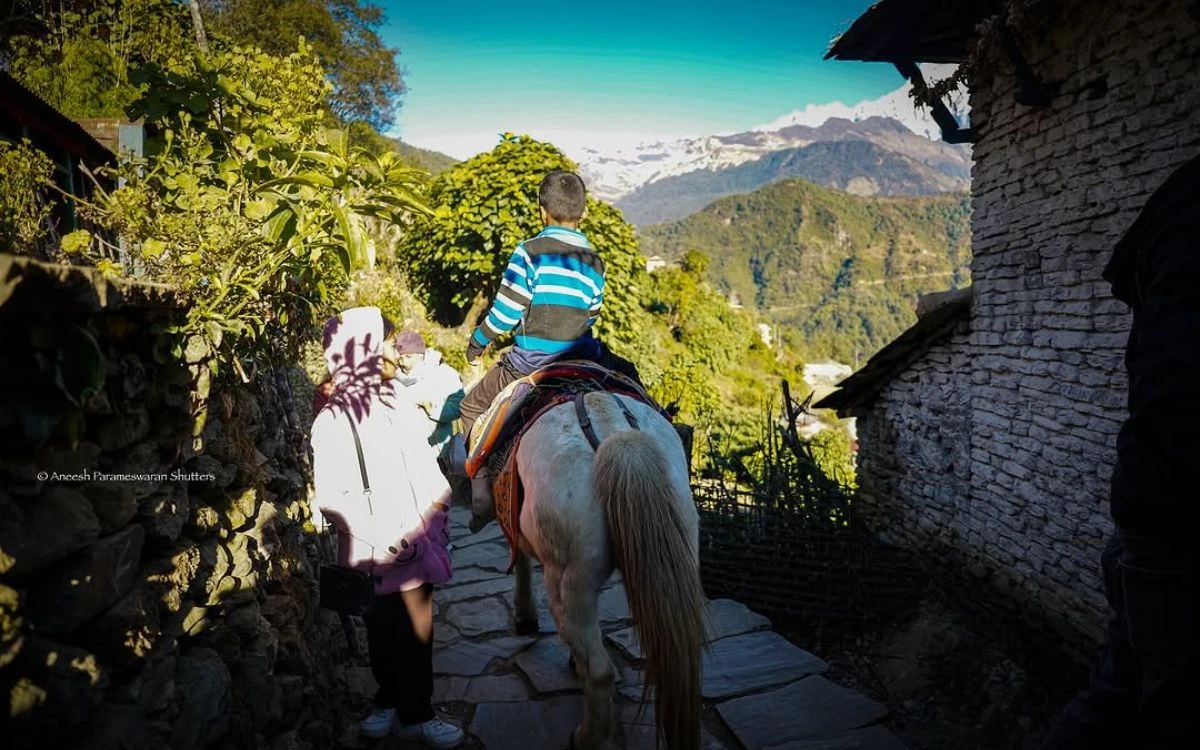
Trekkers walking through stone-paved village path on horseback with Himalayan peaks visible ahead
Wear layers that allow for temperature variation because even in good weather months,s the morning and evening hours may be quite chilly. Trekking boots are essential because the trails can be steep and sometimes slippery. You will also need enough Nepali Rupees (NPR) for purchases because Ghandruk has no ATMs, and your ability to use credit/debit cards in Ghandruk will be very limited. To respect the local customs, visitors should dress modestly, and when taking pictures of the locals, they should ask permission before doing so. Portable water purification tablets or filters should be taken to ensure the safety of your drinking water. A small first-aid kit, some sort of sun protection (like sunscreen or hats), and good quality head lamps will be extremely useful. If you have the means, it is well worth hiring a local guide to enhance your experience of the culture while at the same time providing economic support for the local economy.
Is Ghandruk Village Suitable for Beginners?
Ghandruk is a good place to start trekking, especially for beginner trekkers and families who wish to experience the Himalayas without the risk of getting altitude sickness that can result from trekking at elevations above 3500m. Ghandruk has well-marked, established trails, which can help first-time trekkers navigate, but it is always a good idea to use a guide when visiting Nepal for the first time. The availability of high-quality accommodation options and a variety of food options are among the many reasons why Ghandruk is so welcoming to beginner trekkers. Another aspect of beginner-friendly is the short distances trekkers need to walk daily, which gives the body time to acclimatize without making a huge effort. Additionally, some degree of physical fitness is needed for the uphill parts of the trek as well as the stones on the trail.
FAQs
How many days do I need to visit Ghandruk Village?
For the best experience trekking to Ghandruk, it is recommended to stay at least two or three nights, which will allow you to explore the village and return to Pokhara. If you have more time, you may wish to extend your stay to other areas around Ghandruk.
Is it possible to trek to Ghandruk independently without a guide?
Yes, it is possible to trek independently of a guide, as the trails are clearly marked and independent treks occur frequently. However, having a guide can provide you with an increased cultural awareness while also allowing you to employ a local guide or porter.
What should I take with me when trekking to Ghandruk village?
When preparing for treks to Ghandruk, some key items that are recommended include good trekking boots, warm clothing layers, rainwear, sun protection, water treatment, first-aid, and trekking poles.
Is there internet access and charging facilities in Ghandruk?
Some lodges do have WiFi (usually for a fee) and charging facilities, but can sometimes be slow, and electricity in Ghandruk may be limited.
How hard is the trek from Nayapul to Ghandruk?
The trek from Nayapul to Ghandruk is moderately easy and will take approximately three to four hours of uphill walking. Anyone with minimal fitness should be able to complete the trek without any problem.
Conclusion
As a gem of the Annapurna Region of Nepal, Ghandruk Village represents an amazing combination of culturally authentic experiences, stunning nature, and great trekking opportunities. Whether you want to visit Ghandruk for just a few days or use it as a base to embark on longer hiking adventures such as the Annapurna Circuit Trek, this beautiful Gurung village will provide you with many unique experiences.
Travelers have told us that many years after visiting Ghandruk, they will never forget the friendliness of the people, breathtaking views of the mountains, and their deep-rooted cultural heritage.
Just think of everything from terraces to snow-capped peaks, and the memories of Ghandruk will remind you of what keeps the hearts of all who visit the Himalayas in awe. If you are ready to experience this wonderful village, then please reach out to Himalayan Recreation to take you there and beyond.


-3.webp)



-1.webp)
-1.webp)
-1.webp)