Group Joining Treks in Nepal is a great method of discovering the Himalayas while saving money. Solo trekkers or even small groups can join a scheduled departure from their chosen location and share the adventure with travelers from other countries. The affordable, safe, and social aspects of group joining treks will allow all people to trek through Nepal regardless of age, nationality, or ability level.
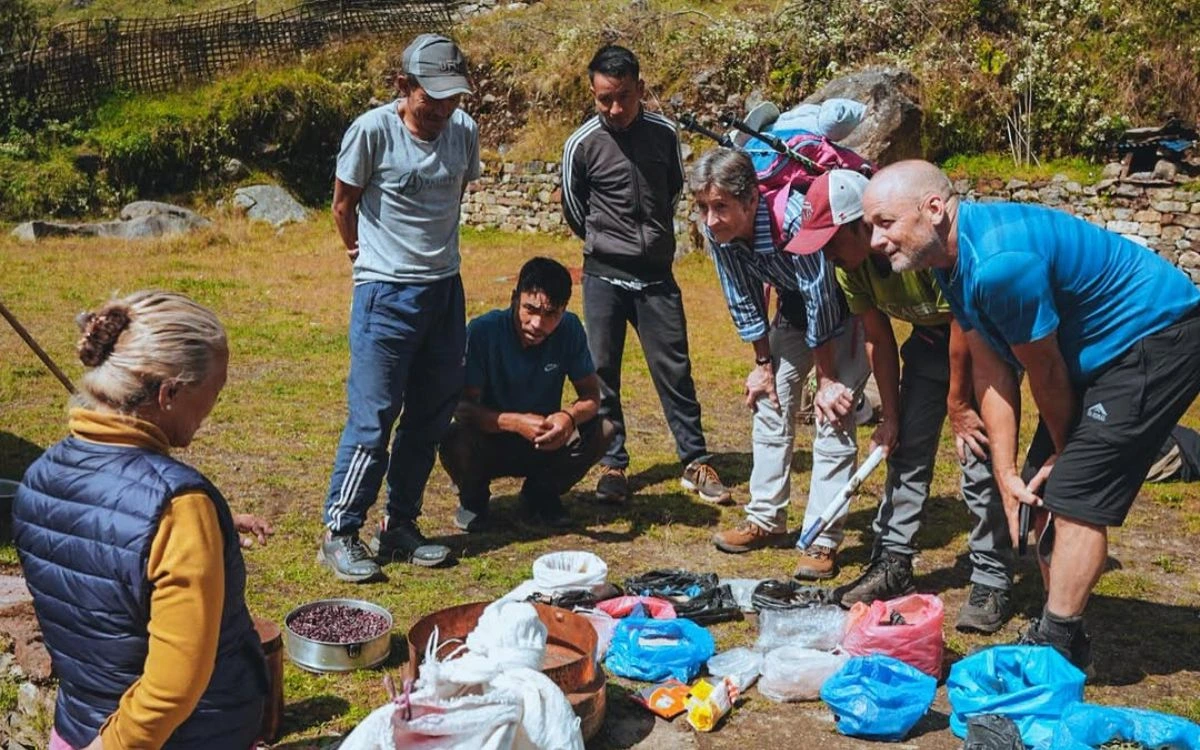
A trekking group and guides reviewing food and gear supplies on the ground before a Nepal trek
Group joining treks allow access to Nepal's world-renowned trekking routes, which range from the world's highest mountain, Mount Everest, to the world's largest ocean-side view, the Annapurna Circuit. With a fixed departure group trek, travelers are able to take advantage of having a professional guide, a team of support, and fellow trekkers at a cost much lower than a private tour. After reading the above, if you wanted to experience the Himalayas for yourself, joining a fixed departure group trek would be the optimal way.
What Are Group Joining Treks?
Shared or fixed-departure treks, or what some people refer to as “group joining treks,” are standard pre-scheduled trekking trips in which individual trekkers join up with a group of fellow trekkers that a trekking company has arranged. As opposed to reserving a private trek, you pay a set amount per person and join other trekkers who have signed up for that specific itinerary and departure date.
On these group departures in Nepal, typically the trek will include things such as an authorized guide, a porter if needed, lodging at tea houses/lodges along the way, meals while trekking, all required trekking permits, and hassle-free airport transfers. Because everything is prearranged, you just need to show up and then go on the trek with the group.
Why Choose Group Joining Treks in Nepal?
Affordable Travel Alternatives
Joining a group for budget trekking in Nepal makes it a lot closer to actuality. The expense of guides, permits, and logistics is shared among many trekkers, significantly reducing the total cost per person. Group departure cheap trekking Nepal packages can cost anywhere from 30-50% of the cost of a private trek,d thus making the Himalayas accessible to budget-conscious individuals.
Connecting with Others
Trekking in a group also provides camaraderie with other hikers that you meet along the way. Group treks will bring together trekkers from many different countries, cultures, and walks of life. After trekking together through the high mountain passes and enjoying tea together in the evenings in tea houses, many trekkers will leave with new friendships that will last a lifetime.
Trekking Alone Versus Together
When you take a guided group tour for trekking in Nepal, safety is a significant advantage when compared to trekking alone, especially if you have never trekked before. A certified guide is responsible for watching for altitude sickness symptoms, managing emergencies, keeping track of all group members, and ensuring that everyone stays together. Trekking together reduces your chances of getting lost or being faced with challenges that you may have encountered while you were on your own while trekking.
How Group Trekking Works in Nepal
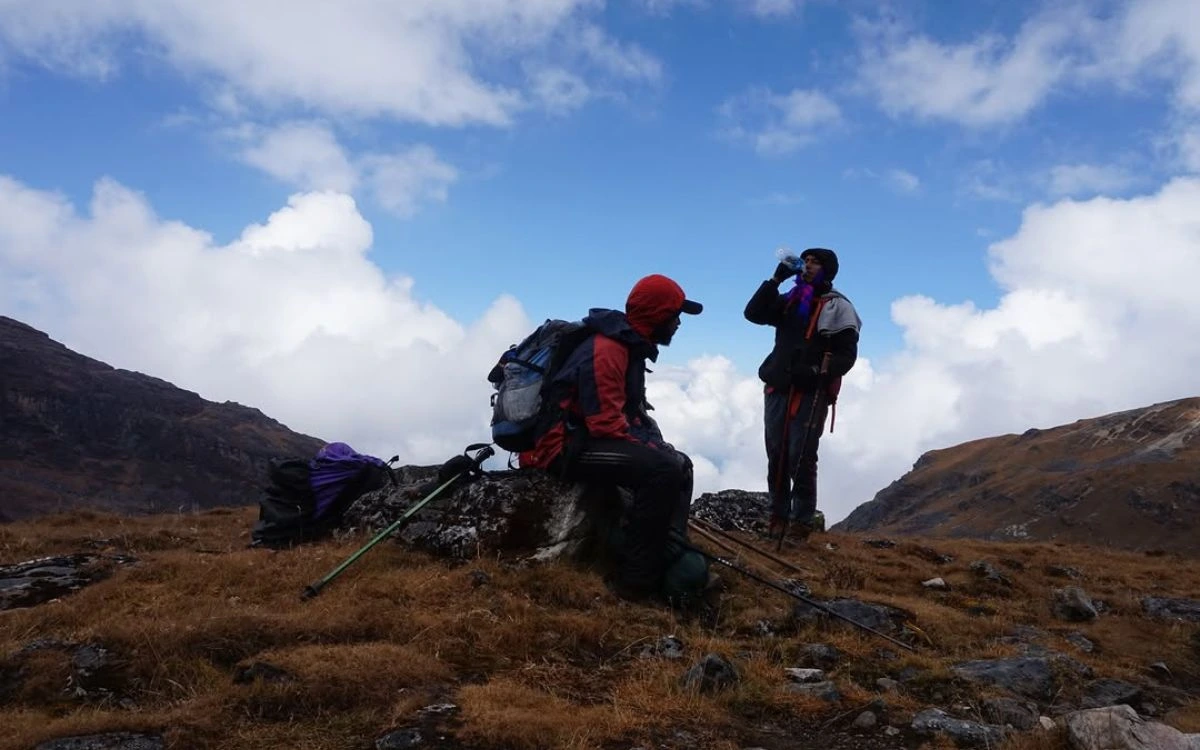
Two trekkers taking a rest break on a high alpine ridge during a group joining trek in Nepal
In Nepal, treks with fixed departures are available throughout the year, allowing you to pick the trek and when you'd like to leave. After reserving your trek space, the trekking company will update the group roster with your name. All trekkers will meet on a prearranged date in Kathmandu for the trek briefing, after which you will all leave together.
Most group joining treks have an ideal size of between 8 and 16 people; this size allows participants to socialize and have a sufficient amount of personal attention from their guide. The head guide will lead the group, while an assistant guide or porter will be responsible for supporting trekkers at the back of the line to ensure that they do not fall behind.
Popular Group Joining Treks in Nepal
Everest Base Camp Trek in a Group
This is an extremely popular group trek. The trek will take you from the heart of the Khumbu – all the way to the base of Mt. Everest (5,364m) – passing many iconic landmarks along the way, including Namche Bazaar and Tengboche.
The EBC Treks typically run from 12 to 14 days and are usually offered by most trekking companies as fixed departure packages (group treks) in Nepal.
Annapurna Circuit Group Trek in a Group
This is one of the most famed classic treks around the world and consists of being involved in the sublime Annapurna massif for a couple of weeks. The major highlight of the Annapurna Circuit is crossing Thorong La Pass (5,416m) while being able to trek through an amazing range of landscapes from subtropical lowlands to alpine desert. This trek will suit you if you want a longer and more immersive trekking experience in Nepal as part of a group.
Annapurna Base Camp Trek in a Group
The Annapurna Base Camp Trek takes you into the spectacular, luxurious, and awe-inspiring Annapurna Sanctuary. The Annapurna Sanctuary is an enclosed natural amphitheater located among the highest mountains globally. You'll have the chance to see the eruption of Mt. Annapurna (8,091m) at the base of the mountain (4,130m), from which the view is spectacular with majestic panoramas of Mt. Annapurna 1, Machapuchare, and Hiunchuli.
The ABC Trek is one of Nepal's most desirable joint group treks in terms of scenery and reasonable difficulty.
Langtang Valley Trekking Group A
For those who wish for a nice, affordable group trek anywhere in Nepal. The Langtang Valley trek is relatively close to Kathmandu and has beautiful views of the Himalayas, a wonderful Tamang culture, and much fewer people than the Everest or Annapurna areas. A Langtang trek can be completed in seven to ten days.
Manaslu Circuit Trekking Group A
If you’re looking to do a trek that is less traveled and will take longer to do than you would on the main trails of Nepal, you may be interested in completing a trek called the Manaslu Circuit. This is a restricted area trek that surrounds the world’s 8th-highest mountain. Because this is in a remote area, a special permit is needed to do this trek, and your trek must be done with a licensed guide (this makes it a good way to combine your group trekking trip in Nepal). In addition to the great scenery along the Manaslu circuit, you will see many traditional Tibetan-style villages.
Group Trekking Cost in Nepal
The group trekking cost in Nepal varies by route, duration, season, and service level. Here is a general breakdown of what to expect:
Trekking Permits: USD 30–300 depending on the region and season
Licensed Guide Fee: Shared across the group, typically USD 25–35 per day
Tea House Accommodation: USD 5–15 per night (often included in packages)
Meals on the Trail: USD 15–25 per day (often included)
Airport Transfers & Kathmandu Hotel: Usually included in group packages
Generally priced around $1100-$1500, an all-inclusive hiking trip to Everest Base Camp can vary depending on what you want in your hiking experience. In contrast, the Everest Base Camp trip typically costs between $700 - $1000 each and will certainly allow for a more budget-friendly hike. Some of the lower-end budget travel options include basic but well-maintained tea house lodging and the ability to eat locally.
Best Time for Group Joining Treks in Nepal
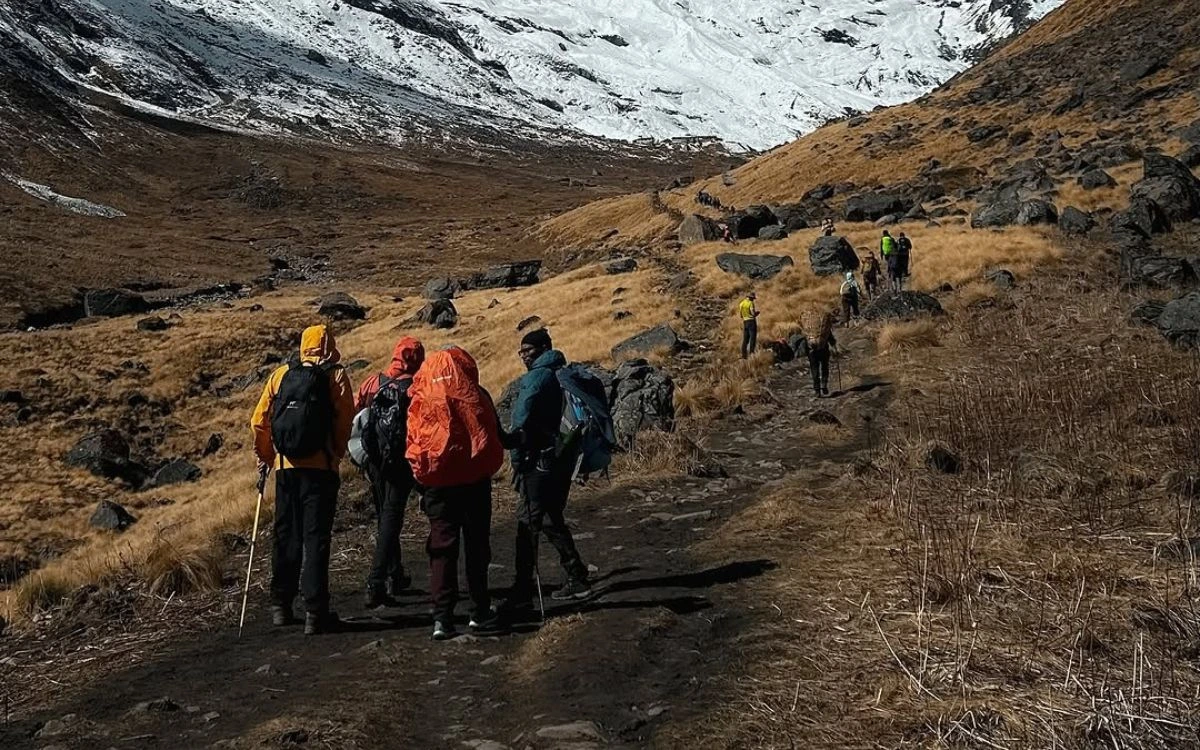
A group of trekkers in colorful jackets ascending a rocky trail toward a snow-covered slope in Nepal
There are two main times of year when people go trekking in Nepal. The most popular time for trekkers to travel on fixed departures is during the spring (March to May). Spring offers good weather and clear skies, as well as rhododendron flowers blooming throughout the northeast region of Nepal. This makes it an ideal time for trekking.
Autumn (September to November) is also a good trekking time in Nepal, with excellent weather conditions, crystal-clear views of the mountains,s and cultural festivals held around Nepal.
There are some lower-altitude trekking routes available during the winter months (December to February). Examples include the Langtang Valley and the lower Annapurna trails. High-altitude trekking routes are usually avoided during the monsoon season because of the heavy rain and poor trail conditions.
Advantages of Shared Trekking in Nepal
Lower cost per person compared to private treks
Built-in social experience and group camaraderie
Professional guide and support for the entire journey
Fixed itineraries make planning simple and stress-free
Ideal for solo travelers who want safety and companionship
Easier permit and logistics management through the trekking company
Disadvantages of Group Trekking
Less flexibility to change the itinerary or pace
You must adapt to the group’s schedule and walking speed
Personality clashes can occasionally affect group dynamics
Fixed departure dates may not suit every traveler’s schedule
How to Join a Group Trek in Nepal
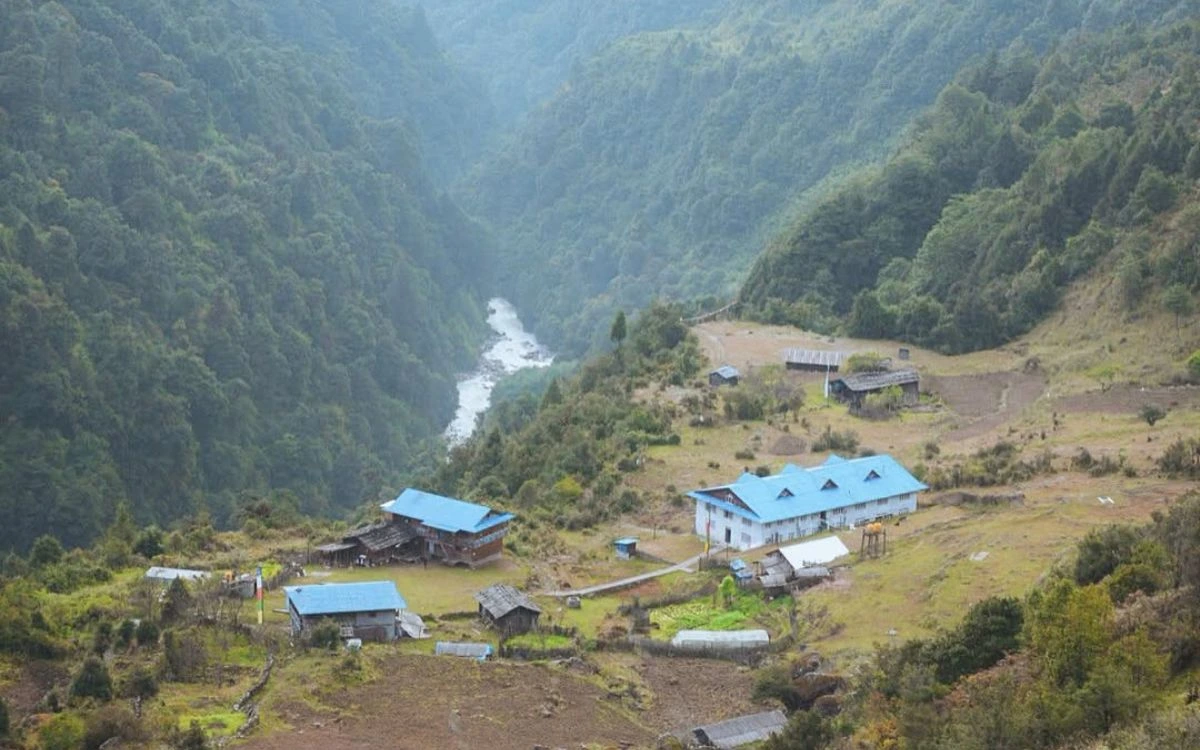
A small remote teahouse village nestled in a deep forested valley with a river below in Nepal
Joining a group trek in Nepal is straightforward. Here is how the booking process typically works:
Choose your preferred trekking route and duration
Browse available fixed departure dates from a licensed trekking company
Book your spot by paying a deposit (usually 20–30% of the total cost)
Receive a pre-departure information pack covering gear, visa, and fitness tips
Arrive in Kathmandu and meet your group at the designated hotel
Attend the welcome briefing and begin your adventure
Always choose a Government of Nepal-registered trekking company with certified guides and verified reviews. A reliable operator ensures your safety, proper permits, and a high-quality trekking experience.
Tips for a Successful Group Trekking Experience
Train your fitness 4–8 weeks before your departure date
Acclimatize properly — never rush altitude gain on any Himalayan trek
Respect your fellow trekkers and maintain a positive group attitude
Pack light — your porter or your knees will thank you
Stay hydrated and eat well throughout the trek
Listen to your guide’s advice on weather, altitude, and route conditions
Carry travel insurance that covers high-altitude trekking and helicopter rescue
Packing List for Group Treks in Nepal
Moisture-wicking base layers and insulating mid-layers
Waterproof trekking jacket and pants
Sturdy trekking boots (well broken-in before departure)
Down jacket for high-altitude camps and passes
Trekking poles for steep ascents and descents
Headlamp with spare batteries
Sunscreen, sunglasses, and a wide-brimmed hat
Personal first-aid kit and altitude medication (consult a doctor)
Reusable water bottle or hydration bladder
Lightweight sleeping bag liner (tea houses provide blankets)
Safety Tips and Trekking Guidelines
Safety is paramount on any Nepal group trekking package. Follow these essential guidelines to protect yourself and your fellow trekkers:
Always ascend gradually and follow the “walk high, sleep low” rule above 3,000m
Never trek alone — always stay with your guide or the group
Know the symptoms of Acute Mountain Sickness (AMS) and report them immediately
Drink at least 3–4 liters of water per day at high altitude
Do not ignore weather warnings or push forward in poor conditions
Register your trek with the Trekkers’ Information Management System (TIMS)
Purchase comprehensive travel insurance before departing your home country
FAQs About Group Joining Treks in Nepal
What experience do I need before participating in a trek with a group in Nepal?
Most of the group joining treks that take place in Nepal are suitable for beginner trekkers with average physical ability. For instance, both the Annapurna Base Camp trek and the Langtang Valley trek are great places to start as beginner trekkers. Trekking the EBC and the Manaslu Circuit are much more challenging, nd as a result, will require more physical preparation in order to complete them successfully.
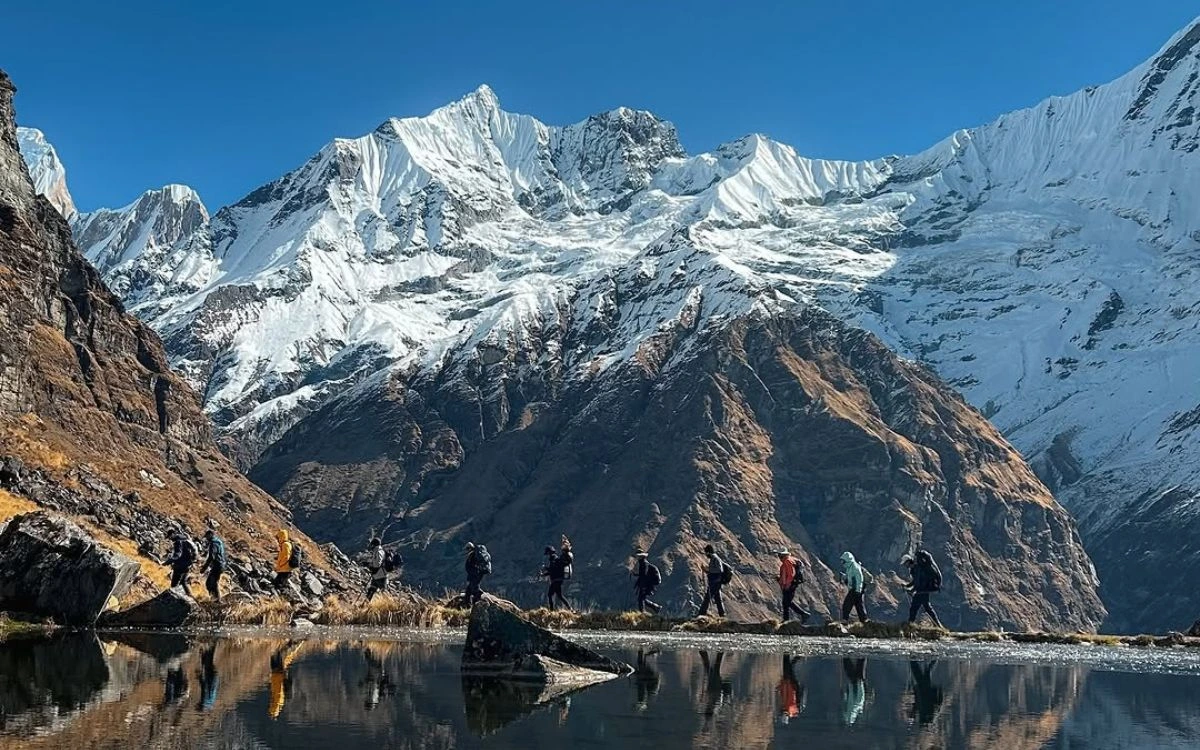
A group of trekkers walking in a line beside a still reflective lake with massive snow-capped peaks behind
What size groups do you normally find on a group joining trek?
Most group sizes are between 6 and 16 participants. Due to the fact that most reputable companies limit their group size to no more than 15-16 people, this is an important factor to consider when booking a group joining trek because it will allow you to get the best possible experience from your group in terms of quality and attention from your guide.
Is it possible for a solo traveler to join a group of trekkers in Nepal?
Yes! A group joining trek is an excellent opportunity to do so, and is one of the most common types of trekking in Nepal for a solo traveler. You can book any group joining trek and pay the standard per-person rate for that group without having to pay a single supplement first.
What’s the minimum age to go on a group joining trek in Nepal?
There are no set minimum age limits for going on a group joining trek; however, most trekking companies will only recommend participants who are at least 10 – 12 years of age for the shorter, lower altitude trekking routes. On the other hand, high-altitude treks are typically recommended for anyone who is over the age of 16 years old to participate in.
Conclusion
The group trekking tour company in Nepal offers you a chance to enjoy all three of these things together — affordable, adventurous, and social. You can share the experience of climbing up Mount Everest on the EBC trek, exploring the Annapurna Sanctuary on the ABC trek, or exploring the many hidden paths of the Manaslu circuit. Group trekking on these treks leads to experiences and friendships that will last a lifetime.
The mountains of Nepal are calling out for you, and a group has been assembled to help you answer. Contact us at Himalayan Recreation Treks and Expedition about your group joining a trek in Nepal today! A friendly and knowledgeable staff member will help guide you safely up to the highest point on the planet!


.webp)



-1.webp)
-1.webp)
-1.webp)