Island Peak climbing difficulty comes down to one honest fact: this is not a trek; it's a real Himalayan climb. Standing at 6,189 meters, Island Peak (also called Imja Tse) mixes high altitude, glacier travel, fixed ropes, and a steep final push to the summit. It sits in a strange middle ground — too technical for a first-time trekker with zero climbing background, yet achievable for a reasonably fit person who trains properly and gets good guidance. If you're wondering whether you can climb it, the short answer is probably yes, with the right preparation. The long answer needs a bit more explaining, so let's break down exactly what makes this climb hard and what it takes to stand on top.
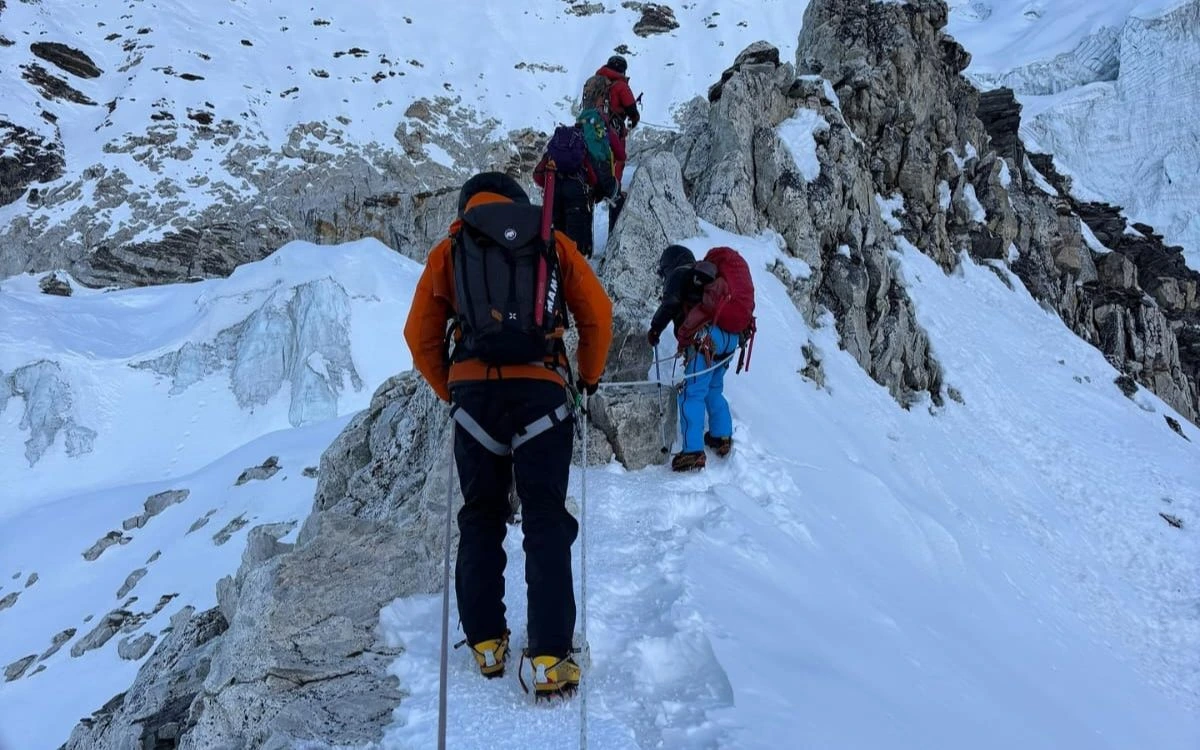
Roped climbers navigating a rocky ridge on Island Peak
In this guide, we'll walk through everything that shapes Island Peak climbing difficulty: the technical grade and glacier sections, altitude and acclimatization, how much training and gear you actually need, whether beginners can attempt it, the typical itinerary and summit-day routine, the best season to go, what it costs, and your realistic chances of reaching the top. By the end, you'll know exactly what to expect and how to prepare.
How Difficult Is Island Peak Climbing?
In terms of technical difficulty, Island Peak falls under the "moderate" level, but moderate research shows that it is not easy. In other words, one does not have to be a mountaineering expert to conquer Island Peak, but a hiker should possess fundamental rope skills and be physically fit, along with the ability to endure the long and chilling night climb.
Overall grading
According to most guiding companies, Island Peak would receive an Alpine Grade PD+ (Peu Difficile) rating, which makes it less challenging than climbing technical mountains like Ama Dablam but still above simple trekking. On this climb, a climber will have to walk on the glacier, traverse crevasses, and utilize a fixed rope in the last section before reaching the summit ridge.
Three factors work together: having air that is thin, a very long summit day, and short but real technical sections. Each of these factors cannot be considered extreme on its own. However, together, they lead to a challenging day, especially in cold conditions at 4 a.m. This is why researchers investigating the difficulty of climbing Island Peak find that it is not the technical side of climbing that constitutes difficulty in climbing, but rather the altitude factor, which often appears to be more important.
Island Peak Difficulty Grade and Technical Sections
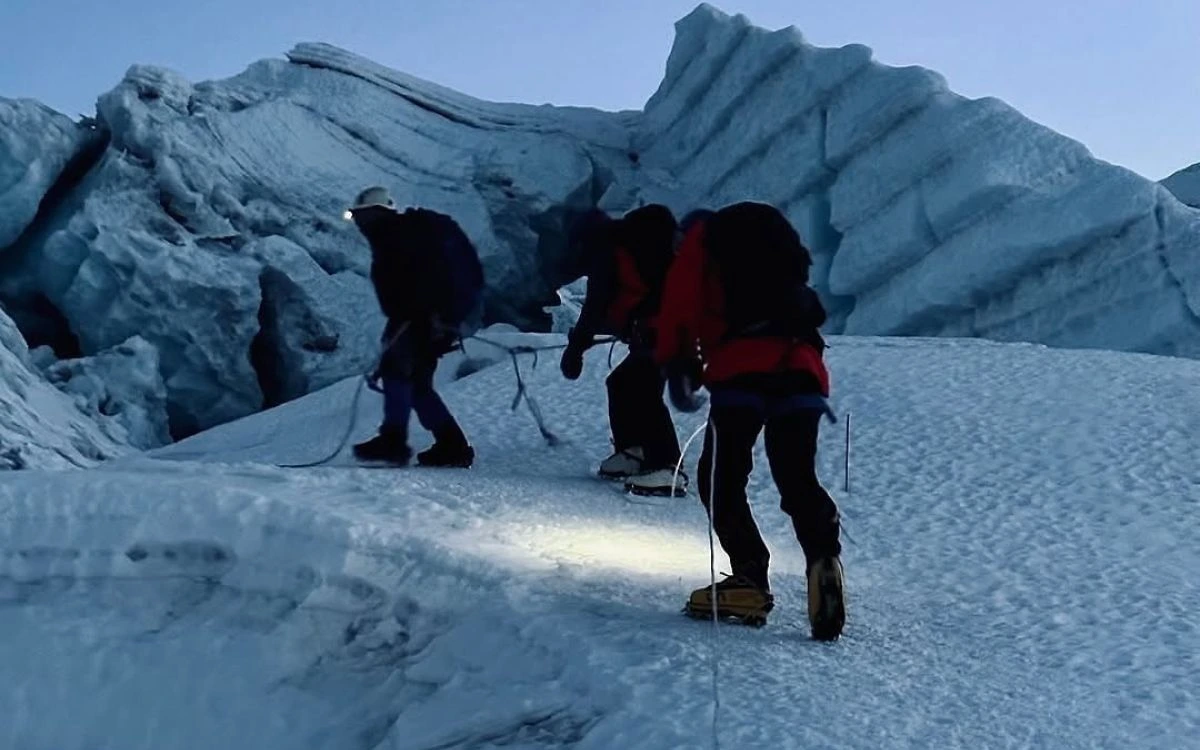
Climbers crossing an icy ridge before dawn on Island Peak
Alpine/technical climbing classification
The PD+ grading indicates that the path possesses some real climbing features; going just doesn't make it a complicated problem to overcome, as it doesn't require elite mountain climbing skills. The most challenging part of the ascent involves the use of crampons and ropes as well.
Crossing the glacier
When you reach the bottom of the steep rock wall, you'll have to cooperate with the fellow climbers when crossing the Imja glacier, where there might be some crevasses on your way. You’ll put on your crampons before you begin, but your team leader will first verify if you are familiar with the proper technique.
Reaching the summit
The final wall is nearly vertical, making it the hardest part of the journey; it is about 100 m long and is climbed using a jumaring system (equipment that allows climbing without moving the anchors). You will feel exhausted after the entire trip, so you will find this part rather challenging than tough technically, which adds to its difficulty.
At 6,189 meters, Island Peak is quite high, where your physiology has to contend with a restrictively low supply of oxygen — hardly more than half of what your body has to work with at sea level.
Why altitude makes climbing difficult
Altitude slows everything down. Simple things become difficult, sleeping becomes harder, you lose your appetite, and you can feel nauseous. This is the aspect of climbing Island Peak for which no amount of gym training can prepare you because you essentially need to acclimatize correctly.
Acclimatization and understanding altitude sickness
Successful programs include resting days and gradual ascent, in line with the famous "climb high, sleep low" principle. It is essential to know the initial symptoms of altitude sickness, such as headache, nausea, dizziness, and to inform your guide about experiencing those symptoms сразу.
How Much Training Do You Need for Island Peak?
Climbers nearing the summit ridge of Island Peak
Cardiovascular endurance
Begin working on your physical fitness program at least three months beforehand. Hiking, running, cycling, or climbing stairs three or more days a week at about 45 minutes to an hour per session builds your stamina and endurance for long hours, especially on summit day.
Fitness for climbing
This type of loading requires more than just strength training — you should train uphill with a loaded backpack on uneven ground if possible. If you have done a trek such as the Langtang Valley Trek, you have already achieved an excellent fitness base.
Techniques in climbing
Before leaving for Nepal, it is recommended to spend at least a couple of days practicing with crampons, an ice axe, and a safety rope. This can also be done during a pre-climb training day in Chhukung, which is part of the program of many climbing trips to Nepal.
What Technical Gear Is Needed?
Crampons, harness, and helmet
You will require a climbing crampon that matches your mountaineering boots, a climbing harness, and a helmet. Wearing improperly fitting equipment is one of the top-known and easily preventable mistakes made on the day of the summit.
Additional gear
Along with an ice axe and an ascender/descender, you will need some climbing ropes. The fixed ropes are the ones set by the mountain; nevertheless, your own gear needs to be reliable and appropriate for your body size.
Personal clothing and high-altitude gear
You must pack layered clothing, a proper down suit or thick insulated jacket, high-altitude mittens, and a sleeping bag rated below freezing. It is especially significant for people who have already trekked in remote places like the Upper Mustang Trek because most of them can tell how quickly the weather can change in the Himalayas.
Do You Need Previous Climbing Experience?
Can beginners climb Island Peak?
However, there are important caveats. Individuals who are new to climbing but have good overall fitness, a strong attitude, and the correct preparation for the climb can succeed in climbing Island Peak easily every climbing season. Because of the above reason, Island Peak is frequently considered the first objective of climbers in the Himalayan region.
What experience facilitates the climb?
Nevertheless, any past knowledge about crampons, fixed ropes, and trekking at altitudes is of great benefit. When one has been on some long trek before, it does not need to be a technical one, such as trekking in Nepal's Himalayan valleys; he/she already knows what it is to trek for days in cold climates and at high altitudes. Thus, the surprises of the summit night are unlikely to be present on the summit night.
Island Peak Climbing Itinerary and Summit Day
Typical acclimatization itinerary
The majority of Island Peak itineraries span between 15-19 days, consisting of the trek through the Everest region and the acclimatization days. A good number of climbers combine Island Peak with taking the Everest Base Camp Trek as well since it can serve as adequate altitude training.
From the base camp at Island Peak to the summit
The summit day usually begins before midnight. Climbers traverse the glacier during the night, go across the headwall at daybreak, and reach the summit at approximately mid-morning.
How better preparation is achieved with a longer itinerary
A longer, well-designed itinerary is not a waste of time as it increases the likelihood of success. The more acclimatization days there are, the healthier the climber will be and the better prepared the brain is for the summit day.
Best Season for Island Peak Climbing
Spring climbing season
March to May offers stable weather, warming temperatures, and good visibility, making it one of the two prime climbing windows.
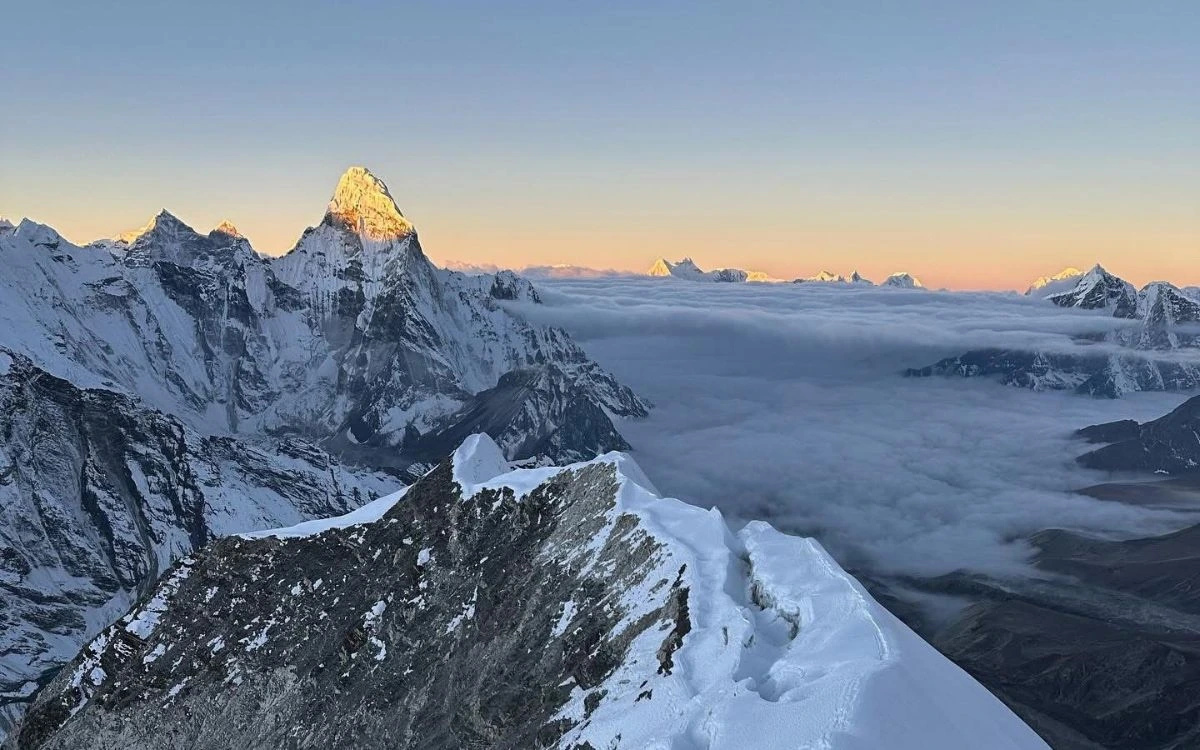
Sunrise view of Ama Dablam above the clouds from Island Peak
Autumn climbing season
September to November is the other favorite, with clear post-monsoon skies and reliably good climbing conditions.
Winter and monsoon considerations
Winter brings brutal cold and heavy snow, while the summer monsoon (June–August) brings poor visibility and unstable conditions on the glacier. Both are generally avoided by serious climbers. If you're planning to combine your climb with a longer circuit, the same spring and autumn windows also happen to be the best season for a route like the Annapurna Circuit Trek.
Island Peak Climbing Cost
Permit and government-related expenses
Island Peak requires a specific climbing permit issued by the Nepal Mountaineering Association, separate from standard trekking permits.
Guide, porter and logistics
A certified climbing guide, porters, and logistics support form the bulk of the cost, and this is not a place to cut corners — a qualified guide is central to both safety and success.
Gear, accommodation and additional expenses
Add teahouse accommodation, meals, technical gear (rental or purchase), and incidental costs. Total packages vary widely by operator and itinerary length, so it's worth comparing what's actually included before booking.
Certain factors such as fitness, acclimatization, weather conditions, and the experience of the guide become crucial for the success of reaching the target summit. In other words, no single aspect provides the necessary guarantee in itself.
Why the success rates change
The success rates differ according to the time of the year, length of the planned route, weather conditions, and type of operator; thus, it is better to be a bit distrustful towards any one figure. The climber who has gone through the acclimatization process and is guided by a knowledgeable person will have decent chances for reaching the summit.
Is Supplemental Oxygen Used on Island Peak?
Generally, Island Peak climbers will not use supplemental oxygen. With the peak standing at 6189 meters, most climbers are fit and acclimatized enough to climb without it. Oxygen is typically used on mountain peaks over 7,000–8,000 meters. A good acclimatization schedule allows the climber’s body to make this adaptation process without the use of oxygen.
Is There an Age Limit for Island Peak?
There's no strict legal age limit, but most operators recommend climbers be at least 16 years old and reasonably fit regardless of age. What matters more than the number on your passport is genuine cardiovascular fitness and mental readiness for a long, cold summit day.
How to Make Island Peak Climbing Easier and Safer
You should improve your fitness level in advance, take acclimatization days seriously, learn how to implement technical skills before you arrive, buy the right equipment, and climb with an experienced local guide. If possible, combine your climbing trip with a slower trek (like many climbers who prepare for serious climbs do) so that you arrive well acclimatized.
Frequently Asked Questions
Is Island Peak the same as Imja Tse?
Yes. Island Peak and Imja Tse are the same mountain — Imja Tse is the original Nepali name, while "Island Peak" was given by early British expeditions because the summit appears to rise like an island from a sea of surrounding ice.
What is a jumar, and why is it needed for Island Peak?
A jumar is a mechanical rope clamp that slides up a fixed rope but locks if you slip. Climbers use it to ascend the steep headwall below Island Peak's summit safely, especially when fatigued after a long, cold night climb.
How do you reach Island Peak Base Camp?
You fly from Kathmandu to Lukla, then trek through the Everest region via Namche Bazaar and Dingboche to Chhukung, the last village before Base Camp. The approach takes about 8–10 days and doubles as acclimatization.
Is travel insurance required for Island Peak climbing?
Yes, comprehensive travel insurance is essential. It should cover high-altitude trekking and climbing up to at least 6,500 meters, plus emergency helicopter evacuation, since rescue costs at this altitude can be extremely high.
What should I pack besides climbing gear?
Beyond technical equipment, bring warm layered clothing, sunglasses with UV protection, a headlamp, water purification tablets, and basic first-aid supplies. A sleeping bag rated for sub-zero temperatures is also essential at Base Camp.
Is there phone or internet access near Island Peak?
Limited Wi-Fi and mobile coverage exist in villages like Chhukung and Dingboche, usually through paid hotspot cards. Once you reach Base Camp and higher, connectivity disappears almost entirely, so treat the summit push as fully offline.
What happens if bad weather blocks your summit attempt?
Good itineraries build in buffer days for exactly this reason. If weather forces a delay, guides simply wait for a better window; if time runs out entirely, climbers may need to descend without summiting.
Can you climb Island Peak without joining a group?
Technically yes, but it's not recommended. Nepal requires a certified guide for peak permits, and climbing solo removes an important safety net on glacier terrain and fixed ropes. Most climbers join small guided groups instead.
How does Island Peak compare to Mera Peak in difficulty?
Island Peak is generally considered more technical than Mera Peak climbing because of its glacier crossing and steep fixed-rope headwall. Mera Peak sits higher in elevation but has a gentler, less technical route to the summit.
Do you sleep in tents or teahouses during the climb?
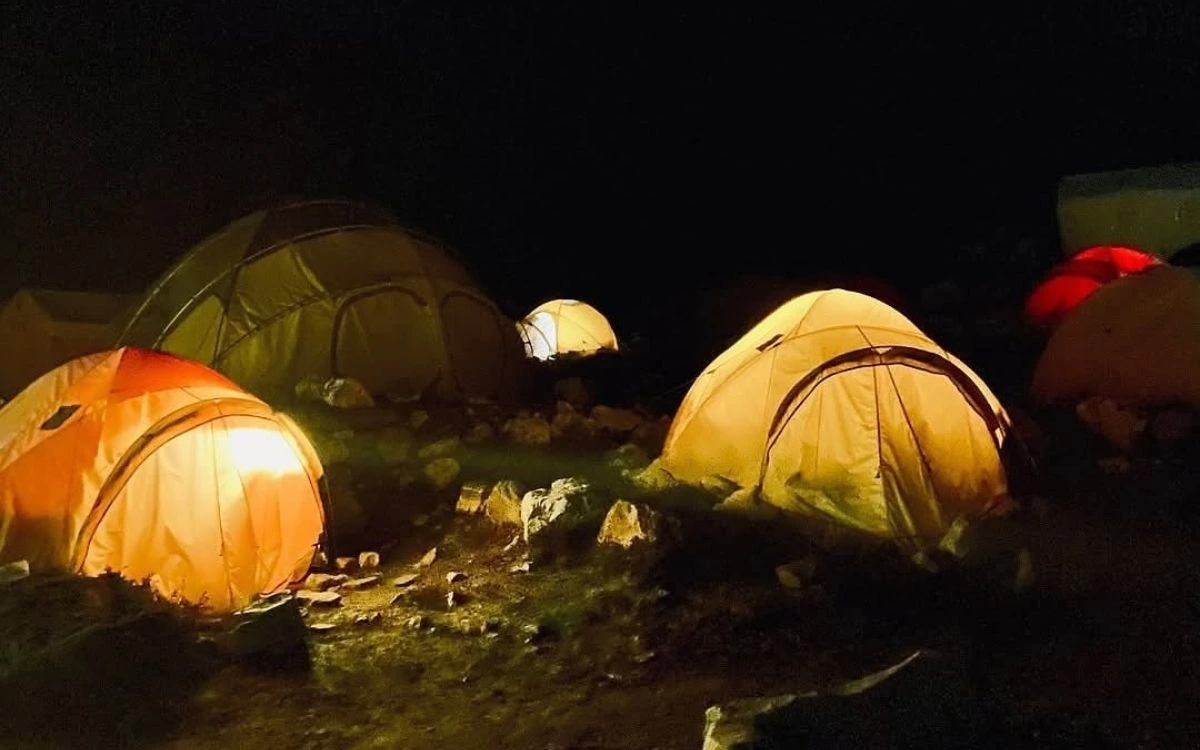
You'll stay in teahouses during the trekking approach through villages like Namche and Dingboche. Once you reach Island Peak Base Camp and High Camp, accommodation switches to tents for the final push to the summit.
Lit tents at high camp during Island Peak climbing
Conclusion
Island Peak climbing is challenging but feasible. It is a tougher adventure than any trekking trip because it involves glacier travel, fixed ropes, and real technical climbing but does not call for years of climbing. If you have enough training, sufficient gear, proper acclimatization, and an experienced guide, it is possible for climbers with fair fitness to reach the top.
Island Peak requires planning more than skills. If you are physically prepared, mindful of the altitude, comfortable with ropes, and equipped with a skilled team, this climb is not something scary to do. Interested in climbing Island Peak? Contact Himalayan Recreation Company and plan your climb with specialists.


-1.webp)



 based on 1 reviews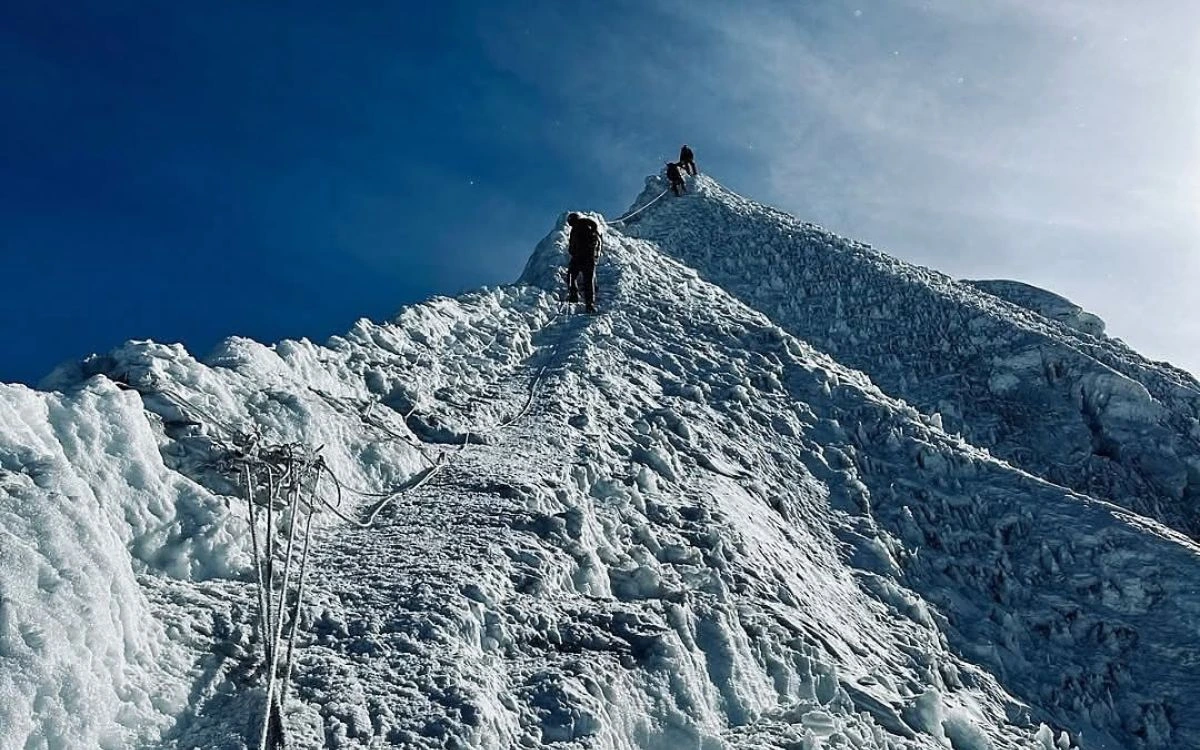



-6.webp)
-1.webp)
-1.webp)