You get off your plane at Lukla—the greatest airport in the world—and are surrounded by the stunningly massive Himalayan Mountains as you begin your adventure. Then you’ll walk through beautiful forests of Rhododendron trees and across swaying Suspension Bridges until you reach the first stop on your journey—the Phakding Village, at an elevation of 2,610 metres (8,550 ft). The welcoming smiles of Sherpas, the gentle sound of the Dudh Koshi River and the warm tea houses provide some relief from travelling. Airs of adventure fill the community as trekkers from around the world stop at Phakding as their first stop prior to trekking the legendary Everest Base Camp trek, and that is why Phakding is so beloved by trekkers after you have arrived.
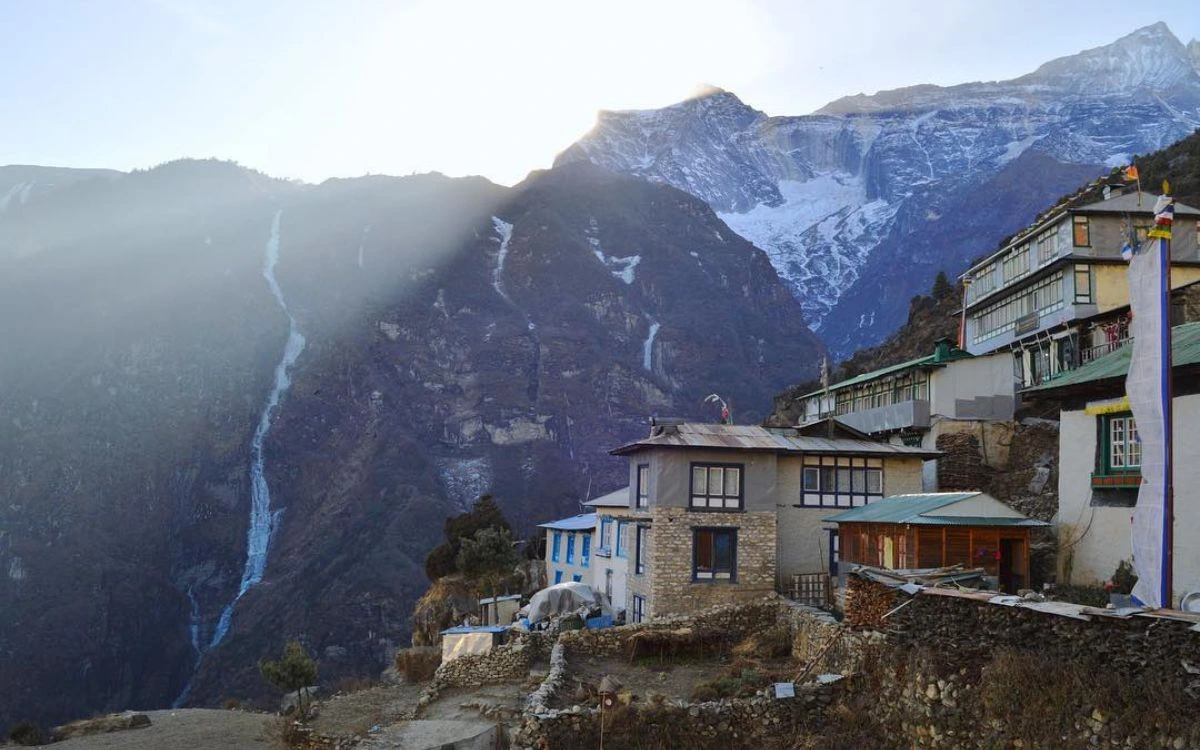
Stone teahouse lodges in Phakding at dusk with waterfall and mountain backdrop
Phakding: A great place to start your expedition in the Himalayas with all the necessary facilities. You'll find many traditional lodges to stay in, delicious dal bhat from local families, and hundreds of years of authentic Sherpa culture. Phakding is ideal for acclimatization before trekking at higher elevations because the altitude gain takes place in the area.
If you're planning on going to Everest Base Camp or Gokyo Lakes, or any other trekking adventure in Nepal, Phakding will be the best place to prepare for your trek. In Phakding, you will see prayer flags blowing in the wind, beautiful Buddhist monasteries where you can find peace and tranquillity, and beautiful views of the mountains that can be seen throughout the village. Your mountain dreams start in this wonderful village of Phakding, where history and adventure meet.
Where Is Phakding Village Located?
Phakding Village - Nepal is located in Solukhumbu District (Province No 1) about 8km north of Lukla Airport. The village is located on the banks of the Dudh Koshi River (in one of the most beautiful areas of the world) and is surrounded by terraced agriculture and large pine forests, creating beautiful natural views. Trekking people coming to Lukla can easily walk from Lukla to Phakding in about 3-4 hours downhill; therefore, Phakding is a very good starting point for people who will be starting a mountainous adventure. Phakding is also known for being the entrance to Sagarmatha National Park (UNESCO World Heritage Site), which is home to some of the most beautiful mountain areas on the planet. Phakding is strategically located between Lukla and Namche Bazaar and is close to the trekking routes and trails in this region, thus making Phakding an important destination for any trekker trekking in Nepal's Everest Region.
Phakding Village Altitude and Geography
It is important for trekkers to comprehend the Phakding height to successfully determine how to acclimate correctly. Phakding is around 2,610 metres above sea level (8,563 feet) and provides a relatively low altitude, allowing trekkers time to gradually acclimatise to increased altitudes, prior to ascending to more difficult higher altitudes. The geography surrounding Phakding is made up of vast valleys along the banks of the Dudh Koshi, which is fed by melting glaciers from Mt. Everest. Many suspension bridges connect the various locations along the trail, which provide a perfect transition zone between tropical rainforests and alpine forests. The terraced hills that surround Phakding show how farmers have adapted their farms to the terrain through the years, and colourful prayer flags that float over the Dudh Koshi add a spiritual quality to the awe-inspiring sights found in Phakding.
Why Phakding Is an Important Stop on the Everest Base Camp Trek
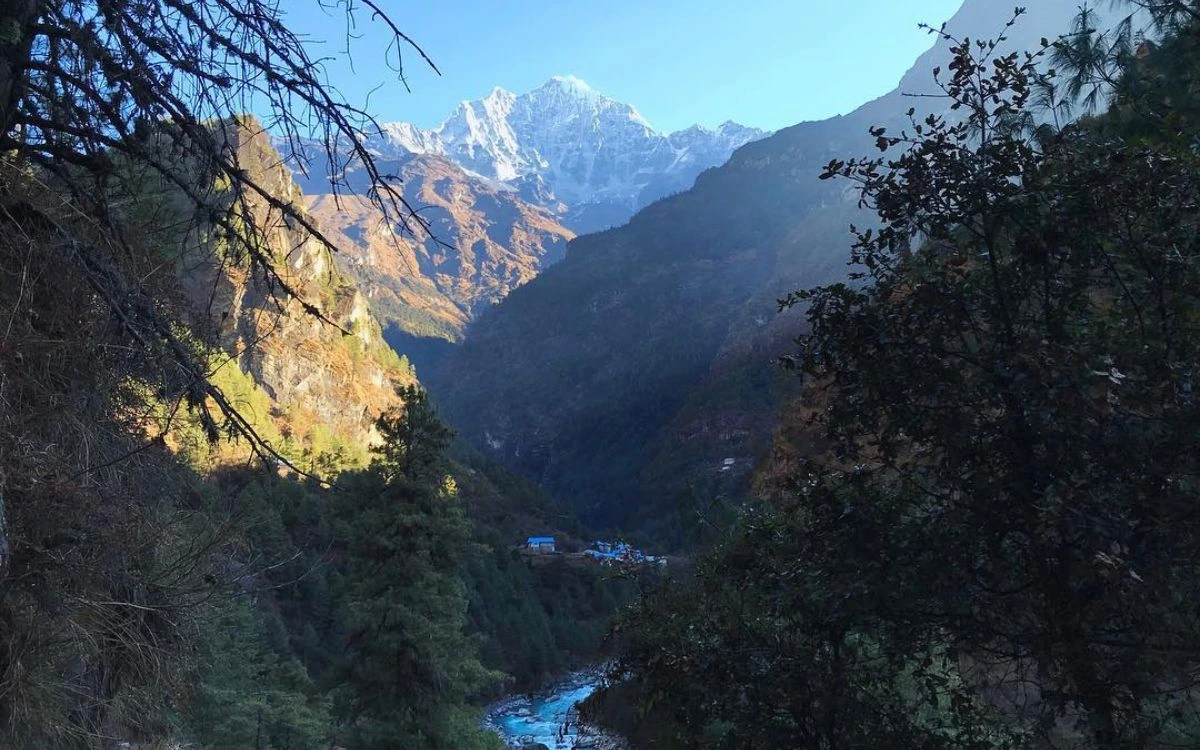
Small settlement nestled in deep valley with snow-capped Himalayan peak framed by trees
The trek from Phakding to Everest Base Camp is an incredible hiking challenge at high altitudes. While many trekkers do not spend more than one night in Phakding, most use it as the first overnight stop after arriving in Lukla. Phakding is ideally located for gradual acclimatization—a good night's sleep at Phakding (at moderate elevation) gives your body a good head start to begin changing to higher elevation. As with most of the stops along the way, you will find decent accommodations, good food, and medical attention (if you need it) available in Phakding. Furthermore, many experienced trekking companies highly recommend that you start your trek from Phakding to limit your potential risk of developing altitude sickness. In addition to the acclimatization benefits, you will also experience authentic Sherpa hospitality and the rich culture of the mountains before hitting the busier, commercial areas farther up the trail.
Phakding to Namche Bazaar: Trek Distance, Time & Route Overview
The trek from Phakding to Namche Bazaar ranges from 8 to 10 kilometers in length, taking anywhere from 5 to 7 hours of hiking while experiencing some of the more significant obstacles associated with trekking in the Himalayas, including river crossings and steep inclines. The route parallels the pristine Dudh Koshi River, where trekkers will cross multiple iconic suspension bridges adorned with colorful prayer flags. Along the way, participants will make their way through the small villages of Benkar, Monjo, and Jorsale before entering the protected area of Sagarmatha National Park. Upon leaving Jorsale, the trail climbs approximately 600 meters to the village of Namche Bazaar, located at 3,440 meters elevation, using an established trail that has been used by thousands of previous trekkers. Just like on trekking routes between villages from the Annapurna Base Camp and Ghorepani Poon Hill, this part of the Phakding Lukla trek follows the major village Rastafarian culture. However, while each area of Nepal provides different geographical and cultural characteristics of trekking in Nepal, the overall structure is the same.
History and Cultural Significance of Phakding Village
The area of Phakding has a long history of being home to Sherpas, traditionally serving as a small village and evolving into a tourist hub for trekkers. For many centuries, Phakding was an important trade route between Tibet and the lower valleys of Nepal. The name "Phakding" means "the place of stones" because the surrounding area is characterized by rugged rocks. There are many ancient monasteries and chortens throughout Phakding that serve as spiritual locations connecting visitors to the area's rich history of Buddhism.
Local lifestyle, customs,s and culture in Phakding
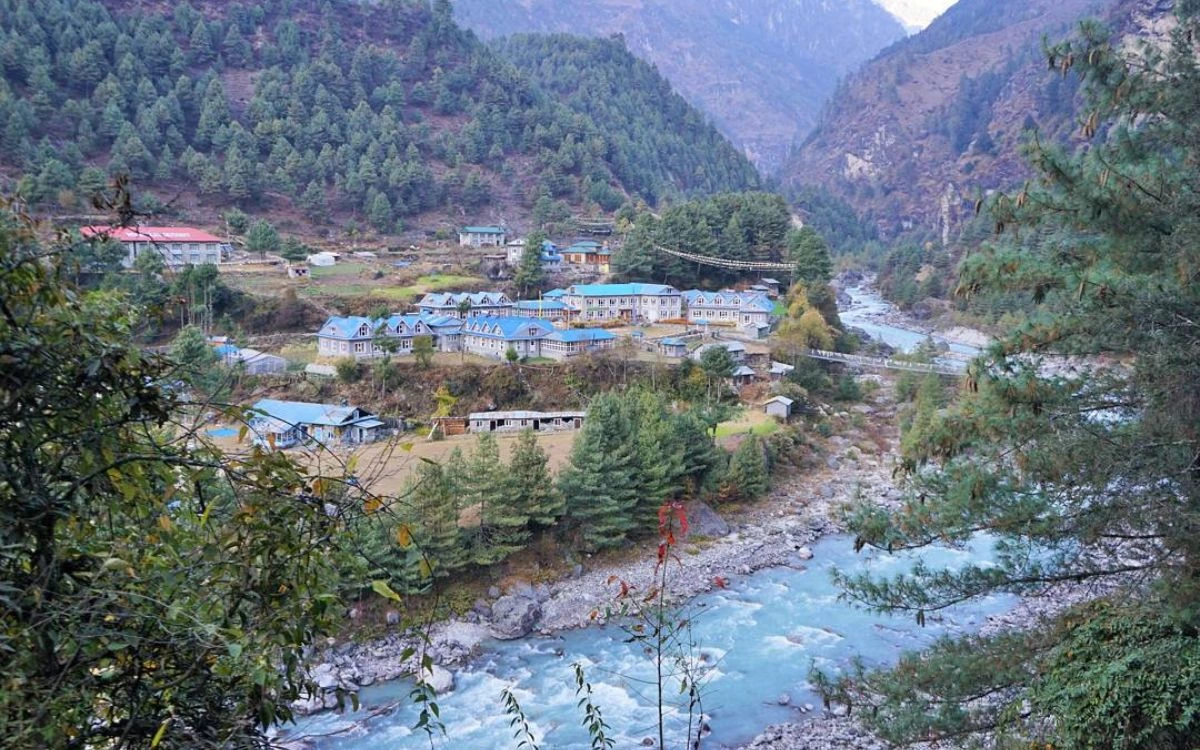
Phakding village with blue-roofed lodges along Dudh Kosi river in forested valley
The Sherpa people maintain their traditional way of life while also adapting to the influx of tourists. Farming is a major part of daily life, with potatoes, barley, and other vegetables grown in terraced fields. The community of Phakding uses Buddhist customs to shape their daily life, such as morning prayers and spinning prayer wheels. Sherpa homes are constructed from stone with colorful prayer flags hanging outside the home. Sherpa festivals, such as Dumji and Mani Rimdu, are a time for community members to celebrate together. Despite the influx of trekkers who visit Phakding, the people of Phakding continue to speak their native language, eat their traditional food, and practice their customs. As a result, a visitor to Phakding will find an authentic cultural experience.
Accommodation in Phakding: Tea Houses, Lodges & Hotels
Phakding accommodation has evolved to meet trekker needs while maintaining Himalayan charm. The village offers numerous Phakding tea hou,ses from basic to comfortable. Most lodges provide twin-bedded rooms with mattresses and blankets. Popular options include Kiwi Lodge, Namaste Lodge, and Paradise Lodge. Facilities include shared bathrooms, and some offer hot showers for a fee. Electricity from solar panels allows device charging.
Food and Dining Options in Phakding Village
Dining in Phakding offersa surprising meal variety catering to international trekkers. Traditional dishes like dal bhat, momos, and Sherpa stew provide nutritious fuel. Tea houses feature menus including pasta, pizza, pancakes, and eggs. Tibetan bread with honey makes a popular breakfast. Local specialties include thukpa and yak cheese. Hot beverages like masala tea help trekkers stay warm and hydrated.
Weather and Temperature in Phakding Throughout the Year
Understanding weather patterns helps trekkers plan effectively. Spring (March-May) brings mild temperatures (5°C to 15°C) with blooming rhododendrons. Summer monsoon (June-August) sees heavy rainfall with temperatures between 10°C and 18 °C. Autumn (September-November) offers the best conditions with stable weather and temperatures from 5°C to 12°C. Winter (December-February) brings cold weather, nighttime freezing, ranging 5from -5 C to 8°C. The Manaslu Circuit trek experiences similar patterns, making autumn and spring preferred windows.
Things to See and Do Around Phakding Village
In addition to being a good place to stop for rest, Phakding has many attractions including a monastery where you can learn about Buddhism and meet friendly monks who will share their knowledge with you, suspension bridges that cross the Dudh Koshi River (that will provide great photo opportunities), side trips on foot to neighboring villages demonstrate farming methods and traditional ways of living, rock carvings that highlight Buddhist mantras show how rich in tradition/spirituality this area is, and early morning walks provide an opportunity to observe wildlife before all of the other trekkers begin their day!
Flora, Fauna, and Nature in Sagarmatha National Park (Phakding Area)
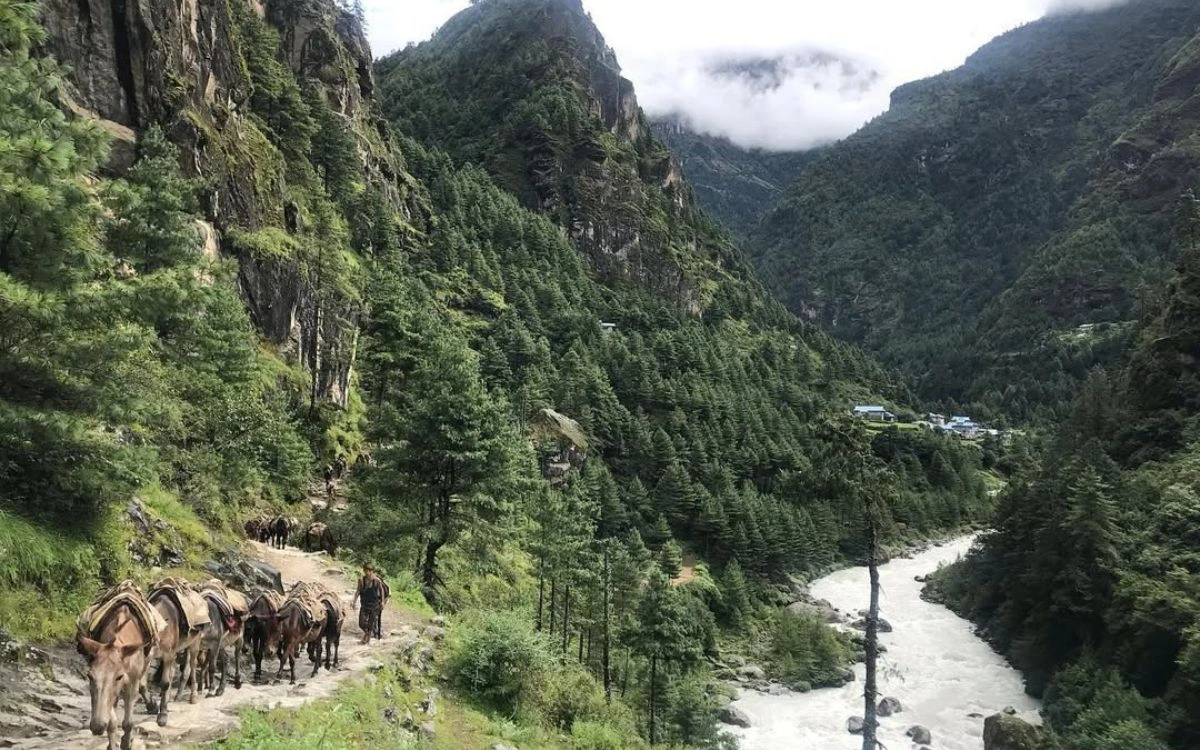
Mule caravan on forested trail above rushing Dudh Kosi river en route to Phakding
The Phakding Sagarmatha National Park has impressive biological diversity. The lower region has great examples of pine/fir/juniper/rhododendron forest habitat type. If you visit during the springtime, you will see beautiful displays of colour created by blooming rhododendrons all over the hillsides. The wildlife includes Himalayan tahr (a goat-like animal), musk deer, and occasionally snow leopards, while bird watchers can observe the Himalayan monal, blood pheasant, and eagles. The Dudh Koshi River supports many aquatic species that have adapted to live in cold water.
Trekking Routes Passing Through Phakding Village
Phakding is the intersection of many Khumbu routes. The classic Everest Base Camp trek goes through the village, and trekkerswhoo go for Gokyo Lakes also use Phakding before splitting off at Namche. The Three Cairns Pass Route also starts in Phakding. Both Island Peak and Everest Base Camp expedition climbers stop at Phakding for their acclimatization. The Langtang Valley trek also has a similar pattern of vegetation between different regions.
Essential Travel Tips for Visiting Phakding Village
Be ready to have an enjoyable experience by being well-prepared for your trip to Phakding Village. Bring cash in the Nepali currency of rupee; there are no ATM’s until you reach Namche. Pack several layers of clothing for the difference in temperature throughout the day. Purchase travel insurance with coverage for high-altitude trekking. Bring water purification systems to minimize the amount of plastic waste. Dress modestly to show respect for the local customs. Learn a few simple words and phrases in Nepali—for example, “Namaste.” Trekking early in the morning will help you beat the clouds forming on the mountains in the evening. Drink plenty of water and maintain a slow pace.
Phakding Village vs Namche Bazaar: What to Expect
Both Phakding and Namcofferers some of the many various aspects of the trekking regions of Khumbu. Phakding has the more traditional, peaceful, and quieter atmosphere with fewer trekkers, and its accommodations are less varied but reasonably priced. Namche is the commercial centre of the area with banks, bakery/deli, i and gear shops, but presents a greater challenge to acclimatize due to the altitude differences from Phakding. Phakding offers a temperate climate due to its riverside setting. Both areas provide a real and authentic trekking experience. During the early stages of their trip, trekkers may prefer to stay in Phakding, but will appreciate the amenities that Namche Bazaar has to offer while they are acclimatising to the altitude.
Responsible Tourism and Sustainable Travel in Phakding
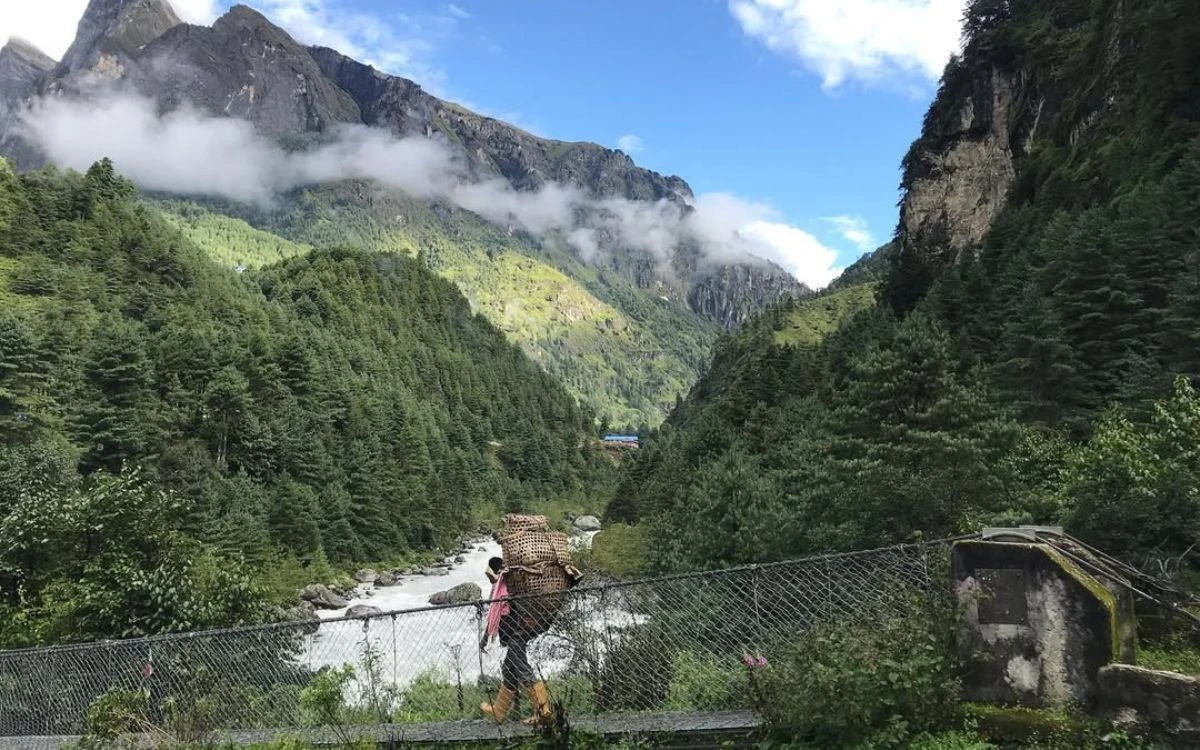
Porter with traditional basket crossing suspension bridge over glacial river in green valley
Responsible tourist practices help to protect the mountain ecosystem. To reduce plastic waste, carry a reusable water bottle. Directly support the local economy by buying from local stores. Respect the animals by keeping a safe distance. Stay on marked trails to prevent erosion. DO NOT leave trash - take non-biodegradable garbage home with you. Conserve water and limit showering. Hire local guides through established businesses that pay fairly. Respectfully engage with the local culture.
FAQs About Phakding Village
What is the duration of trekking from Lukla to Phakding?
The duration of the trek will take you 3 to 4 hours (8 kilometers). The downhill trail is perfect for people new to trekking in the Himalayas.
Is altitude sickness a concern when trekking to Phakding?
The altitude of Phakding (2,610 meters) seldom leads to altitude sickness; however, trekkers should listen to their bodies, keep hydrated, ed and not consume alcohol.
What is the ideal time to visit Phakding?
The best times of year to visit the village of Phakding are Spring (March-May) and Autumn (September-November) due to the more predictable weather, clear skies, and pleasant temperatures.
What kind of internet/phone connectivity is available at Phakding?
Although they may not be reliable, phones can be used with a local SIM card, as well as some lodges that may provide WiFi (which is generally very slow).
What is the recommended packing list for overnight stays in Phakding?
Extra warm clothing, such as a down jacket and warm trekking pants, as well as thermal underwear, a warm hat, and gloves. Also bring a headlamp; toiletries (including water purification); snacks; medications, etc. Porters are available to carry your main luggage.
What is the accommodation price range for Phakding?
Basic lodge (bedroom only) will be about $3-$10 per night. Meals will typically be around $3-$8 each. Lodges in this area provide very low-cost, simple bedrooms, as long as you purchase meals during your stay.
Conclusion
Phakding, located along the route to Everest, is not just a stop during your trek; it also offers an opportunity for those new to the Himalayas to experience authentic Sherpa culture before embarking on an adventure in one of the most awe-inspiring places on Earth. As such, Phakding is a perfect place from which to begin your trek to Everest Base Camp, or anywhere else in the region.
The combination of breathtaking scenery, cultural heritage, and modern conveniences will ensure that whatever experience you have in Phakding remains etched in your mind forever. If you want to have an authentic Himalayan trekking experience and receive support from professional guides, then make your dreams of adventure in the mountains a reality by contact us at Himalayan Recreation Treks and Expedition.


-1.webp)



-6.webp)
-1.webp)
-1.webp)