The trek to Manaslu Circuit in spring is considered one of the best Himalayan treks to do in Nepal due to its stable weather, clear trails, and amazing views of Mount Manaslu. Unlike busier paths like the Everest Base Camp Trek, the Manaslu trek in spring offers peaceful routes, pleasant temperatures, and fewer chances of weather delays. In spring, the weather around Manaslu is usually pretty nice at lower altitudes, with temperatures ranging from around 10°C to 18°C during the day. It does get chillier up near Samdo and Larkya La, but things are generally more stable compared to winter or monsoon seasons. As April rolls around, the snow starts melting; this actually makes it safer for trekkers crossing the pass.
Spring is a great time to get ready for the Manaslu Circuit Trek since teahouses are open, food is fresh, and trail services are reliable. The forests in Philim, Namrung, and Lho burst with spring colors, while the higher areas are dry and clear. Many trekkers love this time for the trek because visibility is excellent all day long.
If you're planning to tackle the Spring Trek to Manaslu Circuit, this blog has got you covered with all the essential details. From weather updates and trail conditions to packing tips, permit info, costs, and useful advice, you'll find everything you need for a successful trekking experience.
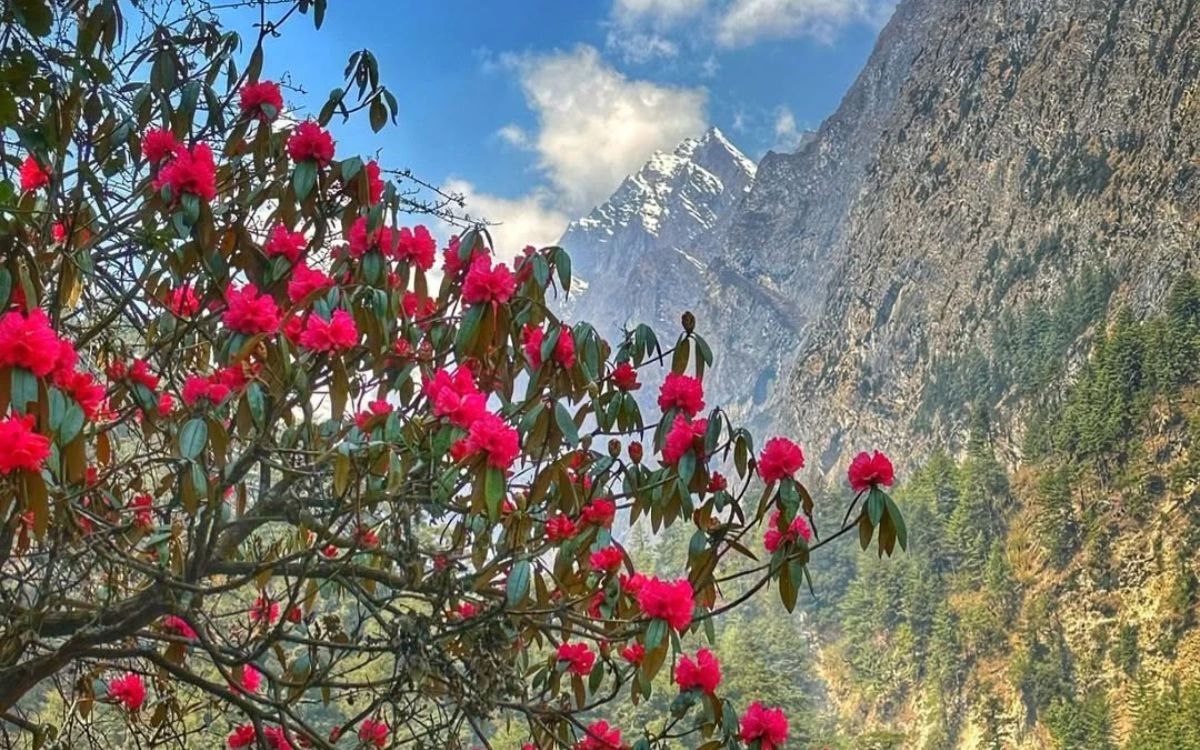
Spring rhododendron blooms with Himalayan mountains Manaslu Circuit
Highlights of the Manaslu Circuit Trek in Spring
Offers a wonderful view of Mt. Manaslu (8,163m) and many other Himalayan peaks.
Clear skies and stable weather are best for taking pictures and trekking.
The trail has blooming rhododendron and oak forests in the lower and mid-sections.
The trail is less crowded than the Everest Base Camp Trek with a more tranquil trekking experience.
Larkya La Pass is safer to cross since the snow begins to melt in mid-April.
Teahouses are operating normally with fresh prepared meals for you and rooms that allow you to stay warm.
You can visit the villages of Samagaon, Samdo and Lho to experience the culture of local Tibetan and Gurung people.
Daytime temperatures during the moderate trekking season are generally between 10 to 18 degrees Celsius at lower elevations.
You will see many types of terrain while trekking, including rivers, terraced farm fields and high mountain desert.
There are many animals that stock the Manaslu Conservation Areas.
Due to the stable trail conditions and reasonable altitude aspirations, this is an optimal trekking time for people at all skill levels.
Why Is Spring the Best Season to Trek the Manaslu Circuit?
Manaslu circuit trek in spring season is one of the best times to trek due to stable weather and daytime temperatures between 10 and 18 degrees Celsius at lower altitudes. The snow at the higher elevations (Larkya La Pass, etc.) has begun to melt, making the trails safer and easier to navigate. Teahouses and settlements are operating at full capacity with fresh food and lodging available. The lower to mid-level sections are in full bloom with rhododendron and oak trees creating a beautiful landscape. The clear skies during spring provide incredible views of the Manaslu and surrounding mountains for both trekkers and photographers alike.
While the Manaslu Circuit is great in the fall with its stable weather and vibrant landscapes, spring is even better because it's warmer and the trails are not as snowy. Winter trekking in Manaslu Circuit is possible but it's tough, colder, more snow on the passes, and fewer services at teahouses. So, for most trekkers, spring is the safer and more comfortable choice.
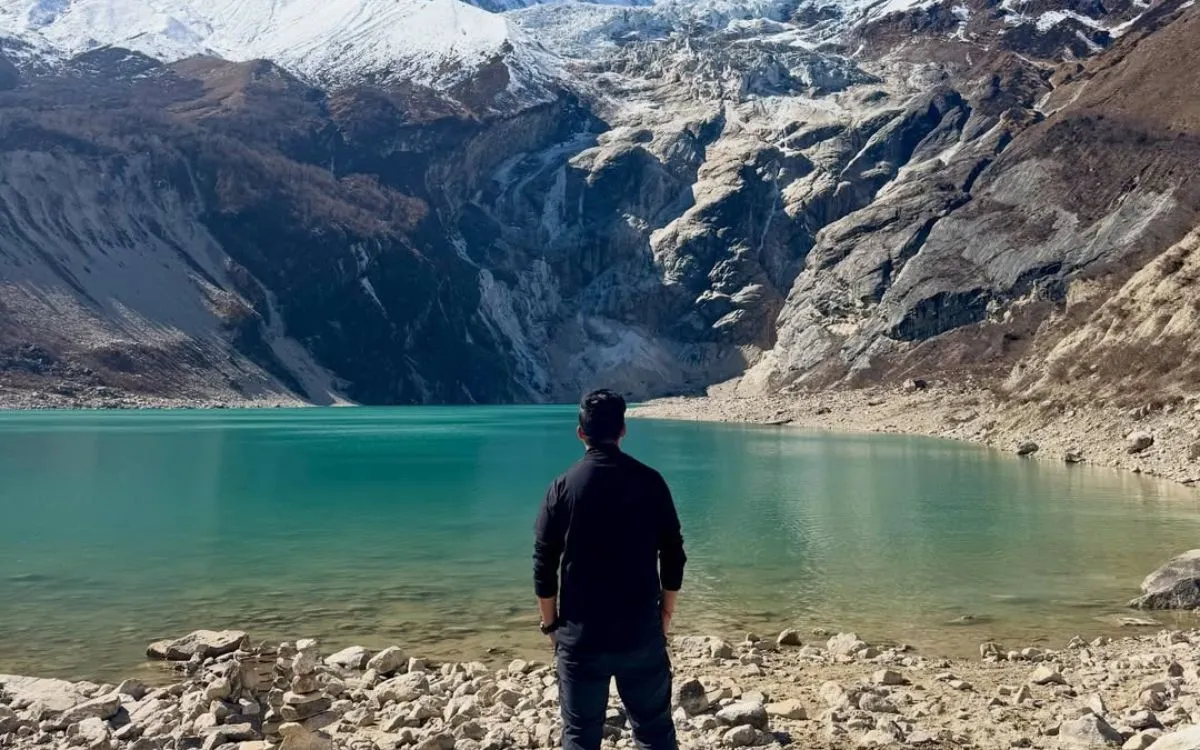
Hiker at turquoise glacial lake with Manaslu mountain backdrop
Spring Months for the Manaslu Circuit Trek: March, April, and May
Manaslu Circuit in March
Spring season begins in March. The lower elevations will experience a range of temperatures between 8°C and 15°C in the daytime. However, it will be cold at the higher places near Samdo and Larkya La. The trails may still have some sections that are covered by snow, but overall, they will be easy to walk. The lower and mid elevation areas will begin to show the first blooms of rhododendron and other spring wildflowers as well as provide excellent panoramas of Manaslu and its neighboring mountains during clear days in March. The number of trekkers will be fewer and this will allow for a more tranquil trekking experience.
Manaslu Circuit in April
Going to Manaslu in April is an excellent choice due to higher temperatures of 10°C–18°C at lower elevations; melting snow on upper elevation(s) make crossings over Larkya La easier during this time. Trekking routes through Rhododendron forests and blooming alpine flowers provide beautiful colour accents. Clear skies offer wonderful visibility, with optimal views of Manaslu, Ngadi Chuli and other surrounding mountains of the Great Himalayan Range. Trek routes in April are worked by moderate amounts of traffic; that is, more trekkers are in the area.
Manaslu Circuit in May
May marks the transition into late spring, just before the pre-monsoon season kicks in. During this time, you can expect daytime temperatures to hover between 15°C to 20°C, with only a sprinkling of snow on the higher passes. The scenery comes alive with lush greenery, blooming forests, and picturesque alpine meadows. The teahouses are up and running, making this month perfect with its warm weather, beautiful blossoms, and crystal-clear views.
Temperature and Weather on the Manaslu Circuit in Spring
Category
Details
Typical Temperatures
Lower Elevations (700–2,000 m): Daytime 10–20°C; nights near freezing in March and 5–10°C by May.
Mid-Elevations (2,000–3,500 m): Daytime 6–16°C in March–April, warming to 10–20°C by May; nights –5 to 5°C.
Larkya La Region (4,800–5,100 m): Daytime –5 to 5°C; nights can drop to –10°C or lower, especially in March.
Weather and Sky Conditions
March: Cool mornings, lingering snow at higher altitudes, chance of light snowfall.
April: Clear, stable weather with dry trails, excellent mountain views, and full rhododendron bloom.
May: Warmer lower valleys, rising humidity, more afternoon clouds, and occasional showers; mornings usually clear.
Wind, Snow, and Precipitation
Strong winds on Larkya La, especially late morning. Fresh snowfall is possible in March and early April at high elevations. Less snowfall and more rain by May at mid and lower altitudes. Overall precipitation is moderate, increasing toward late May.
Manaslu Circuit Trek Cost in Spring
A Manaslu Circuit Trek cost for spring will cost between $750-$1,500 per person in Spring. Larger groups can expect to pay less and individual trekkers will pay the highest price. The lower permit rates of spring apply to the Manaslu RAP which is $125 for 14 days, the MCAP and ACAP at $30 each. A licensed guide is required to trek on this route which ranges from $25-$35 per day.
Additional costs would consist of food, lodging in simple teahouses, transportation to/from the trek, gratuities, and insurance which would normally cost between $25.00-$40.00 per day plus approximately $100 -$200 for transportation.
During the spring months, you will have excellent views and you will be walking on trails that have wildflowers blooming at no additional cost. Please contact us so we can provide you with an accurate estimate of the cost based on your personal itinerary.
Permits Required for the Manaslu Circuit Trek in Spring
To trek the Manaslu Circuit in spring, three permits are mandatory. All necessary permits can be organized by us and are included in your trekking package.
Manaslu Restricted Area Permit (RAP): USD 75 for the first 7 days, approximately USD 125 for a 14-day trek.
Manaslu Conservation Area Permit (MCAP): USD 30 per person.
Annapurna Conservation Area Permit (ACAP): USD 30 per person.
These permits can't be transferred or refunded. If you're trekking in the Manaslu region, you must have a licensed guide with you. The permits you get let you only go to specific spots in the restricted and conservation zones there.
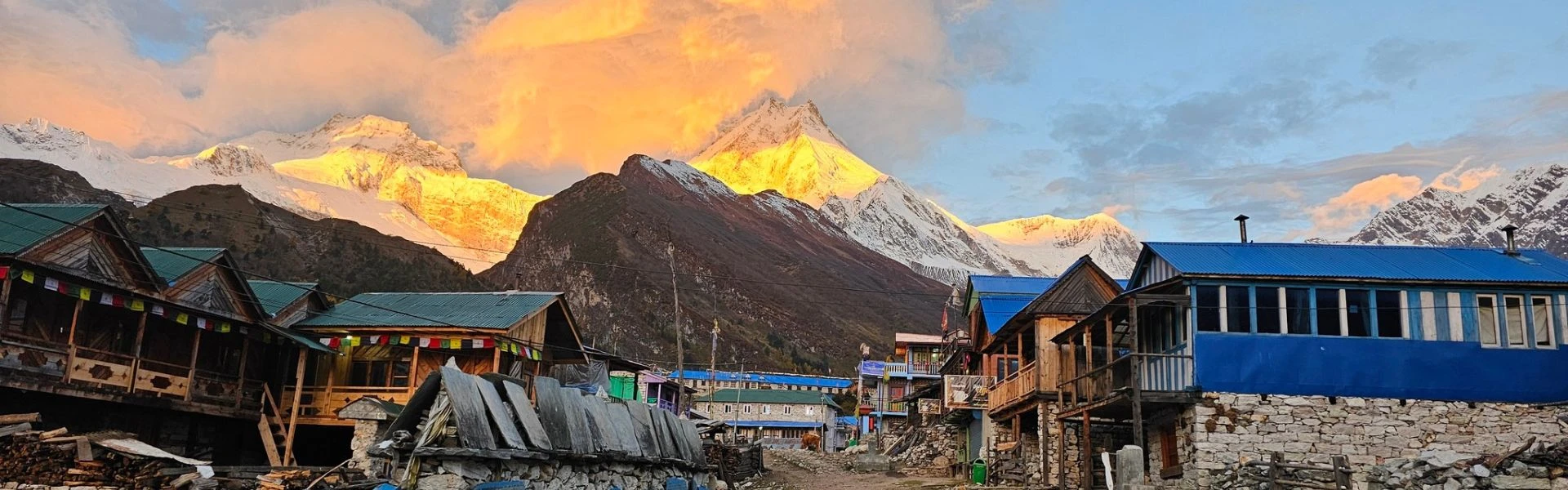
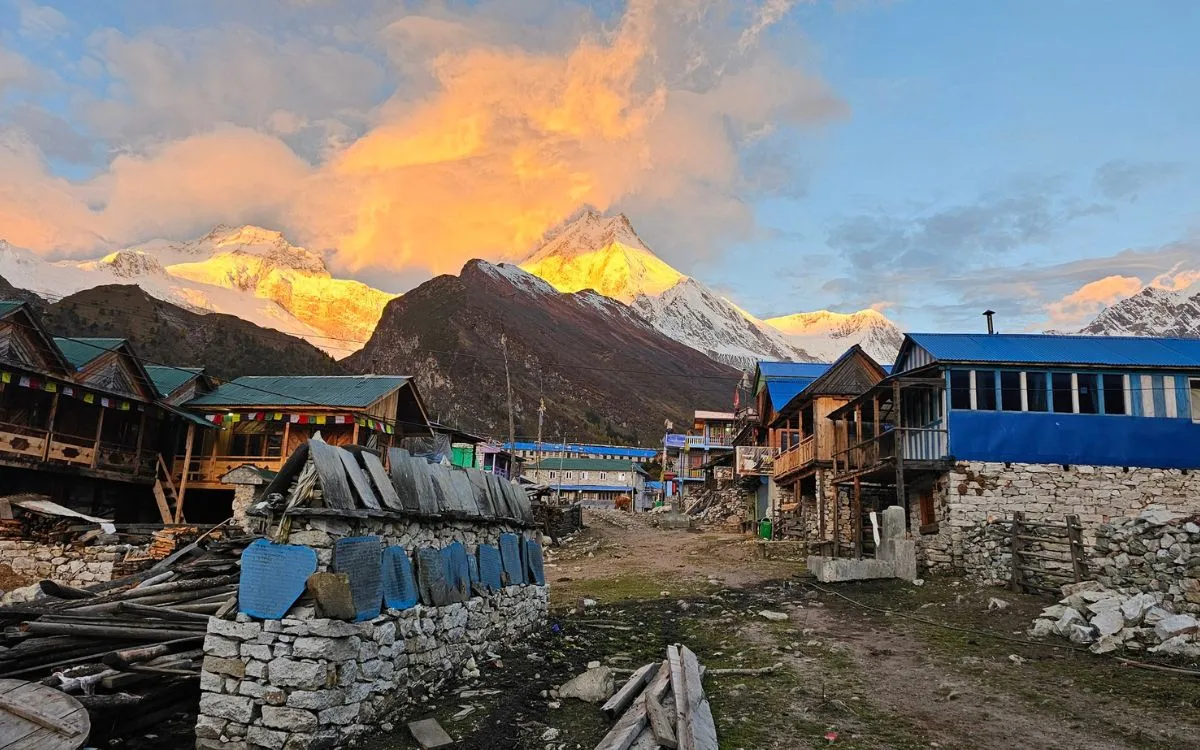
Mountain village lodges at sunset on Manaslu Circuit trek
Down jacket or insulated jacket for higher altitudes
Waterproof and windproof jacket and pants
Lightweight trekking pants and shorts for lower elevations
Warm hat, sun cap, gloves, and scarf or buff
Footwear
Sturdy, broken-in hiking boots
Trekking socks (3–5 pairs)
Lightweight sandals or camp shoes
Accessories and Gear
Sunglasses with UV protection
Headlamp with spare batteries
Trekking poles (collapsible)
Daypack (30–40 liters)
Water bottle or hydration system
Personal toiletries and quick-dry towel
Sleeping and Camping
Sleeping bag rated for cold temperatures (0°C to –10°C)
Sleeping bag liner
Optional but Useful
Gaiters for snow or mud
Lightweight rain cover for backpack
Camera or smartphone for photos
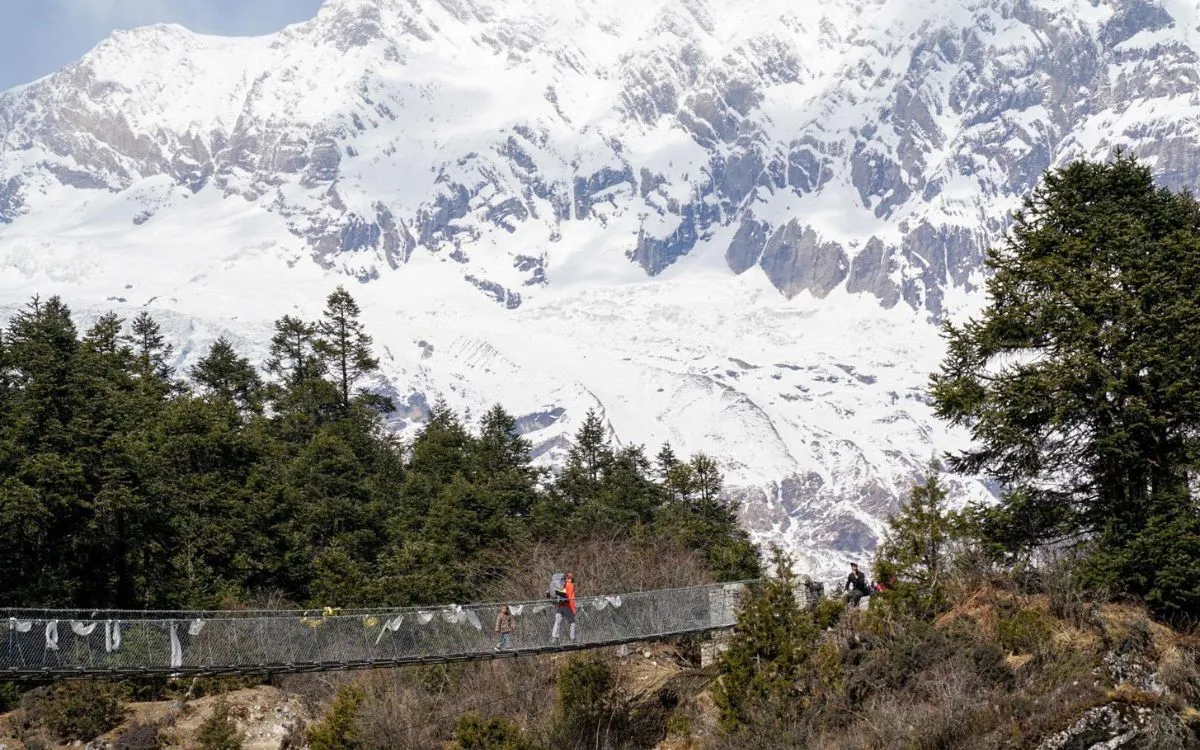
Trekkers crossing suspension bridge on Manaslu Circuit with snow peaks
Manaslu Circuit Trek Itinerary for Spring 2026
Our standard 12-day itinerary for the Manaslu Circuit Trek during the Spring includes all of the major Villages, Acclimatization Stops and scenic attractions of the area so that you have an all-inclusive experience of trekking and everything it has to offer.
If you are interested in changing this itinerary due to time constraints, personal preferences, or trekking speed, please let us know and we will help design a custom itinerary for you. Day 01: Drive from Kathmandu to Machhikhola (900 m) Day 02: Trek from Machhikhola to Jagat (1,340 m) Day 03: Trek from Jagat to Deng (1,860 m) Day 04: Trek from Deng to Namrung (2,630 m) Day 05: Trek from Namrung to Lho (3,180 m) Day 06: Trek from Lho to Sama Gaun (3,530 m) Day 07: Acclimatization and exploration in Sama Gaun (3,530–4,100 m) Day 08: Trek from Sama Gaun to Samdo (3,860 m) Day 09: Trek from Samdo to Dharmasala (4,460 m) Day 10: Trek from Dharmasala to Bimthang via Larkya La Pass (5,160 m) Day 11: Trek from Bimthang to Dharapani (1,960 m) Day 12: Drive from Dharapani to Besisahar and onward to Kathmandu
Accommodation and Food on the Manaslu Circuit Trek in Spring
During the spring season, accommodation on the Manaslu Circuit is provided at basic teahouses, which provide simple twin accommodation with wooden beds, blankets and communal restrooms. Accommodation options at lower elevation villages are slightly more upscale, but higher elevation villages in the Manaslu Circuit (i.e., Samagaun, Samdo and Dharamsala) have the most basic facilities available and are generally much colder than the lower elevation villages. Cost of accommodation varies from NPR 500-NPR 1200 per night during the spring season.
Food options available at these accommodation locations include a variety of vegetarian and meat-based meals including dal bhat, various soups and noodle dishes, fried rice, pasta, Tibetan bread and momos; all of which range from NPR 600-NPR 1200 in lower elevations, and NPR 800-NPR 1500 in higher elevation villages. Hot beverage options (i.e., tea, coffee, etc.) are available and cost between NPR 150-NPR 500, and extra charges may apply for services such as WiFi and/or charging mobile devices.
Most teahouses on the Manaslu Circuit will do their best to accommodate any dietary requirements you may have, however, you need to make them aware of any dietary restrictions ahead of time since food options will be limited in remote villages. If you would like us to make arrangements for your dietary needs in advance, please do not hesitate to reach out to Himalayan Recreation and we will provide assistance in ensuring that your needs are met.
Benefits of Trekking the Manaslu in Spring
During spring the lower Manaslu trail is full of vibrant blooming rhododendrons creating a colourful and beautiful hiking experience from Soti Khola all the way to Namrung.
The weather is generally more reliable during spring with stable and sunny weather each day and less chance of heavy rain. As such trekkers can walk in comfort and have smoother hiking days.
The views from the mountains are often the best views seen during the season and offer trekkers clear and crisp views of Manaslu, Himalchuli and Ganesh Himal nearly every morning.
Temperatures are mild and very comfortable for trekking, warm in the lower villages, and moderately chilly in higher elevations and thus allow for the enjoyment of long days hiking in comfort.
Fresh greenery and wildlife are abundant during spring creating a greater opportunity for seeing Himalayan Thar, Blue Sheep, and many other bird species.
The length of daylight provides trekkers with more time to walk, relax, and enjoy the beauty of the trails than the urgency of reaching the next teahouse.
During spring snowfall is consistently lower than in winter months making it less likely that the Larkya La Pass will become blocked and thus the most reliable time of year for crossing high passes.
Most teahouses are in operation during spring and provide a greater selection of food items available in addition to having more rooms and superior service compared to other seasons.
Side trips to Manaslu Base Camp, Birendra Lake, and Pungyen Gompa are easier during spring since, because of the conditions associated with the weather and the trails, the possibility of doing them in a safer manner is available.
Tips for a Successful Manaslu Circuit Trek in Spring
Begin your trek as early as possible to avoid the heat of the day while enjoying clear, mild weather. For spring treks, be prepared for sudden weather changes or increased winds.
Take very little gear with you on your trek but make sure to have enough warm clothing for when you reach the higher elevations of villages such as Samagaun, Samdo and Dharamsala. The temperatures here will fall sharply from the daytime to the nighttime hours even during the spring months.
Drink plenty of fluids during your trek and make sure to stay hydrated. Trekking uphill during the hot season can quickly dehydrate you, so be sure to drink more than you think you will need, and replenish your electrolytes to help maintain a constant level of energy throughout your trek.
Wear trekking footwear that has already been worn many times before you begin your trek, since spring trails can often become muddy and/or slippery, and your feet will be tired and sore at the end of the day if they were not comfortable to wear during your trek.
Allow for at least one buffer day within your trekking itinerary as the weather conditions in the spring may change abruptly, and delays are frequently encountered within the Larkya Pass region of the Manaslu Region.
Use sunscreen on all exposed skin, sunglasses and a hat. The intensity of the sun in the Manaslu valleys during spring will be very strong; this is especially true after Lho and Samagaun.
Properly acclimatize yourself to Samagaun on your acclimatization day. This is the perfect way for your body to get used to the increased elevation. Short hikes such as the Pungyen Gompa hike or hiking in the direction of the Manaslu Base Camp would be an excellent way for you to prepare for the greater elevations of the area.
Wear moisture-wicking fabrics instead of cotton since heavy wet clothes can become uncomfortable and take a long time to dry during springtime rain and humidity.
Be sure to eat regular meals even if you don't feel as hungry at high elevations; your body still needs plenty of fuel to provide energy and keep warm.
Follow the pace of your tour guide; they know the best times to cross rivers, the conditions of the trails, and how quickly the weather can change during spring.
Use a rainproof cover for your backpack; sudden spring rains can hit anytime, so it's important to keep your clothes and electronics dry.
Be prepared to be flexible with your daily walking schedule; spring weather is unpredictable, and changes to your stops can make you more comfortable and safe.
FAQs
How difficult is Manaslu Circuit Trek in the spring season?
The trek's difficulty level is moderate to hard depending on how far you are up the climb to Larkya La Pass. The starting section of the trek is easier, but ascending Larkya La Pass requires physical fitness and spending around six to seven hours each day on the trail. In spring however, the weather is relatively stable which some times makes things easier than during the winter.
How crowded is the Manaslu Circuit in spring?
While there are many people trekking during springtime, the Manaslu Circuit is less travelled than the Everest or Annapurna regions. You will meet other trekkers throughout the trek, mainly around Samagaun, Samdo and Larkya Pass, however, overall, the trail does not feel overly crowded.
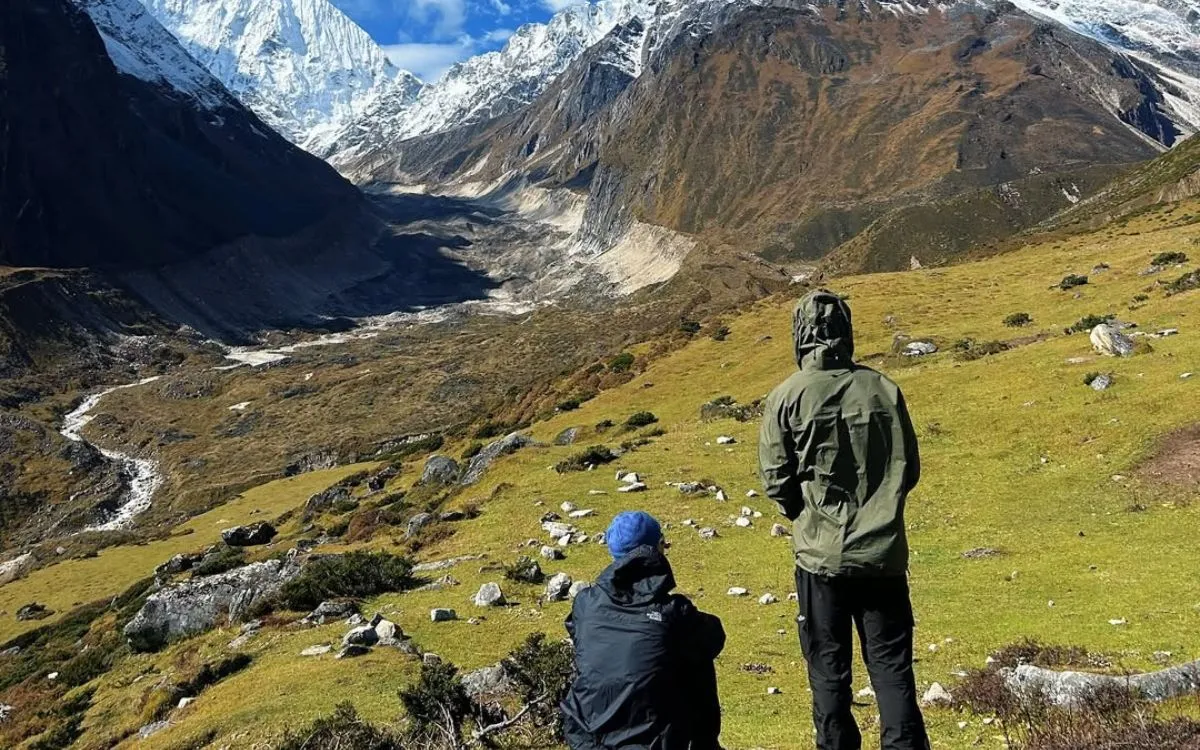
Hikers looking over the mountains in Manaslu region
How cold does it get during the Manaslu Trek in spring?
The temperature in lower elevation regions along the trek is usually warm. However, as you go higher, you will notice it will get colder at night in villages like Samagaun and Samdo, to an average of -5 to -10 degrees Celsius. The trek will be comfortable to walk during the daytime for most of the trek, especially if you stay below the 3,500-metre mark.
What is the condition of Larkya La Pass in spring?
Larkya La Pass's trail is generally in good condition, making it a safe place to be in spring. During this season, the path is better defined than in the winter months, when snow is much higher. Still, some spots can remain icy until mid-morning.
Can beginners do the Manaslu Trek in Spring?
The trek does require beginners to have a good fitness level, take proper precautions, and follow the acclimatisation schedule. You are required to hire a licensed guide to assist you with the trek, as they will provide the knowledge and assistance to help ensure that the trek is easier and safer than if you are simply going into the trek alone.
Are there ATM or charging facilities on the Manaslu?
There are no ATMs past the village of Soti Khola, so you should carry enough cash to cover all your expenses along the way. While most teahouses will allow trekkers to charge devices, expect to pay extra for the service, usually between NPR 200 and 800 depending on the teahouse you use.
Conclusion
Spring is a great time to hike the Manaslu Circuit, as the weather is generally stable, the skies clear, and the trail conditions are ideal. As the snow melts, it creates better visibility and improves the safety of the trails. In addition, beautiful springtime flowers can be seen in the lower elevations, while spectacular views of Manaslu and surrounding mountains are visible all day long.
During this period, all of the teahouses are open, which makes it very easy to find food and lodging. If trekkers are well-prepared with the right equipment, the right guide, and an adaptable itinerary, they should have no problem completing their trekking experience during spring. If you want support in planning your trip and would like to have an enjoyable and well-organized trekking experience, WhatsApp to Himalayan Recreation for assistance.





-1.webp)
-1.webp)
-1.webp)