Imagine standing before an enormous wall of ice and rock that stretches skyward higher than 8000m (26,247ft). Picture valleys so deep that they create their own weather patterns, as well as landscapes that change from lush subtropical forests to frozen glacial paradises after twelve hours of trekking. This is not a fantasy; rather, it is the Annapurna Himalayas, which await your arrival. Have you ever considered what it is like to tackle one of the world's most hazardous mountains? Or dreamt of walking through scenery so dramatic that you are re-educated about the power of Nature? The Annapurna region of Nepal offers far more than just another mountain destination; it has been a major part of mountaineering history, where civilisations have survived despite overwhelming challenges, and where every corner has a breathtaking view waiting for you.
The Annapurna Himalayas rank as some of the most beautiful mountain ranges on Earth. Located in the centre of Nepal, the Annapurna massif contains many of the most impressive mountains and features on this planet. The AnnapurnaExperience encompasses all aspects of the Annapurna region, from the high, snow-capped summits to the world's deepest gorge, all the way down to the diverse ecosystems that allow for experiencing multiple climates during a trek. All visitors to the Annapurna range will return transformed by what they have experienced on their visit there. At the centre of the Annapurna range are four mountains named Annapurna I, II, III and IV. These four mountains are the four giants of the Annapurna massif and each tells its own story, has its own climbing legacy, and offers its own unique challenges. Annapurna I was the first 8,000-meter mountain ever climbed by men and this achievement is held in the highest regard in the history of mountaineering.
The wonderful news about the world of mountaineering is that you don't have to be an expert mountaineer to appreciate all that it has to offer. The Himalayan region of Annapurna welcomes everyone, whether you have just started hiking in the Himalayas or if you are a seasoned traveller in the mountains. This complete guide will give you detailed information about all four Annapurna mountains (I, II, III, and IV), including their heights and locations, the history behind climbing them, and how YOU can be part of those historical moments, safely and responsibly. So, let us get started on your journey into the heart of the Himalaya.
Overview of the Annapurna Massif
Nepal's Annapurna Massif is one of the principal subranges of the Greater Himalayas. The massif is about 55 kilometres long from east to west. The deepest gorge in the world, the Kali Gandaki Gorge, spans much of the east and west extremes of the massif, which separates it from the Dhaulagiri Range. Because of its geographical location in Nepal, the Annapurna Massif is one of the most dramatic landscapes on Earth.
The Annapurna Massif offers visitors a tremendous amount of vertical relief. Within a space of less than 30 kilometres, the terrain rises from a tropical environment at approximately 800 metres above sea level to jagged peaks with an elevation greater than 8,000 metres. Such a dramatic elevation change creates a variety of different climates, ecosystems, and an incredibly stunning view that varies from one thousand metres to another in altitude.
Key Features of the Annapurna Himalayas:
Home to Annapurna I (8,091 m), t10th-highestest mountain in the world
One of the most geologically diverse regions in Nepal
Protected under the Annapurna Conservation Area (ACA)
Prime destination for trekking, peak climbing, and high-altitude mountaineering
Annapurna has over 30 peaks higher than six thousand metres, including one eight-thousander (Annapurna I), and 13 peaks greater than 7,000 m (Annapurna II-IV, Annapurna South). The Annapurna massif is different from isolated mountains; it is a tightly knit group of peaks connected by large ridges and glaciers. The massif is made up of several primary summits: Annapurna I (Main), Annapurna II, Annapurna III, Annapurna IV, Annapurna South, Gangapurna, and Hiunchuli. Mountaineers and geographers around the world are primarily interested in the summits of Annapurna I-IV.
Annapurna I – The Historic Giant
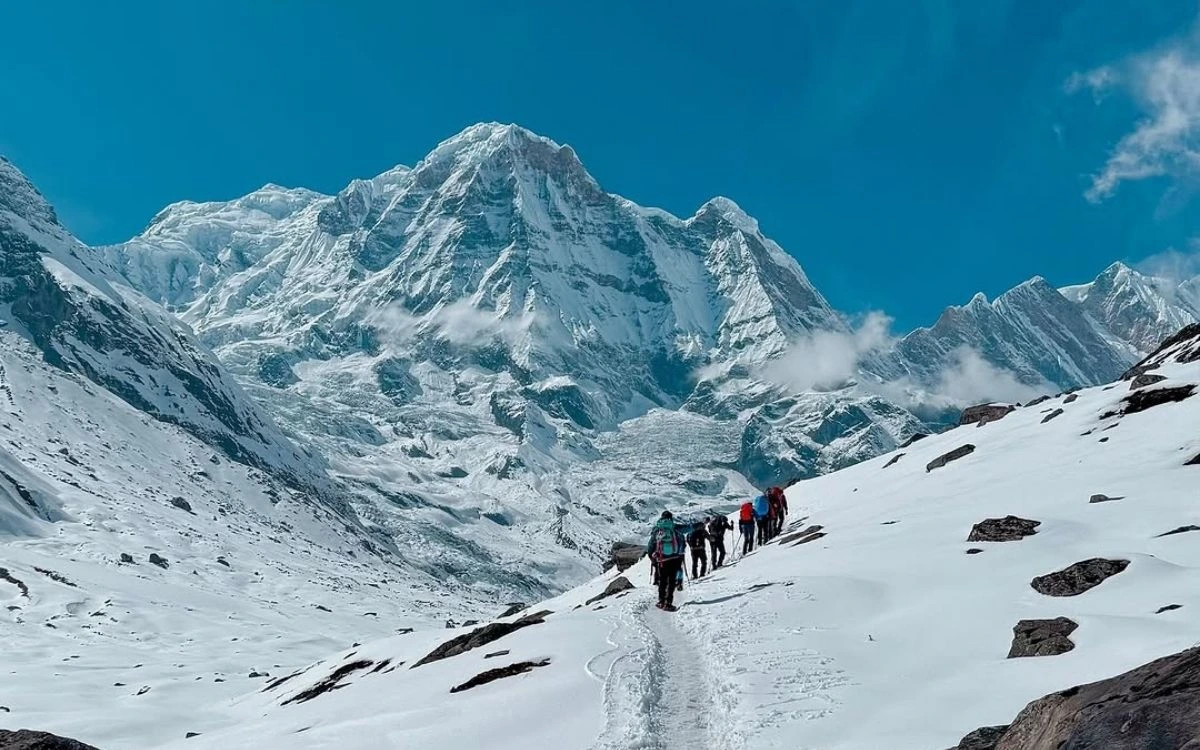
Trekkers hiking toward snow-covered Annapurna peak-I under clear blue sky
Height and Location
At 8,091 metres (26,545 ft), Annapurna I is the 10th highest mountain on Earth and the highest mountain of the Annapurna Himalaya. It is located in central Nepal and is located within the Annapurna Conservation Area. The stunning mountain rises significantly above surrounding glaciers and valleys and features a remarkable south face, which is nearly 3,000 metres (over 9,800 ft) from the base of the mountain to the peak.
The Historic Ascent of Annapurna I
Annapurna I has a very special place in the climbing history of Annapurna. It was first climbed successfully by a French team under the leadership of Maurice Herzog and Louis Lachenal in 1950, becoming the first climb of any mountain over 8,000 metres (26,247 ft). The ascent represented a pivotal moment in the annals of high-altitude mountaineering and served to prove that humans could survive and reach the summit of any mountain over the "death zone".
However, the ascent came with a huge price: many climbers suffered from extreme frostbite. Herzog and Lachenal lost fingers and toes; however, their achievement made it possible for all climbers to reach the summit of future 8,000 m (26,247 ft) mountains, including the eventual achievement of conquering Everest in 1953.
Difficulty and Danger
Annapurna I is widely regarded as one of the most dangerous peaks over 8000 metres primarily because of frequent avalanches, unstable snow conditions, complex climbing routes, and a significantly high fatality-to-summit ratio. Yet, this incredible mountain attracts elite mountain climbers in search of one of the toughest challenges in the Himalayas. If you don’t have extreme mountaineering ambitions, but are perhaps looking to trek in Nepal, then consider taking part in the Annapurna Base Camp Trek, which allows for great views of this impressive peak, while not having the dangers involved with climbing.
Annapurna II – The Eastern Sentinel
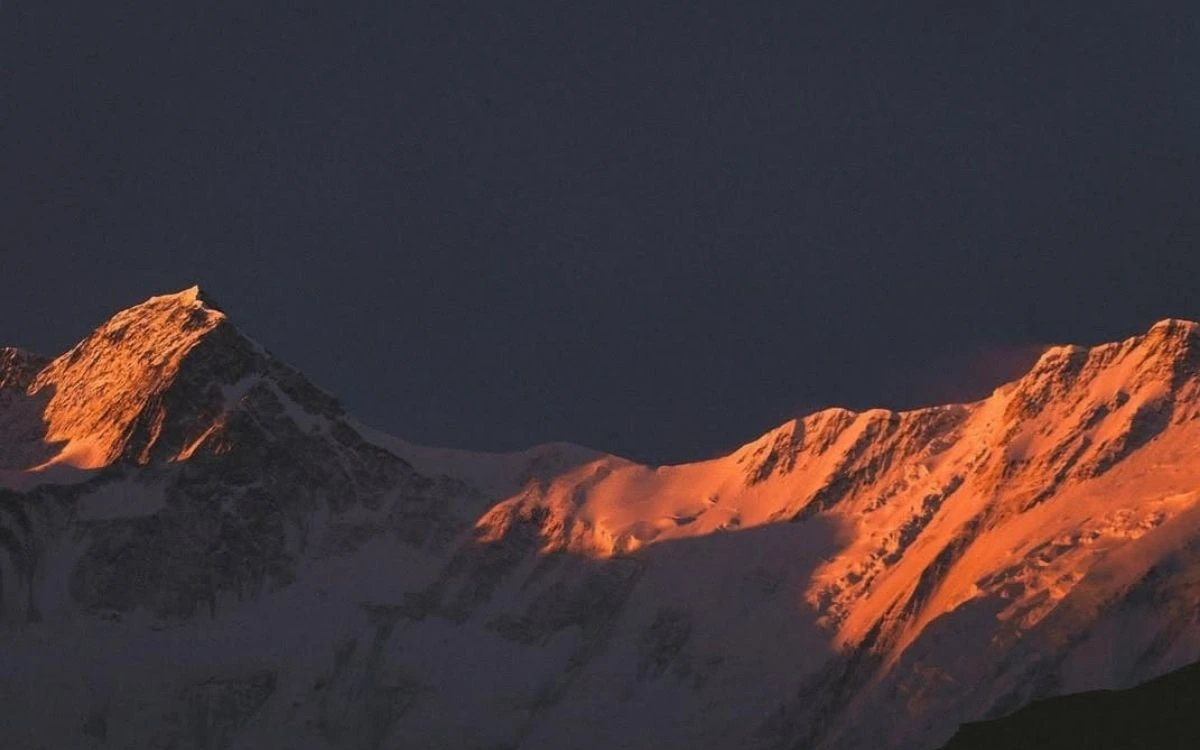
Annapurna peak-II glowing orange at sunset against dark sky
Height and Location
Standing at 7,937 meters, Annapurna II ranks as the 16th-highest mountain in the world and the second-highest peak in the Annapurna range. This imposing summit dominates the eastern skyline of the Annapurna massif, serving as a sentinel guarding the eastern reaches of this magnificent range. While less famous than Annapurna I, it remains a technically demanding and visually stunning mountain.
Climbing History
The first ascent of Annapurna II occurred in 1960 when a British-Indian-Nepali expedition successfully summited via the west ridge. Compared to Annapurna I, this mountain sees considerably fewer climbing attempts, making it quieter and more remote for the handful of expeditions that venture to its slopes.
Characteristics
Annapurna II features long ridgelines and exposed sections that test even experienced climbers. The mountain experiences severe weather conditions but proves less avalanche-prone than Annapurna I, though it certainly presents its own formidable challenges. Most adventure enthusiasts prefer to admire Annapurna II from renowned trekking routes like the Annapurna Circuit Trek, which offers stunning perspectives of this eastern sentinel without requiring technical climbing skills.
Annapurna III – The Technical Challenge
Height and Location
Annapurna III reaches 7,555 meters and sits strategically between Annapurna II and Gangapurna. Among climbers, this peak has earned a reputation as a highly technical peak. Although lower in elevation than Annapurna I and II, it demands greater technical expertise due to its steep faces and complex ice routes.
Climbing Significance
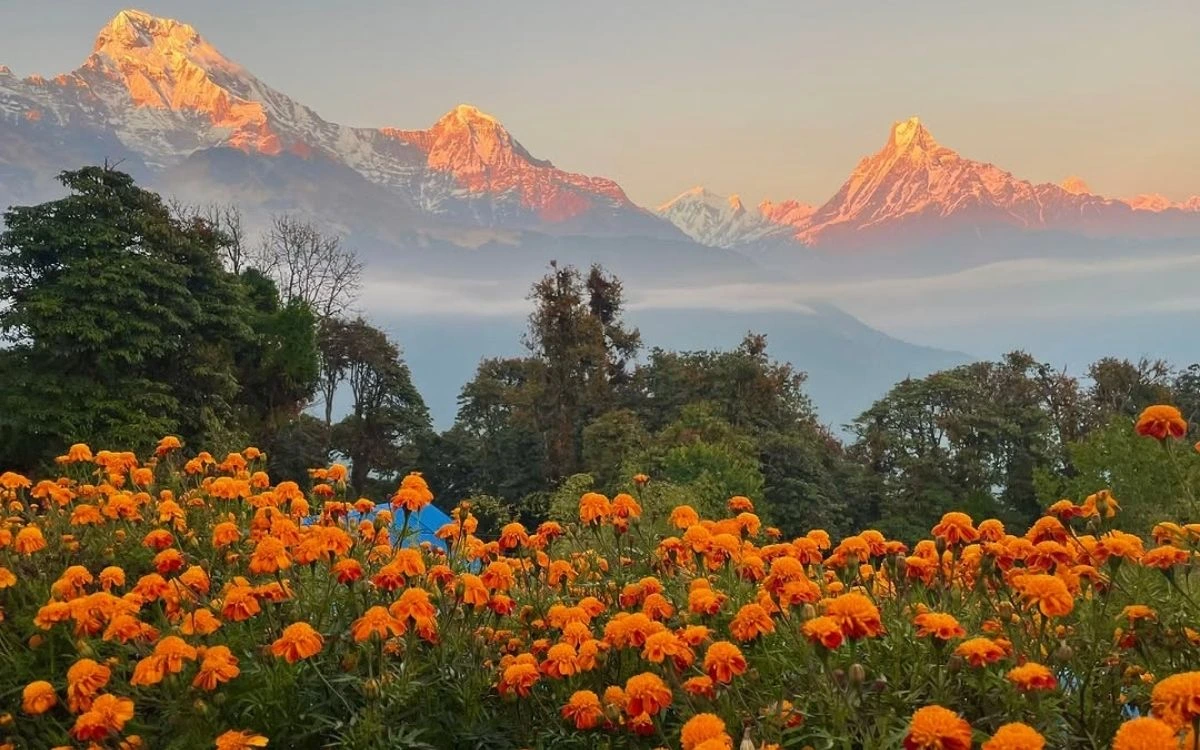
The evening sunset view from Tadapani, It's great place to view Mt. Annapurna south, Himchuli, Machhapuchhre and Annapurna III
The first ascent of Annapurna III was achieved in 1961 by an Indian expedition. Since then, successful ascents have remained relatively rare, reinforcing its reputation as a climbers' mountain rather than a commercial objective. The peak features steep rock and ice faces with minimal visibility from popular trekking routes, appealing mainly to elite alpinists seeking technical challenges.
Annapurna III contributes significantly to the dramatic skyline of the massif, especially when viewed from the Marsyangdi Valley. Trekkers on the Mardi Himal Trek can catch glimpses of this formidable peak rising above the surrounding landscape, though it remains less photographed than its more accessible neighbors.
Annapurna IV – The Lesser-Known Giant
Height and Location
Annapurna IV, which rises to a height of 7,525 meters, is one of the highest and most inaccessible peaks in the entire Annapurna Range. It sits to the east of Annapurna III and does not have the same degree of recognition as its neighbouring mountains, but it is nevertheless a large and formidable mountain that deserves some level of acknowledgement.
According to climbing history, Annapurna IV was first ascended by the German expedition in 1959, with this ascent being one of the first successes of the exploration of the Annapurna Mountains. It is common for climbers to confuse Annapurna IV with some of the neighbouring ridgelines or smaller summits, mainly because of where it is situated within the overall massif formation. In addition, Annapurna IV features steep, snow-covered slopes and also has technical sections that present significant difficulty to climbers who want to try an extremely difficult route up the mountain, making it ideal only for the most committed and dedicated mountaineer.
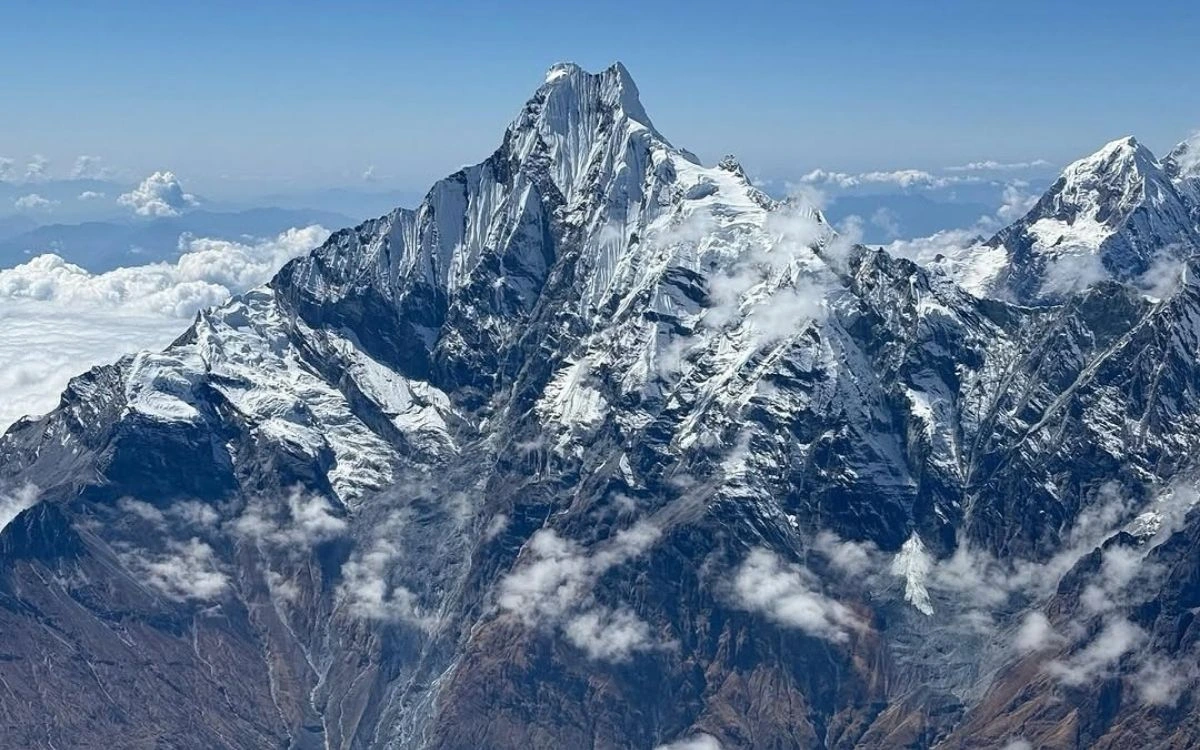
Annapurna peak rising above clouds with dramatic pyramid summit
Annapurna Himalayas vs Other Himalayan Ranges
The Annapurna Himalayas are much different from other well-known areas within the Himalayan range, including Everest and Kangchenjunga. Annapurna I has a much higher death rate than Everest; therefore, it is viewed as far more hazardous than Everest, even though it has a smaller peak elevation. Because of the lower elevation from which to begin climbing and the greater elevation gain from this point on, the Annapurna region is also much more diverse ecologically.
In addition, compared to the possibilities found on Mount Everest, those found in the Annapurna region of Nepal are significantly less common, allowing trekkers and mountain climbers to experience a more genuine feel for what it means to climb in the Himalayas. All of these factors make the Annapurna Himalayas highly attractive to adventurous individuals looking to experience the natural beauty, cultural authenticity, and lower density of visitors that flee to the Everest region in search of adventure and challenge.
Trekking in the Annapurna Region
While climbing Annapurna peaks is reserved for the best mountaineers, trekking in this part of Nepal allows all levels of expeditions. The Annapurna Himalayas are some of the most incredible trekking areas in the entire world, providing many different vantage points of the incredible mountains.
The Annapurna Base Camp Trek goes directly to the base of Annapurna I and provides trekkers with up-close views of Annapurna I's enormous south face. The trail passes through a wide variety of environments, including terraced farming, rhododendron forests, and high-altitude glaciers.
The Annapurna Circuit Trek goes around the entire Annapurna massif and crosses the challenging Thorong La Pass at 5,416 meters. It shows all the different climates and types of vegetation in the whole Annapurna region in Nepal.
For those seeking quieter trails, the Mardi Himal Trek has emerged as a hidden gem, offering intimate views of Machapuchare and Annapurna South with fewer crowds.
The Khopra Ridge Trek provides panoramic vistas of the entire Annapurna and Dhaulagiri ranges from a spectacular high-altitude vantage point. Additionally, the Manaslu Circuit Trek, while technically in a neighboring region, complements the Annapurna experience and appeals to trekkers seeking even more remote adventures.
These routes showcase stunning views of Annapurna I, Annapurna South, Machapuchare, and surrounding peaks without the inherent dangers of high-altitude climbing.
Best Time to Visit
Spring (March–May) brings rhododendron blooms and stable weather, creating a colorful tapestry across the mountainsides. Autumn (September–November) offers the clearest skies and best visibility for mountain photography and panoramic views of the Annapurna massif.
Annapurna Conservation Area
The Annapurna Region (ACA) is the largest protected area in Nepal, covering an area of more than 7600 square kilometers. The ACA is crucial to protecting the delicate ecosystems of the Himalayas and allows for sustainable tourism to benefit residents and promote their livelihoods.
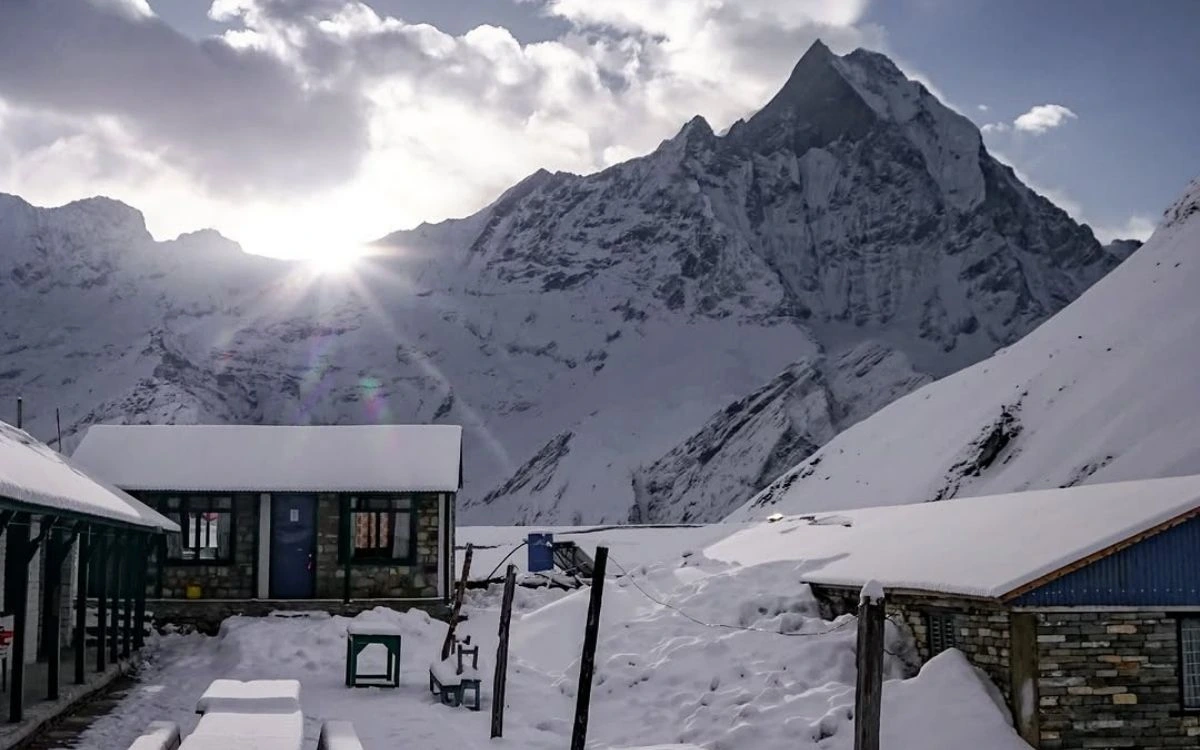
Snow-covered mountain lodges at Annapurna Base Camp with peak behind
The protected area protects endangered animals such as Snow Leopards, Himalayan Tahr, and Blue Sheep. The ACA also conserves the cultural heritage of local people belonging to the Gurung, Thakali, and Manangi ethnic groups, as well as the trade routes and monasteries that have existed in the region for hundreds of years. Sustainable tourism plays an important role in protecting this unique area for generations to come.
While trekking or climbing within the Annapurna Himalayas, safety is the number one priority. Acclimatization is needed to prevent altitude sickness, and continuous monitoring of climbers’ vitals will prevent life-threatening storms from occurring. Using licensed guides will improve safety and also promote the economy of the region, supporting the local people.
To be properly prepared for climbing Annapurna I-IV, an individual should have the support of a professional expedition and have extensive training at high altitudes. Even highly experienced climbers acknowledge that considerable risks can arise from these particular peaks.
FAQs
Which is the highest peak in the Annapurna Himalayas?
Standing at 8,091 meters (26,545 feet, Annapurna is the tallest peak in the Himalayas, and is ranked 10th tallest in the world.
Why is Annapurna considered dangerous?
The unpredictability of its weather, avalanches happen regularly, snow conditions are unstable, and there are also complicated routes to navigate.
Will trekkers get to see Annapurna without climbing?
Yes! Trekkers can enjoy wonderful views of Annapurna from the Annapurna Base Camp and surrounding areas on trekking tracks without having to face the dangers of climbing.
How many peaks are there in the Annapurna Massif?
More than 30 peaks are above 6,000 meters (19,685 feet) within the Annapurna Massif.
Do you require a permit to enter the Annapurna Region?
Yes! All visitors must obtain an Annapurna Conservation Area Permit (ACAP).
Conclusion
The Annapurna Himalayas are among the world’s most magnificent mountain ranges. These peaks, including Annapurna I and the massive ridgelines of Annapurna II through IV, are synonymous with adventure and exploration and are imbued with a sense of natural beauty. The Annapurna region in Nepal offers numerous opportunities, from strenuous, high-altitude climbing to accessible expeditions at lower altitudes, all set against dramatic views of the majestic Himalayan Range and rich cultural traditions.
Whether you are a trekker wanting to experience amazing vistas or a climber inspired by the rich history of climbing at Annapurna, the experience you obtain from these famous peaks will both inspire and humble you. The variety of ecosystems, exceptional hospitality from the people who live there, and the breathtaking beauty of the Annapurna Mountains will create lasting memories for you. If you are ready to start planning your adventures in the Annapurna area, please contact us at Himalayan Recreation Treks and Expedition to begin organizing your trip to this incredible mountain range.


-4.webp)



-1.webp)
-1.webp)
-1.webp)