In Nepal, the region housing Mt Everest is perhaps one of the most photographed and recognizable places in the world, and home to many mountain and Sherpa communities. Each year, thousands of trekkers walk these roads to get to Everest Base Camp and to enjoy the unspoiled beauty of Khumbu. Hidden just off the main trail in Nepal is Phortse Village. Phortse is a small, remote village of Sherpas, untouched by the vast numbers of tourists on the main trekking routes.
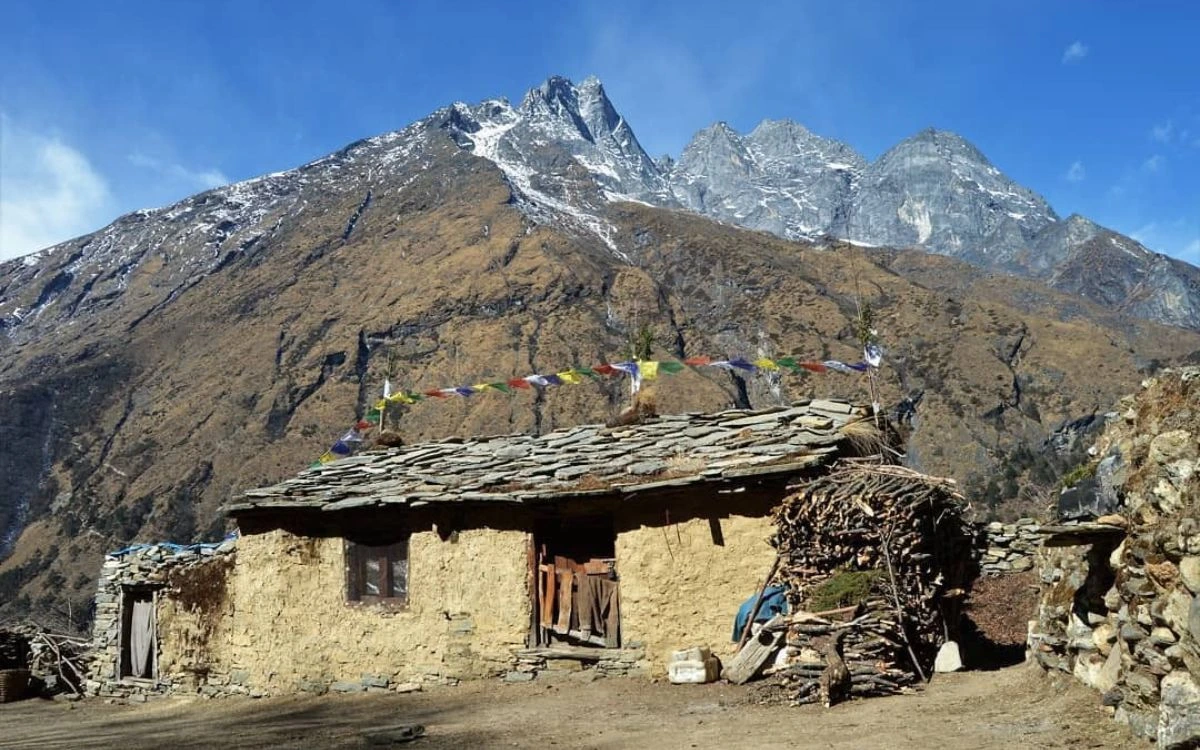
Traditional mud-and-stone Sherpa house with colorful prayer flags and a firewood stack against a rocky Himalayan ridge
This blog post will explore everything about Phortse, such as its location, altitude, how to get to Phortse, the culture of the village and its monastery, the various trekking options that go through Phortse, where to stay in Phortse, what to eat in Phortse, and when the best time to visit Phortse would be. Read on if you would like to add Phortse Village to your plan to visit Everest!
Overview of Phortse Village Nepal
Where Is Phortse Village Located?
The village of Phortse is located in the Solukhumbu District of Nepal, within Sagarmatha National Park. The elevation of Phortse is approximately 3,810 m (12,500 ft) above sea level. The village sits at the confluence of the Dudh Koshi and Imja Khola valleys, providing an unobstructed view of Ama Dablam, Thamserku, and Kangtega. Longitude and latitude of Phortse village are approximately 27.842°N, 86.740°E.
Why Phortse Is a Hidden Gem in the Everest Region
Many trekkers hurry through Namche Bazaar and make their way to Tengboche without visiting Phortse. Those who visit Phortse will find a thriving Sherpa community, terraced potato agriculture, ancient prayer walls, and a village that has produced many world-famous mountaineers. Phortse is one of the best villages in the Everest region of Nepal for authentic cultural experiences.
How to Reach Phortse Village Nepal
Trekking via Phortse on the Everest Base Camp Route
The classic Everest Base Camp trek route from Lukla continues past Namche Bazaar, then splits off from the busy Tengboche path at Sanasa, taking you directly into Phortse, which is quieter and more attractive and offers a greater cultural experience.
Route Options: Namche Bazaar to Phortse
When leaving Namche Bazaar and heading towards Phortse via the Imja Khola valley, you will be walking along cliffside paths above the valley and through the village of Khumjung. It takes approximately four to five hours to walk from Namche Bazaar to Phortse (total distance of eight to nine kilometers), making it a fantastic option for those looking for a scenic alternative to the standard trek along the Tengboche route to Everest Base Camp.
Phortse to Dingboche Trek Overview
From Phortse, trekkers will enjoy an overnight stay before heading to Pangboche (1.5-2 hours, 3-4 kilometers), followed by a trek of approximately 5-6 hours and 11-12 kilometers north-east to Dingboche, which is connected to the main circuit of the EBC trekking route. This is often cited by those who have trekked both routes that the Phortse to Dingboche trek offers as beautiful and dramatic visual scenery as that offered on the Annapurna Base Camp trek.
Phortse Village Elevation, Geography, and Landscape
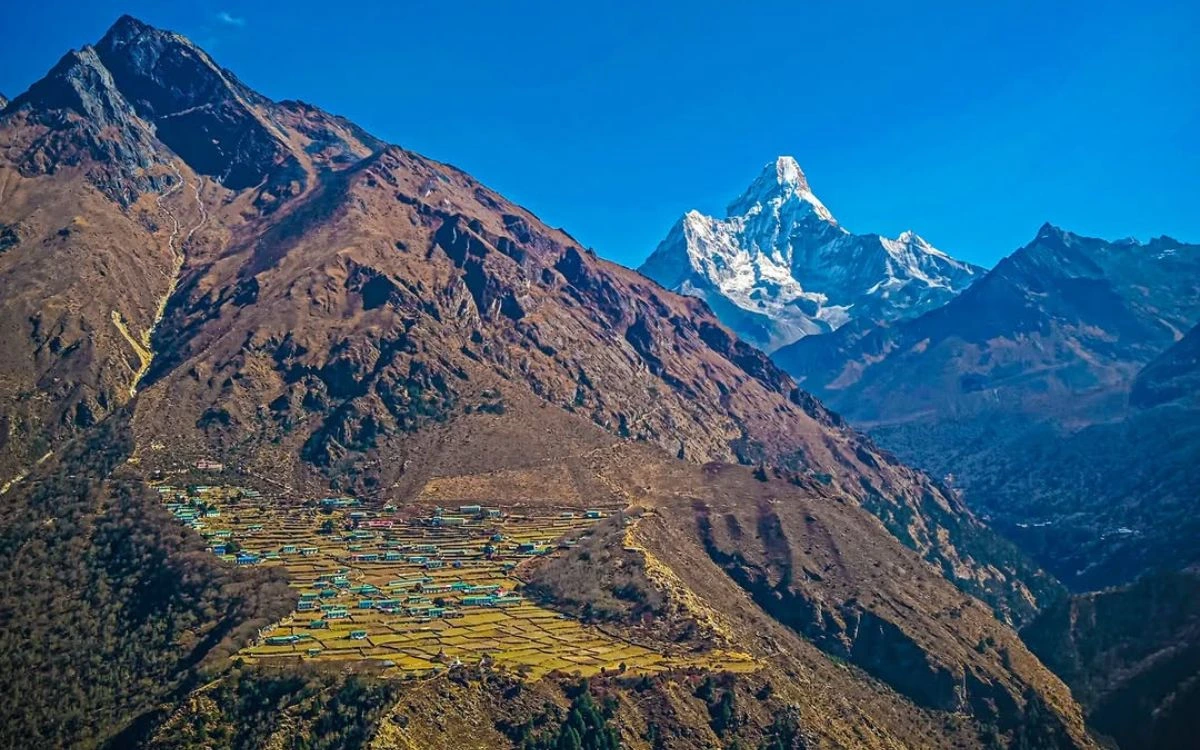
Aerial view of Phortse village with terraced fields on a mountain slope and Ama Dablam's iconic peak in the distance
Altitude and Terrain
Phortse has a height of 3810 m (12500 ft), with much of it being up to as high as 3900 m (12795 ft). The village lies on a naturally levelled terrace, protected from the wind by the ridge. Some of its landscapes include alpine meadows, glacial streams, and terraced barley/potato fields. It is located at an appropriate altitude for acclimatisation prior to attempting to go higher towards Lobuche or Gokyo.
Scenic Views of the Everest Region
Phortse provides stunning views of Ama Dablam (6812m), Taboche, Thamserku, and Kangtega from the village. On a clear day in the morning, the summit of Everest can be seen towering above the ridge line. There are many short hikes from Phortse up into the hills, where you will find prospective panoramic viewpoints that are incredibly beautiful at both sunrise and sunset; they can equal any prospective viewpoint on the main EBC trail.
The traditional Sherpa village life in Phortse is based on agriculture (farming and yak herding) and community. People in this area grow crops in terraced fields, raise milk-producing yaks, and produce food from crops grown locally (e.g.; potatoes, barley, and seasonal greens).
Women are responsible for the household and farm work, while men work as Everest guides, high-altitude porters, and Icefall Doctors (the individuals responsible for fixing and maintaining the ropes in the Khumbu Icefall before the start of each climbing season).
Local customs and hospitality
The hospitality of the Sherpas in Phortse is warm and unhurried. When you meet someone from this area, or any Sherpa, you should greet them with "Namaste." When walking around mani walls (stone prayer wheels) and prayer stones, you should walk around them in a clockwise direction; always ask permission before entering someone's home or taking a photo of another person. Trekkers leaving Phortse will often have lots of new and interesting stories from families in the area who have a long legacy of climbing Mount Everest, which is an experience that you will not find any guided tour can replicate.
Festivals and daily lifestyle
The most well-known festivals in the Phortse area are Mani Rimdu and Lhosar; during these festivals, the entire village gathers for pujas, dances with masks, and community feasts at Phortse Monastery. In addition, some of the younger residents of Phortse work as guides in the Langtang Valley Trek area and on other major trekking circuits in Nepal during the non-Everest season.
Phortse Monastery and Spiritual Significance
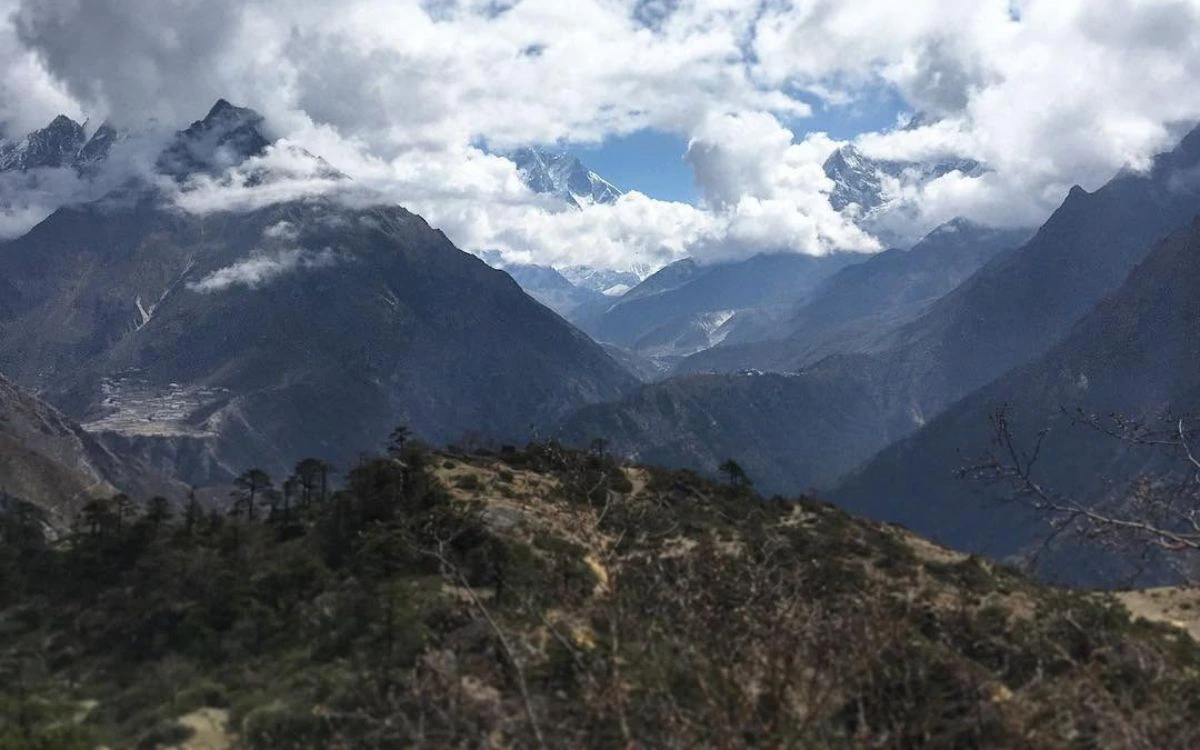
Panoramic valley view from near Phortse with Everest and Lhotse peeking through clouds in the far distance
History of Phortse Monastery
The Phortse Thakri Chholing Gomba follows the Nyingma school of Tibetan Buddhism and anchors the spiritual life of the village. Inside, ancient thangka paintings, butter lamps, and sacred scriptures line the walls. Monks perform daily prayers that have continued uninterrupted for centuries, making it one of the most authentic monasteries Nepal experiences in the entire Khumbu region.
Role in the Local Community
Beyond religion, the gomba serves as the village gathering space for ceremonies, festivals, and community decisions. It also preserves oral Sherpa traditions that might otherwise fade. Visiting the monastery is peaceful, meditative, and free — a quiet contrast to the physical exertion of the trail.
Why Trekking via Phortse Is Worth It
Less Visited Option to the Main EBC Trail
The main EBC trail from Namche and Tengboche is very busy with trekkers in spring and fall. Phortse provides an attractive alternative to these two trails for those who want to enjoy a less developed area with very few other trekkers nearby. The mornings are a peaceful experience with only the sound of wind, yak bells, and prayer flags flapping against blue Himalayan skies.
Fully Immersive Cultural Experience
Phortse has the Khumbu Climbing Center (KCC), where Sherpas receive technical mountaineering training. It is unique to observe the training and speak to KCC instructors and participants from other countries; no other village can provide such a complete experience on any other trekking in Nepal.
Full Everest Region Trek Experience
The Gokyo Lakes Trek passes through Phortse via Phortse Thanga on its way into Gokyo Valley. Together, they create one of the most complete Everest loop treks that is rich in natural beauty, culture, and high altitude accomplishments.
Accommodation and Food in Phortse Village
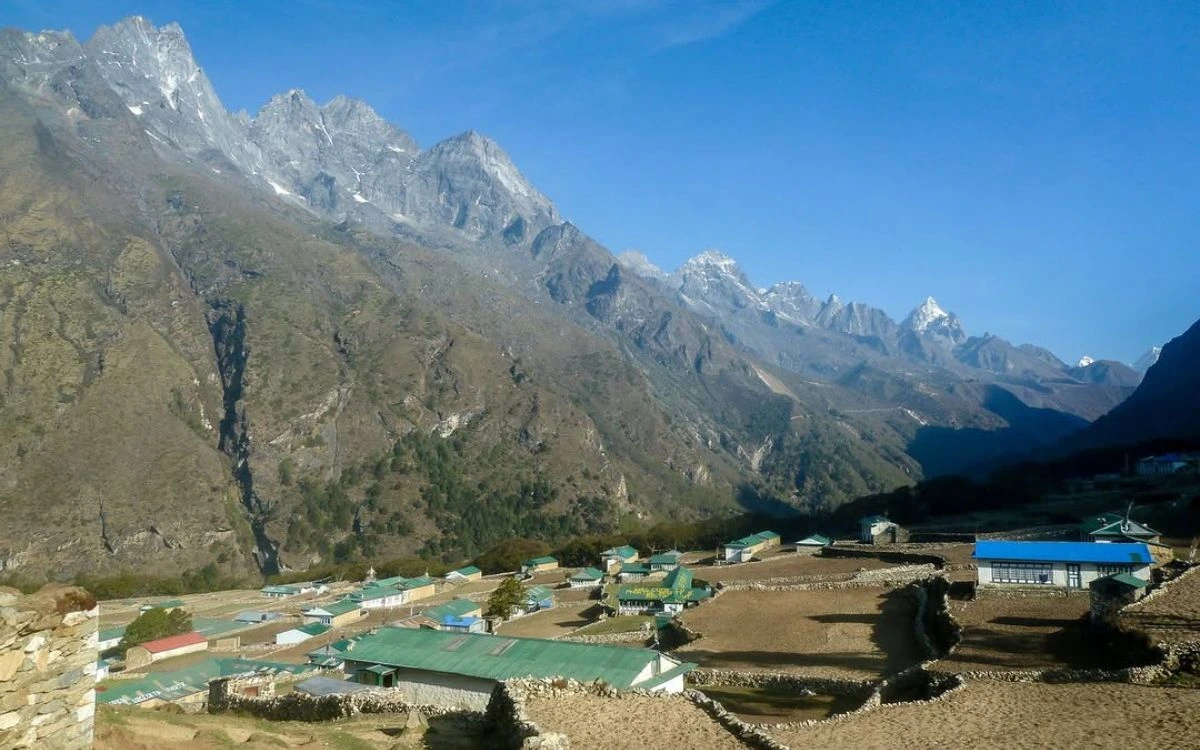
Overview of Phortse village's green-roofed houses and stone-walled fields nestled beneath a dramatic serrated ridgeline
Teahouse & Lodge
The stone buildings that house the family-oriented teahouses of Phortse are made of split logs, have a beautiful wooden interior, dining areas with large windows that look towards Ama Dablam, and are cozy and friendly. The accommodations consist of a clean, simple, wooden-framed bed, a thick blanket, and basic bathroom facilities. While some teahouses provide Wi-Fi, hot showers, and electricity, these amenities are limited at best. Therefore, I strongly encourage you to make a reservation if you plan on visiting during the peak seasons, which are generally in the spring and fall months.
Local Cuisine & Dining
Dishes that you will find on the menu at the teahouses in Phortse consist primarily of hearty high-altitude foods, such as dal bhat, a Sherpa stew, vegetable soup, fried rice, and momos (dumplings). For breakfast, there is typically Tibetan bread, porridge, chapati, and pancakes available for you. While most of the food products, such as potatoes, vegetables, grains, etc., will come from the farmers in Phortse, trekkers will gather together each night around yak dung-burning stoves to share their experience on the trail while enjoying steaming bowls of soup.
Best Time to Visit Phortse Village Nepal
Trekking Seasons: Spring (March – May) & Fall (September – November)
The best times to visit Phortse are spring or autumn. During spring, it’s warm (10 – 15°C during the day!), and the rhododendrons are blooming, while in autumn, visibility is excellent, and skies are clear and dry. In both spring and autumn, you'll find great trail conditions as well as the highest degree of dependability with respect to the weather in the Khumbu.
During winter, temperatures drop well below 0ºC at night, and occasional snowfalls may close some teahouses. The monsoon season (June – August) can produce heavy rainfall, making trails muddy and slippery, with cloud cover frequently obstructing visibility. Phortse weather can change rapidly (sunny one minute, then completely overcast the next!), so be sure to wear layers and bring adequate sun protection all year long!
Tips for Visiting Phortse Village
Preparation and Trekking Tips
Prior to climbing to Phortse, take at least two nights at Namche Bazaar to acclimatize correctly. You should carry trekking poles since the cliffsides above Imja Khola valley are generally high/steep and in a few areas, exposed. A local guide will add both safety and cultural value to your trip. If you will be trekking the Manaslu Circuit Trek or the Everest Three Passes Trek, build your cardiovascular fitness level long before you even depart for the trek.
Permits and Regulations
Both an entry permit for Sagarmatha National Park and a TIMS card are required for trekkers. Permits can be obtained in general in Kathmandu or in Namche Bazaar. The money paid for your park entrance goes directly towards conserving the ecosystem surrounding Phortse. Carry out all waste, and do not disturb animals such as the Himalayan Tahr that live on the ridges near the village, by following the Leave No Trace guidelines.
Responsible Travel
Use the teahouses run by local families, shop at the village shops for local crafts, and avoid purchasing single-use plastic items when possible. Dress appropriately and take off your shoes before entering the monastery. Phortse is a home first, and a scenic backdrop for Instagram second. Travellers' approach to visiting is vital, in that it will determine how the village welcomes them.
Phortse Village vs Other Villages in the Everest Region
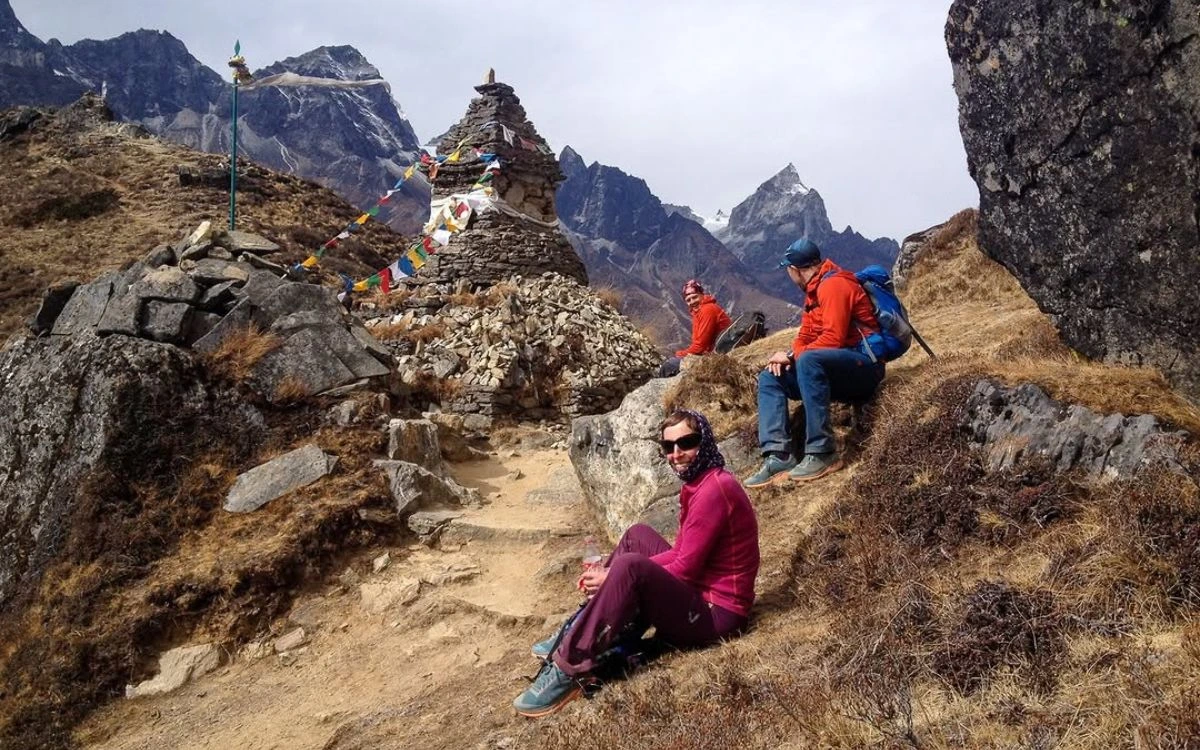
Trekkers resting beside a stone chorten draped in prayer flags on a high ridge above Phortse with jagged peaks behind
Namche Bazaar and Dingboche are contrasted below.
Namche is the busy and commercial centre of the Khumbu region, with an abundance of shops and cafes. Dingboche is a high-altitude stop used for acclimatization by trekkers on the upper Everest Base Camp route, and is exposed to the elements. Phortse is somewhere between the two in character: quiet compared to Namche, warmer and more closely connected to Sherpa culture compared to Dingboche. Phortse offers an authentic Sherpa village experience without the noise associated with the more commercial nature of the trail towns.
What to consider when selecting Phortse Village
Select Phortse if you would like to connect more deeply with the Khumbu than is possible on the average trek. Here you can take your time to sit with a cup of butter tea, watch farmers working in the surrounding fields, and hear the wind carry prayer flags from the nearby monastery. Phortse is the Everest region for trekkers who wish to experience the mountains from a personal perspective rather than simply seeing them.
FAQs About Phortse Village Nepal
Where is Phortse Located in Relation to the EBC Trek?
Phortse is located off the main route to EBC and is on the scenic trail through Sanasa. From Namche Bazaar, you can make an easy detour through Phortse and back onto the main trail at Pangboche. This adds only a few hours to your overall trekking time but will add one overnight stay.
Is it Hard to Trek From Phortse to EBC?
The trek from Phortse to EBC is moderately difficult. It does include a few steep slopes and high areas above the Imja Khola valley, but those who are reasonably fit and have had sufficient time to acclimatize should have no issues completing the trek. You do not need any technical climbing equipment. The two biggest challenges for trekkers are acclimatization (ascending properly, maintaining hydration) and altitude.
Are There Good Local Accommodations in Phortse?
Yes! There are several family-run, clean teahouses in Phortse offering good food, clean, warm, private rooms, and true Sherpa hospitality. Rooms will be clean and simple, with wooden beds and thick blankets. Dining areas are warm and comfortable due to the yak dung-burning stoves.
What Makes Phortse Different from Other Villages?
With its mountain-like grandeur, cultural richness, and legendary mountaineering legacy, Phortse is one of the most unique, least crowded villages in the world. It's a legacy of producing more per capita individuals who have summited Everest than most places in the world. With the monastery, the KCC, the sweeping views, and the relaxed pace, Phortse is among the most unforgettable places to stop in the entire Everest region.
Conclusion
Phortse Village Nepal is one of those "rarities" — here, Sherpa culture & history along with the amazing scenery of the Himalayas will come together to create a true sense of what it means to be an adventurer at heart - away from the tourist-invasion experience; whether you decide to make a detour from your trek to reach Everest Base Camp; do a loop around the Gokyo Lakes; use it as a completely separate adventure traveling into Sherpa culture. However, visiting Phortse will provide you with a very different perspective from the normal trekking routes; make your plans to visit Phortse now as well as the larger geographic area of Nepal, contact withHimalayan Recreation Treks & Expedition - your friends & partners throughout all stages of your travels.


.webp)



-6.webp)
-1.webp)
-1.webp)