Trekking is a significant contributor to the tourism industry in Nepal, and how trekking in Nepal supports local communities can be observed in the villages in the mountains along trekking trails. In the distant regions where agriculture cannot sustain the economy on its own, trekking is a steady source of livelihood for the communities. Hotels, restaurants, stores, and transportation-related businesses are largely in the hands of the communities, resulting in thriving local employment from trekking tourism in Nepal.
One of the main trekking benefits local communities in Nepal is the provision of employment to local guides, porters, and cooks through the establishment of trekking routes. In this regard, when people trek through Nepal and decide to support local guides and porters in Nepal, they are able to earn a decent income and improve their working conditions. In addition, their skills can also be improved.
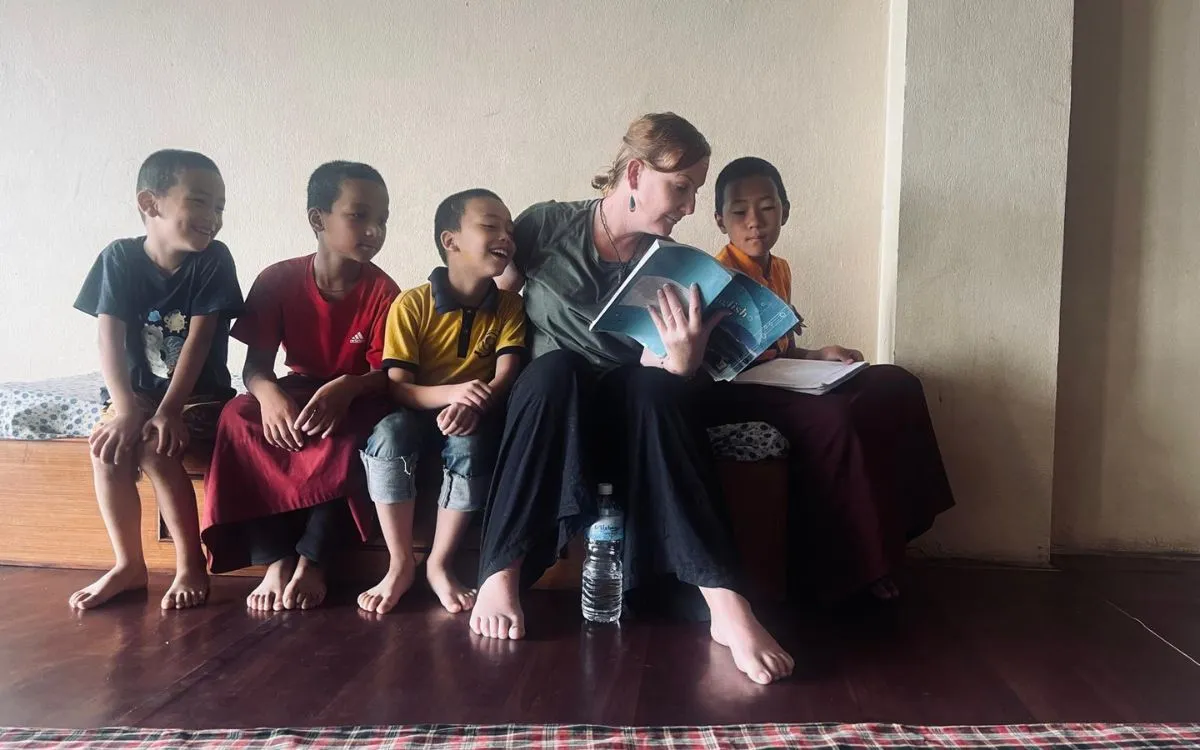
Volunteer reading to local children in Nepal
Trekking in Nepal supports local communities not only economically but also socially and environmentally. The demand for local foods, handicrafts, and cultures by tourists helps to ensure that cultural values are maintained in their communities. Tourists who engage in sustainable trekking in Nepal also contribute to the protection of trails, waste management, and reduced environmental degradation. In addition, the benefits of trekking tourism remain in the communities from which the visitors come.
In this blog, we will explore how trekking tourism directly contributes to the local economy and advances local economic development in villages, as well as supports the sustainable development of regions in Nepal known as trekking regions.
How Does Trekking Benefit Local Communities in Nepal?
Living in rural areas of the Himalayas in Nepal is difficult and unpredictable. Agricultural activity depends heavily on climatic conditions; land available for agriculture is limited; and the number of job opportunities is severely restricted. Most residents are required to leave their home villages to seek employment in urban centres or to migrate to other countries for work.
Given these circumstances, trekking in Nepal has become more than just a recreational tourism activity. Trekking has created jobs for local people as tour guides, mountain porters, lodging operators, food preparation, and providing essential supplies through retail stores.
These new sources of income through trekking have provided the opportunity for families to meet their basic needs including food, education, and healthcare. This is how tourism through trekking contributes to the Nepali farming community at the grassroots level and creates jobs for many of the people living in remote areas of Nepal.
Certain trekking businesses actively participate in Corporate Social Responsibility (CSR) initiatives. Responsible trekkers will find that there are companies working with Nepali villagers to establish school programs, maintain trails, and implement waste collection and destination service projects in the event of an injury or illness to a porter.
When consumers choose to support local guides and porter services, they ensure the benefit from their experience will ultimately remain in the local communities in which the trekking occurs.
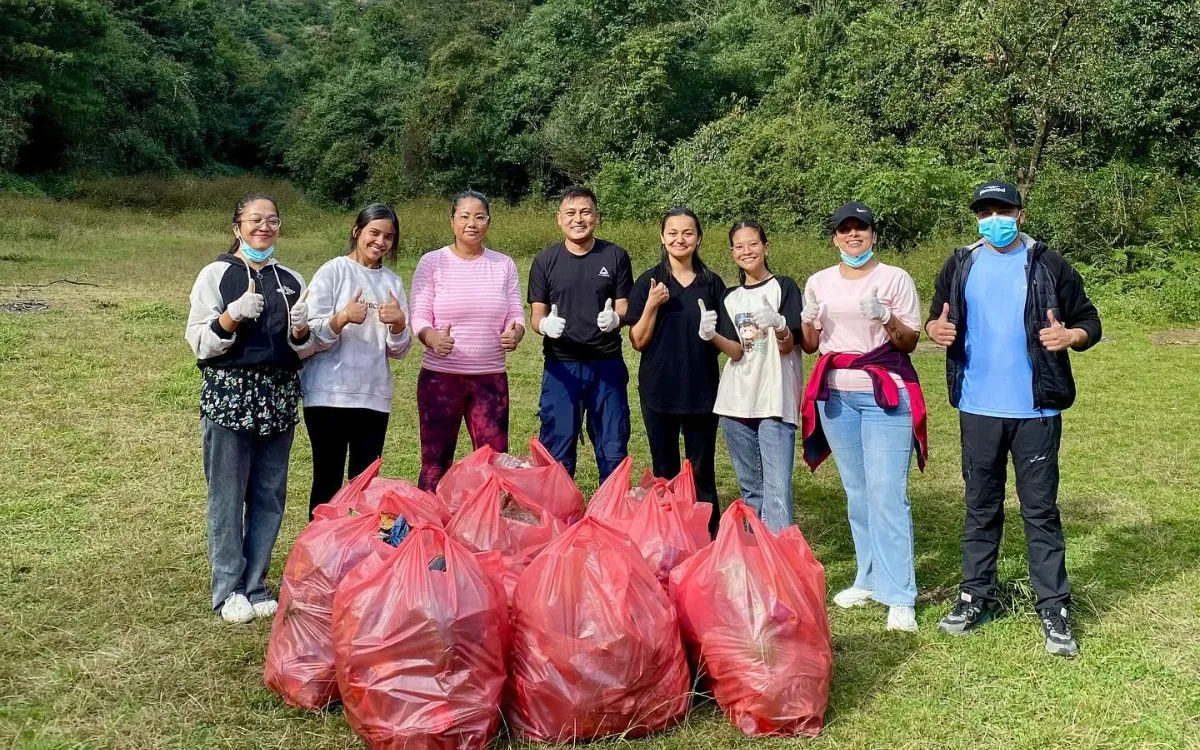
Community cleanup volunteer group with collected trash bags in Nepal
What Role Does Trekking Tourism Play in the Nepalese Economy?
Trekking tourism provides employment for a number of people working in remote mountain areas, such as guides, porters, lodge staff, cooks, drivers, and small business owners.
Trekking tourism makes up a part of Nepal's GDP from money spent within Nepal by tourists, trekking permits obtained from the government, taxes, and other service fees.
Trekking tourism accounts for money coming into Nepal in foreign currencies from international trekkers, which helps to strengthen the economy of the country.
Tourism creates local employment from trekking tourism in Nepal such as tea houses, lodges, transport services, food suppliers, and handicraft businesses along trekking routes.
Government income from national park entry fees, conservation area permits, and taxes on travel goes towards government revenue generated by trekking tourism.
Infrastructure improvements such as upgrading trails, expanding communication access, and providing basic services in mountain areas, will continue to occur in response to trekking tourism.
Trekking tourism contributes to efforts to stop the out-migration of people who currently live in trekking communities by keeping them employed at home.
Trekking tourism promotes long-term economic viability through the connection of conservation practices with traditional cultures and local livelihoods.
How Does Trekking Help Preserve Local Culture and Traditions?
By staying in rural areas and having a close relationship with their local community, trekkers help preserve and promote local customs and culture by keeping them visible throughout the duration of their stay in the area. When a trekker participates in a cultural practice such as a festival, participating in religious ceremonies, wearing traditional clothing, and seeing the architecture of the local village, the local culture is still identified and valued as part of everyday life. Not only do the local communities maintain places of worship, such as monasteries and prayer locations, and grow food, but the creation and production of handicrafts is also directly associated with trekking. Additionally, through trekking, local residents have the opportunity to make a living while remaining in their own community and this provides continuity in the knowledge and tradition of the local culture and community for future generations.
Which Nepalese Regions Benefit Most from Trekking?
Trekking is best suited to the Everest (Khumbu) and Annapurna Regions of Nepal as these are the most popular trekking destinations for tourists visiting Nepal. The Everest Base Camp Trek and the Annapurna Circuit have spectacular mountain landscapes, excellent trekking facilities and services, and rich Sherpa and Gurung cultures which attract large numbers of trekkers. Trekking tourism has supported the local economies of communities in the Everest and Annapurna Regions by providing income from lodging, guide and porter services, transport services, and cultural exchange.
Trekking has also supported the local economies of communities in the Langtang, Manaslu, and Kanchenjunga Regions by generating income through trekking, even though they see fewer trekkers than the Everest and Annapurna Regions, and these communities depend on the income from trekking to support their households.
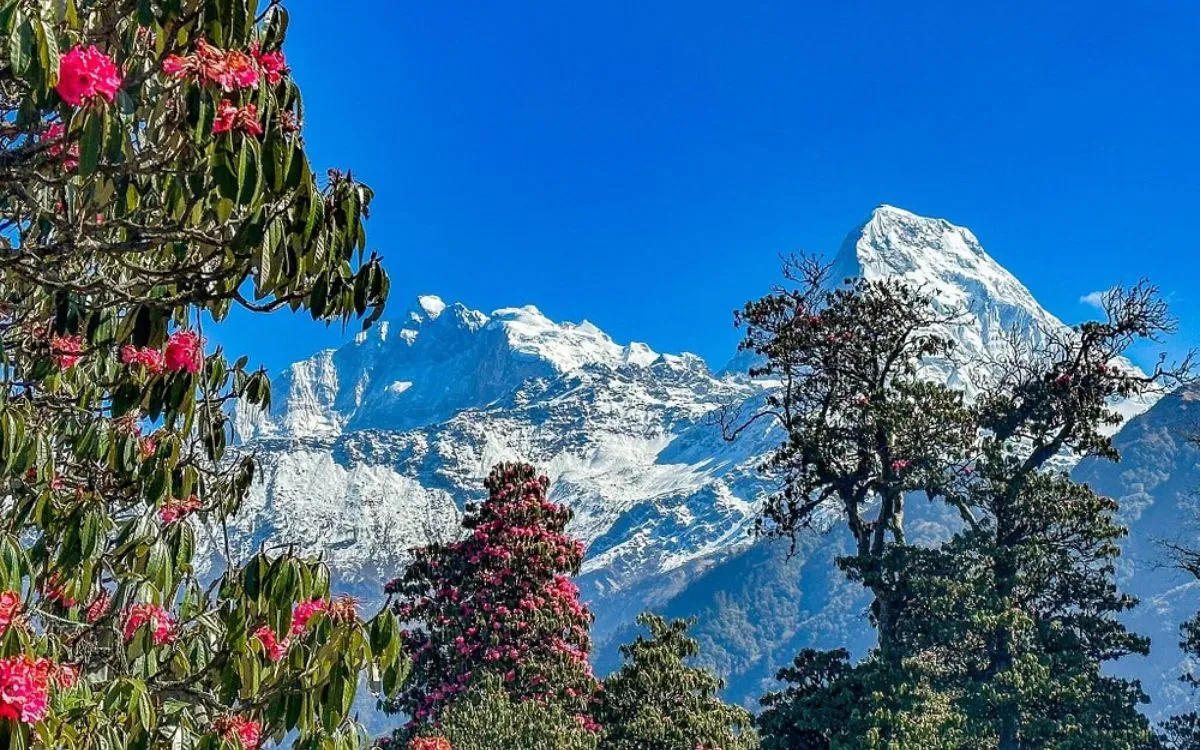
Himalayan mountain peaks view in Nepal Annapurna Region
In Upper Mustang and Dolpo, two of the most isolated trekking locations, controlled trekking with a limited number of visitors and permits guarantees that the local communities are directly benefiting from the trekking tourism that is taking place there. Collectively, these regions demonstrate how trekking tourism drives economic activity in both well-developed and rural areas of Nepal.
Why Hiring Local Guides and Porters Makes a Difference
Hiring local individuals to be guides and hire porters can enhance the experience of both trekkers as well as local communities along the trekking trails. Local guides are familiar with regional topography, weather patterns, traditional culture, and all of the little nooks and crannies that outsiders may miss, making the trek safer and more meaningful. With porters helping carry heavy loads, trekkers can enjoy their adventure, while providing fair wages to the local porters.
When choosing local guides to assist on your trek, you will be providing a source of income for entire families of remote mountain villages, where other job options are limited. This income supports these families with daily living expenses, paying for children's education, as well as having access to healthcare, and improving the overall quality of life in their communities. Additionally, local guides and porters develop new skills related to navigation, safety, and hospitality over time; these skills are then useful for the entire community.
Aside from generating income, hiring local guides and porters supports environmentally sustainable trekking practices in Nepal. Local guides and porters understand how to be environmentally conscious as well as how to preserve cultural sites, which directly benefit the sustainability and responsibility of trekking tourism.
How Can Trekkers Directly Support Local Communities?
One of the easiest ways trekkers can help support the local communities in Nepal is by making responsible decisions during their journey. By using local guides and porters trekkers can keep money within the village and pay fair wages for their work. Trekkers can also help ensure that families earn money directly from tourism by staying in village lodgings and tea houses, rather than in outside hotels. Buying food, drinks and handicrafts in local shops will help support small businesses and maintain traditional crafts.
At Himalayan Recreation, we promote that your trek will benefit the local people living along your trekking routes. We employ local guides and porters, work with village lodges, and procure food and other supplies from communities in close proximity to the trekking routes. This offers families a means of providing them with a steady income and supports the local community's livelihoods.
Himalayan Recreation's sustainable trekking policies allow our staff to keep the trails maintained, manage waste generated from trekking activities, and maintain the cultural traditions of the mountain communities.
When trekkers choose to make the above-mentioned decisions, they will have an enjoyable, well-planned and purposeful trekking experience while providing a direct benefit to the growth, well-being and long-term sustainability of mountain communities.
What Sustainable Trekking Practices Support Villages?
Sustainable trekking supports villages by strengthening local economies, respecting culture, and reducing environmental impact. Staying in locally owned lodges, buying handmade crafts and local food, and hiring local guides and porters helps create local employment from trekking tourism in Nepal and ensures income stays within the community. Learning about local customs, dressing modestly, and asking permission before taking photos shows respect for village life. By minimizing waste, conserving water and firewood, and choosing eco-conscious trekking operators, trekkers help protect both communities and nature for the future.
Cyclists traveling on rural road in Nepal
What Are the Best Responsible Trekking Tips to Protect Villages and Nature?
To trek responsibly, one has to follow guidelines for Leave No Trace. Bring back all your trash, even food, use a refilled container for drinking, and select environmentally responsible products for hygiene. Keep to the designated track, camp areas above 200 feet from any water source, and cook using a stove instead of a fire. To respect nature, view wildlife from a distance, avoid feeding any creatures, and store food properly. Follow guidelines for cleaning near a water source: wash using biodegradable soap. Do not pick plant materials or pick anything natural and cultural. Support the local population by purchasing local products, camping in local facilities, and adhering to their culture as well as trekking assistance.
What Are the Best Ways to Trek Ethically and Responsibly in Nepal?
Doing trekking in an ethical and responsible manner in Nepal involves taking decisions that can impact either those in the communities or the environment in a positive manner. Use Nepalese guides and porters for trekking in Nepal by staying in teahouses instead of foreign-run lodges and buying their food so that trekking in communities around Nepal has positive economic impacts. Be culturally sensitive by respecting sites of reverence and adhering to cultural practices that may differ from those in other parts of the world.
How Himalayan Recreation Supports Local Communities in Nepal
At Himalayan Recreation, we believe that trekking in Nepal needs to have direct benefits to the people living in the trekking trails. Wherever possible, we make every effort to hire experienced local guides and porters, paying them fair wages, ensuring adequate working conditions, and providing long-term employment through trekking tourism to the people of Nepal. This includes partnering with locally-owned tea houses, purchasing food from nearby villages, as well as purchasing goods from the treks that support the local economy.
The way we do sustainable treks in Nepal also has a culture and environment-related perspective. At Himalayan Recreation, we practice Leave a Trace, which ensures that we take care of their trails, sanitation, and culture when we have the chance to visit these places. In effect, when one chooses to have a trekking adventure with us, he/she also helps to sustain their culture as well as their environment for that matter.
FAQs
What role does trekking tourism play in Nepal’s economy?
Trekking tourism is one of the most succeeding sectors of Nepal’s economy. It is responsible for creating livelihoods, among others, of guides, porters, lodge staff, cooks, and shopkeepers, apart from earning foreign exchange, making contributions to GDP, as well as to government revenue in terms of permits and park fees.
What are the economic benefits of trekking tourism in Nepal?
Trekking pays for household income, nurtures local businesses, and inspires entrepreneurship. Expenditure on accommodation, food, permits, and services directly benefits the local communities and helps reduce migration from mountain villages.
How can trekking preserve Nepalese culture and traditions?
Trekking adds value to local culture. Villages keep festivals, monasteries, traditional dress, architecture, and handicrafts because visitors value these things. Income from tourism inspires communities to preserve and pass on traditions.
Why should I hire local guides and porters while trekking?
Hiring locals provides fair wages and enables them to support their families in these remote areas. Guides offer safety, navigation, and knowledge about the culture; porters carry gear. This also encourages skills development and makes sure that all the benefits remain local.
How can trekkers directly support villages in Nepal?
Trekkers support communities, hire local guides and porters, stay in village lodges, buy food and handicrafts, give fair tips, or help out on community projects or trail maintenance.
How can tourists minimize environmental impact while trekking in Nepal?
Follow the trails, avoid litter, use refillable bottles, and practice environmental etiquette. Responsible trekking protects both the environment and the local economy.
How does trekking empower women and marginalized communities in Nepal?
It also provides direct employment for women and marginalized groups as guides, cooks, lodge attendants, or craft sellers. By the same virtue, this contributes to income generation that improves access to education and health, thereby enhancing the status and influence of their position in society.
Do trekking fees and permits help local communities in Nepal?
Yes, fees and permits fund trail maintenance, conservation, schools, healthcare, and local infrastructure-so the financial benefits of tourism actually reach the villages-while prioritizing environmental protection.
Local volunteers planting trees in Nepal community
Conclusion
Trekking is very significant in Nepal, and understanding how trekking in Nepal supports local communities shows its importance beyond adventure. It offers jobs to guides, porters, lodge staff, and small business owners, apart from contributing to the local economy through permits, lodging, and food. It contributes to preserving cultural traditions, supports women and marginalized groups, and encourages sustainable practices that protect trails and the environment.
By staying in village lodges, hiring local guides and porters, and purchasing local products, trekkers can directly benefit the people along trekking routes. For a responsible tour that helps support the local communities of Nepal, feel free to contact us at Himalayan Recreation to arrange a meaningful and sustainable trekking experience.






-1.webp)
-1.webp)
-1.webp)