The Climate Change Impact on Himalayan Treks is no longer a distant forecast — it is something guides, lodge owners, and trekkers are already noticing on the trail. Rivers are running higher than old route notes describe, snow is falling later in the season, and villages that once relied on predictable weather windows are adjusting how they plan for visitors. None of this means trekking in Nepal is becoming impossible. It means the experience is changing, and travelers who understand what is shifting can still plan safe, rewarding trips into the Himalaya.
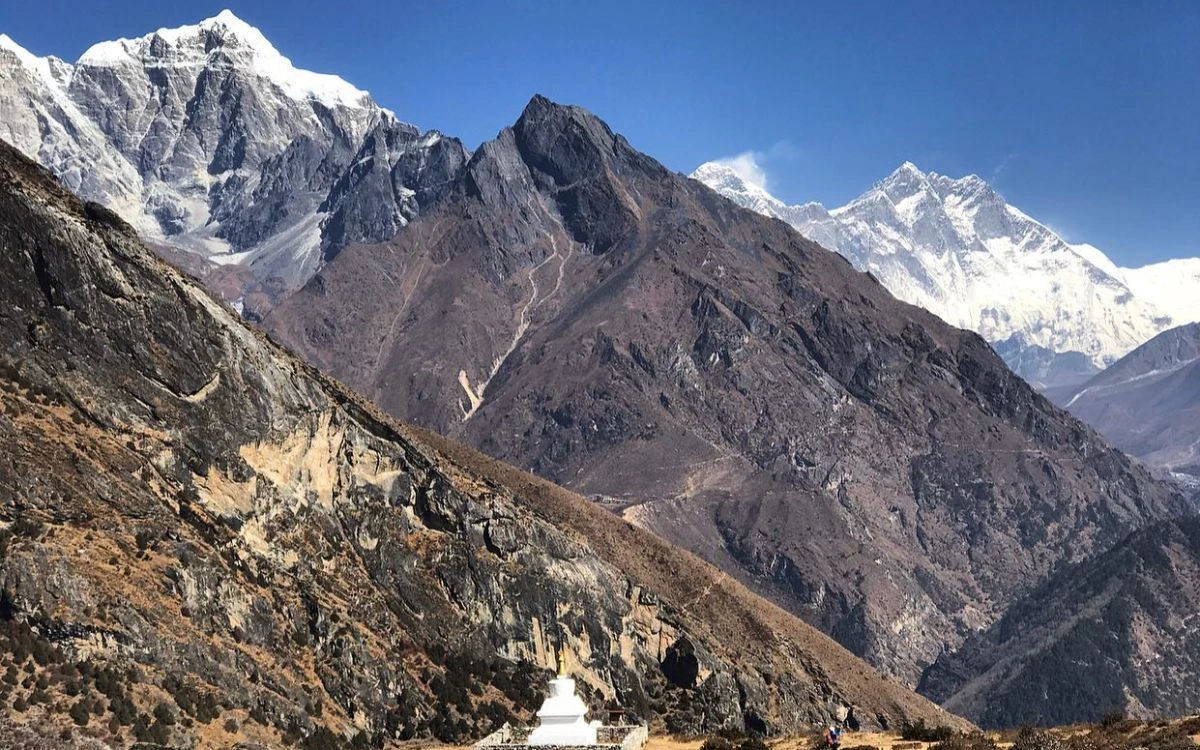
Everest region trekking route showing glaciers vulnerable to climate change
For decades, Himalayan trekking routes followed a fairly reliable rhythm: clear pre-monsoon weeks in spring, a wet lull through the summer monsoon, and long stretches of stable, cold, clear days in autumn. Guides built itineraries around that rhythm, and lodges were stocked and staffed accordingly. Climate change in the Himalayas is loosening that rhythm. Glaciers are retreating faster, rainfall is arriving in shorter and more intense bursts, and the line between "trekking season" and "off season" is blurrier than it used to be.
This guide looks at what is changing for trekkers, guides, and mountain communities — from glacier melt and shifting weather to trail hazards, regional differences, and practical ways to adapt. Rather than repeating a single-region deep dive, it takes a broader view across Nepal's major trekking areas, because climate risks in Nepal do not stop at any one valley.
How Is Climate Change Changing Himalayan Trekking?
As the Earth's atmosphere warms, high-elevation areas are affected most. The Himalaya is one of them, where research organizations have repeatedly identified the Hindu Kush Himalaya as one of the climate-sensitive mountain systems, with rising temperatures at altitude exceeding those of the lowlands. This change for trekkers means it will be fewer major changes but rather a number of smaller ones.
Increases in temperature at a high elevation reduce the distance between "cold but manageable" and truly problematic trail conditions, in particular those above 4,000 meters.
Variations in snowfall and rainfall patterns mean that now some months where the same passes were reliably snow-free see late or early snow, while other passes may have less snow than the expected amount for that trek.
It is getting harder and harder to predict the trekking conditions, so the same route in the same month may feel quite different one season from the next.
In some locations, trail conditions are becoming more unstable (loose ground, minor slips, and soft riverbanks), persisting much longer into the season after the monsoon when they normally settle.
This does not automatically mean that every trek is getting safer every year. Actually, the idea is that historical records for average conditions, or based on the way a route looked ten years ago, are becoming less reliable day by day.
Glacier Melting and Its Effect on Trekking Routes
Why Himalayan glaciers are retreating
Glacier melting has been observed on many different rivers in various basins due to a number of reasons: the general warming of the climate, decreased snow cover, and altered weather patterns. The scientific groups monitoring the larger Hindu Kush Himalaya region have discovered that the rate of glacier shrinking has been faster recently than in the preceding decades, most of all in the early 2000s. Based on this, this has been going on for a relatively recent period of time and is reflected in the stories local guides share with trekkers on their usual walks through the mountains. This story is consistent with many of them being longtime trekkers who have been taking these same trails for many years already.
Before-and-after comparison of a snow-capped peak turning bare, showing climate change
How glacier change affects trekking terrain
As glaciers thin and retreat, the terrain around them changes too. Moraines that used to be stable can become looser. Glacial lakes — pools of meltwater held back by ice or rock debris — can grow larger and less predictable. Trekking trails that pass near glacier snouts or moraine walls sometimes need to be rerouted as the ice retreats and the ground underneath shifts.
There are certain stretches of the trail which run on or near glaciers (or glacial lakes) where the hiker should be extra cautious. Not to say these locations are always dangerous, but the nature of them is to undergo changes that are not predictable, and so a five-year-old travel book or blog cannot really predict. One of the most visible ways the glaciers' retreat in the Himalayas is showing up - actually affecting the hiking community - is the need for trekkers to plan and avoid rather than simply observe and understand.
Changing Weather Patterns on Himalayan Treks
Unpredictable snowfall
Snowfall timing has become harder to forecast on some routes. Early snow can close a pass ahead of schedule, while a lighter-than-usual winter can leave a route more exposed and dusty than trekkers expect. Either way, checking recent trail reports rather than assuming a fixed calendar window has become a genuinely useful habit.
Heavier rainfall and extreme weather
It is likely that there will be a significant change in the timing of rain, with more rain coming at once. As the weather records in South Asia are showing the tendency for rain to become short and heavy instead of evenly distributed light showers. With such changes, the impact of such heavy rains is concentrated in the shorter duration, which results in more damage to trails, bridges, and riverbanks. That is one of the reasons why trekking in a changing climate is perceived as different from the same season that was in the past.
Shorter windows of stable trekking conditions
Guides on several routes describe the stable "sweet spot" of clear, dry days as narrower than it used to be, with more days of transitional weather at the edges of the main spring and autumn seasons.
What changing weather means for trekking plans
The practical takeaway is not to avoid trekking in Nepal but to build a little more flexibility into an itinerary and to lean on current, local information rather than fixed assumptions about what a given month is "supposed" to look like.
Landslides, Rockfalls, and Other Trail Hazards
Why unstable slopes matter to trekkers
Heavier, more concentrated rainfall and thawing ground at altitude both increase the chance of landslides and rockfalls on steep Himalayan trekking trails. These events tend to cluster around the monsoon months and their immediate aftermath, though glacier-related events can happen outside that window entirely.
Effects on bridges, paths and mountain settlements
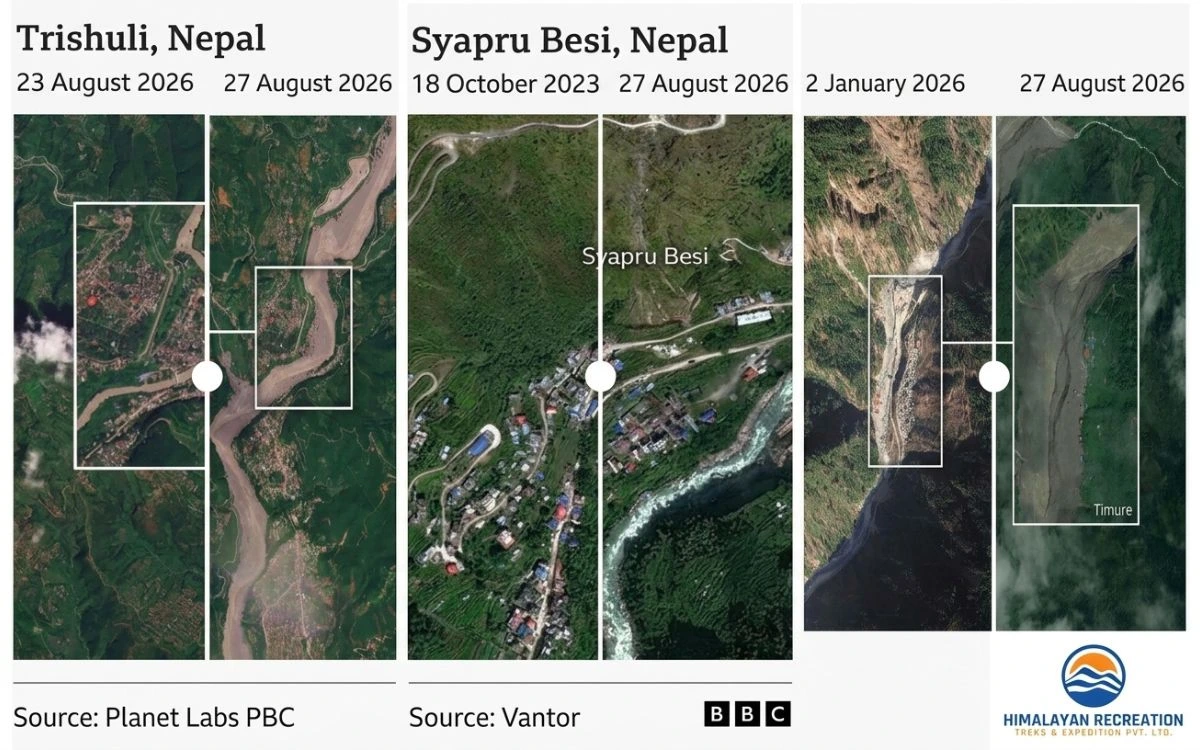
One of the very recent disturbing examples took place in late August 2026 when the Bhote Koshi and Trishuli river valleys in the Rasuwa district of north-central Nepal were hit by a flash flood very suddenly. Per the authorities, they suspected a high-elevation glacial event near the Nepal-China border as the cause rather than the heavy local rains - this was just a warning of some of the new major mountain hazards coming from glacier instability and not just the storms.
The flood wreaked the town of Syabrubesi, one of the main gates for the Langtang Valley trek, and also destroyed roads and bridges connecting to the Rasuwagadhi border post and even blocked access to travel to Langtang and Gosaikunda when officials assessed the trail. Meanwhile, the major trekking regions of Everest, Annapurna, and Manaslu continued to be open normally. In the coming days, the exact disaster details could vary from the original, and think about the casualty and trigger factors to be in an evolutionary stage rather than final.
Satellite imagery comparing Trishuli, Syapru Besi, and Timure before and after the August 2026 Nepal flash floods
Actually, such disasters are part of a larger trend: trekkers and tour operators need to have their eyes not only on the rain-affected landslides but also on the glacier-related hazards upstream, which can cause access problems for the trails without giving too much notice.
Why route information needs to be checked more carefully
Because hazards like this can appear with short notice, checking with a registered trekking operator or Nepal's tourism authorities close to the departure date is now a more meaningful step than it once was, particularly for routes that follow river corridors below glaciated terrain.
Climate Change and Trekking Seasons in Nepal
Nepal's trekking calendar has traditionally centered on two main windows, and understanding how each is shifting helps in finding the best time to trek in Nepal for a given route and comfort level.
Spring (roughly March to May) still offers some of the most reliable trekking weather in Nepal, though guides increasingly report more variable temperatures and occasional late-season snow at higher passes.
How are monsoon conditions changing?
The June-to-September monsoon remains the wettest period across most of Nepal, but rainfall intensity within that window appears to be increasing in short bursts, even where seasonal totals stay similar to historical norms.
What should trekkers know about autumn?
Autumn (September to November) is still the most popular season for the country's best-known routes, thanks to generally clear skies, though the transition out of the monsoon has felt less clean-cut in some recent years.
Is winter trekking becoming different?
Winter treks at lower and mid elevations remain a realistic option, but snow timing at high passes has become harder to predict, which is one more reason to confirm current trail conditions before committing to a winter itinerary.
Which Himalayan Trekking Regions Are Being Affected?
Climate effects are not identical across Nepal's trekking regions. Rather than repeating a single-region deep dive, it is worth comparing how a few of the most-visited areas are experiencing these changes.
Everest Region
Amongst many regions of the mountain range, the Khumbu Valley is one of the few places that still has a high concentration of glaciers and glacial lakes, and it also houses the well-renowned Everest Base Camp Trek. That means a major chunk of Himalayan regional research is focused here on the glaciers. If you are an enthusiast of glaciers and their melting, the causes behind it, and the mitigation efforts, then you can refer to Himalayan Recreation's piece, in which the topic is dealt with much more elaborately. In contrast, this guide gives a comparative account of the Everest region without going over the ground again.
Annapurna Region
Along the Annapurna Circuit Trek and the Annapurna Base Camp route, trekkers and guides describe similar patterns to Everest — shifting snowlines and less predictable rainfall—though the range's varied elevation and rain-shadow effect around the Kali Gandaki valley mean conditions can differ sharply between neighboring valleys.
Langtang Region
Langtang sits closer to glacier-fed river systems than some other regions, which is part of why it has been affected by both the 2015 earthquake-triggered landslide and, more recently, the August 2026 Rasuwa flash flood discussed above. Anyone planning a Langtang Valley Trek in the near term should check current access conditions directly with a registered operator.
Manaslu and Other High-Mountain Routes
The Manaslu Circuit Trek, plus highly remote trails like Upper Mustang, traverses many terrains, starting from green valley floors all the way to the extremely dry and sun-shaded Annapurna range. With relatively few tourists on the trails compared to others and the presence of remote villages with no proper facilities, these treks are a bit more challenging. But the beauty and solitude, combined with the opportunity of experiencing a new culture and lifestyle of the locals, more than compensate for any inconvenience or delay in reaching your trail or enjoying the view.
How Climate Change Affects the Trekking Experience
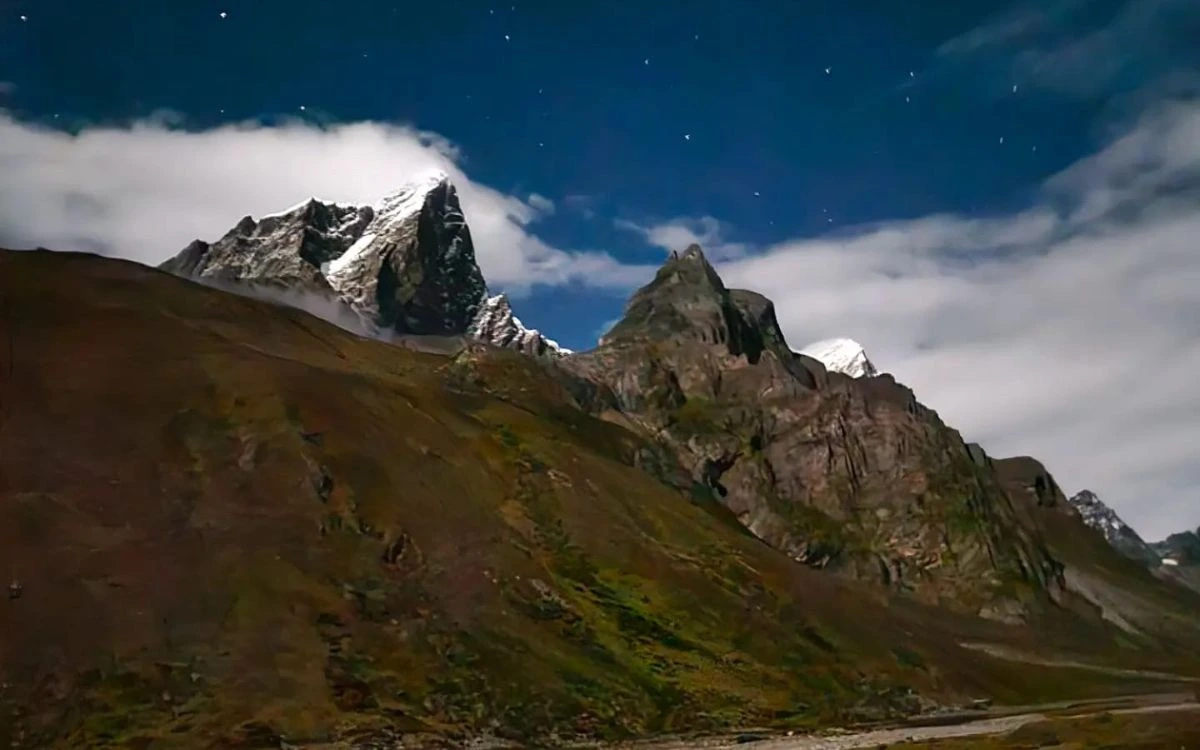
Himalayan peak with reduced snow cover under a starry night sky, reflecting climate change
Trail conditions and route changes
Sections of trail can be rerouted, temporarily closed, or simply feel different underfoot from one year to the next as ground conditions shift near glaciers, rivers, and unstable slopes.
Accommodation and mountain infrastructure
Teahouses and lodges built decades ago were designed around older weather patterns. Heavier rain events and shifting water sources sometimes require repairs or adjustments that take time in remote areas.
Water availability
Some villages that historically relied on glacier-fed streams report more variable water availability as glacial melt patterns change, which can occasionally affect water access along a route.
Visibility and landscape conditions
Shifting cloud patterns and haze can affect the classic mountain views a route is known for, meaning the same month can offer very different photography conditions from one year to the next.
Trek planning and itinerary flexibility
Building one or two buffer days into an itinerary, and choosing an operator willing to adjust a route in response to current conditions, has become a genuinely practical way to protect a trip rather than an overcautious add-on.
How Climate Change Is Affecting Mountain Communities
Tourism-dependent livelihoods
Many mountain communities rely heavily on trekking income, so route disruptions from landslides, floods, or unpredictable seasons have a direct effect on local livelihoods, not just on visiting trekkers.
Agriculture and water resources
Farming at altitude depends on predictable snowmelt and rainfall timing. Shifts in either can affect crop cycles for communities that trekkers pass through and rely on for food and lodging.
Changes in local infrastructure
Bridges, trails, and small hydropower systems built for an earlier climate pattern sometimes need reinforcement or rebuilding after extreme weather events, and funding and logistics for that work can take time in remote districts.
Why guides and local communities matter in adaptation
Local guides and lodge owners are often the first to notice a changing pattern on their home trail, long before it appears in a report. Supporting local, community-run operations is one of the more direct ways trekkers can back genuine on-the-ground adaptation.
Does Climate Change Make Himalayan Trekking More Dangerous?
What risks are increasing?
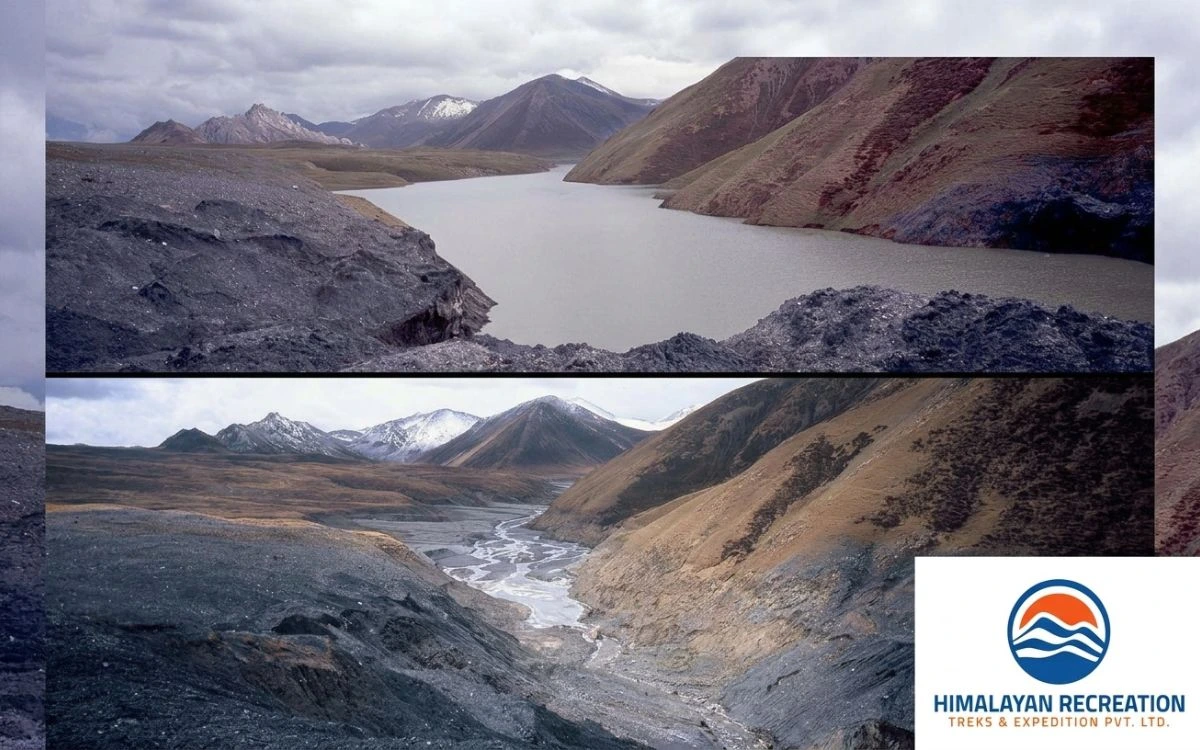
Himalayan glacial lake shrinking into a dry riverbed due to glacial melt
Landslide, rockfall, and glacial-hazard risk appear to be increasing on some specific stretches of trail, particularly those near unstable moraines, glacial lakes, or river corridors fed by glacier melt.
What risks depend on season and location?
Risk is highly route- and season-specific rather than uniform across the country—a route can be entirely unaffected one year and see a disruption the next, which is why blanket statements about Nepal being "more dangerous" overall are usually an overstatement.
Why current local information matters more than historical averages
Given how much year-to-year variation now exists, checking with a registered trekking agency close to departure, rather than relying purely on a guidebook's seasonal averages, is one of the most useful safety habits a trekker can build.
How Trekkers Can Adapt to a Changing Himalayan Climate
Choose the right season
Understanding the best time to trek in Nepal for a specific route — rather than assuming every route behaves the same way in the same month — remains one of the simplest ways to reduce weather-related risk.
Build flexibility into the itinerary.
A day or two of built-in buffer gives a trip room to absorb a weather delay or a short reroute without derailing the whole plan.
Follow local weather and trail updates.
Checking conditions with a trekking operator in the days before departure, rather than relying on older trip reports, is especially important on routes that pass near glacier-fed rivers.
Use responsible trekking practices.
Packing the right trekking essentials for Nepal for the actual conditions of a given season and confirming current Nepal trekking permits and route requirements before departure both help a trip go smoothly even as conditions shift year to year.
Support local and sustainable tourism.
Choosing operators and lodges that reinvest in their communities helps mountain regions build longer-term resilience to a changing climate.
Sustainable Trekking: What Can Travelers Do?
Small, consistent choices on the trail add up across the volume of trekkers who visit Nepal each year:
Reduce unnecessary waste, especially single-use plastics, on multi-day routes
Minimize environmental impact by sticking to marked trails and designated camping or lodging areas
Respect local conservation rules in national parks and conservation areas
Choose responsible trekking operators who employ local guides and porters fairly
Follow Leave No Trace principles throughout the trip
What Is the Future of Himalayan Trekking?
How trekking routes may evolve
Some sections of trail may be rerouted permanently over time as glaciers retreat and terrain shifts, much as routes have occasionally been adjusted after past landslides or earthquakes.
The importance of climate adaptation
Continued monitoring of glaciers, weather, and trail conditions by Nepali authorities and research institutions will likely play a growing role in how routes are planned and communicated to visitors.
Why sustainable tourism will become increasingly important
As mountain communities adapt to a changing climate, tourism that supports rather than strains local resources will matter more, not less, in keeping trekking in the Himalaya viable for the long term.
FAQs About Climate Change in Nepal Treks
How is climate change affecting Himalayan trekking?
It is changing weather predictability, glacier and trail conditions, and the timing of safe trekking windows, rather than making every route uniformly harder.
Is climate change making trekking in Nepal more difficult?
In some specific areas and seasons, yes—mainly through less predictable weather and occasional trail disruption—but most major routes remain accessible with good planning.
Are Himalayan glaciers melting faster?
Long-term monitoring of the wider Hindu Kush Himalaya region shows glacier mass loss accelerating since the early 2000s compared with prior decades.
Does climate change affect trekking seasons in Nepal?
Yes — spring and autumn remain the most reliable windows, but both are showing more year-to-year variability than in the past.
Are landslides becoming a bigger problem on Himalayan treks?
Heavier, more concentrated rainfall and glacier-related hazards have both been linked to landslide and flash-flood events in recent years, including the August 2026 Rasuwa flood affecting the Langtang region.
Is Everest Base Camp affected by climate change?
Yes — the Khumbu region has some of the most closely studied glaciers in the Himalaya; for a detailed look at that region specifically, see Himalayan Recreation's dedicated article on climate change in the Everest region.
Which Himalayan trekking regions are most affected?
Effects vary by route; areas near major glaciers and glacier-fed rivers, such as parts of Khumbu and Langtang, tend to see the most direct impacts.
Is trekking in Nepal still safe with climate change?
Yes, for the great majority of routes and seasons, provided travelers check current conditions with a registered operator before departure.
What is the best season for trekking in Nepal?
Spring and autumn remain the most reliable overall, though the ideal window varies by specific route and altitude.
How can trekkers reduce their environmental impact?
Minimizing waste, staying on marked trails, respecting conservation rules, and choosing responsible operators all help reduce a trek's footprint.
Conclusion
Climate change is changing the Himalayan trekking experience — through glacier melt, shifting weather, and events like the recent Rasuwa flash flood — without eliminating it. Most routes remain safe and rewarding for well-prepared travelers who check current conditions, build flexibility into their plans, and support sustainable, community-based tourism across Nepal.
Ready to plan a well-informed trek? Talk to Himalayan Recreation Treks and Expedition for up-to-date route conditions and a trip built around today's Himalayan climate.
Other popular trekking packages of Himalayan Recreation Treks and Expedition


-1.webp)


 based on 3 reviews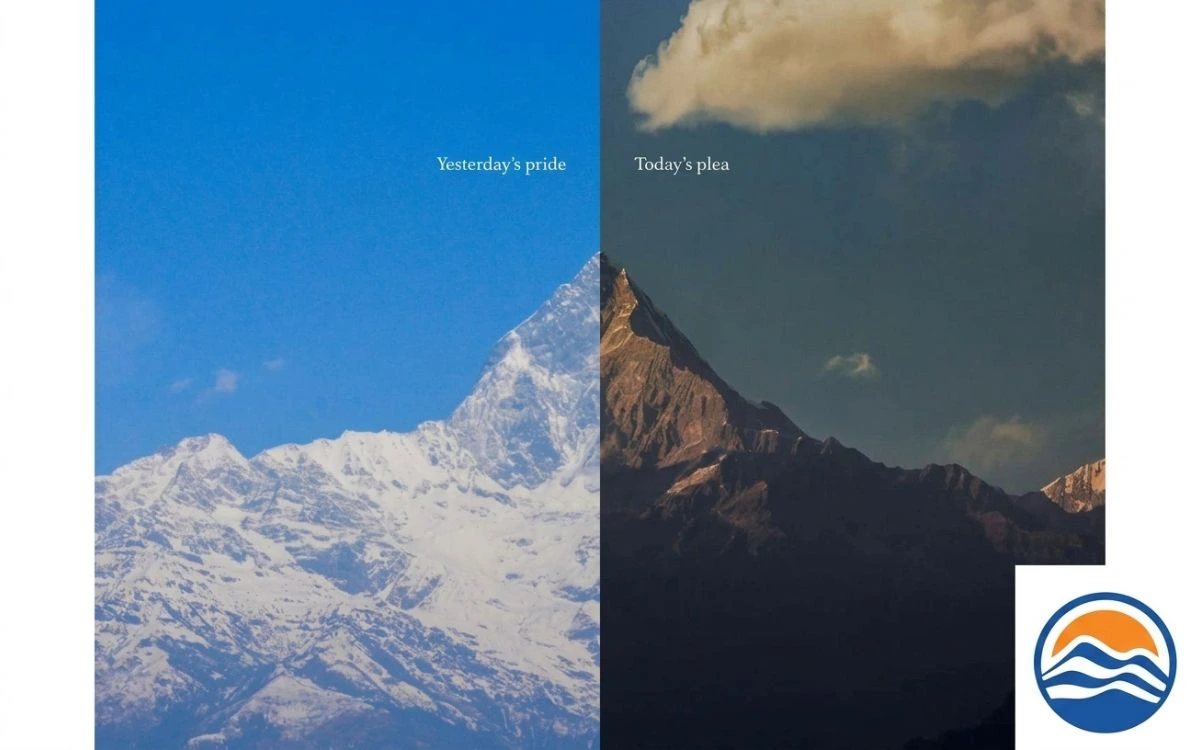



-6.webp)
-6.webp)