Many climbers dreaming about climbing mountains in Nepal must choose between Island Peak and Mera Peak. They both offer an unforgettable experience while surrounded by breathtaking nature; however, climbers will encounter very different challenges when attempting these two peaks due to the technical difficulty, access, and elevation.
Island Peak is 6191 m high and has sections of moderate level of technical difficulty. Mera Peak, on the other hand, is the highest trekking peak in Nepal at 6476 m. Climbing this peak requires little technical skill but does have more of a strenuous ascent than that of Island Peak. Therefore, it will be very important that the climbers understand the primary differences between the two mountains, including the following points: the height of the peaks, their difficulty, the climbing routes available, and the cost of obtaining a summit on either of these mountains so that each climber can identify which mountain best matches the skill level and objectives that they have for their mountaineering pursuit.
Nepal's majestic mountains draw thousands of climbers each year, with two of the most sought-after summits being Island Peak and Mera Peak. Both of these summit options provide climbers with an opportunity to gain valuable experience before attempting a larger expedition to the Himalayas. Both Island Peak and Mera Peak provide suitable initial climbs for climbers who are new to technical mountaineering.
Selecting between Island and Mera peaks can be challenging due to the similarities and differences in their climbing routes and requirements; however, ultimately, the correct mountain for you will be unique to you based on your fitness level and climbing skills, available financial resources, and overall level of confidence. This article intends to help you understand the major features and differences of both mountains so you can make a more informed decision about which one to attempt.
Island Peak vs Mera Peak: Quick Comparison
Feature
Island Peak
Mera Peak
Height
6,189 meters (20,305 feet)
6,476 meters (21,247 feet)
Location
Khumbu Region
Hinku Valley
Technical Difficulty
Moderate (requires crampons, ice axe, rope work)
Lower (mostly trekking with some glacier travel)
Duration
15-18 days
16-21 days
Best For
Climbers wanting technical experience
High-altitude trekkers seeking summit experience
This Island Peak vs Mera Peak snapshot reveals that while Mera Peak claims greater elevation, Island Peak demands more technical mountaineering skills.
Island Peak Overview
Island Peak Height and Location
Mountain base camp buildings with snow-covered Island peaks in background
Island Peak, officially named Imja Tse, sits at 6,189 meters in the heart of the Khumbu region, surrounded by giants like Lhotse, Nuptse, and Ama Dablam. The peak earned its nickname from Eric Shipton in 1952, who observed it resembled an island in a sea of ice when viewed from Dingboche.
Island Peak Climbing Route and Highlights
The Island Peak climbing route begins with the classic Everest Base Camp Trek, offering stunning views and excellent acclimatization opportunities. After reaching Everest Base Camp, climbers head to Island Peak Base Camp at 5,200 meters. The summit push involves crossing a glacier, ascending a steep snow and ice slope requiring fixed ropes, and navigating a challenging headwall before reaching the summit ridge. The technical sections make this climb exciting and educational for aspiring mountaineers.
Who Should Choose Island Peak?
Island Peak suits climbers who want to develop technical mountaineering skills while experiencing high-altitude climbing. If you're comfortable using crampons, ice axes, and handling rope work, and you're seeking a challenge beyond trekking in Nepal, Island Peak offers the perfect progression.
Mera Peak Overview
Mera Peak Height and Location
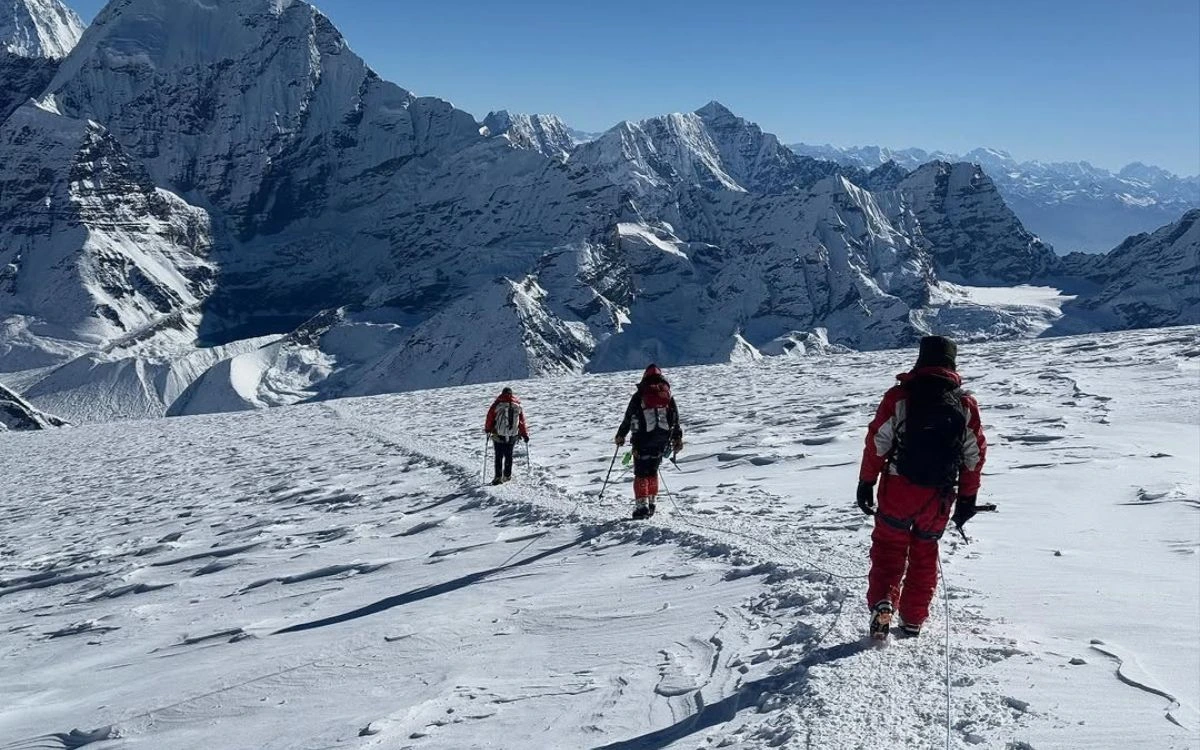
Three climbers trekking across wide snow field toward distant Mera peak
Mera Peak towers at 6,476 meters in the remote Hinku Valley, making it Nepal's highest trekking peak. Its location offers a more wilderness-oriented experience compared to the busier Khumbu region. The peak has three summits: Mera North (6,476m), Mera Central (6,461m), and Mera South (6,065m).
Mera Peak Climbing Route and Highlights
The Mera Peak climbing route ventures through the less-traveled Hinku Valley, passing through pristine forests, traditional Sherpa villages, and isolated high camps. The climb itself is primarily a high-altitude trek with glacier walking. From Mera Peak High Camp at 5,780 meters, the summit day involves a long, steady climb across snow slopes with breathtaking panoramas of five 8,000-meter peaks: Everest, Lhotse, Cho Oyu, Makalu, and Kanchenjunga.
Who Should Choose Mera Peak?
Mera Peak is ideal for strong trekkers looking to summit their first 6,000-meter peak without extensive technical climbing. If you've completed challenging treks like the Annapurna Circuit Trek and want to test yourself at extreme altitude while enjoying spectacular mountain views, Mera Peak delivers an unforgettable experience.
Island Peak vs Mera Peak Height Comparison
With the elevation of Mera Peak at 6,476 meters, it is almost 300 meters taller than Island Peak at 6,189 meters. Because of the increased height of Mera Peak compared to Island Peak, climbers will experience more altitude sickness. As a result of this elevation difference, the amount of time needed to acclimatize and reach the summit will differ greatly.
Island Peak requires proper acclimatization, which can be achieved by recognizing the summit route that, for the most part, follows the Everest Base Camp Route, naturally preparing the climber for the final summit altitude. With Mera Peak, you must pay close attention to the acclimatization schedule, with several rest days included in the itinerary. While both peaks will have the potential of causing AMS to climbers, Mera Peak will pose a higher threat of AMS due to the increased elevation.
Island Peak vs Mera Peak Difficulty Level
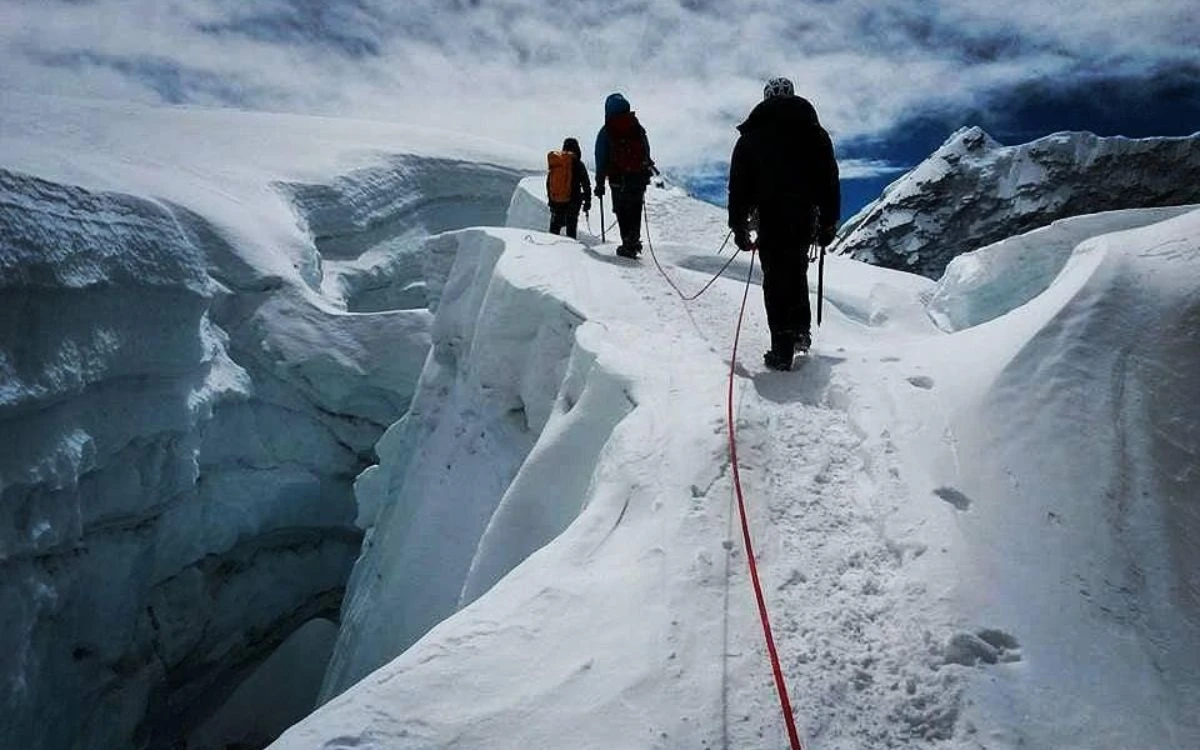
Climbers roped together crossing narrow glacier ridge with deep crevasses
Island Peak Difficulty Explained
Island Peak's difficulty centers on technical skills rather than extreme altitude. The climb requires:
Proficiency with crampons and ice axes
Rope climbing techniques using jumars
Confidence on steep snow and ice slopes
Physical stamina for 8-10-hour summit days
The technical headwall section presents the crux, where climbers ascend fixed ropes on 45-50 degree slopes. While not extremely difficult for experienced mountaineers, these sections challenge first-time peak climbers.
Mera Peak Difficulty Explained
Mera Peak's difficulty lies primarily in altitude and endurance rather than technical skill. Challenges include:
Extended duration at extreme altitude
Long summit days (10-14 hours)
Glacier navigation with crevasse awareness
Mental strength during demanding conditions
Basic crampon use and glacier travel knowledge suffice for most climbers. The physical endurance required exceeds many treks, but the technical demands remain minimal.
Best Peak Climbing in Nepal for Beginners
Mera Peak offers a more beginner-friendly experience than Island Peak as it is a less technical climb requiring much less technical training. It is important that beginner climbers have good levels of fitness and prior high altitude trekking experience (i.e., completion of theManaslu Circuit Trek), prior to climbing Mera Peak. Island Peak is suited for those beginning climbers who would like to learn technical climbing skills in an environment with some support but also not too much removed from a normal trek; i.e. fairly basic level of climbing support.
Climbing Routes: Island Peak vs Mera Peak
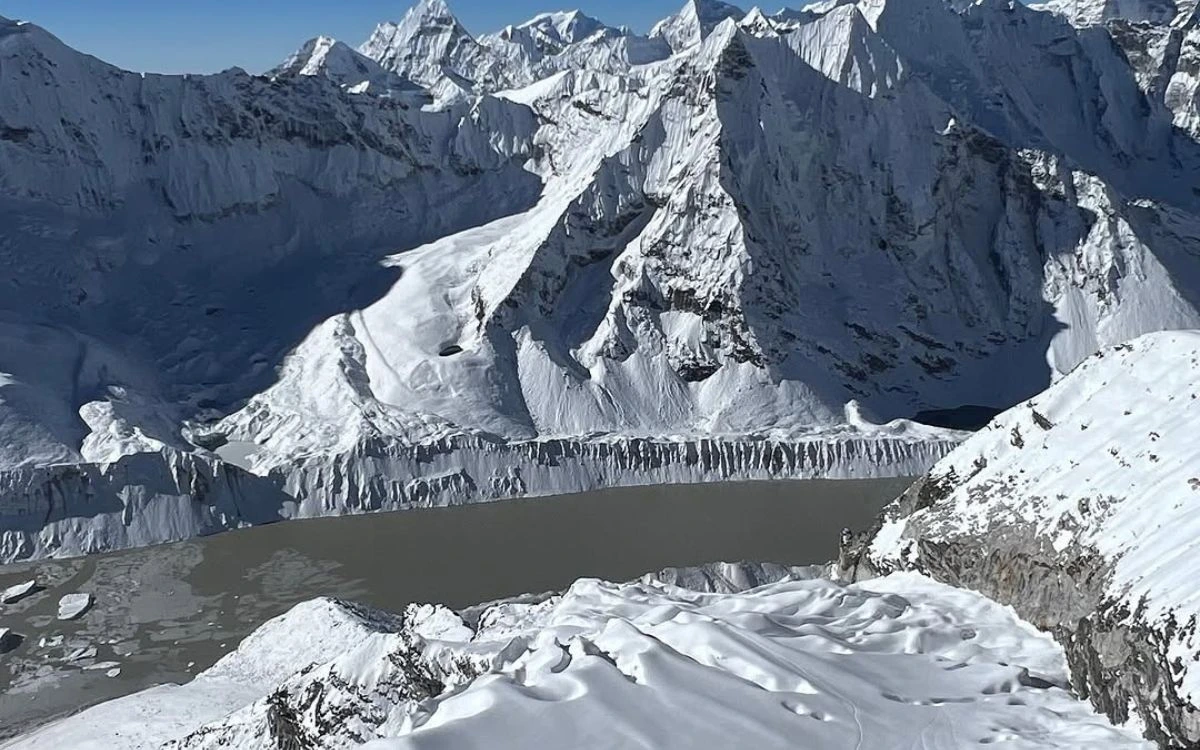
Aerial view of glacial lake surrounded by ice walls and mountain peaks
Standard Island Peak Climbing Route
The standard Island Peak route follows:
Fly from Kathmandu to Lukla
Trek through Namche Bazaar, Tengboche, Dingboche
Acclimatization at Everest Base Camp
Cross Kongma La Pass to Chhukung
Island Peak Base Camp and High Camp
Summit push and return
Total duration: 15-18 days with 1 technical climbing day.
Standard Mera Peak Climbing Route
The standard Mera Peak route includes:
Fly from Kathmandu to Lukla
Trek to Paiya and Panggom
Continue through Hinku Valley
Reach Khare and Mera High Camp
Summit attempt and descent
Total duration: 18-21 days with extended trekking and 1 summit day.
Training and Preparation for Island Peak and Mera Peak
Both peaks demand excellent cardiovascular fitness. Training should include:
Island Peak cost typically ranges from $1,800-$3,500 per person, depending on:
Group size and operator
Guide and porter services
Equipment rental
Permits (Sagarmatha National Park and climbing permit)
Mera Peak Climbing Cost Breakdown
Mera Peak cost generally falls between $2,000-$3,800 per person, including:
Extended trek duration
Remote area permits
High camp logistics
Guide services and equipment
Both climbs require similar gear investments (boots, clothing, technical equipment), which can add $500-$1,500 if purchasing new equipment.
Best Season to Climb Island Peak and Mera Peak
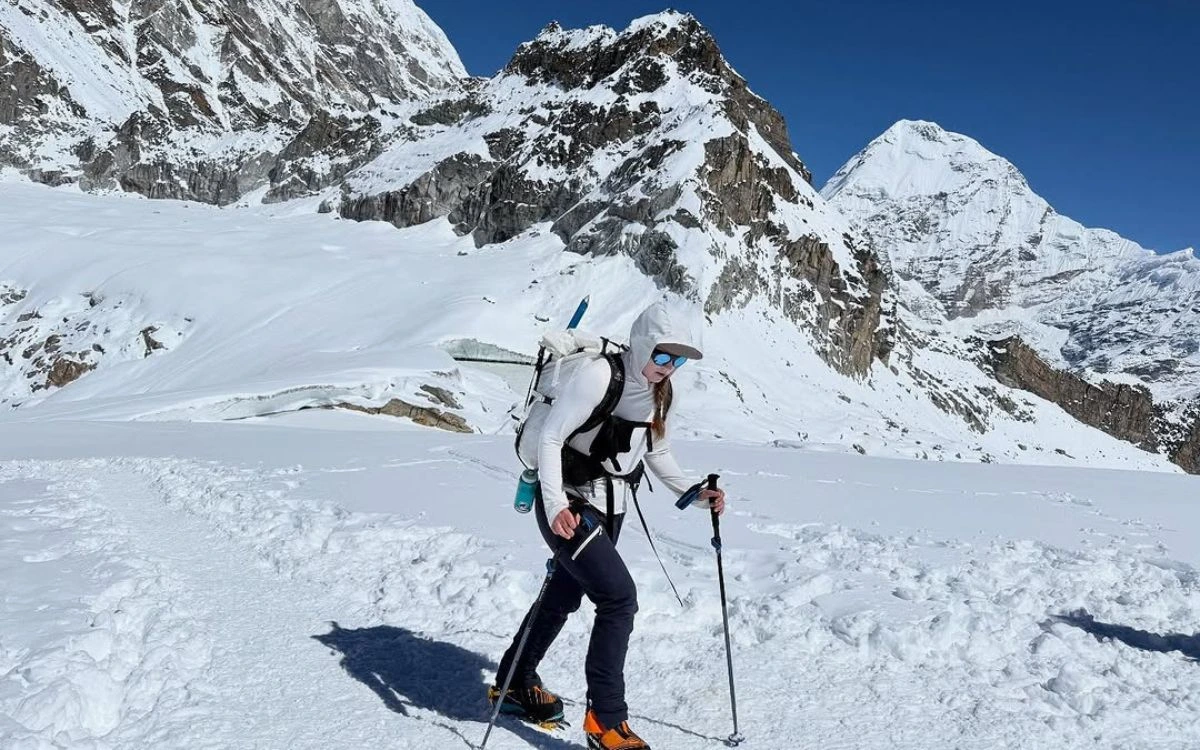
Female climber ascending snowy slope with rocky mountain face behind
The best times to climb Mount Jiri and Mount Chang are from April through May (spring) and September through November (autumn). The good weather, high temperatures, and good visibility during these months give climbers a high chance of success. During these months, there are generally clear skies, comfortable temperatures, and beautiful views of the surrounding mountains. After the monsoon season, the weather also stabilizes and provides good visibility due to the high level of humidity.
On the other hand, climbing during the winter and monsoon seasons is not only much more difficult because of the extremely bad weather, the increasing number of avalanche occurrences, and the poor visibility, but also requires a lot of money and time. Most commercial expedition companies only run operations during the spring and fall months.
Island Peak or Mera Peak: Which Is Better for Beginners?
Mera Peak is a great option for those new to Himalayan peak climbing but have extensive experience in trekking. With its lower level of technical skill needed to climb, climbers will have more time and energy available to concentrate on altitude acclimatization and endurance training rather than mastering advanced techniques in mountaineering.
If you are a beginner looking for a safe environment to develop your mountaineering skillset, then Island Peak may be the better choice. The technical sections of the climb provide practical mountaineering experience under the supervision of trained professionals. For many climbers who have completed some of the more popular treks in the area, such as the Langtang Valley Trek, Island Peak is a natural progression that will allow you to develop your technical mountaineering ability further in a safe and structured manner.
In deciding between the two, it is important to consider your goals. If your primary goal is to be able to say you have stood on the summit of the highest trekking peak in Nepal with the spectacular views that accompany it, then Mera Peak is the better choice. On the other hand, if you desire to learn how to use a rope properly and learn how to ice climb, along with the other technical aspects of mountaineering, then going up Island Peak is the better educational option for you.
Panoramic view of Himalayan mountain range from snowy summit ridge
Pros and Cons of Island Peak and Mera Peak
Island Peak Advantages
Technical skill development
Classic Everest Base Camp approach
Shorter duration (time-efficient)
More established infrastructure
Excellent training for future expeditions
Island Peak Disadvantages
Requires technical equipment and skills
More challenging summit day technically
Busier route during peak seasons
Mera Peak Advantages
Nepal's highest trekking peak
Spectacular 8,000m peak panoramas
Less technical difficulty
Remote wilderness experience
Better for pure altitude experience
Mera Peak Disadvantages
Longer expedition duration
Higher altitude increases AMS risk
More remote with basic facilities
Longer, more exhausting summit days
Safety, Altitude Sickness, and Risk Factors
Both peaks present serious altitude sickness risks. Acute Mountain Sickness (AMS) prevention requires:
Gradual ascent profiles with rest days
Proper hydration (4-5 liters daily)
Avoiding alcohol and sleeping medications
Recognizing early symptoms and descending if necessary
The following risks are associated with Island Peak: crevasse falls, severe weather related to the headwall, and rockfall. The Mera Peak is generally less dangerous than the Island Peak. However, Mera Peak separation crevasses, extreme cold, and exhaustion related to conditions can lead to personal injury/death. Hiring knowledgeable guides, having adequate gear, and adhering to a conservative climbing schedule will greatly reduce risk.
NEVER attempt to climb either of these peaks without proper preparation and support.
FAQs
Is Island Peak harder than Mera Peak?
Island Peak involves more technical challenges with rope climbing and ice climbing, as well as several very steep sections. While Mera Peak is much higher, and is primarily about endurance, with altitude being the main issue climbers face. For novice climbers who have not been exposed to any technical mountaineering skills, Island Peak would be considered to be more difficult than Mera Peak, due to the high altitude of Mera. However, Mera Peak would be considered to be more physically demanding for many climbers, compared to Island Peak, because of its extreme altitude.
Can beginners summit Mera Peak?
Yes, beginners who are physically fit and have done some trekking at high altitudes (like Everest Base Camp) may be able to successfully summit Mera Peak. However, the definition of "beginner" should include someone who has done physically demanding treks (such as Everest Base Camp) to qualify. Therefore, in addition to being physically prepared, climbers must have sufficient acclimatization, as well as experienced mountaineering guides, to summit Mera Peak.
What are the best views from Mera Peak and Island Peak?
Mera Peak has stunning, unobstructed panoramic views of five 8,000m peaks (including Everest, Lhotse, Makalu, Cho Oyu, and Kanchenjunga). Island Peak has stunning close-up views of Lhotse, Nuptse, and Ama Dablam; both mountains provide fantastic views of the Himalayan region, but Mera Peak is at a slightly higher elevation and is located in a more remote area than Island Peak so therefore providing a wider view.
Which peak has a better success rate?
Mera Peak typically has higher summit success rates (80-90%) than Island Peak (60-75%) due to the longer weather windows and less technical difficulty. The reason Island Peak's summit success rate is slightly lower than that of Mera Peak is that the technical sections of Island Peak are relatively small in comparison to Mera Peak's summit, while the weather windows on Island Peak are considerably shorter.
Will I be able to climb both mountains during one expedition?
Many experienced tour operators are now providing combined expeditions of Island Peak and Mera Peak over the length of 26 to 30 days, which will give you an excellent opportunity to gain valuable experience with high-altitude mountaineering; however, it will require an incredible amount of fitness and a great deal of time.
Conclusion
When you choose to climb either Island Peak or Mera Peak, you will start an exhilarating journey in the Himalayas; a journey that will push your limits as well as allow you to create lasting recollections. Assess your skill level of climbing, fitness, available time, and goals for mountaineering when deciding which peak to climb.
Both peaks provide amazing opportunities to climb some of the most beautiful mountains in Nepal and provide genuine accomplishments when climbing at high altitudes. If you're ready to take on this challenge, reach out to Himalayan Recreation and prepare yourself for an amazing experience climbing one of these beautiful peaks in the Himalayas.


-4.webp)




-6.webp)
-1.webp)
-1.webp)