A Nepal trek in March is ideal for those who envision walking beneath snow-capped mountains, surrounded by blooming rhododendrons and the cool mountain air. The spring trekking season begins in March and offers some of the most favorable conditions in Nepal. In general, the weather improves dramatically in March: the sky clears after all the winter clouds, the temperature increases to pleasantly warm, and the trees come alive with bright red, pink, and white rhododendrons In addition to the spectacular landscapes of Nepal during the March trekking season, there are so many things to see and do while trekking in Nepal in March, whether you are an experienced excursionist or visiting Nepal for the first time.
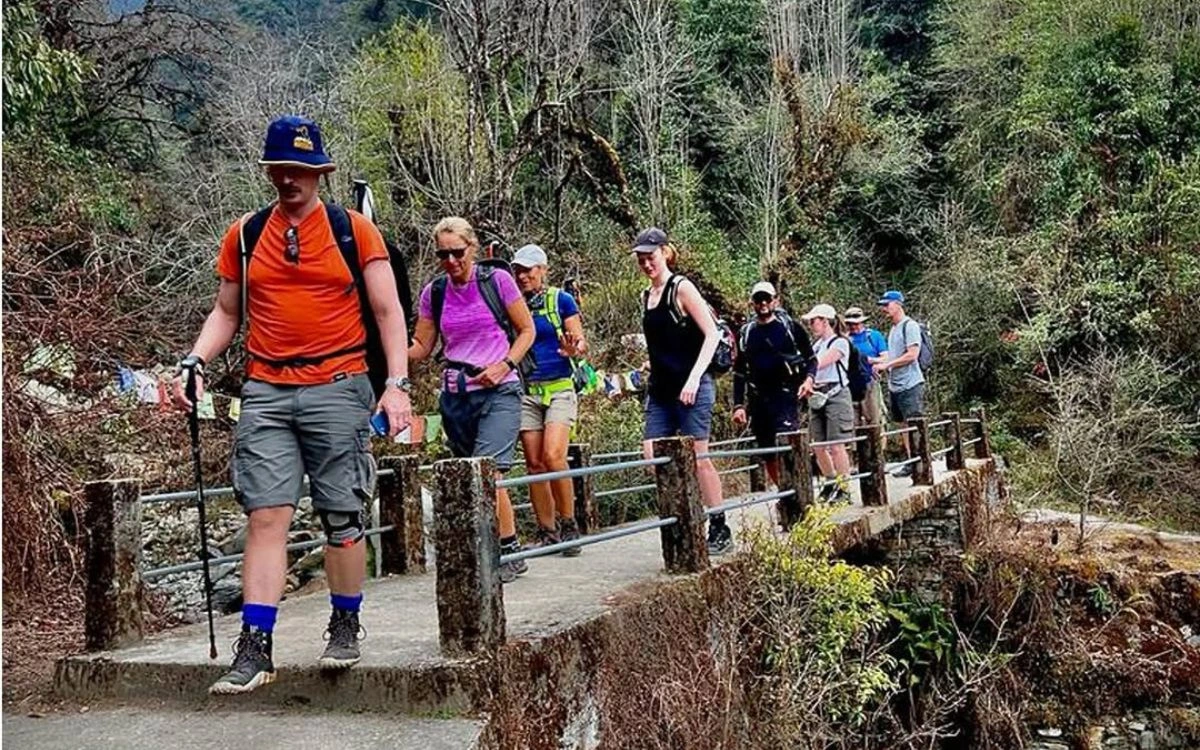
Group of trekkers crossing a stone bridge through a forest trail in Nepal
This guide covers everything you need to know to prepare for a phenomenal adventure in the Himalayas, including Nepal's March trekking conditions, the top March trekking routes, travel preparation for your trek, trek difficulty levels, and safety precautions.
Plan your upcoming March adventure in Nepal with this guide.
Is March a Good Time to Trek in Nepal?
Certainly, March marks the start of Nepal's spring trekking season, and it's consistently one of the best months to trek in the Himalayas. After winter, visibility is crystal clear, and temperatures are cooler (temperatures vary by elevation). The trails will not be too icy and not too dusty. Most trekking permits can be obtained within a week; lodges along popular trekking routes will be open and stocked, and the trek itself will feel fresh and energising.
If you've been wondering, "Is March a good time to trek in Nepal?" the answer is yes; this is the second peak trekking window of the year, with the first being October and November.
Weather for Nepal Trekking in March
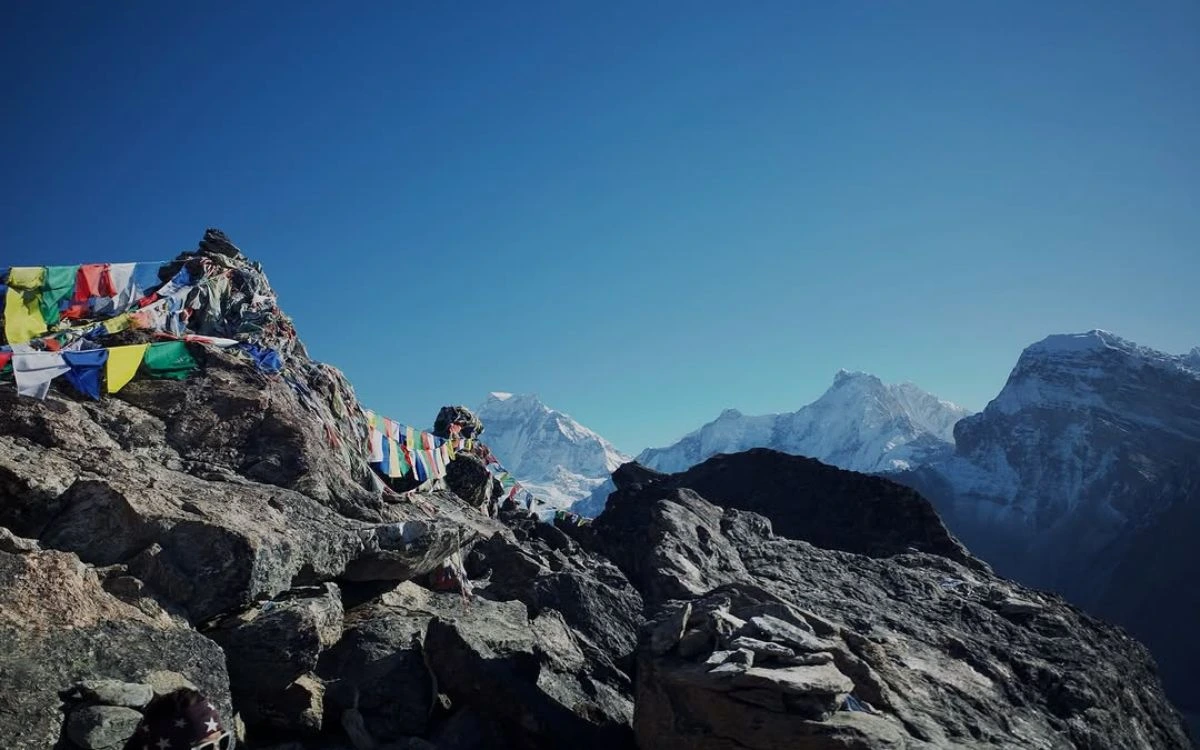
Colorful prayer flags on a rocky summit with snow-capped Himalayan peaks behind
An understanding of the weather is important before heading out on the trail. In Nepal, the weather varies widely by location and elevation. Being knowledgeable about this in March will help keep you safe and chilly as you trek through the high Himalayas.
Temperatures in Popular Areas of Nepal
When you are down low, such as Pokhara or Kathmandu (lower elevations), the temperature during the day will be between 15 and 22 degrees Celsius. As a result, acclimatisation hikes and city exploration will be pleasant. If you are trekking at elevations between 2,000 and 3,500m, the daytime temperature in March will be between 8 and 15 degrees Celsius. When hiking at elevations of 4,000m and above, the temperature will fall to -5 and below at night; therefore, it is advisable to dress in layers.
Weather Conditions at Various Elevations
At elevations above 5,000m (high elevation pass/camps), such as those in the Everest Base Camp Trek, the temperatures after dark can be cold, around -10 degrees Celsius or below. You will also have a chance of snow at elevation in March; therefore, you will require proper winter layers.
Daytime vs Night Temperature
One of the main features of the March trekking in Nepal is the temperature difference between day and night. During the day, it is generally warm and pleasant; however, at night it tends to get very cold (especially at elevations over 3,500 meters). A high-quality sleeping bag rated for at least -10 °C will help you get a good night’s sleep while trekking. You will also want to pack thermal base layers for your night(s) on the trail.
Why March is One of the Best Months for Trekking in Nepal
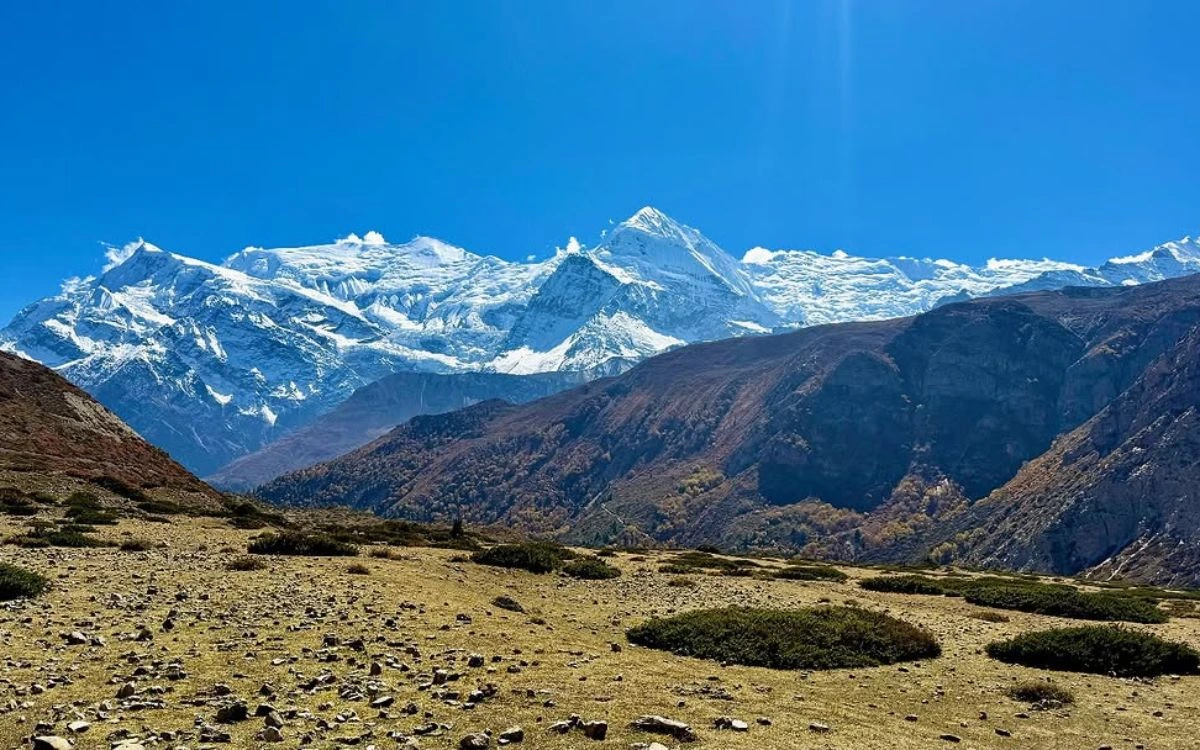
Snow-capped Himalayan peaks rising above a rocky alpine valley under clear blue sky
Start of the Spring Trekking Season
March marks the official start of Nepal's spring trekking season. As winter retreats, trails become more accessible, mountain passes open, and the entire Himalayan landscape awakens. Local teahouse owners reopen their doors, and guides and porters return to their trade after the quieter winter months.
Blooming Rhododendron Forests
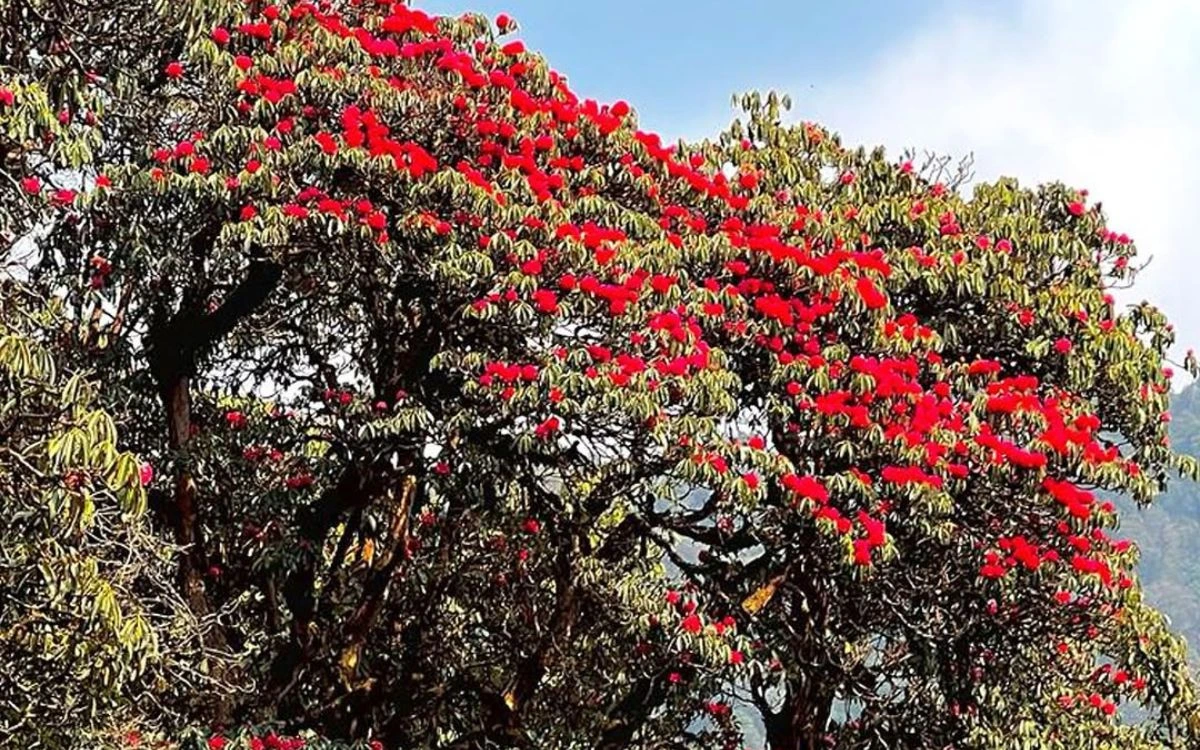
One of the most iconic sights during a Nepal trek in March is the explosion of rhododendron blossoms along the mountain trails. Nepal's national flower paints the hillsides in shades of crimson, pink, and white between altitudes of 1,800 m and 3,500 m. The Annapurna region and the Langtang Valley are particularly famous for their stunning rhododendron forests in spring.
Clear Mountain Views
Pre-monsoon air is crisp and largely dust-free in March, offering crystal-clear views of Nepal's greatest peaks, including Everest, Annapurna, Manaslu, and Dhaulagiri. Photographers and mountain lovers consider March one of the best months to witness panoramic Himalayan vistas.
Best Treks in Nepal in March
Nepal offers dozens of trekking routes, but some stand out as especially rewarding in spring. Here are the most popular options for March trekking routes in Nepal:
Everest Base Camp Trek
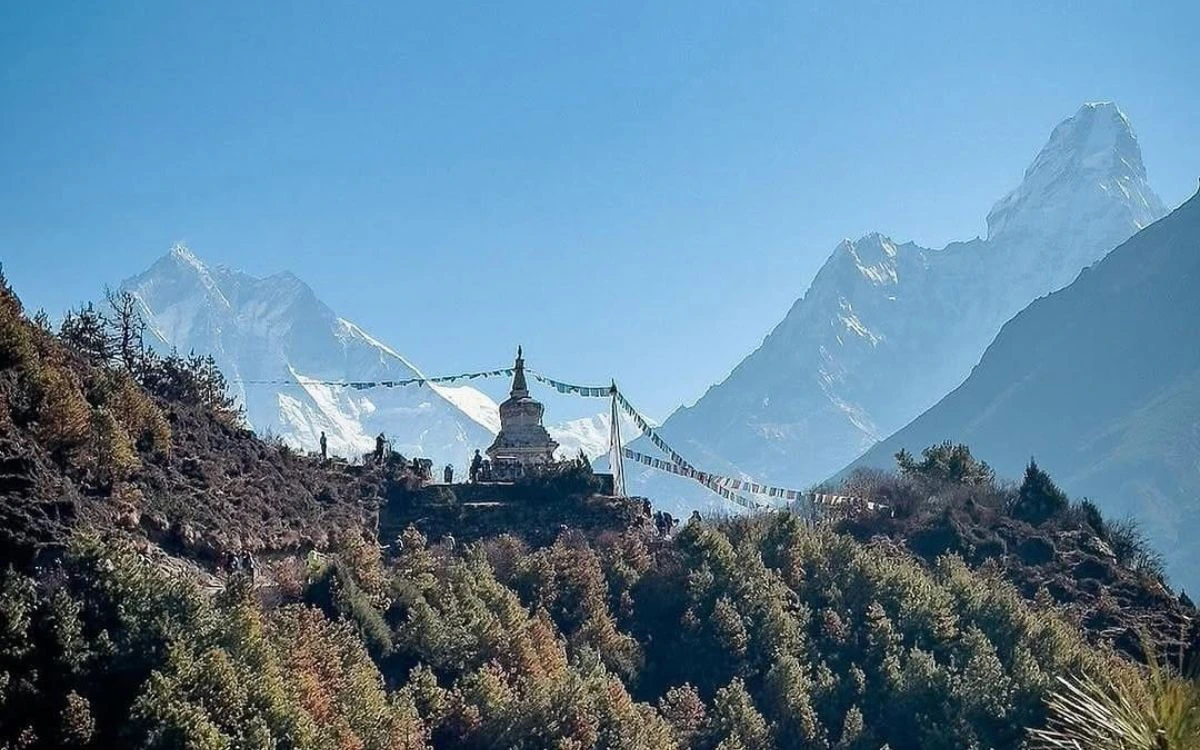
Buddhist stupa adorned with prayer flags framed by towering Himalayan peaks
Everest Base Camp Trek (EBC) represents the premier high-altitude trekking experience globally! March marks the onset of warmer weather in the Khumbu area, making the trek accessible and offering unparalleled views of Mount Everest, Mount Lhotse, Mount Nuptse, and Mount Ama Dablam. From Lukla, trekkers will traverse the Khumbu Valley via Sherpa villages and old monasteries, before returning following an entire round trip of 12 - 14 days. Springtime sightseers will also see blooming rhododendrons in the lower elevations below 3500 m, contributing colour to the trail. March is an optimal month to trek to base camp before the summer monsoon season.
Annapurna Base Camp Trek
The Annapurna Base Camp trek (ABC) is hallowed ground and the centre of the Annapurna Sanctuary, a glacial enclave ringed by many of the world's highest peaks. The ABC trek is moderately strenuous over 7-12 days and is suitable for all skill levels. March is especially fitting, as the blooming of both rhododendron and magnolia trees impressively changes the landscape before reaching the base of Annapurna. With lucky weather, you will enjoy some incredible sunrises once you arrive at the base camp of Annapurna.
Annapurna Circuit Trek
The Annapurna Circuit Trek offers diverse landscapes, from subtropical lowland jungles to snowy high-altitude mountain passes. One of the main sights along the way is the Thorong La Pass (5416 m), where you will cross the pass typically starting around the middle of March as winter snows are melting. The complete circuit takes 12–21 days and passes through both the Gurung and Thakali communities, allowing trekkers to experience rich cultural heritage while enjoying spectacular vistas of the surrounding mountain landscapes.
Langtang Valley Trek
One of Nepal's lesser-known treasures, the Langtang Valley Trek is situated north of the capital, Kathmandu. March is an excellent month to explore this trekking route, as the forests of rhododendrons lining the valley trail will be in full bloom at that time. Along the way, you will encounter Tamang villages and numerous ancient Buddhist monasteries, as well as close-up views of Mount Langtang Lirung (7246m/23783ft). The Langtang Valley Trek can be completed in 7-10 days, depending on your trekking ability and available time.
Ghorepani Poon Hill Trek
The Ghorepani Poon Hill Trek is scenic and spectacular, making it a short yet memorable trek. It’s not surprising to see how popular short treks in Nepal are. Trekkers who choose to do the pre-dawn hike up to Poon Hill (at 3,210 m) will be rewarded with a panoramic view of sunrise across the Dhaulagiri and Annapurna ranges. Trekkers will also find the best time to trek this route is in March, as the rhododendron forests between Ghorepani and Tadapani are in full bloom, providing an amazing burst of colour along the trail. This 4–5-day trek is ideally suited for beginners and families.
Manaslu Circuit Trek
For trekkers seeking to avoid crowds, the Manaslu Circuit Trek is a superb alternative to the Annapurna Circuit. This 14–18 day adventure circumnavigates the world's eighth-highest peak, Mount Manaslu (8,163 m), and crosses the challenging Larkya La Pass (5,106 m). In March, the pass is generally accessible, and the lower valleys are lush with spring greenery. The Manaslu region requires a restricted area permit, which adds a sense of exclusivity to this wild and remote route.
Difficulty Level of Trekking in Nepal in March
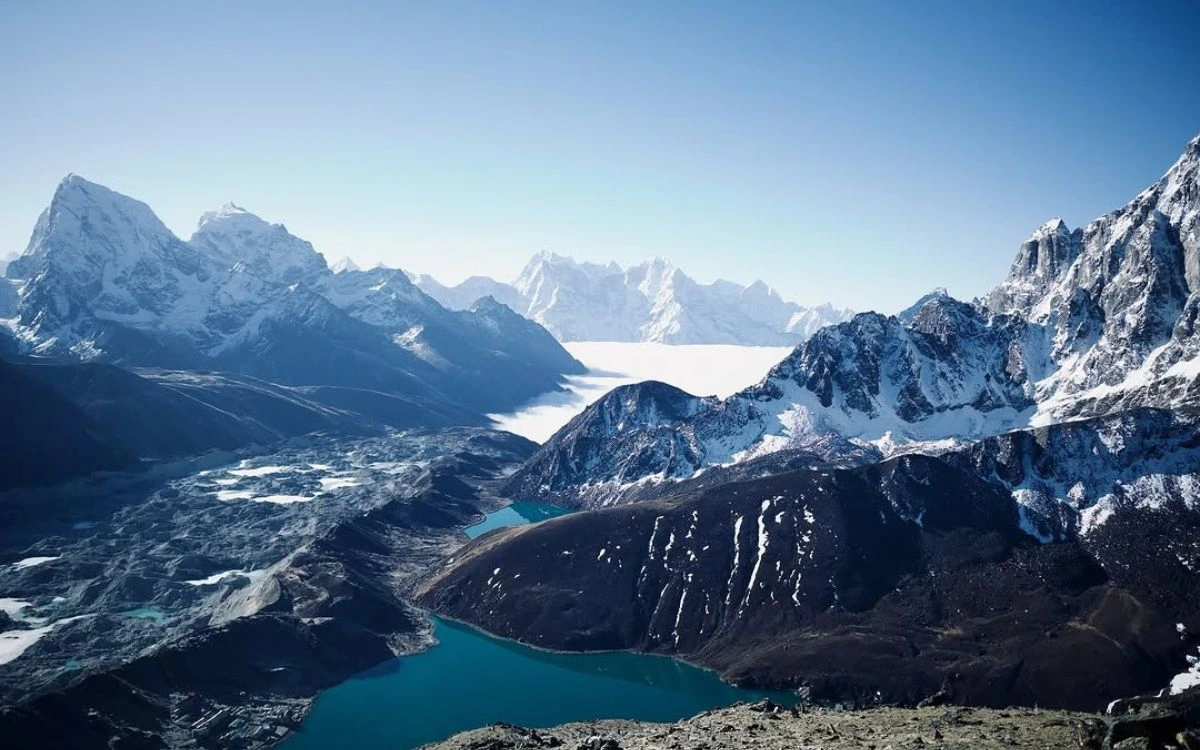
Aerial view of turquoise glacial lakes surrounded by snow-covered Himalayan peaks
The difficulty of trekking routes in Nepal in March varies widely depending on the altitude and type of trek you choose. Low- and medium-altitude treks, such as Poon Hill and Langtang Valley, will be considered relatively easy to moderately difficult and will appeal to most new trekkers who maintain a reasonably good level of fitness. However, high-altitude treks such as the EBC Trek and the Manaslu Circuit are extremely physically demanding and require previous trekking experience, a good fitness level, and proper acclimatisation before attempting them.
Trekking conditions are usually more stable in March compared to what would be expected in the winter months, but there will be evidence of melting snow on the high passes. As with any trek above 4500 meters, you should have microspikes or gaiters for walking on ice-covered ground.
Advantages of Trekking in Nepal in March
Stable, clear weather with excellent mountain visibility
Rhododendron forests in full bloom create breathtaking scenery
Comfortable daytime temperatures on mid-altitude trails
All major trekking routes and teahouses are open and operational
Less crowded than the October and November peak seasons
Wildlife is more active in the lower forest zones
Longer daylight hours compared to winter months
Challenges of Nepal Trek in March
While March is an excellent time to trek, it does come with a few challenges that trekkers should prepare for:
Cold nights above 3,500 m require quality sleeping gear
High passes such as Thorong La and Larkya La may still have snow and ice
Mountain weather can change rapidly — afternoon cloud build-up is common
Early spring dust on lower trails can be irritating — a buff or face mask helps
Trekking permits and flights to Lukla should be booked well in advance
What to Pack for Nepal Trekking in March
Packing smart is the key to a comfortable spring trek in Nepal. Here is a practical checklist:
Moisture-wicking base layers (thermal top and bottom)
Mid-layer fleece or down jacket for evenings and high altitude
Waterproof and windproof outer shell jacket
Comfortable, broken-in trekking boots with ankle support
Trekking poles for steep ascents and descents
Sleeping bag rated to at least –10°C
Sun hat, sunglasses (UV protection), and sunscreen (SPF 50+)
First aid kit including altitude sickness medication (Diamox)
Reusable water bottle and water purification tablets
Headlamp with extra batteries for early morning hikes
Accommodation and Food During March Treks
Red rhododendron tree in full bloom on a Nepal trekking trail in spring
The main trekking routes in Nepal have a well-established teahouse/lodge network offering a variety of basic yet comfortable options. In March, when trekking on popular routes such as Everest Base Camp, Annapurna Base Camp, and Langtang, all teahouses along those routes will be open and ready for trekkers. Each teahouse will provide a private or shared bedroom with a bed and a set of blankets; however, please bring your own sleeping bag, as the teahouses do not provide one for hygiene and warmth.
Teahouse menus typically include Dal Bhat, the national dish of Nepal (rice, lentils, and vegetables), as well as pasta, noodle dishes, eggs, pancakes, and hot beverages. Teahouse meals are cooked fresh daily and are calorie-dense, ideal for fueling a long day in the mountains. Meal prices will gradually increase as you hike to higher elevations, so carry some additional Nepali rupees in case you need to purchase a meal at a teahouse.
Safety Tips for Spring Trekking in Nepal
Acclimatise properly — follow the golden rule of climbing high and sleeping low.
Stay hydrated and drink at least 3–4 litres of water per day
Hire a licensed guide and porter through a reputable trekking agency
Purchase comprehensive travel insurance that covers high-altitude evacuation
Register your trek with the Trekkers' Information Management System (TIMS)
Carry a basic first aid kit and know the symptoms of Acute Mountain Sickness (AMS)
Descend immediately if AMS symptoms appear — never ignore them
Check the weather forecast daily and always start walking early in the morning
Frequently Asked Questions
Is the month of March an ideal time to trek in Nepal?
It certainly is! March is one of the most popular months to trek in Nepal because it marks the start of spring, when stable weather, incredible mountain views, and stunning rhododendron blooms line the trails.
What are some ideal treks to do in March in Nepal?
The best treks to take in March include: Everest Base Camp Trek, Annapurna Base Camp Trek, Ghorepani Poon Hill Trek, Langtang Valley Trek, and Manaslu Circuit Trek. Each trek offers a memorable experience and is suitable for different fitness levels.
Is there significant traffic on Nepal's trekking routes in March?
Trail traffic is moderate during the month of March. It is much busier than in the winter months; however, it is typically not as crowded as in the peak months of October and November. Therefore, you can enjoy a peaceful trek while still accessing all facilities and services at the teahouses along the trail.
What is the weather like in Nepal in March?
March generally has mild temperatures in the lower elevations (15-22 degrees Celsius) and cold temperatures at higher elevations (below 0 degrees at night, above 4,000 meters). Occasional snow may occur at high passes; however, the weather remains stable and conducive for trekking.
Do I need a permit for trekking in Nepal in March?
Yes, most trekking routes in Nepal require at least a TIMS card and a permit for the national park or conservation area. Some restricted routes,, such as Maasl,u, require additional permits. Your trekking agency will help arrange all necessary documentation.
Conclusion
Trekking in Nepal during the month of March is an unforgettable experience! With rhododendrons blooming, sunny skies, and welcoming mountain communities, Nepal's trails are bursting with life in the spring. There are many options to choose from, including the towering heights of Mount Everest on the Everest Base Camp Trek, the lush valleys of the Langtang Valley Trek, the magnificent sunrise over Poon Hill, the cultural diversity of the Annapurna Circuit, and the pristine wilderness of the Manaslu Circuit. No matter which trek you choose, you'll be treated to some amazing sights in March.
If you prepare well, have the right gear, and join forces with a reputable local company, your spring Himalayan adventure will be an experience you'll never forget. Contact Himalayan Recreation Treks and Expedition today, and allow our team of experts to help you create the perfect Nepal trekking itinerary for March!


.webp)



-1.webp)
-1.webp)
-1.webp)