Before planning your dream trek to the Himalayas, you'll need to figure out how much it will cost you to visit Nepal, as this is the first step to making your dream a reality. Whether you're a budget traveler or looking for a luxurious experience while traveling, you'll need to know how much it costs to trek in Nepal to ensure you make it happen.
There is a large variation in costs associated with trekking in Nepal, depending on the route you take, the style of trekking (luxury or budget), and the season you are trekking in. Different treks (the Everest Base Camp trek versus the Annapurna Base Camp trek) provide different experiences and price ranges.
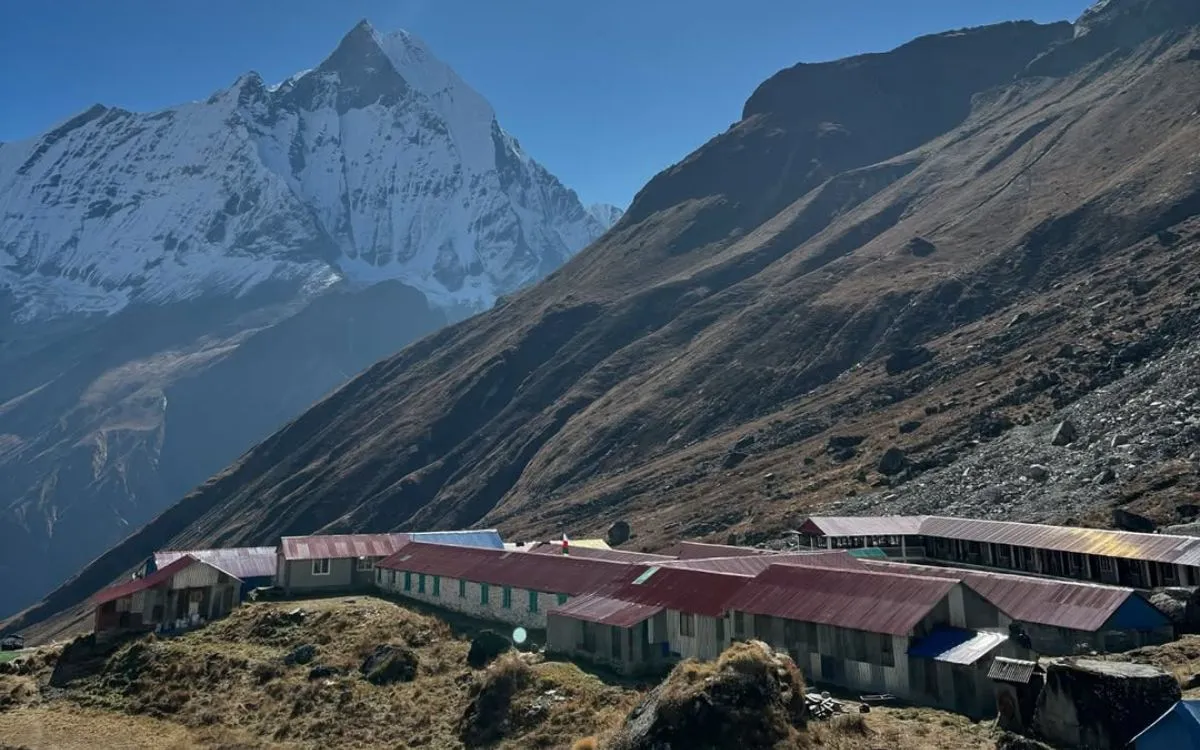
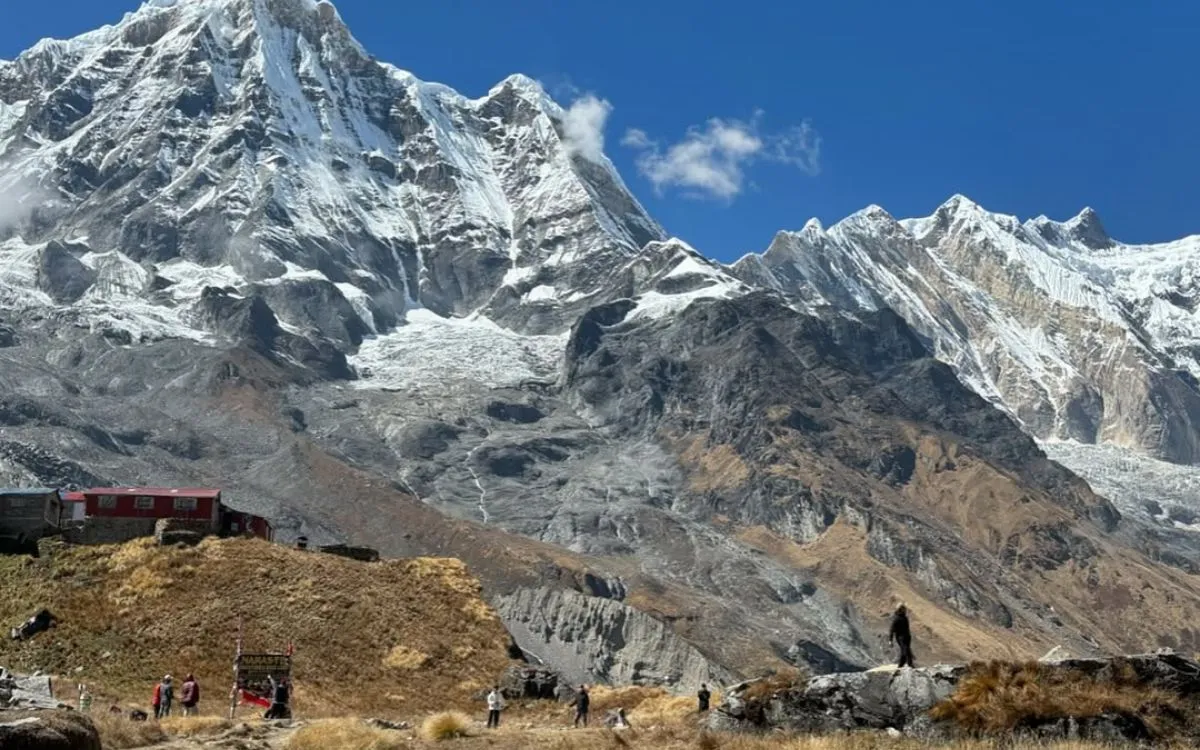
Mountain lodge with red roofs at high altitude beneath pyramid-shaped Himalayan peak
This guide will provide you with information related to every component of trekking cost in Nepal (including permits/guide fees, accommodations, and food) to allow you to effectively manage your budget for your trip to the Himalayas. By having a complete understanding of the Himalaya trek cost breakdown, you'll be able to successfully plan an unforgettable trek in Nepal (the Himalayas) within your budget.
Key Factors That Affect Trekking Cost in Nepal
The cost you will incur when trekking in Nepal can be affected by many factors. Knowing more about these variables is useful to help you budget.
Trekking Region and Route
The location you select has an immense effect on your finances. Some of the more popular trekking routes, such as the Everest Base Camp and Annapurna Base Camp trails, have established infrastructures that provide competitive prices; on the other hand, more remote routes (like the Manaslu Circuit and Upper Mustang) require a greater financial investment due to fewer available services and limited permit access. Another example would be the Langtang Valley trek, which has been regarded as a much less expensive alternative than both the Manaslu Circuit and Upper Mustang treks.
Trek Duration and Season
Trekking length is directly related to the amount of total expenses. The peak season for treks in Nepal (March through May and September through November) has higher prices because of the climate that is most favorable for trekking. The off-season for trekking can be up to 20-30% less than during the peak season; however, the potential for unpredictable weather is higher during this time. Hiking in Langtang Valley over a period of 7 days will be significantly less expensive than hiking to Everest Base Camp over a period of 16 days, both in daily expenses and total logistics.
Independent vs Guided Trekking
The most recent regulations require hiring a licensed guide in the majority of trekking areas in Nepal. A range of opportunities exists for both group (less expensive) and individual (more expensive, but more personalized) guided expeditions. Depending on which type of guide you employ (basic or complete with porters and a higher standard of accommodation), your cost per day for trekking in Nepal could either double or triple.
Average Cost to Trek in Nepal (Daily Breakdown)
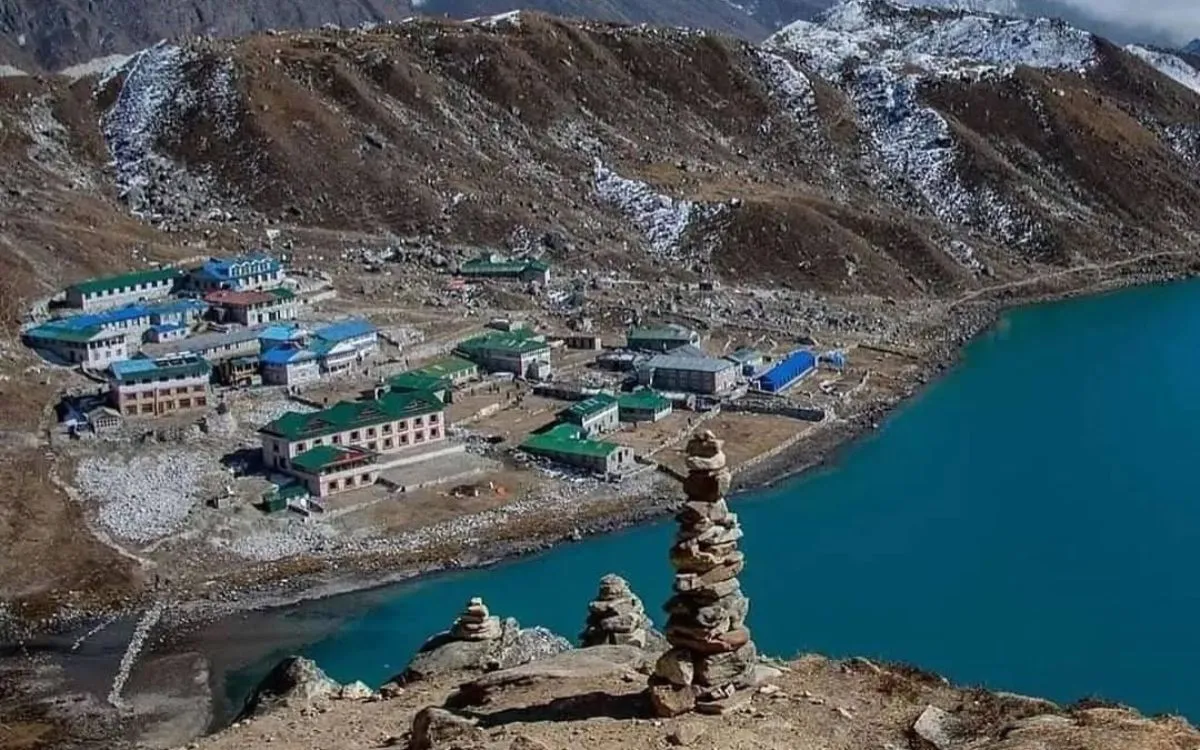
Mountain teahouse lodges beside turquoise glacial lake with stone cairns in foreground
Nepal Trek Cost Per Day (Budget, Mid-Range, Luxury)
Budget trekking prices are typically $25 through $40 per day for basic tea house/guesthouse accommodation, food, and an essential guide service. Mid-range trekking prices are between $50 and $80 per day; these places provide better accommodations, a greater variety of food, and experienced guide services that will include portering.
Luxury trekking in Nepal generally costs around $150 through $300+ each day and includes premium lodges/hotels, gourmet-style meals, a private guide service, helicopter transport, etc. Hiking/trekking-related costs per day will also include bottled water/snacks, electrical charging fees, and hot showering, which add an approximate total cost of $10 to $20 to what is considered the baseline cost of stimulating energy.
Low-Cost Trek Destinations to High-Cost Trekking Destinations
Budget-friendly trekking options can be found in regions such as Langtang, Ghorepani Poon Hill, and the lower Annapurna Circuit, where these places have developed trails available at attractive rates. Moderate billing area consisting of Annapurna Base Camp and EBC. An example of a higher-cost area would be Upper Mustang ($500 permit), and alsoincludese the Manaslu Circuit and Dolpo, which are generally higher-priced due to infrastructure challenges and the necessity of obtaining additional permits.
Nepal Trekking Permit Costs
Permit fees constitute a significant portion of your cost of trekking in Nepal. Recent changes have made guide requirements mandatory while streamlining permit processes.
TIMS Card Cost
The requirement for cards to enter TIMS has changed; the TIMS card will not be necessary to enter most of the main regions because the TIMS, as a permit system, has been combined with conservation area permits. That being said, all treks in the various destinations of Nepal require there to be a registered guide, which will improve safety and help support tourism in the area.
National Park & Conservation Area Permits
Permits for Sagarmatha National Park (Everest) are 3000 NPR ($23). Annapurna Conservation Area permits are also 3000 NPR ($23) for all treks in the Annapurna region, including the popular ABC Trek. Langtang National Park is 3000 NPR ($23). Each of these permit fees goes towards both conservation and local community development efforts.
Restricted Area Permit Fees Higher-priced permits apply to restricted areas. The Upper Mustang costs $500 for a permit for 10 days. The Manaslu Restricted Area costs $100 in peak season or $75 in off-peak season for a permit. The Kanchenjunga Restricted Area has a $20 per week permit fee. All permits are intended to protect the local fragile ecosystem and traditional culture while reducing the impact that tourists create.
Guide and Porter Cost in Nepal
Professional guide services are mandatory for trekking in Nepal, making this an essential component of your Nepal trekking expenses.
Licensed Trekking Guide Cost
Licensed guides charge $25-35 per day, with experienced guides commanding higher rates. This typically includes the guide's food and accommodation. Guides provide route navigation, cultural insights, safety management, and translation assistance. Peak season rates may increase by 20-30%.
Porter and Porter-Guide Pricing
Porters cost $15-$25 a day per person (they can carry 25-30 kg between two trekkers). The porter-guides charge $20-$30 a day to carry your bags and guide you fairly. The cost of the porter fee includes the cost of all food and accommodation. Using a porter will help improve your trekking experience because you only need to take a "day-pack". If you use a porter, expect to give them a tip of $50-$100 for 2 weeks of trekking.
Accommodation Cost While Trekking in Nepal
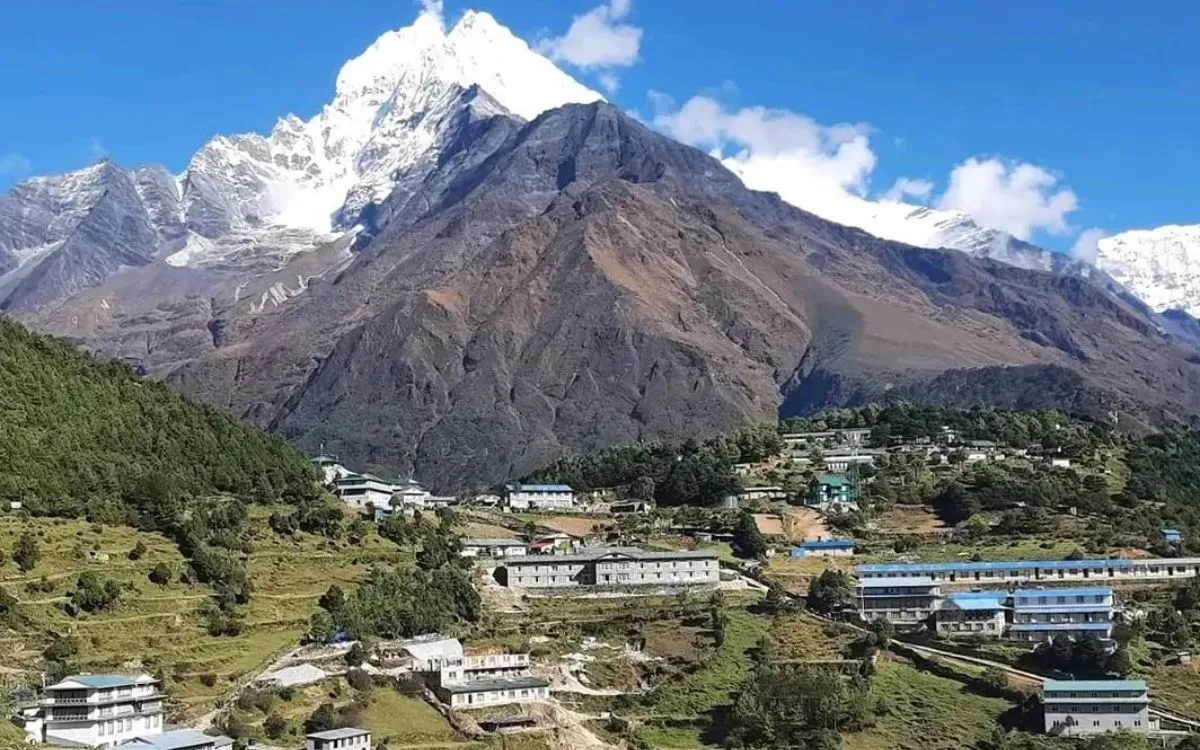
Himalayan village with teahouses and lodges beneath dramatic snow-capped peak"
Teahouse Lodging Cost
Lower elevation accommodations (like basic teahouses) will typically run you about $3-$10 per night, whereas higher elevation accommodations cost anywhere from $5-15. But on the popular trek routes (like the EBC and ABC), renting a premium teahouse at a price of $15-$30 will get you nicer rooms with attached bathrooms. In addition, if you plan on dining at the lodge regularly (i.e., for each meal), you can negotiate for lower rates for your room. It's also worth mentioning that anything located over 4,000 meters or at higher elevations is going to cost more (about $20+ more).
Camping Trek Accommodation Expenses
Camping treks cost $80-150 per day, including tents, cooking equipment, crew, and meals. This option offers privacy, flexibility, and access to pristine wilderness. Some regions mandate camping due to a lack of permanent structures.
Food and Drinking Water Cost on Nepal Treks
Meals Price Range on Popular Trekking Routes
In less affluent locations, it is recommended that you budget $15–25/day for food, and as you ascend in elevation, you can expect to spend anywhere from $25–40/day on meals. One of the best values available is dal bhat, which ranges in price from $5-8 (including unlimited refills). Breakfast items run from approximately $3-7/each. Most places that serve lunch and dinner in the major tourist regions will cost between $6-12/meal, but in the higher-altitude region,s you can expect to pay $10-18/meal. Coffee and tea will typically cost from $2-5/cup.
Bottled Water vs Purified Water Costs
In lower regions, bottled water typically costs $1-$2, but at high altitudes this increases to between $4-$6 per liter. If you plan on trekking for two weeks and using bottled water, expect to pay between $100 and $200. Experienced trekkers will bring along purification tablets ($15) or SteriPENs ($50-$100) so they can have safe drinking water. Boiled water is available for sale at many teahouses for $1-$2 per liter. When budgeting for your daily hydration needs, if you use purification methods, expect to spend $2-$5 each day. If you purchase bottled water, you will spend $5-$10+ per day.
Transportation Cost for Trekking in Nepal
Domestic Flights Cost (Lukla, Jomsom, etc.)
Kathmandu-Lukla flights (gateway to Everest Base Camp trek) cost $180-38round-tripip. Jomsom flights run $200-300 round-trip. These flights save days of road travel but add substantially to budgets. Weather delays are common—budget extra Kathmandu accommodation. Helicopter charters cost $3,000-5,000 for small groups.
Local Bus and Jeep Transportation Expenses
Tourist buses from Kathmandu to Pokhara cost $10-20 (6-8 hours). Local buses to Syabrubesi (Langtang Valley trek start) cost $5-10 (7-9 hours). Private jeeps cost $100-200 per vehicle. Factor in 1-2 days of travel time each way for most trailheads.
Cost of Popular Treks in Nepal (Route-Wise Breakdown)
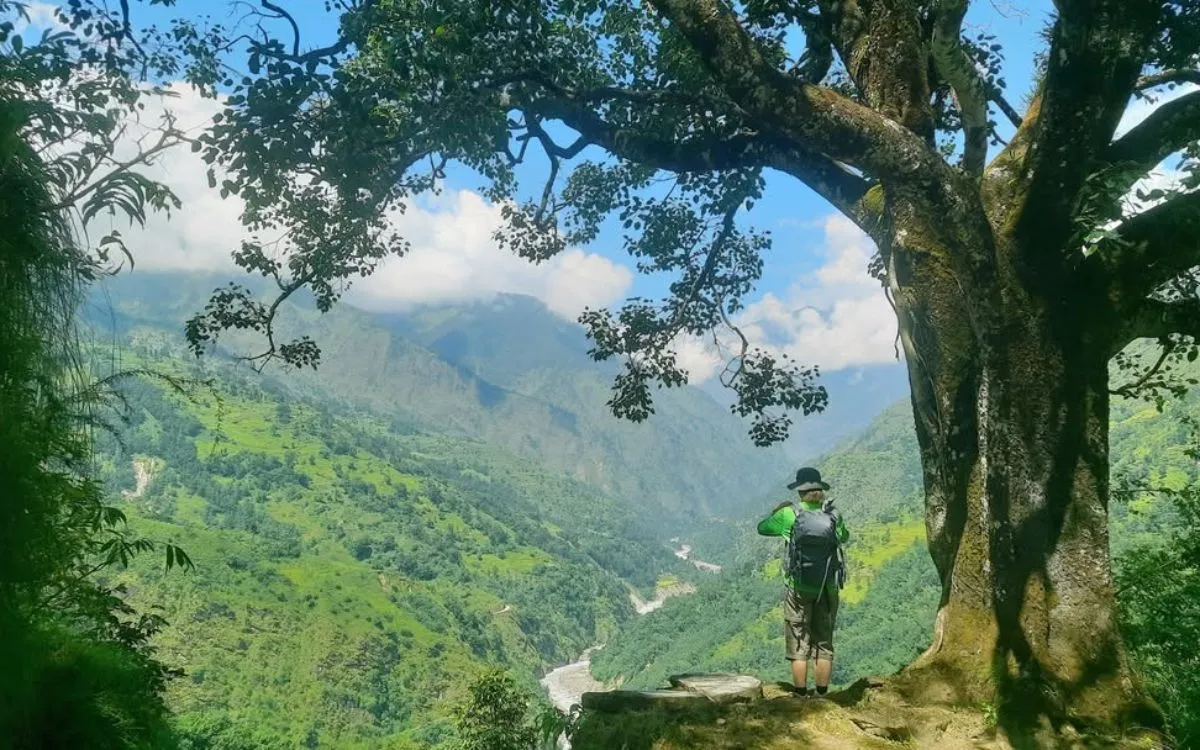
Trekker in green jacket viewing misty valley through moss-covered trees
Everest Base Camp Trek Cost
The iconic Everest Base Camp trek costs $1,200-2,500 for 12-14 days. This includes Lukla flights ($360), Sagarmatha permit ($23), guide services ($350-450), porter ($200-300), accommodation ($150-200), and meals ($350-500). Budget trekkers complete it for $1,000-1,200, while luxury packages exceed $4,000.
Annapurna Base Camp Trek Cost
The Annapurna Base Camp trek costs $800-1,800 for 7-12 days. Road access eliminates flight costs—bus transportation costs just $10-20. ACAP permit ($23), guide fees ($250-400), porter ($150-250), accommodation ($100-150), and meals ($250-400) comprise the main expenses. This trek offers spectacular scenery at a fraction of EBC costs.
Langtang Valley Trek Cost
Langtang Valley trek is among Nepal's most affordable, costing $500-1,200 for 7-10 days. Minimal transportation costs ($10-20), Langtang permit ($23), guide services ($200-300), porter ($120-200), accommodation ($70-100), and meals ($200-350). Budget trekkers complete Langtang for under $600. Proximity to Kathmandu makes it ideal for time-limited travelers.
Manaslu Circuit Trek Cost
Manaslu Circuit trek costs $1,400-2,800 for 14-18 days. Special permits ($100 peak season), Manaslu Conservation permit ($30), transportation ($15-30), guide fees ($400-550), porter ($250-350), accommodation ($200-280), and meals ($450-650) comprise expenses. This challenging circuit offers pristine wilderness with fewer crowds than the Annapurna or Everest routes.
Budget Trekking in Nepal: How to Trek Cheaply
Money-Saving Tips for Trekkers
Trek during shoulder seasons for lower prices. Book guides directly in Kathmandu rather than through international agencies, saving 30-50%. Share porters between trekkers to split costs. Order dal bhat for unlimited refills and the best value. Bring water purification instead of buying bottles. Negotiate room rates. Join group treks to share guide costs. Use local buses. Rent gear in Nepal rather than buying. Skip extras like hot showers and Wi-Fi when possible.
Cheapest Trekking Routes in Nepal
Ghorepani Poon Hill (4-5 days, $300-600) offers spectacular sunrise views. The Langtang trek provides Himalayan immersion for under $600. Mardi Himal (5-7 days, $400-700) features stunning mountain vistas. Khopra Danda (7-9 days, $500-900) rewards adventurous trekkers. These routes combine road accessibility, shorter durations, and competitive pricing—perfect for budget-conscious adventurers.
Luxury vs Budget Trekking Cost in Nepal
The gap between budget and luxury trekking is substantial, with luxury costing 3-5 times more. Budget trekking ($25-40/day) involves basic teahouses, simple meals, and shared guides. Mid-range ($50-80/day) upgrades accommodation and meals. Luxury ($150-300+/day) features premium lodges, gourmet meals, private guides, and helicopter transfers. The core experience—mountain views, cultural encounters, and personal achievement—remains similar across budgets, making Nepal trekking accessible to all.
Additional Trekking Expenses to Consider
Trekkers at base of massive Annapurna Base Camp with snow-covered Himalayan mountain with glaciers
Travel Insurance Cost
Comprehensive travel insurance with helicopter evacuation coverage is non-negotiable. Policies cost $80-200 for 2-3 week trips. Essential coverage includes emergency medical evacuation (minimum $100,000), medical expenses, and trip cancellation. Verify coverage explicitly includes altitudes above 4,000-6,000 meters. Helicopter evacuation costs $5,000-10,000 without insurance.
Trekking Gear and Rental Cost
Renting gear in Kathmandu costs significantly less than purchasing. Sleeping bags rent for $1-2/day, down jackets $1-2/day, trekking poles $0.50-1/day. Complete rental packages cost $50-100 for two weeks. Many trekkers combine owned basics with rented specialty items for optimal economy.
Tips, Wi-Fi, Charging & Hot Shower Fees
Tipping guides and porters is customary—budget 10% of service cost ($50-100 for two weeks). Wi-Fi costs $3-10/day. Device charging fees range $2-5 per charge. Hot showers cost $3-7 each. These extras add $100-200 to the budget trekking costs.
Is Trekking in Nepal Worth the Cost?
Absolutely, Nepal is one of the best countries for trekking and has some of the best mountains in the world. There is no other place that can provide the same level of incredible scenery, culture, and hospitality as the Himalayas, especially for such low prices, when compared to the costs of a similar trip to the European Alps or South America.
The average cost of a typical two-week-long Himalayan expedition ranges from $1,500 to $2,500, while the comparable cost of a similar trip to Europe would be from $5,000 to $10,000. The benefits of trekking to Everest Base Camp, Annapurna Base Camp, and Manaslu Circuit are far greater than the money spent on the expeditions.
Conclusion
Having an understanding of what the overall cost of trekking in Nepal includes will help you more confidently and accurately plan for your trip. The associated costs of each type of trek can vary greatly, from $800 (less expensive options) all the way up to $5,000 (more expensive options) for the highest-quality trekking. Most trekkers will typically spend between $1500 and $2500 on an average two-week trek in Nepal.
The overall cost to trek in Nepal must include permits, meals, transport, lodging, and guides; however, through effective planning, any level of budget should provide you with an optimal level of value. If you're interested in trekking to such famous destinations as Everest and the stunning Annapurna Base Camp trek, there are also many hidden jewels throughout Nepal, such as the Langtang region. Are you ready for your Himalayan trekking adventure? Contact us at Himalayan Recreation to create your dream itinerary for a well-priced, expertly planned trekking experience in the Himalayas.


-1.webp)



-6.webp)
-1.webp)
-1.webp)