Training for trekking in Nepal is possible even with a busy day-to-day life. No matter how hectic your schedule might be, dedicating an hour each day for three months can get your body ready to go trekking in Nepal. In general, Nepal hiking training is about endurance, leg strength, and preparing yourself to walk on mountain trails for hours. If you have a decent structure, it does not have to be complicated or take up too much of your time.
Training for high altitude trekking in Nepal requires consistency rather than long workouts. A basic trekking training plan that includes walking, some light cardio, basic strength exercises, and hiking is sufficient if one is consistent with the routine. This training schedule of trekking in Nepal may work better for beginners since it does not require a gym or advanced equipment.
In fact, a well-thought-out training plan for trekking at a high altitude in Nepal requires consistent effort rather than overly long training sessions. Following a simple training program for trekking in Nepal consisting of walking, low-intensity cardio, strength training, and hiking will provide a good base for those preparing to do a long trek in Nepal, as long as the training is followed on a regular basis.
This blog will help you to find out how to train for trekking in Nepal and will outline a short but effective trekking training program specifically geared towards beginners. It emphasizes using a short, focused training plan to fit into an existing busy day-to-day schedule. The program is designed with an emphasis on utilizing the one hour per day to provide effective results.
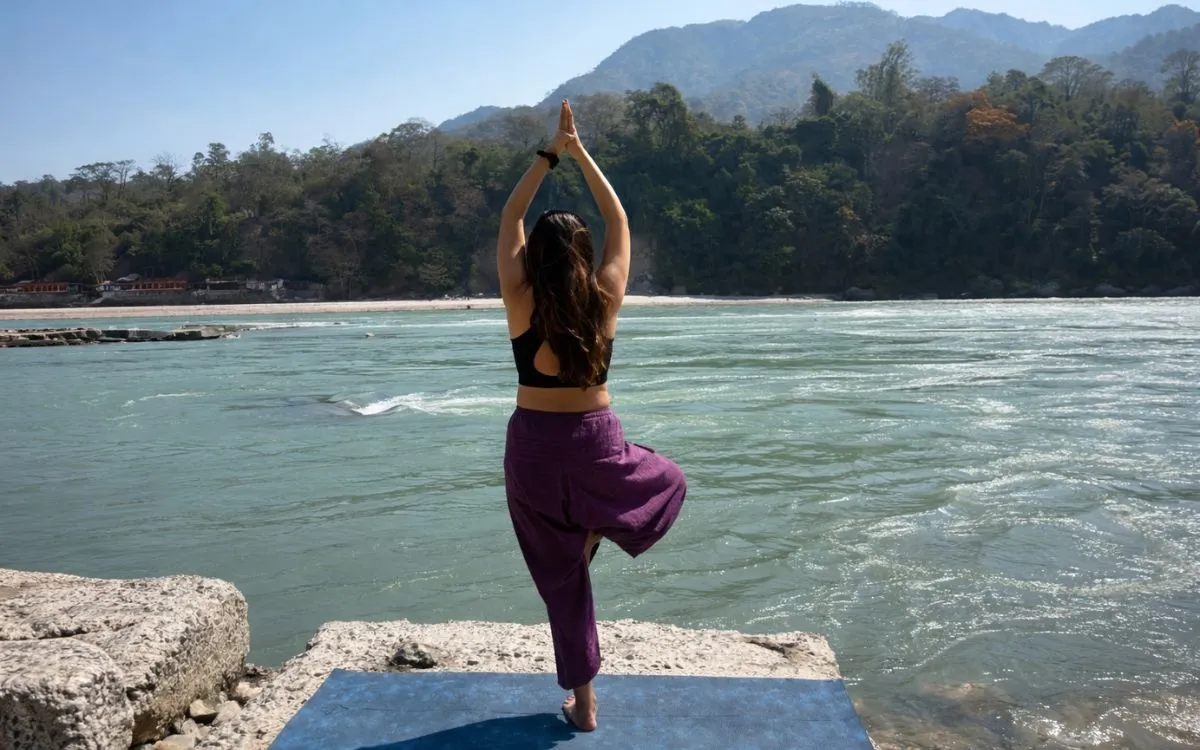
Person doing tree pose yoga exercise on riverbank
How Fit Do You Need to Be for Trekking in Nepal?
Before trekking in Nepal it is important to ensure you are physically prepared to walk uphill for hours at a time at a slow, steady pace. Many trekking trails in Nepal are located between 3000 - 5500 meters in altitude. As you climb higher into the mountains, you will find that your ability to walk becomes increasingly difficult.
Expect to be walking on various surfaces, including stone stairs, dirt trails, and extended uphill climbs, 5-7 hours a day for most of the popular treks, including Everest Base Camp, Annapurna Circuit, and Manaslu Circuit. As a basic fitness level to prepare for trekking in Nepal you should be able to walk up a number of long hills each day and not stop every 5-10 minutes, carry between 5 and 8kg in weight on your back and still feel that you can repeat this the next day.
A training plan for trekking in Nepal should be designed for developing endurance through walking, using stairs, and building leg strength rather than trying to achieve a particular speed or building strength through heavy workouts in the gym. Training your body to prepare for trekking at higher altitudes in Nepal will help improve your ability to manage your breath, minimize your chances of feeling fatigued and learn to cope with being on the trail for long periods of time without feeling overwhelmed.
How to Access Your Fitness Level Before Nepal Trekking?
Complete a 5 minute brisk stair or step test. Continuously step up and down for 5 minutes without stopping; If you complete the exercise without stopping, are able to speak while doing it, and your recovery interval is less than 3 minutes from the completion of the test to when you are able to speak again, then your legs and cardiovascular fitness level are sufficient enough for training to trek. If you find it hard to complete the test or feel very out of breath, you will need to work on walking, stairs, and leg exercises for a minimum of two weeks before beginning any type of high-altitude training.
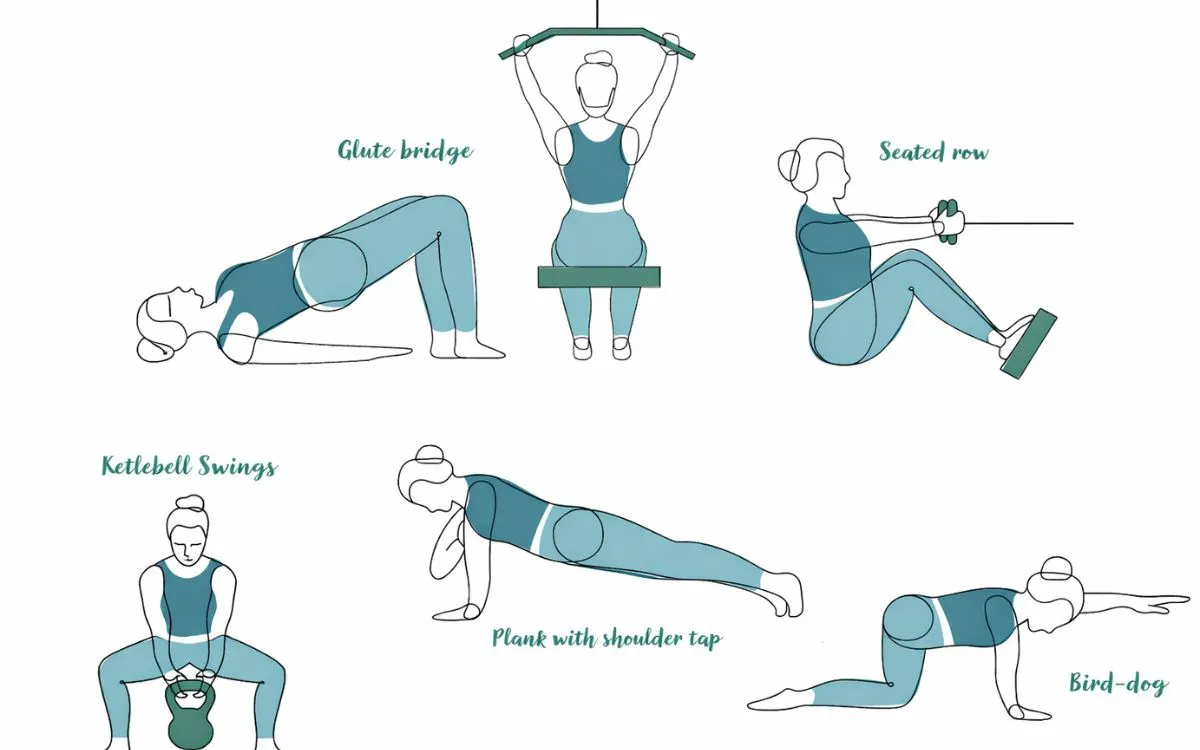
Illustration showing six strength exercises: glute bridge, lat pulldown, seated cable row, kettlebell swings, plank with shoulder tap, and bird-dog pose.
Month 1 (Weeks 1–4): Building Basic Fitness for Nepal Trek
As you begin preparations for Nepal trek, the first month should begin with developing a fitness level and a routine. During this initial phase, the aim is to enhance overall stamina levels in the body. It is advised to indulge in cardio exercises like brisk walking, cycling, or light jogging for 30-45 minutes, 3-4 times a week which is a perfect start for training for trek in Nepal for beginners. Weight training can be done twice a week. It is also necessary to stretch each time after a session.
Day 1: Cardio (Moderate Intensity): 30-45 minutes of steady cardio such as brisk walking, cycling, swimming or light jogging. Maintain a pace that allows you to comfortably talk during exercise.
Day 2: Strength Training (Legs and Core): Complete 3 sets of 10 reps of squats, lunges, and step-ups. Finish with a plank for 20-30 seconds. Focus on proper form and do not use weights; only use your own body.
Day 3: Active Recovery and Mobility: 30 minutes of light stretching; yoga, or a leisurely walk to aid in muscle recovery and flexibility.
Day 4: Cardio with Incline or Hills: 30-45 minutes of cardio exercise that includes an uphill component. Some options include walking up hills, climbing stairs, or using the incline option on your treadmill. A light pack can be worn if comfortable.
Day 5: Strength Training (Full Body): 45-60 minutes performing a full body workout which includes squats, lunges, push-ups, planks and basic upper body movements. Preparing your body for carrying a heavy pack.
Day 6: Long Walk or Easy Hike: 1.5-2 hours long on moderate terrain wearing trekking shoes and practicing with trekking poles if you have access to them.
Day 7: Rest and Recovery: Take a complete rest day, or do gentle stretching so your body can recover completely.
Progression: This should be followed for a period of four weeks. Every week, either intensity or duration should increase by 5-10%.
Month 2 (Weeks 5–8): Improving Endurance and Strength for Nepal Treks
During the second month, your body will be prepared for more rigorous training. This level of training emphasizes building endurance, developing trekking muscles, and enhancing ability on uphill routes. Cardio training will involve longer exercise, carrying weight, and more intensive strength training. It is essential to conduct training a total of 5-6 days a week while observing proper recovery.
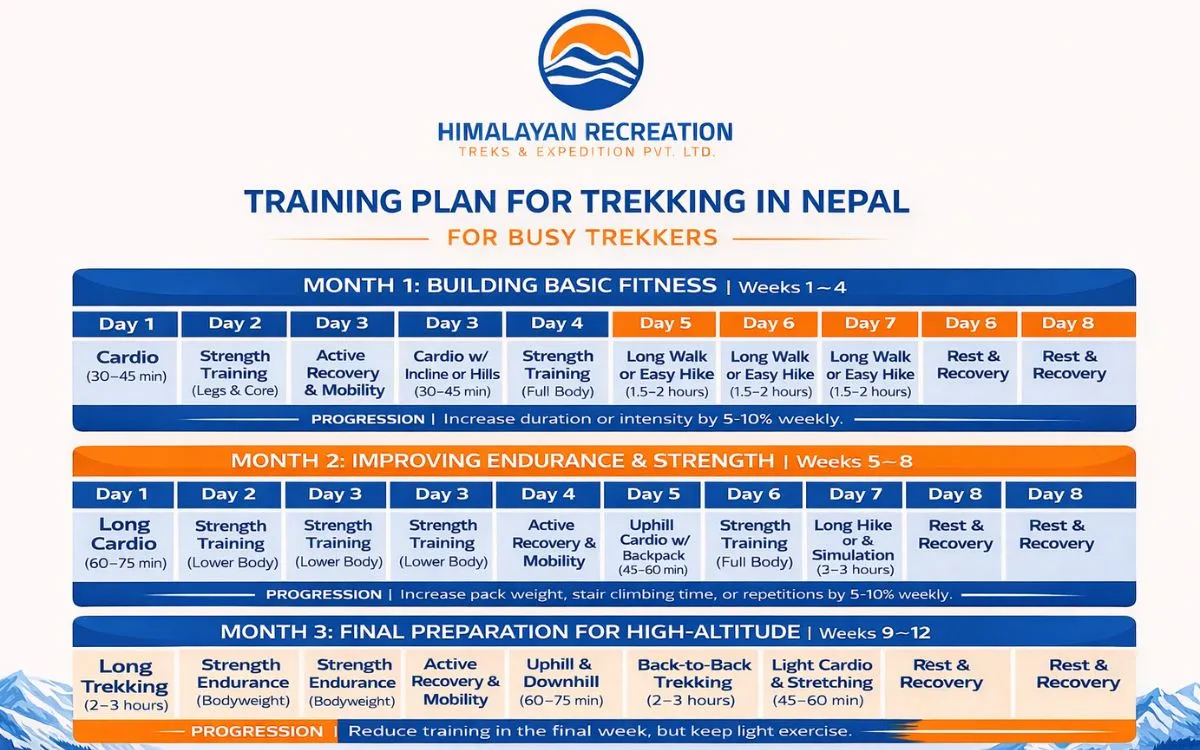
Training plan chart for trekking in Nepal showing three months of progressive workouts, including cardio, strength training, hiking, and recovery days
Day 1: Long Cardio Session: Engage in 60-75 minutes of brisk walking, jogging, cycling, or hiking. Pace yourself to keep moving with regular breathing.
Day 2: Strength Training (Lower Body Focus): Do 3-4 sets of squats, lunges, step ups, and calf raises, perform 12-15 reps for each exercise. Add plank holds of 30-45
Day 3: Active Recovery and Mobility: Carry out light yoga or a walk for 30 to 40 minutes to relieve your muscles.
Day 4: Uphill Cardio with Backpack: Walk for 45-60 minutes uphill or on stairs. Go for a hike. Take a backpack weighing 5-7 kg.
Day 5: Strength Training (Full Body): A full-body workout can be done, including legs, core, and upper body. Higher reps and shorter rest phases can be used for increasing endurance.
Day 6: Long Hike or Trek Simulation: Hike or walk for 2-3 hours, including varied terrain, while backpacking and working on maintaining a steady pace.
Day 7: Rest and Recovery: Take a rest day or do light stretching exercises.
Progression: Follow this program for four weeks. Gradually increase walking time, weight in pack, time climbing stairs, or number of repetitions by 5-10% each week.
Month 3 (Weeks 9–12): Final Preparation for High-Altitude Treks in Nepal
The last month is dedicated to getting your body and mind ready for actual trekking conditions in the Himalayas. The training sessions will now be very close to the actual days of trekking: long walks, heavy backpacks, and successive days of training. Recovery, nutrition, and sleeping are specifically vital in this phase.
Day 1: Long Trekking Day: Walk or hike for 2-3 hours on hilly or irregular terrain while trekking a backpack weighing 8-12 kg. The pace and breathing should be practiced.
Day 2: Strength Endurance Training: Engage in bodyweight strength training exercises like squats, lunges, step-ups, and plank exercises done with high reps and less rest.
Day 3: Active Recovery and Mobility: Do gentle stretching, yoga, or an easy walk to aid in muscle recovery.
Day 4: Uphill and Downhill Training: Train on hills or stairs for 60 to 75 minutes, doing both uphill and downhill exercise to spare your knees.
Day 5: Back to Back Trek Training: Repeat a long walk or hike for 2-3 hours to acclimatize your body for the next days of trekking.
Day 6: Light Cardio and Stretching: Do 45–60 minutes of light walking or cycling followed by extended stretching.
Day 7: Rest and Recovery: Take a full rest day to allow your body to adapt to training stress.
Progression: Do this routine for three weeks. In the third or final week before the trek, cut back on the amount of training done but keep the level of light exercise.
Simple Altitude Acclimatization Tips for Trekking to Nepal
To acclimatize to high altitudes, the best method is to be exposed to them directly. However, if that cannot be done prior to your trek, you can prepare your body at home for trekking.
While hypoxic training masks can help strengthen the muscles involved with breathing, they do not reduce oxygen levels, but rather help to improve your breathing control during treks. Additionally, hypoxic tents and hypoxic rooms are a more effective method for simulating sleeping at 2,500 to 3,600 meters (8,200 to 12,300 feet) because they provide a reduced oxygen concentration. With the use of hypoxic tents, it is advisable to gradually increase the simulated altitude and to monitor how your body responds to it over time. It may be beneficial to sleep at simulated altitude for 2 to 4 weeks to assist with natural adaptation to altitude.
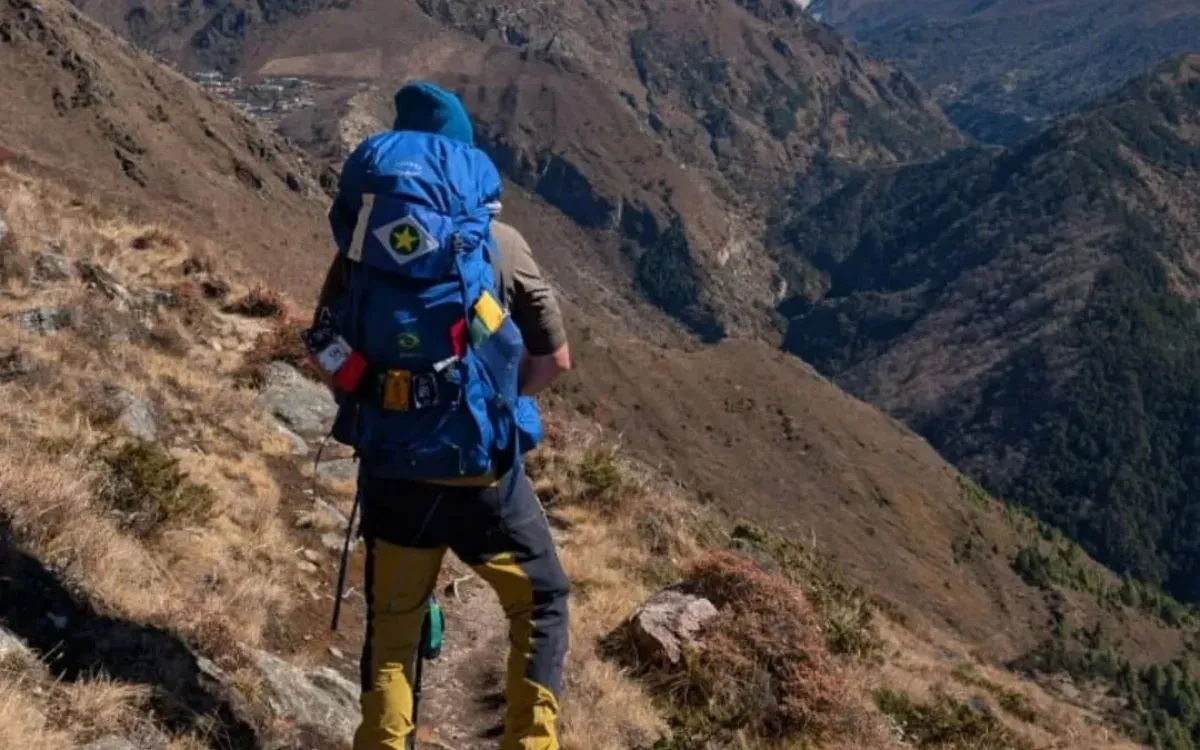
Trekker with blue backpack and trekking poles walking on mountain trail in Nepal.
Hypoxic training aids provide training but are not a substitute for actual altitude acclimatization, and even very well-conditioned individuals may experience altitude sickness if they ascend too rapidly.
When trekking, trek slowly, climb high, sleep low, and have limited altitude in your sleep each day. Hydration and resting are essential in Nepal hiking training and training related to high altitude trek in Nepal. Patience during hiking is most important.
Nutrition and Hydration Tips During Trekking Training
Your body will also need a large number of calories in terms of hiking. Your body will consume about 3,000 and 5,000 Kcal of energy in a day. Your diet will therefore consist of a large number of carbs of up to 60 and 70 percent. Add protein food like eggs and meats or beans and walnuts in every meal. Your body will recover from hiking. Include healthy fat like avocado or olive oil. Do not take a lot of fibers and raw veggies before hiking because of digestion.
Hydration is also an important aspect. You need to consume 3-4 liters of water a day even during training. Moreover, when at high altitude, your breathing and sweating rates increase; therefore, it is a good idea to continuously sip water along the route. You also need electrolytes such as sports drinks or salt tablets to replenish lost minerals in your system when your body perspires.
Essential Gear to Support Your Trekking Training in Nepal
While training for Nepal trekking, you are supposed to wear gear that would get your body accustomed to some long hiking and irregular trails. First of all, wear good trekking shoes or boots that fit well and provide ankle support. Use them during walks and stair climbing in order to strengthen the feet and legs.
It allows practicing carries with a light backpack; it starts with three to five kgs and can increase up to seven or eight, according to the improvement of training. Trekking poles help while walking uphill and downhill because they reduce knee strain and improve balance.
Wear moisture-wicking clothes to stay dry during training sessions. Carry water or a hydration pack and sip regularly to practice proper hydration. Optional equipment is hypoxic masks or altitude tents that help in training for high altitude, but neither of these replaces real altitude experience.
FAQs
How fit do I need to be to trek in Nepal?
You don’t have to be an athlete, but you must be capable of walking uphill for several hours with a small backpack on your back. It takes 5-7 hours of walking on uneven trails during most popular treks, and you must be good at breathing and recovering, not necessarily quick.
How long should I train before trekking in Nepal?
Train for an average period of 8-12 weeks. Beginners can begin with short walks and basic strength training, while advanced walkers can incorporate longer hikes. They can thus acclimatize their bodies for the long treks on the trip.
Can beginners train for high-altitude trekking in Nepal?
Yes, for basic training, one can walk, do stairs, and exercise strength for legs as well as the torso. Start slow and build up endurance - increase time spent walking, enhance the backpack’s weight, as well as altitude, slowly. Pair this training routine with healthy eating, drinking, and resting for safe High Altitude Nepal trek.
What is the most important training for high-altitude trekking?
The most useful kind of training is endurance walking, hill walking, stair walking, and exercising leg and torso strength. This builds endurance, eases knee troubles, and conditions your body to haul a pack for six or eight hours a day. Aerobic conditioning and pace are much more valuable than gym strength.
Do I need a gym to train for trekking in Nepal?
No, most training can be accomplished outdoors with exercise and walking. A gym is not needed for additional strength training. The most important aspects of training would be walking, stairs, step-ups, squats, lunges, and plank training. All of these activities exercise trail muscles.
How can busy people fit trekking training into daily life?
If necessary, you can break training down into shorter sessions of 20–30 minutes. Whenever possible, take the stairs, not the elevator; walk to work; or do push-ups and squats at home. Even short but consistent walks and strength sessions build endurance over time.
Does training prevent altitude sickness during treks in Nepal?
It is true that training will help your body deal with long days and fatigue, but it will not prevent altitude sickness. You still have to properly acclimatize, ascend gradually, hydrate, and rest to avoid altitude problems.
Should I train with a backpack before Nepal trekking?
Yes, it does. Carrying a light backpack during training is closer to real trekking conditions. Start with 3–5 kilograms and gradually increase weight to 7–8 kilograms. This will strengthen your back, shoulders, and legs in preparation for multi-hour hikes.
Is this training plan suitable for Everest Base Camp or Annapurna treks?
Yes, it emphasizes endurance, leg strength, core strength, and uphill walking, which are very necessary if you are doing high altitude treks in nepal treks as the EBC or Annapurna. It will depend on your trek, changing your walk duration and pack weight accordingly.
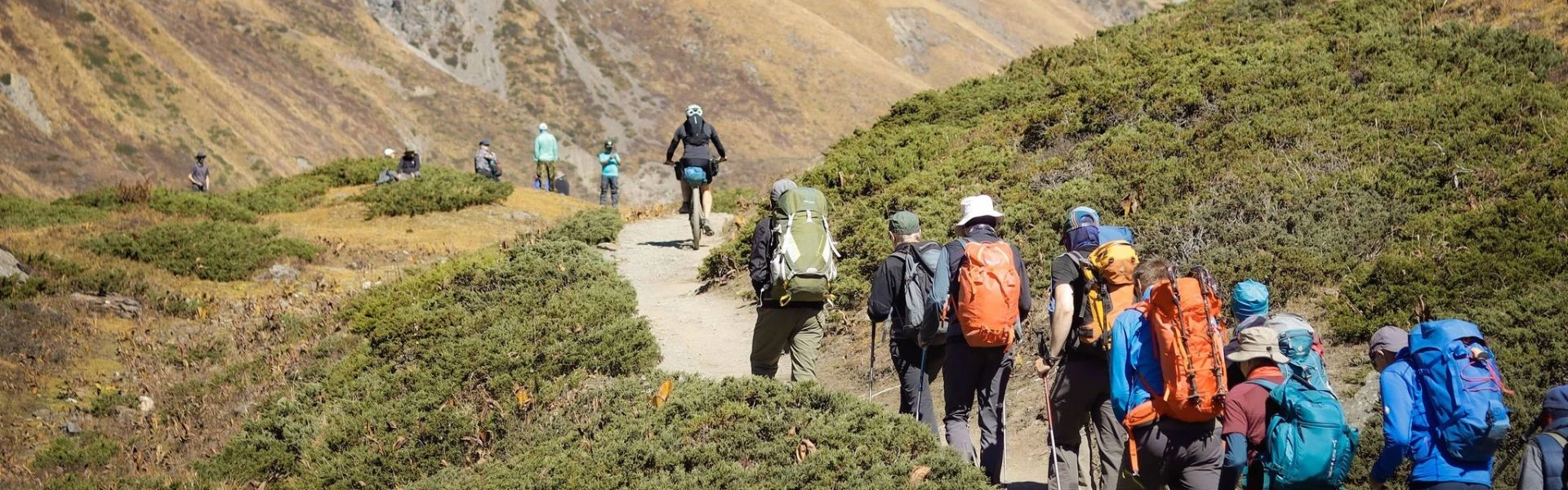
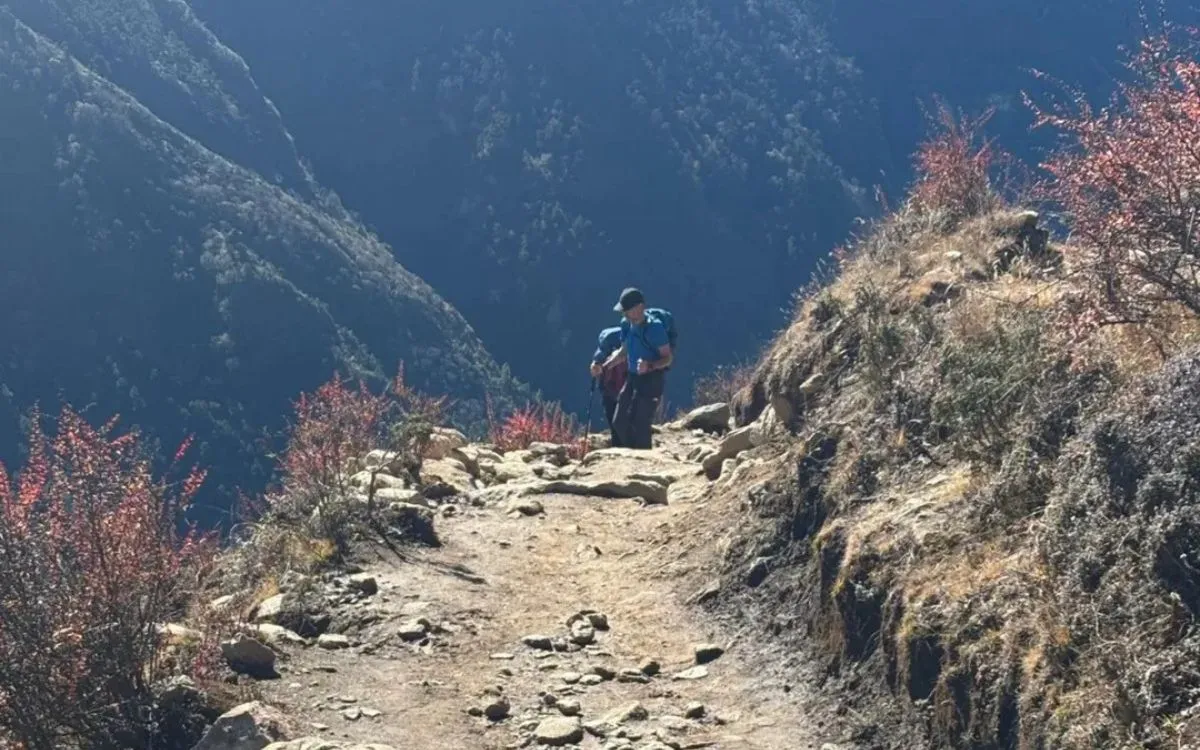
Trekker hiking uphill on rocky mountain path surrounded by vegetation.
Conclusion
You can prepare for trekking in Nepal even if you have a hectic timetable, as long as you follow a specific training regime that includes walking, stair climbing, strength training and an increase in weight capacities by gradually using a backpack. These activities will provide you with the necessary levels of endurance, leg strength, and core stabilisation required to successfully complete long treks each day. In order for your body to remain optimally supported throughout the duration of your training and trek, you should ensure that you consume a well-balanced diet, drink plenty of fluids, and take adequate time to rest.
Whether you are an experienced or inexperienced trekker, if you maintain a consistent level of training for a period of 8-12 weeks before setting out to trek one of the most sought-after trekking destinations in Nepal, such as the Everest, Annapurna, Manaslu, or any of the other routes in Nepal, then you will be adequately prepared. It is worth noting that proper training will improve your stamina, as well as, lessen the likelihood of fatigue during your trekking experience is essential if you want to maximise your trekking experience at high altitudes. For assistance with preparing a personalised training plan or additional support during your trekking journey, contact Himalayan Recreation.





-6.webp)
-6.webp)