First-time trekkers can trek in Nepal. Trekkers from all over the globe are encouraged to consider trekking in Nepal because it is one of the most beginner-friendly trekking destinations on earth; there are many good trails, many places to stay (tea houses), and a very friendly trekking community that welcomes trekkers of all skill levels. If you have always wanted to hike through beautiful forests of rhododendrons, cross Nepal's highest suspension bridge, or stand beside the highest mountains in the world on your trek, you should start planning your trip.
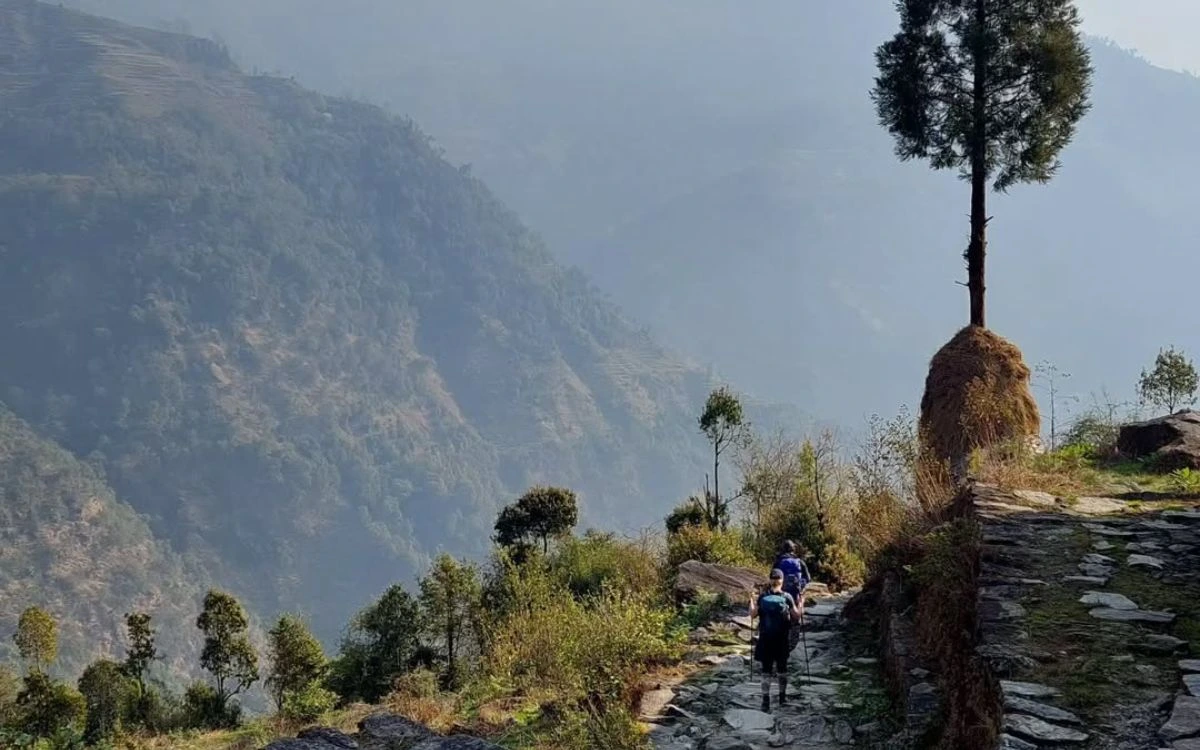
Two trekkers with trekking poles descending a stone trail through misty Himalayan hills
This guide will provide all of the information you will need to successfully plan your own trekking adventure in the Himalayas, including details about the easiest trekking routes, fitness advice, and costs, as well as safety considerations.
Can You Trek in Nepal Without Experience?
If you ever wondered, "Can beginner hikers trek in Nepal?" then the answer is yes! Nepal provides trekking opportunities for people of all hiking levels. Whether you are interested in flat valley walks or high altitude mountain expeditions, there is a trekking route in Nepal that is suitable for you. First-time hikers have a wide range of options with many well-established trekking trails throughout the country, low-cost lodges, and friendly local people who represent a safe and rewarding opportunity to get started.
To hike in the Himalayas, you do not need previous mountaineering knowledge or experience hiking for several years. Instead, you will need to choose the proper trekking route, do enough preparation work before your hike, maintain a minimal level of physical fitness,s and be mentally prepared for your hike. When these things are established, you can have an amazing experience on your first hike in Nepal.
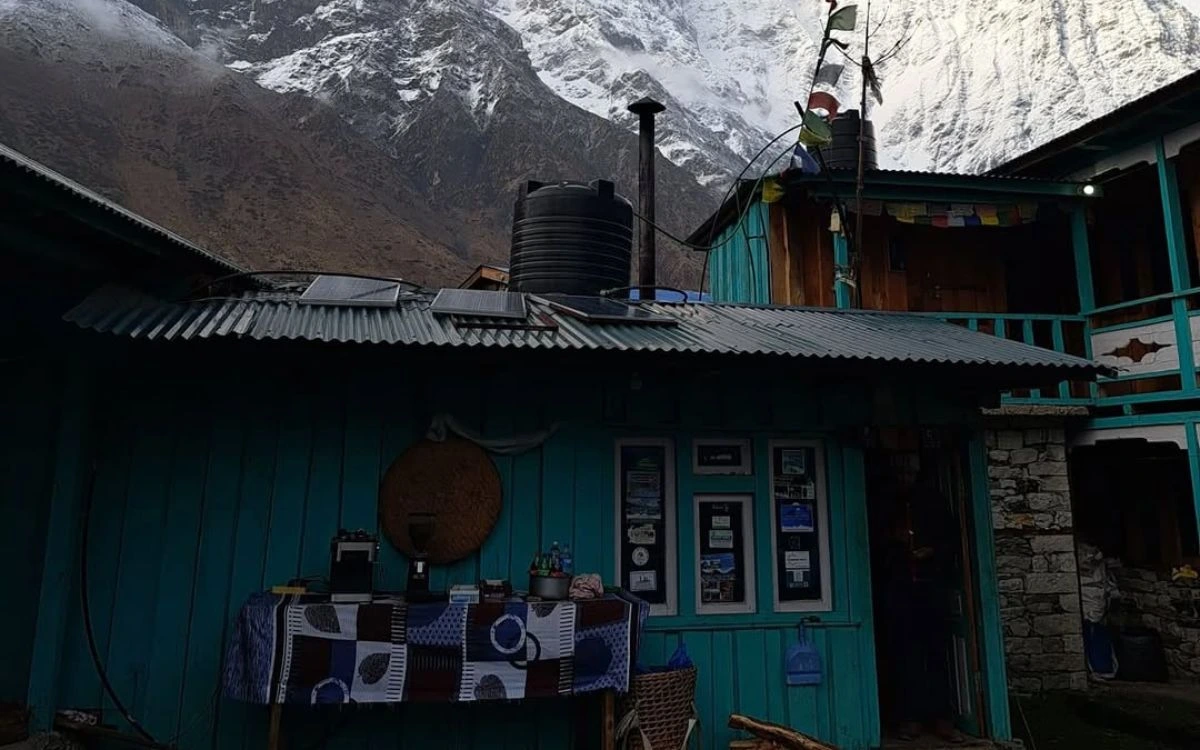
A teahouse with prayer flags nestled below snow-covered cliffs on a Nepal trek
Absolutely — new trekkers will feel at ease during their first trek to Nepal. Here are three reasons why:
Nepal has Asia's most developed trekking infrastructure with well-marked routes, lodges that provide food and refreshment, and knowledgeable and experienced local guides.
Many of the most frequented beginner treks do not exceed 4,000 meters in altitude, which reduces the possibility of developing serious altitude illness.
Trekking agency services, permits, guided treks, etc. They are easily accessible to beginners and at a reasonable cost.
The assumption that one needs to be extremely fit or have many years of experience before attempting a trek in Nepal is a common misconception. Contrary to what many new trekkers believe, many easy beginner routes within Nepal will only require a moderate level of fitness to complete — approximately the same level required to complete a couple of hours of regular walking each day. The pace is not too fast, and the fact that there are teahouses to stay in along all routes means that trekkers only need to carry a small daypack with them throughout the trek.
Best Easy Treks in Nepal for Beginners
Choosing the right route is the most important decision for any first-time trekker. Here are five of the best beginner treks in Nepal:
Ghorepani Poon Hill Trek (4–5 days)
For novice trekkers, this is a highly sought-after list of places to experience (in Nepal). Trekkers can visit traditional Gurung and Magar settlements along the route and through dense rhododendron forests before ascending Poon Hill (3,210m), where they can experience breathtaking views of Dhaulagiri and the Annapurnas at sunrise. The Annapurna Base Camp Trek also begins in this area, making it the ideal precursor to continued ascents into ever higher elevations.
Langtang Valley Trek (7–8 days)
The Langtang Valley trek is found north of Kathmandu; it truly is a hidden treasure with stunning alpine views, yak grazing land, and the unique Tamang culture. The highest point along this walk is about 3870m, so even new trekkers should have little difficulty completing it. This trek also gives people an excellent introduction to the vastness of the Himalayas without being overwhelmed by too many people.
Mardi Himal Trek (5–6 days)
The Mardi Himal Trek is a newer and quieter route through the Annapurna Region in Nepal. It is very suitable for less experienced trekkers looking for a peaceful trek with close-up panoramic views of the Mardi Himal, Machhapuchhre (fish tail), along with, and also of the entire Annapurna massif. This route has clearly marked trails and a gradual climb in elevation, making it a much easier trek.
Everest View Trek (5–7 days)
If you want the experience of climbing the top of Mount Everest but without going to the very extreme altitudes of the summit, you can take an Everest View Trek! The trek will allow you to visit all of the fascinating Sherpa communities, including both Namche Bazaar and the Tengboche Monastery, while only reaching a total altitude of about 3,867m/12,700 ft when you spend a night at the Everest View Hotel. It’s also the best way to experience the culture of Khumbu and get a feel for what it is like to live in the Sagarmatha Region. However, if you really want to do the full Mount Everest summit-to-base experience, then the Everest Base Camp Trek may be the best option for you once you have sufficient experience trekking.
Nagarkot to Dhulikhel Hike (1–2 days)
The short trek from Nagarkot to Dhulikhel, which is right outside of Kathmandu, will give you a gentle introduction to the beauty of Nepal's hills and scenery. It is an easy trek that only requires a few things to be prepared for, and there are beautiful views of the Himalayas along the way, making it an ideal first hike in Nepal.
What Makes a Trek Beginner-Friendly?
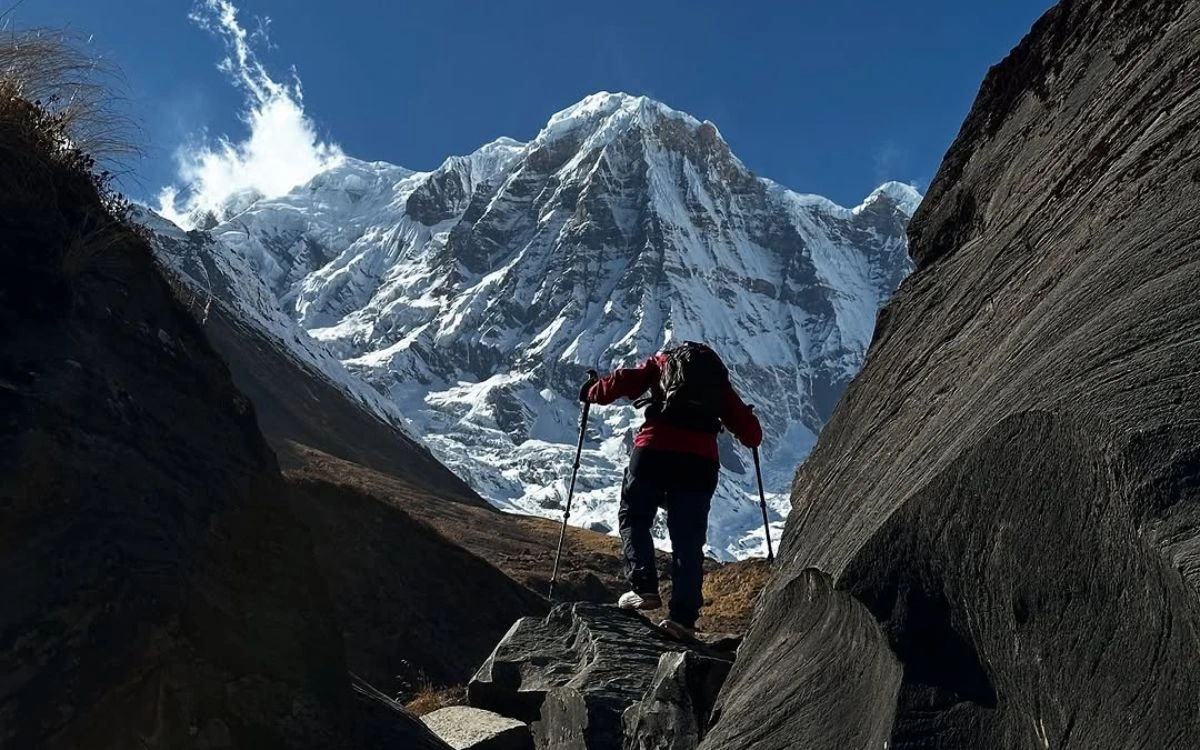
Solo trekker with poles climbing rocky steps toward a massive snow-capped Himalayan peak
Not all treks are created equal. Here's what to look for when choosing a beginner-friendly route:
Moderate altitude: Stick to trails that peak below 4,000m to reduce altitude-related risks.
Gradual ascent: A steady climb over several days gives your body time to adjust.
Well-marked trails: Clear signage and established routes reduce the chance of getting lost.
Teahouse availability: Lodges along the trail mean you carry less and sleep comfortably.
Short duration: Treks of 5–8 days are ideal for first-timers to build stamina without burnout.
Physical Fitness Requirements for First-Time Trekkers
A common question is: "How fit do I need to be to trek in Nepal?" The honest answer — reasonably fit, but not an athlete.
You should be able to walk 5–6 hours a day on uneven terrain with a light backpack. Before your trip, try to:
Walk or hike for 1–2 hours daily, at least 4–6 weeks before your trek.
Add some cardio (jogging, cycling, swimming) to boost stamina.
Practice stair climbing to prepare your legs for uphill and downhill sections.
The key is consistency. You don't need gym-level fitness — just the endurance to keep moving at a comfortable pace each day.
Essential Preparation Before Your First Trek
Best Seasons: Trekking in Nepal is best accomplished in the Spring (March - May) and Autumn (September - November) seasons when the weather is stable, the skies are clear, and the mountain views are at their most spectacular.
Permits: Permits are required for most trekking regions. A good example is trekking in the Annapurna region, where you would require a TIMS card and an Annapurna Conservation Area Permit (ACAP). Your guide or trekking agency can help to arrange these permits.
Packing Essentials: Light pack. Important items to take: rugged trekking shoes or boots, moisture-wicking clothing layers, a warm fleece or down jacket, rain gear (either a jacket or poncho), a first-aid kit, and a refillable water bottle with purification tablets.
Do You Need a Guide or Porter as a Beginner?
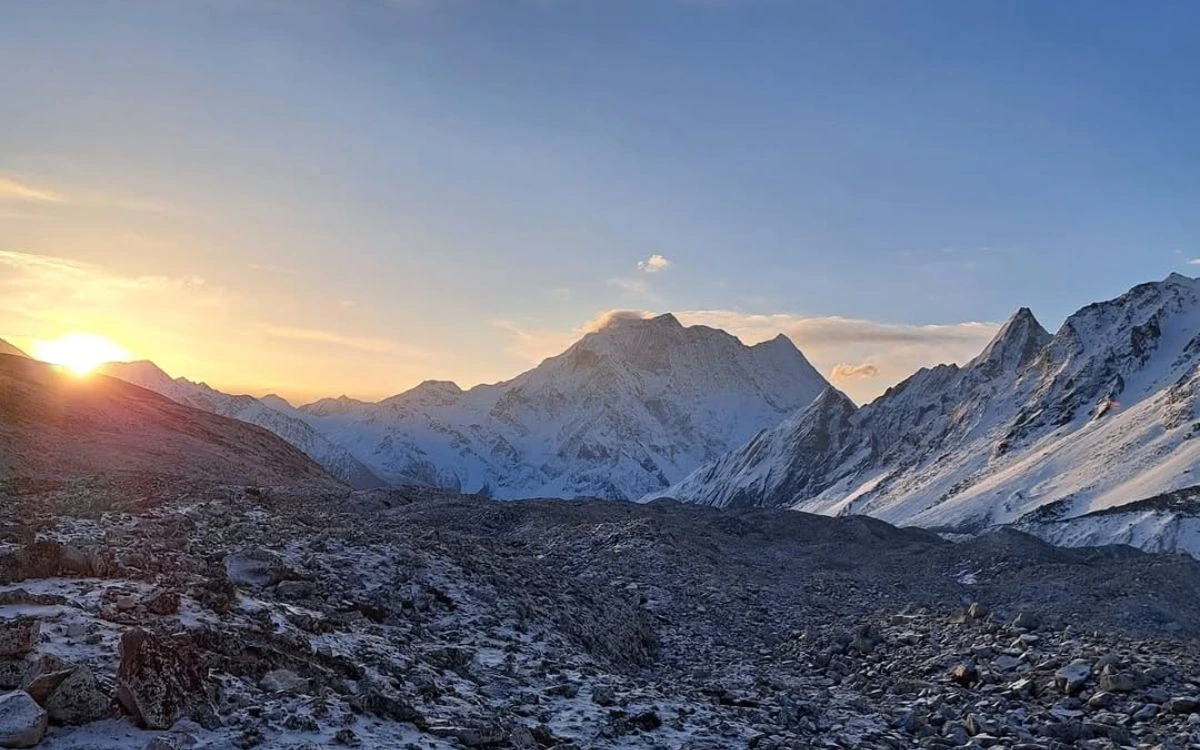
Sunrise over a glacial moraine valley surrounded by towering Himalayan peaks
Though many seasoned trekkers opt to explore independently, it is highly recommended for any first-time trekker in Nepal to use a licensed guide. Here are three reasons for doing so:
A guide knows the trails, understands the weather patterns in the mountains, and knows immediate resources to help if an emergency occurs.
A guide provides cultural context and language assistance when you arrive in a remote village.
A porter carries your heavy backpack so you can enjoy the trek more.
In terms of cost, the cost of a licensed guide to assist the trekker would average around USD $25 - $35 per day; the cost for a porter would average around USD $15 - $20 per day. Therefore, the small amount you invest in both your safety and your overall experience with a guide and a porter adds considerable value and enhancement.
Safety Tips for Trekking in Nepal Without Experience
Altitude sickness: You should ascend gradually. Adhere to the golden rule of "Climb high, sleep low". Make sure to drink plenty of fluids and take note of your body if you experience symptoms such as headaches or nausea.
Weather Awareness: Mountain weather is unpredictable and can change rapidly, so ensure you begin your hike early in the morning and arrive at your destination before storms arrive in the afternoon.
Travel Insurance: Obtain travel insurance that is comprehensive enough in terms of when you will be trekking at altitude, and also with your transport if you need to be airlifted.
Emergency Contacts: Before leaving, ensure you have saved emergency contact numbers for your trekking company, your nearest medical facility, and the TIMS Helpline number.
Cost of Trekking in Nepal for Beginners
Nepal is one of the most affordable trekking destinations in the world. Here's a rough breakdown:
Permits: USD $20–$50 depending on the region.
Teahouse accommodation: USD $5–$15 per night.
Meals on trail: USD $3–$7 per meal.
Guide fee: USD $25–$35 per day.
Porter fee: USD $15–$20 per day.
A typical 7-day guided trek for a beginner costs between USD $600–$1,200, including transport, permits, food, accommodation, and guide/porter fees. Independent trekkers can do it for less but sacrifice the safety net.
Common Mistakes First-Time Trekkers Should
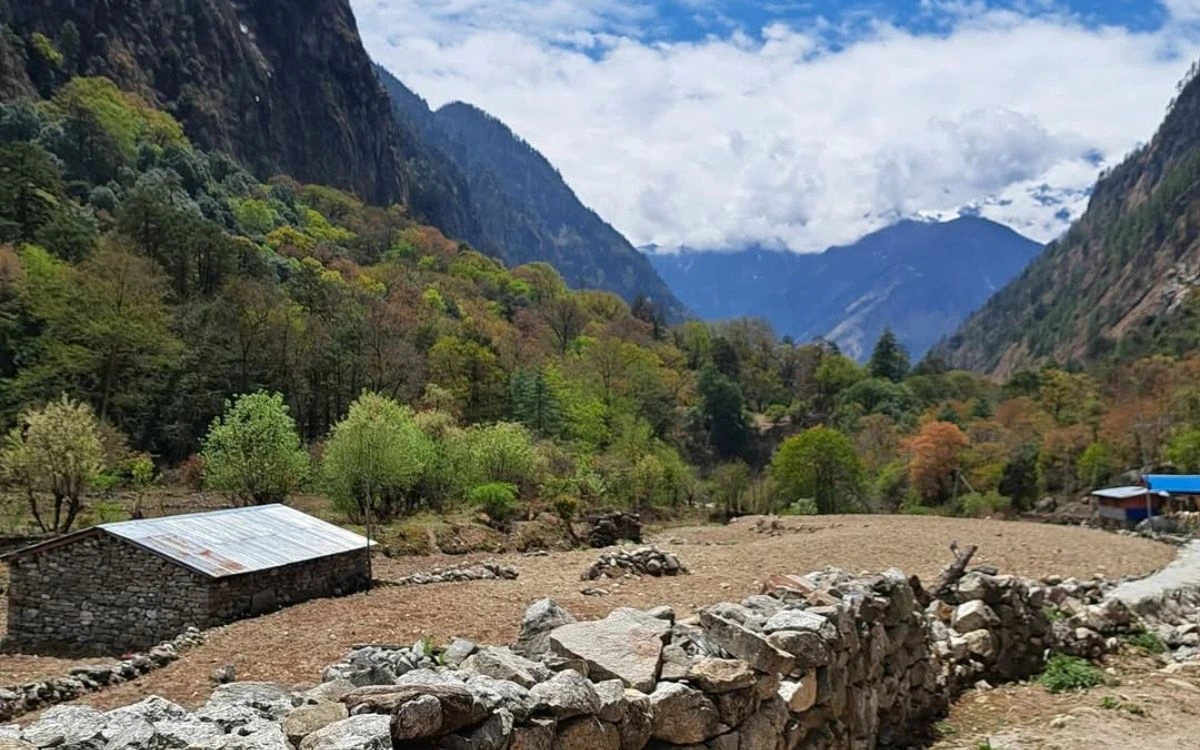
Lush green valley with stone-walled fields and a traditional village on a Nepal trekking route
Too much weight in your backpack will become heavier when you get higher up the mountain, so pack only your essentials.
Going too fast without acclimating will cause you to get ill from altitude sickness — trust me, the extra days are not a waste of time and will allow you to enjoy yourself more.
Being too ambitious in planning an extremely difficult route for your first mountaineering experience will cause you to become out of shape before you can complete the entire trip. Try doing some easier hikes so you can build your fitness and confidence before moving on to more challenging ones.
The weather can change quickly in the mountains,s and many times the forecast may not reflect actual conditions — you have to be flexible and willing to change plans if necessary.
Travel insurance is mandatory for anyone traveling to Nepal as it will cover medical emergencies, personal items, and evacuation from high altitudes.
FAQs: Trekking in Nepal Without Experience
Trekking Solo in Nepal for Beginners
It is possible to do some popular routes without a companion, but we recommend hiring an experienced trekking guide if you're inexperienced, as it will be a safe option. Trekkers are now required to use a licensed guide in many areas as part of the new trekking regulations in certain areas.
Are There Any Easy Treks in Nepal for First-Time Trekkers?
Depends on which trek you choose. Poon Hill, Langtang Valley, and other easy treks will all be suitable if you are generally healthy, as you have the right amount of strength. The greater challenge of these treks will be your endurance over the period of time,e as opposed to having the technical skills required to complete them.
Is There an Easiest Trek in Nepal for First-Time Trekkers?
Determining which trek is the easiest is difficult in Nepal; however, Ghorepani Poon Hill Trek (4-5 days) is commonly thought of as the simplest and most rewarding for those first-time trekking in Nepal.
How Many Days Will Be Required for First-Time Trekkers?
There are many beginner-friendly treks located throughout the country that are scheduled for 5 to 8 days in duration. This length of time will allow you to enjoy the experience of being outdoors alone without pushing your body any more than you are able to.
Conclusion
You do not need any experience to trek in Nepal - trekking in Nepal can be one of the most exciting experiences you will ever go through! With the correct trail, adequate fitness level, appropriate planning, and a reputable trekking guide, even inexperienced trekkers can hike through some of the most beautiful locations on the planet! Due to the many great beginner trails, low costs, and friendly people, trekkers will find that Nepal is a great place to begin their Very First Himalayan trek.
If you're interested in taking your Very First step into the Himalayas, let us know at Himalayan Recreation Treks and Expedition. Call us today, and we will assist you with the logistics of your trip to create an unforgettable experience for a beginner to trek in Nepal.


.webp)



-1.webp)
-1.webp)
-1.webp)