The Annapurna Circuit Trek, after the road construction is one of the most searched and debated topics among trekkers and adventure seekers today. For decades, this iconic trail in Nepal has drawn thousands of trekking enthusiasts each year with its dramatic landscapes, diverse terrain, and rich cultural tapestry. But with roads now cutting through large portions of the route, many trekkers wonder whether the magic of this classic Himalayan journey still holds. The answer? Yes — with the right knowledge, planning, and attitude, the Annapurna Circuit still offers an extraordinary trekking experience.
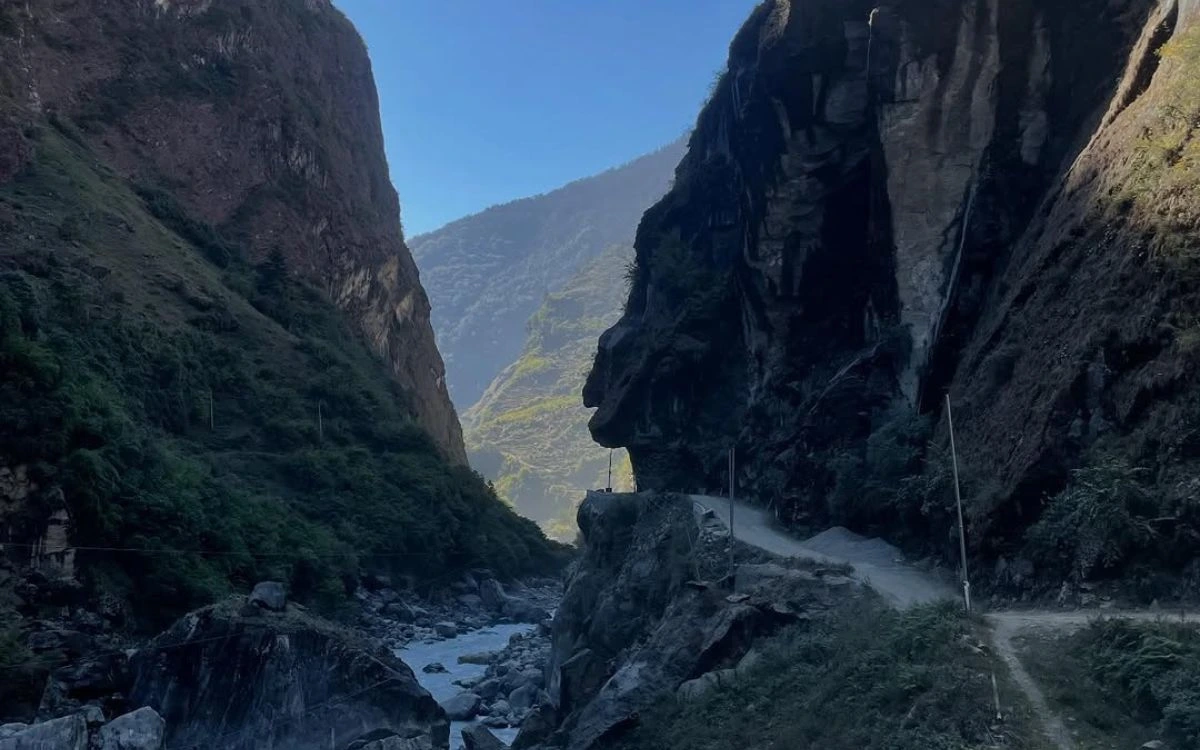
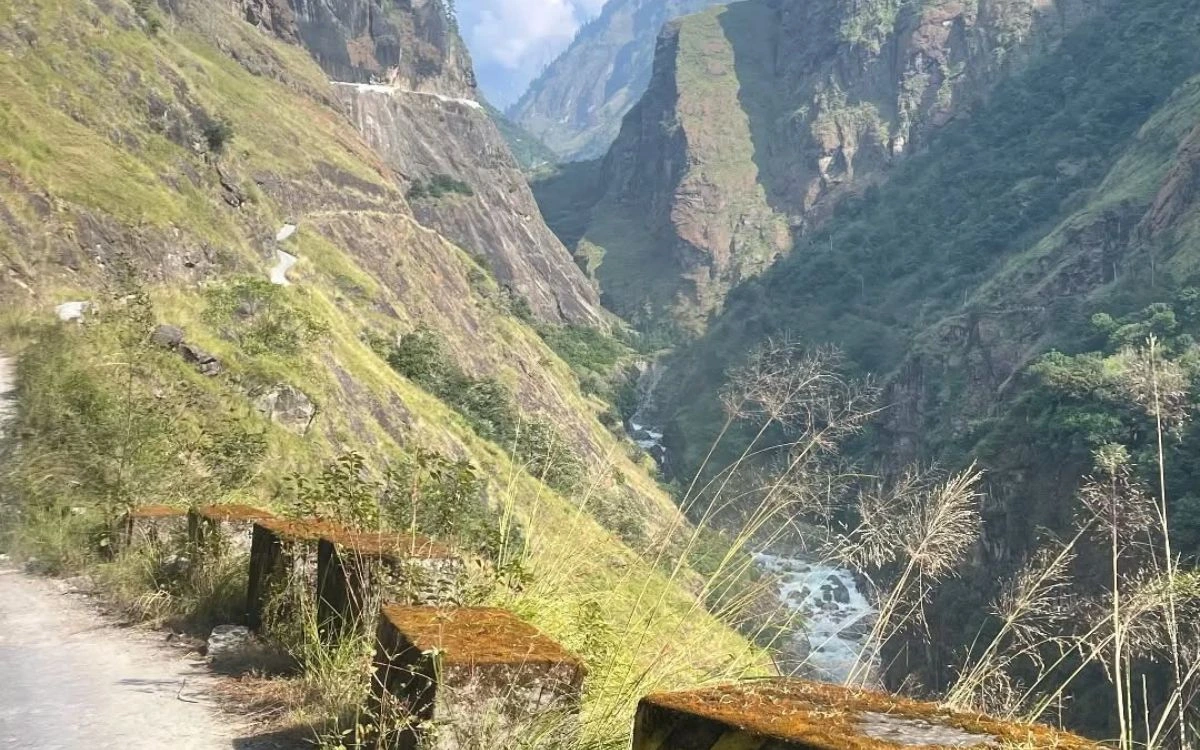
A narrow river gorge with a dirt road carved into the cliff face on the Annapurna Circuit
Over the last two decades, trekking in Nepal has seen great change – as witnessed through the Annapurna Circuit. The construction of roads through parts of the circuit has permanently altered areas that were previously untouched, creating some beautiful natural paths into dusty and highly trafficked jeep roads. The impact of this shift has raised so much concern from hikers that many who trekked the Annapurna Circuit during its glory days are now genuinely worried about how to continue to do so.
Nonetheless, the Annapurna Circuit hike continues to be one of the most beautiful long-distance mountain treks in the world. The awe-inspiring altitude of Thorong La Pass (5,416m), the peace and serenity of Manang village, and the spiritual allure of Muktinath Temple can never be diminished by a road. The trail has just changed – and with the right guidance for the avoidance of newly constructed roads, it will still be incredibly rewarding.
This blog post provides all of the information you will need regarding your Annapurna Circuit trek, post-road construction, including what has changed, how those changes affect you, new routes available to avoid roads altogether, an updated itinerary, and some tips from experts to help enhance your trek.
What Changed After Road Construction on the Annapurna Circuit?
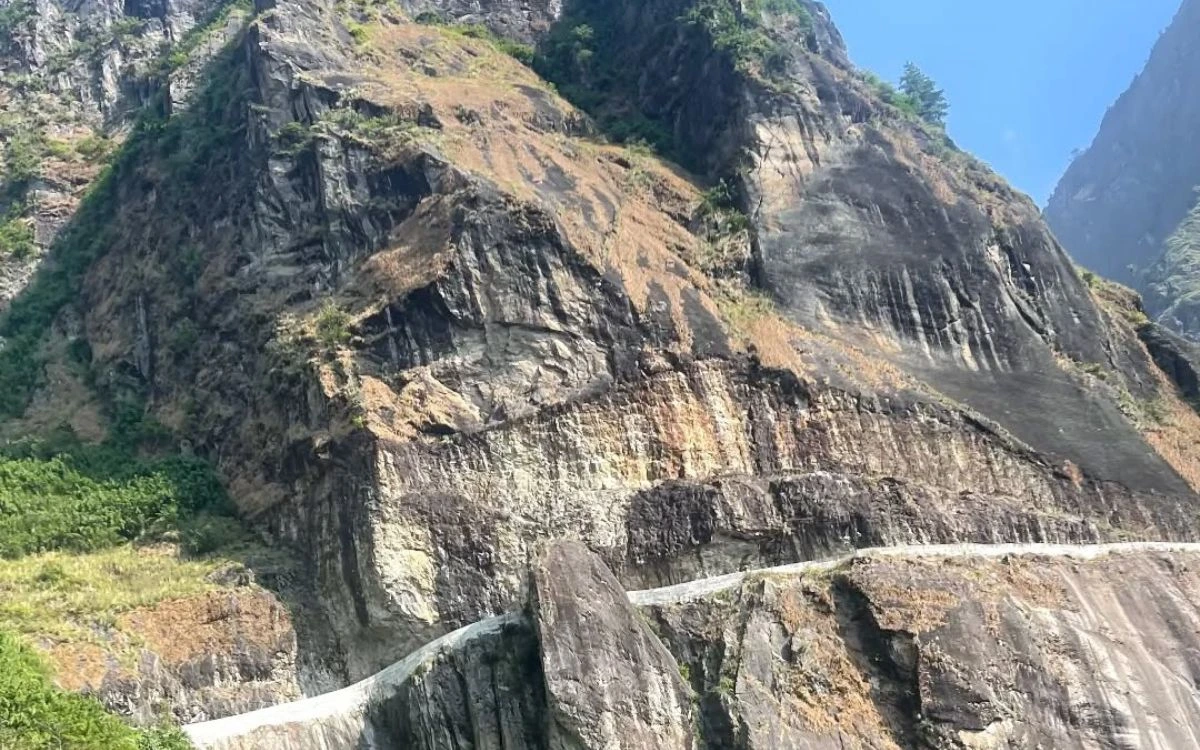
Road work on the Annapurna Circuit commenced in earnest during the early 2000s and has continued since then in phases. Initially, only a small project focused on improving access to remote villages grew to include an extensive network of jeep tracks that run next to or through the pathways of the original lower circuit area.
Timelines for Road Development
In the early 2000s, developments on roads started happening in the lower Marshyangdi Valley. The mid-2010s saw the construction of these roads, allowing for access from both directions to Manang by vehicle. Currently, there is a vehicle track that connects Besisahar and Manang from the east and Jomsom and Pokhara from the west, allowing for the motorization of the two lower sections of the trek.
Location of Road Impacts
Besisahar to Chame and Jomsom to Tatopani have the highest concentration of road impact. Villages like Dharapani, Bagarchhap, and Chame, which were previously stops on the trail for trekking, are now located adjacent to a busy road used by Jeeps. Muktinath to Tatopani on the western descent will have the same type of effect.
Changes in Trekking
Too many trekkers are starting the circuit now at Chame or even Dharapani so they can get out of the dusty lower sections using jeeps. Many trekkers are now ending their trek at Muktinath or Jomsom and, before returning to Pokhara, are either flying or taking a jeep instead of walking the western descent. These few minor changes will keep the wilderness appearance of the trek for years to come.
How the Road Has Impacted the Trekking Experience
A narrow road blasted into a steep exposed rock face along the Annapurna Circuit after road construction
Positive Impacts
Not all of the road construction effects are negative. The new roads have brought several practical benefits to trekkers and local communities alike.
Easier access and logistics: Trekkers can now reach higher-altitude trailheads faster, cutting days off the lower, less scenic sections.
Flexible itineraries: The road allows trekkers to customize their route — starting or ending at different points to maximize time in the most beautiful areas.
Emergency evacuation: Faster vehicle access has significantly improved safety and emergency evacuation options in remote areas.
Local development: Roads have boosted the economy in remote mountain villages, improving livelihoods and infrastructure.
Negative Impacts
The downsides are real and worth acknowledging honestly. The Annapurna Circuit road construction's effect on the trekking experience includes:
Dust, noise, and vehicle traffic: Jeeps and motorbikes now share the trail in some sections, creating noise and dust that erodes the mountain peace trekkers seek.
Loss of wilderness feel: In the lower sections, the sense of remote adventure has diminished considerably.
Cultural change: Increased vehicle access has accelerated commercialization in some villages, altering their traditional character.
Environmental concerns: Road construction has caused erosion, landslides, and habitat disruption in ecologically sensitive areas.
These are genuine trade-offs, and any honest Annapurna Circuit road update must acknowledge them. However, with smart route planning, trekkers can largely avoid the most road-impacted sections.
Is Annapurna Circuit Still Worth It After the Road Construction?
Definitely yes, as long as you are the right kind of trekker, the mids to the uppers have not lost their spectacular beauty to roads and other manmade things. The Annapurna trek above Chame, especially above Manang, is still awesome - no different than it was.
Who Should Still Do This Trek
Experienced trekkers who want a high-altitude adventure with cultural depth.
Those who can afford 12–16 days for a complete, immersive experience.
Trekkers interested in combining the circuit with a side trip to Tilicho Lake or the Upper Mustang Trek.
Anyone looking for one of the most diverse treks in the Himalayas, crossing everything from subtropical forests to high alpine desert.
Who Might Want Alternatives
Trekkers with only 7–10 days may find the Annapurna Base Camp trek offers a more time-efficient wilderness experience.
Those who prioritize pristine, road-free wilderness above all else might prefer the Langtang Valley Trek, which remains largely untouched by vehicle traffic.
Budget trekkers who want a classic Himalayan feel without road navigation may prefer the Everest Base Camp Trek in the Khumbu region.
In summary, the circuit is still deeply worth it — you just need to plan smarter than you would have 20 years ago.
Best Sections of the Annapurna Circuit That Remain Unspoiled
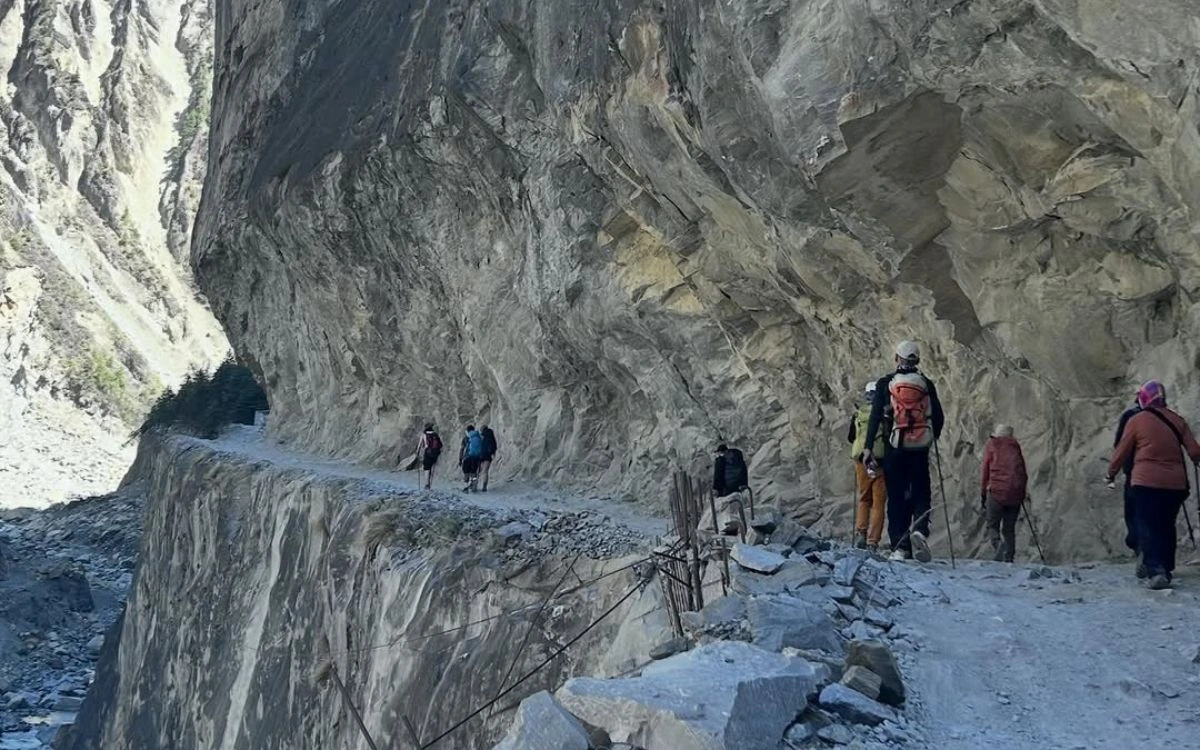
Trekkers walking single file along a cliff-edge road beneath overhanging rock walls on the Annapurna Circuit
Despite theeffects oft road construction on the Annapurna Circuit, several sections of the route remain wild and off-road. These are the highlights that make the trek genuinely special.
Thorong La Pass (5,416m)
Crossing the Thorong La Pass - the highest trekking pass in the Annapurna area - is the most exciting part of the Annapurna Trek. The adventure begins before dawn and includes the ascent to the pass, a completely wilderness trek.
Manang and the Upper Circuit
Manang Valley and the area between Chame and Thorong Phedi are breathtakingly beautiful. Terraced farms, communities of locals in ancient-style buildings, stunning views of Annapurna II, III, and IV, and the picturesque Braga Monastery are just a few of the many features that make this part of the Annapurna trek particularly special.
Muktinath and the High Desert
Muktinath Temple, the wind-carved landscapes of Upper Mustang, and the stunning Kali Gandaki Gorge are just a few of the awe-inspiring features of this region. They are some of the most unique landscapes in the world — and will remain that way, whether or not a road exists below.
Pisang and the Pisang Peak Viewpoint
Upper Pisang has one of the best viewpoints of the entire trek. It can be reached via an alternate route, completely separate from the road below. From here, the views of Pisang Peak and Annapurna III are awe-inspiring.
Annapurna Circuit Alternative Routes to Avoid Roads
Smart trekkers use Annapurna Circuit alternative routes to sidestep the most road-affected sections. Here are the best options available today.
Upper Pisang Trail
Rather than going down the road from Lower Pisang, go via the Upper Pisang Trail through Upper Pisang village. Although this will add a bit of time to your trip, it provides amazing views and a true trail experience.
Ghyaru and Ngawal Trail
Travel along a high-altitude route that follows a ridge heading toward Manang from Pisang Village and gives you an uninterrupted view of the Annapurna mountains below.
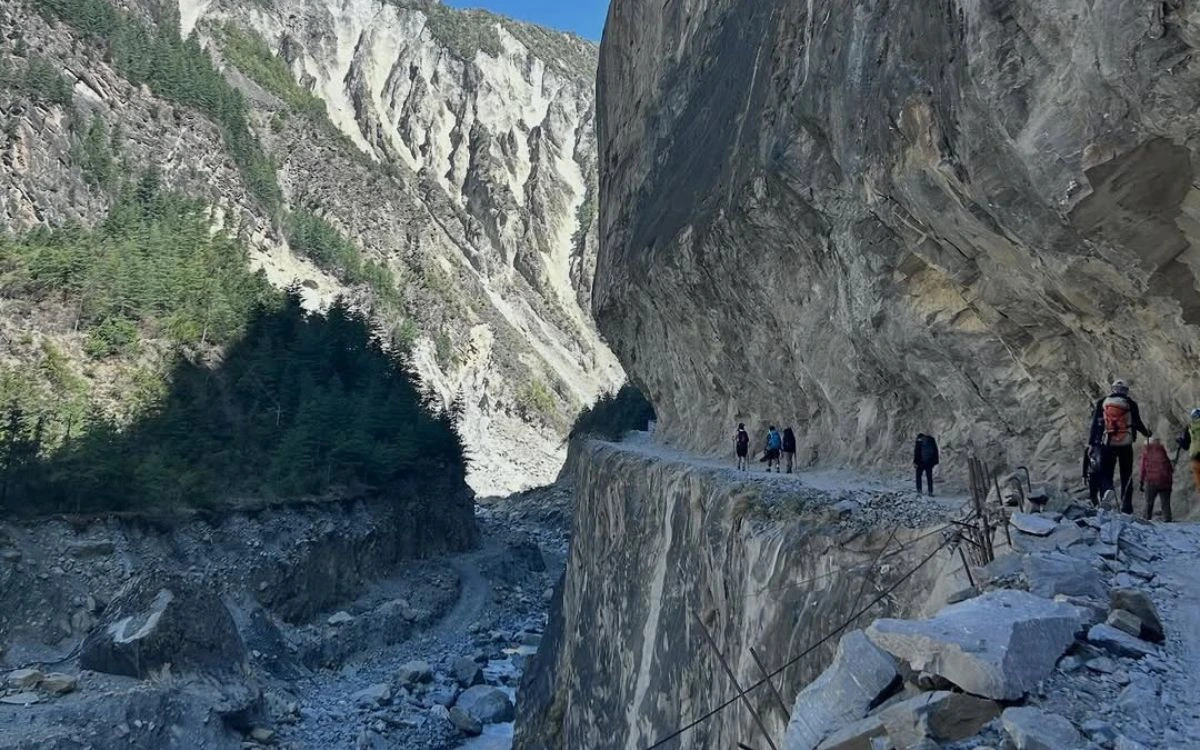
A group of trekkers navigating a narrow ledge trail high above a rocky gorge on the Annapurna Circuit
Tilicho Lake Side Trip
The route around Tilicho Lake is one of the most spectacular routes in the circuit and will take you from Manang to one of the highest lakes (4,949 m) in the world. This incredible side trip is a wholly off-road experience and takes an additional 2-3 days of pure mountain bliss.
High Route versus Low Road
Wherever possible, when walking on a high trail alongside a lower road, always use the high trail. It may require slightly more of your energy, but the views will be far better and will give you the authentic experience of the Annapurna Circuit that you are likely looking for.
By taking these detours and traveling from Chame (instead of taking the lower Besisahar-Chame jeep ride), you can easily make your trek from the largely road-based lower circuit to a largely off-road high-mountain trek.
Here is a suggested 12–14-day itinerary that maximizes the best of the circuit while minimizing road exposure. This is the recommended Annapurna circuit road update for modern trekkers.
Day
Route
Notes
Day 1
Kathmandu / Pokhara → Besisahar → Chame (jeep)
Skip the lower road section by vehicle
Day 2
Chame → Upper Pisang
High trail; great views of Annapurna II
Day 3
Upper Pisang → Ghyaru → Ngawal → Manang
High-altitude ridge trail; fully road-free
Day 4
Acclimatization Day in Manang
Day hike to Ice Lake or Gangapurna Lake
Day 5
Manang → Tilicho Base Camp
Start of Tilicho Lake detour
Day 6
Tilicho Base Camp → Tilicho Lake → Return
One of the world's highest lakes
Day 7
Manang → Yak Kharka
Gradual altitude gain; stunning views
Day 8
Yak Kharka → Thorong Phedi / High Camp
Short but important acclimatization day
Day 9
Thorong La Pass (5,416m) → Muktinath
The circuit's defining highlight
Day 10
Muktinath → Kagbeni → Jomsom
Kali Gandaki Gorge; cultural immersion
Day 11
Jomsom → Pokhara (flight or jeep)
End trek; scenic flight option
This road-avoiding route keeps you on high trails for the majority of the journey, delivering the full Himalayan experience that the Annapurna Circuit is celebrated for.
Annapurna Circuit vs. Other Treks in Nepal
For trekkers deciding between Nepal's legendary trails, here is a useful comparison. Nepal offers some of the world's finest high-altitude treks, each with its own character and strengths.
Annapurna Circuit vs. Everest Base Camp Trek
The Everest Base Camp Trek is renowned for being the most well-known trek in Nepal and is frequented by many trekkers visiting the Khumbu area. In comparison to the Annapurna Circuit, the Everest Base Camp Trek offers a greater emphasis on the culture that exists along the trail, including many of the historically significant and traditional Sherpa villages such as Namche Bazaar and Tengboche. The Annapurna Circuit has a greater variety of terrain, providing a more complete sense of being in proximity to some of the tallest mountains on Earth. Both treks represent excellent world-class trekking opportunities; the only difference is that the Annapurna Circuit has much more area covered.
Annapurna Circuit vs. Annapurna Base Camp (ABC)
Trekking to the Annapurna Base Camp is about 7 to 10 days of breathtaking bare-footed walking from the Annapurna Base Camp at about 4,800 metres (15,748 ft). While the ABC Trek is further removed from a road, the ABC Trek provides limited opportunities to be within a single wilderness area for extended periods of time. However, the circuit provides for the beautiful Thorong La crossing as well as a much more diverse range of cultures.
Langtang Valley Trek
Langtang Valley Trek is a secret hiking spot, it is a no-vehicle area where there are many local interactions with the people who live nearby, and it is an astonishing glacier valley about 2 hours north of Kathmandu. Langtang provides a pure wilderness experience for hikers who are looking for an authentic hike without any compromise due to the road system. Langtang is also much shorter and not as commonly shown in guidebooks. However, it has its own beauty that hikers will experience.
Upper Mustang Trek
The Upper Mustang Trek takes you through an ancient Kingdom – the high-altitude Tibetan Plateau. It has incredible dryness, cave monasteries, and medieval towns that are all surrounded by mountains and deserts. Other than Lower Mustang, where a road now runs through it, Upper Mustang still feels like an extraordinarily remote region. Many people do both Upper Mustang Treks and continue on an extended hike along Jomsom to get one more great experience in the Himalayas.\
There is no shortage of amazing experiences at each of these different trekking areas in the Himalayas, but the Annapurna Circuit is the most diverse and well-rounded of all. Even after roads were built throughout the area, it is still viewed as the most complete and flexible of the three trekking pathways.
Tips for Trekking the Annapurna Circuit After Road Construction
A winding mountain road overlooking a deep green river gorge on the lower Annapurna Circuit
Choose the Right Season
Spring (March–May) and autumn (September–November) are the best seasons for the Annapurna Circuit. Autumn is especially recommended post-road — the air is clearer, there is less dust from jeep traffic, and the trail conditions are excellent. Avoid the monsoon season (June–August) when road traffic and mud are at their worst.
Start from Chame, Not Besisahar
The single most effective tip for trekking the Annapurna Circuit after road construction is to take a jeep from Besisahar to Chame. This skips the dustiest, most road-impacted section entirely and places you directly at the start of the scenic upper circuit.
Always Take the High Trail
Wherever a high trail alternative exists — Upper Pisang, Ghyaru, Ngawal — take it. These trails are where the real Annapurna Circuit lives today.
Hire a Local Guide
A knowledgeable local guide is invaluable on the modern circuit. They know which trail alternatives offer the best scenery, where the road sections are unavoidable, and the most authentic teahouses to stay in. Local guides also support the communities that rely on responsible trekking in Nepal.
Start Early Each Day
Vehicle traffic is highest midmorning. Starting your trekking day at dawn means you cover road-adjacent sections before the jeeps are active, significantly improving your experience.
Pros and Cons Summary
Pros
Cons
Thorong La Pass remains road-free and stunning
Lower sections are dusty jeep tracks
High-trail alternatives bypass most roads
Some teahouses now cater to vehicle tourists
Easier logistics and flexible start/end points
Loss of the traditional end-to-end walking feel
Improved emergency access and safety
Environmental damage from road construction
Rich cultural experience still intact above Chame
More planning required compared to pre-road days
FAQs
Is the Annapurna Circuit ruined by road construction?
No, the Annapurna Circuit is not ruined. The lower sections have changed significantly, but the upper circuit — from Chame to Muktinath — remains spectacular. With smart route choices and high-trail alternatives, the overall experience is still exceptional.
Can you avoid the road completely during the Annapurna Circuit trek?
You cannot avoid the road entirely, but you can minimize exposure significantly. Starting from Chame, taking high trail alternatives through Upper Pisang and Ngawal, and ending at Jomsom reduces road walking to less than 10% of the trek.
What are the best sections of the Annapurna Circuit after the road construction?
The best sections include the Chame to Manang high trail, the Tilicho Lake detour, the Thorong La Pass crossing, and the upper Kali Gandaki valley between Muktinath and Kagbeni. These areas remain largely road-free and breathtaking.
How long does the Annapurna Circuit take after the road construction?
With a jeep to Chame and the road-avoiding high trail route, the Annapurna Circuit typically takes 12–14 days. Trekkers adding the Tilicho Lake detour should plan for 14–16 days.
Is the Annapurna Circuit better than Everest Base Camp after the road construction?
Both are outstanding in different ways. The Annapurna Circuit offers more terrain diversity, a higher pass, and broader cultural exposure. The Everest Base Camp trek offers more concentrated mountain drama and iconic Sherpa culture. Post-road, EBC may edge ahead for those who prioritize pristine trail conditions throughout.
What are the main disadvantages of road construction on the Annapurna Circuit?
The main disadvantages are dust and vehicle noise on lower sections, reduced wilderness feel in the Marsyangdi Valley, cultural commercialization in road-access villages, and ongoing environmental damage from construction and vehicle traffic.
When is the best time to trek the Annapurna Circuit after the road construction?
Autumn (September to November) is the best time. Clear skies, stable weather, and reduced dust from dry roads make this the ideal season. Spring (March–May) is an excellent second choice with blooming rhododendrons adding color to the trail.
Do I still get the full Himalayan experience on the Annapurna Circuit?
Yes, absolutely. The cultural richness, high-altitude drama, diverse landscapes, and spiritual atmosphere of the Annapurna region are all still present. The road has changed the route, not the mountains, the people, or the sky above Thorong La.
Conclusion
The Annapurna Circuit, as it stands today, following the road construction,n is a very different trek and equally challenging trek to the pre-road era. As a result of this change,ge all trekkers on the circuit will need to plan smarter, choose their route judiciously, and be flexible and adaptable. In exchange for these things, you will still get an extraordinary trekking experience; the high passes, ancient settlements, sacred temples, and majestic mountains have not changed. You will still find yourself pushed mentally and physically (i.e, to the top of Thorong La), peaceful and serene (i.e, Lake Tilicho), and spiritually connected (i.e., Muktinath).
Start planning your next epic trekking experience in the Himalayas by choosing Himalayan Recreation Treks and Expedition! Your premier source for safe, responsible, and memorable experiences in the Himalayas!


.webp)



-1.webp)
-1.webp)
-1.webp)