Many people often ask, "How much cash do I need to take on my trek in Nepal?" before actually heading into the wild. The reason this is such a good question for first-time trekkers is that trekking trails in Nepal are unlike city travel; they take you through remote villages, high-altitude tea houses, and even valleys where digital payments cannot be made. This lack of cash planning is one of the major reasons that trekkers are stressed during a trekking route; for example, a trekker can run out of money at a lodge, they cannot pay for a meal, or they do not have access to emergency funds when bad weather causes them to be delayed on their return trip.
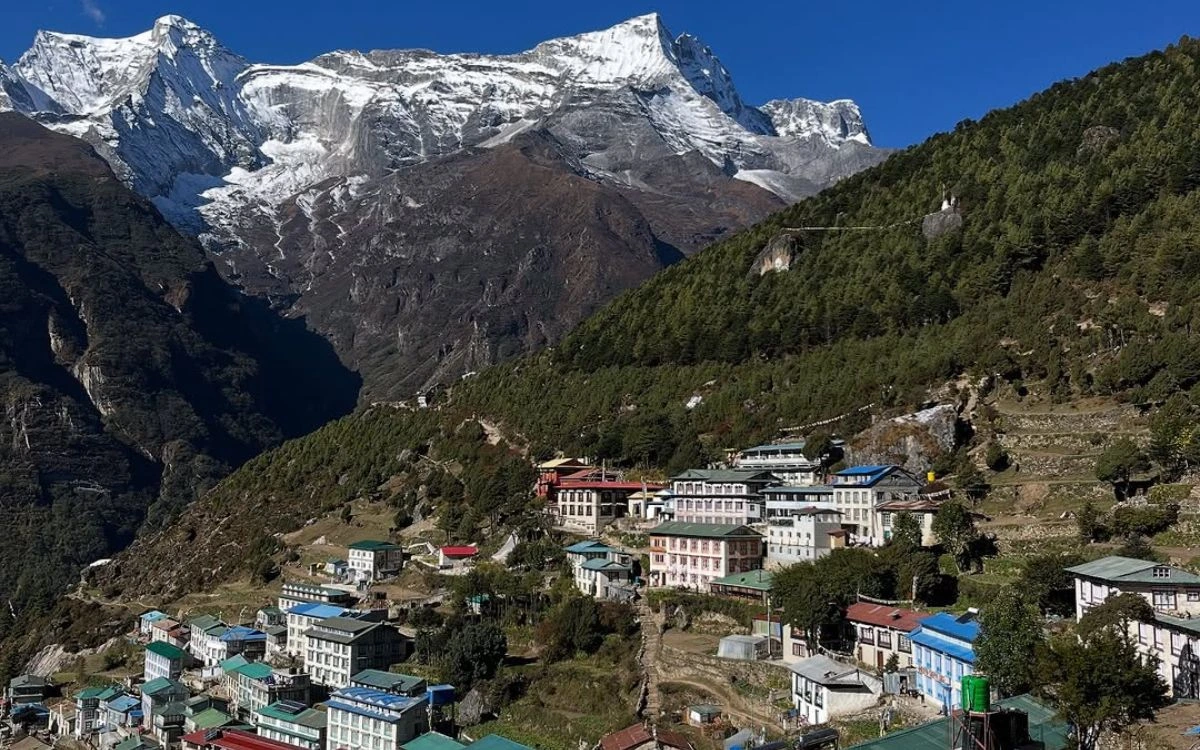
Namche Bazaar village nestled on a hillside with Himalayan peaks behind
What you will spend for a daily Trekking budget in Nepal on a daily basis will be determined by your route, your style, and the luxury items you choose to add. Regardless of whether you will be heading in the direction of the snow-covered peaks of the Himalayas above Namche Bazar or trekking through Rhododendron forests, having a good sense of what you are going to spend money on each day before you leave home will make the difference between an adventure that is completely enjoyable and one that is not enjoyable.
To help you prepare for your trek across the Himalayas without worrying about how you will afford it, this budget guide provides you with a comprehensive breakdown of your food and lodging costs as well as any additional costs associated with permits, ATM's, and emergency fund requirements.
Average Daily Cost of Trekking in Nepal
Understanding food and accommodation costs on treks in Nepal forms the basis of a sensible budget. The price of staying in a teahouse will increase significantly as you climb higher, as everything that can be eaten or drunk, from a boiled egg to a packet of crisps, must be carried up to the lodge by a porter or pack animal.
This is a general way for you to get an idea of how much you might be spending each day on a typical trekking route.
Meals (3/days)
Tea House Lodge
Hot Shower
NPR 800-2500
NPR 300-1500
NPR 200-600
At lowland lodging in and around Lukla or Pokhara, there are many affordable accommodations (NPR 300–500 per night). However, at high elevations along the ABC trek, lodging costs will vary significantly. Basic accommodation can cost anywhere from NPR 1,000–1,500. Meals such as dal bhat will also generally be cheaper than other types of food. A meal of dal bhat typically costs around NPR 500–700, and there are unlimited refills of these dishes. Imported snacks and energy bars, as well as bottled drinks, will be significantly more expensive the farther away from Kathmandu or Pokhara you travel.
Most trekkers fall into one of three spending categories. Knowing which one suits your travel style helps you calculate your total Nepal trekking cost breakdown accurately before you leave the city.
Trekker Type
Daily Spend (NPR)
Daily Spend (USD approx.)
Style
Budget Trekker
NPR 2,000–3,500
USD 15–27
Basic
Mid-Range Trekker
NPR 3,500–6,000
USD 27–45
Comfortable
Comfort Trekker
NPR 6,000–10,000+
USD 45–75+
Premium
Budget Trekker- Stay in the cheapest possible accommodation, eat dal bhat (rice and lentils) for two meals a day, do not use the WiFi, and take a cold shower. Mid-Range Trekker- Eat a variety of meals in different places, pay extra for hot showers, charge electronics, and buy a hot chocolate or snack occasionally. Comfort Trekker- Order food from abroad; stay in better quality accommodations, tip well, and have a sizable emergency buffer.
Trek-Specific Cash Estimates
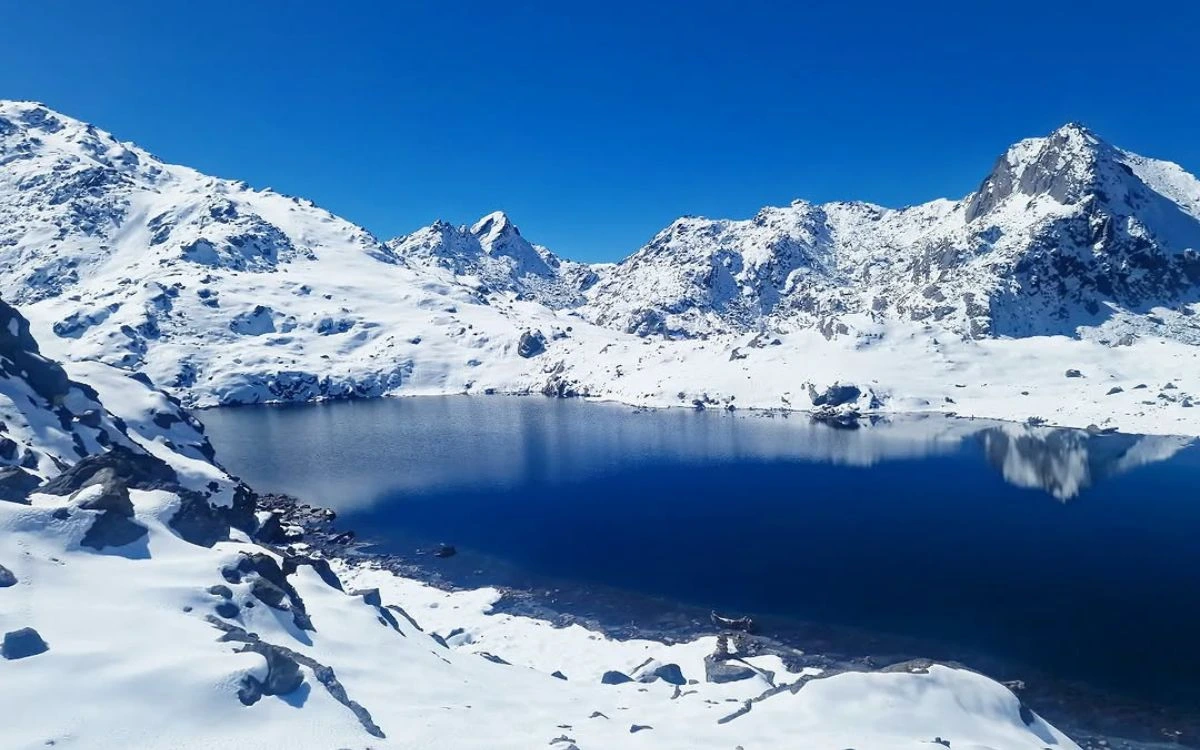
Snow-covered mountains surrounding a still glacial lake in Nepal
Cash Needed for the Everest Base Camp Trek
The cost of trekking to the Everest Base Camp is among the highest of all the trekking routes in Nepal; it will take you around 12-14 days to reach the Everest Base Camp from Lukla.
As you gain altitude, the cost of tea house accommodation goes up substantially. By the time you get to Gorak She,p a basic dinner will cost you at least NPR 1,800-2,500 on average.
For the complete Everest Base Camp trip, you should budget around NPR 90,000-130,000 (US$700-1,000) in actual cash (not including the cost of permits or guide/porter fees) to cover your daily food expenses, accommodation, and miscellaneous costs.
Budget for the Annapurna circuit trek.
The Annapurna circuit trek is longer and more varied than the Everest trek. It consists of travelling through lush subtropical forestsgettingts much higher into the mountains, passing through Thorong La, and many ancient villages in the Mustang area.
Trekking on the Annapurna circuit is slightly less expensive in the lower sections compared to the Everest Base Camp, mp and then increases significantly around Manang and when you have crossed the Thorong La Pass.
For the 14-18-day Annapurna circuit, you will need to carry approximately NPR 70,000-100,000 (US$530-750) in actual cash (not including the cost of permits) to cover your daily food expenses, accommodation, and miscellaneous expenses.
Cash for the Annapurna Base Camp Trek
The Annapurna Base Camp trek is a shorter route — typically 7–10 days — that takes you into the heart of the Annapurna Sanctuary. It is more affordable overall. Budget around NPR 40,000–65,000 (USD 300–490) in cash for the full journey, with slightly higher costs per day as you approach the base camp.
Extra Cash for Remote or Restricted Treks
Remote routes like the Upper Mustang trek and the Manaslu Circuit trek require restricted area permits costing hundreds of dollars and have even fewer amenities along the route. For these high-altitude adventures, carry at least 20–30% extra cash beyond your baseline daily budget. ATMs do not exist in Upper Mustang, and many lodge owners prefer cash in US dollars or Nepali rupees.
Quick tips: For any trek beyond 10 days, always add a 2–3 day buffer to your cash estimate. Weather delays, route changes, and unexpected rest days are common in the Himalayas — and you will need funds to cover them.
Permit Fees and Mandatory Costs
The cost of Nepal trekking permits is one of the most frequently underestimated expenses. Before you even reach the trailhead, you must pay for several mandatory permits. These fees are almost always collected in cash at checkpoints along the route.
Permit Type
Cost (Approx.)
Where Required
Sagarmatha National Park Entry
NPR 3,000 (~USD 23)
Everest Base Camp Trek
TIMS Card (Individual)
NPR 2,000 (~USD 15)
Most trekking routes
Annapurna Conservation Area
NPR 3,000 (~USD 23)
Annapurna region treks
Upper Mustang Permit
USD 500 (10 days)
Restricted area
Manaslu Restricted Area Permit
USD 35–100/week (season-based)
Manaslu Circuit
Always keep a dedicated pocket of cash set aside for permit payments. TIMS card fees and national park entry fees must be paid at official checkpoints, and they do not accept credit cards.
ATM Availability on Popular Trekking Routes
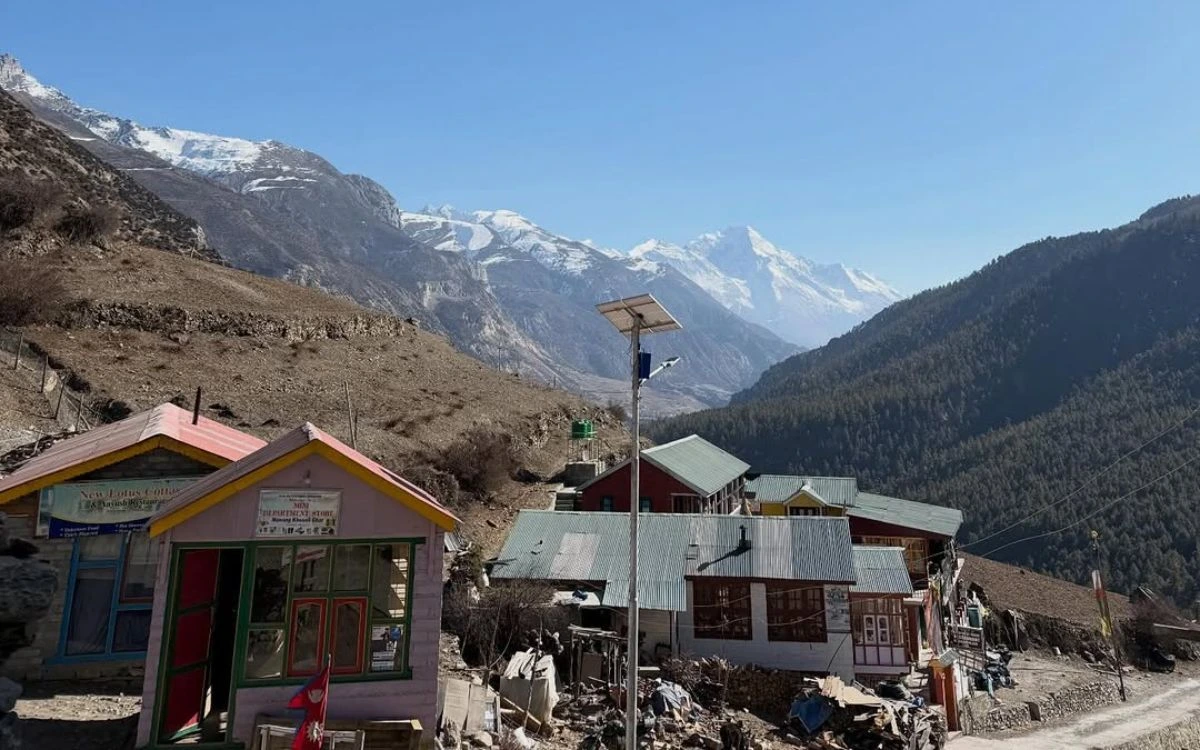
Colourful teahouse and guesthouse buildings in a remote Himalayan valley
If you're trekking in Nepal, it is extremely important to check ATM accessibility along the way, as many trekkers think they will find ATMs throughout the trek; however, there are only a few towns (known as gateway towns) where it is possible to withdraw cash.
In the Everest region, you can find an ATM in Namche Bazaar, which is the last place to reliably withdraw cashbeforeo making the transition to the high route. In the Annapurna region, you can withdraw cash in Pokhara and Besisahar, but once you pass Chame on the Annapurna Circuit, there are no cash withdrawal options available. On remote treks such as the Manaslu Circuit or Upper Mustang, you need to withdraw all of your funds in Kathmandu or Pokhara before departing for your trek.
ATM withdrawal limits in Nepal typically cap at NPR 35,000–50,000 per transaction, and many machines run out of cash during peak trekking season (March–May and October–November). Withdrawal fees can range from NPR 400–700 per transaction. Always carry a backup debit or credit card in case one fails.
Cash vs Card on Nepal Treks
A very straightforward argument exists between cash and card trekking in Nepal; without a doubt, cash is the winner on the trails of Nepal. While many of the larger cities throughout Nepal (Kathmandu, Pokhara & some of the
entry towns) do have the option to pay via credit or debit card at restaurants, gear stores, hotels, and the like. Once you step out onto the trails, you will only be using cash to pay for everything you will
encounter along your trek past the first hour.
Most of the teahouses, local lodges, checkpoint permit stations, small village shops, as well as any payments to your guide and porter, must all be made with cash. You might find some higher-end teahouses/lodges in Namche Bazaar or Pokhara that accept credit cards or have QR-based payment systems, but
Do not depend on this, as connectivity and failure of the payment system happen regularly in the mountain zones.
Regarding the currency, the primary form of currency you will be using on the trails is the Nepali rupee (NPR). The only circumstance where you would use US dollars is for obtaining restricted area permits or booking through some of the guide agencies. For all other daily expenses, you will need to carry NPR. You will get the best rates when you exchange your money at the authorized exchange counters in
Thamel — Kathmandu. Always make sure you count your money before leaving the exchange counter.
Extra Expenses Trekkers Often Forget
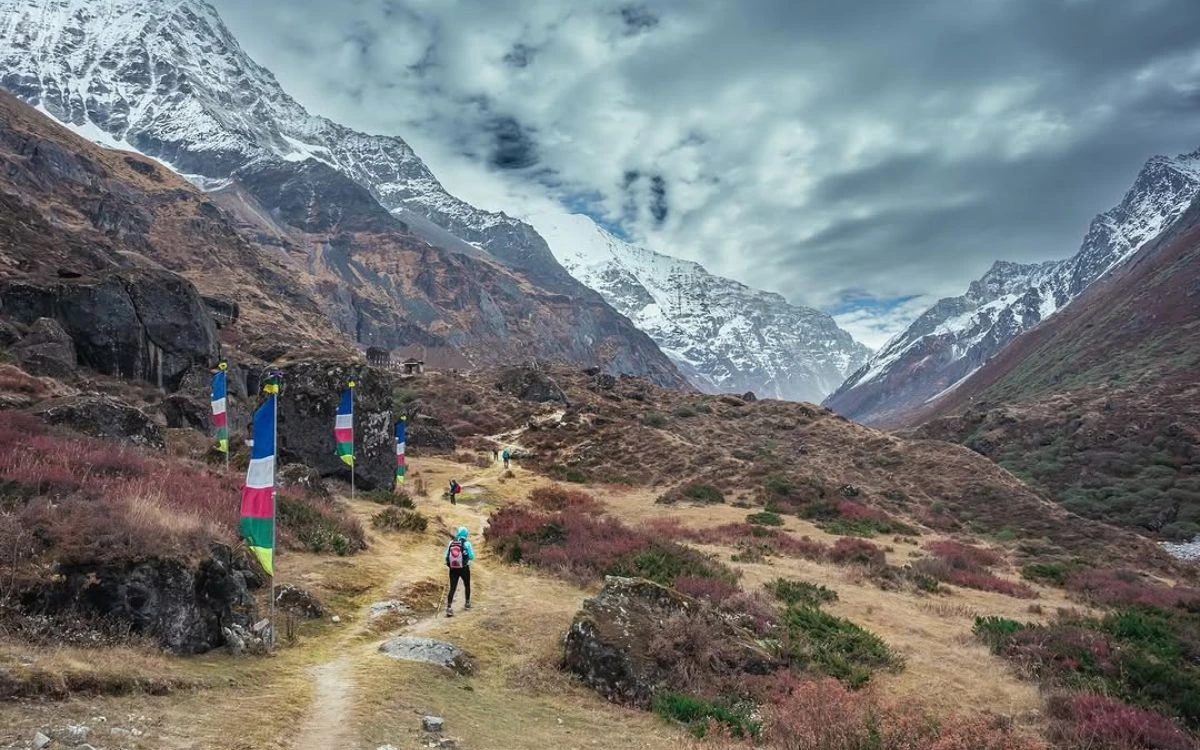
Solo trekker walking a mountain trail past Buddhist prayer flags in Nepal
Even if you normally take the time to conduct a detailed budget before any trip, there will always be costs that aren't captured by your regular estimates. Here’s a list of the most common types of expenses that are frequently overlooked when budgeting for a trip to Nepal:
While tipping your guide or porters is not required by law, it is considered a culturally and ethically acceptable practice. For example, it is customary to pay out a minimum of Nepali Rupees (NPR) 500-1,000 per day to your porter and NPR 1,000-2,000 per day to your guide. When you factor in a guide and a porter for a 14-day trek, you should set aside between NPR 25,000 and 42,000 for tips.
We often overlook the costs of weather delays and emergency funds, too. The weather in the mountains of Nepal is unpredictable, which could result in you being evacuated by helicopter if you experience acute mountain sickness (AMS). Regardless of whether you carry insurance or not, you should always have at least NPR 20,000-30,000 (cash) available for emergencies in case you need to pay for lodging, medication, or repair of equipment.
If you're hiking in Nepal, snacks, baked goods, and hot drinks can add up quickly. For example, in Namche Bazaar, you can get a slice of apple pie for approximately NPR 500-700, a cup of hot lemon tea for NPR 150-300, and a chocolate bar will cost you approximately NPR 400-600. Plan to spend an additional NPR 500-1,000 each day on snacks and extras beyond your meals.
Smart Budgeting Tips for Nepal Treks
You don't have to spend a fortune to experience an incredible Himalayan trekking adventure. Follow these clever tips on how to break down your trekking expenses in Nepal without sacrificing comfort or safety.
Before your trek begins, take out all your cash in either Kathmandu or Pokhara (preferably using multiple cash machines at different bank locations in order to avoid exceeding the local limit). Break down your cash into three separate pouches: daily spending, trekking permits, and an emergency fund in a waterproof pouch. While trekking, eat at least one meal each day of dal bhat; it's high in calories, has plenty of carbs/high protein/calories, and is the best value for food you'll find on a trekking route. Also, don't waste money on buying bottled water; bring a water filter or boil water from your lodgings and fill up containers before going out every day; this will save you 100-200 NPR ($1-2 USD) per day.
Quick Calculation: your estimated cost for your trek is (number of days trekked x daily budget) + cost for permits + your guide/porter + 20% more in case of an emergency. This calculation will allow you to safely estimate your budget for any trekking route in Nepal.
Sample Trekking Budget Breakdown (Per Person)
Here is a practical side-by-side comparison of three trekker types on a 14-day Everest Base Camp trek to help you understand the full Nepal trekking budget per day across different spending styles.
Expense Category
Budget
Mid-Range
Comfort
Food & Drinks (14 days)
NPR 28,000
NPR 50,000
NPR 80,000
Accommodation (14 nights)
NPR 7,000
NPR 18,000
NPR 35,000
Permits (TIMS + Park)
NPR 5,000
NPR 5,000
NPR 5,000
Guide (14 days)
NPR 28,000
NPR 35,000
NPR 42,000
Porter (14 days)
NPR 21,000
NPR 25,000
NPR 30,000
Tips (Guide + Porter)
NPR 14,000
NPR 21,000
NPR 28,000
Extras & Emergency
NPR 10,000
NPR 15,000
NPR 25,000
Total (approx.)
NPR 113,000
NPR 169,000
NPR 245,000
FAQs About Carrying Money on Nepal Treks
Should I carry US dollars or Nepali rupees on a Nepal trek?
For daily expenses on the trail, it’s best to have the majority of your money in Nepalese rupees (NPR). You should also keep between $200-$500 USD in cash on you for use as payment for things like restricted area permits, payments to guide agencies, or in case of an emergency. When in Kathmandu, you can exchange your USD for Nepalese rupees at authorized currency exchange shops in Thamel for the best exchange rates.
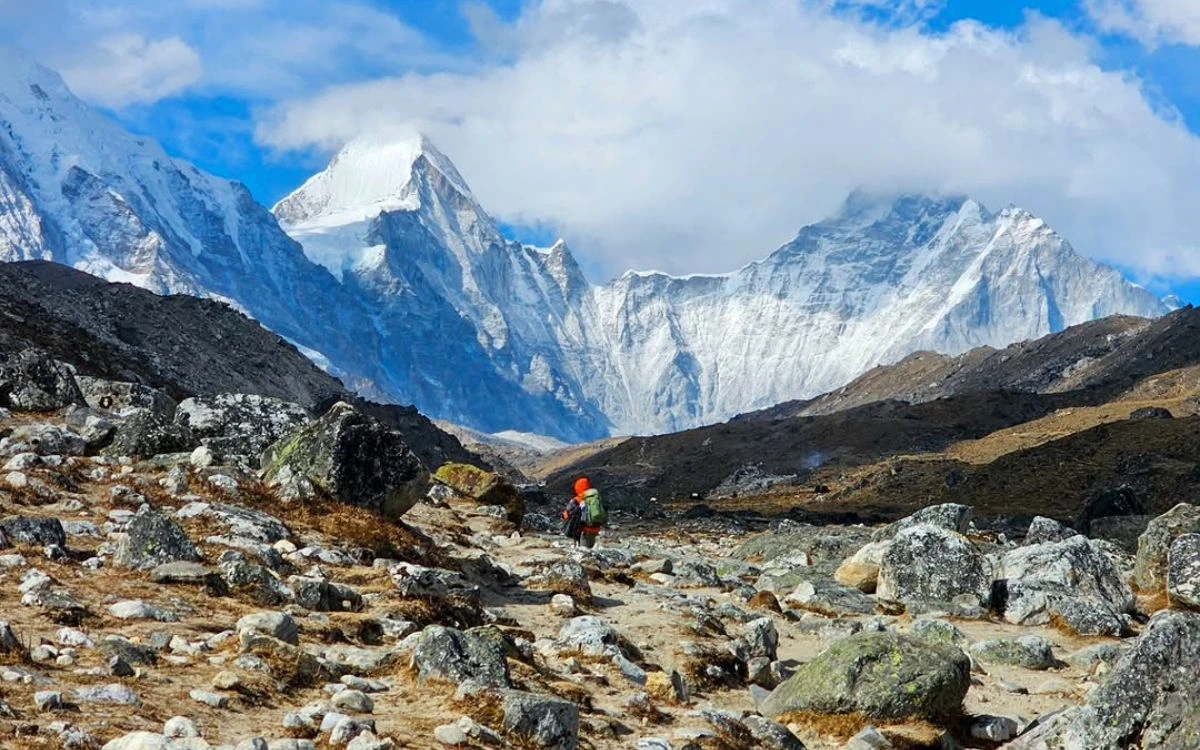
Hiker with a large backpack on a rocky trail towards snow-capped Himalayan peaks
Is it possible to use credit cards along the trek?
Credit cards are accepted at the majority of locations in Kathmandu and Pokhara, and you may also be able to use your card at some higher-priced lodges in gateway cities like Namche Bazaar. However, once you begin your trek, you should expect to rely only on cash for any payments.
At which ATM is the last withdrawal pointbeforeo the start of the trek to Annapurna Base Camp?
For the ABC trek, you will be able to find basic banking services in Chhomrong just before the trek begins. However, the majority of trekkers will have already withdrawn their entire budget for the trek prior to leaving Pokhara to travel to Nayapul or Ghandruk.
How much emergency cash should I carry?
As an emergency fund, keep at least 20,000 – 30,000 NPR in case of unexpected lodging owing to weather delays; medication from a trail pharmacy; or emergency transportation to descend from high altitude quickly.
Will I require cash for my Manaslu Circuit trek?
The Manaslu Circuit is a remote, restricted route without ATMs. Therefore, withdraw all necessary cash from Kathmandu before beginning your trek and ensure that you have enough cash for your permits, daily expenses, paying both your guide and porter, and having a comfortable amount of money as an emergency buffer.
Conclusion
Knowing how much cash to carry with you on your trek in Nepal is one of the biggest stressors alleviated from your experience in the Himalayas. The golden rule is relatively simple: withdraw all your money in either Kathmandu or Pokhara, separate it into sufficient categories, and then come up with a base estimate and add 20% on top of this figure to ensure you have enough money. Whether considering a high drama trek to EBC, the sweeping views of the Annapurna Circuit, or the peaceful majesty of the ABC, or experiencing the cultural vibrancy of Upper Mustang, or being in remote wilderness on the Manaslu Circuit, cash will be your most reliable companion while trekking.
Smart budgeting does not mean that you are spending less; rather, it means that you are spending smart. This way, you can remain safe, appropriately tip your lei, and fully enjoy every minute of your time above the clouds without having to worry about money.
Let plan your trek with Himalayan Recreation take care of all of your trekking budget, permits, and logistics so that you can concentrate on enjoying the mountains.


.webp)



-1.webp)
-1.webp)
-1.webp)